BOOK REVIEW: Octavio Paz / Selected Poems ed. by Charles Tomlinson

Selected PoemsSelected Poems by Octavio Paz
My rating: 5 of 5 stars

Amazon page


Octavio Paz was a Mexican author, poet, and diplomat who won the Nobel Prize for Literature in 1990. (By separating “author” and “poet” I mean that he wrote in a variety of forms, and he is as famous for his essays as for his poetry.) His poetry reflects not only Mexican culture and sentiments but it also displays an infusion of the flavor of places he was posted or visited – e.g. there are many references to India and Hinduism as Paz was the Mexican Ambassador to India in the 1960’s. That variety is the spice of life is a sentiment Paz seems to have embraced. The poems included present examples of both short and long form, as well as prose poems and free verse. There is even concrete (visual) poetry in which the words are formed into an evocative shape. Also, as hinted at, there’s a mix of Eastern and Western worldview in these poems.

There are a number of different “Selected Poems of Octavio Paz” collections available. The details of the version I read are ISBN: 0140422463, first published in 1979 by Penguin Books and edited by Charles Tomlinson. The various collections tend to share many of Paz’s “greatest hits” and so the reason I mention the publishing details isn’t because you’re likely to get an entirely different selection of poems, but rather the features and translation skill may vary from one edition to the next. Most notably, the paperback edition I read is a bilingual edition (Spanish and English.) That didn’t do much for me as I’m not a Spanish speaker, though I do have an interest in the sound of poetry. While I can’t speak to the trueness of translation, I found the Tomlinson text to be evocative and effective.

The edition mentioned includes 56 poems drawn from five different poetry collections, ranging from the late 1940s to 1976. (Paz died in 1998.) Paz’s early collections favor prose poems and he moves more into free verse and short form poems later.

I enjoyed this collection. I was particularly enamored of Paz’s presentation of surrealist imagery and his questioning of reality. I would highly recommend poetry readers take in some of Paz’s work.

View all my reviews

BOOK REVIEW: Descartes’ Error by Antonio Damasio

Descartes' Error: Emotion, Reason and the Human BrainDescartes’ Error: Emotion, Reason and the Human Brain by António R. Damásio
My rating: 5 of 5 stars

Amazon page


I’ve joked that there must be a law requiring any author writing a book on neuroscience for a popular audience to tell the story of Phineas Gage. This book is no exception. Its first couple chapters explore the case of Gage in detail. For those who don’t read much on this subject, Phineas Gage was a foreman for a construction company. By all accounts he was a reliable and solid individual, respected by his employees, trusted by his employer, and beloved by his family. Then one day a four-foot tamping rod was blown through his skull – literally, in one side and out the other. One might think that having a chunk of brain skewered out by a steel rod on a gunpowder-fueled ride through the skull would leave one – at best — a glassy-eyed, drooling, catatonic lump. Surely, a steel rod would wreak more havoc than the narrow needle used in lobotomies? However, what makes Gage’s story fascinating is that the injury resulted in no readily apparent disruption in cognitive function. Gage could still speak fluidly. He retained his memories. He could do math at the same level as before. However, this isn’t to say that the hole through his brain left him unchanged. The even temperament that made him an ideal employee and that endeared him to friends and family was gone. Gage became angry and unreliable.

So what is the relevance of the Gage story to Damasio’s book? Quite a lot, actually. Damasio’s book is about emotion, its influence on decision-making, and how bodily states create emotion. In parts two and three of this three-part book, after introducing the reader to the role of the brain in emotion via the cases of those with selective brain damage, Damasio lays out an argument for what he calls the “Somatic Marker Hypothesis” which says that bodily states are what create the sensations that we associate with emotion. The title-referenced error made by Descartes will be apparent to those familiar with Cartesian dualism. Descartes believed there was a dualism between mind and body – i.e. that there was this physical stuff that got us about from place to place, but there were these intangible thoughts and feelings that were matter-independent that were the makings of mind and which were really you (i.e. you think, therefore you are.) Damasio believes that you cannot separate what it feels like to be you from the body and all its hormones, neurotransmitters, vital statistics, neuronal firing, etc.

The book consists of eleven chapters divided into three parts. In the first part, the author lays out not only the case of Gage, but other examples of individuals who had injury or illness in the brain that disrupted emotion and its influence on decision-making. We learn that an unemotional being isn’t like Spock, but instead is paralyzed by indecision. It turns out that it’s emotion that give us a kick, particularly when he have no sound basis on which to make a rational judgement. The second part draws the connection between body and our emotional self, culminating in a description of the Somatic Marker Hypothesis. The final part describes how the Somatic Marker Hypothesis could be tested and where this line of study seems to be going. The book is annotated and has a bibliography as one would expect of a scholarly work – even one written for a popular audience. The book has a few graphics – graphs, charts, and diagrams, but not very many and of a clear and simple nature.

I’d highly recommend this book for anyone interested in the working of the mind. It’s a thought-provoking look at what it means to be an emotional being and challenges our preconceptions about feelings.

View all my reviews

DAILY PHOTO: Solitary Zebra

Taken in May of 2018 near Lusaka, Zambia.

POEM: Kathmandu

tight warren of streets, alleys, and stupa-laden courtyards
— a junky’s labyrinth
low portals force a bow to the ever-watching Buddha
how’s someone, hot-wired and strung out —
slipping the sacred geometries —
kink their way through this dusty burg
without clocking a noggin on bricks
— blocks of brown, dried blood brown
how do lost self-medicating masses find themselves
where it’s so easy to be lost

DAILY PHOTO: Asian Elephants, Sri Lanka

Taken in Kegalle, Sri Lanka (near Kandy) in May of 2015


DAILY PHOTO: Scenes from Patan’s Durbar Square

Taken on May 4, 2018 in Patan (Lalitpur.)

DAILY PHOTO: Find the Fishtail

Taken in April of 2018 in Nepal.

Remarkable how well mountains can blend with cloud and sky. Machapuchre (“Fishtail”) Mountain becomes almost invisible.

DAILY PHOTO: Terraces

Taken in April of 2018 near Chomrong, Nepal

5 Works of Nonfiction That May Be [at least in part] Fiction

NOTE: There are many famous examples of books presented as nonfiction that turned out to be partially or completely fabricated (e.g. Go Ask Alice, A Million Little Pieces, Three Cups of Tea, The Teachings of Don Juan, and Papillon are examples that spring to mind.) That’s not what I was going for when I started this list. Instead, I was thinking of examples of books that may well be true to the best of the author’s knowledge, but which may also be examples of false memory syndrome. I became interested in this while reading Julia Shaw’s The Memory Illusion, which discusses how faulty memory can be — to the point that people can be led into false memories of something as traumatic as committing crimes that never occurred. Meredith Maran wrote a book entitled My Lie: A True Story of False Memory about what she discovered were false memories of childhood sexual abuse. So, I’m not saying these books are fabrications, and — for all I know — some may be completely true. After all, some of the featured individuals think they were exploited by the MK Ultra mind-control shenanigans, and some of them may have been, but it’s also possible some weren’t.


5.) Secret Weapons by Cheryl and Lynn Hersha: The Hersha sisters say they were in a program that turned them into femme fatales.


4.) Psychic Warrior by David Morehouse: I read about Morehouse in Jon Ronson’s The Men Who Stare at Goats. Sadly, it’s not in question that the military maintained a program of psychics, nor that Morehouse was involved in said program. What is in question is the degree to which the program had successes.


3.) Communion by Whitley Strieber: This is the most famous alien abduction story. I don’t know what really happened, but I seriously doubt it’s what the author proposed.


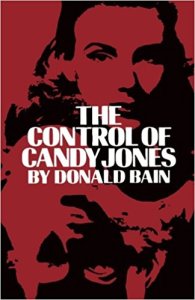
2.) The Control of Candy Jones by Donald Bain: This is a more well-known case similar to that of the Hersha sisters in which a woman was said to be reprogrammed by a nefarious psychiatrist in a mind control program. Candy Jones was famous as a pin up girl. After she got married, her behavior changed radically, and her husband asked her to participate in sessions of hypnosis which are said to have turned up a buried second personality.


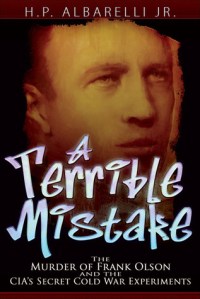
1.) A Terrible Mistake by H.P. Albarelli Jr: This is another example of a case in which there are certain remarkable facts that aren’t in dispute, but the degree to which the fine details are accurate is hard to judge. The fact is that Frank Olson was a biologist in the employ of the government, he was dosed with hallucinogenic substances, and thereafter he took a fatal plunge out of a hotel window. Whether he was murdered as a cover up or just had a bad trip has always been an open question.

DAILY PHOTO: Stupa Field, Swayambhunath

Taken in April of 2018 in Kathmandu