
Taken in December of 1999 in Budapest
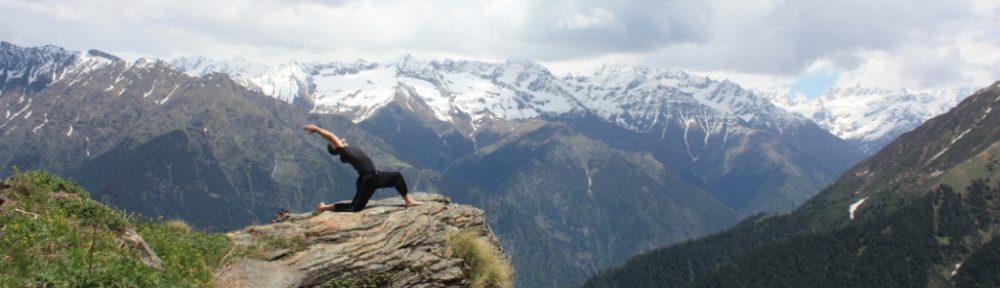
Taken in December of 1999 in Budapest
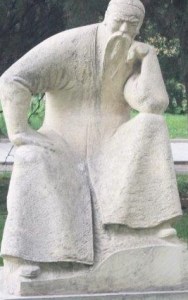 Life makes philosophers of us all.
You’re forced to decide how you will know your truth.
And it is “your truth,” or “my truth.”
We are powerless to determine THE truth, having only a limited capacity to even discern it.
“Your truth” is the concoction of fact and fiction by which you dance through life.
Now, you may say,
“Life may force me to be a liar, a whore, and a scoundrel, but I’ll never stand for it to make me a philosopher!”
Maybe you think you can side-step philosophy by taking answers straight from science, scripture, or lockstep walking with your tribe, but making that decision has still forced you to philosophize.
No matter what default you choose, knowledge of truth will remain limited and sometimes faulty.
I favor holding truths like an intact bird’s egg found fallen out of a nest — careful not to grasp too tightly for fear of either crushing it or having a misidentified velociraptor chick pop out and bite off my thumb.
I can’t say that this is a better approach than those who hold truths in the way of a rodeo rider with a dislocated elbow and shoulder who — never-the-less — stayed his eight.
It’s not just in matters of truth and knowledge that we are forced to philosophize.
One also has to determine what constitutes a virtuous life, and to what degree one finds chasing said path worth the effort. Again, the choice to outsource future thought to a holy book is still an act of philosophizing.
I understand that most people don’t want to be seen as a philosopher anymore than than they would want to be seen as a masochist — a lifestyle which bears something in common with philosophy.
After all, the philosopher is one who insists on engaging in rigorous and tedious thought on subjects that offer no right answers — just a huge slate of equally least-worst options.
If she wanted to engage in such thought AND uncover the right answer, she’d be a scientist.
If he wanted to wax eloquent on his love of living in the dark, he’d study language or literature.
But the philosopher likes his thought like he likes his tragic figures of Greek mythology –Sisyphean.
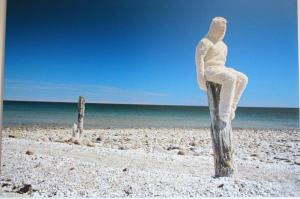
the faceless, in my dreams, play at chores i can’t comprehend,
leaning over consoles — big powerplant-style consoles,
neither typing nor jabbing buttons,
just sitting, attuned to the lay of the world according to indicator lights
i shout to them
of course, they can’t shout back
but they don’t even flinch
zero acknowledgement
i can’t tell if they have ear-holes,
whether they’re ignoring me, or can’t hear me
i guess i should consider myself lucky
if one turned its faceless face toward me
i’m sure i’d shit a dream brick
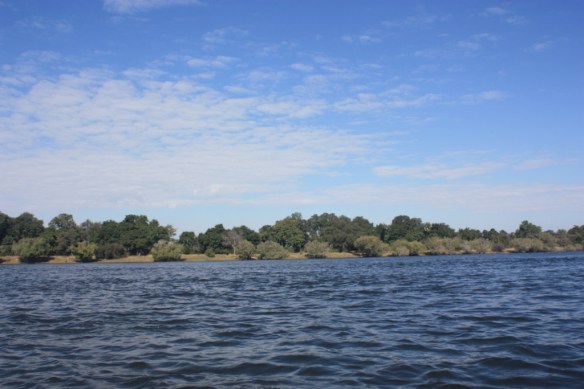
Taken in May of 2017 on the Zambezi River between Zimbabwe and Zambia


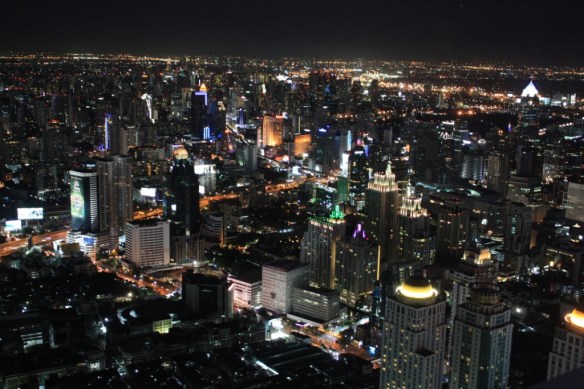
Taken from Baiyoke Sky Hotel in the Summer of 2014

Taken from Wat Arun

Taken in August of 2019 at Big Almaty Lake
ultima Thule / əl-tə-mə-ˈthü-lē / n. 1. a distant unknown region; 2. the extreme edge of the discovered world
“Where lies the ultima Thule?”
he inquired about the edge of discovery.
“It’s down in cave, beyond the cold,
in a pocket that’s hot and noxious.”
“I’m sure it lies in the Challenger Deep,
far down below the waves.”
“It must be out amid the void of space,
where frozen silence reigns.”
“If it lies not in the recesses of my mind,
I’m sure I’ll never see it.”
 Crazy Wisdom by Chögyam Trungpa
My rating: 4 of 5 stars
This book collects the lessons of two seminars on crazy wisdom taught by Chögyam Trungpa in 1972. “Crazy Wisdom” is an awakened state of mind that was taught by Padmasambhava – the teacher who introduced Buddhism to Tibet from India. The two seminars consist of six and seven lessons, respectively. These thirteen lessons make up the chapters of the book. Each chapter consists mostly of a text discussion of the topic at hand, but with an interview at the end in which the teacher is asked to clarify points mentioned in the text or that are relevant to the topic under discussion.
The book starts with differentiating two approaches: trying to live up to what one would like to be (i.e. spiritual materialism), and trying to live what one is. While the former is a widespread phenomenon across many religions, it’s dismissed as not all that productive. Along the way, the book discusses how being childlike, ruthless, hopeless, fearless, and in touch with death can all have beneficial effects on the mind. Of course, one has to go about such things in a proscribed manner as it’s emphasized that crazy wisdom and being crazy aren’t identical states (even if they may share similar appearances in some instances.)
Like many books on wisdom, this one offers a mix of profound insight and a sort of double speak used to make profound-sounding but ineffable statements, or logically inconsistent statements, seem true and / or thought-provoking. A philosophizing style is employed rather than narrative style, and so it can read a bit blandly.
There are a few notes and several line-drawn artworks in the Tibetan Buddhist style, but otherwise it’s a straightforward text.
I found this book to be intriguing and to offer interesting food-for-thought. It’s a short book, but may be a bit challenging for a reader without a background in Tibetan Buddhism, or in Buddhism in general. If you’re interested in Vajrayana Buddhism, you should give it a read.


