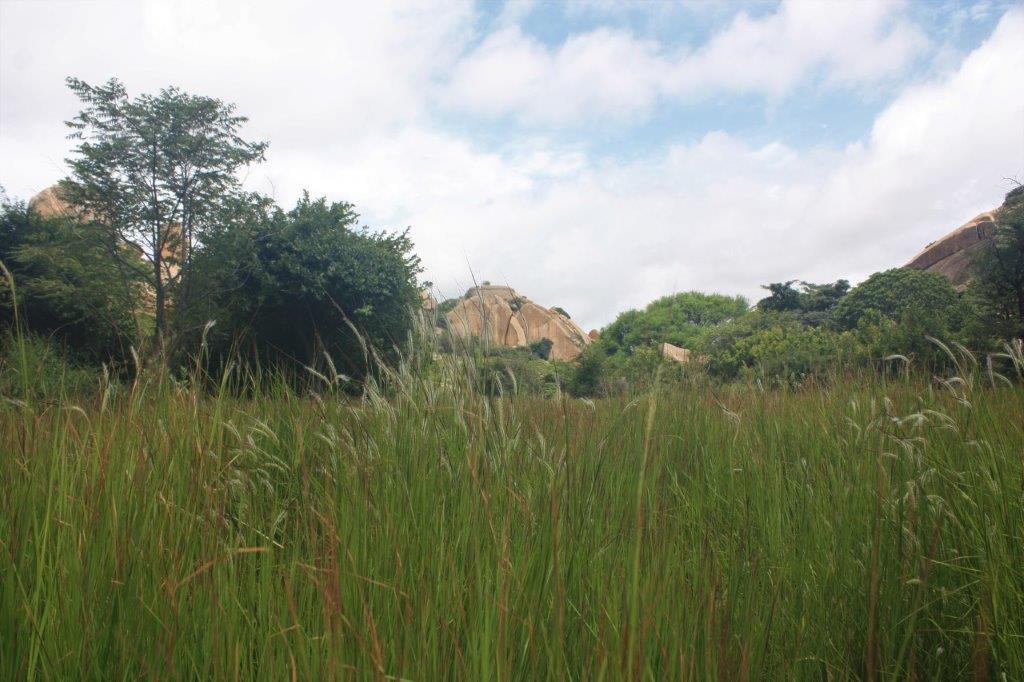
DAILY PHOTO: Gooty Fort Overlook

Taken in October of 2021 at Gooty Fort

Atlanta Limerick

There once was a man from Atlanta
who wouldn't drink Coke, Sprite, or Fanta.
They called him crackpot,
fired him on the spot,
and he was put on the naughty list by Santa.

BOOK REVIEW: Iranian Love Stories by Jane Deuxard & Deloupy

Iranian Love StoriesIranian Love Stories by Jane Deuxard
My rating: 5 of 5 stars

Amazon.in Page

Out: December 14, 2021

This graphic novel shows what life is like in Iran. A French couple engaged in immersion journalism converses with Iranian men, women, and couples. As the title suggests, the theme of the book is intimate relationships (and marriage, when it – sadly – doesn’t fall into that category,) and the trials of love under an ultra-conservative theocratic regime. The book offers insight into how singles sneak love, how arranged marriages work (or don’t,) and how the bizarre in-law dynamics of arranged marriage are navigated. One also learns about non-amorous elements of Iranian life – i.e. the illicit nature of dog owning, workplace dynamics, etc.

The people Deuxard talked to were overwhelmingly wealthy, educated, and unhappy with the regime. That said, there’s a range of views presented. There were a few who were mostly happy – e.g. one young woman complained about the impossibility of openly dating, but said she was ultimately happy not to live in the West where she would probably have to work and / or take on other responsibilities she was freed of as an Iranian housewife. Additionally, one girl said that a relationship in Europe would offer no thrill because, you know, no one will murder you for smooching your boyfriend in Denmark. There were also many who desperately wanted out of the country, some of whom felt trapped and others who were working toward getting away (there are measures in place to make this difficult for many – e.g. if you have an Iranian degree, you have to pay it off before you’re granted an exit visa.) Some were hopeful that the theocracy would be overthrown, but most were resigned to a tormented life.

As a traveler, I’m fascinated by how people live at various places around the world, and so I found this book intriguing and thought-provoking. However, I can see how those who aren’t interested in such questions might find it a bit dull. It’s essentially documentary-style interviews in graphic novel format. That said, I thought the artist and writer did a good job of conveying mood. If you want to know what life is like in Iran, check it out.

View all my reviews

BOOK REVIEW: The Case-Book of Sherlock Holmes by Arthur Conan Doyle

The Case-Book of Sherlock Holmes (Wisehouse Classics Edition - With Original Illustrations)The Case-Book of Sherlock Holmes by Arthur Conan Doyle
My rating: 5 of 5 stars

Amazon.in Page

The dozen stories in this collection make up the final book in the Sherlock Holmes canon. It’s not the most beloved of the Holmes’ books, but Doyle did take some bold diversions from the usual Sherlock formula (probably in an attempt to maintain his own interest in the character.) Some of the experiments are regarded as fails. I’ll discuss the anomalous tales, with the understanding that most of the other stories follow the recipe.


In “The Adventure of the Creeping Man” Doyle ventures into what some have called bad sci-fi with a tale in the vein of “Island of Doctor Moreau.” While the farfetched nature of the story stands in contrast to the usual enlightened rationality of Holmes, to be fair, it’s hard to fault anyone living through the early decades of the twentieth century for imagining some outlandish possibilities — given the wild scientific and technological advances being seen. In this collection we see microscopes and other disruptive technologies.


In “The Adventure of the Blanched Soldier” Holmes, himself, takes up narration (i.e. Doctor Watson’s job.) In my view, besides Holmes’s occasional chiding of Watson and his writings, there didn’t seem to be as great a distinction in voice as Doyle might have hoped to achieve.


“The Adventure of the Lion’s Mane” is also narrated by Holmes, but is also anomalous for the nature of its solution. While a murder investigation is solved using Holmes’s arcane knowledge, it might leave many readers feeling that it was an anticlimactic variation on the formula.


A couple stories, “The Adventure of the Veiled Lodger” and – to a lesser extent – “The Adventure of Shoscombe Old Place” skip the usual necessity of Holmes solving the case and taking part in the explanation of discoveries, and – instead – the solution is presented entirely by individuals involved in the mystery. This harms the protagonist’s agency.


Despite the lack of love this collection receives, generally, it does still present some interesting cases and I credit Doyle both for taking chances and for showing an evolution of Holmes and his world.


View all my reviews

BOOK REVIEW: Marvel-Verse: Shang-Chi by Fred Van Lente, et. al.

Marvel-Verse: Shang-ChiMarvel-Verse: Shang-Chi by Fred Van Lente
My rating: 4 of 5 stars

Amazon.in Page

This is a collection of issues involving Shang-Chi. The early issues present the “Master of Kung Fu” in cameo / secondary roles within headliner characters’ comics – notably Wolverine and Spiderman. In those early issues, Shang-Chi mostly serves as the invincible master showing quippy superheroes that their kung fu lacks vigor and precision. In the later issues, those in which Shang-Chi is the lead, he becomes more well-rounded leading man material and less of a stoic, exotic Yoda-figure. In those issues, Shang-Chi combats the elusive ninja organization called “The Hand,” as well as “Lady Deathstrike.”


There is one issue, “Shang-Chi’s Day Off,” which is written as one-liner laden low comedy. Its tone stands out as distinct from the rest of the volume, but it has a few genuinely amusing lines, and so it’s not so bad. Those who take their superheroes somewhat seriously will hate it.


This collection isn’t a bad way to gain insight into the character and his evolution over time. Don’t be thrown off by the campy and stereotyped way he’s portrayed in his 70’s Kung fu cinema iteration, it gets more balanced and sophisticated later in the volume. I read found it on Amazon Prime.


View all my reviews

BOOK REVIEW: Introducing Evolutionary Psychology: A Graphic Guide by Dylan Evans

Introducing Evolutionary Psychology: A Graphic Guide (Introducing...)Introducing Evolutionary Psychology: A Graphic Guide by Dylan Evans
My rating: 4 of 5 stars

Amazon.in Page

Ever controversial, one can’t help but see some appeal in evolutionary psychology, at least with respect to certain aspects of human behavior (e.g. mate selection, parenting, and certain questions of cooperation versus competition.) As a social scientist, I was often struck by how much social science theories were like zombies – you couldn’t kill them, but if you moved fast enough you could ignore them. Which is to say, even as evidence of incorrectness piled up, theories would be tweaked to seem more consistent with reality – slap a “neo-” prefix on the front end and insert a few choice rationalizations into the theory, carefully worded so as to avoid direct contradiction the original idea. But in Darwinian Evolution one has a well-validated, powerful theory that is so simple and elegant that it’s hard not to see its merits.


While not explicitly divided up this way, this book could be segmented into three parts. The first part presents background information about evolutionary biology and cognitive psychology, the “parents” of evolutionary psychology. The meaty middle of the book investigates the areas of human behavior and decision-making where evolutionary psychology makes its most compelling arguments – e.g. familial relations, dietary decisions, disgust, cooperation, altruism, etc. The final section explores some of the criticisms that have been leveled against evolutionary psychology. These critiques are restricted to three scholarly complaints about the discipline (i.e. Pan-adaptationism, Reductionism, and Genetic Determinism.) It doesn’t delve into the current popular criticisms of evolutionary psychology – e.g. that it seems to justify womanizing and “toxic masculinity.” However, the author does explain that the discipline only comments on the “is” part of the “is-ought” dichotomy – i.e. explaining the way things are shouldn’t be taken as endorsing them as the way things should be. [This explanation is made regarding the discipline’s earliest blackeye – i.e. being used to justify eugenics.]


I found this to be a thought-provoking overview of this intriguing – if controversial — branch of psychology.

View all my reviews

DAILY PHOTO: Shivamogga Temple Figures

Taken in August of 2021 at Shivamogga