Taken May 23, 2015 in Kandy, Sri Lanka

Taken May 23, 2015 in Kandy, Sri Lanka
Taken near Ramboda Falls, Sri Lanka on May 25, 2015.
 Inversions are a class of postures (asana) in which part or all of the body / limbs are raised above the head. The classic inversions are: headstand [shirshasana], shoulder-stand [sarvangasana], plow pose [halasana], forearm-stand [pinchamayurasana], and handstand [adho mukha vrksasana], but there are many more–some of which are easier and others of which are more challenging than these basics. Other than a few partial inversions (e.g. down-dog [adho mukha svanasana] and leg-up-the-wall pose), inversions tend to be daunting for beginners (and even intermediate students) at a mental as well as a physical level.
In this post I’ll focus on headstands. Most students seem to achieve shoulder-stands and plow pose relatively easily because it feels more stable. I’ll note that those two asana require as much or more care and caution as any inversion given the flexed state of the neck. On the other hand, by the time one is perfecting one’s handstand, one will likely be over the issues that I’m addressing in this post. I’ll save those poses for a later post with a different thrust.
Let’s first consider the effect inversions are supposed to have (and then the effect they tend to have in reality.)
What inversions are supposed to do: The story is supposed to go like this: 1.) The body inverts. 2.) Our body’s sensors recognize that the blood flow to the brain is far beyond its needs. 3.) The body quiets our vital signs.
What inversions (too often) actually do: It may surprise some readers that inversions are supposed to have a calming effect because the chain of events is often as follows: 1.) The body inverts. 2.) The amygdala fires, triggering the physiological responses associated with fear. 3.) One’s conscious mind imagines the pain and suffering of falling. 4.) The amygdala fires some more. One is in “fight or flight” mode, and the flight the body wants to make is to a right-side-up position.
While I’ve had to work hard to improve my inversions, I had a much easier time with this issue than many. Before you dismiss me as a narcissist, let me state unequivocally that I have no special gift for inversions . I’m not claiming to be a yoga prodigy by any stretch. Why was it easier for me? I’ve practiced a martial art for many years that required training in breakfalls (ukemi.) Therefore, I had no particular fear of falling over onto my back, because my body is trained to tuck and roll. [My only fear when I first started doing headstands in studio sessions was that someone, e.g. the teacher, would walk into my blind spot. Note to all: don’t walk behind someone’s back when they’re inverted unless you’re sure you’re out of the “timber” zone.]
Why are breakfalls so beneficial to the development of one’s inversions? Because it allows one to get off the wall. A lot of practitioners get addicted to the wall. “Addicted” may sound like a harsh term, but like addicts they think they can quit anytime and that they will quit at some undesignated point in the future–sometimes they do, but often they don’t. Reliance on the wall is reinforced by the fact that one may find one can only spend a couple anxiety-filled seconds inverted without the wall, but one can spend minutes comfortably against the wall. There’s a reason for this great disparity, and understanding this reason is crucial for knowing why doing 2 or 3 seconds unsupported (at first) is better for one’s long-term development than staying for three minutes leaning on the wall.
Here’s the deal. When you invert, your body needs to make subtle corrections to keep you on balance–at least until you reach the level of yoga genius. If you stand up with your feet together, your eyes closed, and you pay attention to your feet and legs, you’ll see that this is true when you’re upright as well. It’s just that your body is used to being upright. It knows how to make all these micro-corrections without conscious thought. The good news is that one’s nervous system rapidly learns to do the same thing when one is upside-down. When I say “rapidly” I’m not talking about the first, second, or even the twelfth time you try to do an inversion. [Trust me, despite what your mother may have told you about her darling genius, you didn’t achieve stability upright on your first few tries either.] The first several times, you’ll fall down almost immediately. However, if you keep trying, your body will learn and you’ll achieve progressively longer inverted stays. You can’t make these corrections at the speed of conscious thought. But the beauty part is that your body will learn to achieve stability solely through practice without any intellectual activity whatsoever.
Why doesn’t your body learn this when you use the wall? The cornerstone biological principle for those interested in fitness, movement, and sports is: Your brain and body are lazy; they will not develop any capability that you don’t force them to by challenging activity. Your muscles don’t get bigger without overloading them and causing little micro-tears in them that they must heal up better than before. Your bones don’t get more dense unless you put more load on them (see: Wolff’s Law.) And your nervous system will not wire itself to keep you upright in an inversion if you’re propped up against a wall. You can invert against a wall for a thousand years and not get the same benefits as from an hour of struggling to get off the wall. This principle is reflected in nature from Darwinian evolution onward. Gazelles don’t learn to run 500 miles an hour. Once it can accelerate (on average) fast enough to survive the cheetahs that prey on it, it passes on genetic material and the evolutionary pressure is off. Gazelles don’t keep getting increasingly faster than their predators for shits and giggles.
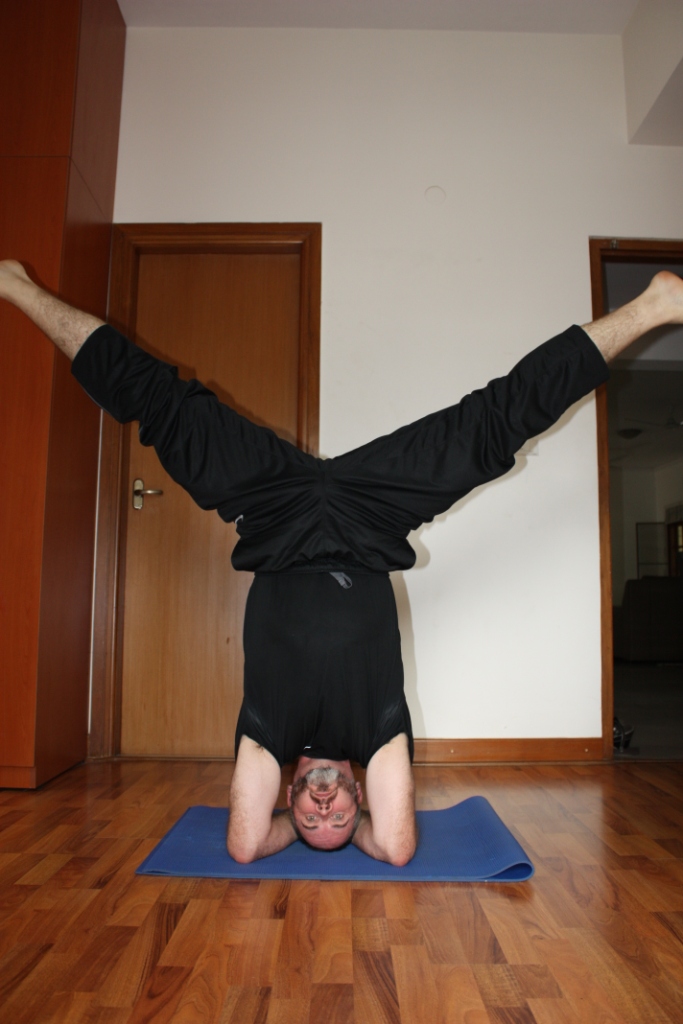
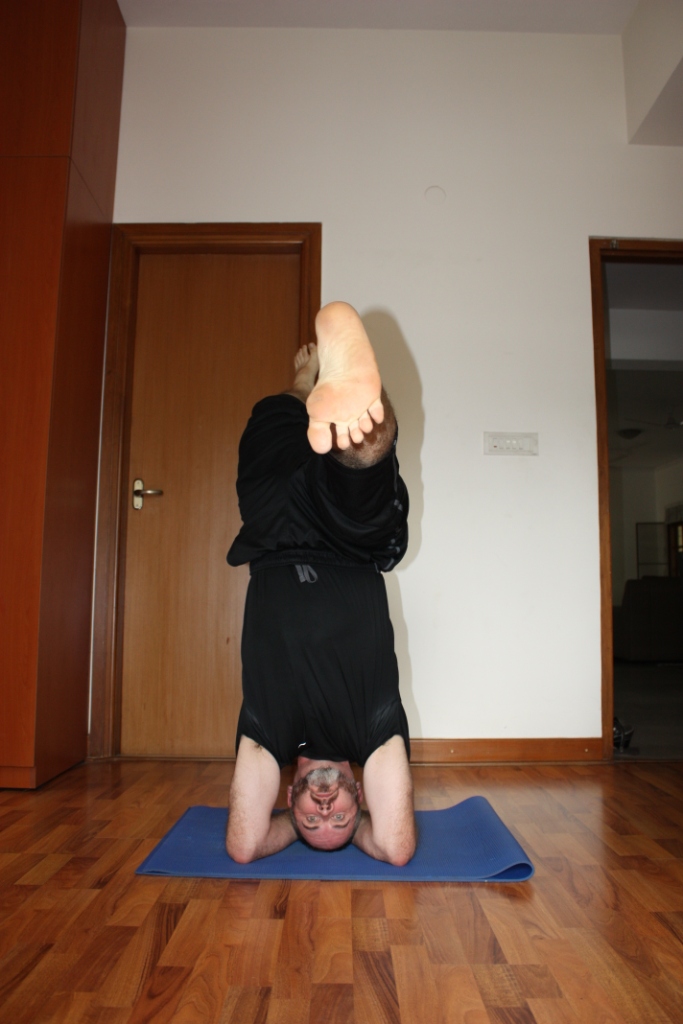
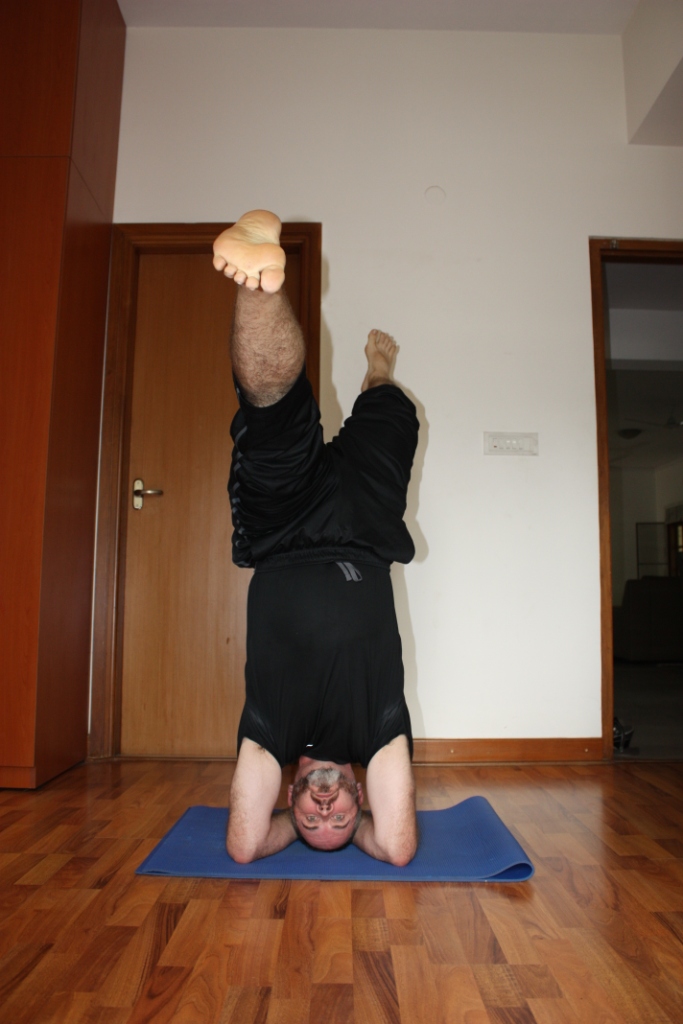
Incidentally, this is also why you should keep challenging yourself, and not rest with getting the basic form. There’s always somewhere new to take it. For example, one can look at moving between splits like so:
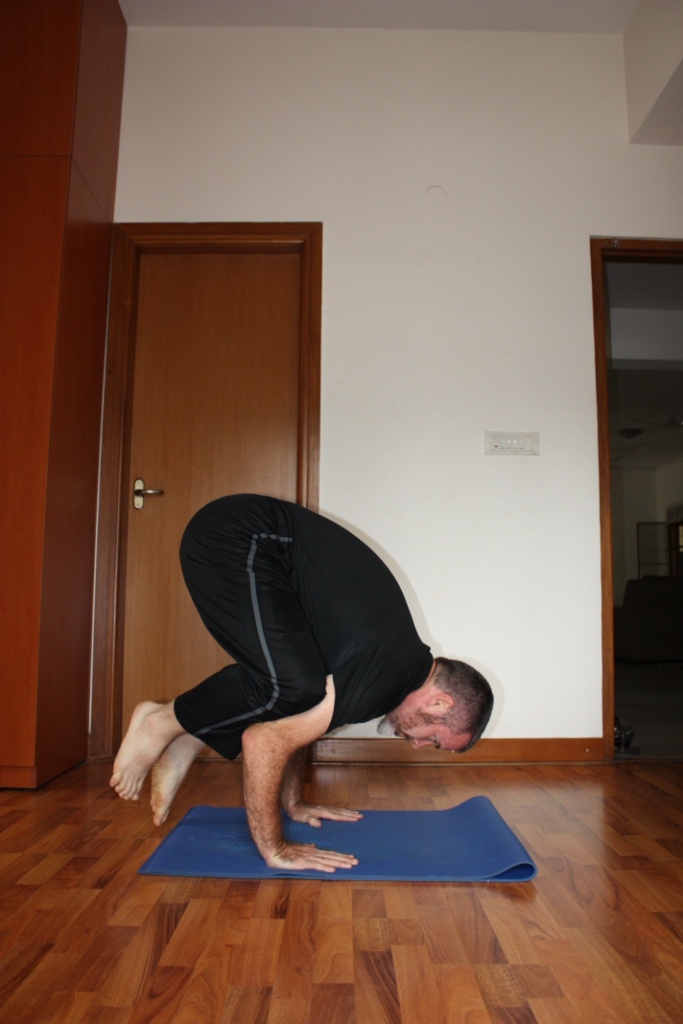
Alternatively, one can work on a different form of the pose, such as the tripod headstand. Transitioning from crow pose [kakasana] to tripod headstand is a good way to start to learn the bodily control that will serve one well in intermediate and advanced practice.
Yet another option is to practice a controlled descent. The inverted “L” is quite a challenge. Not as one might think because it requires tremendous core strength, but because it requires gradually leaning into the direction of falling backwards in order to counterbalance the weight of your legs.
A few notes on headstand breakfalls:
– Make sure you have room in all directions to fall without crashing into anything or anyone. While it would be nice to always fall back onto one’s feet, it’s neither realistic nor beneficial to your development. Why not? If you’re always distributing your weight to fall onto your feet, you will be keeping muscles tense and will have trouble finding a relaxed state of balance. Furthermore, there is a tendency toward panicked motion if one starts to lose balance in the wrong direction, and speed is your enemy in inversions. (One wants to do everything from entering the inversion to falling in as slow and controlled a manner as one can possibly manage.) If you get your feet up high enough to be on balance, you need to accept the fact that you’re as likely to roll onto your back as on to your feet.
– If one is doing the basic forearm-supported headstand, don’t tightly interlock one’s fingers. “Tightly” is the key word here. It’s alright to interlock your fingers, but one doesn’t want to create ridged hands such that one’s neck rolls over a 3 to 4 inch (7 to 10 cm) ledge if one falls backwards. One wants the hands to collapse.
– Tuck and roll. Don’t reach back with your foot / feet and try to arrest your fall. If you have enough strength, flexibility, and timing to make that work you probably don’t need my advice and haven’t read this far. (i.e. you have advanced gymnastic skill.) If you’re the more typical yoga practitioner, you’re more likely to injure your back, toes, feet, or some combination thereof by arching into a back-bend to arrest your fall.
– Counter-intuitively, you probably don’t want to put anything behind you to soften your fall. You don’t want your spine rolling over surfaces that are at different levels–even if one them is relatively soft. It’s usually best to roll over a level surface, even if that surface may be a bit hard. Furthermore, if you think you’re going to save yourself by working entirely on a softer surface, you’ll probably find yourself falling more often and for a longer period. Softer surfaces are harder to maintain balance on. That’s why one of the primary ways that we make an exercise more challenging is to do it on a softer (more rolly) surface.
– Don’t let your neck crumple. On a related aside, never look around while you’re in a headstand. If you need to see something, e.g. the teacher’s demonstration, come out of the headstand.
– However you come out of an inversion, don’t neglect the counter-pose. For the headstand, child’s pose is a common counter posture, and you should spend some time there upon exiting the pose.
– It’s best to begin one’s practice of inversions under the supervision of a qualified teacher. As one develops confidence and one’s body begins to learn how to maintain stability, one can make these postures an increasing part of one’s practice.
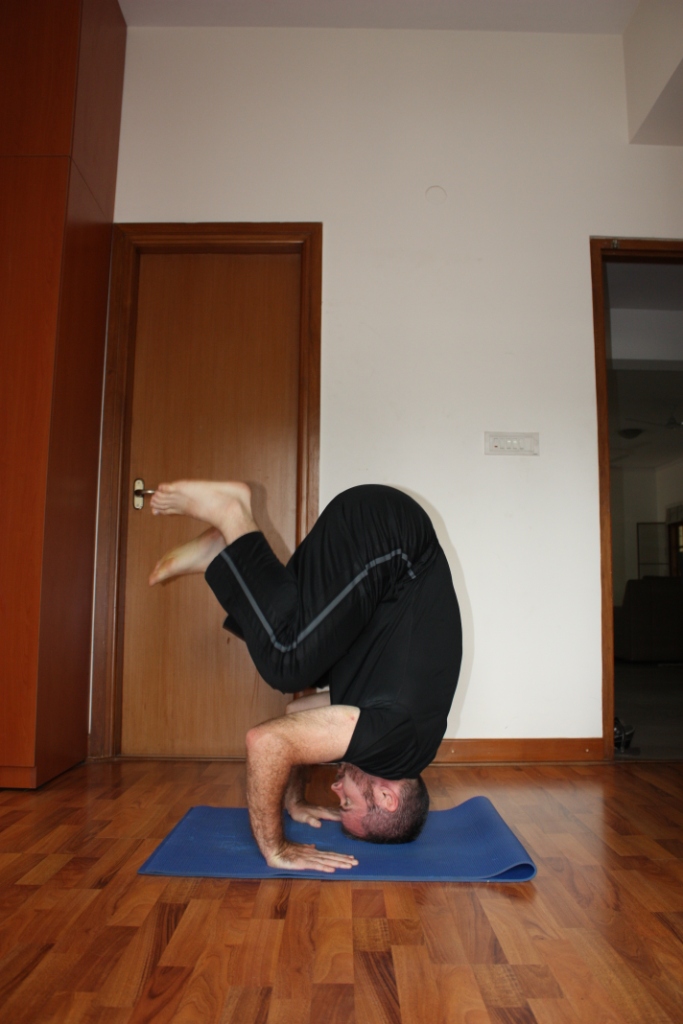
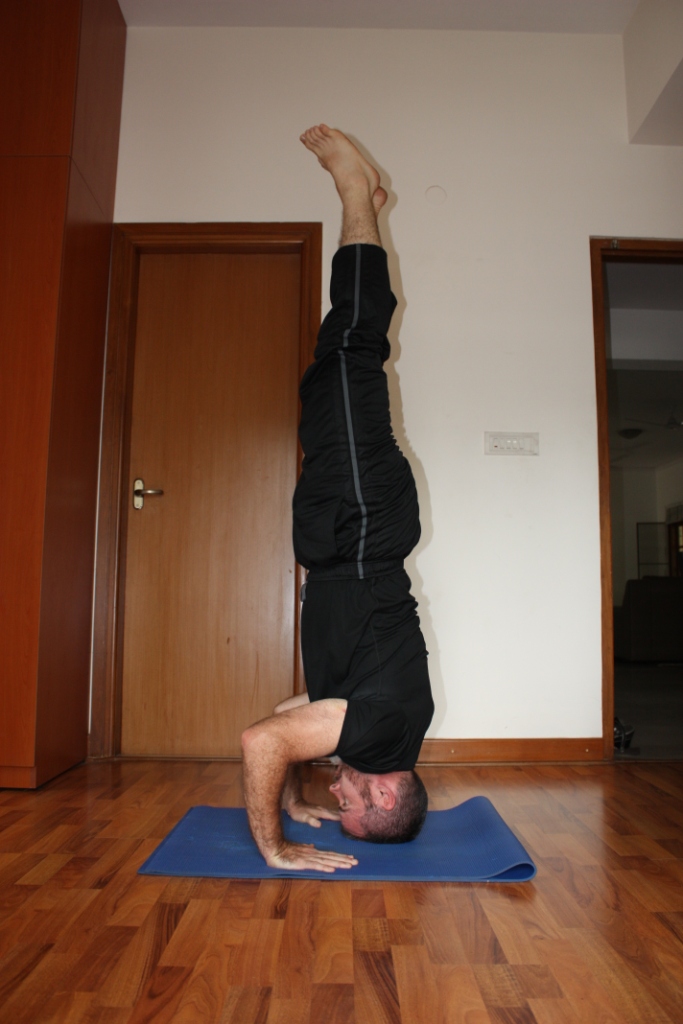
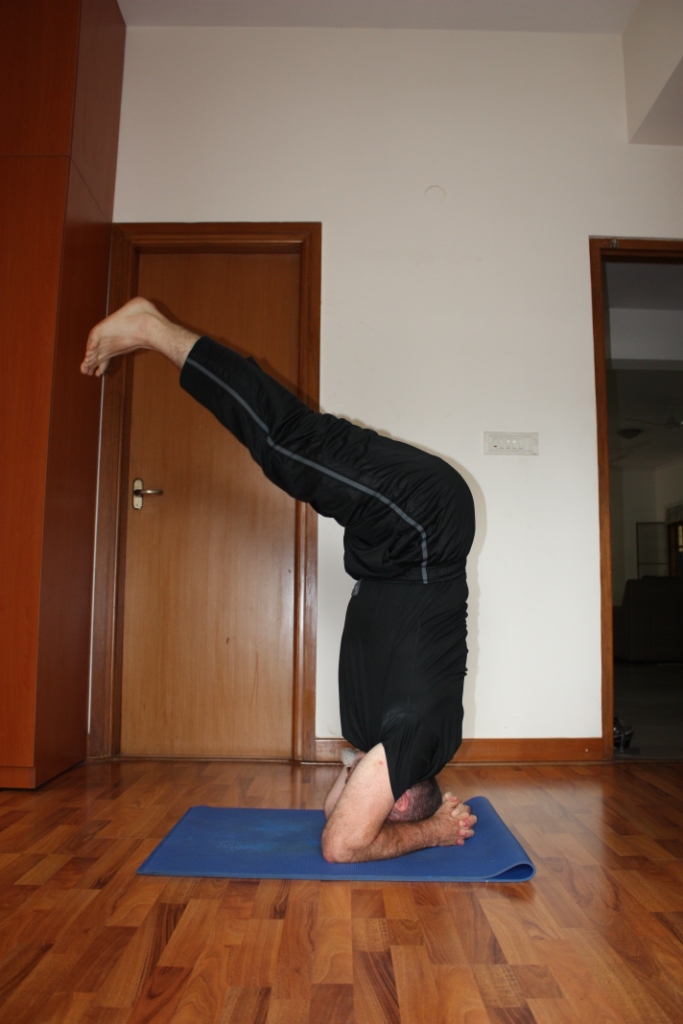
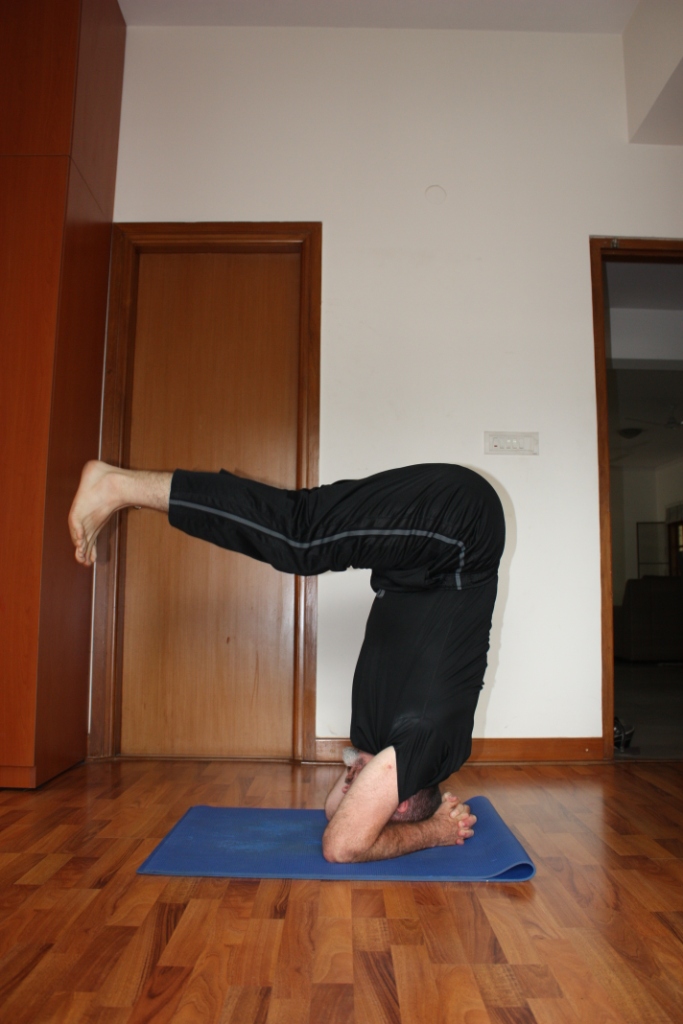
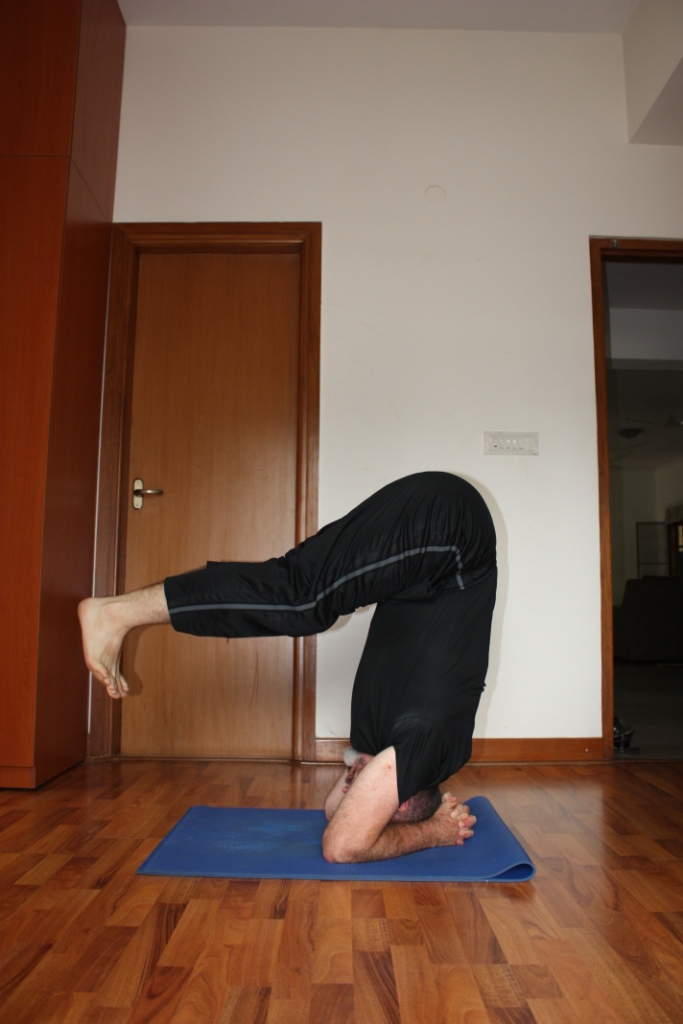
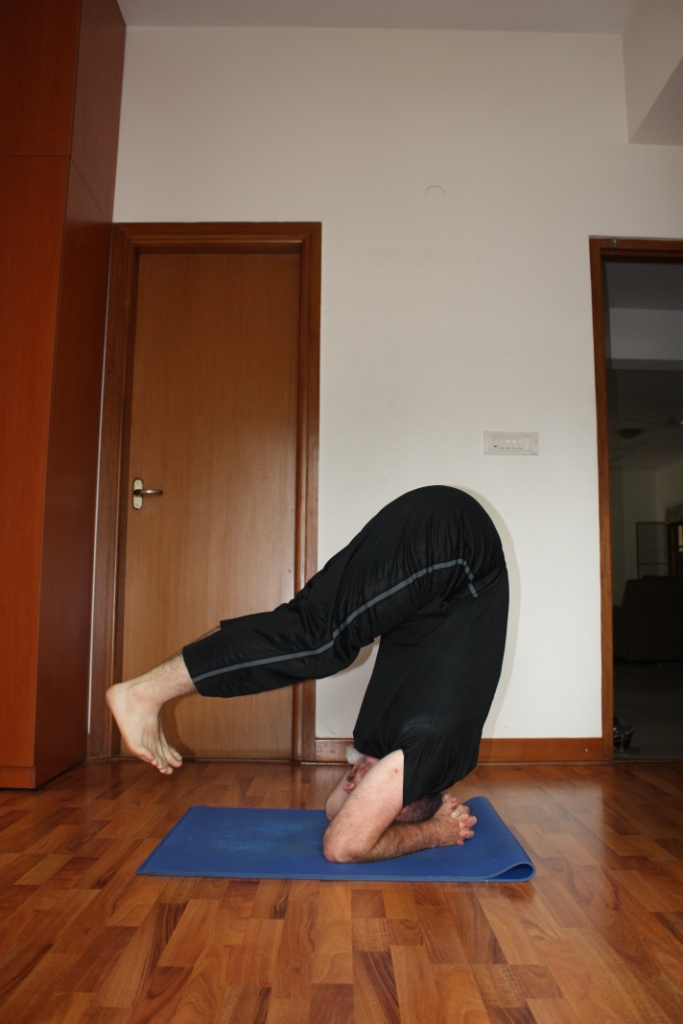
It’s hard to get get a good sequence of pics to show how to breakfall–given my limited photography skills, that is. But here’s my attempt.
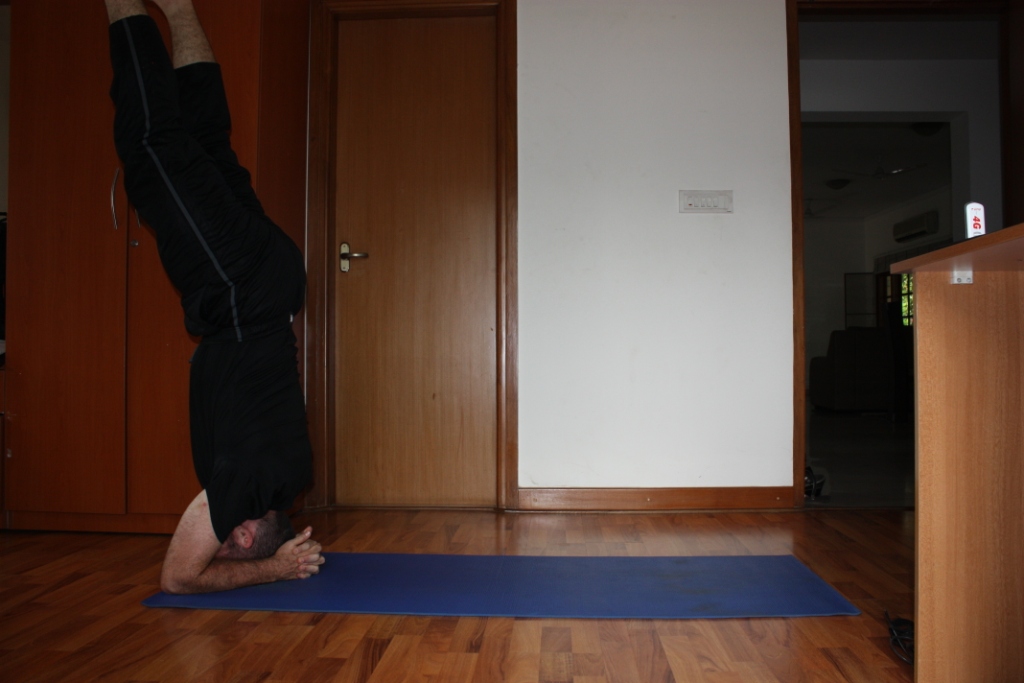
So it begins with crumpling balance
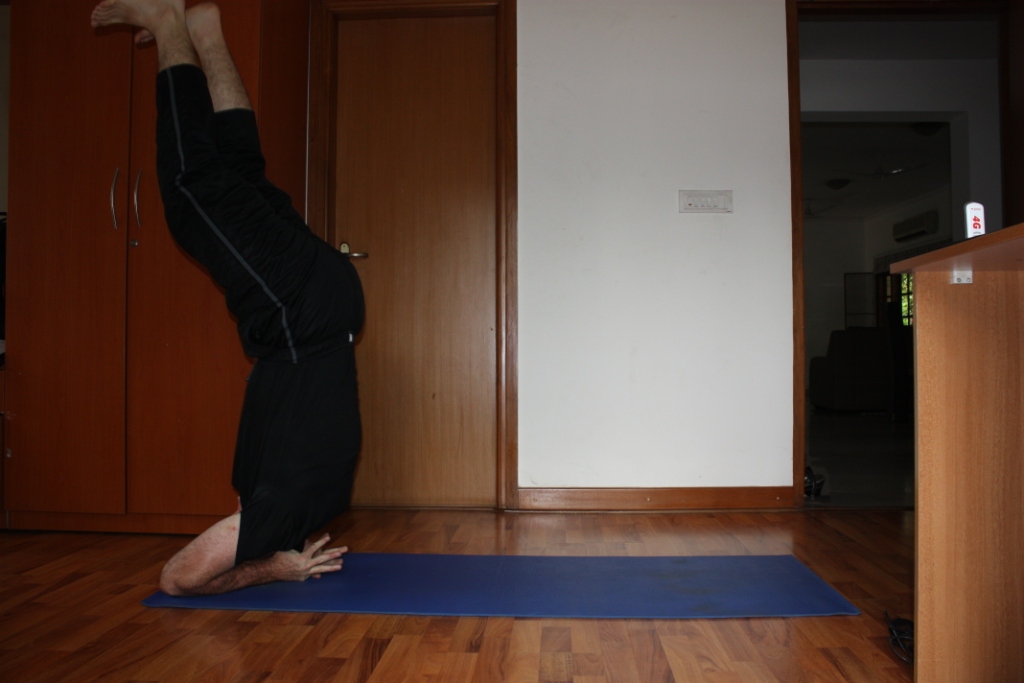
Get those fingers open so your neck doesn’t flow over an interlocked fist
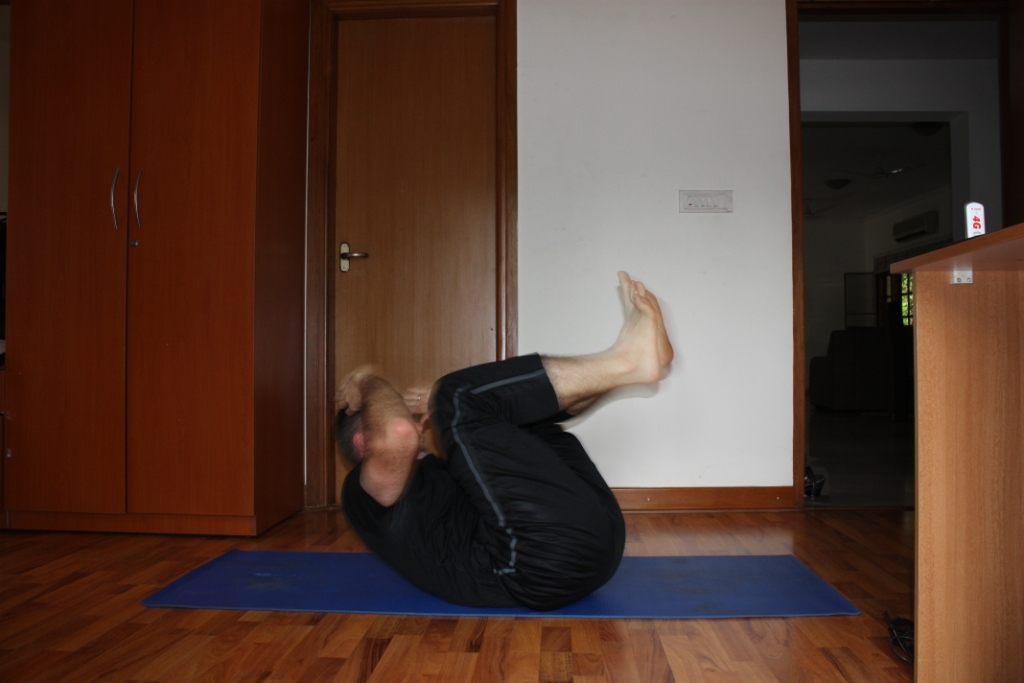
Tuck and roll
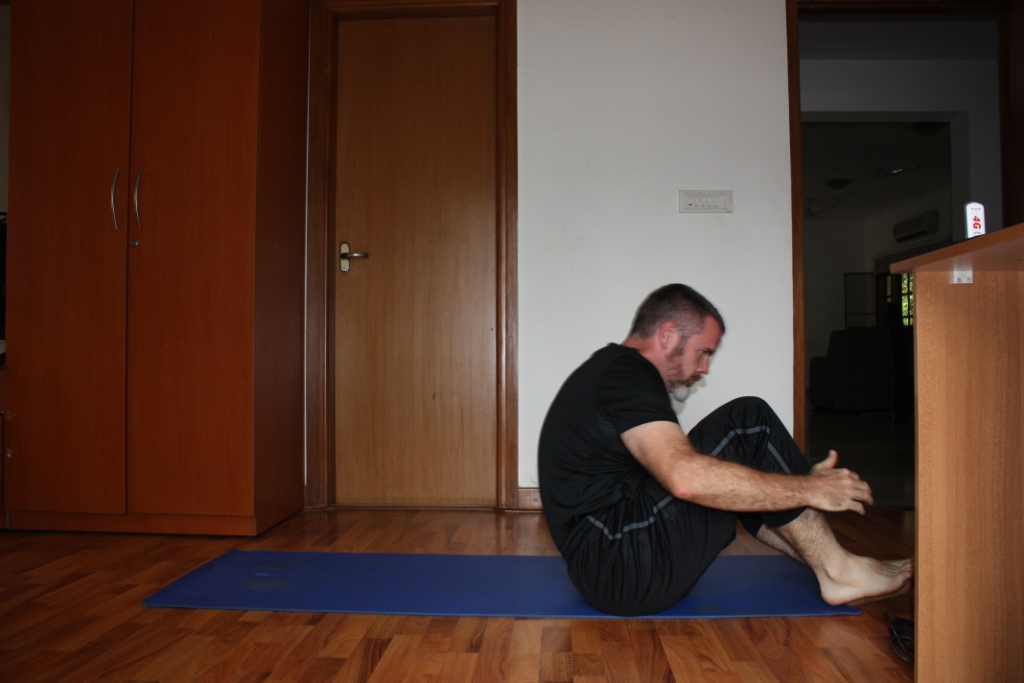
Don’t arrest your roll. Let momentum carry you forward. Gradually dissipate the energy.
Happy inverting.

Taken on May 24, 2015 in Royal Botanical Gardens in Peradeniya, Sri Lanka

Taken May 25, 2015 in Negombo, Sri Lanka

Taken on May 24, 2015 in Kandy, Sri Lanka
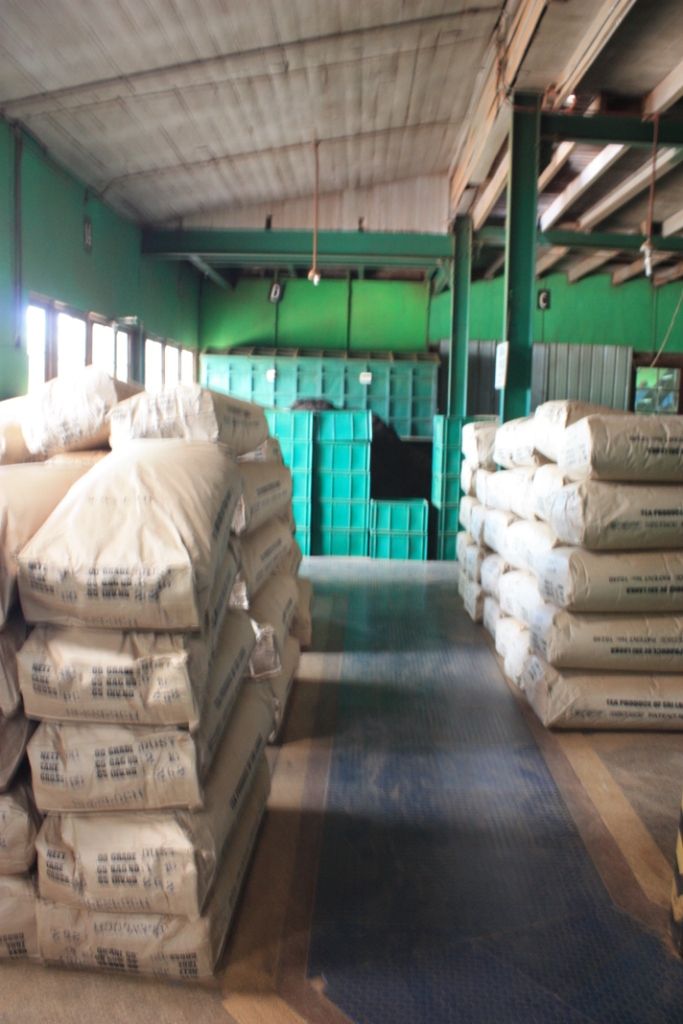
Taken on May 24, 2015 at the Glenloch tea factory in Katukithula, Sri Lanka
Sri Lanka is loaded with tea factories that can be visited for free [except what you may spend at the factory’s gift shop or restaurant.] If you’re interesting in how your food and beverages get to look like they do, these are nice places to see how this:

gets turned into this:
 Most of the tea that is produced on the Glenloch tea factory isn’t sold under the Glenloch brand. Instead, about 75% gets sent to Colombo, where it is auctioned off on a market to the highest bidder. That’s when it comes to be the tea you recognize from brands on your local shelf, e.g. Lipton. The bags above are the product that will be shipped to market.
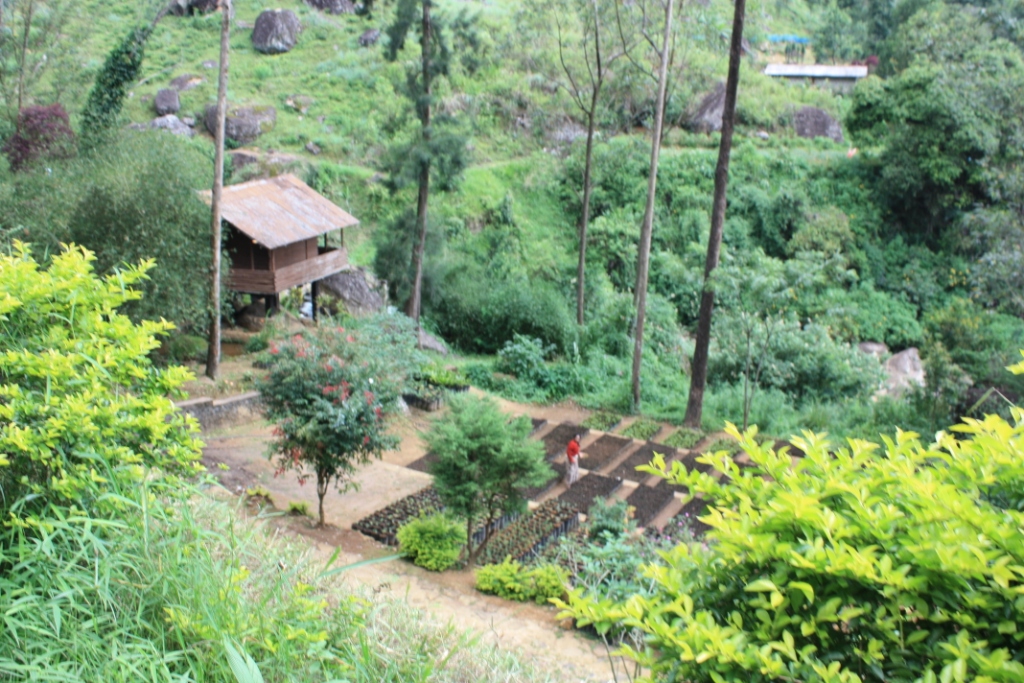
Taken on May 25, 2015 near Ramboda Falls, Sri Lanka
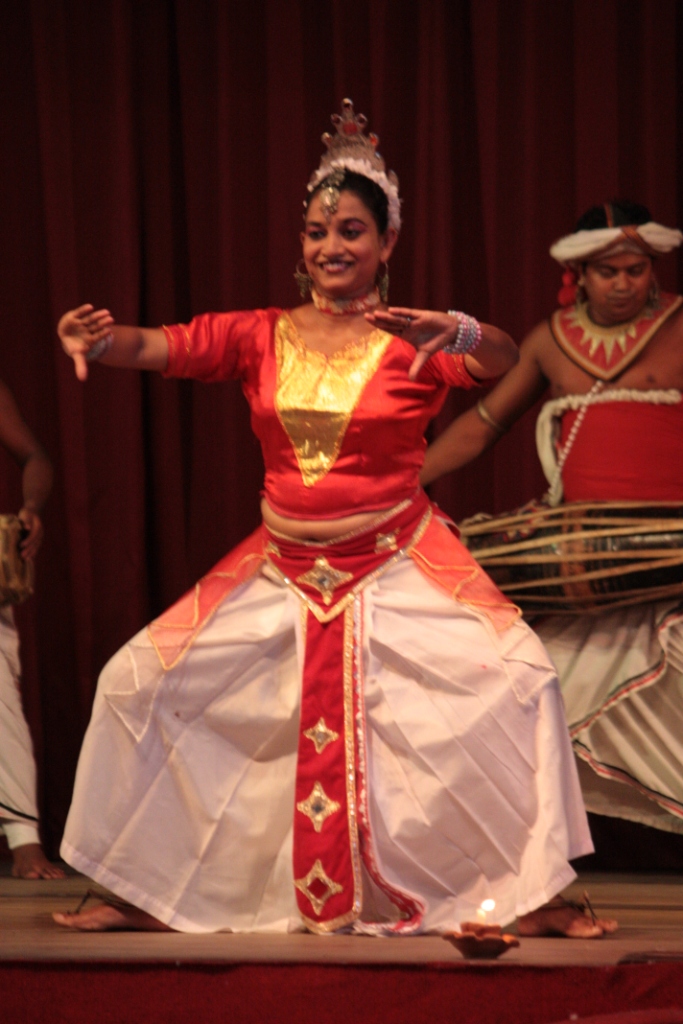
Taken on May 23, 2015 in Kandy, Sri Lanka
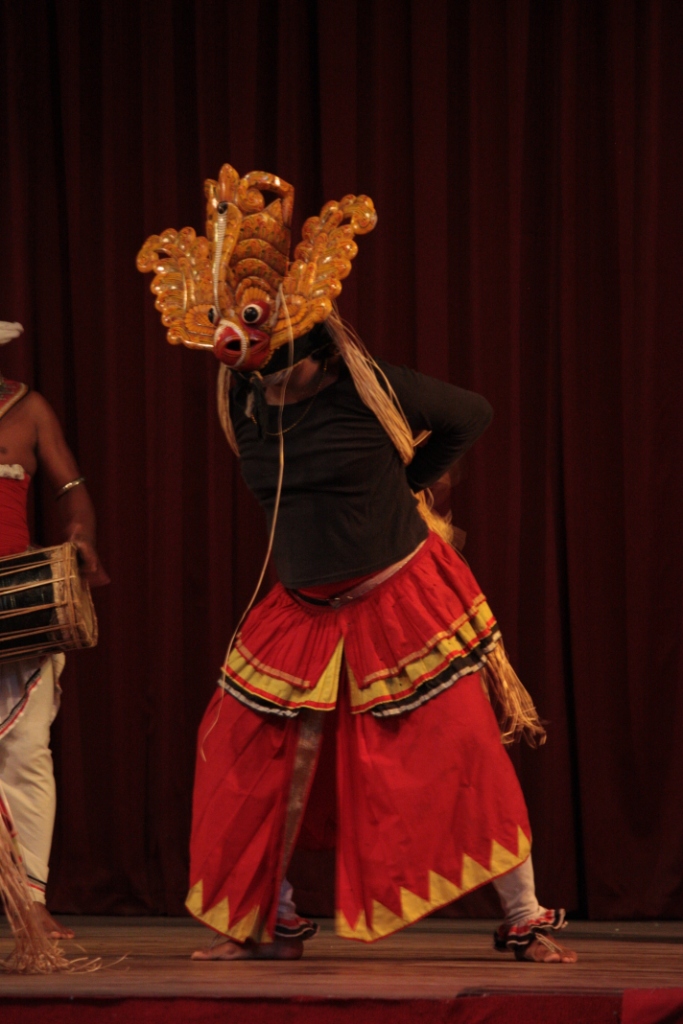
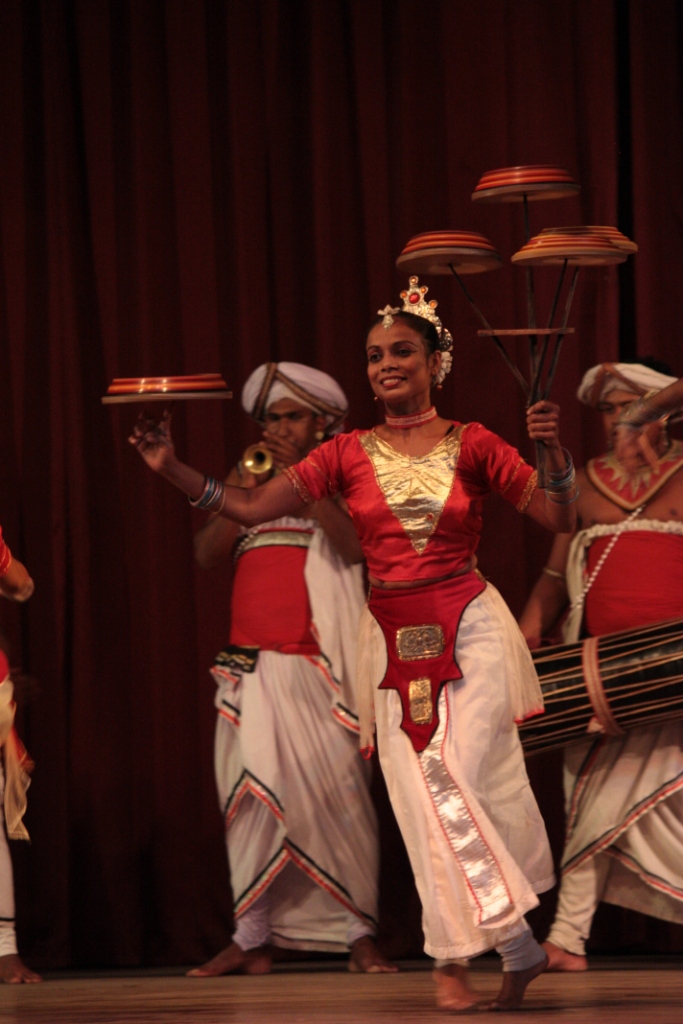
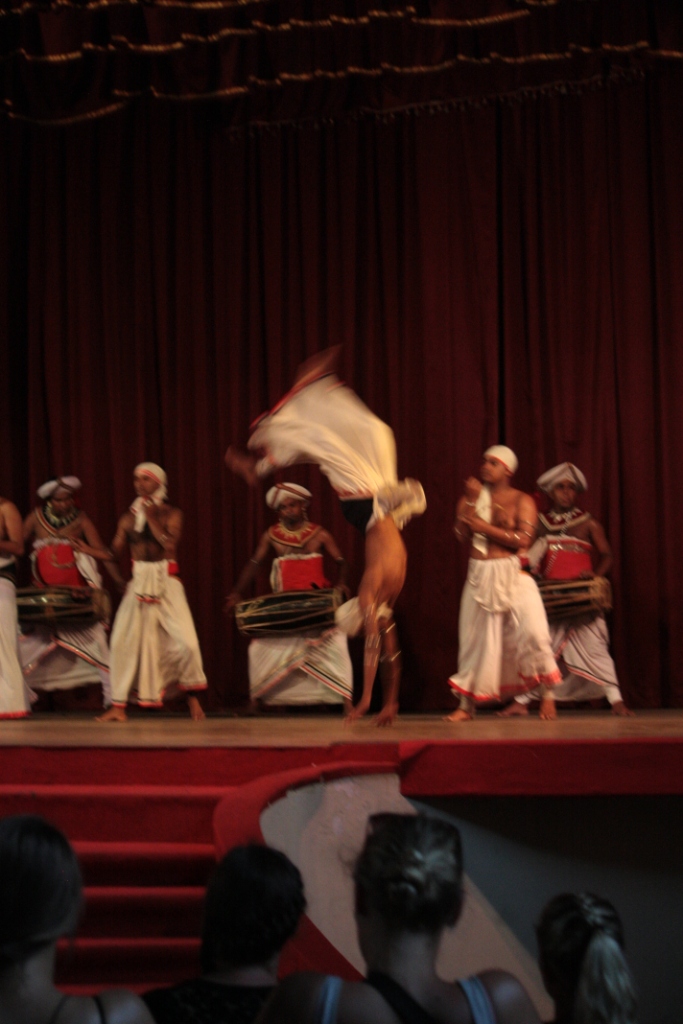
These are some shots that I took at the Kandy Cultural Centre. They do daily performances of indigenous dance and performance art.
 Crow With No Mouth : Ikkyu : Fifteenth Century Zen Master by Ikkyu
My rating: 5 of 5 stars
Ikkyū Sōjun was the Howard Stern of Zen masters. Born in 1394, he lived through most of the 15th century. Ikkyū served as a temple’s abbot for less than two weeks before he quit in disgust, vowing to move into a red-light district—apparently he wanted to live among people he found more honest and less hypocritical. The Zen master despised the corruption and snobbery of monastic politics.
Crow with no Mouth is a collection of Ikkyū’s verse, which is largely in the Zen tradition–featuring natural subjects and simple wisdom in a sparse style. Of course, as per my comments in the preceding paragraph, there are a few poems on topics such as cunnilingus and debauchery—so it’s not what one would call a child-friendly collection (unless one enjoys explaining the sexual exploits of a lecherous monk to one’s child.) The more explicit poems may seem like a diversion from the Zen path, but perhaps not. Maybe Ikkyū offered them as a way to train the mind, to observe one’s reaction to shocking commentary as a means of changing one’s way of thinking.
A few of my favorite lines of a more traditional nature include:
-“you can’t make cherry blossoms by tearing off petals to plant; only spring does that”
-“sometimes all I am is dark emptiness; I can’t hide in the sleeves of my own robes”
-“it’s logical: if you’re not going anywhere any road is the right one”
-“the edges of the sword are life and death; no one knows which is which”
-“even in its scabbard my sword sees you”
-“a flower held up twirled between human fingers; a smile barely visible”
-“in war there’s no time to teach or learn Zen; carry a strong stick; bash your attackers”
Here are a few of those jarring lines that I mentioned above:
-“that stone Buddha deserves all the bird shit it gets”
-“all koans just lead you on but not the delicious pussy of the young girls I go down on”
-“ten fussy days running this temple all red tape; look me up if you want o in the bar whorehouse fish market”
-“my dying teacher could not wipe himself; unlike you disciples who use bamboo; I cleaned his lovely ass with my bare hands”
-“don’t hesitate get laid that’s wisdom; sitting around chanting, what crap”
-“who teaches truth? good/bad the wrong way; Crazy Cloud knows the taste of his own shit” [Crazy Cloud was Ikkyū’s name for himself.]
When he left the monastery, Ikkyū shredded the certificate that served as his monastic credential. Some of his students found it, and pieced it back together. That led to the following verse:
-“one of you saved my satori paper I know it piece by piece; you pasted it back together; now watch me burn it once and for all”
Ikkyū’s verse asks us to reevaluate what it means to be sacred or profane. The orthodox view would be that Ikkyū fell from the sacred life of a monk. However, Ikkyū tells us that one can degrade what is important by raising the wrong things to sacred status. Conversely, some of what we believe to be profane is just rooted in habitual and ill-reasoned ways of thinking.
I’d recommend this work for those who love the spare form of Japanese poetry, and who don’t mind a hard jolt to their psyche occasionally.