


Taken on July 2, 2016 in Kolkata; Taken by Lilla Gourley

Taken on July 2, 2016 in Kolkata; Taken by Lilla Gourley

Taken in Kolkata on July 4, 2016
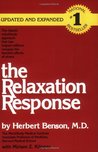 The Relaxation Response by Herbert Benson
My rating: 4 of 5 stars
I read the 25th anniversary edition of this seminal work on stress reduction, which was released in 2009. Obviously, that makes this an oldie, but it’s clearly a goodie as well. The new addition has a substantial introduction, providing updated information.
The body’s “fight or flight” response to stressful conditions has long been recognized and it’s virtually a household term. However, despite the equally alliterative name and the fact that Dr. Benson’s original book came out well over 30 years ago, the relaxation response remains a lesser known phenomena. Decades ago, Herbert Benson, a Harvard physician, recognized that patients’ coping ability influenced their health outcomes–specifically with respect to hypertension (a.k.a. high blood pressure.) This led him to investigate how a state of reduced stress could be achieved, and whether this could have a positive impact on health outcomes.
Benson and his co-investigators found that Transcendental Meditation (TM) could trigger the relaxation response, and from that they further uncovered specific aspects of TM that were generalizable in achieving this state (i.e. an object of concentration and a passive / non-judgmental attitude.) From this it followed that activities such as yoga, chi gong, walking, and some types of exercise could achieve the same physiological state as meditation. There was scholarly pressure to establish that the relaxation response was more than a placebo effect. In proving that the relaxation response didn’t hinge on a patient’s beliefs and that it had a predictable effect (and hence it was inconsistent with the placebo effect) Benson also realized that maybe doctors shouldn’t be so dismissive of the placebo effect—people were getting better, after all, and there was some mechanism by which that wellness was achieved that would be worth understanding.
In the first chapter, Benson describes an epidemic of hypertension, the fight or flight response, and its opposite number: the relaxation response. The next chapter delves into the specifics of hypertension and related topics like cholesterol consumption. Chapter 3 makes a connection between stress and the proclivity to develop hypertension. The following chapter lays out various approaches to achieving a more relaxed physiological state, including: biofeedback, yoga, zen, progressive relaxation, and hypnosis. Chapter 5 is about altered states of consciousness, and, specifically, the meditative state. Various age-old methods of achieving a meditative mind are examined. That’s followed by a chapter which lays out the results of relaxation response training in reducing hypertension and drug use. Chapter 7 is an explanation of how to achieve the desired state that generalizes beyond the specific approach of TM. The last chapter is a brief summary.
I found this book to be both interesting and informative. It’s useful both as a practical guide to practice and an explanation of related information.
I’d recommend “The Relaxation Response” for anyone who is interested in learned to de-stress. It’s a classic, and the new edition offers substantial updates.
 Discovering the Power of Self Hypnosis: The Simple, Natural Mind-Body Approach to Change and Healing by Stanley Fisher
My rating: 4 of 5 stars
For many, hypnosis is the domain of stage artists who make people cluck like chickens. As with the feats of stage magicians, few give much consideration to wherein the trick lies, but they assume there’s a trick. In scholarly circles, hypnotic practices have been on a roller-coaster ride. Hypnosis was once mainstream psychology but then fell into disrepute but now there’s a resurgence of interest as neuroscience answers questions about what is happening in the brain during a trance state. Doctor Fisher’s book is an attempt to demystify the subject, and to explain how a personal practice can be used to achieve a wide range of benefits.
Fisher’s book culminates in a description of how to build one’s own self-hypnosis exercise to work toward change in one’s own life. However, there’s a lot of track that needs to be laid in anticipation of that final chapter (Ch. 9.) The first chapter counters seven of the most common myths about hypnosis. Given the aforementioned misapprehensions about hypnosis, this seems like a wise place to start to get readers on board. Chapter 2 starts where Fisher’s personal involvement with self-hypnosis began, with the use of it to prepare patients for surgery and surgical recovery. Here we get our first look at the technique of self-hypnosis as well as a discussion of cases of self-hypnosis used for surgical patients. Cases are central to Fisher’s approach, and are used throughout the book to inform the reader about how self-hypnotic methods worked for particular individuals in the pursuit of various goals. Chapter 3 explains what the trance state is and how it’s achieved.
Chapter 4 explains the process by which we make choices with an eye toward helping to disrupt destructive impulse behavior. In the next chapter the reader learns about how the state of mind can contribute to physical illnesses, and how changing the state of mind can help improve one’s health. Chapter 6 is about reevaluating ingrained beliefs that don’t serve us well. This includes the notion that one can’t change one’s behavior because it’s just how one feels, as well as the belief that one can simply quash one’s emotions through force of will. Chapter 7 examines cases involving a number of common problems resulting from stress and the pressures of everyday life.
The penultimate chapter offers comparison and contrast with a range of alternative methods that are used to achieve the same goals—some more advisable than others. The alternatives include: therapy, meditation, biofeedback, exercise, somatic desensitization, and drug use.
As indicated, the final chapter offers an outline for building one’s personal self-hypnosis practice to achieve one’s own goal. There are three sections to this chapter. The first is a simplified set of exercises to evaluate one’s capacity to enter a trance—including both a survey and physical methods (e.g. degree of eye roll.) Susceptibility to hypnosis varies widely. The subjects one sees at a stage show tend to be those rare specimens who are highly suggestible. Often, part of the act is separating them from the crowd. There are also those who can’t be hypnotized under any circumstance. Most of us are in the meaty middle, having some, limited capacity to be hypnotized. The second section offers advice about how one might go about setting up the suggestive part of one’s exercise, i.e. the core of the exercise carried out once one has induced a trance. The final section lays out three different methods of inducing a trance. The first of these is the eye roll-based method one is introduced to in Chapter 2, and the others are variants that may work better for some.
I found this book to be informative and useful. It gives the reader both the necessary background to understand how one’s subconscious mind can influence one’s life and how positive ideas are introduced through it, as well as a practical guide to setting up one’s own personal practice.
I’d recommend this book for anyone who wants to learn about self-hypnosis.

Taken on July 2, 2016 in Kolkata

Interestingly, while this monument looks like the minaret of a mosque (and combines elements of Egyptian, Syrian, and Turkish architecture) it was originally a memorial to the commander of the British East India Company, Sir David Ochterlony. Ochterlony was instrumental in the defense of Delhi in 1804 against Marathas and a British victory in the Anglo-Nepalese war.
In 1969, it was re-purposed to serve as a monument for those who died in the Indian independence movement. The current name, Shahid Minar (or Shaheed Minar) means “martyrs’ monument.”
The Shahid Minar dates to 1828 and sits in the north of the Maidan, Kolkata’s central park.

Taken on July 3, 2016 in Kolkata

Above: Is This Racist?
Below: Orgasmic Dolphin
 Thing Explainer: Complicated Stuff in Simple Words by Randall Munroe
My rating: 3 of 5 stars
Allow me the awkward start of explaining two things before offering my lukewarm reception of “Thing Explainer.” First, I loved “What If?” (this author’s previous book.) I thought that book was brilliant, gave it my highest rating, and eagerly anticipated Munroe’s next book (this one.) Second, I didn’t deduct because this book is a pain to read on an e-reader (at least the basic model I have.) That’s on me. I should’ve known better, and accept full responsibility. All I will say on the matter is to recommend that–if you still do want to read this book—you get a hard copy. [If you have an awesome reader, your results may vary.] The hard copy is large-format, and that’s useful because the graphics are so crucial and the text can be hard to read (some of it is light text / dark background and some is dark text / light background.)
The author uses only the most common 1,000 words of the English language to explain the operations of many modern technologies (e.g. laptops and helicopters) and scientific ideas (e.g. the workings of a cell or the sun.) It’s an intriguing question, and I can see why Munroe was interested in it. Can one convey the inner workings of objects like nuclear power plants or a tree with a rudimentary vocabulary? You can. Munroe does. However, the next question is, “Should you?” I come down on the side of “no.”
One might say, “But this is a book for kids [or people with a child-like grasp of language], you aren’t the target demographic.” Perhaps, but the book doesn’t do children any favors because the brainpower needed to puzzle out what the author is trying to convey through imprecise language can be more than is necessary to expand one’s vocabulary. [e.g. What do “tall road” or “shape checker” mean to you? If you went straight to “a bridge” and “a lock,” you may be more in tune with Munroe’s thinking than I, and thus more likely to find this book appealing.] For adults, it’s like reading essays by an eighth-grader who’s in no danger of being picked for the honor roll. Without the combination of the book’s graphics and a general background in science and technology, I suspect the book would be a muddle. I’m not against explaining ideas in simple terms, but I felt the book takes it too far and it becomes a distraction.
On the positive side, the graphics are great—sometimes funny while providing enough detail to get the point across without bogging one down. Also, Munroe’s sense of humor comes through here and there throughout the book (though it’s hampered by the lack of vocabulary.)
The book includes the list of words used as an Appendix (though you obviously won’t find the word “Appendix.”)
If it sounds like something that would interest you, pick it up. It’s hard to say that I’d recommend it, generally speaking. It’s funny and educational, but it’s also distracting and tedious. I neither hated it, nor loved it. I give it the median score of “meh.”
 The Science of the Hitchhiker’s Guide to the Galaxy by Michael Hanlon
My rating: 4 of 5 stars
There are a lot of “The Science of…” books out there using science fiction as a means to explain science. It’s easy to see the appeal for both readers and writers. For one thing, it makes complex and technical subjects approachable and palatable. For another, it provides a series of examples with which most readers will already be familiar. Triggering memories of a beloved book can’t hurt sales.
This “Science of” book is a little different in that it uses a work of absurdist humor as its muse. [In the unlikely event that you’re unfamiliar with Douglas Adams’ “The Hitchhiker’s Guide” series, you can access a review here.]One may wonder whether the book delves into this absurdity by contemplating the efficiency of infinite improbability drives (faster than light engines that run on unlikelihood) or the value of melancholy robots. It does and it doesn’t. For the most part, it relates the wildest creations of Adam’s mind to the nearest core notion that has scientific merit. [Though it does have a chapter on babel fish (an ichthyologically-based universal translator), but that’s a technology that’s already in the works—just not in fish form, but rather a phone ap.]
For the most part, the book explores science and technologies that are popular themes in the pop science literature. These include: the existence of intelligent extraterrestrial life, artificial intelligence, the end of the world, the beginning of the world, time travel, teleportation, cows that don’t mind being eaten (presumed to take the form of lab-grown meat, and not talking cows who crave flame-broiling), the simulation hypothesis (as related to Adams’ Total Perspective Vortex), parallel worlds, improbability (only tangentially related to the infinite impossibility drive, i.e. focused on understanding extremely unlikely events), and the answer to the ultimate question. There is also a chapter that I would argue is more in the realm of philosophy (or theology, depending upon your stance) than science, and that’s the question of the existence of a god or gods. (This isn’t to say that the question of whether god is necessary to explain the existence of the universe and our existence in it isn’t a question for science. It is. But Hanlon mostly critiques the numerous arguments for why there must be a god, and it’s easy to see why because they provide a lot of quality comic fodder.)
The book contains no graphics, but they aren’t missed. It has a brief “further reading” section of other popular science books, but it isn’t annotated in the manner of a scholarly work. It is well-researched and highly readable, not only because it hitches its wagon to Adams’ work but also because it’s filled with interesting tidbits of information and its own humor. The book was published in 2005, and so it’s a little old, but most of the technologies it explores are so advanced that the book has aged well. (But if you want the latest on a particular aspect of science fiction-cum-science, you may want to look at a more recent book.)
I’d recommend this book for fans of “The Hitchhiker’s Guide to the Galaxy,” and those interested in popular science generally. (Having read the five books of Adams’ “Hitchhiker’s Guide” trilogy will make the book more entertaining—though it’s not essential to make sense of it.)

Taken on July 2, 2016 in Kolkata (in the Maidan–Kolkata’s [Calcutta’s] main park)


