5 Exercises to Wed Your Yoga and Calisthenic Practices

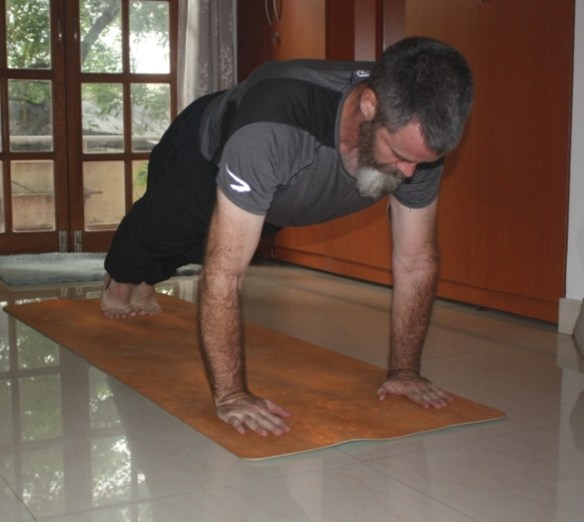
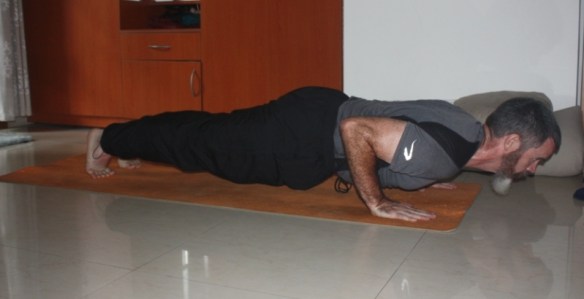
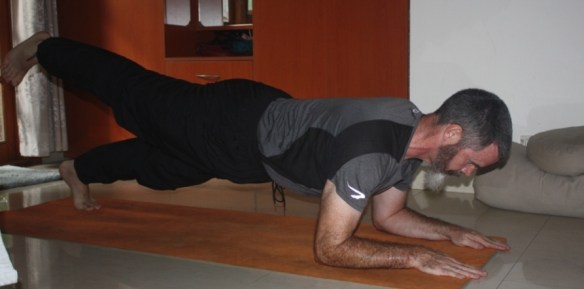
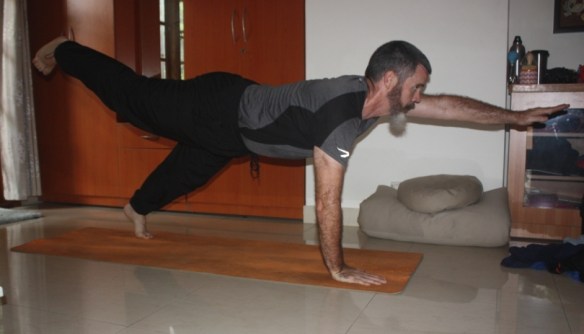
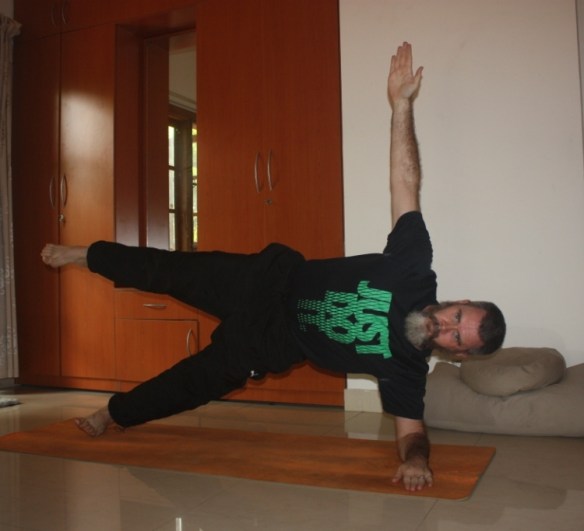
5.) Anything plank (a.k.a. adho mukha dandasana / santolanasana): Who knows how long planks have been a feature of yoga? Plank postures are a fixture in Hatha Yoga, playing a role in most versions of Surya Namaskara (sun salutations), and being used to both to build core strength and to prepare for arm balances.

Planks have also gained immense popularity with calisthenic practitioners. In my gym class days, sit-ups and crunches were the go to ab exercises. No more. Now many bodyweight fitness practitioners are ditching sit-ups and crunches altogether for a number of exercises deemed more effective–include many variations on the plank.

High plank (adho mukha dandasana)


Low plank (chaturanga dandasana)


Forearm plank variation with leg up


High plank variation with alternating limbs extended


Side plank (vasisthasana)


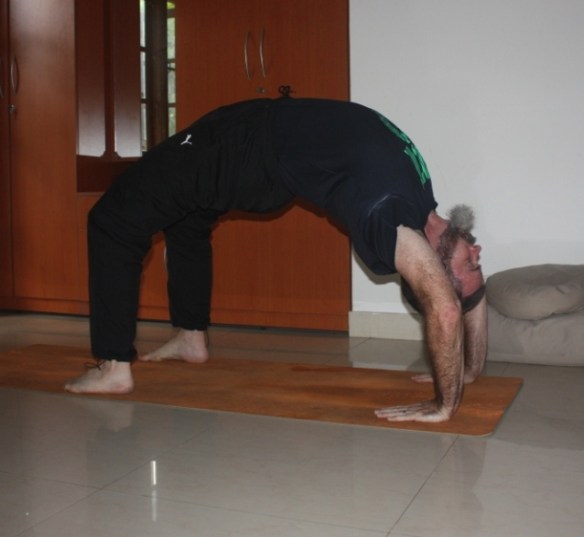
4.) Back bridge (a.k.a. Chakrasana): This is another yoga classic that’s being brought into calisthenics training in a big way. You may note a recurring theme in my selections for this post, exercises and postures (asana) that help to build shoulder joints that are strong, stable, and yet sufficiently flexible. This is a big challenge for bodyweight workout practitioners. One can get stability by bulking the muscles up, but if you don’t have the range of motion to achieve proper alignment, it’s not going to do one a lot of good.

The back bridge (chakrasana, or “wheel pose”)


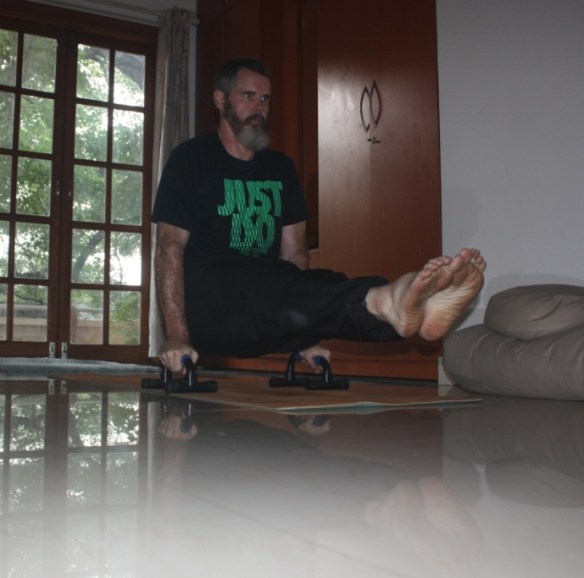
3.) L-sit (a.k.a. Bramcharyasana): Of course, the other recurring theme (besides building shoulder stability) is core strength. This exercise is both a yoga classic and is probably as old as gymnastics itself. Its Sanskrit name, Brahcharyasana, means celibate’s pose–but as far as I’m concerned that’s purely optional.

L-sit (Bramcharyasana)


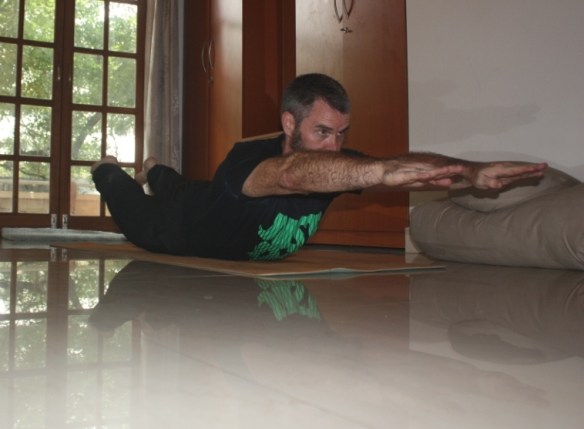
2.) “Supermans” (a.k.a. shalabasana [locust pose]): Another core exercise, but one that strengthens the back muscles.

“Supermans” (shalabasana)


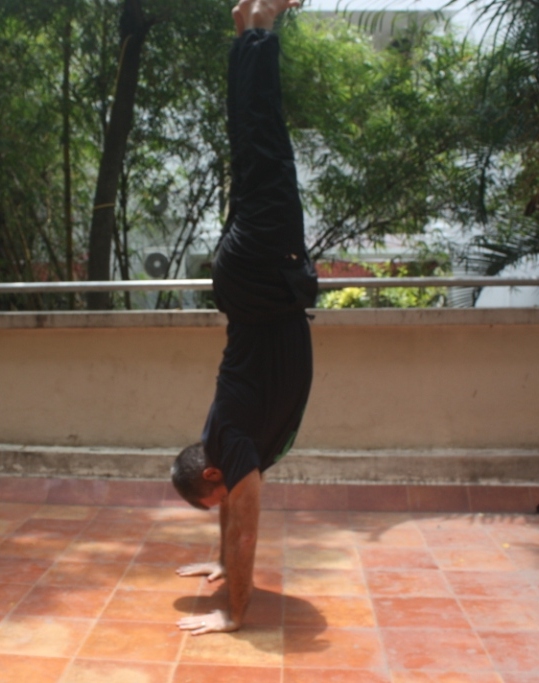
1.) Handstands and Handstand Preppers (a.k.a. adho mukha vrksasana): This practice isn’t just about looking impressive. As mentioned above, it’s hard to build shoulder joints that allow enough stability and range of motion to have the command of one’s body that one would like. Our shoulders are optimized to maximum mobility. That helped our ancestors to be awesome throwers of spears and rocks, but it makes it tough to support our weight in an inverted position. The handstand is a good way to build stability in the shoulders.

Handstand (adho mukha vrksasana)


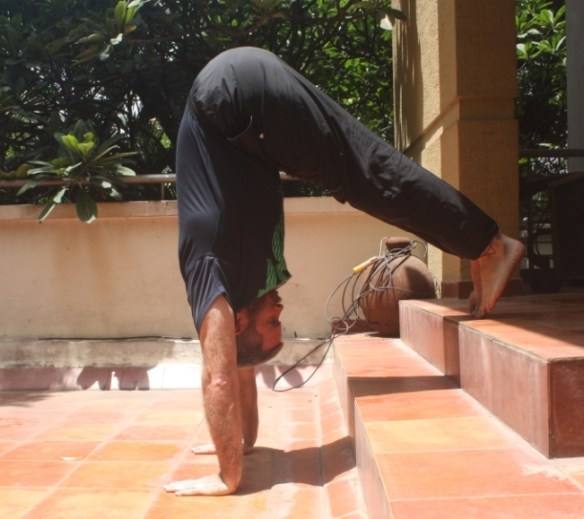
If it’s too hard, use your legs to stabilize you (but still try to get that straight up-and-down arm position)


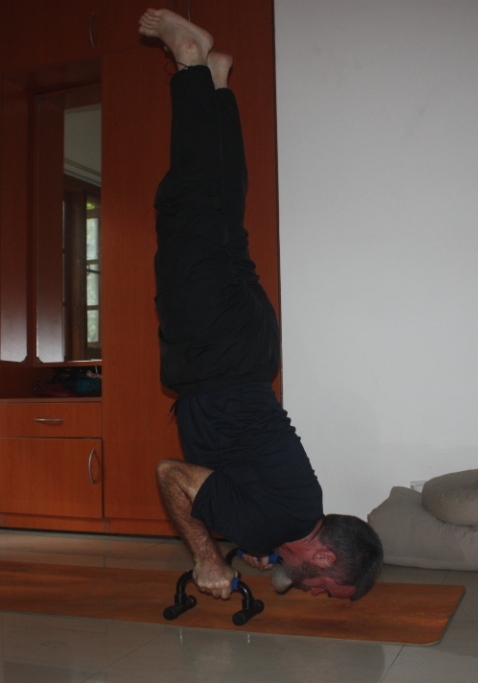
If it’s too easy, start doing push-ups

5 Tools to Hulk Your Way Out of Your Comfort Zone


5.) Take a class / Join a group: While I’m partial to yoga and the martial arts, the class could be in any area that presents a challenge.  However, there are a couple of advantages to the aforementioned two (to which I would add dance.)


First, these disciplines train one to be expressive with one’s body and to move more freely. This can do wonders for confidence. People store tension in their bodies without even realizing it. Many have postural problems that effect confidence and self-perception.  A 2014 New Zealand study found that posture can have a strong effect on emotional state.


Second, no matter who one is, one will be challenged by new approaches to movement.  The average person has great difficulty learning to use their body in new ways. One needs to drill in movements conscientiously to achieve competency. Our conscious mind, frequently gets in the way. Even the most athletic and coordinated people will need to work it, failing repeatedly until they succeed.


Why is the challenge so important? Many people go through life afraid to fail, but far too few fear never failing. Sounds idiotic. Nobody wants to fail. I have some hard news. If you’ve never failed, it’s not because you are unmitigatedly awesome in all things. It’s because you’re living in a box and cherry-picking life experiences that feel unthreatening.


If, like me, you’re an introvert, this approach offers the additional benefit of social interaction that is of a predictable / schedulable nature. One needs the interaction, but the problem comes when one has social interactions and / or sensory stimulation that go on too long and in an unpredictable fashion. Therefore, being able to schedule such time is a good way to go about being a more productive introvert.


4.) Writing  / Visualization:  These two approaches to mentally rehearsing allow one to keep one’s inner critic in check. The problem with simply day-dreaming it is that critic can chirp in without being that cognizant of it.

In visualization, one quiets the mind and can then non-judgmentally acknowledge and dismiss the negative thoughts. In writing–be it as a journal entry, poem, or a story–we may not notice the nagging voice of the inner critic on the first draft, but you can take note of it and undo it in rewrites.


3.) Travel / Living abroad: I should point out that not just any old travel will have the desired effect. Many people plan their travel with the objective of being comfortable at the fore.  They eat at places that serve the same kind of food as at home. They stay in hotels with virtually all of the comforts of home, and sometimes many more. This is understandable because the traveler might just be seeking rest.  However, if one is seeking the epiphany or enlightenment experiences talked of by backpackers and ashram-dwellers, that’s not something that comes from staying in resorts or eating at American fast food joint. Those kinds of brain changing experiences come when one is stripped from the familiar and has to surrender one’s attachments to the way one thinks the world should be. One’s perception of culture and worldview changes radically when immersed in a foreign environment.


2.) Game it / Roleplay: There’s a big movement to gamify all manner of everyday activities.  In her book, “Reality is Broken,” scholar of game design Jane McGonigal describes a game called “Chore Wars” that incentivizes the doing of mundane household chores.


What is it about games that help one move beyond one’s limits? First of all, it incentivizes actions. And if you’ve ever noticed people playing games on their phone or FB for hours on end, you’ll note that it doesn’t take much reward to keep people plugging away—as long as the game is structured well.


Second, good games provide a built-in process of “leveling up.” This means that the challenge keeps being intensified as our skill level advances. Those familiar with Csikszentmihalyi’s conception of “Flow” will recognize that matching skill level to challenge level is one of the most crucial elements in facilitating flow-state.


Roleplaying is a bit like the previously mentioned tools of visualization and gaming in that it’s a way to have a low-cost rehearsal. If one has someone with whom one can engage in such a roleplay, than one also has someone to help make you aware of your inner critic and its deleterious effects. And that brings us to the final tool:


1.) Have a spouse, partner, and or confidant: In “Why Zebras Don’t Get Ulcers” Robert Sapolsky tells a story of being interviewed by a magazine. He was asked what the number one thing that they could tell their readers about reducing stress.  To which he replied that the most well-established factor in stress reduction is to have a spouse / life partner with whom to share one’s challenges.  Unfortunately, this was a magazine for women business leaders, a significant portion of whom had given up on permanent relationships and families. They, therefore, asked him what else he had.  Still it’s hard to overlook the anxiety-fighting effects of having someone around with whom to share one’s dread.

5 Interesting Respiratory Facts for Yoga Teachers


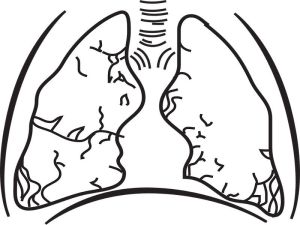
Pranayama (breath exercise) is a crucial part of yogic practice. While I may spend less time on the pranayama portion of my practice than the asana (postural) part on most days, I’ve come to view pranayama as at least as important. (i.e. It packs a lot of punch.) With that in mind, here are a few fun facts about respiration for you your consideration:


5.) Asthma Fact: People in richer countries are more likely to have asthma, but–within more wealthy countries–poor people are disproportionately effected. (Asthma is a condition in which lung tissue becomes inflamed, and thus it’s hard to breath.)

Source: Krucoff & Krucoff. 2000. Healing Moves. New York: Three Rivers Press. p. 288

Yogic Relevance: There’s at least some preliminary evidence that yoga practice can benefit asthma patients. Mekonnen, D. & Mossie. A. 2010. “Clinical Effects of Yoga on Asthmatic Patients: A Preliminary Clinical Trial.” Ethiopian Journal of Health Science. Vol. 20(2). pp. 107-112.


4.) Altitude Fact: At the summit of Everest, atmospheric pressure is about 30% of what it is at sea level.

Source: Coulter, H.D. 2001. Anatomy of Hatha Yoga. Allahabad: Himalayan Institute India. p. 96.

Yogic Relevance: The slow deep breathing you sometimes teach in pranayama courses could be a life-saver. Bilo G. et. al.  2012. “Effects of Slow Deep Breathing at High Altitude on Oxygen Saturation,” Pulmonary and Systemic Hemodynamics. PLoS ONE. Vol. 7(11): e49074. https://doi.org/10.1371/journal.pone.0049074.


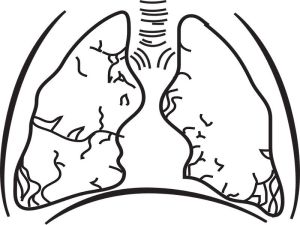
3.) Lung Fact: If one extracted, flattened, and laid side-by-side the 300 million alveoli of the average person’s lungs, they would cover an area greater than the average one bedroom apartment. (Alveoli are the little sacks at the end of the bronchioles where oxygen and carbon dioxide are exchanged.)

Source: Hymes. A. 2009. “Respiration and the Chest: The Mechanics of Breathing.” in Science of Breath: A Practical Guide by Swami Rama. Honesdale, PA: The Himalayan Institute Press.

Yogic Relevance: Vital capacity (total amount of air one can breath in and out of those little sacks) is increased through yogic practice. Karthik, P.S. et. al. 2014. “Effect of Pranayama and Suryanamaskar on Pulmonary Functions in Medical Students.” Journal of Clinical and Diagnostic Research. Vol. 8(2). pp. BC04 -BC06.

Note: there has been confusion about the degree to which yoga helps VO2 max (maximum oxygen utilization), at least in comparison to other forms of exercise, because there has been mixed results in the literature. The consensus seems to be the effect–if any–isn’t large compared to cardiovascular exercises. The strength of the pump (i.e. the heart) seems to have more to do with this particular measure than the lung’s holding capacity. While VO2 max is an important measure for athletes, the fact that it may not be improved by yoga doesn’t mean yoga doesn’t offer many fine benefits for athletes. As I recall, this is dealt with at length in Broad’s book (i.e.  Broad, W.J. 2012. The Science of Yoga: The Risks and Rewards. New York: Simon & Schuster.)


2.) Nose Fact: Rhinologists (doctors specializing in noses) figure that the nose has around 30 functions in the breathing process (e.g. moisturizing and warming air, catching foreign matter, directing airflow, and much more.)

Source: In the aforementioned Swami Rama book Science of Breath in a chapter entitled, “Following Your Nose: Nasal Function and Energy” by Rudolph Ballentine, MD.

Yogic Relevance: Alternate Nostril Breathing (Nadi Shodhana) is shown to tone the parasympathetic nervous system (PNS, i.e. the part of the autonomic nervous system involved in rest & digest functions.)  Sinha, A.N., et. al. 2013. “Assessment of the Effects of Pranayama / Alternate Nostril Breathing on the Parasympathetic Nervous System.” Journal of Clinical and Diagnostic Research. Vol. 7(5). pp. 821-823.


1.) Pace Fact: At about 5 breaths per minute, most people’s thinking is clearer than usual.

Source: Brown, R. & Gerbarg, P.2012. The Healing Power of Breath. Boston: Shambhala Publications.

Yogic Relevance: The breath is our most powerful tool for controlling the mind. Vindicated!

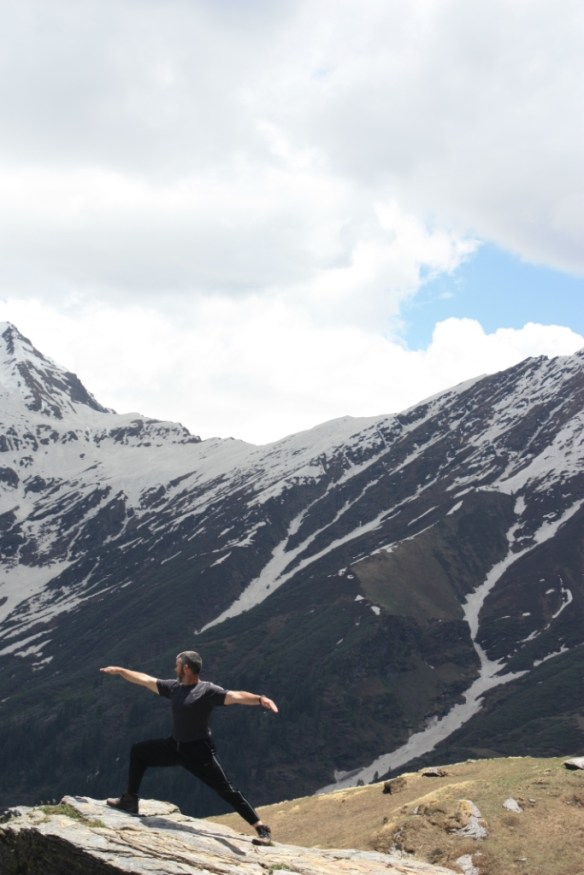
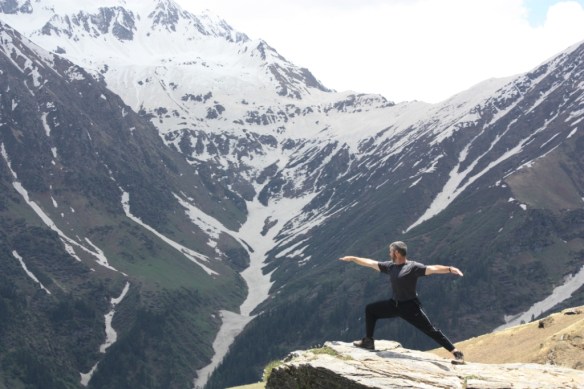
DAILY PHOTO: Virabhadrasana II [Warrior II] with Mountains

Taken in June of 2015 in Kullu District of Himachal Pradesh


5 Ways to Fake It til You Make It

5.) Adopt a power posture: There’s been a lot of research in recent years suggesting that posture isn’t a one-way street–i.e. body doesn’t necessarily have to follow our mental state. One can reverse the flow, improving one’s mental state by adopting a strong  and confident posture.

One of the most thorough discussions of this phenomena is in Amy Cuddy’s book Presencewhich famously mentions the “Wonder Woman” pose. However, another widespread example is using the up-and-outward fist pumping posture that is widely seen among humans and even other primates (i.e. with arms outstretched as Usain Bolt is seen above.)


I got my eye on you

4.) Master eye contact: This is dreadfully difficult for an introverts such as myself. We tend to look anywhere but the eyes.

If one is traveling in risky places, it’s important to have a grasp of the fine art of eye contact. If one doesn’t make any eye contact, then one risks looking zoned out–potentially inviting aggression. If one rapidly  looks away, offering too short an eye contact period, one appears intimidated–potentially inviting aggression. However, if one’s eye contact is too long, it may trigger some primal fight impulse, or–at a minimum–suggest you have taken more interest in the individual–which may invite aggression. This means one has to balance a fine line that says, “I see you, you know I saw you. Now I’m going to do me and let you do you.”


3.) Adopt the opposing viewpoint:  Say you find yourself obsessing about some perceived slight or wrong.  While you want to address this issue, you want to be calm enough to avoid saying or doing something you’ll regret. You want to be seen as a sensible individual while being persuasive. The key is seeing both sides, and taking a moment to realize that your opposition is probably not the black-hearted villain of his own story. He likely has some reason for his behavior. Maybe it’s even a reason you can empathize with, given your own experience–i.e. being overworked and distracted, facing a decision that only allows for a best worst option, etc.


2.) Visualize it: It may seem as though anything that occurs solely in the mind can’t have that much force, but–in fact–it can. Visualizing can help one get over one’s anxieties. By systematically considering how events will unfold, one can break the cycle of worst-case scenario creation that the brain readily falls into. This will make an activity seem less intimidating and more manageable.


1.) Start small: Often when a person would like to be more kind or compassionate, she’s flummoxed or overwhelmed by the scale of the problem. She sees problems that she can’t make a dent in. So schedule one small act of kindness in a week or maybe a bigger one monthly, or as is possible. Do it, see its value, and be content.

One also sees a need for starting small with advanced physical practices. If you can’t do a yogasana or martial arts move, figure out what capacity building or modifications one needs to get to the end goal. Then take it on bit-by-bit. There are many videos on how to systematically build up to challenging maneuvers like the press handstand or planche, moves that almost no one can do with out a great deal of prep work.

5 Neuroscience Fun Facts for Yogis & Yoginis

5.) IDEA: While our conscious mind feels like the sum of our mental world, in fact, it’s the tip of the iceberg of mental processes. Our decisions and actions are guided to a large degree by happenings below the waterline.

INTRIGUING EXAMPLE: In one study, interview subjects were randomly assigned to hold either iced or hot coffee. No attention was drawn to the coffee and it was set up as a mere accident of happenstance (the HR person directing the interviewees had her hands full.) The coffee was retrieved before the subjects made handshakes with interviewers. Unrelated to their verbal responses, those who had held the iced coffee were disproportionately described more in terms suggesting a cold personality (e.g. calculating, devious, etc.) and those who had held hot coffee were credited with a warmer personality.

RELEVANCE: Get your hands warm before you start making corrections.

REFERENCE: The coffee study is discussed by David J. Linden in his book Touch. However, there are many books on this topic, several that I’ve reviewed. In particular, I can recommend Eagleman’s Incognito and Mlodinow’s Subliminal.


4.) IDEA: Emotions play a crucial role in decision-making. We aren’t nearly so rationale and calculating as we think ourselves to be–particularly when there is uncertainty in the mix.

INTRIGUING EXAMPLE: Giovannni Frazzetto’s book describes cases of patients with lesions in their medial prefrontal cortexes who would deliberate ad nauseam and still couldn’t reach a decision.

RELEVANCE: This is why we don’t silence or stamp out emotions, but rather watch them dispassionately while avoiding a mental drift into a frenzy of illusion building.

REFERENCE: The Frazzetto book I referenced is: How We Feel, and it deals with anger, guilt, anxiety / fear, grief, empathy, joy, and love.  However, the patients described in his book were those of Antonio Damasio, and so you may want to check out Descartes’ Errorwhich I’ve heard good things about, but haven’t yet read.


3 .) IDEA: Experiences once thought to be supernatural, mystical, or fraudulent are increasingly being understood in scientific terms.

INTRIGUING EXAMPLE: For some, an Out-of-Body-Experience (OBE) is an impossible flight of fancy, while for others it’s a mystical / transcendent state beyond the physical realm. However, in recent years scientists have not only confirmed that people have these experiences, they’ve come a long way toward understanding such occurrences by actually inducing them via electrodes applied to the right angular gyrus. It seems that area of the brain is responsible for integrating sensory information from various senses, and its disruption creates an illusion of one’s consciousness floating outside the body.

RELEVANCE: As many have wisely advised, don’t spend a lot of time chasing siddhis–not only might it stunt your growth toward the ultimate goal, it might just be running after tricks of the mind.

REFERENCE: I highly recommend Anil Ananthaswamy’s The Man Who Wasn’t There. The book looks at the various ways in which “self” has been defined (one’s memories, one’s body, etc.) and it shows how neuroscience has learned a thing or two about the various dimensions of self, and how none of them fully defines an “I.” (i.e. The Buddhist conception of the self as illusion might turn out to be not far off the mark.)


2.) IDEA: Our brains can be rewired through practice and training. The property is called neuroplasticity, and it’s often described by the verse: “neurons that fire together, wire together.”

INTRIGUING EXAMPLE: You may have heard about  how London taxi cab drivers develop an enlarged hippocampus, which helps them meet the vast spatial memory needs required of the job. However, an even more fascinating example may be how some blind people have developed a capacity for echolocation–i.e. their mind registers changes as sound bounces off walls, curbs, and other obstacles.

RELEVANCE: One takes advantage of neuroplasticity when one works to be more kind and compassionate by recognizing and changing one’s behavior patterns.

REFERENCE: Fascinating reading on the topic can be gleaned from Kathleen Taylor’s book Brainwashing, but the most widely-cited book on the topic may be Norman Doidge’s The Brain That Changes Itself.


1.) IDEA: We have neural circuitry that predisposes us to spiritual belief and inclinations toward the sacred.

INTRIGUING EXAMPLE: The evidence suggests that it’s not so important who or what you believe in, but the more positive the message the better. People of religion have demonstrated both better and worse health outcomes–all else equal–and it seems linked to whether you have one of those smiting gods or a more compassionate one.

RELEVANCE: Belief and surrender–religious or secular–can play an important role in one’s personal development.

REFERENCE: Newberg and Waldman’s How Enlightenment Changes Your Brain deals with these issues in detail.

5 Physiological Fun Facts for Yoga Teachers and Practitioners


5.) FACT: People who lose weight often still feel heavy and commonly maintain the body language and movement characteristic of an overweight person.

REASON: A conflict exists between the body schema (which is largely up-to-date on the current state of the body, but is largely unconscious) and body image (which relates to how we feel about our bodies, can lag behind the state of the body, and of which we are conscious.)

RELEVANCE: It may take unconventional activities to help a student realign his or her body schema and body image. e.g. Wobble boards have been shown to be effective.

REFERENCE: “The Body Has a Mind of Its Own” by Blakeslee and Blakeslee


4.) FACT: The busiest skeletal muscles in the body are the extraocular muscles (i.e. more than 100,000 moves per day.)

REASON: We don’t see over a broad area as clearly as we think we do. The illusion that we can is created by rapid saccades by which the eye is constantly moving to take in sights from the point at which our sight is best. You can prove this to yourself by fixing your gaze forward, and then–from the side–draw a playing card at random so the face is towards your cheek while holding the card out to one’s side at shoulder height, and then–eyes still fixed forward–gradually move it in an arc at arm’s length towards one’s center-line until you can make out which card it is. You might think you’d be able to make it out at say a 30-degree angle from center-line, but you’ll find it’s almost directly in front of your eye when you can make it out. If if isn’t: a.) your eyes made a cheating saccade so quickly you didn’t notice it or, b.) you are an android and have eyes (and nervous system interface) that aren’t constructed on the same principles as the human system of vision.

RELEVANCE: One may want to brush up on eye yoga. Yes, there is such a thing.

REFERENCE: There’s a section on exercises for the eyes in Swami Saraswati’s “Asana Pranayama Mudra Bandha” (commonly called APMB.)


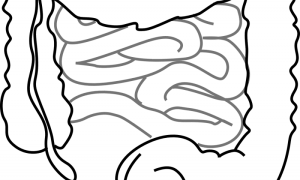
3.) FACT: The gut has its own nervous system (i.e. the enteric nervous system) that can interact with our body’s nervous system, and increasing evidence suggests that it’s not always mental stress that causes stomach aches, but sometimes problems in the gut result in mental / emotional turmoil.

REASON: There’s a lot that remains unknown at the moment, but a lot of research is going on in this area. It seems reasonable to guess that there’s probably an evolutionary advantage for the digestive tract to be able to express its dissatisfaction in a way that changes behavior (and emotions are all about behavior change.)

RELEVANCE: Unexplained depression or emotional outbursts may have unexpected origins.

REFERENCE: I can highly recommend “Gut” by Giulia Enders, but I’ve also heard great things about the more recent “I Contain Multitudes” by Ed Young, though I haven’t gotten around to reading it yet myself.


2.) FACT: The problems that can arise due to hyperventilation aren’t about oxygen levels, they are about too little carbon dioxide.

REASON: Lack of carbon dioxide can cause arteries and arterioles of the brain and spinal cord to constrict.

RELEVANCE: Introduce kapalbhati and bhastrika with caution.

REFERENCE: H. David Coulter’s “Anatomy of Hatha Yoga” chapter on breathing (Ch. 2) deals with the physiology of breathing in an excellent fashion.


1.) There are oh-so-many more than five senses in the human body. Within the realm of “felt sensation” alone there’s not only touch (one of the five senses we usually think of), but also: thermoception (sense of temperature), nociception (sensation of pain), proprioception (sense of the location and motion of our various body parts, and balance (which relies on vision and proprioception but also vestibular sensation.)

REASON: Without these sensations we couldn’t function as we do. I don’t have to tell experienced meditators how difficult it can be to simply stand up or walk when proprioception is dampened by the pins-and-needles from sitting cross-legged such that one doesn’t notice one’s drooping foot.

RELEVANCE: At some point one should begin to practice relying on proprioception more and visual confirmation less. (Proper drishti–focal points–rarely allow one to visually confirm one’s position.)

REFERENCE: Besides the book mentioned in #5, check out David J. Linden’s “Touch.” I’ve also begun reading a Harvard Medical School Guide entitled “Better Balance” that gives insight into how to improve the sense of balance–particularly if one serves senior citizen students.


The Thai Yoga Bodywork / Yoga Nexus


[Note: This article was first posted on the IMOSHA website.]


It was October of 2013 and I found my way to the Meditation Hall at the Fireflies Ashram off Kanakapura Road outside Bangalore’s southern sprawl.  That morning, I’d begin learning the sequence of actions of the Chiang Mai style of Thai Yoga Bodywork (TYB.) I would struggle to remember that sequence as I awkwardly groped about trying not to drive my thumb into the bones or nerve junctions of my fellow students. But over the course of those ten days, I progressed to the point that my awkwardness was less apparent, and I could get through the sequence without forgetting much.


I’d arrived in India with a long list of activities to try and skills to learn as part of a plan of self-betterment. That TYB course was the first item on the list to be scratched off. I’d been in the country a little over a month.  The strange thing about that was that TYB was the activity farthest outside my comfort zone. I wasn’t a complete stranger to yoga or meditation when I arrived in India. And while I was new to the martial arts of Kalaripayattu and Muaythai, I’d practiced a Japanese martial art my entire adult life.  So while I wasn’t skilled at those arts, I had a level of transferable confidence to counterbalance my lack of skill. The same couldn’t be said TYB. It was all new. But that’s the magic of moving around the world, everything is outside your comfort zone, so you might as well go big or go home.


Small world.  A couple of years later, I’d be in that same Meditation Hall for the capstone weekend of my 500-hour yoga teacher’s course.  I remember lying in that Meditation Hall, resting after having learned the advanced cleansing practices (shatkarma) of hatha yoga. (By then there was an entirely new level outside my “comfort zone” as I’d purged my entire alimentary canal.) At any rate, the Fireflies Meditation Hall was just a piece of geographic connective tissue that linked my yogic and TYB educations. I’d like to discuss five more substantial links.


5.) Anxiety management:  Let me begin with a theme that I mentioned in my introduction. It’s an aspect of personal development that I’ve spent a lot of time working on recently, and that’s moving outside one’s comfort zone to dispassionately observe one’s anxieties.   Both Yoga and TYB present practitioners with opportunities to observe and tame anxieties in a safe way. In TYB, one’s anxiety might be about injuring the person one is working on, about doing a poor job, or it could even be just about touching strangers. People have various reasons—from various social anxieties to germophobia—for discomfort with physically touching people they don’t know well. (Being an introvert, I have a tinge of this discomfort that would likely be much worse if I hadn’t studied martial arts. But, having studied a grappling-centric martial art for so many years, I’d developed a bit of transferable confidence about being in close physical proximity with people I didn’t necessarily know well.)
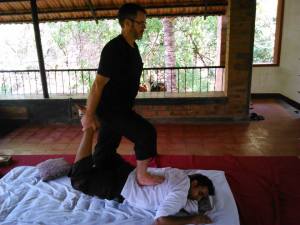
Anxiety about injuring another


In yoga, the sources of anxiety are often gravity related (e.g. inversions and arm balances), but can be quite varied. I mentioned shatkarma as another example. And I’ve found external breath retentions from pranayama to be a potent area in my own personal practice.
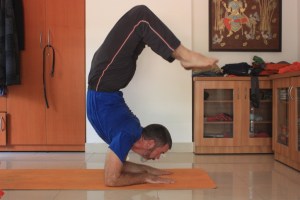
 

Anxiety about injuring oneself


At any rate, what both Yoga and TYB do to help one take on one’s anxiety is to insist that one confront it in a mindful way. Just practicing forces one to experience the anxieties, but the crucial second ingredient is that one must keep one’s attention on the action—preventing one’s mind from engaging in the escalatory patterns by which it makes molehills into mountains. While it’s true that there are many other activities that this should be true of, it’s common in many fitness activities to practice distractions. People often blare portable music devices to drown out their body and mind as they exercise and practice other self-betterment activities. Such distractions aren’t an option in [good] TYB or Yoga instruction (Note: I say “good” because one can see a sad wave of distraction yogas out there that bury the sensations of practice in cute animals, alcohol, and—even–frat-house style raves.)


4.) Anatomical intuition: Both TYB and Yoga expand one’s understanding of the human body. A great feature for those who practice both systems is that the two systems are complementary. They present both overlapping and non-overlapping means to insight into the body. Yoga provides insight through all of one’s senses—not just the five we think of, but including proprioception (the sense by which a person is aware of the position of his or her own body parts and their movement) and balance. In other words, yoga allows one to see inside one’s own body as fully as possible. On the other hand, TYB offers the opportunity to learn about the wide range of variance in human bodies—feeling all their varied characteristics, strengths, and weaknesses.

Finding the limits of another


I think a yoga teacher can learn a great deal by practicing TYB. It encourages a greater understanding of the strengths and limitations of others. At the same time, TYB practitioners benefit from yoga’s high degree of intra-bodily awareness because the Thai style involves many assisted stretches that require strength, balance, and awareness.
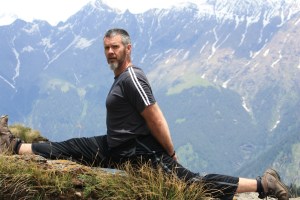
 

Finding one’s own limits


3.) Appreciating the Slow: Modern life shouts at one to do everything faster. Yoga and TYB are two activities in which there isn’t any payoff for being faster, and, in fact, there are costs. In TYB, the massaged individual will find a fast tempo massage less relaxing. If one has ever been handled by a masseuse or masseur like a baker making bread, one knows exactly what I’m talking about. Hatha Yoga also emphasizes slow movement. Even when one is doing an active style like Ashtanga Vinyasa Yoga, there’s an emphasis on maintaining control of the body throughout, and that requires engaging musculature to counter the forces of gravity and momentum.
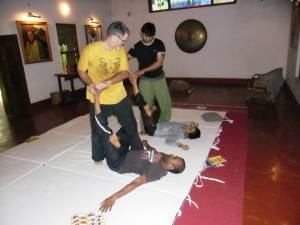
FYI- this is the aforementioned Meditation Hall during that first training


Sometimes slow is the only way to succeed


2.) Core stability and muscular endurance:  Both TYB and Yoga build and require core strength and muscular endurance. Bodywork is a physically demanding job. When one learns TYB, a great deal of attention goes into the minutiae of handling the client so as to minimize the stress and strain on one’s body. Still, there’s no way around the fact that one is manipulating another person’s body  and one has to bear that weight so that the client can be relaxed as one stretches them out or turns them over. Commonly, those people will be larger and heavier than the person delivering the massage.  Even if one isn’t doing TYB all day, one will likely feel it—perhaps all the more because one hasn’t developed that core strength and muscular endurance. Yoga can also help the TYB practitioner to keep supple in a job that can easily make a person sinewy.


On the other hand, yogis and yoginis can learn a thing or two about balance and control of the core from the challenging act of manipulating another person through their stretches.


1.) Attentiveness to Subtle Sensations:  In yoga teacher training, one is often shown Wilder Penfield’s homunculus. Penfield was a doctor who studied the functional organization of the brain, and particularly the sensory and motor cortexes (the parts that process sensations and commands to move body parts.) He was eager to map the motor cortex so that he’d know what portions of damaged or cancerous tissue could be removed without causing paralysis or the like.  At any rate, you’ve probably seen either a flat or 3-D version of the homunculus. It’s notable for its huge lips and hands and comparatively tiny chest and thighs. That’s because the size of a body part on the model doesn’t represent its anatomical size but rather its size in the brain, and our hands have a truly astounding piece of cerebral real estate.


What’s fascinating is that for all this capacity for feeling through our fingers, one has to practice to get the fullest out of that ability. In the beginning, it can be quite different to feel huge knots in the muscle during TYB sessions—even though our ability to differentiate tiny tactile differences is tremendous.  In yoga one isn’t so much engaged in feeling with one’s fingertips as one is with one’s internal sensory suite, but the point remains that we have a great deal of capacity that most people leave unused.


I suspect there are many more points of confluence between TYB and Yoga that haven’t occurred to me. If you’ve got one, feel free to comment below.

BOOK REVIEW: Jnana Sankalini Tantra by P. Prajnanananda

Jnana Sankalini TantraJnana Sankalini Tantra by P. Prajnananda
My rating: 3 of 5 stars

Amazon page


Tantra is in a class with quantum physics as a topic that everybody likes to talk about but no one seems to understand. But the situation is worse because everybody can have an opinion about what Tantra is and who’s to say one is correct and another is not. Therefore, there are many conceptions of Tantra floating around out there. Unfortunately, I can’t say that this book will clear up the topic, though it does offer a great deal of information in a readable package.

In the West, Tantra is mostly about having longer and more satisfying orgasms during sex. In India, that is seen a great oversimplification, but there’s an entirely different muddling of the topic. If there were pro-Tantra and anti-Tantra parties, the topic could remain clear despite differing views on the validity of the approach. Everybody might agree about what Tantra is, but veer apart as they say why they like it or loath it. However, there’s another faction, and that’s the mainstream religious personalities who want to selectively utilize bits and pieces of Tantra that they find useful, while suggesting other parts of it are all just a misunderstanding. And, again unfortunately, that is where this book stands.

As my criticism may not make sense otherwise, I’ll try to explain something I was taught about Tantra. As it was described to me, Tantra (the yogic version, Buddhist Tantra may vary entirely) was—at least, in part–a practice of engaging in endeavors that might be considered distractions on the path to overcome them. Whereas, mainstream religion says, “x is bad, never do x,” Tantra says “x can be a distraction, and so I should engage in x in a mindful way so that it no longer controls me.” This is where the focus on sex comes in. It’s not that Tantrics were perverts; they just believed they could achieve some manner of transcendence through its practice.

My primary complaint is that this book selectively takes what it likes and strains credulity by suggesting the material it dislikes is all a misunderstanding of a selective code. So there is this idea of the five principles (panchatattvas or panchamakara) and they are five practices of Tantrics consisting of consumption of: alcohol, meat, fish, roasted/fried foods, as well as sexual activity. Now, most of these are objectionable to the modern Hindu, but the author says that these were all just code for a practice of breathing with one’s tongue pressed to a certain spot on the roof of one’s mouth. Why was kechari mudra so super-secret that one had to call it sex or fish-eating? (And why would one use a code consisting of activities one finds severely objectionable?) I don’t know, the reader is just left to believe that it makes sense.

Now, should I conclude that the entire work is in code? For example, when it says that finding a good teacher and following them is important, might they really be saying that I should “Find a river otter to take to Disneyland?” No. Because only the parts that the author and his sect finds contrary are encoded, everything else is to be taken literally.

Now, the offending section is only a small part of the book, and the topic of yogic Tantra. However, the degree to which it strains credulity makes it difficult to believe anything else the books says.

The book is in two parts. The first part is an introduction to jnana sankalini tantra (JST), and the second part is the 110 verses of the JST—said to be a dialogue between Shiva and Parvathi on Tantra—with analyses by the author.

I believe that this book contains a lot of interesting ideas, but, being a neophyte to the subject but with a degree of expertise in detecting faulty logic and religious dogma, I didn’t feel I could trust the book entirely.

If you are a mainstream Hindu who wants a palatable description of Tantra that doesn’t offend your sensibilities, this is probably a great book for you. If not, I don’t think you’ll have any better idea of Tantra is than when you started.

View all my reviews

BOOK REVIEW: Anatomy of Hatha Yoga by H. David Coulter

Anatomy of Hatha Yoga: A Manual for Students, Teachers, and PractitionersAnatomy of Hatha Yoga: A Manual for Students, Teachers, and Practitioners by H. David Coulter
My rating: 5 of 5 stars

Amazon page


There are many books on anatomy for yoga, and I’ve read my share, but this is my favorite.

What did I like about it? First, Coulter examines the anatomy and physiology of breathing in some detail, and that’s an important topic that is overlooked by many others. A lot of yoga anatomy books stick exclusively to the musculo-skeletal system. Second, this book doesn’t mix science and pseudo-scientific mythology. Sometimes books shift from talking about arteries and veins to nadis and chakras in a manner that can be confusing and counterproductive. Third, the book discusses how postures can be safely varied for individuals with limits, as well as discussing the most advanced expression of postures for more flexible or skilled students.

What’s the catch? There must be a downside? Well the book is dense and it’s a challenging read. It’s not that the writer uses too many technical terms. That isn’t the case at all. In fact, Coulter is careful not only about using anatomical terms, but also avoids reliance on Sanskrit names as well. It’s just that there is a lot of material that one must read painstakingly while visualizing and–in some cases—tactically probing around one’s body (or someone else’s–if they’ll let you.) I don’t know that there’s much that could be done about this, given the desire to convey the material that the book does—and it’s valuable information. The book has a large number of graphics that mostly consist of anatomical drawings and photographs of the various versions of the postures. It’s possible that more graphics could have been used to reduce the amount of descriptive text, but—on the other hand—reading it slowly and carefully is a useful and productive exercise. And, if you’re not reading it for your RYT-500, you can take your time and read it section by section, as time permits, over the course of more than a year as I did.

The ten chapters of the book are mostly divided up by classes of posture (asana.) Chapter 1 is about “movement and posture” and provides the necessary background that one will need to understand the later chapters. Chapter 2 is on breathing–both the musculature involved and the physiology of it. The rest of the chapters are on core exercises, standing postures, back bends, forward bends, twists, headstands, shoulder-stands, and meditative postures, respectively.

The book has a glossary, a short bibliography, and two indexes (one by anatomical parts and the other by practices/postures.) I normally don’t bother to mention indexes, but in this case it’s useful to know because the book’s organization is by type of posture, and so it’s not always straight forward where various muscles or tissues are being covered.

As I say, I found this book to be tremendously informative. I recommend it for yoga teachers as well as intermediate / advanced practitioners.

View all my reviews