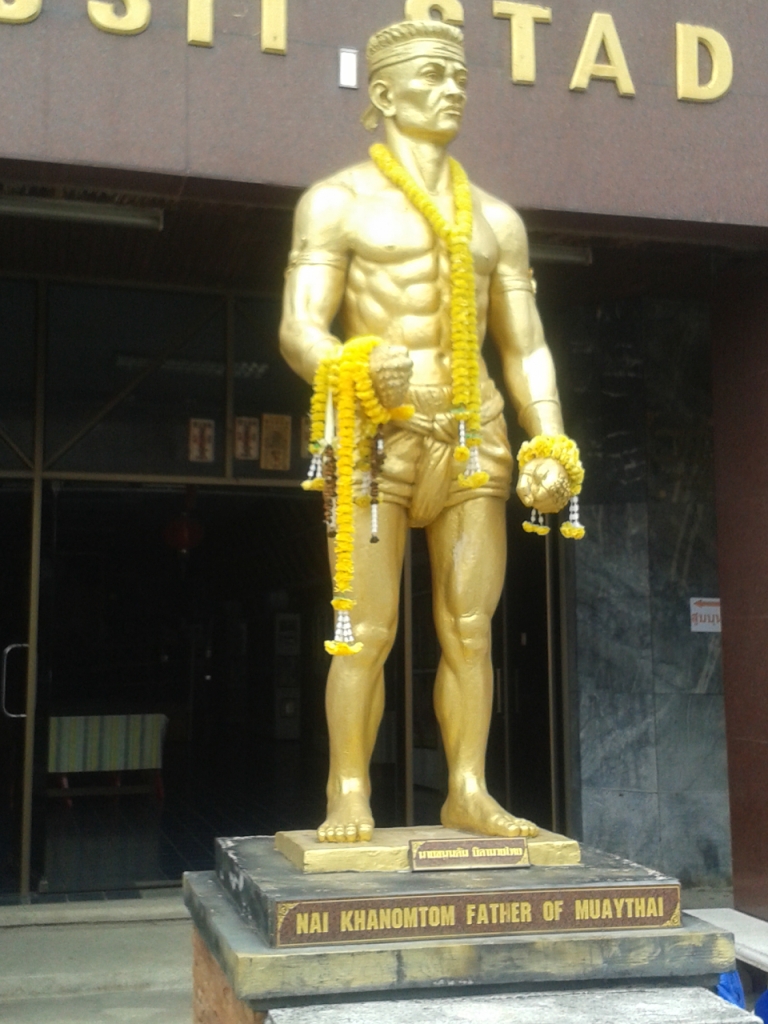
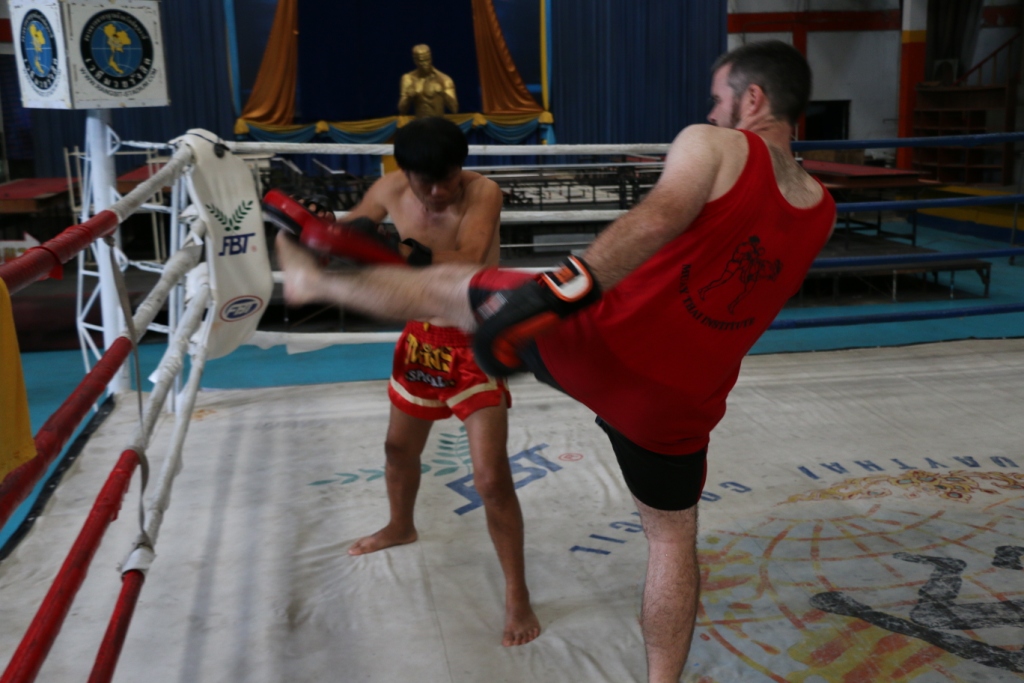
The Muay Thai Institute (MTI) in Rangsit, Thailand is uncommon in that it offers two different approaches to training. The first option is a program that will allow one to test for a certificate showing that one mastered the skills required at one’s respective level (Beginner, Intermediate, Advanced, Professional, and Teacher.) The second option is daily/weekly/monthly training, which the teachers refer to as the “freestyle” tract.
MTI’s website covers details of pricing and timing, but one may not be clear about what the differences will be with respect to actual training. I’ve trained at MTI on two occasions–the first time for one week and the second time for two weeks–and have trained in the freestyle track on both occasions. The majority of students at MTI seem to pursue the rank certificate approach. This is probably in part because there aren’t many gyms at which one can get a certificate and transcript recognized by Thailand’s Ministry of Education. There a vast number of places to train Muaythai in Thailand, but few at which one can build rank that has some recognition beyond one’s own teacher. (Which is not to say that certification is the only reason to train at MTI versus elsewhere; I’ve been back for training without certification.)
|
A QUICK COMPARISON OF CERTIFICATE v FREESTYLE TRAINING
|
| Advantage Freestyle |
Advantage Certificate |
| PriceBroader training experience
No need for planning
No minimal time investment
Focus on fighting skills |
CertificateGreater perfection of fundamentals
Doors open to progress
Systematic approach to learning
Learn Wai Kru (respect) in detail |
|
|
Before I elaborate on some of the differences, it should be noted that at least one’s first few days (and perhaps more depending upon one’s physical acumen) as a freestyle student will be spent training with the Level I (Beginner) certificate students. If your stay is short or if you have trouble grasping the basics, your whole training period may be identical to a Beginner certificate student. However, after a few days the training a freestyle student receives is likely to be different from the Level I student.
I’ll elaborate on the notations made in the above table:
PRICE: It’s a little cheaper to train freestyle. As of the time of this writing, it cost 8000 Baht for the Level I certificate program, which involves 10 training days (i.e. 20 sessions, or 40 hours). So if one trains the usual twice a day schedule without many (or any) days off, one can do this in two weeks. At the weekly training rate, one will pay 5000 Baht for two weeks. Note: CHECK THE WEBSITE as pricing details may change over time.
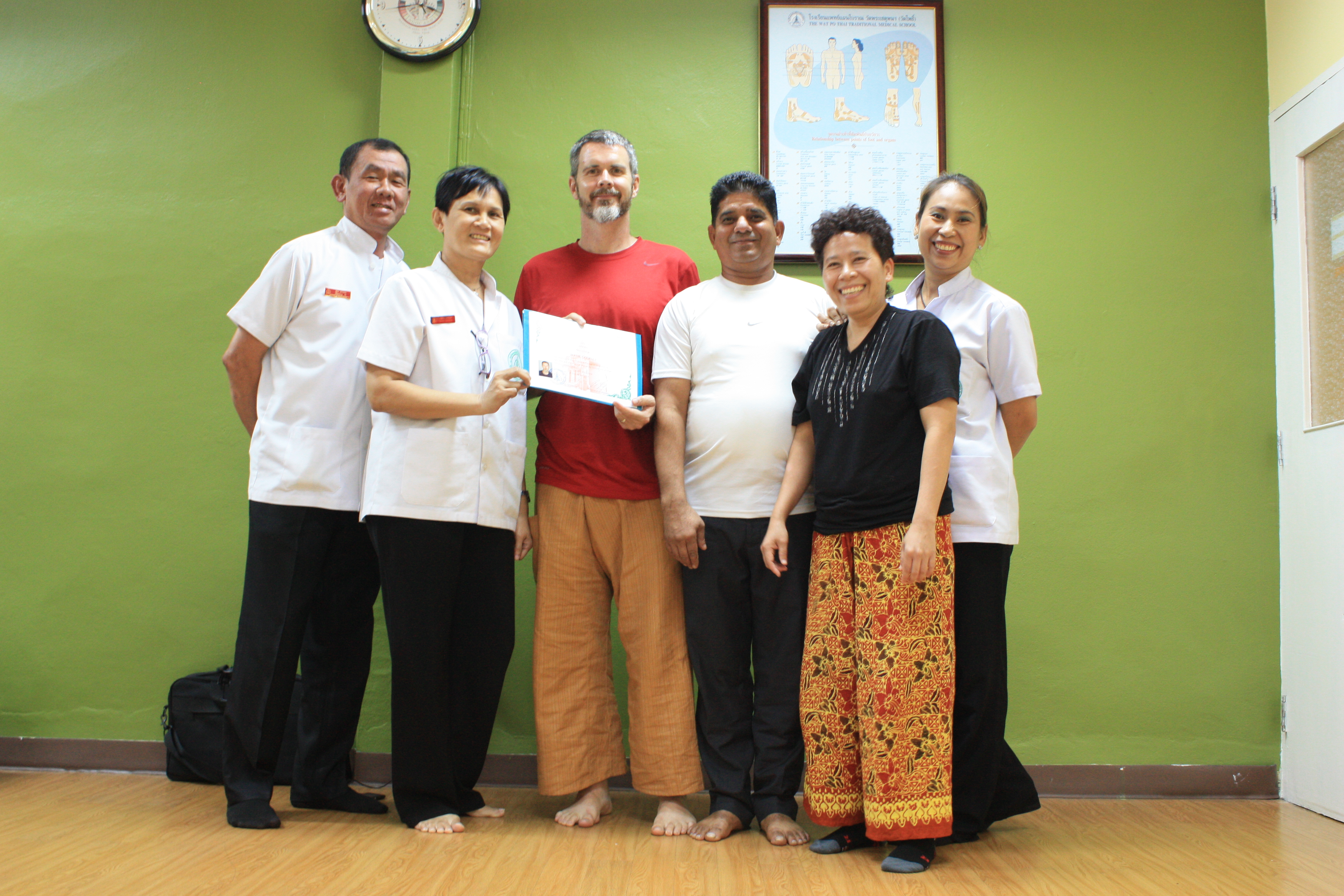
CERTIFICATE: In the certificate program, one gets a handsome certificate, plus a transcript that breaks down how one did on all of the requirements so that one knows what items one kicked butt upon and which ones one eked by upon. As I mentioned, this is recognized by the Thai Ministry of Education, and so holds a little more gravitas than one’s teacher saying, “Hey, you can move over to the Intermediate ring now.” If one wants to teach Muaythai, it might not even be a question of what track you will pursue.
Sadly, for those in the Western world rank tends to hold a great deal more importance than it does throughout much of Asia, where one is either the teacher or one is a student and the respect others grant one is based more upon what one can do and how hard one trains than what color belt one wears.
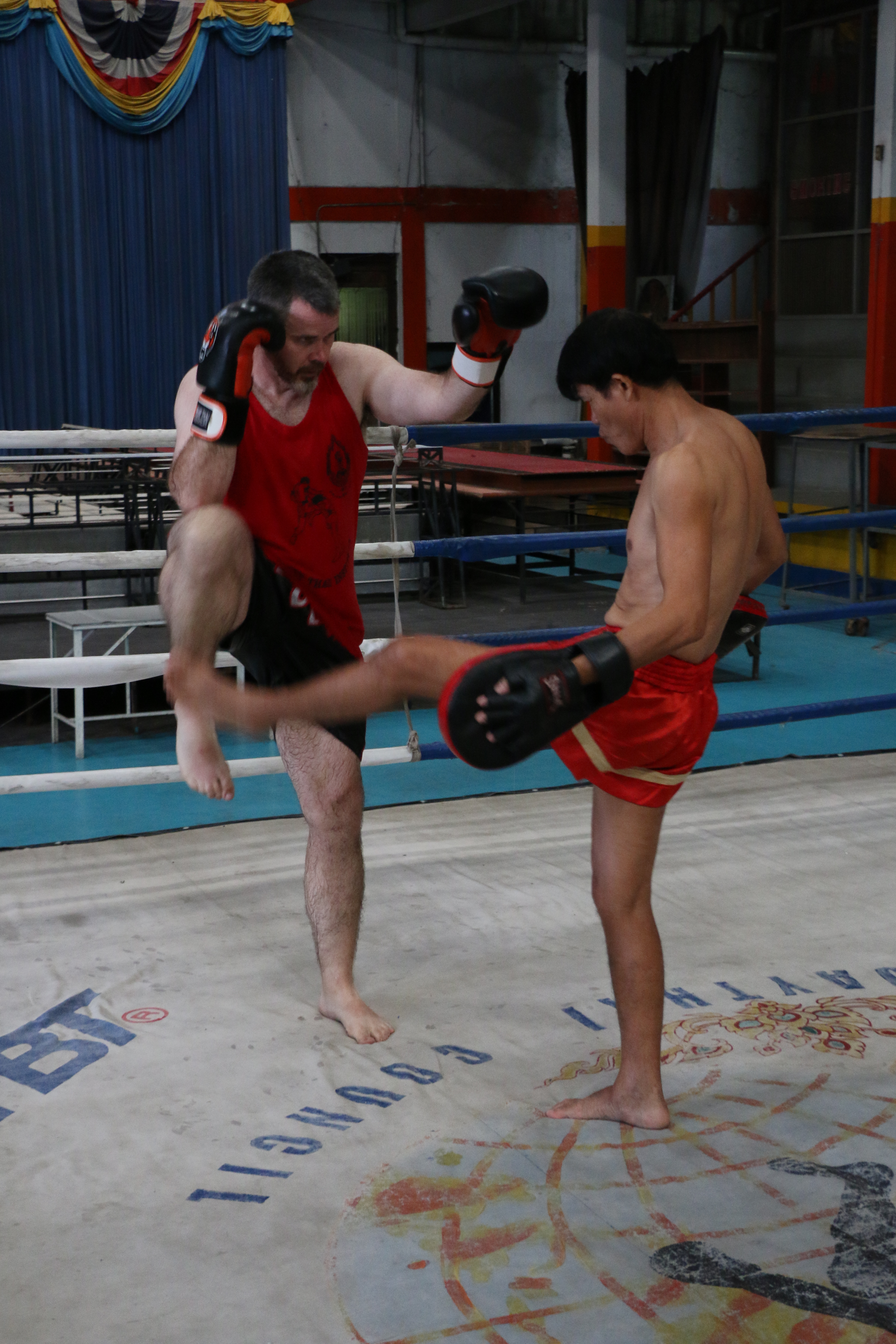
 BREADTH OF TRAINING EXPERIENCE: Freestyle students usually spend more time doing pad work, unrestricted shadow boxing, and sparring than (Beginner or Intermediate certificate students. Freestyle students will also be exposed to a range of techniques from the Beginner through the Advanced levels. A Level I certificate student will focus on mastering the material for one’s level, and that will mean mostly doing footwork drills without and with punches /basic defenses, as well as bagwork.
DEPTH OF TRAINING EXPERIENCE: The flip-side of the previous entry is that certificate students will likely develop better technique because they’ll drill the basics more and will be corrected on smaller errors than will freestyle students. Which of these approaches is better is a personal question that depends on the student’s background and what they hope to get out of training.
THE NEED FOR A PLAN: A freestyle student just needs to show up every session and do what the teacher tells one, when he tells one. If one decides to take a session or even a day off, there’s no issue other than personal nagging guilt (not that one shouldn’t take a day off once a week or so—depending on how long one is training for.) However, if you are in it for a certificate, you need to be conscious of the effect that dropping classes will have on having the minimum number of classes needed to take the test.
The certificate student may also need to put in time outside of the training sessions. Beginner students must show they know the Wai Kru, which involves an elaborate sequence of moves that one will usually practice in class at most once per day. While one usually has plenty of free time, if you haven’t experienced training Muaythai for four hours a day, you may not be aware of how much energy it takes to go practice even the relatively slow moves of the Wai Kru outside of training sessions.
PROGRESS: For those who want to be able to teach Muaythai eventually, it’s important to start checking off the intermediate steps. That requires progression through ranks. If one has no intention of working toward a high level, the certificate my hold little value. Also, be cognizant that Level 4 and the teaching levels require that one have a certain number of professional fights under one’s belt. That may or may not be feasible for some. So don’t think you will work your way through to the teacher levels without fighting.
MINIMUM TIME INVESTMENT: The first time I attended MTI, I had only one week and I couldn’t have done the certificate program if I wanted to. If one wants to do the certificate, again, one needs to make sure one has adequate time to get in the minimum number of sessions. If one has only a week or even a few days, one can get value out of training freestyle.
SYSTEMATIC APPROACH TO LEARNING: If one is new to martial arts (and to movement related activities in general), it may be beneficial to begin sticking solely to a small set of the most basic techniques—as per the certificate program. The freestyle approach could be frustrating if one doesn’t have some experience using one’s body fluidly and adjusting to changing conditions. While the details of techniques vary considerably from one martial art to the next, there are a set of skills related to bodily awareness that people who’ve practiced movement arts for many years develop that can translate to relatively smooth and rapid acquisition of other approaches to movement.
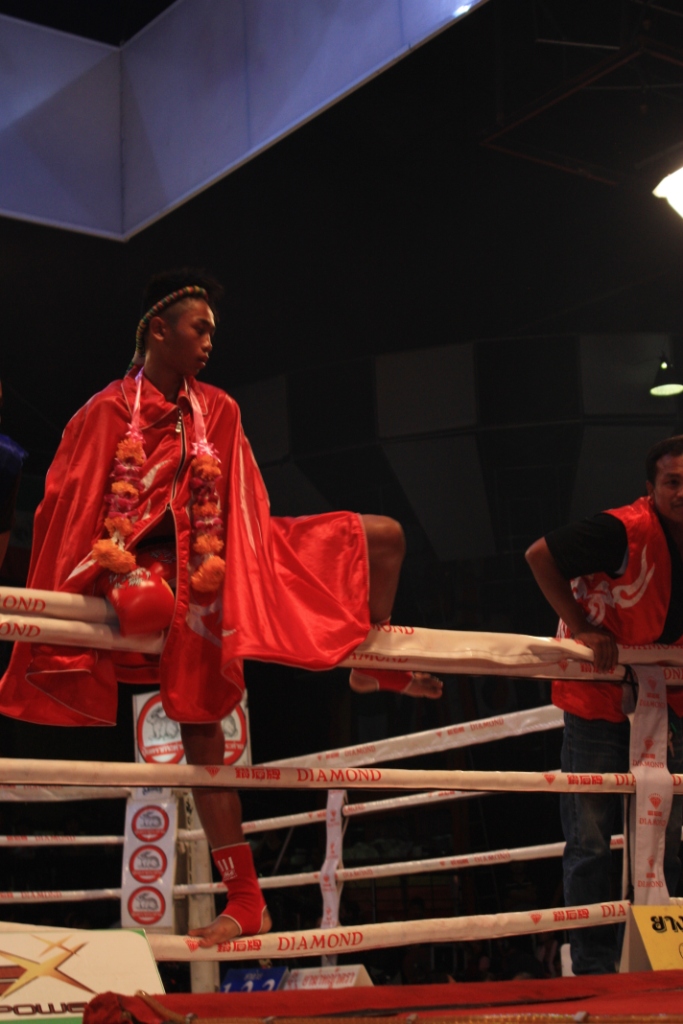
FOCUS ON FIGHTING SKILLS: For a Beginner certificate student, the Wai Kru is the single most challenging item on one’s list to learn. The Wai Kru is very important, as it’s how one shows respect to one’s teachers and lineage. However, if one is primarily interested in picking up skills to apply to self-defense or to one’s mixed martial arts stand-up game, spending lots of time on getting the entire sequence perfect may not be the best use of one’s time. (As opposed to if one wants to fight in Muaythai bouts or teach the art one day, in which case it’s worth taking the time to perfect this activity early.) [I should point out that freestyle students do get the opportunity to learn and practice the Wai Kru. It’s usually how one of the day’s sessions is finished each day. However, I will say that in two weeks I was nowhere near fluid in having memorized the full sequence, hence the suggestion that one be prepared to put in some overtime on it if one wants to earn a certificate and get high marks. ]
LEARN WAI KRU AND OTHER “ANCILLARY” SKILLS: There are skills like the Wai Kru that one will probably not master going about the freestyle tract. This may or may not matter to one, and whether it does or doesn’t matter is an important consideration in one’s decision.
These are my views on the difference between training freestyle or for rank at MTI. If you decide to train there, I hope it will be of some value.
Share on Facebook, Twitter, Email, etc.