
Taken in September of 2014 at Wat Arun in Bangkok.

Taken in September of 2014 at Wat Arun in Bangkok.
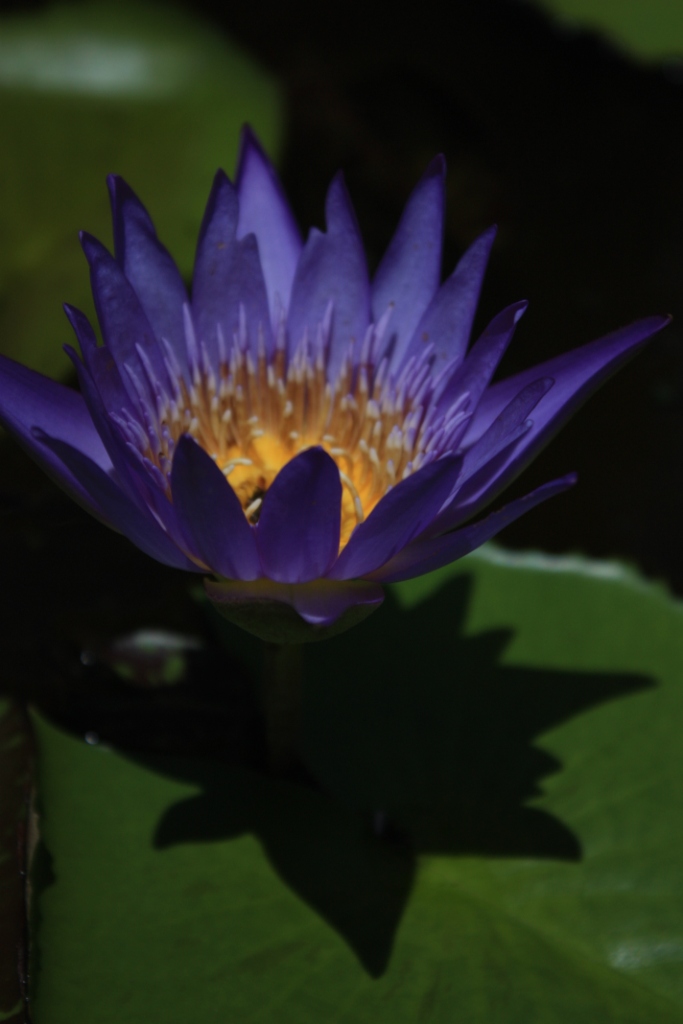
Taken in September of 2014 at Wat Pho in Bangkok.
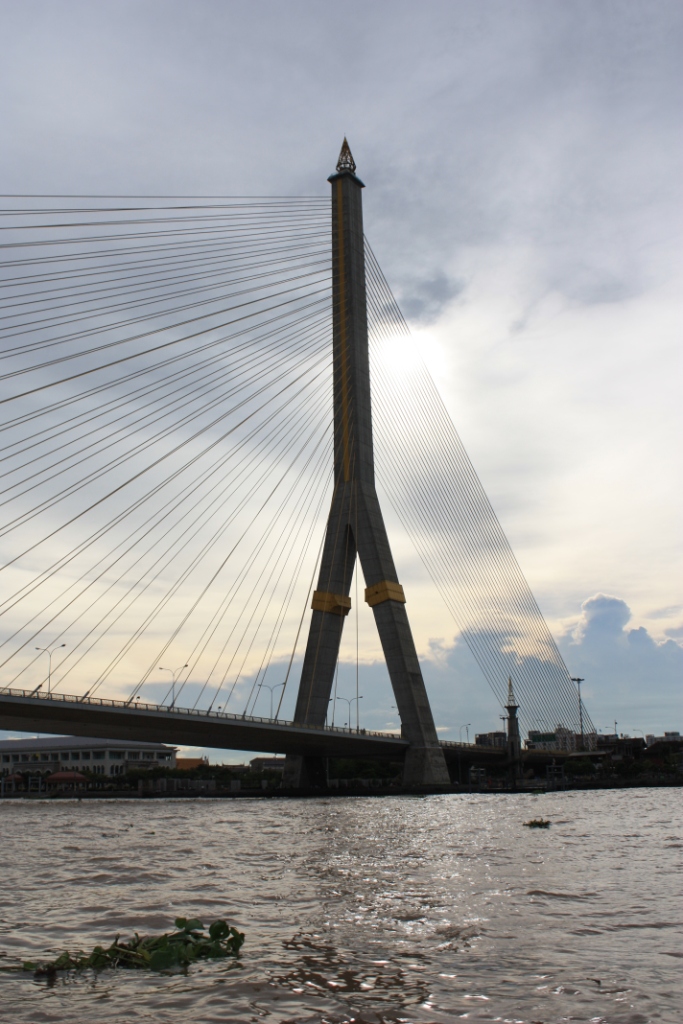
Taken in September of 2014 in Bangkok
This is a bridge over the Chao Phraya River in Bangkok.
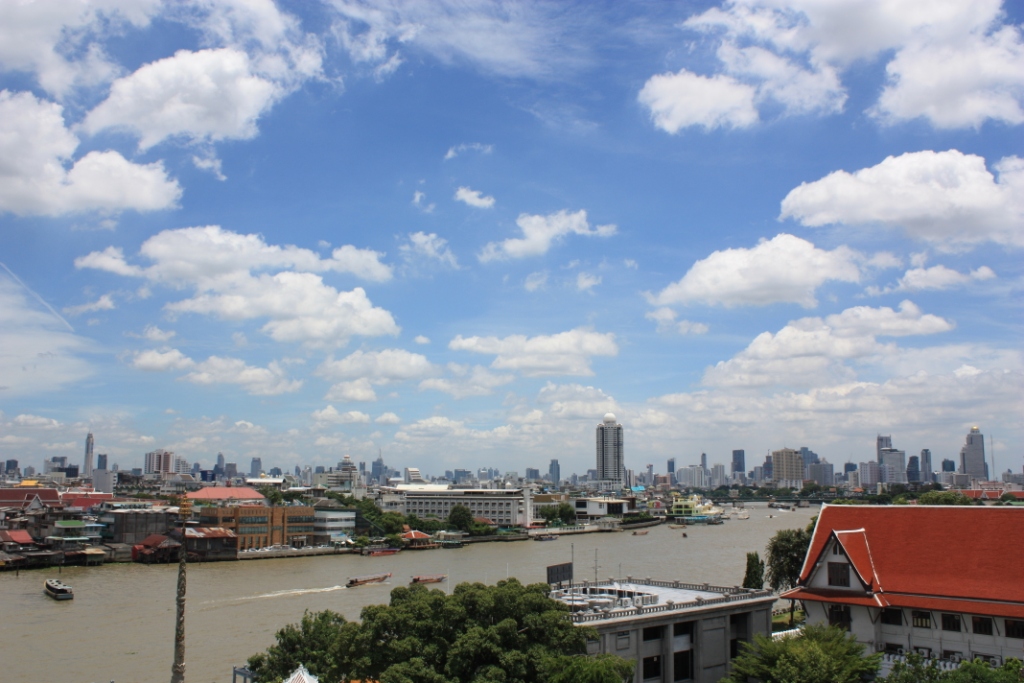
Taken in September of 2014
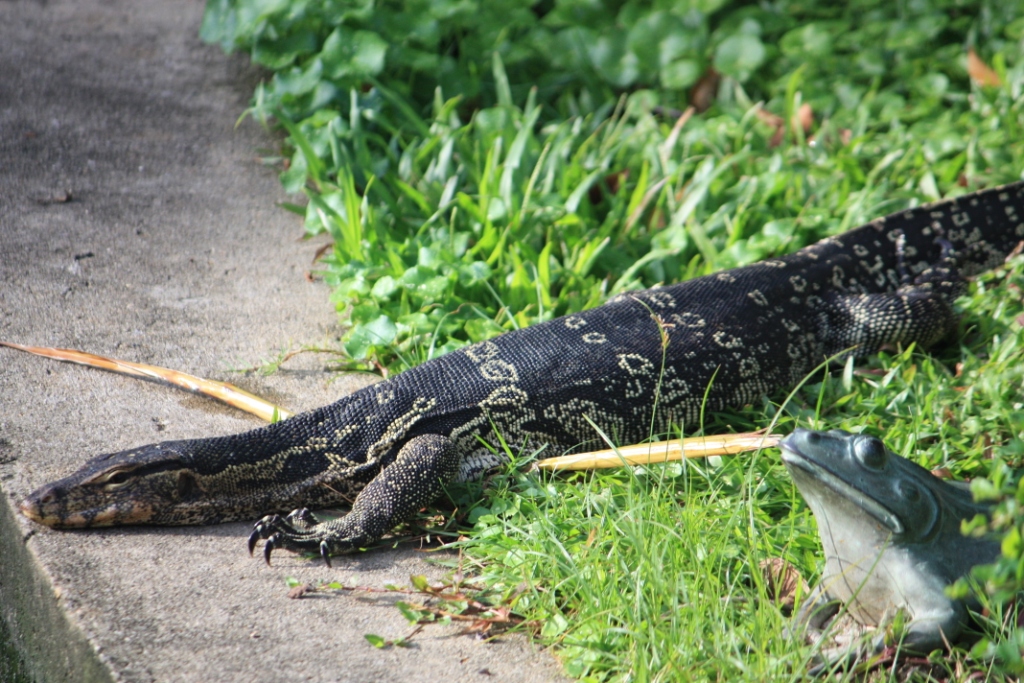
Taken in September of 2014 in Bangkok
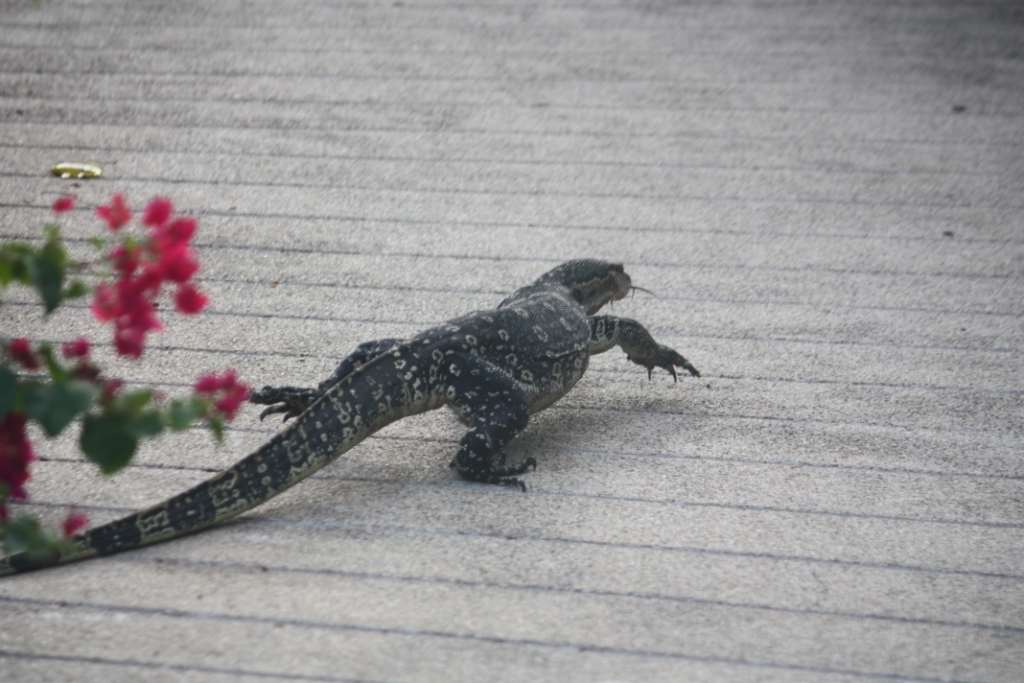
Among the unexpected sights of Bangkok is this Monitor Lizard of about 4 foot long from the tips of its forked-tongue to the tip of its tail. It was right in the center of Saranrom Park which is across the street from the Grand Palace and Wat Pho in Bangkok’s old town.
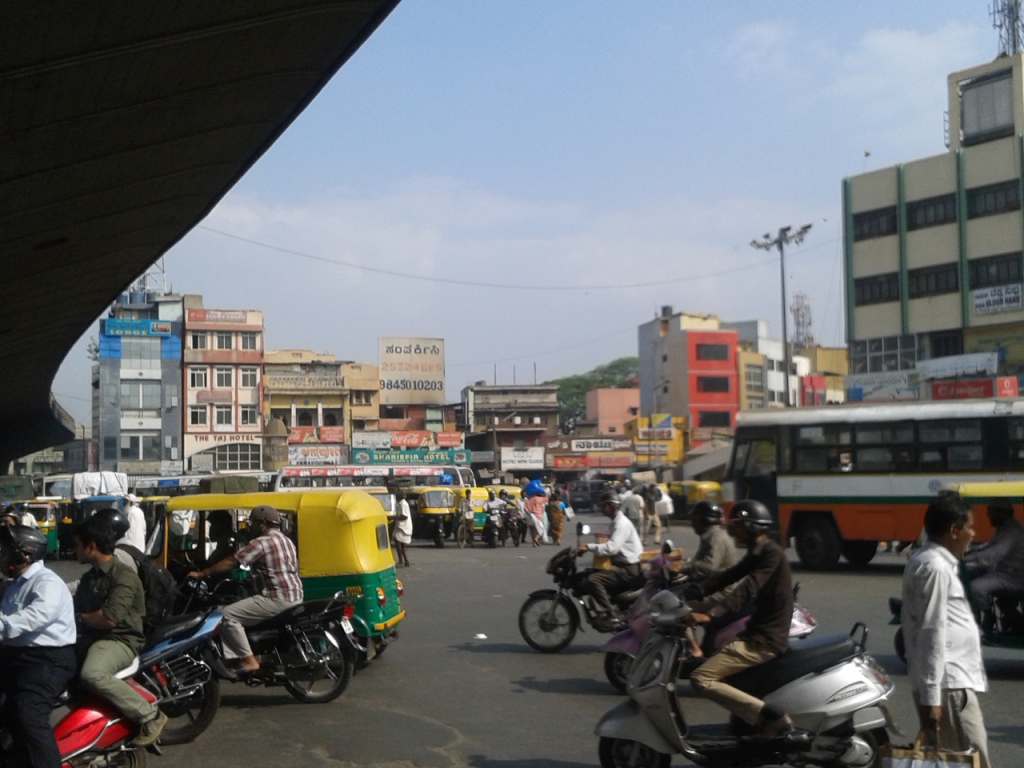
Bangalore traffic
It took me several months to master the art of crossing streets in India. Pedestrian crossing signals are as rare as gold crappers, and as useful as wings on a goat. There are many streets that one can’t cross in one fell swoop between the hours of 8am and 11pm. So, if you don’t want to spend the day trapped on your block like a jittery puppy, you need to plunge into traffic and take it one lane at a time.
Fearlessness. That’s the key–pure and simple. One will have crosstown buses whizzing past on either side. In the military, during Basic Training, we got inoculations via cattle vaccination-guns. It was an assembly line of shots. Take one step forward get a shot, one more step and get another shot. The clinic staff had a lot of recruits to inoculate that were standing between them and their morning coffee. The warning was, “Take one step and stand perfectly still.” Because as soon as you stopped, they would “shu-shunk” that shot into your deltoid. If you wavered, the gun wouldn’t make a nice solitary puncture, but rather would gouge out a slit. Or so we were told. At any rate, the advice to a Bangalore pedestrian is the same, “Step onto the dashed line and remain perfectly still, because if you cringe, you’ll get a truck mirror up side the cranium and you’ll die.”
I traveled to Thailand this past month. I’ve been to Thailand on a couple previous occasions, but not with the implicit rules of Indian traffic ingrained in me. My first official act in Bangkok was to almost cause a multi-car pile up accident. Why? Because Thai people do this strange thing when a pedestrian wanders into the street or an intersection in front of them, they apply the brakes. Now every Indian knows that the proper device to employ when someone crosses into traffic in front of one is the horn. As a matter of fact, the horn is the go-to Indian driving tool for almost every eventuality. It wouldn’t occur to most Indians to apply the brakes and certainly not to make a lane change for an encroaching pedestrian or other driver. If the pedestrian doesn’t get out of one’s way, you simply lean into the horn, putting all your body weight into it.
Now, it may sound like I’m giving Indian drivers a hard time. However, it occurred to me that either system works as long as everybody is on the same page. Those who’ve experienced roundabouts will tell you that they are at least as safe–and probably more so–than crossroad intersections. Even though roundabouts seem terrifying for novice drivers, they have a prevailing logic that is sound. By the same token, it may be that the Indian approach is at least as safe. (It certainly makes a pedestrian more cautious.) The Thai approach, which is widespread though most of the world, is at once more polite but less trusting than the Indian approach.
BONUS TRAVEL TRAFFIC ADVICE: Anywhere in the developing world, always look both ways when crossing one-way streets. The prevailing view is that lane directives are optional for scooters and small motorcycles.
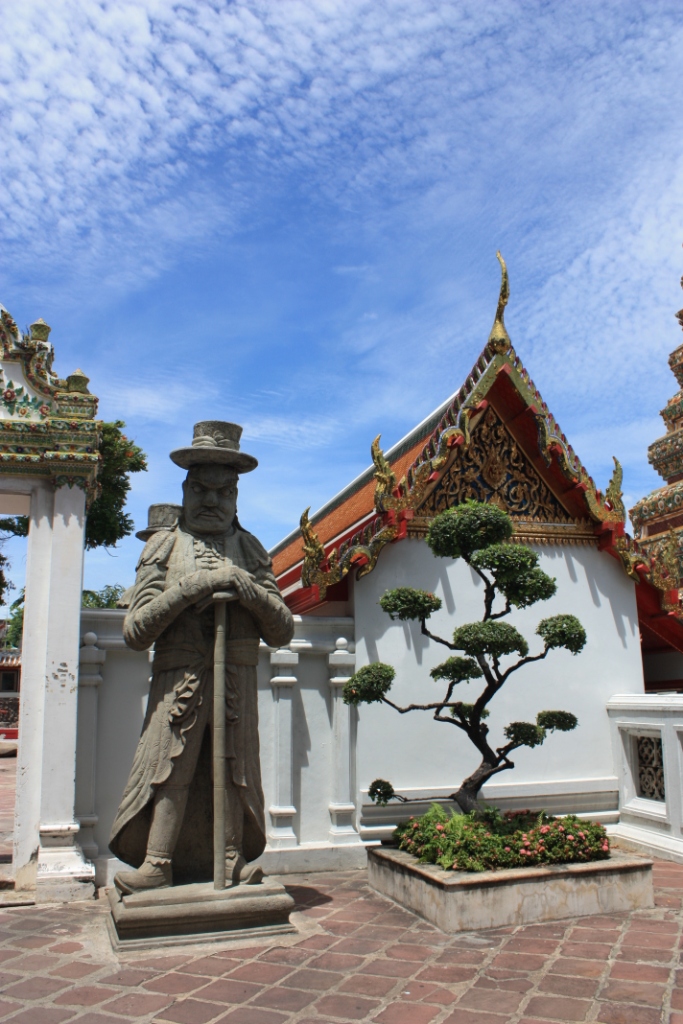
Taken in September 2014 in Bangkok
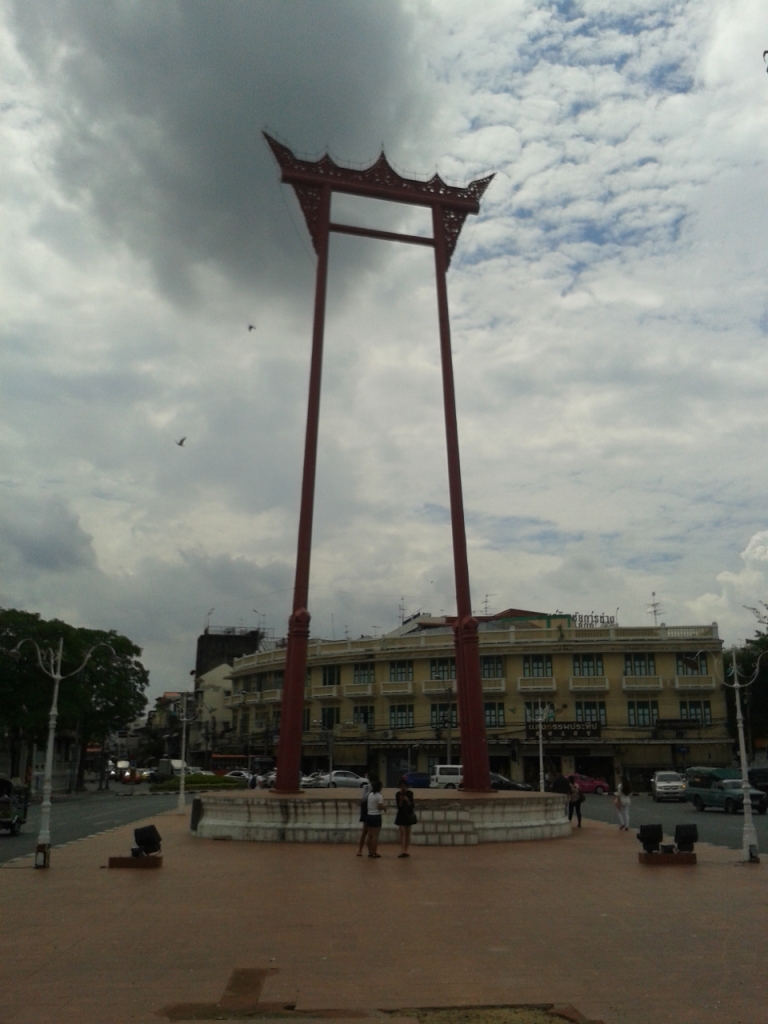
Taken in September of 2014 in Bangkok
This swing is located outside Bangkok’s Wat Suthat. It’s due west of the grand palace in an area north of the heart of little India and northwest of the heart of Chinatown, but very much in an area that reflects a blending of these cultures.
The swing is of Hindu origins. There’s a swing ceremony that reenacts events surrounding Shiva’s descent to Earth at Bramha’s behest. The ceremony involves people trying to snatch a satchel of coins off a pillar by swinging to it.
During my recent trip to Thailand, I attended Thai Yoga (a.k.a. Rusie Dutton, i.e. “ascetic exercises”) classes at the Wat Po Temple. As a yoga practitioner, I took note of the similarities and differences between Thai yoga and the Hatha Yoga of India. It’s no surprise that Thai Yoga would display the influence of India. Indian influence from olden times can be seen throughout Thailand. The roots of Thai Massage (a.k.a. Thai Yoga Bodywork or Nuad Bo Rarn) itself are attributed to Shivago (also, written/pronounced Chivako), a north Indian doctor in the Buddha’s community of followers.
One can plainly see the influence of Hatha yogasana (postures) in these Thai exercises, but the details vary. I’m interested in how movement systems (e.g. martial arts) with a common ancestry diverge over time in response to the unique needs of a different culture. I believe that not only the new system evolves, but there’s also a continuing evolution in the original line. One can, therefore, end up with systems that look little alike over the course of several generations.
The degree to which the Thai Yoga poses vary from Hatha Yogasana varies. In the Thai Yoga class we did a simple lateral bend with interlocked fingers that was identical to a Sivinanda Yoga pose named tiryaka tadasana.

Lateral Bend (tiryaka tadasana)
Balancing poses made up much of the Wat Po Thai Yoga sequence. This makes sense as the course was aimed at practitioners of Thai Massage and balance is important in this massage system because there are techniques that involve standing on one foot as one applies pressure with the other fort or in which one must stand to apply stretches. (Obviously, it’s bad for business to step on the recipient in an uncontrolled fashion or to topple onto them.) There were poses that were reminiscent of Natarajasana (Shiva’s Dancer pose), Vrksasana (tree pose), and Utthita Hasta Padangusthasana (hand to big toe pose). Each of these varied in the details. The most prevalent Thai variation was bending the support leg to lower one’s center-of-gravity. In Hatha Yoga, it’s usually taught to keep the support leg as straight as one can manage (this both contributes to the stretch and can prevent loading the tendons.)
NATARAJASANA: There were two variants of this pose practiced at Wat Po. Both folded the torso more forward than one would typically see in Hatha Yoga, as well as bending the support leg more. The first version (palm on front knee) is as such:
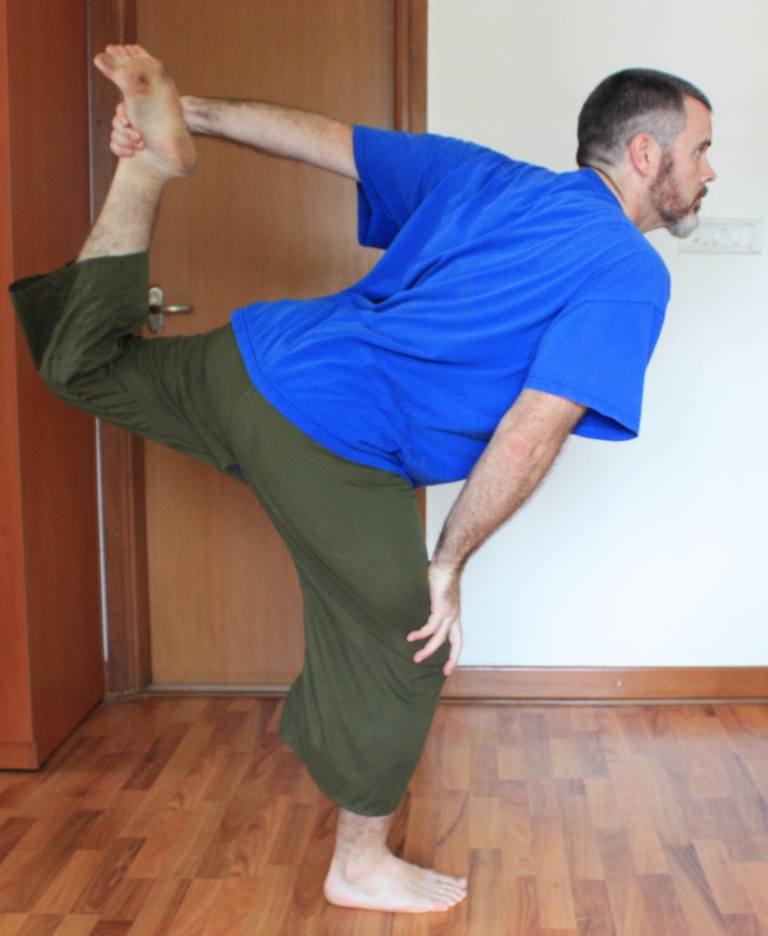
Version 1 from Thai Yoga (Palm on Knee)
The second version has the front hand up in a manner similar to the Hatha version, but the torso isn’t kept upright and the support leg is deeply bent.
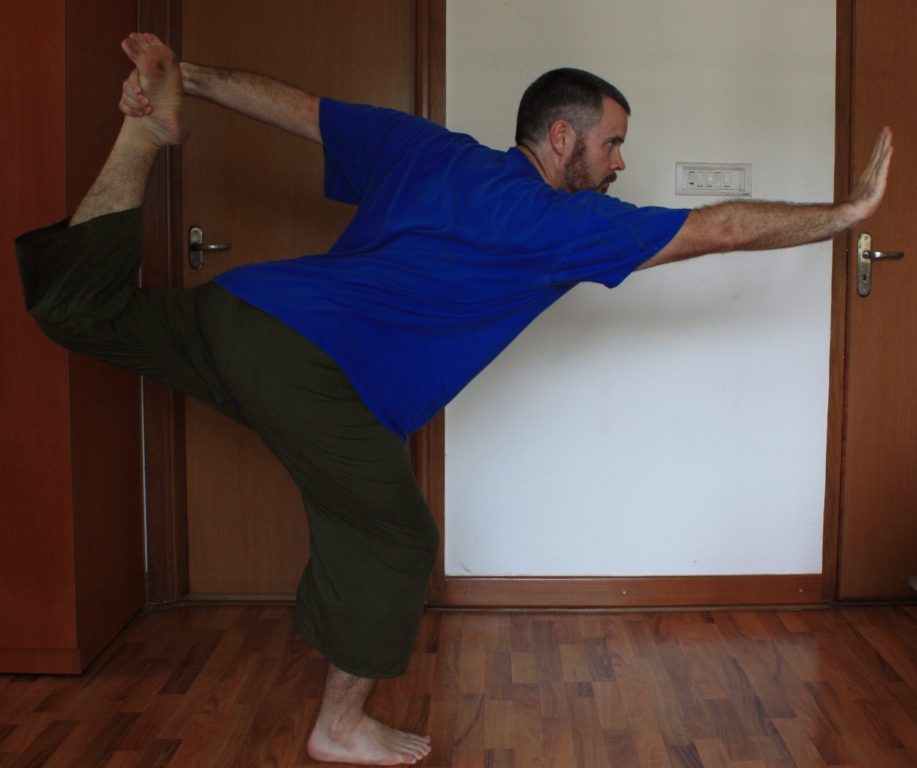
Thai Version 2 (hand out front)
In contrast, the Hatha version is more upright.

Natarajasana
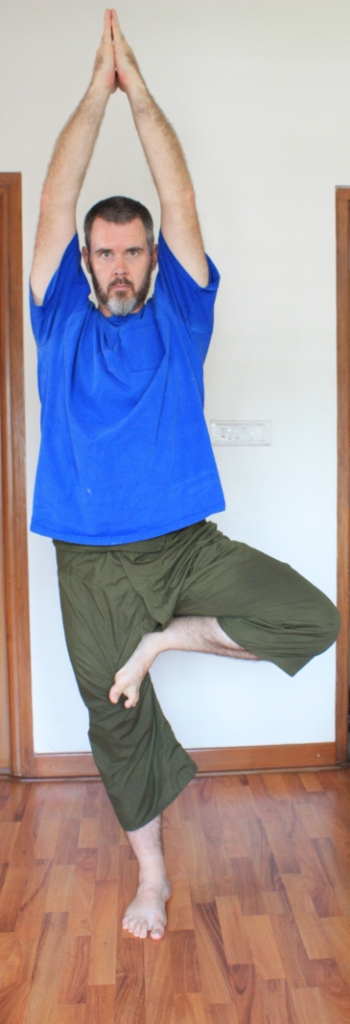
VRKSASANA: There are two variants of tree pose in the Thai Yoga. In both the ankle is kept on top of the thigh and the support leg is bent. Version one is as follows:

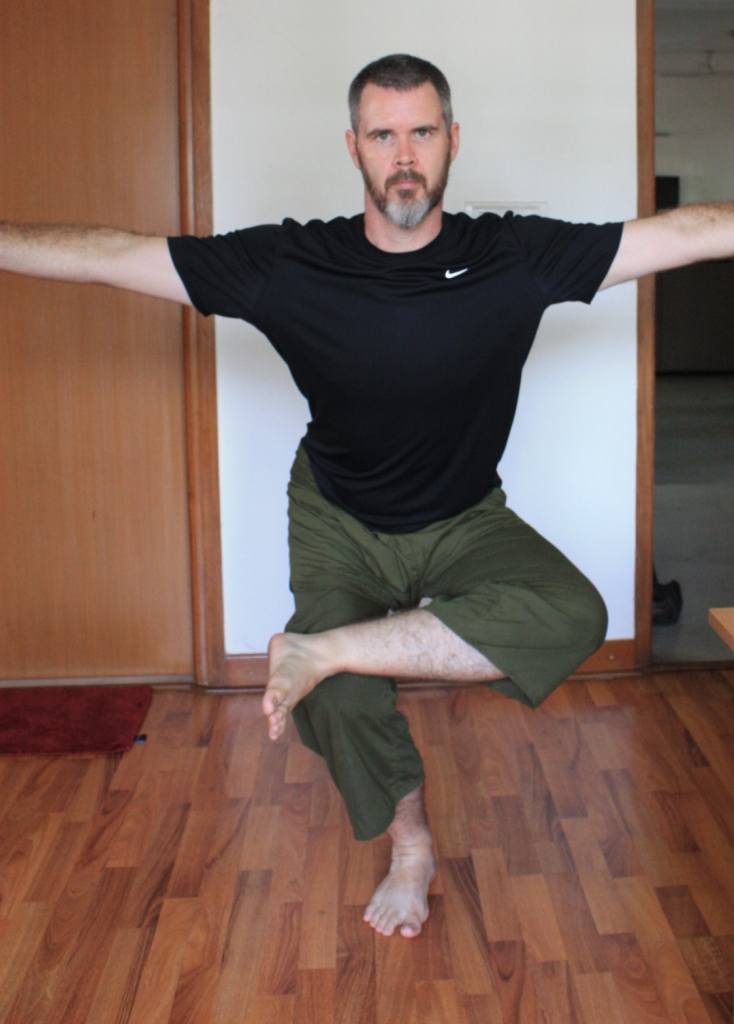
Version 1 begins and ends in Pranamasana (hands in prayer pose) but hands are taken out to the side in between
Version 2 includes a wrist stretch with the balance pose. One puts fingers on thigh facing upward and the squat folds the wrist back.
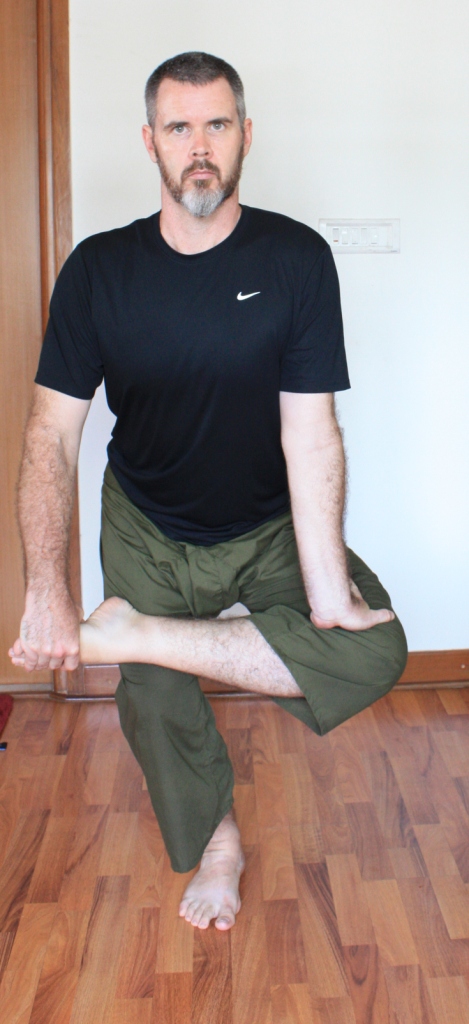
Version 2 with wrist stretch
The Indian version:
UTTHITA HASTA PADANGUSTHASANA: There are also two variations of this pose. Note the bending of the support knee. Version 1 holds the foot with the same side hand and places the opposite palm on the knee.
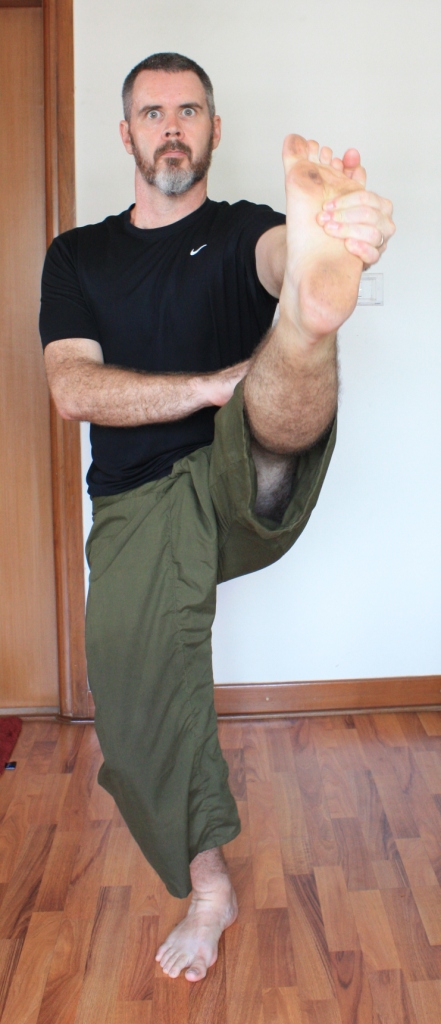
Version 1 from front
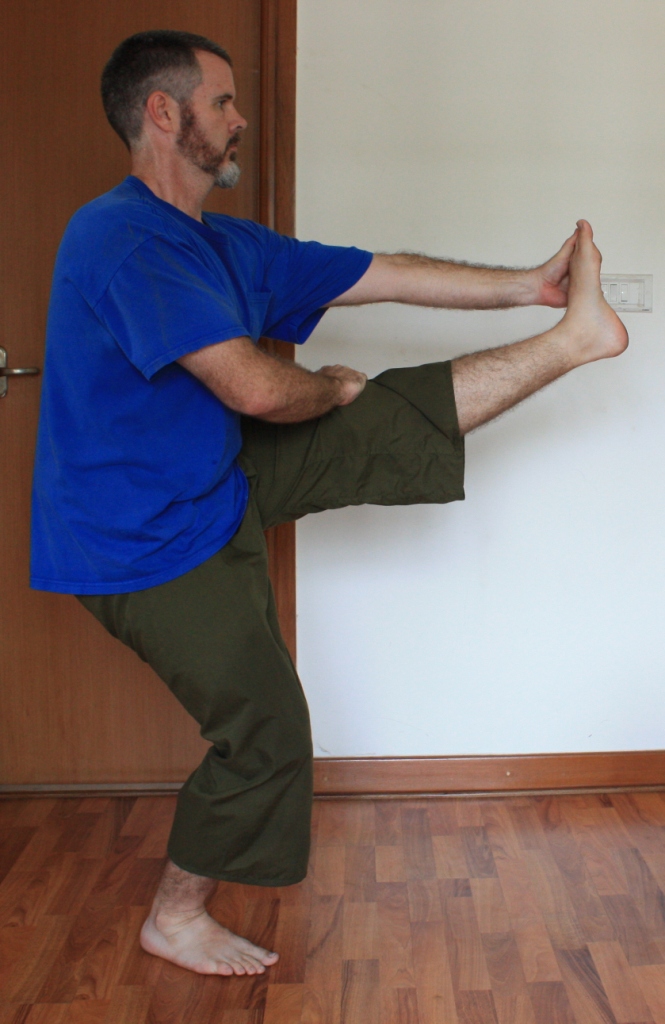
Version 1 from side
Version two holds the extended foot with both hands.
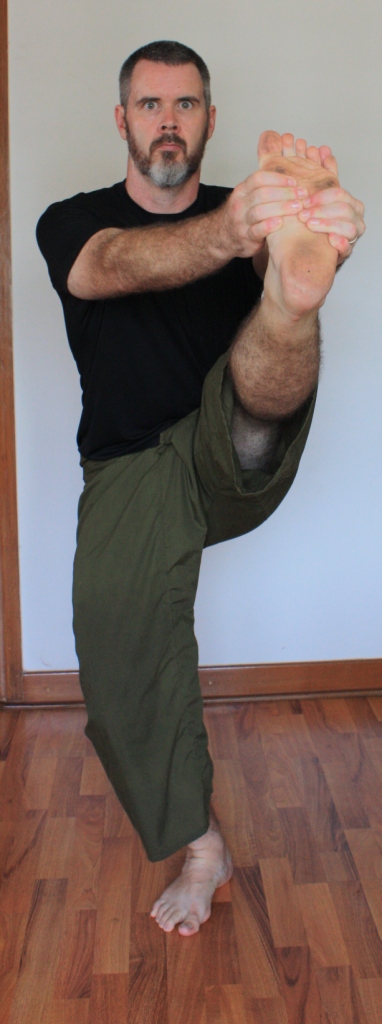
Version 1 from the front
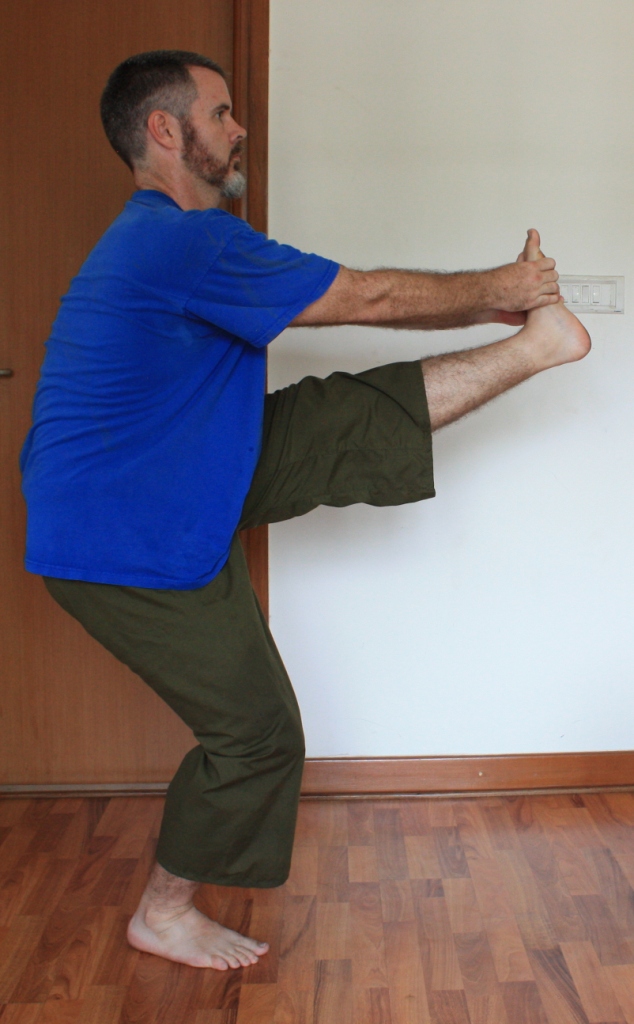
Version 1 from the side
For comparison, the Hatha Yoga version:

Utthita Hasta Padangusthasana from side
UTKATA KONASANA: There are three variants of a pose that is usually called Goddess pose or Utkata Konasana. The difference here primarily deals with how the hands are positioned, but given the many variants within Hatha Yoga for hand position, this can be seen as a virtually identical pose.

Thai version 1 of Goddess pose
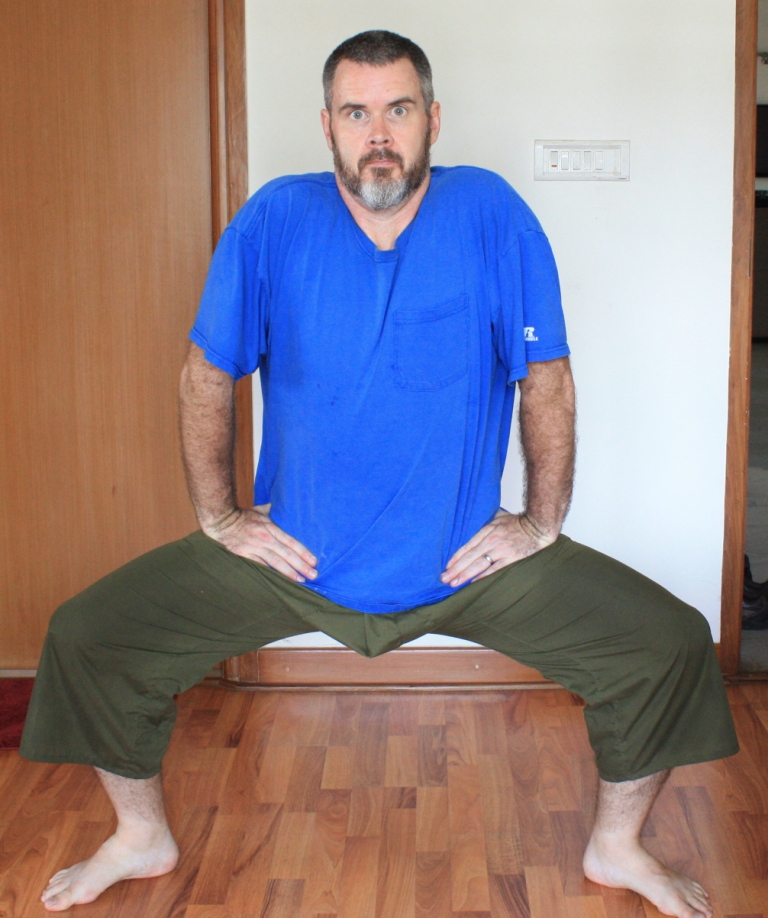
Thai version 2 of Goddess pose

Thai version 3 of Goddess pose
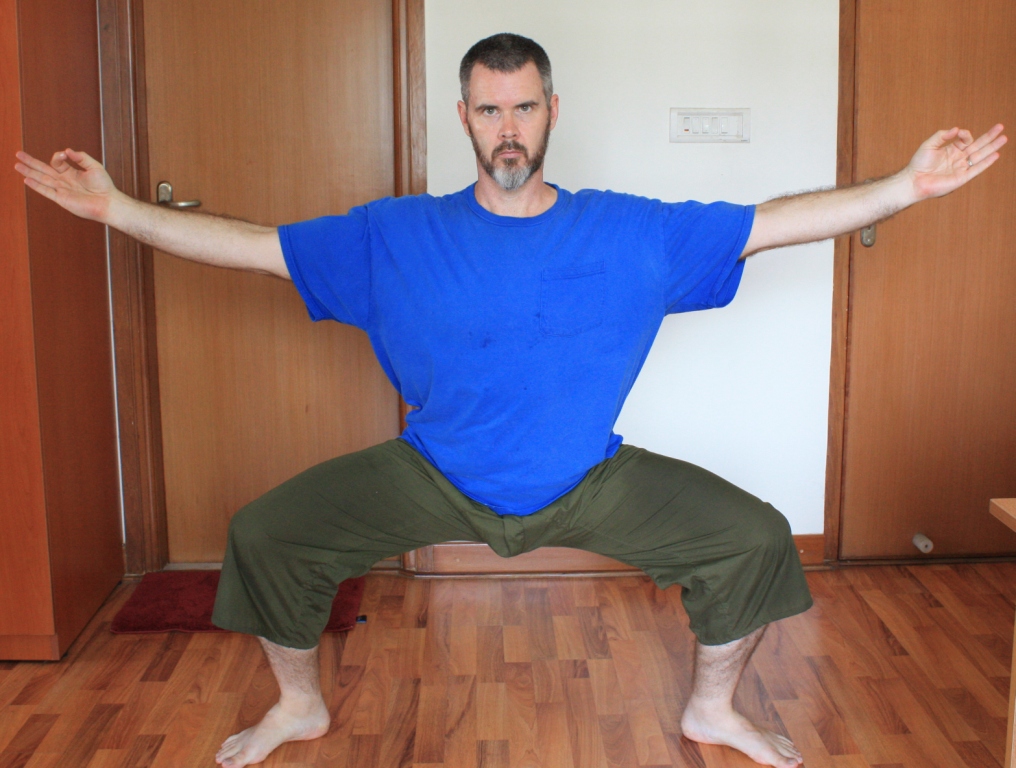
Goddess pose with hands in Chin mudra.
VIRABHADRASANA: There is a series of five lunge poses that are reminiscent of the Virabhadrasana (Warrior). I’ve dropped the first one because it requires a photo taken from a back angle becuas it involves pulling one’s wrist behind one’s back.
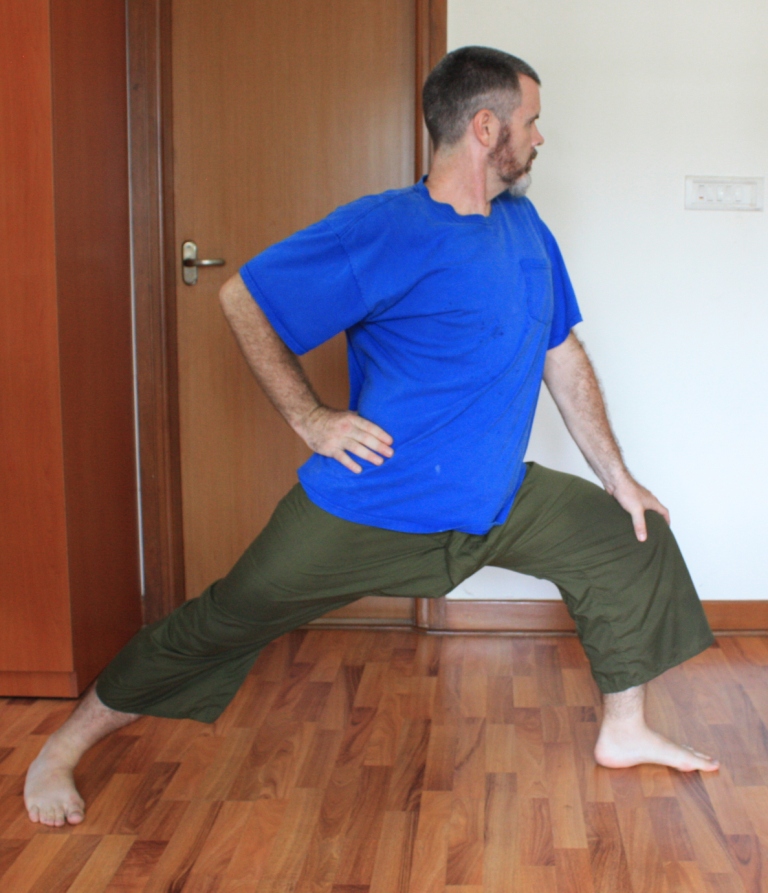
Thai Version 2 hand on front knee
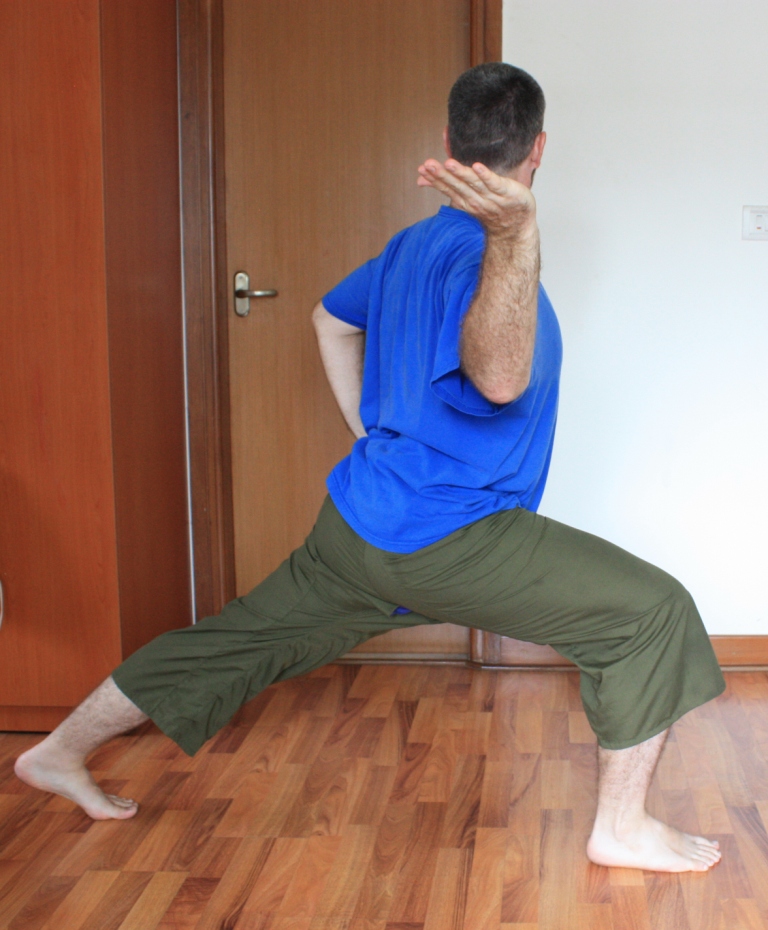
Thai version 3 twist

Thai version 4 looking back
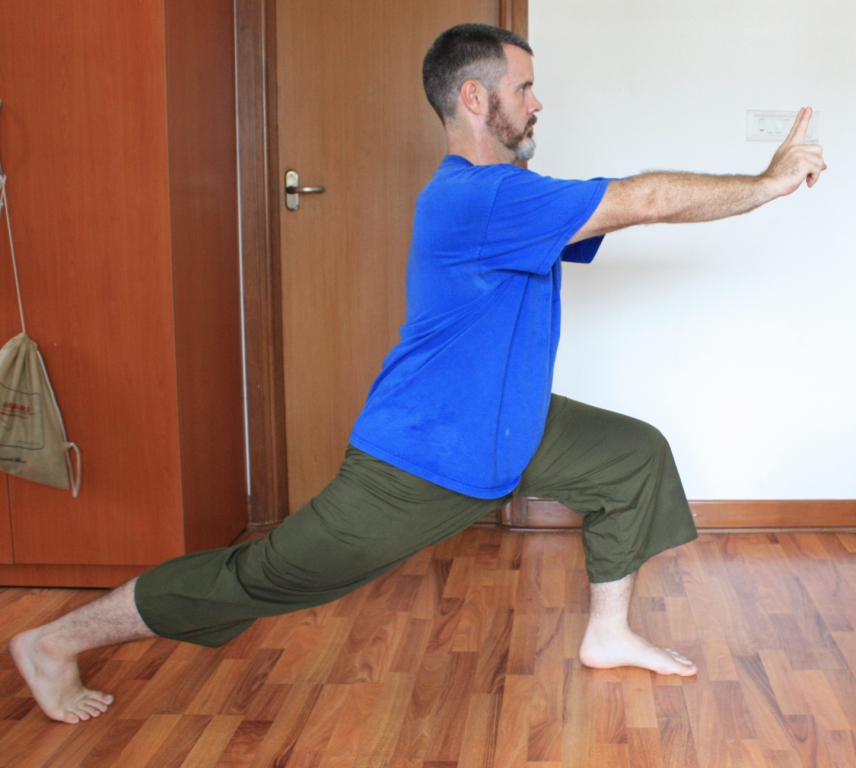
Thai version 5 taking aim
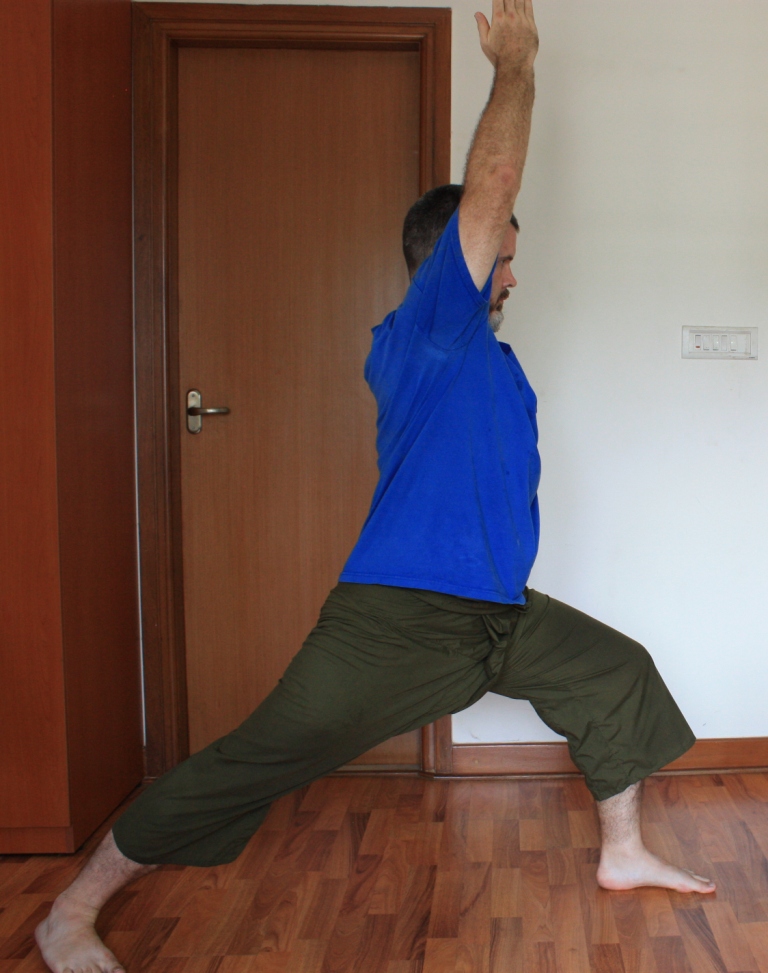
Virabhadrasana I

Taken in September of 2014 in Bangkok.


