BOOK REVIEW: The View From the Cheap Seats by Neil Gaiman

The View from the Cheap Seats: Selected NonfictionThe View from the Cheap Seats: Selected Nonfiction by Neil Gaiman
My rating: 4 of 5 stars

Amazon page

Not every writer—not even many literary greats—could pull off a book like this. It’s a collection of random speeches, front matter from books (not his own), liner notes, and the occasional eulogy for individuals living and dead. While the book is organized into sections on topics like other authors, comic books, films, and music, it seems that organization derives organically from the topics on which Neil Gaiman is asked to comment–rather than a desire to tighten the book’s theme.

If you’re a Neil Gaiman fanboy/girl, you’ll need no excuse to read anything that he puts out (even though–if that is the case–you’ll probably have read much of this before in separate outings.) So the question is why the rest of us—who may enjoy Gaiman’s writing tremendously but who don’t qualify as fanboys / fangirls—should read this. The reason that it’s worth reading is that Neil Gaiman is funny, has a way of framing ideas that makes them thought-provoking and interesting, and frequently writes quotable bits of text that are essentially brain candy.

The book’s title comes from an essay on Gaiman’s experience attending the Oscars from the upper balcony. As mentioned, the book is divided into thematic sections–ten of them to be precise. The book starts with “Some Things I Believe,” which presents speeches on the virtue of reading, libraries, books, and bookstores. The next section discusses people he has known and worked with—largely writers and graphic artists. Then Gaiman offers thoughts on the nature of science fiction, again mostly through book forwards on seminal works from the genre. There is a section on films and Gaiman’s experience with them—several of his works have been made into films and many others have been considered. The next part is on comic books and the works and artists that influenced Gaiman. The next section bears the title “Introductions and Contradictions” and it offers introductions for various books (not Gaiman’s but those written for other writers.) There’s a musical section about a few recording artists including They Might be Giants, Lou Reed, and—of course—Gaiman’s wife Amanda Palmer. Next, Gaiman presents some introductions and forwards for works of fantasy. One section includes only a solitary entry–a commencement speech entitled “Make Good Art.” The final section is sort of a catchall of essays that includes the title piece and one on events in Syria.

I’d recommend this book for those who enjoy reading (or writing) in the genres for which Gaiman is known. His comments offer interesting insight, and you may learn about some books and authors that you’d never heard of before.

View all my reviews

POEM: Size of the Future

Microbots may one day kill
From nano-pills you’ll get your fill
One day everything will be small
Except rayguns and the mall


Those two will be colossally large
Like a present-day garbage barge
Heaped into a humongous hill
Headed to a continental landfill


BOOK REVIEW: Meeting the Dog Girls by Gay Terry

Meeting the Dog Girls: StoriesMeeting the Dog Girls: Stories by Gay Terry
My rating: 3 of 5 stars

Amazon page

This collection consists of 30 pieces of short fiction that might be put in the bucket of speculative fiction. (“Speculative fiction” being defined as existing in a world unlike our own–i.e. sci-fi, horror, strange tales, and fantasy.) The stories are cross-genre, but “tales of the weird” is a common theme. Many of the pieces are too long for flash but on the short side of short story, though there are also a number that are of typical short story length.

It’s a mixed bag not only in terms of genre, but also in terms of the appeal. There were a few stories that I enjoyed, others that I didn’t care for, and—worst of all–a number that were utterly forgettable. Besides the strangeness, there’s another quality that might be called “quirky humor” that sparkles here and there throughout the collection.

Among the pieces that I found most interesting and readable were: “Spirit Gobs,” “Barbara Hutton Toujours,” “On Orly’s Border,” “Icon,” and “Meeting the Dog Girls.”

There’s a mini Tai Chi theme running across a couple of pieces, so I dig that.

If you enjoy tales of the strange and you can pick this book up at a good price, you just might like it.

View all my reviews

BOOK REVIEW: And Another Thing by Eoin Colfer

And Another Thing... (Hitchhiker's Guide to the Galaxy, #6)And Another Thing… by Eoin Colfer
My rating: 3 of 5 stars

Amazon page

The Earth is about to be destroyed, again. To save it, Zaphod Beeblebrox and friends need weave together a web of improbable conditions including getting Bow Wowbagger–the immortal alien whose pastime is insulting every person in the universe—to take him to Asgard so that he can get Thor to “dissuade” the tirelessly bureaucratic Vogons. Fortunately, the possibility that a genuine god might prove up to the task of smiting the immortal insult-slinger once-and-for-all is enough to gain his compliance. Thor, on the other hand, will take some convincing after Zaphod’s high jinx resulted in the mighty god’s abject humiliation.

Facing precarious business conditions, the publishing industry is reluctant to let anything as trivial as the death of a popular author derail the gravy train of a successful series. James Patterson, having proven that an author’s involvement can be an inconsequential factor in the selling of books, paved the way for wave of books written by authors who who’ve passed on (e.g. Eric Van Lustbader has already written three times as many “Bourne” novels as Robert Ludlum, and a new author is taking on the “Girl With the Dragon Tattoo” series that was immensely popular a few years back.) The problem is that not all novels are James Patterson’s formulaic “Alex Cross” crime novels; some writers have a unique voice—if not a genius. Some authors do matter.

It’s hard to imagine a better example of an author who mattered to the success of his books than Douglas Adams. It’s not that no one could be as funny as Adams, but rather that his brand of funny isn’t so easily to emulate. This is the nature of humor. Consider stand-up comedians. Among them there are some who could be fed material written by anyone about anything and they would be funny in the same degree (for good or bad.) However, there are others whose funniness is tied to their voice and the material that they either developed or molded to their peculiar nature. Adams had a peculiar nature.

It seems to me that there are two possible outcomes for someone trying to emulate Douglas Adams. The first is that they try to be original, but copy the style of Adams. That book seems like it would be impossible to make worthy of more than one star. The other possibility is for the author to use Adam’s own tropes and ideas to provide the humor and then to stick heavily to Adam’s original material with respect to story. Such a book would be derivative in the highest degree, but might not suck entirely. The best I could rate such a work would be mediocre, which is where I think “And Another Thing” is. It’s not that Colfer isn’t a good writer or a sharp guy; it’s that he took on a task that was doomed. Perhaps, I should say kudos to him for challenging himself to such a daunting task.

Personally, I think H2G2 should have been allowed to be laid to rest. (Frankly, having read all five of the original series books, I thought the stories began to drag as the series progressed relative to its original greatness. In other words, I’m not sure whether Adams, himself, could have added anything worthy to franchise.) However, having said all this, I must admit that I would’ve found this book an enjoyable read if I didn’t know that the best of it was just the result of standing on the shoulders of a giant.

Read it or don’t. It’s readable, enjoyable, derivative, and utterly unnecessary in equal proportions.

View all my reviews

BOOK REVIEW: Captain America: Civil War by Ed Brubaker

Civil War: Captain AmericaCivil War: Captain America by Ed Brubaker
My rating: 3 of 5 stars

Amazon Page

Captain America has gone rogue. In the wake of the passing of a law that requires heroes to be registered and regulated, Steve Rogers (a.k.a. Captain America) leads a resistance movement. The arc conveyed in this four-book collection tells a story of the resistance at once battling S.H.E.I.L.D. Cape-Killers on the one hand and a HYDRA plot on the other. It should be noted that it’s at least as much a Winter Soldier collection as a Captain America one. In fact, the third book in the collection is the only one in which Steve Rogers / Captain America can be said to be the lead.

The books included are: “Captain America #22 [Civil War / The Drums of War, pt. 1],” “Captain America #23 [Civil War / The Drums of War, pt. 2],” “Captain America #24 [Civil War / The Drums of War, pt. 3],” and “Winter Soldier #1: Winter Kills.”

The first issue features Sharon Carter meeting with a S.H.E.I.L.D. psychiatrist, or so she thinks. Carter is the agency’s liaison with Captain America, and has developed a close relationship with him. While S.H.E.I.L.D. is trying to get her to exploit the relationship to bring in the Captain, others are manipulating Carter for their own nefarious purposes.

In the next issue, Bucky Barnes (i.e. the Winter Soldier) breaks into a secret facility at the behest of a disembodied Nick Fury in order tap into a fake robotic Nick Fury. Next, Winter Soldier takes on a group of “Cape Killers” (i.e. agents of the government working to bring down Captain America’s resistance forces using Tony Stark technology) in order to capture some of their technology.

In the third issue, Captain America breaks into a HYDRA facility on a mission that goes bad. When he’s discovered by Cape Killers, he’s “rescued” by Sharon Carter. During his infiltration, he learns something that will help him in his mission to defeat the Red Skull, if only he can succeed before the Red Skull destroys him.

In the final issue, the Winter Soldier is sent by a disembodied Nick Fury to interrupt a group of Young Avengers who think they are about to attack one of Tony Stark’s facilities when, in fact, it’s a HYDRA base. After a brief skirmish, the Winter Soldier succeeds in talking these young heroes out of their mission, only to be discovered. As a result, Bucky and his new group of young comrades are forced to take down the facility. The setting of the story on Christmas Eve, with flash backs to Christmas Eve 1944, are used to make the story more poignant.

As a collection, I didn’t care for this book. It didn’t provide a satisfying narrative arc. Though I’d say the individual issues were worth reading, and if the collection went a little further, it’d have something. But nothing is resolved at the end, and the jumping between Captain America and the Winter Soldier stories doesn’t provide the makings of character development. It’s a series of missions with varying objectives. The collection does offer quite a bit of action, much more than the “Iron Man: Civil War” collection that I recently reviewed. However, it doesn’t provide nearly as much of a story as that book, and is not as artfully grouped as the Iron Man collection. In summary, the tone setting and action are good, but it’s a collection of action that doesn’t go anywhere.

View all my reviews

BOOK REVIEW: Iron Man: Civil War by Brian Michael Bendis et. al.

Civil War: Iron ManCivil War: Iron Man by Brian Michael Bendis
My rating: 4 of 5 stars

Amazon page

With the “Captain America: Civil War” movie set to come out this year, one would have to be living under a rock to be unfamiliar with the basic premise of the Civil War story line. (Not that the movie will—or even can—follow the comic books exactly. But the gist is the same.” The government passes a Registration Act that would require superheroes to be registered, regulated, and trained. This splits the Marvel universe of heroes into two battling factions. (In the movies, it’s just the Avengers, but the comics include members of the Fantastic Four, X-men, etc.) One side, led by Tony Stark—a.k.a. Iron Man, supports the Registration Act. The other side, led by Steve Rogers—a.k.a. Captain America, staunchly opposes the new law. The four issues collected here offer insight into the mind of Tony Stark.

The four issues in this collection are: “Civil War: The Confession #1,” “Iron Man #13,” “Iron Man #14,” and “Iron Man / Captain America: Casualties of War #1.” Putting the issues in this order contributes to the somber tone of the storyline, as the chronological end of the events is put up front in the form of Stark’s confession. The start is a little like the very beginning of “Saving Private Ryan” (before the battle scene begins.) As with “Saving Private Ryan,” this opening does little to detract from the story and in fact builds immediate intrigue.

This isn’t the most action packed collection, but it is an emotional story line. Tony Stark is serious, somber, and sober (in both senses of the word.) This isn’t the cocky, witty playboy philanthropist one associates with Iron Man. It’s a man whose convictions are forcing him to fight his friends and comrades in arms. The irony of the situation is that Stark is certain the Registration Act is necessary because of people like him. In other words, if everybody was like his friend-turned-enemy Steve Rogers (i.e. a pinnacle of virtue) then the Act would be unnecessary.

There is some awkward expositional dialogue / monologuing in this book—a common problem among serial comic books. However, overall the story is engaging. If you want battle scenes, you may be disappointed, but this book makes one sympathize with Stark—even if you’ve previously thought him an arrogant douche.

View all my reviews

BOOK REVIEW: The Strange Case of Doctor Jekyll and Mister Hyde by Robert Louis Stevenson

The Strange Case of Dr. Jekyll and Mr. HydeThe Strange Case of Dr. Jekyll and Mr. Hyde by Robert Louis Stevenson
My rating: 4 of 5 stars

Amazon page

This novella has become more than just another Victorian sci-fi story. The central idea is a kernel that has been revisited in so many popular characters, perhaps most notably Marvel’s “Incredible Hulk.” The titular characters often feature in books, movies, and stories that use the Victorian literary world as their stomping grounds (e.g. “The League of Extraordinary Gentlemen” and “Van Helsing.”)

It’s hard to imagine that anyone doesn’t know the gist of this story. [Spoiler, if you’ve lived under a rock your entire life.] Dr. Jekyll succeeds in splitting off his dark side, and soon comes to regret it. Whereas Mr. Hyde is usually portrayed as gargantuan on film, in the book he’s dwarfish—representing only a part of the whole. It’s telling that it’s impossible to get to reading this book without knowing the twist from a million references to it in pop culture—e.g. the Looney Tunes cartoons.

Still it’s worth reading the original. It starts with a lawyer telling one of his friends a ghastly tale in which a vile, little man—Mr. Hyde–runs into a girl, and then stomps over her body as he makes his exit. The lawyer becomes concerned when he learns that his good friend and client, Doctor Jekyll, is leaving all his worldly possessions to the dastardly Hyde for reasons the lawyer cannot fathom. The book may not be action packed by today’s standards, but it does have good pacing and revelation of information. The descriptions of grotesquery are also gripping. The story is also told in a manner that is very different from how it would likely be told today, and that also makes for interesting reading. Furthermore, it’s short–less than 100 pages over 10 chapters.

I’d recommend this book for anyone who is interested in the classics of science fiction and speculative fiction.

View all my reviews

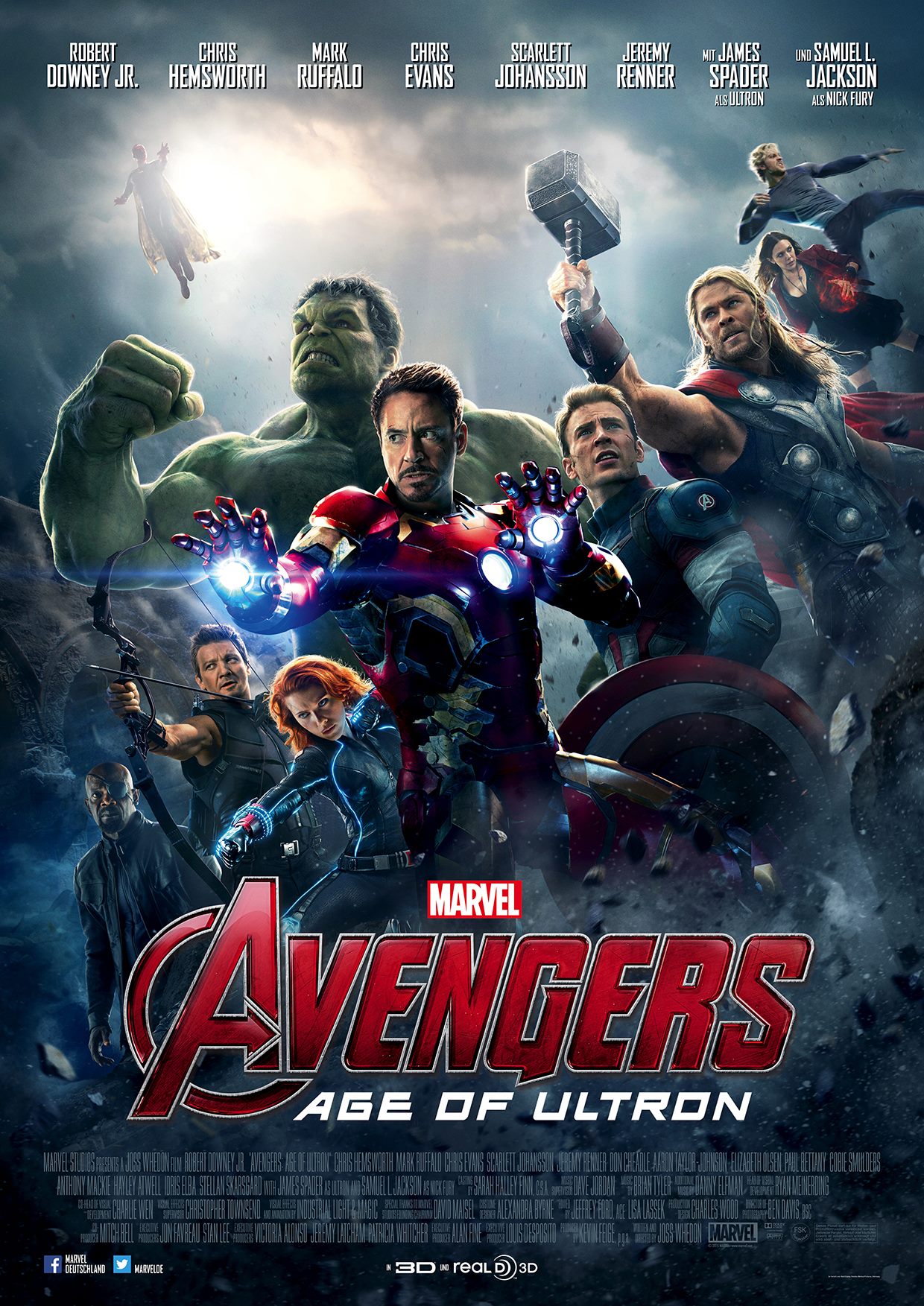
MOVIE REVIEW: Avengers: Age of Ultron

Avengers-Age-of-UltronAvengers: Age of Ultron opened across India today, April 24, 2015. This film is set sometime after the events of the second films in the Captain America and Thor solo “trilogies.” We know this because Thor is on Earth and the Falcon (in a cameo) makes an offhand comment indicating that he’s spending time looking for Bucky Barnes / Winter Soldier. Furthermore, we know it because the opening scene is the Avengers working as a team to take down Baron Von Strucker’s fortress (re: Captain America 2 end-credit scene) in a fight to obtain Loki’s scepter. This scene suggests that the team has been working together for a while in taking down Hydra bases of operation globally. (Many have jokingly inquired why Steve Rogers (Cap) wouldn’t have called in his avenging friends during the events of the Winter Soldier film.  This film reinforces, rather than solves, that riddle.) At any rate, that opening scene contains an awesome action sequence.

The core premise of the film will not come as a surprise to anyone who has seen the trailers for this film–not to mention the previous Marvel Cinematic Universe (MCU) films and post-credit scenes. Tony Stark (Iron Man) tries to “create a suit of armor around the world” and the program–dubbed Project “Ultron”–goes terribly awry.  After Ultron comes into existence, he quickly moves to co-opt the Maximoff twins (better known as The Scarlet Witch and Quicksilver.) Because the twins have an axe to grind with Tony Stark, they willingly side with Ultron. The Scarlet Witch is instrumental in Ultron’s plan. If you haven’t seen the trailers don’t finish this sentence, but for others it will be apparent that the Scarlet Witch’s mind control is used to pit some Avengers against either themselves or others.

The tone of this film is different from the first Avengers movie. In the first film much of the tension springs from unfavorable first impressions and standoffishness. Now the characters know each other and love-hate relationships are rife–some more loving and some more loathing than others. This may make it easier to relate to what’s going on between the major characters. The strained relationships inside the team remain an important factor, and are crucial to the films going forward–most notably Captain America 3: Civil War.)

While the trailers may have led one to believe this would be a big film for Natasha Romanov (aka Black Widow) given the flashback scenes, it’s actually Clint Barton (aka Hawkeye) who has a more pivotal and revealing role in this film. (Perhaps to the chagrin of the many who wonder why he’s even on the team.) However, the evolving relationship between Romanov and Bruce Banner gets a fair amount of screen time–though the need to pack a lot into the film given the huge cast makes this drama feel a bit thin. The twins and their tormented past are also critical to the tone of the film. They hold an event from the past against Stark, but they are ethical people at their core.

The Vision is the character that has been held closest to the vest by Marvel. I won’t say much about Vision to avoid spoiling anything other than that it’s an intriguing character. I was worried that either the way this character was created or the effect he had on the story would be a disappointment, but it wasn’t.

I think James Spader did an excellent job of playing Ultron–a character that vacillates between being childlike and being a grim psychopath. (One may not get the childlike part from the trailers, but this is a brand new intelligent entity, and so it’s clever to show that.)

Like the first Avengers movie, this one has its bit of deus ex machina (bolt from the blue solutions to once insolvable problems), but it’s not the perfection of story that makes these movies engrossing. (I didn’t find it as deus ex machina as the first film–though there is at least one moment that springs to mind.)

What sells these films is: a.) the witty dialogue;  b.) the stunning visuals of the action sequences; and c.) the tension between characters both friend and foe. (Probably not in the aforementioned order.) On those three items this film doesn’t disappoint.

I won’t even bother to recommend you see it, as I’m sure–like everybody else on the planet–you will.

BOOK REVIEW: The Wit and Wisdom of Master Yoda by Yoda

The Wit and Wisdom of Master Yoda: Master Yoda QuotesThe Wit and Wisdom of Master Yoda: Master Yoda Quotes by Yoda

My rating: 1 of 5 stars

[I normally put a link here to the books I review, but wouldn’t want anyone to accidentally buy this one by mistake.]

This review is the same rant I put in my weekly reading review today. If you saw it there, don’t bother reading onward.

This book was a stinker, and I can’t recommend it for anyone–though its saving grace is that it’s slim and thus only wastes a tiny bit of one’s time. What the author apparently did was to watch a Star Wars movie marathon and pull every Yoda line out and collect them together. This is a sad effort in two ways. First, while Yoda isn’t a lead in the movies (and, therefore, has a limited number of lines), there’s a vast canon of Star Wars books, and it doesn’t look like the author trolled any of them for quotes. Second, some of the lines are neither witty nor wise. Occasionally, Yoda has a line equivalent to, “take a left at the second light,” and the author includes such banal quotes. Furthermore, some of the quotes appear a second time in either reduced or extended form. Beyond all these complaints, the author doesn’t even take the time to put together meaningful front matter to tell the reader something interesting that they don’t already know, and thus doesn’t establish his worth in producing such a book. (Also, he doesn’t seem to know accepted protocol for writing quotes inside quotes–i.e. use of single quotes. Which I guess means he probably didn’t just cut and paste all the quotes because then they would have been grammatically correct.) He also could have at least provided told us which movie each quote was from. It’s a lazy effort. It succeeds spectacularly in being lazy. If you’ve seen the movies (or have basic cable so that you can readily do so by way of one of the frequent Star Wars marathons) you’ll gain nothing from this book.

View all my reviews

BOOK REVIEW: The League of Extraordinary Gentlemen (Vol. 1) by Alan Moore

The League of Extraordinary Gentlemen, Vol. 1The League of Extraordinary Gentlemen, Vol. 1 by Alan Moore

My rating: 4 of 5 stars

Amazon page

For those unfamiliar with this series or the movie featuring Sean Connery, this graphic novel assembles a team of heroes from 19th century science fiction and adventure novels. Specifically, the team includes: Mina Harker (of Bram Stroker’s Dracula), Allan Quatermain (of H. Rider Haggard’s King Solomon’s Mine series), Captain Nemo (of 20,000 Leagues Under the Sea and other Jules Verne novels), Dr. Jekyll/Mr. Hyde (of the Robert Louis Stevenson novel featuring their names), and Hawley Griffin (of the H.G. Wells novel, The Invisible Man.) The team’s principle nemesis is Professor James Moriarty of Arthur Conan Doyle’s Sherlock Holmes series.

Interestingly, this book follows the same general plot progression as the movie, but is much different in tone, settings, and character details. The plot progression of which I refer is that the team is assembled (with no small amount of mutual animosity) and they bond into a team as they face a grandiose threat of steampunk industrialization run amok. That plot progression aside, you’ll find an entirely different story otherwise. First, those who favor gender equality will appreciated that Mina Harker is in a leadership role in this volume, the role played by Quatermain in the movie. (That being said, this isn’t a group of individuals who take readily to being led.) Second, those who like darker, grittier tales will find this book more appealing than the movies. Allan Quatermain is found by Harker wasted in an opium den. Griffin is captured after having moved into a girl’s school to use his invisibility to lecherous advantage and the head mistress of said school is decidedly dominatrix like. I generally liked the grittier tone better, though it was hard to reconcile Griffin’s abhorrent behavior with heroism—anti-heroes are a challenge, particularly one who can disappear at will. Third, the team in the book is smaller and more manageable, with the movie having taken on two more characters (Dorian Gray and Tom Sawyer.) Finally, the book doesn’t get around so much. The movie features at least four major settings—not counting the high seas, but the book takes place mostly in Victorian London.

You don’t have to have read all the classic works from which the characters derive to get the story, but it does make it a little more fun. (Yes, I realize that I’m using “classic” for books–some of which–were considered the pulp fiction of their day. However, if your book is still in print after 100 years, I’d say you deserve the status and respect.) Those who’ve read the books will get some subtleties that aren’t critical to the story but are kind of nifty. That being said, don’t expect the characters to match their originals perfectly. The novels covered are wide-ranging, some rely on supernatural elements and others are more realistic, some are futuristic while others reflect the times more accurately. One can’t bring all these individuals into one world and have them be exactly as they were in their original domains.

There are some extra features at the end including a short story featuring a time traveling Allan Quatermain and some art from the series.

I’d recommend this book for those who read comics and graphic novels—especially if they’ve read the stories of at least a few of the 19th century characters. (If you haven’t read any of the novels, you should probably go back and hit some classics before you read anything else. Just my opinion.) It’s an intriguing concept, and it’s done well.

The movie trailer is here.

View all my reviews