BOOK REVIEW: Brain Rules by John Medina

Brain Rules: 12 Principles for Surviving and Thriving at Work, Home, and SchoolBrain Rules: 12 Principles for Surviving and Thriving at Work, Home, and School by John Medina
My rating: 4 of 5 stars

Amazon page


As the title suggests, this is a book of guidance about how to get the most out of one’s mental life. Medina goes a mile wide, looking at twelve areas in which one can improve the performance of one’s brain, including: exercise, attention, memory, sleep, stress management, sensory integration, and visual acuity. It also has chapters that explain how evolution and gender affect the way in which one’s brain operates.

After an Introduction that sets up the premise of the book, there are twelve chapters. The first chapter explores the well-documented connection between exercise and mental performance, and offers insight into what type of exercise has been shown to be most helpful to the brain. The second chapter pertains to our brain’s evolutionary history. The conscious mind housed in the cortex is but the top floor of a multi-story enterprise, and understanding this has important ramifications for how one gets the most out of one’s brain. Chapter 3 explores the way brains are wired, which turns out to be flexibly and diversely. By flexibly, I mean that brains can be rewired by way of what is called neuroplasticity on the proviso that neurons that fire together wire together. By diversely, I mean that each individual’s brain is a bit different, and these differences can explain how someone gifted in one domain may be an idiot in other aspects of life. The next chapter deals with attention and explains why humans suck at multi-tasking (despite thinking they are the bomb) and why an extended ability to concentrate is essential to success.

The next two chapters both deal with memory, but with different types of memory—each having its own unique considerations. The first, chapter five, describes the peculiarities of short-term memory, that part of the memory that can hold a finite amount of data points at the forefront of our minds for a limited period. Chapter six deals with long-term memory, the part that holds vast stockpiles of information for extended periods (sometimes across a lifetime) but with lower fidelity and accuracy than we generally believe. While the rule offered for both forms of memory is simple—i.e. repetition is key—there is much to consider in the details. For starters, there are many other ways to divide up memory other than with respect to the short-term / long-term dichotomy (e.g. procedural v declarative) and differences in the way these types of memory work affect how they are both optimized.

The influence of sleep on mental performance is the subject of chapter seven. There is a vast pile of research on this subject, including a number of famous cases of extreme sleep deprivation—some of which are touched upon herein. It’s true that there is a great deal of variation in how people sleep (e.g. morning v non-morning people, and those who can power nap and those who can’t.) However, one thing remains unambiguous and that’s that we need sleep and must have full cycles of it in order to not suffer mental degradation. Chapter 8 is about how stress can kill mental performance. Of course, not all stress is the same. When one feels in control, short bursts of stress can be just the motivator one needs, but when feeling out of control stress can become crippling.

Chapters 9 and 10 are both about the senses. The first, nine, explains how one can obtain synergistic outcomes in a multi-sensory environment, and the second focuses on vision—arguably our most dominant sense. Our sensory experience is much more a product of the brain (and much less a pure representation of the outside world) than we tend to believe.

Chapter 11 reports on the gender differences that have been discovered with respect to brains. Before anyone lights a torch or sharpens a pitchfork, this isn’t the old “boys do math and girls do language” line. The differences are more nuanced, and it’s not clear in every case that the differences matter—or how. E.g. Men have bigger amygdala (involved in emotional response) and produce serotonin more quickly. While it’s not clear that these differences make a big difference, it’s know that men and women use their amygdala differently in times of stress, men activate the right amygdala and tend to remember more of the gist of events while women trip the left and remember more emotional details. The last chapter is about our human proclivity to explore, but it focuses heavily on infancy and childhood, during which the world is novel and the impulse to explore is at its height.

Each chapter ends with a summary box that both restates the rule and offers a few bullet points of key takeaway lessons, which may either be more specific guidance or summary of relevant research findings. There aren’t many functional graphics—by functional I mean as opposed to the ornamental drawings used throughout. I only remember one brain drawing. However, the reason for the dearth of graphics may be that there is a link to a 45 minute video that one can access, and the publisher probably thought that was a much more useful way to impart graphic information. It should also be noted that in the Kindle edition that I have, the references are also on-line.

I found this book to be useful. As I mentioned, it’s a broad overview. One can get books that dive more deeply into all of the topics addressed. But this is a nice mix of popular science and self-help. It’s readable, and the summaries and concise statement of rules help make the content stick more effectively.

I’d recommend this book for those who are seeking a book that covers a lot of ground, and which offers practical guidance as to how to put scientific discoveries on the brain into use in one’s own life.

View all my reviews

BOOK REVIEW: Siddhartha’s Brain by James Kingsland

Siddhartha's Brain: Unlocking the Ancient Science of EnlightenmentSiddhartha’s Brain: Unlocking the Ancient Science of Enlightenment by James Kingsland
My rating: 5 of 5 stars

Amazon page


Kingsland builds his niche by connecting the dots between the teachings of the Buddha and scientific discoveries about meditation and mindfulness. There are many books that tell the life story of Siddhartha Gautama from various perspectives (e.g. famously the books by Hermann Hesse and Karen Armstrong.) There are also a number of books reporting the science of meditation (e.g. Herbert Benson and Sat Bir Singh Khalsa.) However, it’s not so common for the subjects to be overlapped.

There’s a reason that this middle path hasn’t been more widely studied. While Buddhism is arguably the most science-friendly of the major world religions, there’s always a gulf between spiritual and scientific thinking. The writer has to figure out how to chart a course through rocky waters. Books appealing to spiritual seekers are likely to come across as insubstantial fluff to the scientifically minded reader, and books appealing to skeptics are likely to feel materialistic and cold (and, perhaps, naive) to the spiritualist. The Buddha’s teachings about the need for the practice to be experiential, rather than faith-based, offers a unique opportunity to tread this tightrope. Furthermore, the Dalai Lama’s willingness to facilitate a dialogue between science and Buddhism has been crucial as well. One can easily set aside controversial issues like reincarnation and karmic law as they aren’t essential to the value of mindfulness.

The book consists of twelve chapters. The chapters generally begin with a story or teaching from the life of Buddha, and then go on to investigate the relevant lesson in more detail with particular emphasis on any relevant scientific discoveries that support said teachings.

The story of Buddha begins in a wealthy, high-caste household with young Siddhartha Gautama being kept from seeing the effects of aging, illness, and death. When the young Siddartha, nonetheless, sees these things, it is a powerful introduction to the concepts of impermanence and suffering that will play a central role in his future teachings. Chapter 1 starts this introduction and also offers an overview of the book. Chapter two continues it. In Chapter three, Kingsland describes a little of the known history of meditation, though its origins are lost to time.

Chapter 4 is entitled “The Second Dart” and it discusses the Buddha’s teaching of the same name—the second dart being one’s mental reaction to an event (i.e. the initial dart.) Chapter 5 investigates the question of whether there is a self—and, if so, of what manner. A core idea within Buddhism is that the self is illusory.

Chapter 6 gets to the heart of the matter by explaining the mechanism of mindfulness meditation and what has come to be known as MBCT (Mindfulness Based Cognitive Therapy)—a secular approach to the use of mindfulness to improve well-being. The next chapter tells the story of how a group of fire worshippers came to follow the Buddha after he made clear that everything (their senses, thoughts, and emotions) were aflame with craving, hatred, and delusion, and that springboards into a discussion of how mindfulness is used to reduce craving and addiction.

Chapter 8 tells the story of an attempt to kill the Buddha via an angry, drunk elephant, and the Buddha’s thwarting of the plot by way of calm and compassion. As one might have guessed, the chapter is about moderating emotions, just as the Buddha controlled his fear before the elephant.

Chapter 9 takes a jaunt into evolutionary biology to question how the mismatch between what humans evolved to do and what we do in the modern world causes mental illnesses and how mindfulness can help mitigate the problem. Chapter 10 is about metacognition, or the ability to observe and reflect upon our own mental experience—i.e. thinking about thoughts. Chapter 11 is about cognition and decision-making, and the role that meditation can play in improving our performance in this domain. The last chapter discusses the Buddhist conception of death and enlightenment. It isn’t until this point that there’s a major divergence between the Buddhist and scientific viewpoints. There is a discussion of the Buddha’s teachings emphasizing that belief in ideas from on high is not so important as experience.

Six of the chapters (2, 4, 6, 8, 10, & 11) are concluded with guided meditations to offer the reader an introduction into the basics of mindfulness. These are simple practices that many readers will already be familiar with in some variant or another. (e.g. breath awareness, bodily awareness, and mindful eating.)

There are only a few graphics (e.g. maps and diagrams—mostly of the brain) but there is no need for additional graphics. The book has references annotated.

I found this book interesting and thought-provoking. It uses the stories of Buddha as well as some stories from the present day to make the reading more engaging and approachable. The discussion of scientific research is easy for a neuroscience neophyte to follow.

I’d recommend this book for anyone interested in learning more about the science behind Buddhist practices.

View all my reviews

BOOK REVIEW: The Devil’s Dictionary by Ambrose Bierce

The Devil's DictionaryThe Devil’s Dictionary by Ambrose Bierce
My rating: 5 of 5 stars

Amazon page


Like all dictionaries, it’s a collection of words and meanings, but this one is much more fun to read. Before it was compiled into a book, these entries were serialized in newspapers from 1881 to 1906. As might be expected, some of the definitions / jokes didn’t age well. However, a great many of them are as amusing as ever. In fact, because so many of the definitions revolve around people’s narcissism and self-serving biases, they may be more accurate and apropos than ever. (And lawyers and politicians continue to be fair game as the butt of a joke.)


Let me give a few examples of the aforementioned narcissism:

ABSURDITY, n. A statement or belief manifestly inconsistent with one’s own opinion.

ACQUAINTANCE, n. A person whom one knows well enough to borrow from , but not well enough to lend to…

ADMIRATION, n. Our polite recognition of another’s resemblance to ourselves.


Not all of the definitions revolve around humanity’s narcissistic worldview. While subjects like politics, economics, and religion are widespread, the entries cover the wide range of subjects one might see in your regular dictionary. e.g.:

CLARIONET, n. An instrument of torture operated by a person with cotton in his ears. There are two instruments that are worse than a clarionet—two clarionets.

CORPORATION, n. An ingenious device for obtaining individual profit without individual responsibility.

ECONOMY, n. Purchasing the barrel of whiskey that you do not need for the price of the cow that you cannot afford.

EDUCATION, n. That which discloses to the wise and disguises from the foolish their lack of understanding.

LOVE, n. A temporary insanity curable by marriage…

TELEPHONE, n. An invention of the devil which abrogates some of the advantages of making a disagreeable person keep his distance.


Despite being a work of the 19th century, Bierce held a more rational and scientific outlook than typical, and this can be seen in many definitions–some of which were probably considered outlandishly irreverent in the day. This helps to keep “The Devil’s Dictionary” relevant. e.g.:

FAITH, n. Belief without evidence in what is told by one who speaks without knowledge, of things without parallel.

FEAST, n. A festival. A religious celebration usually signalized by gluttony and drunkenness, frequently in honor of some holy person distinguished for abstemiousness.

GHOST, n. The outward and visible sign of an inward fear.

MIND, n. A mysterious form of matter secreted by the brain. Its chief activity consists in the endeavor to ascertain its own nature…

MONKEY, n. An arboreal animal which makes itself at home in genealogical trees.

MULATTO, n. A child of two races, ashamed of both.

OCEAN, n. A body of water occupying two-thirds of a world made for man—who has no gills.

PRAY, n. To ask that the laws of the universe be annulled in behalf of a single petitioner confessedly unworthy.


In addition to the definitions, there are many segments of verse or prose used to elaborate on the definitions. These excerpts are usually clever, humorous, or both. There are no graphics and so these snippets are the only use of examples and clarification provided. e.g.:

re: EPIGRAM: “In each human are a tiger, a pig, an ass, and a nightingale. Diversity of character is due to their unequal activity.”

I would highly recommend this book for those who like humor with language.

View all my reviews

BOOK REVIEW: How to Live on 24 Hours a Day by Arnold Bennett

How to Live on 24 Hours a DayHow to Live on 24 Hours a Day by Arnold Bennett
My rating: 3 of 5 stars

Amazon page


This is a book about free time management. Bennett proposes that one use one’s non-working hours for self-betterment, and offers advice on how to go about it. It’s a single volume from a larger tract entitled, “How to Live.”

The book was written in 1908, and it’s at once archaic and ahead of its time. How is it archaic? While the book is slim–less than 40 pages–it’s verbose by present-day standards. However, the prose isn’t so purple as to be unreadable. Also, some passages won’t be relatable to modern-day readers. (e.g. Bennett counters the argument—apparently common in early 20th century Britain—that one can’t start one’s day before one’s servants have awoken, and asking them to get up an hour or two earlier is so 18th century.)

More importantly, one must exercise caution because some of the advice isn’t sound in light of recent scientific research. The best example of this is the idea that one should summarily cut an hour and a half or two out of one’s sleep time. This can work for some, but as blanket advice it won’t produce wholly positive results. To be fair, there are still people giving this advice, e.g. Arnold Schwarzenegger. In my view, two incorrect principles inform this belief—one is wrong in my opinion, and the other is being gradually killed by science. The first is the Western attitude that rest is a form of weakness that we—unfortunately—are forced to put up with, but which we should try to minimize (and even be vaguely ashamed of.) Rest is an essential part of the productivity formula. (Bennett both recognizes and denigrates the value of downtime.) The second notion is that sleep is just rest for the mind. There’s substantial evidence that sleep plays a major role in memory consolidation as well as ramping up healing actions into full gear.

How is the book ahead of its time? Let me say that I mean ahead of it’s time for early 20th century Britain. In some parts of the world, the ideas I mention have been around for thousands of years. First, Bennett describes the importance of training the mind to not be in a constant state of flux, so that one can be less reactive and subject to petty impulses. Bennett doesn’t use the terms “meditation” or “mindfulness” (he talks about “concentration”), but what he describes is meditative practice. What he describes is a bit more cerebral than one would recommend for a beginning practitioners of meditation in light of what we know from the people who do this stuff really well (e.g. Buddhists and Yogis.) While Bennett says that the one can use any object of concentration, he recommends passages from Epictetus or Marcus Aurelius. (Two stoic philosophers.) Note: I’m not disregarding the virtue of reading and actively thinking about the ideas of the Stoics. I’m just saying that it may take some preliminary concentration work on breath or a mantra to get to a place where one can get what one wants out of it.

Second, the book suggests that one rethink one’s notion of happiness. Then, as now, it was common to think that—or at least behave as–if one accumulated enough wealth / stuff, one would achieve a state of happiness. Of course, there’s no evidence that that’s the case, and building evidence that it isn’t. Third, Bennett recognizes the folly of trying to make a massive change all at once. He suggests that one start with an hour-and-a-half a few times a week, and build from there as is manageable as long as time is available.

This volume consists of twelve chapters of a few pages each. The chapters start by introducing the premise—that one has 24 hours a day and roughly 16 of those are ones that one can use as one wishes. Bennett discusses why one would want to do more with this time, what the challenges are, and how one can structure a program of self-development. There are a couple of chapters that discuss the mind and concentration, as mentioned above. However, the program goes beyond mere concentration. There are chapters on the arts, serious reading, and dangers to avoid when starting such a program–as well as my favorite chapter entitled, “Nothing in Life is Humdrum.”

Perhaps the most controversial suggestion in the latter part of the book is that one shouldn’t include novels in one’s “serious reading” time. It should be noted that Bennett isn’t telling one not to read novels, he’s just saying that they shouldn’t be part of one’s mental development regime. Instead, he recommends poetry and non-fiction. His point is that novels don’t challenge the mind. One can certainly see how this is true of today’s sweatshop commercial fiction or the YA novels that dominate the best seller lists, but harder to understand why it’s true of “Ulysses” or “Moby-Dick.”

Given the proviso that one should take what is useful and discard the rest, I’d recommend one give this a read. It’s particularly ripe for consideration if one feels that one has surrendered one’s free time to social media, TV, and brain candy books.

View all my reviews

BOOK REVIEW: Sikhism: A Very Short Introduction by Eleanor Nesbitt

Sikhism: A Very Short IntroductionSikhism: A Very Short Introduction by Eleanor Nesbitt
My rating: 4 of 5 stars

Amazon page


I picked up this book before a trip to Amritsar. While Sikhs are arguably the most visually distinct religious adherents, it’s one of the least understood world religions with respect to internal aspects like beliefs and practices. And a major religion, it is. With 23 million followers, it’s between the fifth and eighth most widely practiced religion in the world (depending upon whether one aggregates traditional religions in China or Africa.)

This book offers a 150 page overview of what it means to be Sikh, and it explains it not only in religious, but also in cultural, political, and historical, terms. If one needs deep insight and great detail about Sikhism, this may not be the book for you. But it gives one the big picture quite nicely, and with a scholar’s balanced view (as opposed to that of a theologian.)

There are eight chapters in the book. The first chapter introduces one to Sikhism. Besides the basics, this chapter discusses what makes Sikhism a distinct religion, and how it has been influenced by other religions—most significantly Hindu and Islam, in that order. It also discusses what it means to be Punjabi, in contrast to what it means to be Sikh. To understand the subject of the second and third chapters, one has to know how the leadership of this religion unfolded. There were ten human teachers (Guru), and then a book of scriptures assumed the mantle of Guru. The second chapter is about the human Gurus (and mostly about the first one—Guru Nanak, with a little about the next four, and almost nothing about the last five.) The third chapter is about the Guru Granth Sahib, which is the book of scriptures that has served as the religion’s guide since the early 18th century.

Chapter four discusses Sikh religious practices–including the five K’s that serve to give Sikhs such a distinct physical appearance. The 5 K’s are: kesh (uncut hair), kanga (comb), kirpan (sword), kachh (cotton breeches), and kara (steel braclet.) While only the Khalsa (i.e. the community of initiated) necessarily practice all of these, it’s common to see at least some of these features among the community at-large. The wearing of turbans, beards (though often not completely uncut), and steel bangles are ubiquitous in Punjab. The chapter also delves into turbans, ethics, symbols, and the controversial question of vegetarianism (some Sikhs are and some aren’t.)

The fifth chapter offers a history of Sikhism over the past few centuries from the era of the Maharaja Ranjit Singh in the early 19th century to the dire events of early 1980’s (there was a massacre of Sikhs by government forces in 1982 and in 1984 Indira Gandhi was assassinated by Sikh bodyguards, leading to yet more violence.) Chapter 6 discusses the topic of Sikhs abroad. While Punjab is consider the Sikh homeland, there are Sikhs around the world—but particularly in a few areas where there numbers are sufficient to constitute a community—e.g. in the United Kingdom. Chapter 7 investigates the theory and practice of Sikhism with regards to a few key issues of life on the Indian subcontinent including: the caste system, gender, and attitudes toward other religions. (In many regards, Sikhism is comparatively progressive, but practice hasn’t always followed the scripture—e.g. high girl child infanticide rates.) The last chapter considers the future of Sikhism moving forward.

There are graphics of several types throughout the book—most notably black-&-white photographs. There are a few helpful ancillary features including a “Further Reading” section, a timeline, and a glossary of terms.

I found this book useful, and would recommend it for anyone seeking background on Sikhism.

View all my reviews

BOOK REVIEW: The Discourse Summaries by S.N. Goenka

Discourse SummariesDiscourse Summaries by S.N. Goenka
My rating: 4 of 5 stars

Amazon page


I began reading the summaries before I attended the Vipassana meditation 10-day course. While most of one’s days are spent in meditation, each evening they play video-taped discourses by S.N. Goenka, with each running for an hour to an hour-and-a-half. As the title suggests, this book consists of edited transcripts of those talks. As the course is known for being challenging (approximately 10 hours/day in meditation, noble silence [no talking–or even acknowledging–anyone but the teacher and staff], and no distractions [no phones, no books, no journals, no i-Pods, etc.]), reading the discourses was a way to mentally prepare for the course. (Though I’d already read a book call “Equanimous Mind” by an individual who’d completed the course.)

Let me provide background for those unfamiliar with Vipassana meditation. It’s nominally a Theravadan Buddhist practice, but its religiosity is stripped to a minimum and it’s presented in a largely secular manner. That doesn’t mean that a scientifically-minded skeptic such as myself isn’t occasionally left scratching his head and thinking “that’s not right.” However, it’s repeatedly emphasized that one should take what is of value to oneself and leave the rest behind, and so while there are a few notions mentioned during the discourses that aren’t supported by evidence, one needn’t believe anything controversial to benefit from the practice. (e.g. Karma and reincarnation are mentioned, but if one doesn’t believe those are likely realities, it doesn’t change the effectiveness of the meditation.)

Moving on, Theravadan Buddhism is the branch that is most commonly practiced in Southeast Asia. (It’s sometimes called Hinayana, but—as I learned during a discourse—that’s considered a derogatory term by many Theravadans. “Hinayana” means “lesser vehicle” in contrast to Mahayana’s “greater vehicle,” and the implication is that it’s a path by which only a more select group can achieve enlightenment. One can readily see why this would be objectionable to Vipassana practitioners as they emphasize that the practice is available to everybody [one need not even identify as Buddhist] and that the practice is the heart of the path to enlightenment.) Vipassana meditation involves systematically scanning one’s body for sensations and acknowledging them without attaching positive or negative thoughts and labels to them. The idea is to train oneself to not mindlessly react to sensations, nor to mindlessly attach values to them.

There are eleven discourses, corresponding to the days over which one is at meditation center. However, the new information is mostly in the discourses from days one through nine. The last two discourses consist of a review and a discussion of to how to keep one’s practice going—should one choose to do so.

The discourses present two types of information. On one hand, they provide a primer on Buddhist philosophy regarding the path to enlightenment. For example, Goenka explains the Four Noble Truths and the Eight-fold Path. The Four Noble Truths describe human suffering, its causes, and the path to moving beyond this suffering. That path brings one to the Eight-fold Path which describes eight areas in which one must properly align one’s approach in order to eliminate said suffering.

On the other hand, the discourses provide information about the meditational practices and the logic that informs them. During the first few days of the course, one focuses on respiration and related sensations over a progressively smaller area around and on the nose. Then, on the fourth day, one gets into the Vipassana practice as mentioned above (scanning the body for sensation), but one practices several variations of this over the last few days of the course. It seems that one practices these different ways both because one becomes capable of more challenging approaches and because not everybody experiences the same types of sensations, and so some methods work better for some types of sensations than others. To give an example, on day one might scan one arm at a time, but then one shifts to scanning both arms simultaneously.

There are no graphics and the only ancillary matter consists of a list of Pali quotations as well as a Pali term glossary. (Pali is the language in which the Buddhist scriptures were originally written.) However, there was really no need for either graphics or notations.

I found these summaries were worth reading even having gone through the course and heard the discourses at the center. For one thing, there’s a good amount of information packed into the lectures. While it’s not hard to understand, there’s a high density of information content. For another, Goenka was a charming and humorous individual, so it’s not boring to watch the taped discourses even if one has previously read them.

I would definitely recommend reading the Discourse Summaries if one is considering taking the Vipassana course.

View all my reviews

BOOK REVIEW: The Stationary Ark by Gerald Durrell

The Stationary ArkThe Stationary Ark by Gerald Durrell
My rating: 4 of 5 stars

Amazon page


If you’re like me, you have mixed feelings about zoos and aquaria. On the one hand, it’s an awe-inspiring experience to see the mighty, ferocious, and odd creatures that don’t make it into one’s backyard (for those who even have yards.) On the other hand, one has to wonder whether the creatures on display are as miserable as one would be in their shoes. (i.e. Figurative shoes. I do know that other animals don’t wear shoes… Except for horses… but I digress.)

In this book, Gerald Durrell examines the question of what makes for a zoo that’s good for the animals as well as for its human visitors. Most of us are sophisticated enough to realize that straight-up anthropomorphization (projecting human thought processes onto animals) isn’t a sound way to get to the bottom of an animal’s experience. Animals seem much more resilient than humans, but they aren’t infinitely tolerant. While one can’t conduct a “zoo resident satisfaction survey,” there are means by which to gain insight into the animal’s state of well-being, including: its health, its appetite, and its sex drive / reproductive success.

Durrell had the experience of opening a zoo, and was himself dismayed by what he saw at many of the zoos he visited. In some cases, they were designed for optimal viewing but didn’t give adequate consideration to the well-being of the animals. However, some zoos genuinely tried to act in the best interest of the animals, but they missed the mark by projecting human thinking onto animals–instead of examining the evidence for what conditions positively (or negatively) impact the animals’ health, appetite, and sex drive.

This short book (less than 150 pages) consists of seven chapters. The first chapter presents the challenges Durrell went through in trying to open a new and different kind of zoo. Chapters 2, 3, 4, and 6, respectively, examine the issues that must be taken into account with regards to enclosures, feeding, mating, and sick animals. Obviously, these chapters don’t cover the entirety of the subject in detail, but rather combine generalities with a few interesting (and often humorous) examples from specific species. Chapter 5 gets into the challenges of keeping records in a zoo that isn’t just about entertainment but is also focused on conservation and education. The last chapter sums up Durrell’s arguments for how Zoos can be of benefit to animal species other than humans.

There are no graphics, notations, or bibliography. It’s not that kind of book, but is rather an extended essay. It does feature both humor and insight in good measure.

I’d recommend this book for those who want to better understand what features of a zoo are good (or bad) for the animals, and how zoos might be restructured to advance their roles in conservation and education.

View all my reviews

BOOK REVIEW: Conflict & Suspense by James Scott Bell

Conflict and Suspense (Elements of Fiction Writing_Conflict and Suspense (Elements of Fiction Writing_ by James Scott Bell
My rating: 4 of 5 stars

Amazon page


This is a book about the stuff that keeps readers reading. Without conflict there is no hindrance to a character achieving his or her goal, and thus no story. Suspense is a lack of clarity about what comes next that spurs the reader to keep exploring. Bell defines conflict and suspense, and then explores the various means by which these crucial features are conveyed in stories. I say in stories, but Bell is predominantly speaking to novelists with this book.

The book is divided into two unequal parts. The first, and larger, consists of fourteen chapters about conflict. The first few chapters describe conflict and how it is set up. Then Bell examines how the many dimensions of writing can be manipulated to fire up the tension, including: point of view, openings, subplots and flashbacks, dialogue, theme, style, and even editing. Chapter 14 suggests some tools that writers may employ to help them ratchet up the conflict.

The second, and shorter, part (8 chapters) delves into the topic of suspense. The organization follows a similar progression. First, Bell describes suspense through many potent examples. Second, he moves onto examine the various means by which suspense can be created. With respect to the latter, Bell suggests ways in which dialogue, setting, and style can be presented in order to create cliff-hangers. The last chapter pulls everything together to advise writers on the how to create stories that maximize conflict and suspense. This is in part a summary of the book, but it looks at the process more and the dimensions of writing less, and therefore offers something new as well.

Readers of Bell’s other guides may be familiar with the LOCK formulation that he uses in his “Plot & Structure” book. LOCK is an acronym for Lead (an intriguing opening), Objective (a goal of dire consequence), Confrontation (the battle for the objective), and Knock-out Ending (a conclusion that satisfies.) I mention this because one may find synergy in reading other books in the series. LOCK is not as central a concept here as in the “Plot & Structure” book, but it’s nice to have a common mechanism by which ideas are conveyed.

There’s not much by way of ancillary material. There are a few simple black and white graphics / diagrams. However, there is one nice feature in the form of an Appendix that analyzes conflict for two novels: “To Kill a Mockingbird” and “Silence of the Lambs.” These were good choices both because they represent literary as well as commercial fiction, and because they both have popular movie adaptations. The latter comment might seem like sacrilege to the “the book always beats the movie” crowd. However, using movies as examples—as Bell does here and there—offers the advantage that the average reader will have seen a higher percentage of good movies than they’ve read good books. This is even true for most us who read a ton because relatively few (if any) great movies come out each year and the history of cinema is much shorter.

I both enjoyed and learned from this book. Bell uses many excellent examples to support the ideas that he’s presenting, and this makes the book readable and easily digestible. I’d recommend it for writers of fiction who seek to put more zip into their creations.

View all my reviews

BOOK REVIEW: Characters, Emotion & Viewpoint by Nancy Kress

Characters, Emotion & Viewpoint: Techniques and Exercises for Crafting Dynamic Characters and Effective Viewpoints (Write Great Fiction)Characters, Emotion & Viewpoint: Techniques and Exercises for Crafting Dynamic Characters and Effective Viewpoints by Nancy Kress
My rating: 4 of 5 stars

Amazon page


This book is about how to write characters with sufficient depth that readers will follow them through to the end of a story. As the title suggests, there are three major components to the book: character building, emotional considerations, and point of view. A story requires a character who needs or wants something and faces barriers to that goal. The character has to be someone who the reader is interested in seeing through a process that involves inching toward a goal while being repeatedly beaten back. This doesn’t mean the character has to be likable, but if the character is unrealistic and uninteresting readers won’t get far. (In other words, they don’t have to like the character, but they do have to feel some sort of way about them.) Facing barriers to one’s goals creates emotional states that must feel authentic. If a character doesn’t respond emotionally to events, then the story is likely to feel flat (unless one has built a hilarious Sheldon Cooper-like character on purpose.) The perspective from which the reader learns of events is critical because it determines what information the reader is privy to, and—in particular—information about thoughts and emotions that are sometimes falsely portrayed.

Of the sixteen chapters that comprise the book, the first seven explore character development. Chapter 1 describes character in terms of general types. The book goes on to discuss the importance of how one introduces key characters. The next three chapters drill down into the challenge of building an authentic character: 1.) What is the character like deep down? 2.) Are the motives of the character clear-cut or complex? 3.) How can one show that the character has changed over the course of the story, and, if they don’t change, will the reader be satisfied? Chapters 6 and 7 investigate specialized types of characters (i.e. genre characters such as in romance, mystery, thriller, or sci-fi [Ch. 6] and in humor [Ch.7.])

Chapters 8 through 11 examine emotion and how it’s conveyed to the reader. The means by which writers communicate emotion include: dialogue (Ch. 8), metaphor, symbolism, and sensory experience (Ch.9.) Chapter 10 delves into special cases that are common in fiction but which require unique consideration (love, fighting, and dying.) Frustration has its own chapter (Ch.11,) and that may seem odd, but one must remember that a story is one barrier after another being erected in the way of the character’s pursuit of his or her objective.

The next four chapters present information to help the writer evaluate different approaches to viewpoint. Not only are there various pros, cons, and considerations one must take into account when deciding upon viewpoint, each approach has a several variations. The first of these chapters (Ch. 12) outlines the broad-based considerations. The next three chapters deal with first person (Ch. 13), third person (Ch. 14), and omniscient points of view (Ch. 15,) respectively. (The rarely used 2nd person point of view is also discussed briefly, but largely as a warning.) The last chapter explores how to make it all work by way of what Kress calls the “fourth persona.” Early in the book, one is told that the writer must simultaneously embody three personas (i.e. the writer, the character, and the reader.) Kress’s “fourth persona” is that of the critic, and it becomes necessary once one has drafted a story and character.

The book has a few extras. At the end of each chapters there are several (usually 4 to 6) exercises to help writers understand the concepts through practice. The chapters each have summaries, and at the end of the book there’s a summary in the form of a checklist. That is about it for ancillary features. There are a couple of graphics in the form of pictures of a “mini-bio” and an “emotional mini-bio.” These are single page fill-in-the blank summaries that help one build a character that has depth and an authentic feel.

I found this book to be interesting and educational. The writer uses examples from a number of popular commercial and literary fiction authors. There’s no real need to be familiar with any particular author, but being familiar with them might present one with additional insights. The book is readable.

I would recommend this book for writers of fiction.

View all my reviews

BOOK REVIEW: Piriformis Syndrome by Loren Fishman, M.D.

Piriformis Syndrome: Diagnosis, Treatment, and Yoga: Pain in the ButtPiriformis Syndrome: Diagnosis, Treatment, and Yoga: Pain in the Butt by Loren Fishman
My rating: 4 of 5 stars

Amazon page


This short book (<50pp.) describes piriformis syndrome, what causes it and how it’s diagnosed and treated. Piriformis Syndrome is a malady in which a nerve is pinched by the piriformis muscle. Because of the way pain (and other sensations) radiate, it’s not necessarily easy to differentiate this syndrome from a low back injury. However, the descriptions of the specifics of this condition, and the test used to diagnose, it may give one insight as to whether one is looking in the right direction for the cause of one’s butt and leg pain.

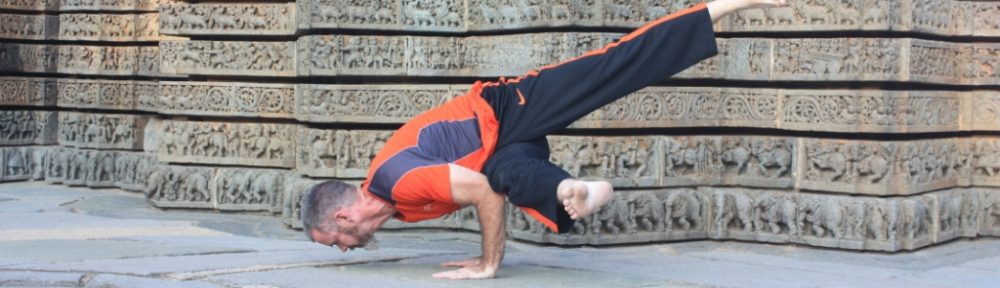
One nice feature of this book is that it explains how yoga can be used both as part of the treatment regimen and as a preventive measure. The yogic treatment consists of just four classical postures of Hatha Yoga: Janu Shirshasana (head to knee pose), Parivrtta Trikonasana (twisted triangle pose), Matsyendrasana (a simple twisting pose named for a sage), and Parivrtta Parsvakonasana (twisted side angle pose.) However, yoga teachers who have students who’ve been diagnosed with this condition will find it nice that the book gives modifications and clarifications pertaining to use of the postures to help such people.

There are seven chapters in the book. The first describes the condition and its cause. The second chapter explains the connection between the condition of piriformis syndrome and the symptom of sciatica. Chapter three clarifies the ways in which this condition may be misdiagnosed, and this is followed up by the chapter that shows how it is diagnosed by both physical examination and by imaging technology. Chapter five gives a basic overview of the available treatment options including injections, drugs, physical therapy, surgery, and yoga. The next chapter talks about the state of research. The last chapter explores the yoga asana that can be used to help treat or prevent piriformis syndrome. There are a few graphics. These include line drawings such as of the diagnostic physical exam, and photos of modified versions of the yoga postures.

I’d recommend this book for those who’ve been diagnosed with this ailment, who believe they might have it, but also for yoga teachers who are interested in expanding their understanding of the afflictions of which their students may suffer—so as to be prepared to help them or, at least, not hurt them.

View all my reviews