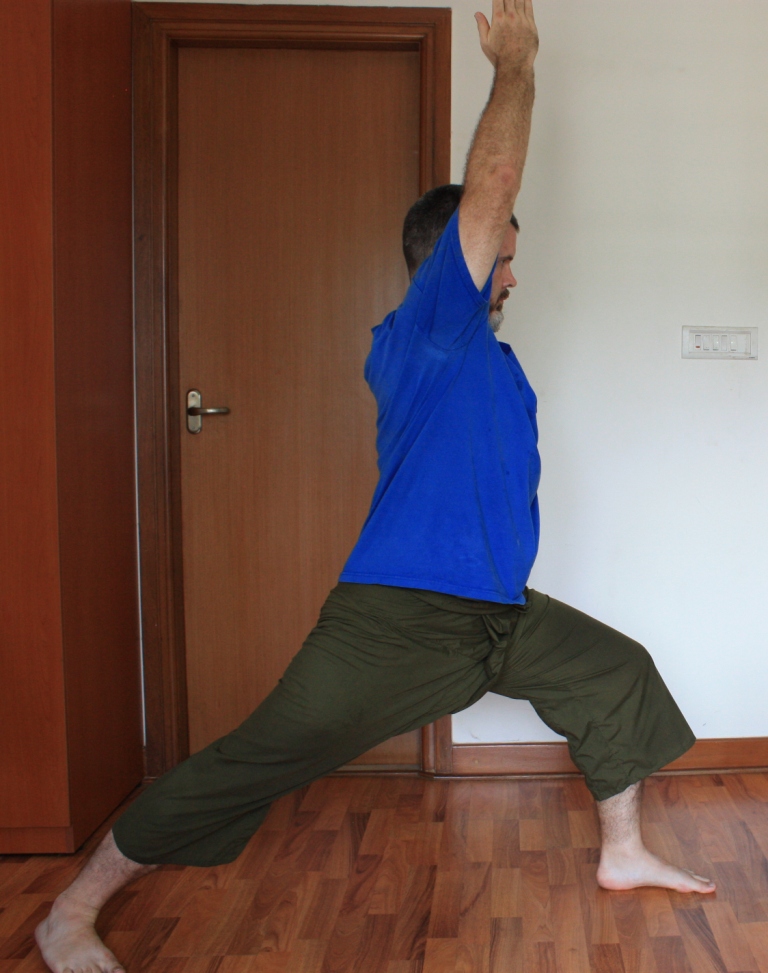
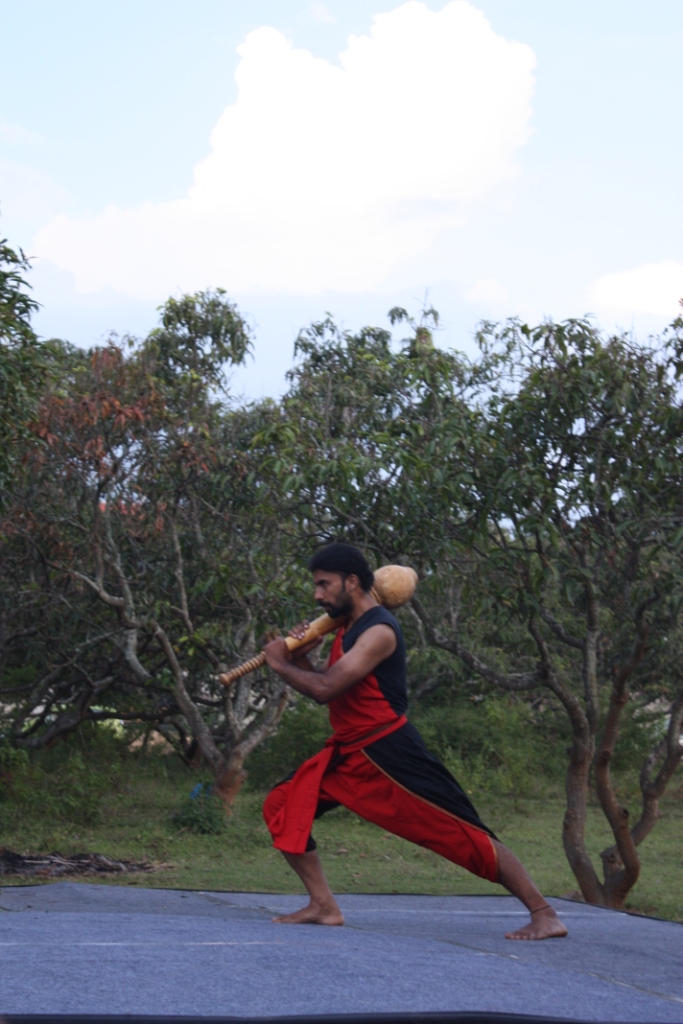
10 Easy Pieces of Fitness Wisdom: and Why “Fitness Secrets” are Bullshit

A few weeks ago I did a post entitled, 10 Easy Pieces of Wisdom: and Why “Secret Wisdom” is Bullshit. That article’s premise was that understanding what one needs to do to be wise is simple, but the process of doing it is inescapably arduous–often to the point of seeming Sisyphean. (For those who aren’t brushed up on their Greek Mythology, Sisyphus was the guy who was punished by having to roll a rock up to the top of the hill only to let it roll back down, and the repeating the process ad infinitum.) I’m not saying that it’s a Sisyphean task, just that it can feel that way and one has to press forward through that feeling.


This post has the same premise, but applied to fitness. Fitness and wisdom have more in common than you might first think–they are both about improvement of the self. Unfortunately, the commonality that’s relevant here is that both invite crowds who will try to convince you they have an end-run around hard work. One of my past martial arts teachers, who was also in law enforcement, said that “cons only work on people with larceny in their hearts.” So it is that the con-men that are trying to sell “enhanced formula supplements” or “a 15 minute per week workout” can only sell to the people who want something for nothing. (Clue: what you get for nothing is nothing worth having.)


Without further ado, here are the 10 easy pieces:


1.) Know Thyself. This is a two-parter:

First, don’t let your ego write checks your body can’t cash. Some students want to jet right into the most advanced exercises. That’s like a third grader taking trigonometry; it’s ultimately less than productive. These are the individuals who tear ligaments, and who you don’t see again for six months–if ever. For virtually everyone, advanced exercises–be it a muscle-up or a yogasana like Urdhva Dhanurasana (A wheel pose, chakrasana, that is entered from a standing back bend)–require a lot of time spent in capacity building via fundamental exercises.


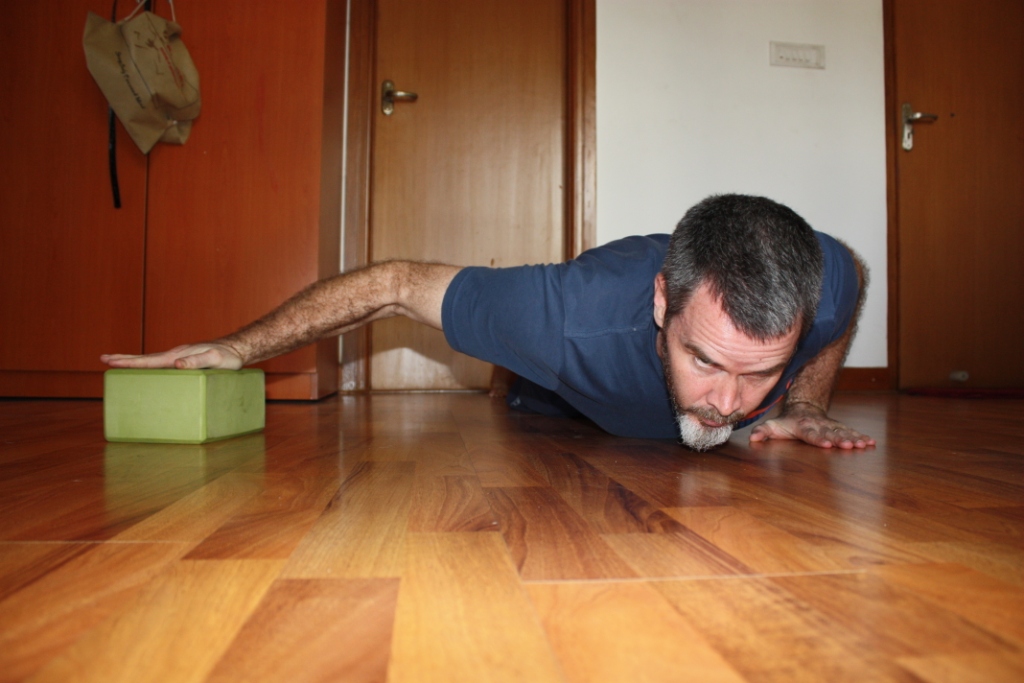
I’ll give an example, I saw someone on television yesterday doing the most horrendous single-armed push up. The only thing that kept this individual from damaging himself is that his range of motion was so tiny (he may have still injured himself.) His problem is that he heard that single-arm push-ups were cool, and he wanted to get straight to it. In reality, one needs to build into that exercise starting from a good solid standard push up, and then doing preppers (preparatory exercises) that gradually shift the load onto one arm. But maintaining form as well as one can. For example, putting one hand on a block off to the side, and gradually shifting it out to arm’s length.
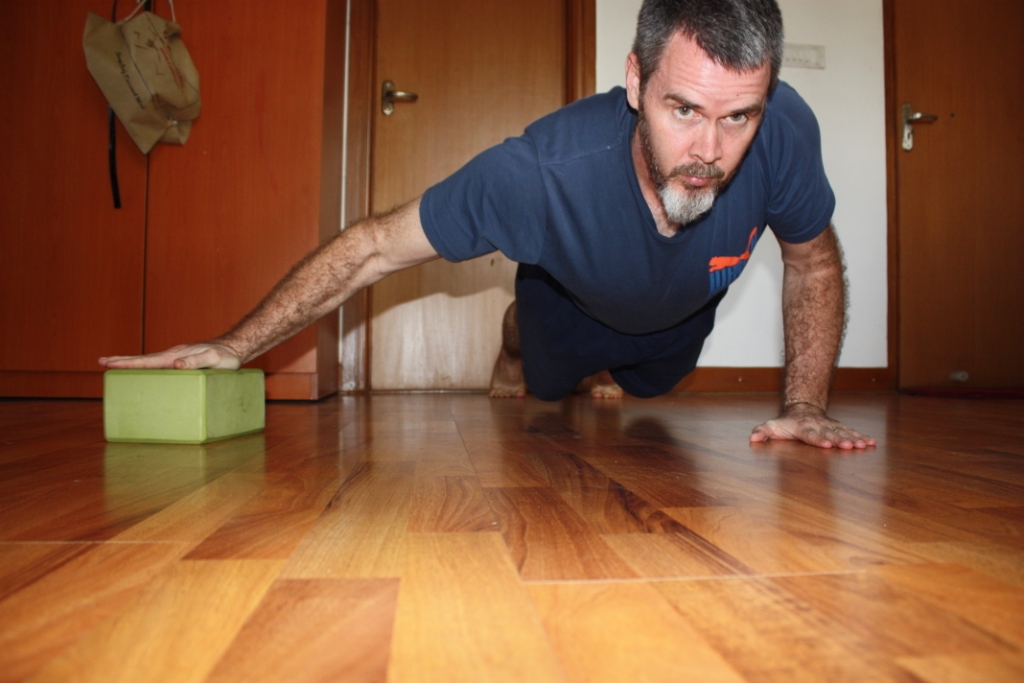
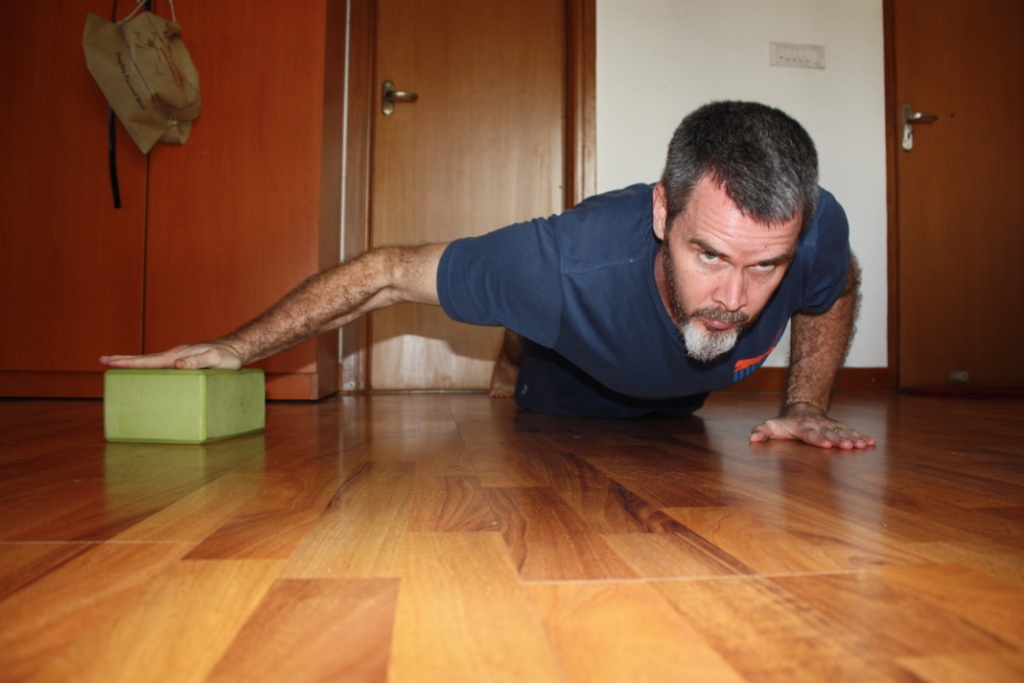
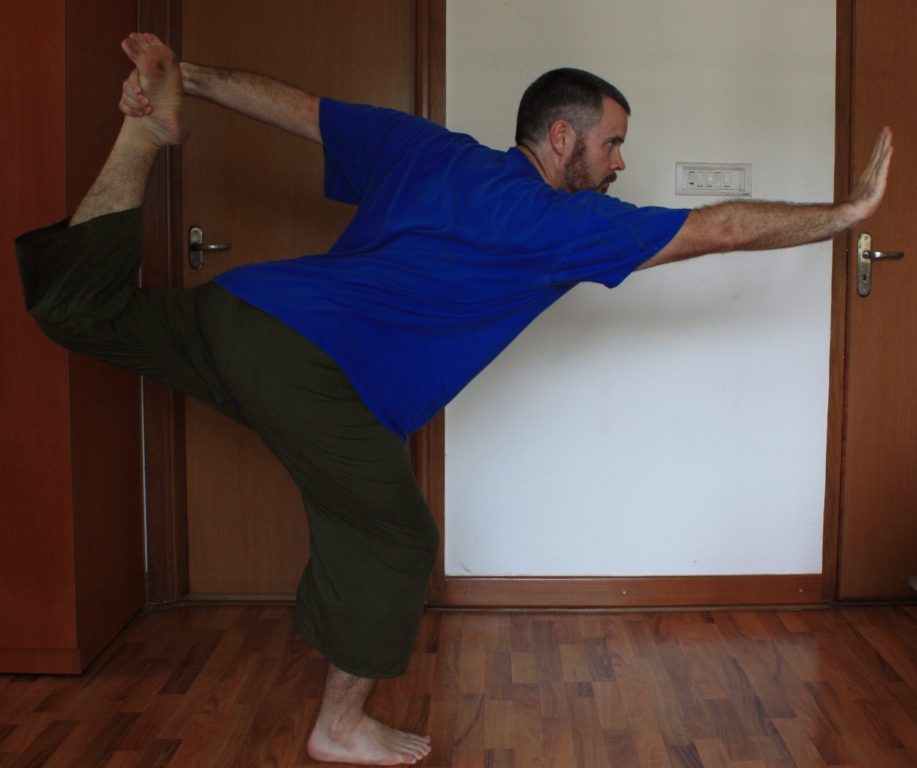
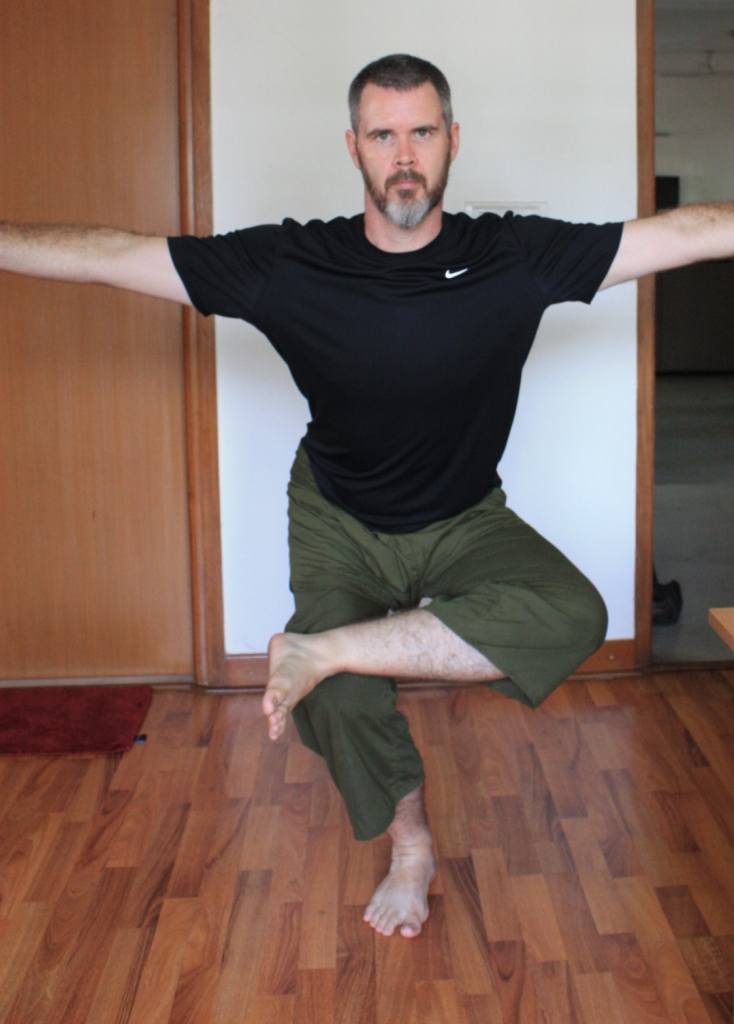
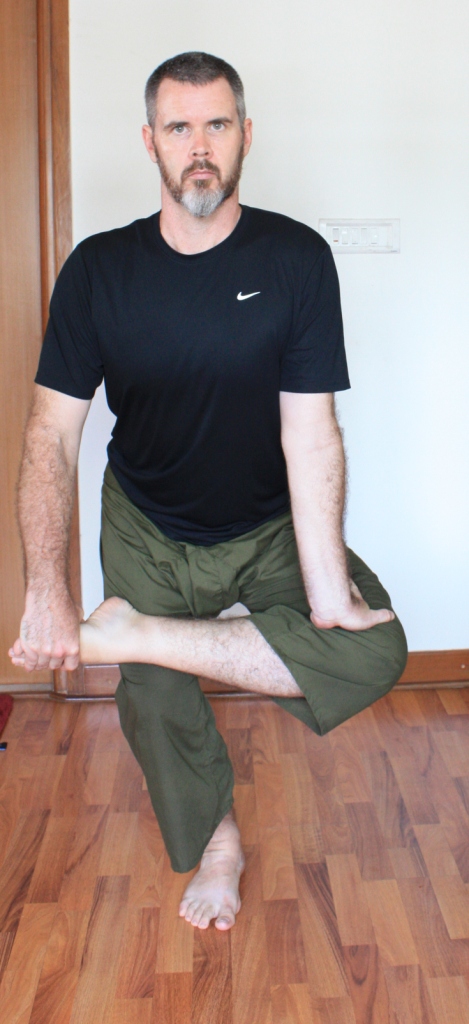
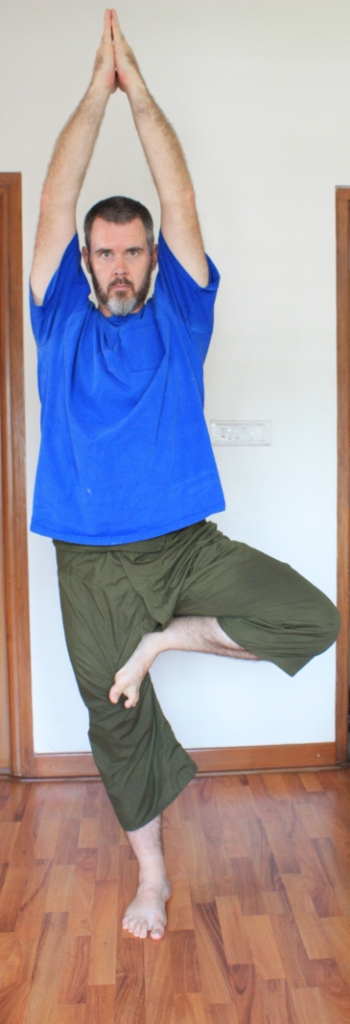
IMG_3217 IMG_3218 IMG_3219


Second, on the other hand, don’t half-ass everything because you mistake discomfort for agony. This confusion cause people to greatly underestimate their capabilities. While you may think your teacher or trainer is a Sadist (only rarely are they are, really), the fact is that they are trying to give you one of the greatest gifts you can ever receive, which is the realization that you are capable of far more than you think you are–if you’re willing to gut it out through the challenging parts.


2.) Diet is the 800 pound gorilla of cutting weight. The simplified mathematics of this that adding exercise (while critically important to fitness) only marginally adds to the calories burned part of the equation. (Believe it or not one burns a lot of one’s calories just through baseline activities–breathing, walking, sleeping, etc.) However, when you cut caloric intake that’s all reduction from the intake side of the equation. However….


3.) Don’t make your goal weight loss, but rather to have a healthy and more functional body. Weight loss tends to be about external validation. That is, one wants to appear more attractive to someone else (or everybody else.) That’s a sucker’s game. People won’t necessarily notice–depending upon how often they see you and how self-absorbed they are. If you shed pounds at a healthy rate, people around you all the time don’t necessarily notice a day-to-day change.


On the other hand, as one starts feeling healthier and develops movement capacity beyond your previous capability, that can’t be taken away by anyone.


4.) When your body has been properly prepared through fundamentals, advanced maneuvers practically fall into place. I was taught a scorpion prepper  just a couple of weeks ago, and was surprised to find it was much easier than expected. I still have a lot of work to do to take it to the full pose. For example, I’m still using a wall so I don’t over-rotate in the arched back position,  but I bring my heels off the wall once I’m up. Next I’ll do away with the wall. Then it will be time to start bending my knees. My point is that  work on back stretches, core strengthening, and headstands made it relatively easy to get into the first stage.
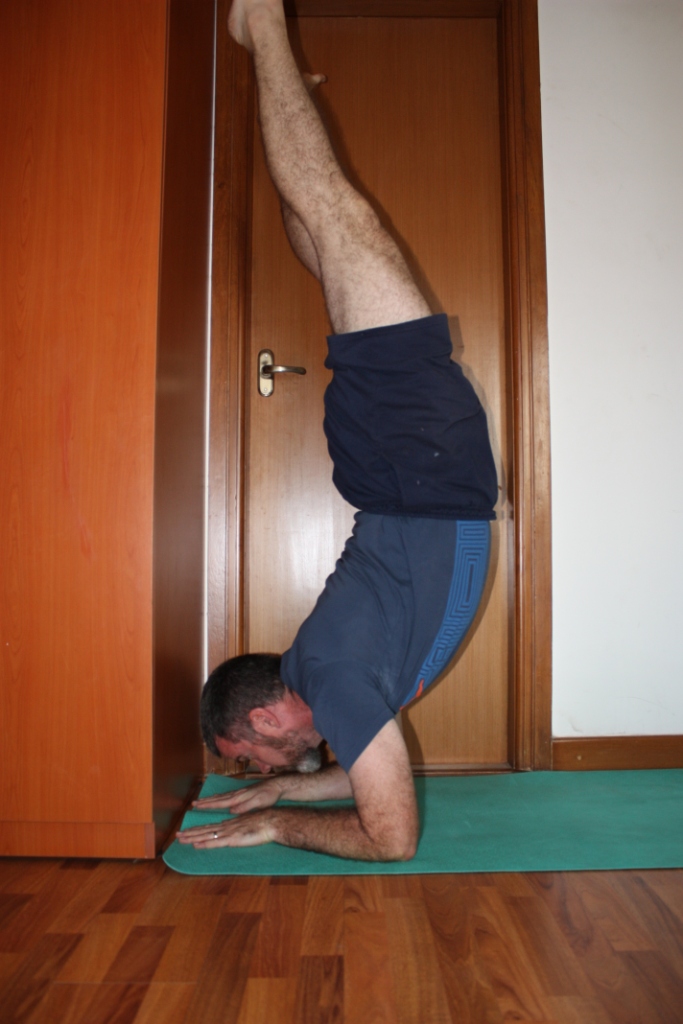
IMG_3225


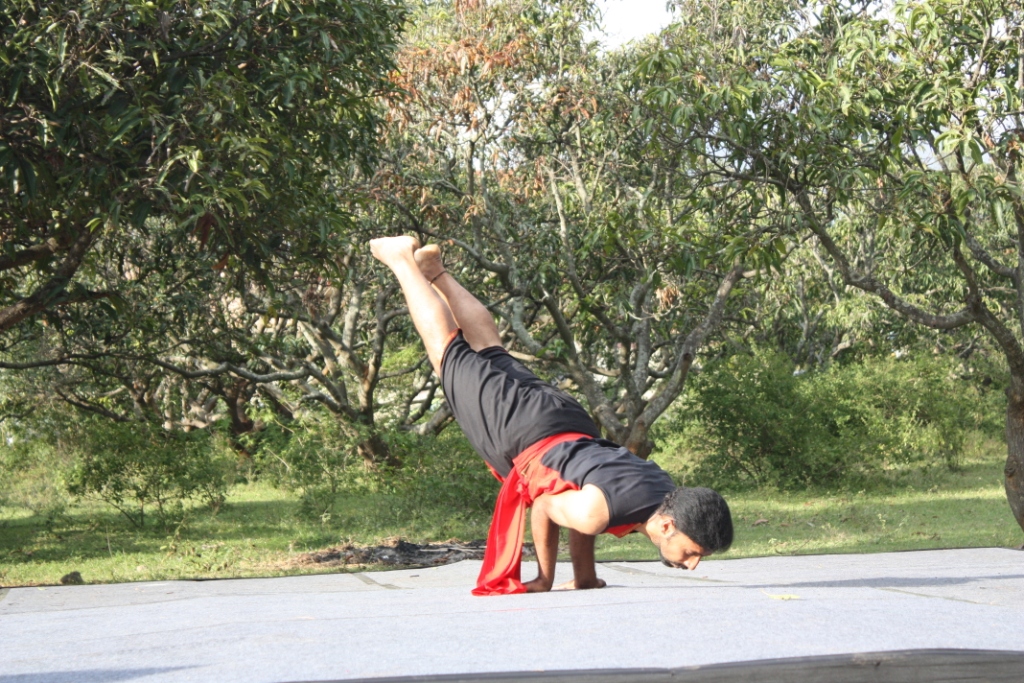
5.) Reveling in small victories can kill progress. The handstand provides a classic example. In the beginning, one starts kicking up against a wall. Even this can be a challenge in the beginning. However, as soon as it becomes doable, one should start gradually taking the training wheels off. This may begin as cautiously as pulling one leg away from the wall at a time. Then do away with the wall altogether. Then the suffering begins anew as one sheds the kick up in favor of a more controlled manner of ascent into the handstand.


6.) Don’t be quantitative.  A journalist once asked Muhammad Ali how many sit-ups he did in his training regimen. Ali said, “I have no idea. I don’t start counting until they start hurting.”

I’ve heard guys pleased with themselves because they do “sets of 100 push-ups.” This is often impressive only until you see the person actually do the exercise, and then–more often than not–you notice that they haven’t actually done one push-up. Rather, they’ve done a whole lot of mild elbow bends from a roughly plank-like position. It’s better to do 10 push-ups with a full-range of motion and controlled ascent and descent than to fool yourself with weak form.


7.) Don’t mindlessly workout. Shun the distraction of headphones, television, or cellphones . If you find working out to be so mind-numbingly boring that you need a distraction, you should re-evaluate the nature of your workouts. You should be “listening” to your body throughout the process. If your goal is to have a greater command over your body and its movement, e.g. you are a martial artist, dancer, yogi, etc., then this is particularly important.


First of all, with respect to boredom, boredom is the product of a weak mind. So you might consider working the mind out as well. Secondly, if you are truly bored, you should be upping your game.


While this may be one of my least popular points in this post, if you don’t believe me, ask Al Kavadlo.


8.) Rest is part of the process. It’s not stepping away from the process. As your body rests, your mind should be alert and taking stock of the effect of the practice on your body. Rest breaks aren’t zone out time. Also, part of having a healthy body is building a healthy parasympathic nervous system and immune system. Your body requires rest to heal, and it can heal and fight off infections tremendously effectively if you provide the right conditions.


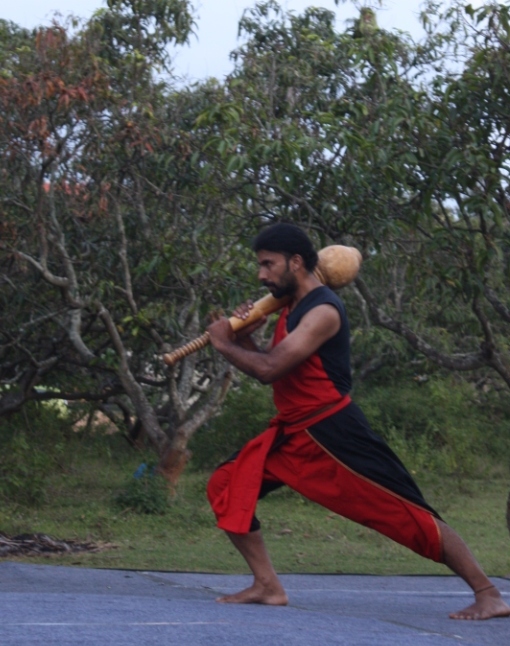
9.) Exercises that consist of the motions you will need for your particular life are the most important.  The term “functional fitness” is ubiquitous these days, but I first read this advice in Bruce Lee’s Tao of Jeet Kune DoLee said that actions like punching, kicking, and grappling practice should make up the core of a martial artist’s workout. That doesn’t mean one should do away with general fitness activities. (Lee certainly didn’t.) Martial arts provide a prime example of an activity that requires a well-rounded form of fitness. That is, one needs core strength, good range of motion, cardiovascular endurance, and extremity strength and speed.


10.) Don’t agonize over failures. Move onward and, carefully, upward. If you aren’t (safely) failing to achieve an occasional goal, then you need to kick your way out of that box of comfort zone you’re trapped in.


Learning to Leap: Why?

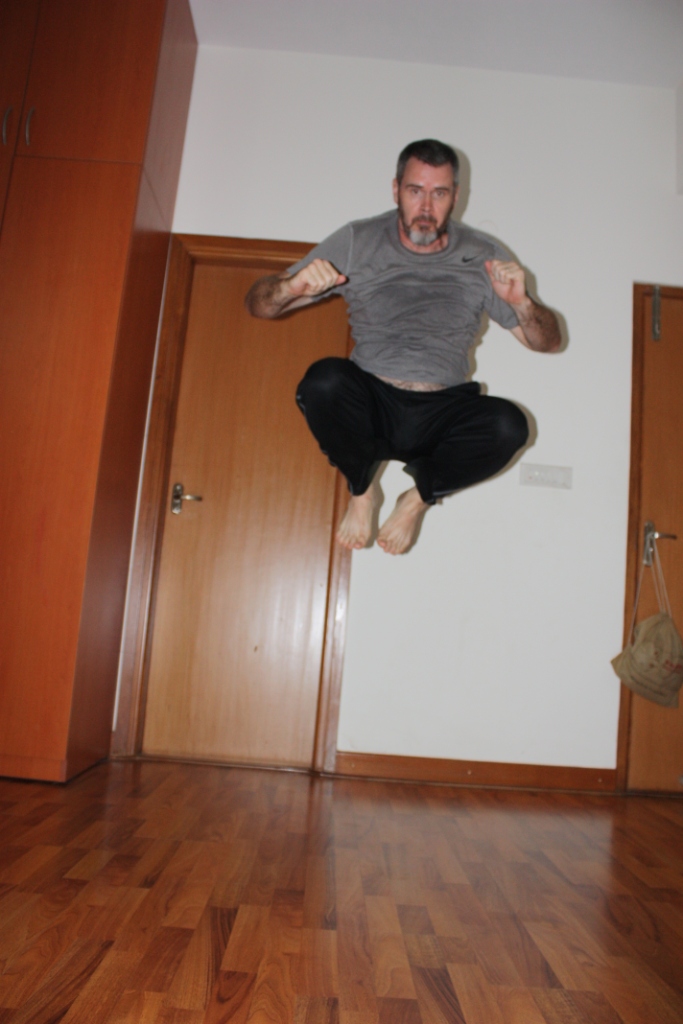
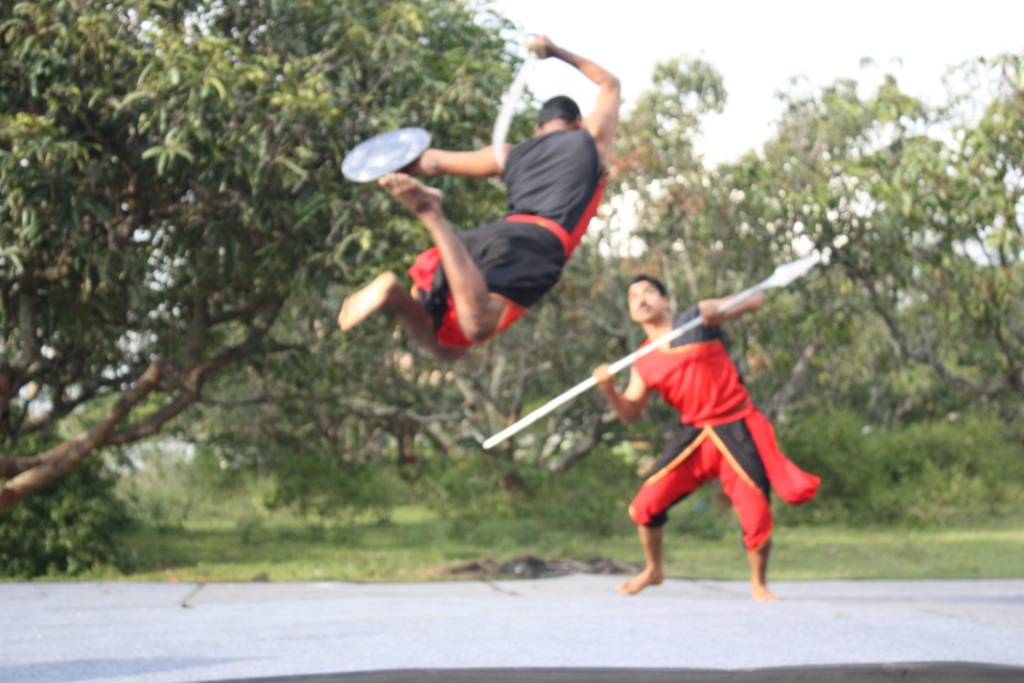
IMG_1631Leaping maneuvers are ever-present in martial arts movies and in some martial arts (e.g. Indian Kalaripayattu and some forms of Kung fu). However, these acrobatic techniques are rarely seen–and are even less often successful–in combative encounters (neither in sport nor in the real world–excepting those sports that highly reward such maneuvers and create rules that make them feasible for entertainment value.)


Why leaping, spinning wildness is popular in movies is easy. We thrill to see extremely demanding action that draws ooohs and ahhhhs. It’s the same reason one wants to watch a parkour runner vault over a car (presuming it’s not one’s car), even when it would be infinitely more practical to walk around it. It’s why we want to see gymnasts tumbling and flipping through the air even though walking across the floor is both easier on the joints and less hazardous.


However, the question of why martial arts that aren’t purely for entertainment practice leaping maneuvers. Even a few of the quintessentially pragmatic Japanese martial arts, which follow the motto “eliminate the extraneous” have some leaping techniques. One of the schools I’ve studied, Kotō-ryū Koppōjutsu has a scroll devoted to leaping techniques, despite the fact that it’s otherwise a grounded system–both literally and figuratively. Muay Thai, which also values tried and true winning basics over snazziness, also has leaping knee strikes in its repertoire, though one doesn’t see them a lot in fights. It’s true that the arts that emphasize practicality but have leaping and spinning techniques tend to have a different approach to them. The Kotō-ryū Hichōjutsu (that school’s leaping techniques) emphasize eliminating big wind-ups, and going straight into the leap from a natural posture. This gives one less air, but is much less obvious. It’s particularly useful if you don’t really want air, but you just want to leap as much as you must.  But why leap at all?

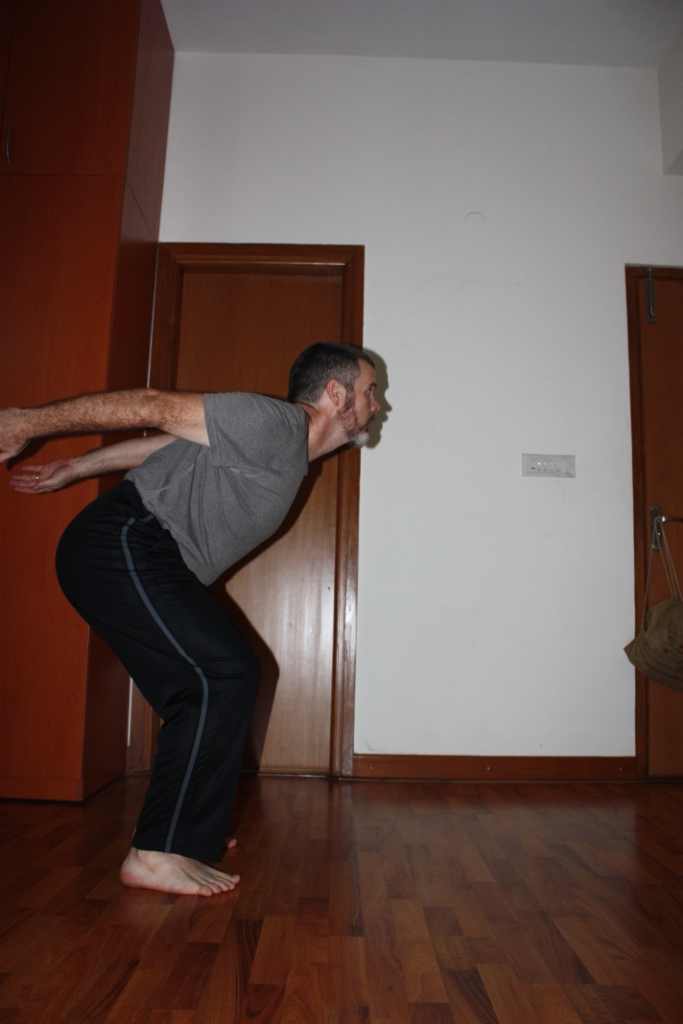
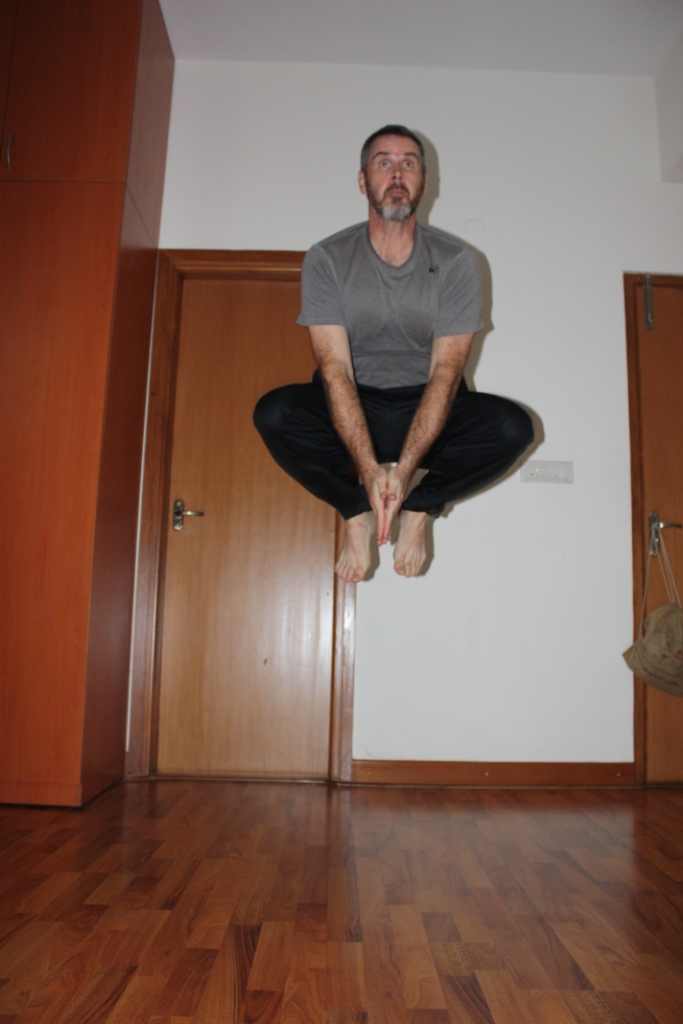
Creating this kind of spring loading of the legs may not fly.

Creating this kind of spring loading of the legs may not fly.

This kind of windup would be anathema to schools.

This kind of windup would be anathema to some schools


There are a number answers to this question. First, while it’s hard to make aerial techniques work, when they work, they can be devastatingly effective. There are few ways to put more power into a strike than to literally put all of one’s body-weight in motion under the force of gravity. There’s understandably something unsatisfying about this explanation. I think it mostly has to do with the dearth of second chances in combative encounters. Few second chances make one want to have the highest likelihood of success on the first go.


Second, while tried-and-true, go-to techniques work because they are hard to defeat and /or they minimize one’s risk of a fight-ending counter, some techniques work because they catch the opponent off-guard. Such techniques work because the opponent can’t believe one is actually trying something so wild on them. However, failing to anticipate the unusual, the opponent hasn’t trained a response into themselves. This answer gets us somewhere in cases where either the situation is dire or one knows something about the opponent.


Third–and I would argue most importantly–these techniques produce explosively powerful legs that are beneficial to a martial artist even when he stays on the ground. In other words, maybe they are more important in the role of capacity building than they are as actual techniques to be emulated.

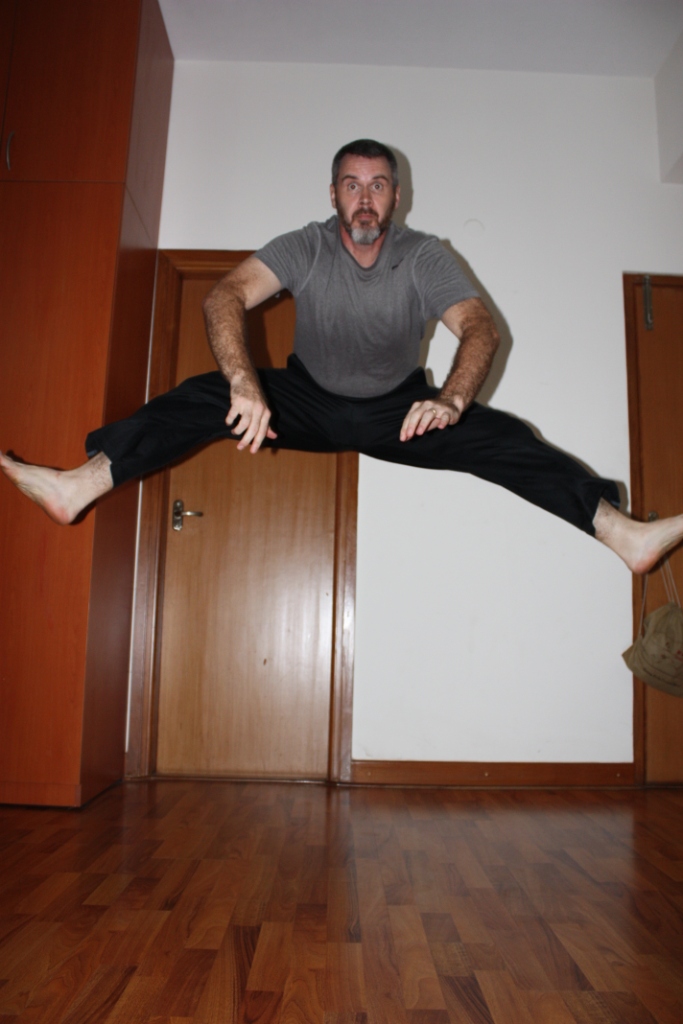
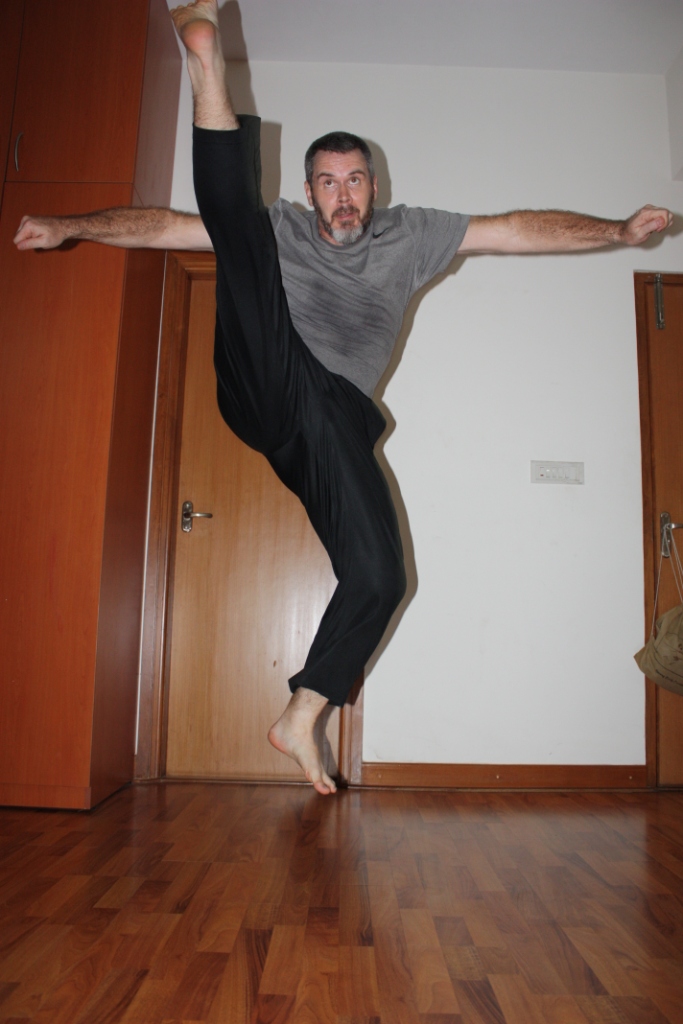
The split kick allows one to kick two opponents at once--as long as they aren't moving and are  perfectly spaced. However, it does require a multidimensional fitness that's beneficial for martial artists. (Which is why I can't do it well.)

The split kick allows one to kick two opponents at once–as long as they aren’t moving and are perfectly spaced. However, it does require a multidimensional fitness that’s beneficial for martial artists. (Which is why I can’t do it well.)


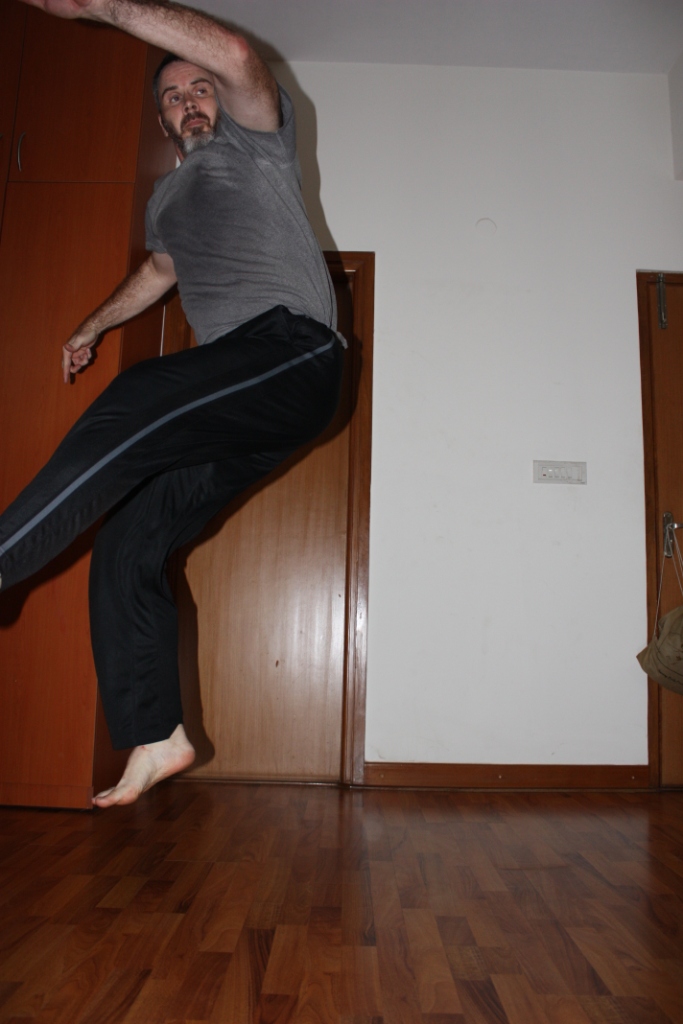
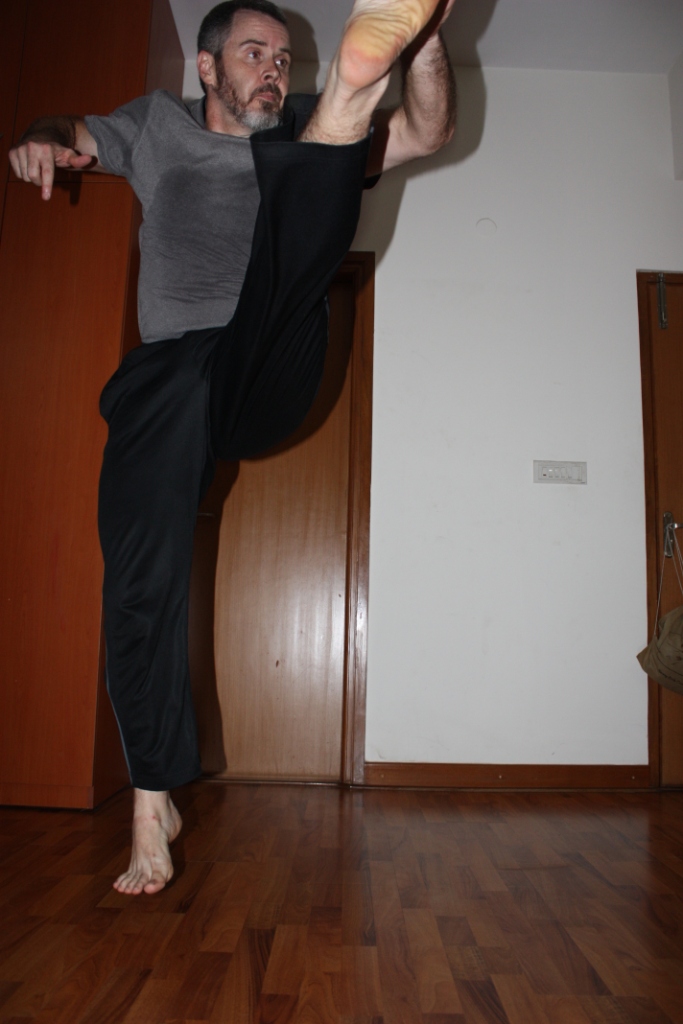
Finally, there’s one more reason that is important but was last because I didn’t even learn this lesson until I was reviewing the photos for this post, and that’s that these techniques require a whole new level of bodily awareness and control. I would generally be considered to have pretty good bodily awareness. I’ve been doing martial arts a long time, have practiced various kinds of yoga and chi gong, and have done my share of other physical training. Still, when I looked at my photos I found that I often had body parts jutting every which way. While one may argue that one doesn’t need that brand of bodily awareness if one is not using that kind of motion, I think that it probably helps with one’s awareness at high-speed in general and that many arts don’t adequately prepare one for keeping one’s body under control when there are those extra forces (e.g. centripetal & centrifugal, and gravity) acting upon it.

In my mind this looked completely different. I didn't have my arms out to the side like I was on a cross and my heel standing leg heel was still up near my buttock.

In my mind this looked completely different. I didn’t have my arms out to the side like I was on a cross and my heel standing leg heel was still up near my buttock.


One aspect of bodily awareness that is particularly important for these maneuvers is control of the eyes. In the arts I’ve studied, there has always been emphasis on the placement of the eyes. However, given all the little details one had to keep in mind, it was a reality easy aspect to half-ass. However, when one is leaping, and particularly if there is a spinning component, wandering eyes translates to crash and burn.

Entering the spin.

Entering the spin.

Mid spin / mid kick

Mid spin / mid kick. I have no idea why my right index finger is pointed down.


I’m not built for leaping. It’s not so much the leaping, but–in the immortal words of Tom Petty–“Coming down is the hardest thing.” I figured that getting to the level of Kalaripayattu training that involves a lot of leaping would be the end of that art for me. As I mentioned, there are some leaping techniques in the martial art I studied, but I was never particularly good at them. When I was young and had the proper body for it, I didn’t have the right mindset, and when I got older I was lacking the physical capacity for them. However, I’ve learned quite a bit about my body through the practice of these techniques, and I’m interested to see what level I can take it to.

IMG_1654


BOOK REVIEW: Zen in Motion by Neil Claremon

Zen in Motion: Lessons from a Master Archer on Breath, Posture, and the Path of IntuitionZen in Motion: Lessons from a Master Archer on Breath, Posture, and the Path of Intuition by Neil Claremon

My rating: 4 of 5 stars

Amazon page

When one thinks of Zen, one thinks of stillness. Sensory and motor deprivation is what scientists call it. But stillness is a favored term among Zen Buddhists. Being someone who is fascinated by movement and activities at the body-mind intersect, this title immediately snagged my attention despite the narrow print on this thin book’s spine. The value of a Zen state of mind in the practice of movement arts is clear and well-established. Zen in Motion recounts the lessons of the author as a student of the Japanese style of mounted archery (kyūdō.) Claremon studied with a Japanese Kyūdō master residing in New Mexico.

It will be clear to many why mounted archers might take allegiance in Zen. Charging down a trail on a horse towards a small, round target, there’s no time for conscious thought in calculating pull and release. Furthermore, there’s stillness in motion (sounds like a koan) that must be maximized because the slightest imperfection in movement can send an arrow astray.

It should be noted that this is neither the first nor the only book written on the nexus of Zen and Kyūdō. (Though it’s the first one I’ve read in full.) Probably the most famous book on the subject is Eugen Herrigel’s Zen in the Art of Archery, but there’s also a more recent book by John Stevens, entitled Zen Bow, Zen Arrow that tells the story of Awa Kenzō (who was Herrigel’s teacher.) The logical question is what is the value-added of Claredon’s book. If we have two books by more famous authors on seemingly the same subject, why should one read this one? I believe Claremon carved out a good niche with this book that makes it sufficiently different from the books of those other authors.

What is Claremon’s niche? The body portion of the mind-body equation is at the forefront in this book. Claremon directs most of his energies to topics such as breathing, posture, grounding, walking, and balance. While I haven’t read Herrigel’s book completely, I did skim through it. Zen in the Art of Archery seems to focus more heavily on the mind portion of the equation—i.e. the philosophy / psychology of Zen, if you will. This may make it sound like Claremon’s book isn’t much about Zen, which is widely considered a mental pursuit. However, one must remember that postural alignment and breath are crucial in zazen, and that Kinhin, walking meditation, is a well-established practice in Zen Buddhism. Furthermore, I don’t want to imply that Claremon leaves out the mental piece altogether, just that the balance of the discussion is toward the physical. (Whereas, it seems like the balance of Herrigel’s discussion is in the realm of the mental—but Herrigel gets into physical topics as well.) Having said all that, an argument could be made that a more appropriate title might be “Ki (Chi) in Motion” as the author devotes a great deal of space to discussing life energy (Ki in Japanese or Chi in Chinese.)

Another valuable piece of Claremon’s work is that there is plenty of value to individuals who don’t practice archery, but who are interested in discovering how these lessons might apply to other movement arts. For example, I found the topic of the 10-point “Diamond Being” that is a central concept in the book to be quite thought-provoking. The 10 points that are roughly arranged in a diamond shape (vertical alignment of 3 nodes down the left side of body, 4 nodes down the body’s centerline, and 3 nodes on the right side, and all these nodes connected by edges (line segments)) and map to the human body. While much of what Claremon said about this construct was esoteric and not of much use to the scientific-minded reader (i.e. sending ki between the various nodes), the construct had value in thinking about postural alignment, for example. There is an entire chapter devoted to healing that, of course, has a value to non-archers as well as archers.

Some of the concepts that are mentioned can be thought of in terms of the modern-day construct of “Flow,” which is related to Zen states of mind and which has gained a following among modern practitioners of high-speed / high-risk sports.) For example, the idea of perceiving time at a slower rate, which is an established part of Flow states valued by skiers and skydivers, would be a valuable state of mind for shooting an arrow from a moving horse toward a small target. Another example is discussed on the chapter of the fear of falling. Whatever one calls the mental state, avoiding an adrenaline dump and the fear associated with it is critical.

The only graphics are drawings, but they seem adequate to the task.

I enjoyed this book. For me the book’s greatest weakness was a tendency to be ethereal and esoteric. While the author denied believing in magic, there was a fair amount of explanation that no scientifically-minded person could hang his hat on. To be fair, this may in part be because the science of some of these experience isn’t yet well-established. (I recently watched a clip from a Discovery Channel program called “Human Weapon” in which there were some Chi related activities that the technicians and experts said they couldn’t explain for all of their state-of-the-art equipment.) However, it could also be that false experiences were arrived at by the leading statements of a trusted teacher.

I’d recommend the book particularly for those who have interests in activities at the intersection of body and mind.

View all my reviews

BOOK REVIEW: Yoga Mala by Sri K. Pattabhi Jois

Yoga Mala: The Seminal Treatise and Guide from the Living Master of Ashtanga YogaYoga Mala: The Seminal Treatise and Guide from the Living Master of Ashtanga Yoga by K. Pattabhi Jois

My rating: 4 of 5 stars

Amazon page

Yoga Mala is a guide to yoga by one of the most influential yogis of the modern era, Sri K. Pattabhi Jois. Sri Jois, who passed away in 2009, developed an approach to Hatha Yoga that is alternatively called Ashtanga Vinyasa or Ashtanga Yoga. Herein, I will use the term Ashtanga Vinyasa to represent Sri Jois’s style of yoga, which relies on a fixed sequence(s) conducted with vinyasa, i.e. flowing transitions that link postures. The reason I chose one term over the other is that the term “Ashtanga Yoga” long predates Jois and is a more generic name for the practice of all eight limbs of yoga as described in Patanjali’s Yoga Sutras.

Having mentioned the “eight limbs of yoga,” it should be noted that this book really only gets into half of them: yama (rules for interacting with others), niyama (rules for conducting oneself), asana (poses), and pranayama (breath exercises.) Furthermore, three-fourths of the book’s pages are devoted to asana. This is not unusual as many yogis consider it a waste of time delving into the higher level practices (pratyahara [sensory withdrawal], dharana [focus], dhyana [meditation], and samadhi [liberation] with individuals who haven’t yet made headway into the more fundamental practices.

After brief discussion of yama, niyama, and pranayama, Yoga Mala launches into description of the postures of the Ashtanga Vinyasa preliminary series. This begins with the two variants of the Surya Namaskara (Sun Salutations) practiced in Ashtanga Vinyasa and progresses through the poses of the standing, seated, and finishing sequences in the order in which they occur in the Preliminary Series. There are clear black and white photos of the optimal version of each asana. The written descriptions explain the entire set of vinyasa for that asana—i.e. the flowing transitions that connect one pose to the next. Most asana have a header paragraph that tells how many vinyasas are associated with the pose and which vinyasa constitutes the asana proper. This opener is followed by a “Method” section that lays out the vinyasa in detail, and—in many cases–a “Benefits” section that explains what the posture is said to do for one–and occasionally what major the contraindications are. (However, this is a poor reference for contraindications as it mostly only says what pregnant women shouldn’t do and doesn’t get into much detail beyond that.)

There are a couple of things that I think could have been improved—mostly formatting / editorial critiques. The first is that the text increasingly lags the photos so that one has to flip forward several pages to view the associated photos. Also, the author often refers to a movement through a position using the numbering system of an earlier set of vinyasa, and this necessitates a lot of flipping back and forth. For example, the instructions often say “then go to the 4th vinyasa of the first surya namaskara sequence” whereas if he said “then do chataranga dandasana [or low plank]) they would have saved words and obviated need for the back and forth.

Sri Jois was very devout man. For those of a similar mindset, you’ll likely find the book resonates. However, if you’re the kind of person who prefers explanations rooted in a logical or scientific approach, then you may find explanations a bit summarily invoked for your tastes. In other words, he’s prone to say, just do what the Vedas and your teacher tell you and everything will be rosy. I don’t know that this is a critique so much as fair warning. If you think that the Vedas were divinely written by infallible authors, then Jois’s approach may sound good to you. However, if you think that the Veda’s reflect the biases and limited knowledge of another era (just like our present writings reflect our current biases and limitations), you may find a few comments suspect. For example, Sri Jois makes a point of saying that the Vedas state that one can do a headstand for three hours straight without adverse effects. (To be fair, he does point out that you must do it properly and under the supervision of a teacher.)

If you practice Ashtanga Vinyasa, or intend to, this is a must-read book, but it’s a useful book for those who practice Hatha Yoga of other styles as well. It’s a good summary of classic asana, and you may find something in Sri Jois’ explanation of yama and niyama to be helpful to you on your personal path.

I should point out that those who aren’t sure whether they want to practice this form should be forewarned that Ashtanga Vinyasa is an intense practice. The vinyasas require a high level of core strength as well as upper body strength for Uth Pluthi (lifts) and vinyasa motions requiring that one load all one’s bodyweight onto one’s arms. Also, the fact that one is doing the “Preliminary Series” shouldn’t falsely lead one to believe that these are all the “easy” asana. That isn’t the case; there are a number of challenging poses both in terms of flexibility and strength requirements. If you haven’t done yoga before, I would only suggest Ashtanga Vinyasa for those who have a fairly high fitness level.

View all my reviews

DAILY PHOTO: This is Kalaripayattu


IMG_2244 IMG_2281

IMG_2557The Kalari Gurukulam put on a demonstration in Chikkagubbi yesterday. Here are a few photos from the event.

Thai Yoga & Hatha Yoga: Compare and Contrast

During my recent trip to Thailand, I attended Thai Yoga (a.k.a. Rusie Dutton, i.e. “ascetic exercises”) classes at the Wat Po Temple. As a yoga practitioner, I took note of the similarities and differences between Thai yoga and the Hatha Yoga of India. It’s no surprise that Thai Yoga would display the influence of India. Indian influence from olden times can be seen throughout Thailand. The roots of Thai Massage (a.k.a. Thai Yoga Bodywork or Nuad Bo Rarn) itself are attributed to Shivago (also, written/pronounced Chivako), a north Indian doctor in the Buddha’s community of followers.

One can plainly see the influence of Hatha yogasana (postures)  in these Thai exercises, but the details vary. I’m interested in how movement systems (e.g.  martial arts) with a common ancestry diverge over time in response to the unique needs of a different culture. I believe that not only the new system evolves, but there’s also a continuing evolution in the original line. One can, therefore, end up with systems that look little alike over the course of several generations.

The degree to which the Thai Yoga poses vary from Hatha Yogasana varies. In the Thai Yoga class we did a simple lateral bend with interlocked fingers that was identical to a  Sivinanda Yoga pose named tiryaka tadasana.

Lateral Bend (tiryaka tadasana)

Lateral Bend (tiryaka tadasana)

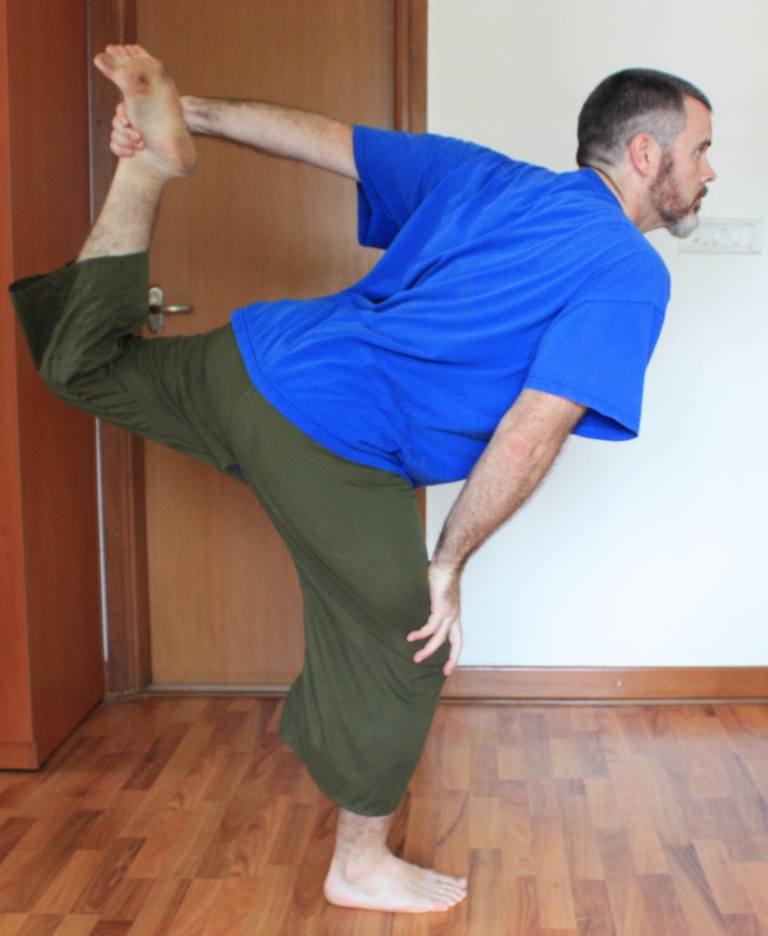
Balancing poses made up much of the Wat Po Thai Yoga sequence. This makes sense as the course was aimed at practitioners of Thai Massage and balance is important in this massage system because there are techniques that involve standing on one foot as one applies pressure with the other fort or in which one must stand to apply stretches. (Obviously, it’s bad for business to step on the recipient in an uncontrolled fashion or to topple onto them.) There were poses that were reminiscent of Natarajasana (Shiva’s Dancer pose), Vrksasana (tree pose), and Utthita Hasta Padangusthasana (hand to big toe pose). Each of these varied in the details. The most prevalent Thai variation was bending the support leg to lower one’s center-of-gravity. In Hatha Yoga, it’s usually taught to keep the support leg as straight as one can manage (this both contributes to the stretch and can prevent loading the tendons.)

NATARAJASANA: There were two variants of this pose practiced at Wat Po. Both folded the torso more forward than one would typically see in Hatha Yoga, as well as bending the support leg more.  The first version (palm on front knee) is as such:

Version 1 from Thai Yoga (Palm on Knee)

Version 1 from Thai Yoga (Palm on Knee)


The second version has the front hand up in a manner similar to the Hatha version, but the torso isn’t kept upright and the support leg is deeply bent.

Thai Version 2 (hand out front)

Thai Version 2 (hand out front)


In contrast, the Hatha version is more upright.

Natarajasana

Natarajasana


VRKSASANA: There are two variants of tree pose in the Thai Yoga. In both the ankle is kept on top of the thigh and the support leg is bent. Version one is as follows:

Vrksasana1_Thai_Front

Version 1 begins and ends in Pranamasana (hands in prayer pose) With hands out to the side in between.

Version 1 begins and ends in Pranamasana (hands in prayer pose) but hands are taken out to the side in between


Version 2 includes a wrist stretch with the balance pose. One puts fingers on thigh facing upward and the squat folds the wrist back.

Version 2 with wrist stretch.

Version 2 with wrist stretch


The Indian version:

Vrksasana_hatha_front


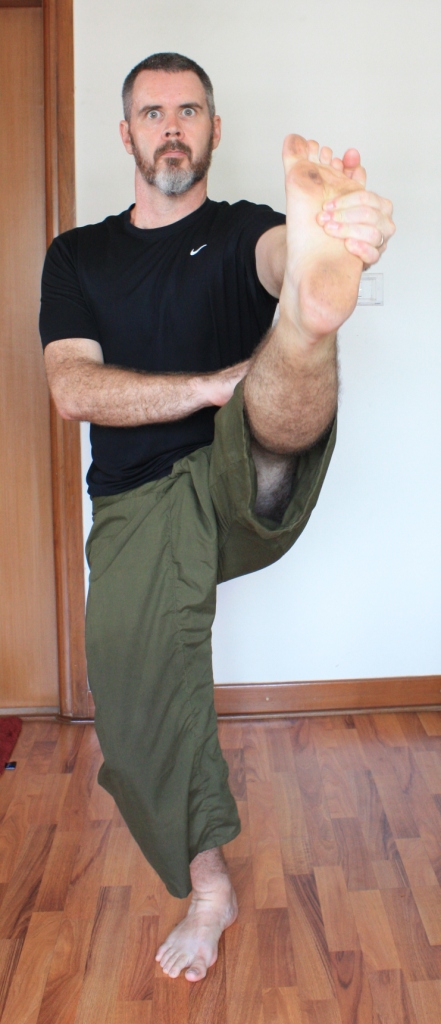
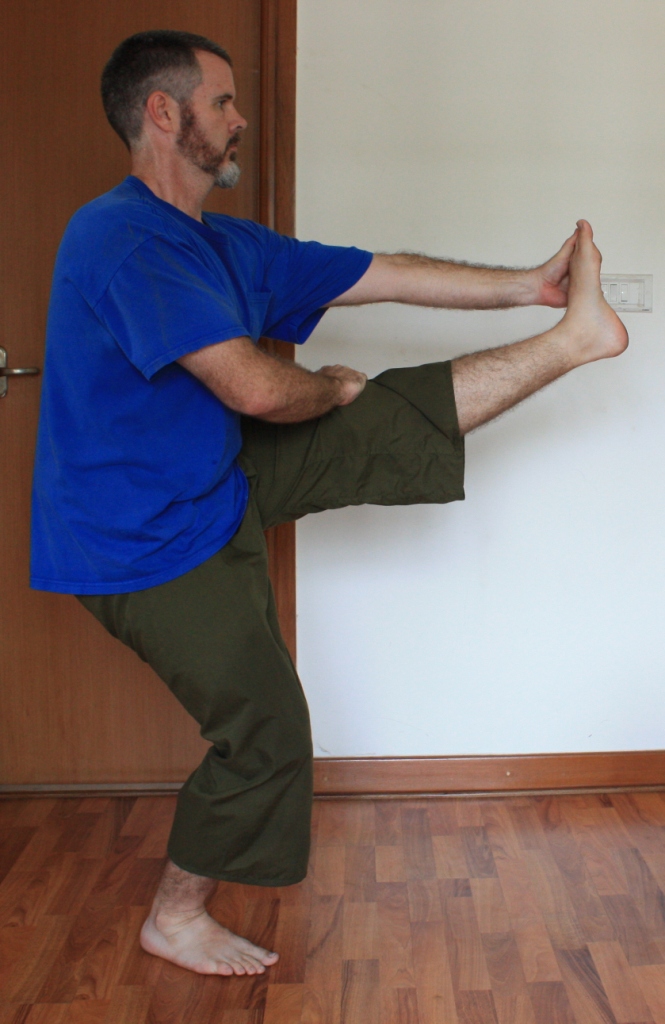
UTTHITA HASTA PADANGUSTHASANA: There are also two variations of this pose. Note the bending of the support knee. Version 1 holds the foot with the same side hand and places the opposite palm on the knee.

Version 1 from front

Version 1 from front

Version 1 from side.

Version 1 from side


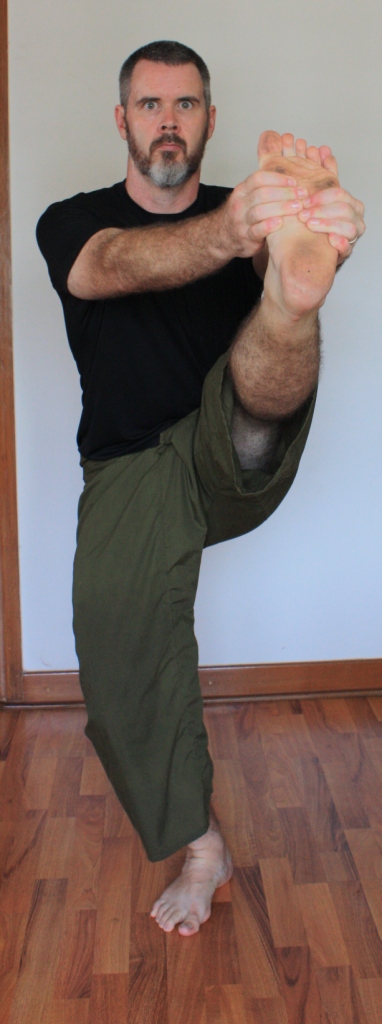
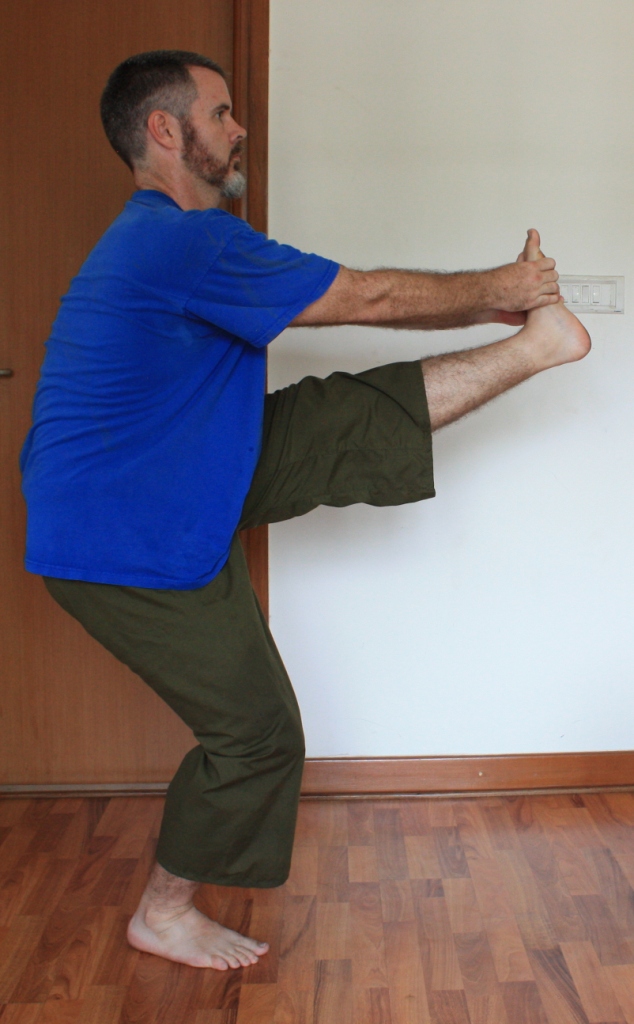
Version two holds the extended foot with both hands.

Version 1 from the front.

Version 1 from the front

Version 1 from the side

Version 1 from the side


For comparison, the Hatha Yoga version:

Utthita Hasta Padangusthasana from side

Utthita Hasta Padangusthasana from side


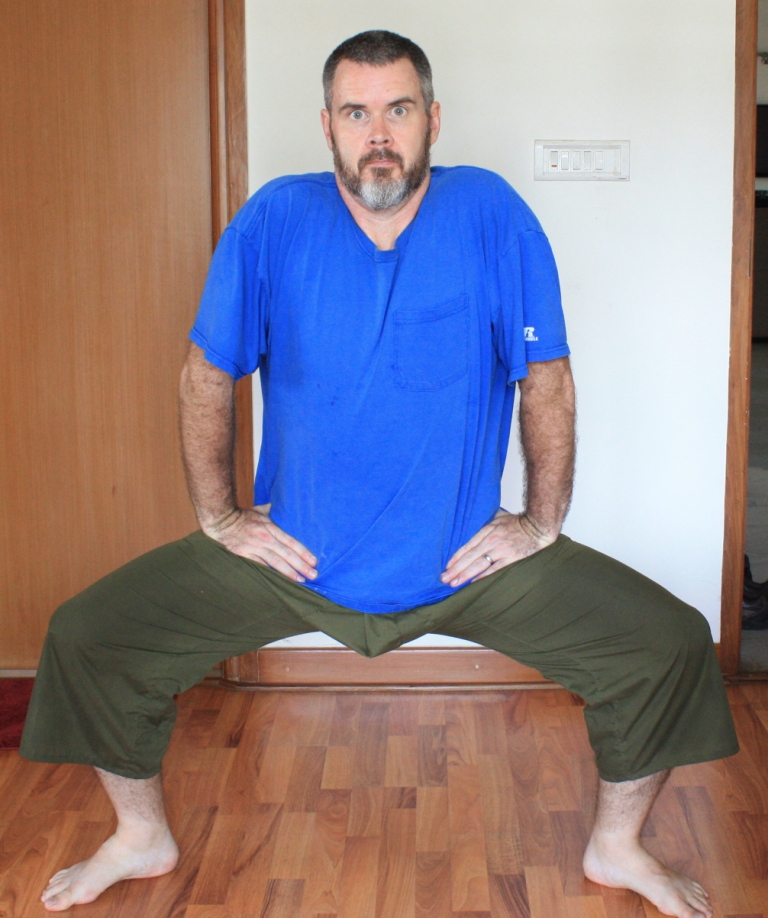
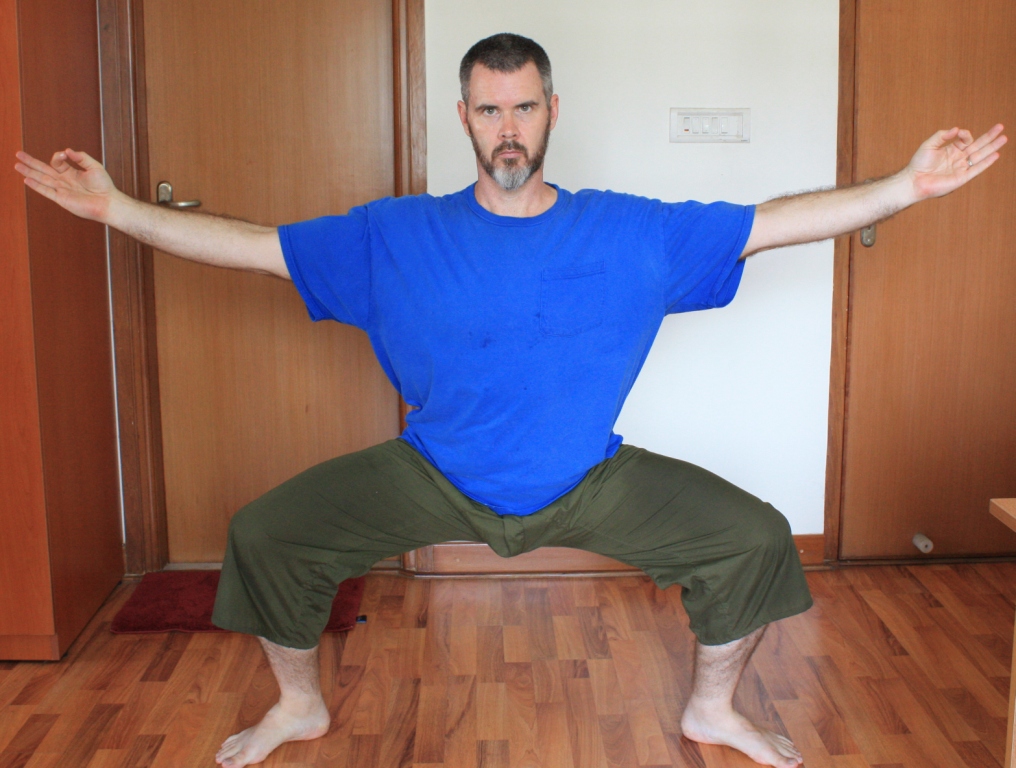
UTKATA KONASANA: There are three variants of a pose that is usually called Goddess pose or Utkata Konasana.  The difference here primarily deals with how the hands are positioned, but given the many variants within Hatha Yoga for hand position, this can be seen as a virtually identical pose.

Thai version 1 of Godess pose.

Thai version 1 of Goddess pose

Thai version 2 of Goddess pose

Thai version 2 of Goddess pose

Thai version 3 of Goddess pose

Thai version 3 of Goddess pose


Goddess pose with hands in Chin mudra.

Goddess pose with hands in Chin mudra.


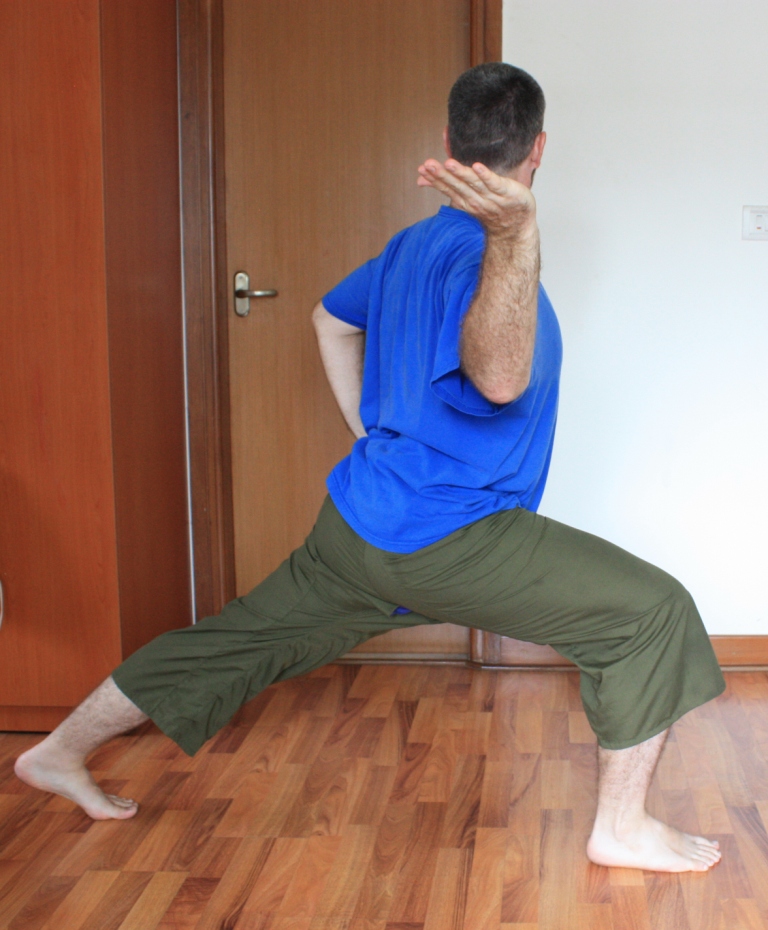
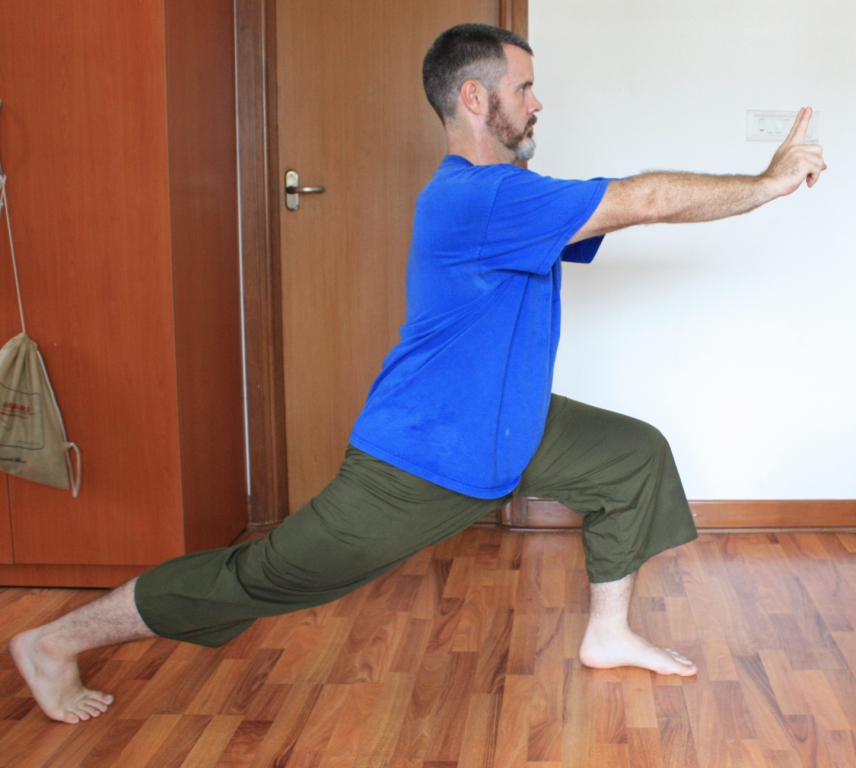
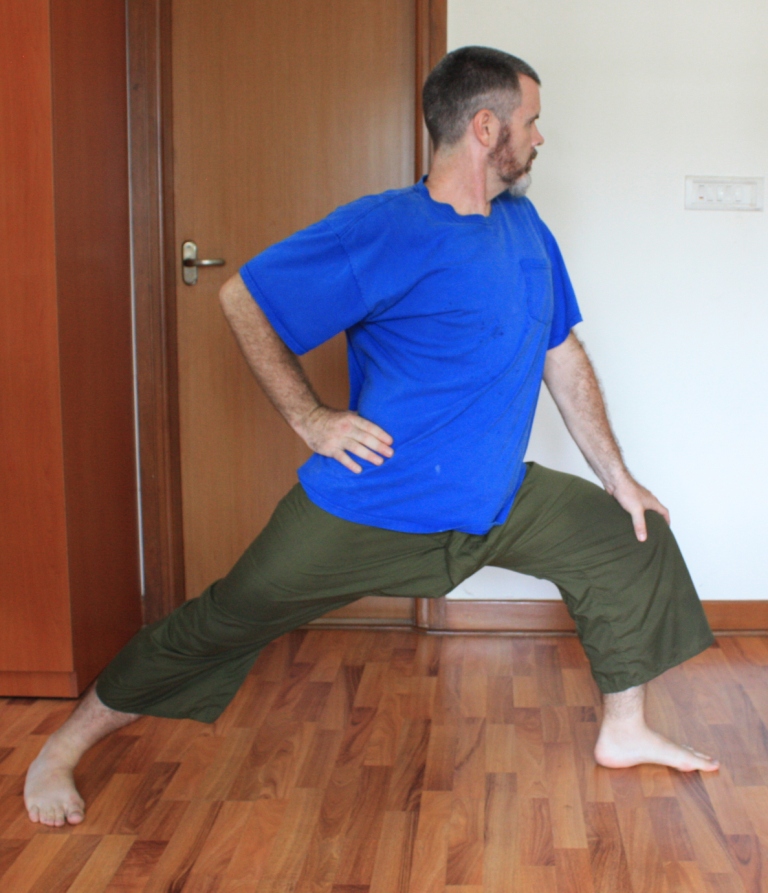
VIRABHADRASANA: There is a series of five lunge poses that are reminiscent of the Virabhadrasana (Warrior). I’ve dropped the first one because it requires a photo taken from a back angle becuas it involves pulling one’s wrist behind one’s back.

Thai Version 2 hand on front knee

Thai Version 2 hand on front knee

Thai version 3 twist

Thai version 3 twist

Thai version 4 looking back

Thai version 4 looking back

Thai version 5 taking aim

Thai version 5 taking aim

Virabhadrasana I

Virabhadrasana I


Paleo-Stressing: Acute v. Chronic Stress

"What happened to the good ole days when I ate you people--not lived in your cages?"

“What happened to the good ole days when I ate you people–not lived in your cages?”

Paleolithic dieting is all the rage these days. I’m no expert on the paleo-diet, but–as I understand it–this refers to the practice of eating the foods consumed by our pre-agrarian ancestors. The idea is that if one consumes the foods that our species is evolutionarily-optimized to eating, one will be healthier.  Whether one believes in the merits of the paleo-diet or not on the whole, it’s hard to argue that one wouldn’t be better off eating less highly-processed and highly-refined foods and more things that look like food at a glance.


Our diet isn’t all that has changed since the days of our pre-agrarian ancestors. Modernity has brought with it an entirely new way of experiencing stress. Eliminating or reducing stress is a common topic of discussion, but not all stress is created equal. There’s a necessary form of stress, a stress that makes one better, stronger, faster, and smarter. We don’t want to willy-nilly eliminate stress; we want to reduce the wrong type of stress.


Our ancestors—like animals–experienced brief periods of intense stress (e.g. saber-tooth tiger attacks), followed by longer periods in which they were free of deadlines, carpools, and after-school activities. Now, no one likes to have a saber-tooth tiger stalking them. It’s unpleasant. Modern humanity has gone to great lengths to eliminate those short bursts of terror, but not without cost. (If you don’t believe me read Robert Sapolsky’s Why Zebras Don’t Get Ulcers.)


Whether or not you believe that eliminating acute instances of terrifying stress is bad for mankind, it’s hard to argue that modernity’s leveling process didn’t eliminate stress, but instead resulted in a chronic stress on a smaller scale. People today have impossibly long daily to-do lists, and they have to accept trade-offs between work, family, and personal development.


It’s true that you don’t get eaten by a giant cat when you drop the ball, but life is so packed diverse events that one may feel like one is dropping some ball constantly. If your boss thinks you’re a model employee, then your kids are probably going to need therapy. If you have a contented home life, your boss may have his or her eyes open for someone who can give the firm consistently 70+ hour work weeks. If you feel you’re doing alright on both the work and family front, your body and / or mind is probably a train wreck.


Chronic [mini] stress may feel better than acute [catastrophic] stress, but it takes its tolls in various ways. First, with our sympathetic nervous system (fight-or-flight reaction) constantly engaged our body’s power to heal itself is reduced. When the parasympathetic nervous system is engaged, the body devotes resources to long-term goals like getting healthier, but in stress mode activities not relevant to immediate survival shut down. This is a great system if you have periodic life and death stress, but is not so good if you’re under constant stress.


Second, chronic stress reduces sleep, and sleep is essential to one’s mental and physical well-being. There are a wide variety of symptoms associated with sleep deprivation such as forgetfulness, decreased concentration, decreased alertness, reduced reasoning ability, diminished problem-solving capacity, and depression—all of which can diminish our physical health through accidents, ailments, suicide attempts, and lack of energy for exercise.


Third, chronic stress can make one fat, with all the health issues that result. Some people use food as a coping mechanism. Other people eat too fast or choose their food poorly because of time constraints or because they are not mindful of eating as their monkey minds churn at a mile a minute. Then there is the more convoluted and complex issue of cortisol–a hormone released under stress that is linked to weight gain in at least some cases. Even if you don’t have a problem on the calorie intake side, the stressed individual may not do so well on the calorie burning side—either because of a lack of time to exercise or a lack of energy.


Modern humans are uniquely suited to chronic stress because we are the only species that achieves the same physiological stress response by remembering and obsessing about a stressful event as experiencing it. Abandoning the modern approach to living isn’t an option most are willing to entertain; but there are ways to combat chronic stress.


Move – Meditate – Mindfully Breath: The bad news is you’ve got to shoehorn these activities into your schedule daily (or at least several times a week.) The good news is that they don’t need to take up a lot of your day. There are a number of systems that address all three components in one handy package such as Qi Gong, Yoga, and some martial arts. I don’t think it matters so much which one chooses as how one goes about one’s practice.


Movement strengthens and strategically stresses the body, but it also increases one’s bodily awareness so that one becomes aware of how stress is manifesting itself in one’s body. Meditation teaches one how to live in the present moment, and it trains one to recognize the seeds of negative thought and emotion earlier so that one can counter-act them. Obviously, breathing is essential to life, but learning to be aware of one’s breathing patterns and to “manually override” the breath patterns associated with harmful emotional states is a beneficial skill.


Massage / Bodywork: Whether self-administered or other-administered (the latter allowing greater distressing–particularly if the masseuse is skilled) massage is an activity, like movement, that can help one become aware of where one is physically holding one’s stress. These physical manifestations of stress can exacerbate the whole experience of stress. One should take time periodically to have bodywork done. A day rarely goes by in which I don’t work on my own neck, shoulders, head, or face, and I occasionally get professional Thai Yoga Bodywork done.


The Places that Scare You: Force yourself to go someplace (not necessarily literally a “place”) that scares you once in a while. This needn’t be skydiving or hand-gliding—but it could be. It may be a martial arts class in which one has to put on the gloves occasionally and go at it. It may be joining Tostmasters and having to give a speech in front of a crowd. It may be traveling to some backwater where you don’t know the language, but you want to learn. This is a very personal issue. (i.e. A Type-A personality he-man may not find that skydiving is outside his comfort zone. If so, sorry, skydiving doesn’t count, he may need to learn ballroom dancing, or something else that truly takes him outside being comfortable.) KEY POINT: The problem with hiding from all stressors is that it doesn’t result in a stress-free life, what happens is that smaller and smaller stressors loom bigger and bigger in one’s mind. Which brings us to…


Perspective:  One must put life’s challenges in perspective. Each person’s problems are important to them, and I don’t want to diminish anyone’s problems, but—come on—you’re not going to be eaten by a freaking saber-tooth tiger.

BOOK REVIEW: The Tao of Jeet Kune Do by Bruce Lee

Tao of Jeet Kune DoTao of Jeet Kune Do by Bruce Lee

My rating: 4 of 5 stars

Amazon page

Jeet Kune Dō (henceforth, JKD) is Bruce Lee’s “styleless style” of martial arts. Its literal meaning is “the way of the intercepting fist.” However, Lee cautions one against attaching too much significance to that name (or any name) in the book’s final chapter. Long before “Mixed Martial Arts” became a household word, Lee was constructing this fighting system that borrowed heavily from the Western traditions of boxing, fencing (conceptually speaking), and wrestling as well as from Kung-fu, Savate, and Judō/Jujutsu. While JKD employs techniques and concepts from these systems, Lee remained adamant that no good came of organized styles built on fixed forms. In fact, that might be said to be the central theme of the book. That is, each fighter should begin with sound fundamentals and build an approach that is ultimately his or her own.

The Tao of Jeet Kune Do is an outline of the martial art. In many ways, it looks like and reads like Lee’s personal notebook. It’s illustrated with crude (but effective) hand drawings of the type one would see in a personal journal, and they are annotated with hand-written notes. (My biggest criticism is that on the Kindle version the graphics are largely unreadable. I’d recommend you get the print edition if you can, which is large-format paperback as I recall.) The book combines a philosophy of martial arts with nitty-gritty discussion of the technical aspects of combat. The philosophical chapters bookend the technical ones.

As others have pointed out, there’s not much that is new in either the philosophical discussions or the technical ones. Lee’s value-added is in how he states these concepts, how he selects the concepts of value (informed largely by a love of simplicity and a hatred of dogma), and the weight lent to the lessons by Lee’s great success story—albeit in a life far too short. Lee was a man of charisma, and one who approached endeavors with gravitas.

Now, I can imagine some readers saying, “Why are you recommending a book on real fighting by a movie martial artist? Would you recommend a book on how to conduct gall bladder surgery from someone because they were on the first two seasons of ER? Would you take martial arts lessons from Keanu Reeves because his moves looked pretty nifty in The Matrix?”

I’ll admit that there is nothing about making kung-fu movies that makes one particularly competent to give advice on close-quarters combat. However, as I said, Lee seemed to devote himself entirely to everything he did. Consider the Bruce Lee physique, which seems so common place among actors today (no doubt in part chemical and in part owing to live-in Pilates coaches) was virtually unseen in the 70’s. Yeah, he probably had good genes, but he must have trained like a maniac as well. Lee’s constant mantra of “simplicity” lends him a great deal of credibility. (It should be noted that pragmatism is not a virtue in the movie-making industry.) Lee demonstrates that he’s given a lot of thought to the subject and done the training when he discusses technical concepts. For example, while he gives high praise to Western boxing and emulates boxing moves in some regards, he also notes that boxers are insufficiently cautious owing to the rules/equipment of their sport (a comment—it should be noted–that can be leveled against any sport martial art.)

The technical material is organized in four chapters. The chapter on “tools” deals with the techniques of striking, kicking, and grappling. A chapter on preparations explains Lee’s thoughts on faints, parries and manipulations. There is a chapter on mobility that discusses footwork and various types of evasions. The last technical chapter discusses the approaches to attack, focusing heavily on JKD’s five types of attack.

The Tao of Jeet Kune Do is undeniably repetitive, but that repetition has value in hammering home key concepts. It’s also consistent with the JKD philosophy of not getting into a great deal of complexity, but rather drilling home the basics. There’s an old martial arts adage that says, “One should not fear the man who knows 10,000 techniques as much as the one that has done one technique 10,000 times.” This seems apropos here. Besides, the concepts that are repeated are often worth memorizing. e.g. Simplify. Eliminate ego. Avoid fixed forms. Be natural. Don’t think about building up as much paring away.

I’d recommend this book for martial artists of any style. Non-martial artists may find the philosophical chapters interesting, but may not get much out of the list-intensive technical chapters.

View all my reviews

Krabi Krabong Double Swords: Coordination in Action

Earlier in the month I took a few Krabi Krabong classes during my two-week visit to Tiger Muay Thai in Phuket, Thailand. For those who are unfamiliar, Krabi Krabong is a Thai martial art that focuses on weapon fighting. However, Krabi Krabong is what one might call a comprehensive martial art. That is, there are a number of different weapons utilized, and there is also an unarmed component. (It’s apparently unclear whether Krabi Krabong was practiced in conjunction with Muay Boran [the old Thai boxing style that predates Muay Thai] or whether they were always independent. Some of the weapons used in Krabi Krabong are sword (singly and in pairs), sticks (singly and in pairs), long staff, shield (used in conjunction with sword or club), halberd, and clubs worn on the forearms called mai sawk (the latter look vaguely reminiscent of the Okinawan tonfa, but upon closer inspection are quite different and are not designed to be spun freely like tonfa.

While I saw the instructor work with both staff and mai sawk, what we learned were double club techniques that the instructor did with double sword as well. The use of twin short weapons is common in Krabi Krabong. Working with two independently operated weapons is fairly new for me. In Japanese martial arts the use of weapons in such a way isn’t that common. Miyamoto Musashi advocated using the long and short swords in unison, and there are a few sword schools that teach this. I learned the fundamentals of one such school, Jinen-ryū Ni-tō-jutsu, but never practiced enough to develop any skill with it. So it took some effort just to get the basic warm-up drills down (e.g. spinning both sticks simultaneously with each stick going in the opposite direction. It’s a piece of cake if they are both going the same direction.) Of course, in any martial art one is likely have to drill a lot of movements where one is doing two or more different things with different limbs at the same time, but it can still be a challenge finding a grove with double weapons.

In most cases what we were doing was moving one stick through a guard position as the other was attacking. This creates a set of exchanges of strike and counter that feels fast.

I learned four basic forms. The first was just alternating downward angled hits at neck level. The second alternated downward strikes first at neck level and then at knee level. (When I was looking through Youtube videos on Escrima–which I’ve heard has dual stick fighting that looks similar to that of Krabi Krabong–I did see a single-stick Eskrima drill that looked quite similar.) The third form also involved two neck and two knee strikes, but it didn’t look like the previous form because it involved a spinning maneuver such that the last two strikes were to the outside of opponent’s same knee with the first one being a forehand hit and the second being a backhand strike coming off the spin. Spinning techniques were brand new to me. Contrary to what one sees Tom Cruise do in Last Samurai, spinning maneuvers (and other “fancy” techniques) are anathema to the Japanese mindset. The fourth form was head strike – knee strike on the same side and then the same on the other. (So unlike form 2 which was head – head – knee – knee, this was head – knee – head – knee.) We then ran these forms together in various orders.

I see the value in drilling this way to ingrain coordination. However, as someone who is relatively slow but has a decent command of range, I’m not sure how comfortable I would be utilizing the approach we practiced as my go-to tactic. In other words, there was a lot of staying at a range the opponent could strike one and relying on being able to get the guard/block/parry in place. This has the advantage of keeping one in striking range as well, but you’ve got to be confident you’ll have the upper hand in speed. Of course, I saw a minuscule part of the system, so maybe there’s more making the opponent reach out for one among the techniques (or maybe we were practicing them wrong and the instructor was just worried about us getting the basic movement down.)

It was definitely an interesting, educational, and humbling experience.

BOOK REVIEW: Higher Judo by Moshe Feldenkrais

Higher Judo: GroundworkHigher Judo: Groundwork by Moshe Feldenkrais

My rating: 4 of 5 stars

Amazon page

If you’re at all familiar with Dr. Moshe Feldenkrais, most likely it’s for the system of bodily awareness and efficient movement that bears his name (i.e. the Feldenkrais Method.) You may be completely unaware that Feldenkrais was a first-rate judōka who trained under judō’s founder Jigoro Kano, and that his experience with judō played a major role in his understanding of the principles of natural and efficient movement. (It should be noted that Feldenkrais was neither a medical doctor nor a doctor in a medical / biological field, but was a physicist by training.)

Higher Judō was originally published in 1952, and was out of print for many years until a new addition was brought out in 2010 (with three new forwards and some additional back matter.) It’s not hard to imagine why the book made a comeback after such a hiatus–and 26 years after the death of Dr. Feldenkrais. The book explains the ground fighting techniques of judō, which are the basis of Brazilian Jujutsu (BJJ), and BJJ is a dominant form of ground and submission work within Mixed Martial Arts (MMA.) Given the immense popularity of MMA, and the desire of fighters to hone their technique to the utmost, it’s a good time to bring this half-century old book back to the fore.

The book consists of twelve chapters. The first half of these chapters deals with preliminaries such as principles of movement, philosophy, and basic movement exercises. The second half gets into the tactics of ground work. The arrangement for the latter chapters is largely by position of the competitors relative to each other (e.g. the mount, 12 o’clock, side control, in the guard, etc.)

The first half has few graphics, but the last half is packed with line drawings that are based on photographs (ostensibly it was cheaper or easier to reproduced the line drawings back in the day.) The line drawings offer sufficient detail so that one can see what is being done (to the degree one would be able to see it in a photo or even in person—i.e. some of the techniques are subtle and the written description becomes essential.)

The book is a good overview of the basics of ground work with a few unusual and rare techniques thrown in. Feldenkrais points out that some techniques are more important than others, and that one should drill a few of the most critical ones rather than focusing a lot of time on the more eccentric techniques. As I’ve written many times before, I don’t believe that one can learn a martial art from a book. However, if you’ve been taught these types of techniques, you’re sure to find this book an interesting reference with some ideas for approaching ground work training.
Some of the characteristics of the book could be taken as positive or negative, and I’ll leave it to the reader to decide. First, Feldenkrais avoids using names for techniques. He uses neither the common Japanese names for the techniques (e.g. there’s no reference to juji gatame, tomoe nage, or hadaka jime) nor the common English names. He goes by figure number attached to the aforementioned line drawings. Second, he has thoroughly cross-referenced the book such that you might be on the page containing figures 228 and 229, and he’ll make reference to figure 52. So the book involves a lot of turning back (I wrote in the page numbers where off-page figures were referenced so I wouldn’t have to find what page the figure was on each time.) Third, Feldenkrais is a scholar by training and is not averse getting a bit wordy and verging on abstruse. Of course, the flip-side of this is that he provides a great deal of precision in his language. That being said, I found this book readable and much less ponderous than one of his Feldenkrais Method books that I read.

I’d recommend this book for anyone interesting in gaining a better understanding of ground fighting. In the early sections of the book he provides excellent food for thought about the judō approach to movement, and in the latter half he catalogs the basics in a thorough and logical fashion.

View all my reviews