BOOK REVIEW: Tai Chi Chuan Classical Yang Style by Yang, Jwing-Ming

Tai Chi Chuan Classical Yang Style: The Complete Form QigongTai Chi Chuan Classical Yang Style: The Complete Form Qigong by Yang Jwing-Ming
My rating: 5 of 5 stars

Amazon page


This book is one stop shopping for students of the Yang Style Tai Chi Chuan Long Form (i.e. 108 forms.) That’s not to suggest that it only describes the sequence of that form. It does that, but it also offers lessons in the history of the art, explanations of chi and qigong, and elucidation of the fundamentals of the art.

The book is divided into four parts. Chapter one examines the history of this martial art and places Tai chi chuan in the context of Chinese martial arts as well as the Yang Style within the context of Tai chi chuan. The nine sections of the first chapter also explore Tai chi chuan as a means to healthy living, and provide guidance to students on how to go about taking up the practice.

Chapter two consists of five parts that delve into the concept of chi (qi), or energy. This section mixes together mythology of traditional Chinese theory on chi with scientific explanations where science has something to say on the matter.

The third chapter describes the 13 postures of Tai chi chuan, which are a set of fundamentals that feature prominently in the martial art. This is a relatively brief section and is where the book becomes photo intensive.

The fourth chapter offers students guidance about the unarmed element of Yang Style of Tai chi chuan. While the capstone of the chapter is a systematic walk through the Long Form, there’s also coverage of some Yang Style fundamental movements as well as presentation of meditation practices taught in the system. It should be noted that this book doesn’t cover the sequence of the Yang Style Short Form (a.k.a. 24 Forms, or the Beijing Standard Form.) (I mention that because that’s the most popular form in the world and many students may want to learn about it specifically. This book offers many insights into the minutiae of the component forms, but doesn’t describe it as a sequence.) There is a fifth chapter, but it’s only a brief conclusion.

With respect to ancillary matter, like most martial arts books, it’s graphic-intensive. The bulk of the graphics are photos that are used in chapters 3 and 4 to clarify the movements and postures. Said photos have arrows and other figures drawn onto them to help clarify the movement involve. There are also a few line diagrams and maps, and chapter 2 has a many scientific photos, diagrams, and anatomical drawings.

There are three Appendices. The first provides a list of the forms of the Yang Style Long Form. The second is a glossary of the many Chinese terms mentioned in the book. The final Appendix provides information about the DVDs that are available to be used in conjunction with the book (there are markers throughout the book to provide suggestions of when students should turn to the video lessons.) There are end-notes of cited material, but I read the Kindle edition, and most of these were unavailable because Chinese characters didn’t convert to the electronic format. This was no big deal for me because I couldn’t read the Chinese reference material anyway, but if you read Chinese, you might opt for the hard copy of the book.

I learned the Yang Style short and long forms several years ago, and bought this book to provide some background and technical guidance. I found the book to be interesting and informative, and would recommend it—particularly if you’ve learned the Yang Style (but one may find the early chapters interesting even if one hasn’t.) The author uses a number of entertaining and educational stories and the book is readable and insightful for students of all levels.

View all my reviews

5 Thoughts on the Conscious Mind in Martial Arts Training

In recent years I’ve spent a lot of time trying to quiet the conscious mind in order to let the subconscious do what it does best. There’s a lot of terminology that’s used to describe the mind state in which one’s actions are effortless and one can adjust swiftly to unforeseen challenges: e.g. “in the zone,” the Flow, Zen mindset, and (in the Kotler and Wheal book I just reviewed) ecstasis. However, regardless of the name, one key to this state is a reduced activity of the part of the mind that’s self-critical and overly cautious, and that requires not letting the conscious mind do what it’s prone to do.


However, taking a course on mauythai advanced fundamentals recently has reminded me of the important roles the conscious mind plays in learning. The challenge is to use the conscious mind effectively–without letting it running amok.


The conscious mind is largely driven by anxiety about uncertainty. This makes the conscious mind a planner and worst-case scenario generator extraordinaire. (In meditation, I’ve begun to not only note what thought popped into my head before I dismiss said distraction, but I also have a classification scheme of kinds of thoughts, and “planning thoughts” are probably the most common type of thought to hijack my mind.) This planning / forecasting  proclivity can be beneficial if one is doing a job that requires such planning, anticipation of possible hazards, and the need to adjust to complex difficulties. However, it can also make one neurotic, overly risk-averse, and pessimistic.


So, here are my five thoughts on the conscious mind in martial arts training.


5.) Feed the right wolf:  There’s a well-known story about a Native American man telling his grandchild that inside each person there are two wolves at war, one good and one evil.

The child asks, “Which one wins?”

The old man replies, “The one you feed.”


This is a variation on the theme–not so much about good and evil as about positive and negative outlook. In martial arts training there are often competing emotional states. On one hand, there is often anxiety about either being injured or even about the embarrassment of being bested. (Surprisingly, it seems like the magnitude of the latter is often greater than the former.) On the other hand, there is an intense thrill that comes with making progress. For those who don’t understand how martial artists can put themselves through what they do, this is the part for which you’re probably not understanding the intensity of the high. When it clicks and you’re getting it right more often than you previously did, the feeling is transcendent.


So, when one sees either of these two feelings arising, choose the latter. If one notices the anxiety, remind oneself the promise of that awesome feeling of having it fall together.


4.) Scanning for lapses in form: The process of learning a martial art–like any movement art–is repetition of the movements until they become ingrained in one’s procedural memory. Early in the process, this feels clunky as one has to scan for imperfections in form with one’s super-intelligent but slow and cumbersome conscious mind. However, increasingly, the body begins to incorporate these movement patterns and they start to become second nature. The trick is to keep this in the moment and not let one’s thoughts linger on what one just got wrong, or any perceived ramifications of getting it wrong.


3.) Try visualization: This once would have been thought hippie guff, but now it’s entered the mainstream. Of course, the advice from #5 must be kept in mind. When I think of the technique of visualization, I’m reminded of a story that Dan Millman told about a girl that he was coaching in gymnastics. He came to check on her only to find her repeatedly cringing and grimacing. He asked what was going on, and she said she kept falling off the balance beam whenever she visualized her routine. It sounds silly, but attitude is a powerful thing, and I lot of people sabotage themselves in ways not much different from this. It’s your mind, you have the power to do the move perfectly every time, if you take the proper mindset.


2.) Conscious mind as governor of action and agent of trust: The subconscious mind can be feral. As one spars, one has to match speeds with one’s opposition so that learning can take place. While sparring looks reminiscent of fighting, the goal of sparring is learning, whereas the goal of fighting is winning (or–as a minimum in actual combat–not being destroyed.)


This is another role for the conscious mind. It can keep reminders to the fore to keep one’s movement appropriate to the occasion. It can inject an awareness that there’s a relationship of trust rather than warring competitiveness between. That one needn’t respond at the same magnitude that one would under attack.


1.) Dropping the Conscious Mind Out of the Equation: While the conscious mind is critical in the learning process, eventually one must do something that feels uncomfortable, which is shifting subconscious operations to the fore and quieting the conscious mind. Overthinking can be death in tests, competitions, not to mention, I’m told, actual combative situations. At some point you’ve got to have some trust in what you’ve trained to do up to that point. It might fail you, but not necessarily as spectacularly as if you let your conscious run amok, getting caught in a death spiral of self-criticism and futile guesswork.


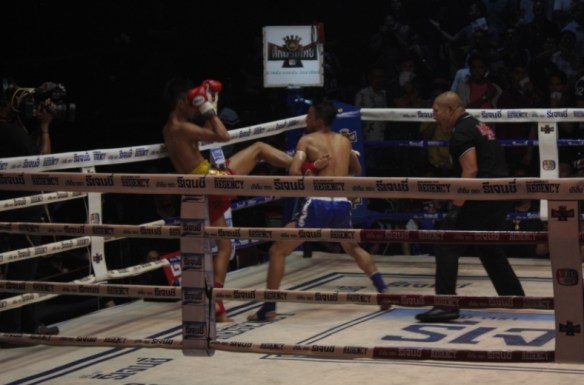
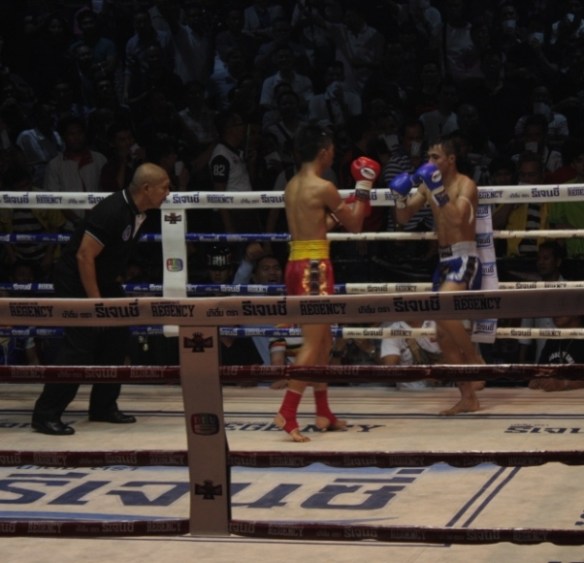
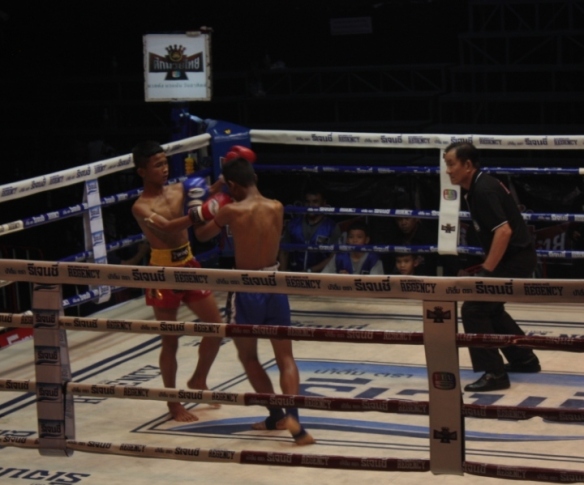
Since I’ve been watching quite a few muaythai fights recently at the Rangsit Boxing Stadium, I’ve begun to wonder just how useful corner advice is. I know that people think it’s beneficial because it’s done in droves. Not only is the fighter’s trainer trying tell them what to do, but also his parents, his siblings, his granny, and a hundred random people who may or may not have put money on him. It would be interesting to see a scientific study of how fighters performed who tuned everything out between rounds versus those who tried to take in all the advice. I tried to look up whether any such study had been done, but a cursor Google search came up empty.


What comes of all the corner talk?

What comes of all the corner talk?

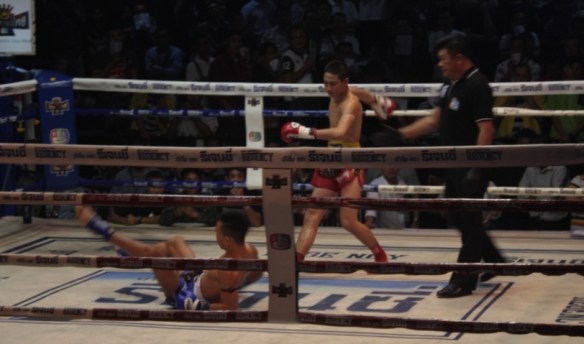
DAILY PHOTO: Vigilant Referee

Taken February 19, 2017 at Rangsit International Boxing Stadium

Taken February 19, 2017 at Rangsit International Boxing Stadium


img_6476


img_6576

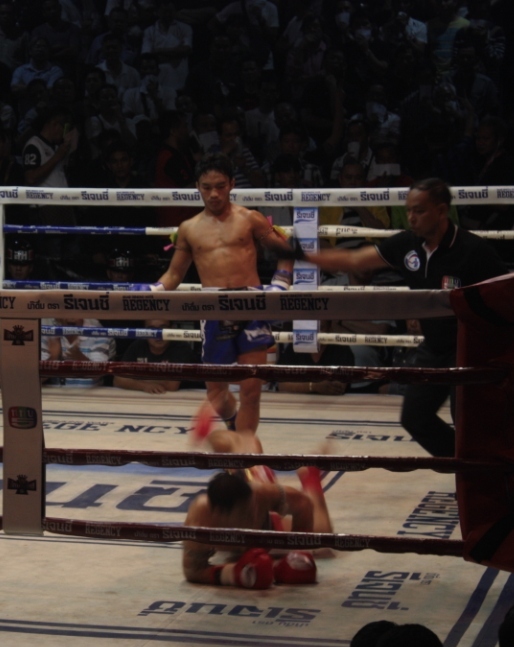
DAILY PHOTO: Rangsit Fight Night Takedowns

Taken on February 19, 2017 at Rangsit Boxing Stadium

Taken on February 19, 2017 at Rangsit Boxing Stadium


img_6515

img_6458

img_6344

img_6338

img_6560

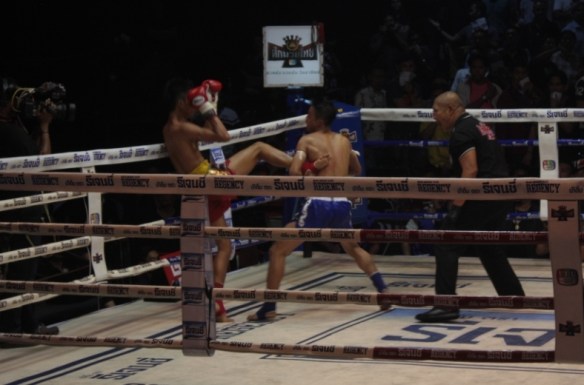
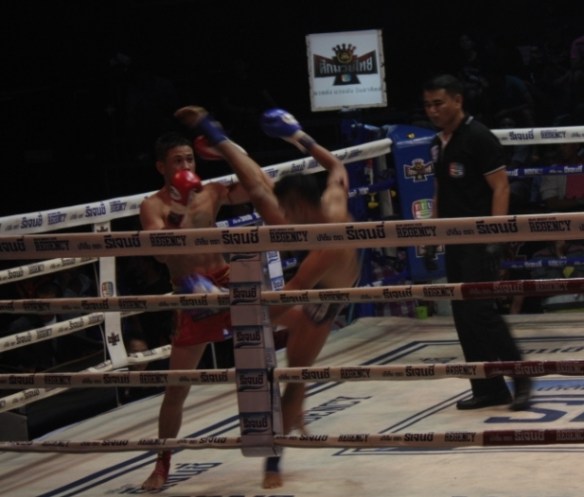
DAILY PHOTO: Muay Thai!

Taken in September of 2015 at the Rangsit International Boxing Stadium

Taken in September of 2015 at the Rangsit International Boxing Stadium


img_1630


Heading back to Thailand for muaythai training. I’m planning on keeping the blog going at some level this time. Hopefully, the metaphoric grass won’t grow up and the tires go flat while I’m away.

BOOK REVIEW: Let Every Breath by Scott Meredith

Let Every Breath: Secrets of the Russian Breath MastersLet Every Breath: Secrets of the Russian Breath Masters by Vladimir Vasiliev
My rating: 3 of 5 stars

Amazon page


This book presents an introduction to breath exercises employed by the Russian martial art called Systema. Systema is one of a number of drill & spar-centric (as opposed to technique-centric) martial arts that have developed in modern times in an attempt to cast off the unrealistic and needlessly complicated elements that tend to grow within traditional martial arts (e.g. Krav Maga is a well-known exemplar of such a martial art.) Among the unique aspects of this system is its focus on, and approach to, breath—and breath is crucial in the martial arts, in a fight, and in life.

I had mixed feelings about this book. I’ll begin with positive aspects and then get into what I found off-putting. First, the book offers a clear explanation of principles and drills that are straight forward and will increase one’s awareness of breath. That is laudable. Are these particular principles and drills the end-all-be-all that will take one to heights that no other approach to breathing could (as the book suggests?) No. But is it a solid approach to breath that will yield benefits by making you more aware of breath while helping you to use it more effectively? Yes. Second, the book doesn’t have a lot of competitors in the “breathing for martial arts” space, and so it fits into a substantial void. (Note: the book doesn’t get into martial arts / self-defense drills or techniques, and doesn’t claim to.)

Now, here’s the other half of the open-faced shit sandwich. You’ve likely already gotten a hint of my problem with the book. This will seem like a two-part criticism, but it condenses into one problem with the book’s attempt to sell the reader on Systema. The starting point, as another reviewer noted, is that this system isn’t as completely novel and unmatched as is presented. Is that a damning indictment? It wouldn’t be. Just because this approach shares concepts applied elsewhere and is constrained by the nature of the human body doesn’t mean that it can’t offer its own unique value-added. The problem is that we are told how unique and completely peerless this system is so often that it becomes a bad info-mercial.

I get it. Systema is a product that has to compete in an intense market place with the likes of Krav Maga, MMA, Total Combat Systems, Defendu, and a ton of other self-protection oriented martial arts. It’s Pepsi, and it has to carve out a market share by convincing us of the unlikely fact that Coke products aren’t even in the same ballpark. The problem is that when it dismisses systems like yogic pranayama and Taoist chi gong, it does so in a way that shows virtually no understanding of those systems. When the author is telling us how the Systema approach to breath is superior to pranayama, he describes an asana (posture-oriented) class. If you’re going to convince us that the several thousand year old yogic tradition completely missed an approach to breath so groundbreaking that it will take one on an e-ticket ride to self-perfection, at least have some idea of the scope of what the yogis learned and how they present those lessons to their students.

The second half of this rant is that there is a lot of hagiography to delve through before one gets to the meat of the subject. Now, in general, authors of martial arts books tend to pay homage to their teachers and lineage. It’s not unreasonable that there is some near-deification of teachers in this book. However, at some point it becomes hard to tell whether the book exists to inform readers or as a monument to someone’s ego. This book gets disconcertingly close to the line. (The arrogance issue is made worse by confusion about authorship. It’s said that Meredith wrote the book, but Vladimir Vasiliev takes the by-line. This creates an odd situation because the book tells us how Vasiliev is both an exceptional human being, and humble as well. You can see my problem. Without evidence to the contrary, I can easily accept that Vasiliev is exceptional. I can also believe that he is humble. But when a book with his name on it tells me both of these things, I’m forced by the dictates of logic to reject at least one of them [and doubt is cast upon both.])

If you are looking to expand your understanding and awareness of breath, you may want to give this book a try. I certainly wouldn’t endorse every claim it makes, but there are some interesting ideas presented.

View all my reviews

5 Bits of Ancient Eastern Wisdom to Make Your Modern Western Life Happier

img_12811.) The Dispassionate Witness:  A person’s default setting is to repress emotions and pretend they don’t exist. On the one hand, this seems to work because others rarely notice one’s clenched jaw or downing of Prozac, and it’s true that fist-fights rarely break out in workplaces and classrooms. On the other hand, this approach leads to a lot of passive-aggressive behavior and stress-related illness. I just read in some material on Flow and business that 2/3rds of performance issues in businesses result from strained relationships.

The alternative is to take time to observe one’s emotional state, but to watch it without dumping fuel onto the fire. This process puts one’s feelings in perspective so that one can respond in a careful, but not repressed, manner. It doesn’t mean one won’t still be mad, sad, or scared, but one will be in a position to act in a manner that is neither petty and knee-jerk, nor one that consists of gobbling antacids. This brings us to #2.


2.) The Second Dart: [Siddhartha Gotama] Buddha talked about the mind’s response to an event as the second dart, suggesting that the second dart produces much more prolonged misery than the first. Imagine one is walking along and gets hit by a dart. Ow!  It hurts. But what makes it agonizing is when one’s mind becomes obsessed with the injury. It’s unfair that someone threw a dart at me. What if the wound doesn’t heal right? What if the wound heals up too well, and I don’t have a cool scar at story time?

This point is closely related to #1. One has to observe, but not let mind run wild. The first dart is real. The second dart is immaterial, a figment of the mind.


3.) Relaxation is Part of the Process: Anyone who’s attended a yoga class is familiar with closing in savasana (corpse pose.)  Occasionally, a student wants to get up and walk out at this point. They “aren’t paying __ $’s to lay around on their a##.” For Americans, rest is something begrudgingly accepted between actually doing stuff.

The problem with the “rest as laziness” approach isn’t just that one is likely to suffer a relaxation deficit, but also that the rest one gets isn’t effective. But how can rest be effective? I’m glad you asked. Because when you’re doing savasana or yoga nidra (yogic sleep) you’re not just letting your monkey mind run wild as it does when one is watching television or stuck in afternoon rush hour.


4.) Breath is Anything but Mundane: Since breathing is constantly going on and one can choose not to think about it, people dismiss it as unworthy of consideration. However, breath is the one point at which we can consciously influence our autonomic nervous system. [Well, there’s also blinking, but to my knowledge there’s no evidence that one can adjust one’s energy level or emotional state through blinking–but you can with breath.]  Breath is the key to improved physical performance, but it’s also a powerful tool to train the mind.


5.) Use the Belly: I haven’t studied a large number of martial arts, but I’ve trained in a diverse few that were extremely different in both approach and priorities. It could be said that these arts (budō, tai chi chuan, muaythai, and kalaripayattu) had nothing in common. Except they did. They all valued strength in a point below the navel. Sometimes it was called dan tien; other times tanden. However, regardless of the pronunciation, name, or the precise anatomical location, there was this commonality.

Strength in the belly is tied to both breath and mental concentration.

img_1786

5 Books to Improve Mind-Body Performance

It’s the time of year when people think about how to be better, fitter, and smarter; so I thought I’d drop a list of books that I found helpful and thought-provoking.


If you’re interested in learning more about any of these books, the hyperlinks take you to my review in GoodReads, and from GoodReads you can get to Amazon page.


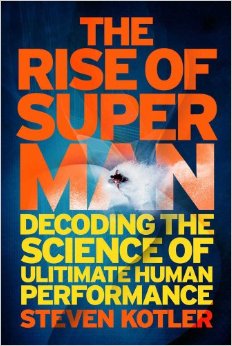
1.) THE RISE OF SUPERMAN by Steven Kotler: How do extreme athletes achieve Flow when one false move will kill them?

RiseOfSuperman


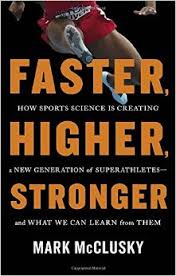
2.) FASTER, HIGHER, STRONGER by Mark McClusky: How do elite athletes squeeze the most out of the potential of the human body?

FasterHigherStronger


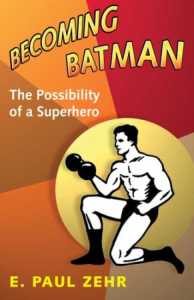
3.) BECOMING BATMAN by E. Paul Zehr: What would it take, physically and mentally, to become the Caped Crusader?

Becomingbatman


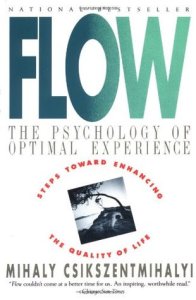
4.) FLOW by Mihaly Csikszentmihalyi: How does one achieve that state of relaxed and confident concentration in which we perform our best called Flow?

flow


5.) Extreme Fear by Jeff Wise: How does one overcome anxiety and fear to perform one’s best?

ExtremeFear

2016: Our Year in Photos

New Year's Day sunrise over Bai Tu Long Bay, Vietnam

New Year’s Day sunrise over Bai Tu Long Bay, Vietnam

JANUARY:

-Travel: returned from our December 2015 visit to Vietnam

-Began RYT300 (Int / Adv) yoga teacher training at Amrutha Bindu Yoga

Taken at Kesava Temple in  Somanathapura

Taken at Kesava Temple in Somanathapura with the RYT300 class


FEBRUARY:

– RYT300 course continued

Teaching yoga at Socare

Teaching yoga at Socare

Learning to cook Indian food at Manju's

Learning to cook Indian food at Manju’s Cooking School


MARCH:

-Completed the RYT300 course to obtain my RYT500 certification

The RYT300 Class at Fireflies Ashram to learn Shatkarma

The RYT300 Class at Fireflies Ashram to learn Shatkarma


APRIL:

-Traveled to Varkala and Amritsar

-Taught a two-week Kids Camp at a1000 Yoga, Kormangala

Varkala, Kerala in early April

Lilla in Varkala, Kerala in early April


Golden Temple (Harmandir Sahib), Amritsar

Lilla at the Golden Temple (Harmandir Sahib), Amritsar


MAY: 

-Travel: Thailand, Zambia, and Dubai

-Completed the Muay Thai 2 (Int.) at The Muay Thai Institute in Rangsit, Thailand

With MTI teachers and students after a successful fight by a German student

With MTI teachers and students after a successful fight by a German student (shirtless)


Zebra at the Chaminuka Game Reserve near Lusaka

Zebra at the Chaminuka Game Reserve near Lusaka


Lilla and I amid the dunes in the UAE near Dubai

Lilla and I amid the dunes in the UAE near Dubai


JUNE:

-Between travels and trainings, a quiet month in Bangalore

Back again with the kids at Socare

Back again with the kids at Socare


JULY:

-Travel: Kolkata and into Jammu & Kashmir for our August travels

Quintessential Kolkata (Calcutta)

I’m afraid you can’t jam more Kolkata (Calcutta) into a photo than this


AUGUST:

-Travel: Jammu & Kashmir (Srinagar, Sonamarg, Great Lakes Trek, Leh, Nubra Valley, and Pangong Tso) and into Chennai for the beginning of my Vipassana Meditation course

Lilla on our first night camp site on the Kashmiri Great Lakes trek

Lilla (green hoodie) on our first night camp site on the Kashmiri Great Lakes trek


Lilla and Eeyore in Leh

Lilla and Eeyore in Leh


Lilla and I at the (reputed) highest motorable pass in the world

Lilla and I at the (reputed) highest motorable pass in the world


SEPTEMBER:

-Travel: 2 trips to Chennai; the first for my 10-day Vipassana Mediation Course, and the second for a wedding

Chennai (Madras)

Chennai (Madras)

Lilla henna'd and bangled for the wedding

Lilla henna’d and bangled for the wedding


OCTOBER:

-Travel: rainy season in Goa

-Anniversary month (22 yrs.)

-Took the 5th level test at Kalari Academy but promptly threw my back out–an injury from which I’m still recovering (although it’s down to a mild leg tingle) [I wouldn’t mention it but I think I’m obligated to by the rules of year-end / Christmas letters to mention any health issues.]

Lilla in front of the Se Cathedral in Old Goa (Velha Goa)

Lilla in front of the Se Cathedral in Old Goa (Velha Goa)


NOVEMBER:

-Travel: Singapore

Lilla in front of the Marina Bay Sands

Lilla in front of the Marina Bay Sands


DECEMBER:

-Travel: We’ll be in Hungary (fingers crossed) in the latter half of the month

-Finished a draft of the novel. I don’t know what version this counts as, but it’s the only one so far even close to having an ending that I can tolerate.

-I’ll probably have read about 100 books by the end of the year.

Here’s a pic from another winter trip to Budapest:

Budapest a few years back

Budapest a few years back

A more recent Budapest Winter pic; this was our most recent winter visit 2014

A more recent Budapest winter pic; this was our most recent winter visit-i.e. 2014

BOOK REVIEW: Zen Bow, Zen Arrow by John Stevens

Zen Bow, Zen Arrow: The Life and Teachings of Awa Kenzo, the Archery Master from Zen Bow, Zen Arrow: The Life and Teachings of Awa Kenzo, the Archery Master from “Zen in the Art of Archery” by John Stevens
My rating: 4 of 5 stars

Amazon page


Awa Kenzo is variously known as an archer without compare, a Zen master, or as the teacher of Eugene Herrigel. Herrigel was a German philosopher who wrote a thin book entitled, “Zen in the Art of Archery” that gained a global following. Herrigel’s book was about his time as a student of Kenzo and the insight that he gained into both Zen and Kyūdō—Japanese style archery—through his studies. Kenzo lived from 1880 to 1939, a period during which arts like kyūdō were used more for development of character than as fighting arts, and Kenzo was important figure in this transformation.

Stevens’ book is a thin volume (< 100 pages) consisting of three parts. The first is a short biography of Awa Kenzo. One shouldn’t expect a thorough treatment, but that may be for the best (i.e. Kenzo’s life is of interest because of his mastery of archery, but probably only his most ardent fans would want to read a 400 page biography on his life.)


The second part is a set of lessons and aphorisms attributed to the master archer. This section includes a few pages by the author to put Kenzo’s brief statements in context. The lessons themselves are sometimes in prose, sometimes in poetry, and occasionally in the form of lists. These lessons offer insight into archery, mindset, and life in general. Archery is portrayed as a lifestyle.

The third section consists of three short (very short) stories in which archery as a means to develop one’s character is at the forefront.

In addition to the three sections, the book includes front matter, annotations, a bibliography, and a few photos.

I enjoyed this book and would recommend it for those seeking insight into the nexus between Zen and the martial arts.

View all my reviews