POEM: Running

Botswanans have a saying:
“only food runs”

I wonder how much that sentiment holds sway in India?

Because, as I was running in the park today
a man looked at me
and then looked back behind me
and then looked at me
and then looked back behind me

and then, smiling, he shouted something in Kananda
that could only have been:
“Whatever was chasing you is gone!”

A Conversation of Mutual Disenchantment

“I remember being born.”

“No. You don’t.”

“How would you know?”

“Well, let’s start from the assumption that you’re human…”

“I’d like to think so, but what are my options?”

“I don’t know. Humans don’t have that neural machinery at birth… So nothing from Earth remembers its birth.”

“And yet, I do.”

“Mightn’t you have cobbled together the scene from your mom’s stories, the family photo album, et cetera?”

“Nah! It’s too detailed. Feels too real.”

“I find your ignorance exhausting.”

“I find your certainty perplexing — not to mention irritating and slap-worthy.”

“Let’s agree to be mutually disenchanted.”

“Agreed.”

DAILY PHOTO: So You Say Your Job Sucks?…

Taken in Ahmedabad in October of 2017

… Does it “pedaling-around-a-dozen-gas-canisters”-suck?

POEM: Foisted, or: Bizarro Liam Neeson

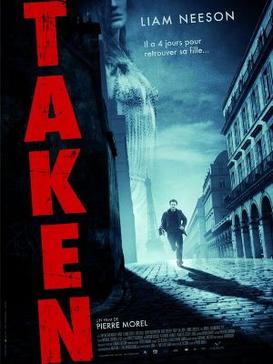
He fancied himself a Bryan Mills

as played by Liam Neeson in “Taken”

only the Bizarro World version.

For he had no particular set of skills

[least-wise not as applicable to his situation]

&

instead of having had a child taken

he’d had one foisted upon him.


While this didn’t fill his every waking moment with violence

in a fight to recover the child

it did fill them all with chaos and occasional contusions

in the struggle to flee the bedlam.


And so, in that sense, they were practically twins.

BOOK REVIEW: A Brief History of Vice by Robert Evans

A Brief History of Vice: How Bad Behavior Built CivilizationA Brief History of Vice: How Bad Behavior Built Civilization by Robert Evans
My rating: 5 of 5 stars

Amazon page


This book’s title and subtitle suggest its central theme, but it doesn’t tell the whole story. As the title suggests, drugs, sex, and sundry bad behavior aren’t just the abhorrent actions of a marginalized few who society seeks to reign in. In some cases, culture and civilization are built on said behaviors. Evans devotes a fair amount of space to discussing research on vices’s role in the growth of civilization. These hypotheses and theories run a gamut from the non-controversial and well-established to more sweeping claims such as that the agricultural revolution was largely driven by the dictates of beer production (i.e. both the need to produce a lot of grain and to be homebodies through the fermentation process) and that the dawn of religion may be linked to the ingestion of mushrooms of the magic variety. Despite the book’s light and humorous tone, it should be noted that the author treats the latter type of claims with the requisite skepticism.

But this isn’t just a book of history, anthropology, and evolutionary biology as pertains to the origins of vice and its linkage to civilization and culture; it also offers humorous anecdotes of the author’s experiments into how to replicate some of the vices of the ancients – as well as offering step-by-step directions for readers to conduct their own such investigations. As might be expected, there’s a lot of humor in the book. Just the idea of debauchery building civilization offers plenty of opportunity for the subversion of expectations that makes comedy, but then one adds in stories of people (and occasionally other species) making decisions under the influence of mind and mood altering substances (or even under the influence of horniness) and one enters territory ripe for hilarity.

The book consists of 15 chapters that cover both expected and unexpected topics. Not surprisingly, discussion of drugs – legal and illicit — takes up a large portion of the book. [I should make clear that the discussion of illegal substances is purely historical, and the “how-to” sections describe “experiments” that were legal in the author’s jurisdiction and that will be for most readers.] Ten chapters are about various consciousness and mood altering substances including: alcohol (ch. 1 & 4), psychedelic substances (ch. 7, 8, and 10), tobacco and marijuana (ch. 9; treated together because historically they had more in common than in their modern use / legal status), the ephedra shrub and derived products ranging from Mormon tea to Methamphetamine (ch. 11), coffee and caffeine (ch. 12), designer drugs ranging from ayahuasca [made from two different plants that don’t live together and which only work when used together] through pain killers and on to the dangerous scourge of synthesized substances created in labs to get around drug laws for a few days until they will be added to the schedule of illegal substances.) The final chapter (ch. 15) is devoted to the search for the mythical salamander brandy of Slovenia (claimed to have hallucinogenic qualities owing to a toxin emitted by the submerged reptile.) I should point out that I have oversimplified with this division of chapters for simplicity’s sake. Some of the chapters dealt with more than one type of substance. For example, Chapter 10 is really about drug cultures and how they kept people safe in, for example, shamanic tribal societies, and how the loss of such culture is part of the reason we have a more severe problem with substances in modern society.

No investigation into the role of vice on civilization would be complete without discussing sex, though there are only two chapters about it. The first, chapter 6, discusses prostitution / sex work. There’s a widespread tongue-in-cheek reference to “the world’s oldest profession” that hints that sex work is both ancient and that past civilizations sometimes viewed these activities in a much different light than do we in modern, Western society. The second chapter on sex, chapter 13, addresses a different question altogether, but one which has captured the attention of many a scholar (as well as being fruitful territory for humorists), and that’s why there’s such a vast range of sexually titillating activities. It’s not difficult to figure out the evolutionary advantage of extreme pleasure being linked to sexual intercourse. However, it’s much less clear why there are such a huge range of fetish behaviors that are intensely arousing for some while ranging from being boring to disgusting for others. [It’s not cleared up by thinking that there is just a tiny fraction of the population that is into everything. A person who gets excited by wearing a head-to-toe rubber suit while being failed with a halibut might find a foot fetish utterly disgusting.]

For those who are counting, that leaves three chapters on miscellaneous forms of vice. Chapter 2 discusses music, particularly as a lubricant of social activities, and it presents an intriguing theory that Stonehenge may have been built for its acoustic qualities – i.e. to facilitate ancient raves. Chapter 3 explores celebrity worship, an activity which we tend to think of as both recent and as harbinger of doom for humanity, but which actually has a long history – so long that it may date back further than humanity, itself, does. That leaves chapter five, which delves into a grab-bag of bad habits that would today be collectively labeled “douchiness.” This includes narcissism, inexplicable overconfidence, and a tendency toward lying, bragging, and delusions about self or others.

The book has a range of graphics from photographs to diagrams. Some are for educational purposes (e.g. to help the reader conduct their own experiments) and some are mostly for comedic effect. The “side-bar” discussions of how to reproduced the results of the ancients (and the author, himself) are presented in text-boxes for the sake of clarity. There are one or two of these text-boxes in most chapters. As mentioned, the subjects for these “hands-on” activities are chosen to avoid running afoul of the law.

I enjoyed this book. It’s at once amusing and thought-provoking. I think the author hits a nice medium between doling out humor and educating the reader. I’d recommend reading it (though not necessarily conducting every one of the experiments) for anyone who finds the subject intriguing.

View all my reviews

BOOK REVIEW: Up the Down Staircase by Bel Kaufman

Up the Down StaircaseUp the Down Staircase by Bel Kaufman
My rating: 5 of 5 stars

Amazon page


This is a humorous novel about a rookie teacher’s first year in a New York City public school with all the frustrations and victories that experience entails. It’s an epistolary novel – meaning it’s conveyed through a series of documents. Some of the humor is of a “kids say the darndest things” nature – though these are high school students, so the humor isn’t so much born of naiveté as it is a combination of teenage snarkiness and a maddening ignorance of concepts that students should have grasped by that age (i.e. laugh so you don’t cry style humor.) The humor from kids is largely conveyed by students’ comments in the teacher’s comment box as well as via homework assignments.

There’s a second kind of humor in the form of bureaucratic absurdism. Bureaucratic wrangling and lack of resources cause most of the protagonist’s frustrations. This humor is largely conveyed through memos – some school-wide and some specifically to the protagonist, Sylvia Barrett. Barrett also commiserates with her co-workers, and we see some of her frustration playing out through the post-it note equivalent of water-cooler conversations.

The epistolary form offers a challenging format for both character development and story presentation. However, the novel is strong on character development. It achieves this in large part by mixing long-form letters to a close friend with the short memos and comment box entries. The reader gets to see events unfold and responses by way of different documents. The longer letters give us some depth of feeling. There is even a point where Barrett is being swamped by correspondence and we hear nothing back from her, and in this we can feel the degree to which she is overwhelmed.

The book isn’t story-centric. However, there is a narrative arc that revolves around the question of whether Barrett will stay on at the public high school or move on to teach at a liberal arts college. She is torn because she feels she can do good at the public high school and that would be satisfying, but at the same time she is bureaucratically frustrated and demoralized by perceived failures. There are dramatic events here and there to elevate the tension from the run-of-the-mill school events, but not so much that the book ever moves away from feeling like the real experience of a rookie teacher.

The book uses drawings here and there, usually presented as student doodles, to add to the humor.

I enjoyed this book, finding it to be both humorous and illuminating. I would highly recommend it for those interested in the challenges of secondary education or who can appreciate the [bittersweet] humor of it.

View all my reviews

5 Reasons to Read Outside Your Comfort Zone

5.) Nothing, and I mean nothing, gets stronger in the absence of adversity. If I told you that I had a strength building regime that would double your strength and you’d never be sore, you’d call bullshit. [I’m presuming that you’re not the proud owner of a Shake Weight.] Yet, somehow, people think they can build a stronger mind while consuming only information that confirms their existing worldview just because it, at best, offers a few additional scraps of information.

4.) Get a journey on the cheap.
 Reading outside your comfort zone not only exposes you to an unfamiliar world, it’s good preparation for traveling and the mental gymnastics that will be required of you. If you cannot handle the cognitive dissonance of reading something that challenges your existing worldview, you aren’t ready for traveling — stick with your AC bus tour group, or stay at home. [Yes, I’m distinguishing between being a tourist and a traveler. If you’re a traveler, you know exactly what I mean. If you don’t know the difference, you — my friend — are either a tourist or a homebody. Yes, furthermore, I’m aware of the irony of making a distinction between travelers and tourists in a post that is — in part — a critique of the proclivity to create separations between oneself and large portions of the rest of humanity.]

3.) Master your mind. If you get queasy reading a character perspective that is remote from your experience, or if you get livid reading views that radically depart from your own, that’s a good opportunity to step in and rewire your mind to be more agile and empathetic. A good place to start is by trying to adopt another’s perspective as a dispassionate observer.

2.) Tear down some of the things you “know.”  I use the word “know” [in quote marks] to describe those beliefs you ascribe to with iron-clad certainty for no reason that would survive, say… lunch with Socrates. I’m not suggesting one should obliterate all of one’s beliefs, I’m just saying one should become aware of which articles of belief serve you and which do not.

For a few decades, I thought the path to a truer picture of the world involved adding to my stockpile of knowledge. However, I realized that some of what I knew was bullshit, and just adding to a stockpile of knowledge ballooned up the bullshit as well as the understanding of truth. So I needed away to tear down illusions. But how to do it? Turns out that beating one’s head with a frying pan destroys what one knows as well as what one “knows.” Furthermore, it turns out that reading outside my comfort zone has been key to helping separate the wheat of knowledge from the chaff.

1.) Be less predictable. Emerson said, “If I know your sect, I anticipate your argument.” He was a smart guy, and thought for himself.

POEM: Intergalactic Smelly Kid; or, Fermi Paradox, Solved It!

Source: European Southern Observatory (via Wikipedia)


Let me step up on my soapbox,
tell you about a paradox.
Said a scientist named Fermi,
“Why’ve no aliens made the journey
to bring us a nice fruit basket
or just tell us how fantastic
it is having us in the neighborhood.”


Scientists have racked their brains
considering competing claims:
“Life is hard and smarts is harder.”
“They can’t stock a trans-galactic larder.”
“They’ve come here, but are to small to hear.”
“They are shy, out of wisdom or of fear.”
Or, simply, “They all blow’d themselves to hell.”


I, too, have had reason to ponder
why aliens stifled the urge to wander
into our little neck of the wood,
and I fear we don’t come off so good.
What if, I ask you, heaven forbid
they think of us as the smelly kid?
Are we the seatmate who won’t shut up
about his robotic barbershop startup?
Do humans come across as the kind
to ask a stranger if they wouldn’t mind,
helping us move and antique armoire
or lending us their new flying car?


So when considering whether we’re alone of device or luck,
consider the competing hypothesis that we really suck.

POEM: Little Monkey

little monkey, where are you?

do you live in the same zoo?

did they give you a tire swing?

or just duvets and napkin rings?

useless crap strewn floor to ceiling

judging by your giddy squealing

i think the former, not the latter

ah, to live a life of monkey matters

BOOK REVIEW: Round Ireland with a Fridge by Tony Hawks

Round Ireland with a FridgeRound Ireland with a Fridge by Tony Hawks
My rating: 5 of 5 stars

Amazon page


When Tony Hawks and his friend Kevin see a man hitching with a refrigerator one night, a debate ensues that results in a ₤100 bet that Hawks can circumnavigate Ireland entirely by hitching rides–while carting a fridge with him. (When Kevin insists that no one could get a lift with a fridge, Hawk’s response sets the book’s tone and theme, “They could in Ireland, it’s a magical place.”) Showing a lack of business acumen, Hawks purchases a compact dorm fridge for ₤130, and sets off from Dublin in a counterclockwise fashion. The rules of the bet stipulate that Hawks must visit Tory island at the extreme north and Clear Island at the extreme south but otherwise can use whatever route he likes as long as he gets around only by hitchhiking, he keeps the fridge with him during his travels, and it takes him less than a month. Hilarity ensues.

Hawks’ book is a hoot. If there is anything that he makes funnier than a person questioning his intelligence / sanity for carting a fridge about, it’s his description of the people who politely ignore the absurdity of him hitching with a fridge. There’s also a fair amount of sour grapes humor as sometimes it seems the fridge has gained more of a celebrity status than the author. Of course, not all the humor is fridge-centric; some of it takes place in pubs with the people the gregarious Hawks meets along the way. The book mixes travelogue with humor writing, and nicely captures both the scenery of Ireland and the national character of the Irish. The book also has its serious moments, particularly as it draws to a close and the author realizes his adventure is at an ends.

In the end, Hawks proves that it can be done—in theory, at least. It should be pointed out that Hawks had the benefit of appearing on a national radio show regularly as well as on TV at the start and finish of his trip. Because of this, people were often on the lookout for him and likely more willing to give him a lift than if he were the average schlub. On the other hand, the need to meet scheduled appointments with media is one of the sources of tension in the book because they usually involve close calls. It seems it’s not always easy to call in from remote locations in rural Ireland while on the move, and the best example may be Hawks’ attempt to make it to Dublin on the last day to meet a PR event that a radio show had set up. He puts the reader on the edge of his seat, despite the lack of any real peril (it is just a guy trying to make media events related to his absurd adventure, after all.)

I’d highly recommend this book. If you’re interested in traveling in Ireland, it’s a light read to give you some ideas about places you might want to hit (or miss.) However, on its humor alone it’s worth a read even for readers who don’t normally read travel writing.

View all my reviews