BOOK REVIEW: 100% by Paul Pope

100%100% by Paul Pope
My rating: 4 of 5 stars

Amazon page


Despite the gritty, futuristic-noir setting of this graphic novel, it’s essentially the intertwining of three love stories. The story opens on the corpse of a dancer found in an alleyway. I thought this was going to be part of the story’s inciting incident or foreshadow it, but — in reality — it just served to establish that we’re on the wrong side of the tracks. The same might be said of a scene involving the purchasing of a gun. [I’ll let the reader figure out whether it was a “Chekov’s gun.” i.e. Chekov famously said, “If you say in the first chapter that there is a rifle hanging on the wall, in the second or third chapter it absolutely must go off.”] The fact that the story set in and around a strip club is apparently insufficient to convey how seedy this neighborhood is.

The love stories are between a dancer and a dishwasher, the club manager and a fighter, and the manager’s best friend and a sound artist. These love stories are nicely woven together, even if they are clichéd. The relationship with the prize fighter is probably the stalest. However, fear of commitment and standing up for one’s art are the well-worn heart of the other two stories. As I think about it, it’s not that those clichéd themes form the heart of the story (one will see the same themes replayed out in great works, past, present, and future,) but instead I think it’s the way we are pummeled over the head with them. It’s much like aforementioned set up of the seediness of the setting. By being so blatant, one can’t help but feel it’s a bit hackneyed.

That said, it’s a fine story, that might have benefited from a little bit of subtlety.

The artwork was well-done as far as I’m able to tell. I have no particular expertise in art, so my only criteria is whether I could follow what was happening, and I could.

The “100%” that is presumably meant to apply to the lengths the characters go to for what / who they love, unfortunately is exceeded in telling the story in a way that draws attention to itself too much for its own good. That said, if you’re looking for sweet stories of love in a seedy setting, this book has got you covered.

View all my reviews

BOOK REVIEW: Hogg by Samuel R. Delany

HoggHogg by Samuel R. Delany
My rating: 4 of 5 stars

Amazon page


If you’re familiar with Samuel R. Delany, it’s probably as a writer of science-fiction. His most famous works are “Dhalgren” and “Babel-17.” However, this book isn’t science-fiction, and I’m not sure that there is a consensus term for the particular genre that would categorize it. Astute readers will point out that it’s described as “erotica” right on the cover. But, in as much as erotica is a genre whose dominant intention is to evoke feelings of arousal, I’m not sure the majority of people would classify it that way (though I have no doubt there is a fetish community that would.) This isn’t to say that the book isn’t loaded with sexual activity. It is, across virtually every page, but the way those acts are presented — I suspect — will be found more cringe-inducing than arousing to the average reader. I’m specifically talking about the extreme unhygienic behavior that takes place throughout this book – much of which is tied up in sexual activity, but not all of it. Let it be known that I’m not commenting on the nature of the sexual activity, which is pansexual. I’m not even talking about the moral disgust of the fact that most of the scenes in which a woman is present involve rape of a particularly vicious nature, and that child molestation takes place throughout. By the same token, horror isn’t a good classifier either, though the book does have many horrifying scenes, and might best be categorized by a type of horror subgenre. If horror is a genre designed to evoke fear, “Hogg” is a book designed to evoke disgust – and it does so with great success. So, the first thing a reader should be aware of before taking on this book is that you may throw up in your mouth at one or more points during the reading of it.

So strong is aversion to disgust that probably most readers will have given up on this review by now and given up any intention of reading the book. Those who are still here, however, may want to know whether the book has redeeming qualities. The answer is: Yes. It has a smart story, psychological intrigue, and skillful use of language (even if much of that skill is directed at making one physically queasy.) While “Hogg” is often painful to read, it is adroit storytelling.

The book tells the story of the unnamed narrator, a boy who is known throughout only by a slang term for “giver of fellatio.” The narrator spends much of the book in service to the titular character, Hogg. Hogg is about as loathsome a character as one can imagine, and he needs the extra “g” because to call him a hog wouldn’t be an insult to swine. He exercises little control over where he urinates and defecates, and prides himself in unhygienic behavior. His job is contract work, but instead of murder he rapes and beats women who’ve run afoul of despicable and cowardly men. The lead character seems to be motivated by a need to please and / or capture the attention of an individual who has no capacity for human connection. The psychotic Hogg seems perfect target for such “affections,” and that’s why after bouncing from master to master, the narrator ends up with Hogg for such a time.

One of the most psychologically interesting elements of the book is its depiction of the bizarro morality of individuals who have an anarchic mindset. At one point, Hogg decides that he can’t tolerate a customer who insists on explaining his reason for hiring Hogg and his crew. In Hogg’s mind, the fact that the man can come up with a reason for the horrific act, other than the pure bliss of it, indicates that the man is crazy and will ultimately feel guilty and be the ruin of them all.

The story is swept along through its climax and resolution when Hogg’s most junior crew member (not counting the narrator who is only along for the ride) goes on a killing spree after an ill-advised penis-piercing. The reader never learns for certain whether this individual just lost his mind as a result of being drawn into Hogg’s world, if it was toxicity from the rusty metal he was pierced with, or some combination of both. However, we know from his chronic, public masturbation that he was never completely right in the head to begin with.

This book is not for everybody. Reading it is almost an act of courage and discipline. As a piece of literature, it’s intense and thought-provoking, but if you find any of the following intolerable to read about, you’ll not get through it: child molestation, rape, violence, the n-word, or coprophilia.

View all my reviews

BOOK REVIEW: New Theories of Everything by John D. Barrow

New Theories of EverythingNew Theories of Everything by John D. Barrow
My rating: 5 of 5 stars

Amazon page


This book reflects upon the various elements that any Theory of Everything (ToE) would have to reconcile. A ToE is the holy grail of physics, a theory that would unify the various forces to explain the nature of the universe as we experience it. There have been many attempts to achieve a ToE, but it remains elusive. There is the mathematically beautiful and elegant string theory that suffers that one drawback of having no experimental support. There are those who have given up on a ToE in the sense that the term is normally used, suggesting that the desired degree of unification isn’t possible and that the desire to think it must be is just wishful thinking.

Probably the most useful piece of information about this book for one considering reading it is its readability. As works of popular science go, it’s more challenging that most (but not as difficult as, for example, Hawking’s “A Brief History of Time.”) [I have little doubt that those who read physics textbooks will find it a walk in the park.] It has few equations, and the mathematics it does present is elementary. However, it does explore quite complicated ideas. The book uses graphics to assist, mostly diagrams, but many of these require thoughtful consideration in their own right.

The organization of the book is based on an eightfold way (no relation to the Buddhist eightfold path) – that is, eight ingredients with which a ToE must be consistent. The nine chapters of the book begin with a brief opening chapter that sets up the rest of the book by discussing what a ToE would really explain (“everything” isn’t necessarily the answer in a strict meaning of that word), what the eight components are, how pre-scientific ToE’s operated, as well as introducing the recurring concept of algorithmic compressibility. (The importance of compressibility lies in the idea that in order to make the equations describing the universe more concise it’s necessary that the data describing the universe be “compressible” – i.e. have some underlying order.)

After the intro chapter, the eight subsequent chapters are logically arranged into the aforementioned eightfold way. These are: 1.) laws, 2.) initial conditions, 3.) the nature of forces and particles, 4.) the constants of nature, 5.) symmetries and the breaking thereof, 6.) organizing principles, 7.) Bias and selection effects, and 8.) to what extent mathematics is integral to the universe. Some of these elements (e.g. the laws and constants) we are told couldn’t vary by much and allow us to still exist. So, the question addressed in the book isn’t only how can science get to a theory that explains the existence of a stable(-ish) universe, but further one that can support complex and intelligent life. The chapters on symmetry breaking and selection effects are particularly relevant to this discussion.

One of the most interesting discussions is the last. Chapter nine, entitled: “Is ‘pi’ really in the sky?” discusses the question of how fundamental mathematics is to the universe. It’s long been a topic of scientific intrigue that there seems to be no particular reason for mathematics to be as effective as it is at describing the way the universe works. The discussion has resulted in a wide range of replies from those who say the success of mathematics is more illusory and limited than it appears to be, to those who believe the universe not only is written in mathematics but is math (see: the work of Max Tegmark.) That is, some say that there are parts of a stable universe that must be orderly enough to be described mathematically and those are the only parts we truly understand as of yet. Others say mathematics is the bedrock of the universe.

I enjoyed this book, and found the organizational approach helped a great deal in thinking about the problem. I doubt I grasped everything the author was trying to convey, but it was a book piled high with food for thought for anyone interested in thinking about the nature of the universe. If you’re interested in the grand-scale questions, I’d recommend this book. That said, there are more readable takes on the subject out there if one is looking for light pop science fare.

View all my reviews

BOOK REVIEW: The Three Stigmata of Palmer Eldritch by Philip K. Dick

The Three Stigmata of Palmer EldritchThe Three Stigmata of Palmer Eldritch by Philip K. Dick
My rating: 5 of 5 stars

Amazon page


This trippy sci-fi novel takes place in a future in which near colonization (e.g. the moon and Mars) has taken place, and life is so dismal that much of the population (especially on the colonies) take a drug that allows them to partake of a communal hallucination of a more idyllic life. This substance is called CAN-D, and – like many drugs – is largely illegal but widely available. But the CAN-D business is about to be turned upside-down, because the tycoon Palmer Eldritch is returning from the Prox System with a new drug based on a lichen that is indigenous to that solar system, a drug called CHEW-Z. CHEW-Z, it is claimed, is better in every way, but it has two readily apparent advantages: it’s cheap, and it’s not yet illegal. Beyond that, what CHEW-Z is is a question the reader will be forced to confront.

The book has shifting perspectives and isn’t focused upon a single central character through its entirety, but the lead character is Barney Mayerson. [If you’re wondering why the titular character, Eldritch, isn’t the lead, it’s because the mystery of him is crucial to the intrigue of the story. Throughout most of the story, Eldritch is more of a legend than a character, and the reader is presented with the question of whether the Eldritch coming back from Prox is the same one who left for it.] Mayerson is in the employ of the firm that runs the layouts central to the CAN-D trade. He has powers of precognition and his job is predicting whether potential products will sell or not so that the corporate powers-that-be can decide whether to invest in them. But two problems loom over his head. First, his number has been called in a draft to force him to move to Mars, away from his prestigious New York life. Second, his position is going to put him right at the center of the battle between CAN-D and CHEW-Z.

The book explores topics of religion and mystic experience. Mayerson, like most of the population, is secular and has little inclination toward religiosity. For many, CAN-D is a sort of pseudo-religion, or at least it frees them from their egos and helps the feel empowered in a way many seek through religious practice. One of Mayerson’s love interests (he has three over the course of the book, but this is the one he meets when he moves to Mars) is a hardcore Christian (by the standards of the day.) The interaction of these two characters brings the philosophical / religious component to the fore.

Much of the story plays out a product war between CAN-D and CHEW-Z, but, in the latter chapters, as the story plays out in large part in the minds of individuals on CHEW-Z, one starts to reflect upon just what CHEW-Z really is. And that reflection leads one into some profound questions such as: What is the nature of consciousness? What does it mean to be a god?

I enjoyed this book. I’m a fan of the work of Philip K. Dick, anyhow, but this book is among my favorites. Hopefully, I haven’t made it sound like a confusing or cumbersome read. It’s actually quite easy to follow despite the perspective shift from Mayerson to his boss Leo Bulero and back as well as the dreamlike quality of life for characters on CHEW-Z. In fact, I’d say its one of the most skillfully written mind-bending reads that I’ve read.

If you like trippy, mind-bending fiction, you should definitely check this book out, and if you like books that spur philosophical deliberations — all the more so.

View all my reviews

BOOK REVIEW: The Art of Losing Control by Jules Evans

The Art of Losing Control: A Guide to Ecstatic ExperienceThe Art of Losing Control: A Guide to Ecstatic Experience by Jules Evans
My rating: 5 of 5 stars

Amazon page


This is a philosopher’s account of sampling from the various wells of ecstatic experience. It’s one of many works these days on what the ancient Greeks called ekstasis. There’s been major interest in investigating the topic in recent years. Historically, religion was the means by which people pursued ecstasy, but – increasingly — people who don’t care for the dogma and tribalism of religion are starting to crave its more blissful and ego-shedding aspects.

As a work of immersion journalism, the book is a mixed bag. Evans does seek some firsthand experience of most of the topics covered, but the extent of his immersion and his discussion of it varies greatly. For example, he goes into great detail in pursuing and discussing mystic Christianity, but isn’t so comprehensive in discussing neo-Tantrism (i.e. Western, or sex-centric, Tantra) and his discussion of psychedelics draws heavily upon decisions / experiences made as a teenager (which, it could be argued, is a little like commenting on the Eucharist based on that time you got drunk on Boone’s Farm and scarfed down a bag of Doritos. Though, to be fair, the author is clear and cognizant that his youthful dalliances weren’t necessarily equivalent to a conscientious pursuit of heightened consciousness, but are more a warning to heed Leary’s advice on “set and setting.”) At any rate, if you are expecting immersion journalism on the level of Michael Pollan’s “How to Change Your Mind” you’ll find this book isn’t consistently on par (though it does have its moments.) That said, Evans does a fantastic job of researching the topic and presenting interesting perspectives on the subject, and he does so with humor and inquisitiveness. (I will say that in the latter chapters I sometimes found myself very intrigued by the discussion, but it would occur to me that I couldn’t see a direct link being made to the pursuit of ecstatic experience. Maybe it was just me, but if he strayed, he strayed interestingly – which is better than the alternative.)

The book consists of an introduction and ten chapters. The chapters cover such approaches to ecstasy as: religion (primarily Christianity is discussed, obviously focusing on sects and subsects that pursue [rather than shun] ecstatic experience), the arts, rock-n-roll (with an intriguing focus on its surprising resemblance to religion), psychedelic substances, meditation, neo-Tantrism, war and violence, communing with nature, and transhumanist efforts.

With the exception of Evans’ investigation into meditation, for which his experience involved Vipassana — a nominally Theravadin Buddhist system, Evans’ book focuses heavily on Western approaches. I actually enjoyed this because it seems like there is much more discussion of Eastern approaches and those rooted in them.

The book is annotated and has a section of photos in the back as well as a few other graphics where needed.

I enjoyed this book and learned lot from it. As immersion journalism it displayed a wide variance of depth and openness, but it was well-researched and the information was delivered in a light and readable manner.

View all my reviews

BOOK REVIEW: The Wild Boys by William S. Burroughs

The Wild BoysThe Wild Boys by William S. Burroughs
My rating: 4 of 5 stars

Amazon page


This is a work of the Beat novelist best known for “The Naked Lunch.” It’s one of those dystopian novels (like “1984”) that makes for a strange read because the date of the hugely transformed world which it envisions has come and gone with nothing close to it so far. [To be fair, it was written in the late 60’s, first published in the early 70’s, and imagines the world in 1988, but – also – I don’t think this is meant to be our universe.] The world it imagines is one in which hedonistically homoerotic gangs of young men are taking over the world, literally. When they aren’t engaged with staggering amounts of masturbation and intercourse, these “Wild Boys” are a force to be reckoned with because of their penchant for violence and mind-altering drugs.

As I’ve heard said of other works by Burroughs, his drug-fueled writing creates a work that has flashes of brilliance but also tracks where it’s not at all clear where the book is going — if anywhere. Some of the language is poetic and the description fascinating in its surreal psychedelicness. On the other hand, it also manages to make ostensibly thrilling subjects like sex and violence tedious both by dragging along with them till a rut forms and by offering the reader indistinct characters. When I’d gotten to the end, I thought it interesting that there were no named characters, but when I flipped through I saw that there were several recurring named characters, they just didn’t develop any life of their own. Certainly, all the wild boys seem like sex-driven versions of the Borg from “Star Trek” – meaning they are indistinguishable because they have the same motive (in the case of the wild boys: 90% sexual release / 10% fight) and they all behave identically. A number of the other characters are similarly boxed caricatures, e.g. the righteous and naïve military officer.

About two-thirds or three-fourths of the way through, the book has an interesting and comedic sequence in which we find out that America intends to save the day and rid the world of these packs of “deviants.” There is support among local communities from Mexico to Marrakesh — as one would expect from normal people tired of roving gangs of jock-strap covered, knife-wielding youths taking over their cities. At any rate, this seems to be a metaphor for the Vietnam War. We have these high-ranking officers who are under the impression that their technological and resource superiority – but especially their moral superiority – will grant them a quick victory over the primitive and morally bankrupt enemy. As with Vietnam, they are proven wrong.

This is a bizarre book and kind of hard to rate. It begins with an intriguing start in Mexico, but I’m not sure where that line went. It has a long period of drag that reminded me of Sade’s “120 Days of Sodom” in that it just becomes so bogged down in hedonism that it manages to make it tiresome. Then this battle line opens up, and that is fascinating and amusing.

As for recommendations, I imagine there is the widest possible set of views on this book, from those who despise it to those who find it to be a masterpiece of a novel. Hopefully, I’ve presented enough for you to make up your own mind about which class you are likely to fall into.

View all my reviews

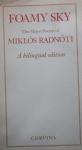
BOOK REVIEW: Foamy Sky by Miklós Radnóti


Foamy Sky the Major Poems of Miklos Radnoti A Bilingual Edition by Miklós Radnóti
My rating: 5 of 5 stars

Amazon page


The short life of Miklós Radnóti was bookended by tragedy, and in the years between he wrote some of the most hauntingly beautiful – if morose – poetry of the twentieth century. The event of his birth was marked by the death of both his mother and his twin, and he died in northwestern Hungary on the route of a forced march from the copper mine in Serbia where he labored toward a Nazi concentration camp that he never reached.

One might say of these bookends to a life that only the former event, his traumatic birth, could have left a mark on his poetry, and you’d probably be right. As a rational skeptic, I’m not a big believer in precognition. However, some of Radnóti’s poetry (e.g. “Just Walk On, Condemned to Die” / “Járkálj csak, halálraítélt!” [written eight years before his death, before the War began]) is as potent an argument for prevision as exists. Yes, it’s probably true that if one writes as much about death as did Radnóti, one is bound to seem prescient about one’s own death, but when one’s words are magic enough to make a skeptic consider the possibility, that’s a powerful testament.

The book contains about eighty poems. I could talk about a selection from across the collection that are among my personal favorites, but they are all great works. The more meaningful distinction to point out is that the last ten poems in the book (four of which are collectively labeled as “Razglednicas”) are Radnóti’s final ten poems and they arose from a grave, having been buried in his coat pocket. When his body was exhumed, the poems were discovered written in an address book in his pocket.

As the poems were all written in Hungarian, the natural question is how good is the translation. After all, poetry translation is a bit like trying to put a queen-size sheet on a king-size mattress (where the corners are: metering / arrangement, sound (e.g. rhyme, alliteration, etc.), imagery, and emotional content / message.) The more that one insists on perfectly capturing one corner, the more the other ends of the sheet curl up. Getting the sheet to hold on each corner takes skill and selective compromise. I think the duo of translators from the University of Texas, Dallas did a tremendous job. The team included one person with expertise in Hungarian, English, and translation, Zsuzsanna Ozsváth, and one with expertise in poetry and poetic form, Frederick Turner. Both of these individuals contributed some prose to the book, Ozsváth wrote the Introduction and Turner offered a Translator’s Epilogue. The latter presents some insight into how the two went about trying to achieve the best translation possible. Meter and rhyme schemes were not sacrificed as they often might be in a modern translation.

One nice feature of the Corvina edition of this book is that it is bilingual with the English on the page opposed the original Hungarian. My (almost non-existent) Hungarian is far too sparse for the task of reading poetry. However, I was able to take in at least the sound quality of Radnóti’s original, and given that he wrote in metered verse, this is not inconsequential.

This is a fantastic collection and I would recommend it for all poetry readers – even if you can only read the English editions, you’ll be moved by these poems.

View all my reviews

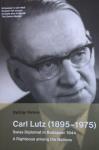
BOOK REVIEW: Carl Lutz (1895-1975) by György Vámos


Carl Lutz by György Vámos
My rating: 5 of 5 stars

Amazon page (only the French edition is currently showing)


Carl Lutz was a Swiss diplomat assigned to Budapest in 1944, at the time the Nazis and their Arrow Cross comrades were trying to deport the Budapest Jewry to death camps. Lutz may not be as well know as his Swedish counterpart, Raoul Wallenberg, but that’s not for lack of saving lives. Like Wallenberg, he saved thousands of Jews by issuing protective documentation, and by fudging numbers and background documents where necessary to keep more people safe.

Lutz also oversaw a facility where the people issued these documents were allowed to stay to keep them out of the city ghetto from which they might get caught up in deportations. The Swiss-flagged facility was called the “Glass House” because it was on the grounds of a factory where specialty glass had been made, and the building’s façade was covered in multiple styles of glass as a way for perspective customers to see what products were available. Unfortunately, the property wasn’t designed for residential use, let alone for providing facilities for large numbers of people. Quarters were cramped and hygienic facilities were inadequate. However, the facility did keep people alive, even though it was raided by the Arrow Cross. [For those visiting Budapest, a small museum / memorial room can still be found at this same location, and this book’s author can offer more insight.]

The book is written in a scholarly style, i.e. employing a historian’s tone. It largely follows a chronological format. The book doesn’t discuss Lutz’s life much outside the war years, but it does give the reader background about Hungary’s anti-Semitic laws and actions as well as an overview of strategic-level events. [Hungary was allied with Germany in the Second World War, but in 1944 tried to separate itself and stop deportations. This resulted in Germany taking control and handing power to the Arrow Cross Militia, which was the Hungarian fascist party — akin to the German Nazis.]

The book is concise, weighing in at only 125 pages — about 17 of which are in an appendix of documents and photos regarding Swiss efforts to undermine the Nazi’s Holocaust.

As I said, the book is written in a scholarly / historical format, rather than the more visceral narrative approach of a journalistic or popular work. Still, it does become more intense reading in the latter half — when the author is describing events concerning the Glass House, Lutz’s issuance of protective documentation, and the siege of Budapest by the Russians at the end of the war. It will certainly give readers insight into a little-known rescue effort during the Holocaust.

If you’re interested in international efforts to thwart the Nazi’s plan to exterminate the Jews, this book will clue you in on events that aren’t well-known – particularly by English readers. I highly recommend this book.

View all my reviews

BOOK REVIEW: The Only Good Indians by Stephen Graham Jones

The Only Good IndiansThe Only Good Indians by Stephen Graham Jones
My rating: 5 of 5 stars

Release: May 19, 2020

Amazon page


Stephen Graham Jones’s new book shows the unfolding fate of four close friends, American Indians of the Blackfeet Nation, who seem to have run afoul of something in the spirit world. I say “seem to” because the author is skillfully strategic in how he unpacks the story and how he presents reality (blending a hard-edged reality of life for Indians on and off the Reservation with the surreal in a way in which the reader isn’t quite sure what’s real.)

This is horror, and it chills and terrifies as horror readers might hope for, but it’s not just horror. (By that I mean it’s not the gruesome elements that make the book, they just make it more visceral.) The story builds characters that one is fond of and can empathize with, and it even sneaks in a moral (which is the best way for a story to have a moral.)

We learn about the demise of the first friend, Ricky, in a prologue — an end that everyone believes resulted from Ricky getting beat to death by some modern-day cowboys outside a bar. There is a ten-year jump cut, and the first half of the book tells us about Lewis, who has moved off the reservation and is living with a pretty non-Indian woman that everybody – including Lewis – realizes is out of Lewis’s league. Lewis is increasingly losing his mind. We know that, but what we can’t be sure of is whether it’s the run-of-the-mill kind of losing one’s mind, or whether it’s the kind of crazy that is the only reasonable response to an even more insane world.

The remainder of the book tells us about Gabe and Cassidy, the two friends who’ve continued to live on the reservation and are still in close contact. Gabe, we learn, has a failed marriage that resulted in one child, a girl with prodigious talent for basketball. He’s prone to over-drinking and was issued a restraining order to keep him from going to his daughter’s ball games – an order that fails to keep him from attending but succeeds in getting him to tone down his expressions of pride and support. Cassidy is shown as the responsible one, but one is led to believe that is the recent result of a relationship with a woman, Jo, who has had a calming influence on him. Jo’s success in straightening out Cassidy creates a strain in the bro-mance between the two friends.

I don’t read much horror, but was hooked by this book. The characters are developed and interesting enough that one isn’t just waiting for the moments when the axe drops (that’s an expression, don’t expect actual axe-induced fatalities.) In between, one is enrapt with questions like whether Gabe can thaw his relation with his daughter, and whether the next generation will end up better off, worse off, or the same as that of the four friends. Throughout there’s this issue of the characters having one foot in the past (traditional Indian tribal life) and one in the modern world, and that is an uneasy and unappealing spot to be in – too little of the community and confidence of the tribe and too little of the wealth and well-being of modernity.

I highly recommend this book for fiction readers.

View all my reviews

BOOK REVIEW: A Guide to the Good Life by William B. Irvine

A Guide to the Good Life: The Ancient Art of Stoic JoyA Guide to the Good Life: The Ancient Art of Stoic Joy by William B. Irvine
My rating: 5 of 5 stars

Amazon page


This is a great little guide for a person considering the Stoic life. Stoicism was one of more well-known philosophies to come out of the ancient world, though it suffered a setback with changing philosophical trends and the rise of the great monotheistic religions. For those who know the term “stoic” as a small-s adjective, it’s worth noting that its definition (emotionless / impassive) is not the distinguishing trait of this school of philosophy. (Something similar can be said for Cynic v. cynic and Epicurean v. epicurean.) Still, there is a thin connection in that Stoics believed in not being controlled by emotion to one’s detriment, and not becoming emotional over things about which one has no control.

This book offers some historical background, showing how Stoicism evolved as it moved from Greece to Rome (and later how it might continue to evolve to appeal to — and work for — a modern following.) It also gives one some idea of the subtle differences of perspective among the Stoics. Usually when one bones up on Stoicism, one does so through the writings of a particular philosopher, be it Epictetus, Marcus Aurelius, or Seneca, and so it’s interesting to see how these men with varied backgrounds lived and taught Stoicism.

The book is divided into four parts. The first part discusses what a life philosophy is, it gives Stoicism a context within other ancient philosophies, and it compares and contrasts Greek and Roman Stoicism. The second part describes the techniques that Stoics used to achieve their worldview and approach to living. These techniques include negative visualization (mentally rehearsing worst-case scenarios in a way that one becomes desensitized to them), classifying events by whether one can do anything about them or not and adopting a fatalistic acceptance of what one cannot influence, self-denial (i.e. avoiding excessive pursuit of comfort or pleasure), and meditation (being aware of one’s behavior so one can learn to implement Stoic approaches to living.)

Part three describes the advice of Stoics on a range of issues that are confronted in life. These include: duty, social relationships, insults, grief, anger, desire for fame, desire for luxury, exile, old age, dying, and becoming a Stoic. You may note, most of these are as valid today as they were in the day of the great Stoics, if not more so, and even “exile” has modern day analogies.

Part four discusses Stoicism for modern living. Among the issues covered include how a secular humanist might justify the practice of Stoicism. (The historical justifications were couched in theistic assumptions about the world.) It also delves into nuts and bolts considerations for the would-be Stoic. (Specifically, Irvine suggests practicing something he calls “stealth Stoicism,” which involves living in accord with the tenets of the philosophy while avoiding drawing attention to it from friends and family who might think you’ve become a lunatic who will soon be showing up to the 4th of July BBQ in a toga.)

Besides annotations and a works cited section, the back matter also includes a Stoic reading program as an Appendix.

I found this book to be interesting and informative. I’ve read works by Stoics, but it was nice to learn about Stoicism through a broader, overhead lens. If you’re interested in a philosophy of life, in general, or Stoicism in particular, this is a good book to read.

View all my reviews