BOOK REVIEW: The Heart of Yoga by T.K.V. Desikachar

The Heart of Yoga: Developing a Personal PracticeThe Heart of Yoga: Developing a Personal Practice by T.K.V. Desikachar

My rating: 5 of 5 stars

Amazon page

This book’s author, T.K.V. Desikachar, was the son and student of T. Krishnamacharya. If you’re not a well-read and/or Indian yoga practitioner, there’s a good chance the latter name means nothing to you, and yet your practice has likely been influenced profoundly by him. He was the teacher of B.K.S. Iyengar, Pattabhi Jois, and Indira Devi. Iyengar, who recently passed away, popularized the use of props (blocks, straps, bolsters, etc.) as a means to achieve proper alignment until one’s flexibility was sufficient to achieve perfect alignment without assistance. Jois developed the vigorous and flowing Ashtanga Vinyasa style of yoga, which is the direct ancestor of Power Yoga—a popular style among fitness buffs in the West. Indira Devi was a Westerner actress who took an Indian name and was among the first teachers to introduce yoga to America and to adapt it to American needs. While Desikachar wrote the book, his father’s presence is seen throughout the book in photos and quotations.

After reading the book, it will not come as quite the surprise that T. Krishnamacharya was teacher to several of modern yoga’s most innovative teachers. A central concept of Krishnamacharya’s teaching philosophy was that yoga is a personal path that must be optimized to the individual. That’s what this book tries to do. Its aim is not to teach one yoga for all, but to help individuals tailor yoga to their own needs.

The Heart of Yoga is divided into four parts. The first two parts form the core of the book, and make up the bulk of its length. The first introduces yoga at a basic level and then goes on to impart practical lessons on asana (poses), pranayama (breathing exercises), and bandha (locks.) The second part instructs on the philosophical aspect of yoga, and how an individual can bring these concepts into their life. This includes ideas that are traditionally associated with Yogic philosophy as well as those of Samkhya (Yoga and Samkhya are two of the six orthodox schools of Indian philosophy, and are closely related.)

Part III of Desikachar’s book is his translation of Patanjali’s Yoga Sutras with commentary. Some will appreciate that the sutras are written in Sanskrit, a Romanized phonetical Sanskrit, and in English. In addition to this, Desikachar’s commentary not only elaborates on each sutra individually, but offers insight into how they are grouped and what meaning their organization conveys. For those who have read Yoga Sutras, you’ll know that they consist of 196 lines of instruction, each so laconic as to be cryptic. Commentary is essential, particularly if one is reading the translated sutras and doesn’t have the historical, cultural, or linguistic background to distill the meaning from these mega-concise aphorisms.

Part IV is called the Yoganjalisaram, which is a poem of 32 stanzas each consisting of three to six lines. “Poem” might be a misleading description. Each Sloka (i.e. like a stanza) is a lesson in yoga. It touches on diet, physical technique, philosophy, and religion.

In addition to what I thought were well-written, concise, and informative chapters, there are a number of ancillary features that are beneficial. There’s an appendix that describes some of the prominent historical texts that are commonly referred to throughout the book. Another appendix provides a series of asana sequences that are consistent with the teachings of Part I of the book. There is a glossary of terms that are used throughout the book. Up front there is an interview with T.K.V. Desikachar that deals mostly with his father’s approach to yoga. In addition to the many photos of Krishnamacharya, simple line drawings are put to good use to convey ideas where necessary.

I think what I found so appealing about this book is that the author has a pragmatic, down-to-earth, and open-minded approach to yoga. Some yoga books are way out there in the stratosphere, and their ethereal qualities don’t inspire confidence in me that the author knows of what he/she speaks. Others are doctrinaire about absolutist beliefs and values one “must” hold to be a true yogi or yogini. Desikachar is neither an ideologue nor flighty. He may have benefited from his education as an engineer. His lessons are presented simply and practically, so as to give confidence that he knows of what he speaks.

I’d recommend this book for any practitioners of yoga–be they beginner or advanced. It provides food for thought for bringing yoga into one’s life at a physical and psychological/philosophical level, and in a personal way.

View all my reviews

BOOK REVIEW: The Coroner’s Lunch by Colin Cotterill

The Coroner's Lunch (Dr. Siri Paiboun, #1)The Coroner’s Lunch by Colin Cotterill

My rating: 4 of 5 stars

Amazon page

The Coroner’s Lunch uses a popular and intriguing technique of setting a crime novel in an unconventional landscape. Like Martin Cruz Smith’s Arkady Renko novels (most famously Gorky Park), James Church’s Inspector O novels (e.g. A Corpse in the Koryo), or Laura Joh Rowland’s Sano Ichirō samurai detective novels, Cotterill’s book places a protagonist staunchly devoted to the truth into a sea of ideologues who value appearances more than facts and who will do anything to maintain their precarious grasp on power.

This approach appeals for a couple of reasons. First, it maintains a line of tension in terms of the world against the protagonist on top of whatever other plot conflicts may exist (criminal against investigator.) It also allows us to recognize the virtues that we find appealing amid a people that we think are a world apart.

While crime fiction is plot driven, this particular variant requires strong character development. We must have a lead character that stands out against the bleak landscape of the authoritarian regime that employs him. However, at the same time, the character mustn’t stand out by being bold and defiant in the manner we might expect of a crime novel set in New York City. Such a character is unbelievable amid totalitarian regimes like the Soviet Union, North Korea, feudal Japan, or—in Cotterill’s case—Laos, circa 1975. We can’t believe such a character wouldn’t be killed by leaders who have people summarily executed on a regular basis. So the character must be clever, adroit at manipulating the system, and a quiet anti-ideologue.

Cotterill’s Dr. Siri Paiboun largely fits the mold, but is a little more irreverent than usual. The old doctor is drafted into being Laos’ national coroner because most of the educated class has fled the country–this despite the fact that Paiboun’s medical expertise is not in forensics. The ultimate source of his bold demeanor is that he is an old man, and he figures that there’s not much that they can do to him. If he were to be executed he wouldn’t lose much longevity over his natural lifespan, and if they sent him to camp, it wouldn’t be as foreboding as the places he has once been. Additionally, he has a highly placed friend, and—beyond that–they can’t replace him in short order. Making Paiboun disappear as Communist regimes were known to do is not an option. Still Siri is clever and does know how to ride the line without tipping across it.

The plot revolves around two crimes. The first is the death of the wife of a high-ranking Party official. The second is the discovery of three Vietnamese government agents in a lake in rural Laos. Both of these cases are high-profile and create incentives to keep truth from coming out.

One element of Cotterill’s novel that is outside the mold for this type of book involves supernatural activities. It seems that–like The Sixth Sense’s Macualay Culkin—Dr. Paiboun sees dead people. Perhaps this device was added to set the novel apart from others in the aforementioned class. For me, this approach seemed superfluous and disadvantageous. Siri’s “gift” kind of detracts from his strength of character because it’s not so much his brilliant mind that is solving murders as the victims giving him hints.

I will say that this supernatural element is introduced in a great way and that it could have been used throughout the novel to a much better effect. When the dead people first visit him, it’s in the form of a dream. At first we don’t know whether his subconscious worked out the solution or whether there is something supernatural going on. However, the author adds a manipulation of the material world so that we know this is supposed to have really happened and later this becomes abundantly clear. I think it would have been better to maintain the ambiguity. People reach solutions to difficult problems through sleep all the time, but we don’t live in a world in which the physical is manipulated supernaturally. Not that there is anything wrong with supernatural fiction (I read a lot of it.) However, crime fiction works best in a realistic world, as does historical fiction. This novel straddles those two genres, and throwing in supernatural events muddles the setting a bit.

Overall, I thought the book was well-written and the main character was humorous and intriguing. If you liked the kind of books I mentioned in the first paragraph, I believe you’ll like adding this to the mix.

View all my reviews

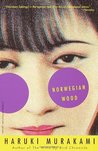
BOOK REVIEW: Norwegian Wood by Haruki Murakami

Norwegian WoodNorwegian Wood by Haruki Murakami

My rating: 5 of 5 stars

Amazon page

Norwegian Wood is about a quintessentially normal and likable guy named Toru Watanabe who has a thing for women who range between eccentric and completely off their rockers. The story is delivered as a flash back as an adult Watanabe mulls over his college days, during which all of these relationships took place.

At the center of his various relationships is his love for Naoko, who had been the girlfriend of Watanabe’s high school best friend until said friend committed suicide. Naoko is a beautiful girl in a fragile state–haunted by her former boyfriend’s suicide and probably a little unstable of her own nature. On the other hand, Watanabe begins a platonic relationship with another girl, Midori, who is sane, but a bit of a wild child and not devoid of her own neuroses. While, of the two, Midori is better for him, he cannot bring himself to take their relationship to the next level as long as Naoko is around—even though Naoko is institutionalized. A third woman, Hatsumi, is dating Watanabe’s college best friend, and she seems to represent the sweet, stable woman who Watanabe doesn’t seem to attract. Incidentally, Hatsumi eventually commits suicide. [Warning: this book is rife with suicide and probably has the highest rate of suicide of any novel I’ve ever read—fortunately it’s a relatively small cast of characters and so this amounts to only a few deaths.]

The character development and story are both excellent. Though I will say the character of Naoko is underdeveloped, but I suspect that is on purpose. I couldn’t tell whether Watanabi had reason to be so madly in love with her, or whether that was his curse. (I suspected the latter.) In contrast, Midori is tremendously likable, and– despite her kookiness–she is the kind of person almost anybody would be drawn to at least as a friend—though some might find it trying to be in an extended romantic relationship with her.

Murakami intersperses humor into this book with its overall somber tone. A lot of this is in the form of dialogue between Watanabe and Midori, or Watanabe and Reiko (Reiko is Naoko’s roommate at the institution and is an older woman for whom Watanabe holds a measure of affection as well.) (Among my favorite quotes is [paraphrasing], “I don’t like being alone. No one likes being alone. I just hate being disappointed.”) These flourishes of humor both add to the readability and the realism of the story.

I’d recommend this book for anyone who enjoys literary fiction. Not that it’s hard to digest literary fiction. It’s very readable, but if you need something beyond realism to hold your attention, this is probably not the book for you. Unlike some of Murakami’s speculative fiction, this work is quite centered in realism. [Though, it does have a fairly high body count.]

There was a movie adaptation made a few years back. I haven’t seen it, and so couldn’t tell how closely it follows the novel, but from the trailer suspect it’s as close as can be expected.


View all my reviews

BOOK REVIEW: The Bhagavad-Gita Translated by Barbara Stoler Miller

The Bhagavad GitaThe Bhagavad Gita by Anonymous

My rating: 4 of 5 stars

Amazon page

The Bhagavad-Gita is a philosophical poem, the title of which is translated as “Song of the Lord.” It’s often read as a stand-alone work, but it’s included in the sixth book of longest known epic poem, entitled the Mahabharata.

In The Bhagavad-Gita, Krishna teaches the warrior-prince Arjuna about sacred duty (dharma.) The setting is the battlefield at Kurukshetra as a war is about to get underway. Arjuna asks his charioteer, Krishna, to halt the vehicle between the opposing armies. Arjuna is struck with a crisis of conscience. He doesn’t want to fight and kill the men on the opposing side–some of whom are related to him by blood and others of whom are well-respected elders. Arjuna can see no virtue in the war.

Krishna, after briefly mocking what he describes as Arjuna’s newly developed cowardice, goes on to offer his explanation of why it is that Arjuna should fight. The first argument is that nobody really dies because consciousness is reborn. This makes sense if you believe in reincarnation… otherwise, not so much. A concise restatement of this argument is presented in the 11th teaching: “I am time grown old, creating world destruction, set in motion to annihilate worlds; even without you, all these warriors arrayed in hostile ranks will cease to exist. Therefore, arise and win glory! Conquer your foes and fulfill your kingship! They are already killed by me. Be just my instrument, the archer at my side!”

Another of Krishna’s argument is that if Arjuna fails to fulfill his duty he will be thought less of by others. This is an odd argument to make as Krishna makes a more compelling case for ridding oneself of ego, whereas this seems to be saying that one should put what others think of one above doing what one believes is right. That sounds a lot like succumbing to ego rather than eliminating. In the 12th teaching, in fact, Krishna tells us that the best of men are “Neutral to blame or praise…” This suggests that perhaps one shouldn’t be moved by what others will think of one.

At the core of Krishna’s argument is that one cannot escape the Karmic cycle by engaging any acts but those that are selfless. Like the reincarnation argument. One may find this logic compelling or not depending upon whether one believes in Karmic theory. Karma is the idea of cause and effect. If you do good, you’ll receive good effects and if you do bad you’ll experience bad effects. Ultimately, however, the goal is to break free of the Karmic cycle and, in theory, the only way to do that is to engage in acts that are selfless—hence doing your sacred duty. If your driver isn’t God, it’s not entirely clear how you know what your sacred duty is, at least not by way of this work. (Presumably, God talks to kings and princes, and kings and princes tell the unwashed masses what they are supposed to do. If you happened to have already done away with such a system—as most of the planet has—you may have trouble with this logic.) However, if one takes the lesson to be that one should not be consumed with personal gain when one acts, one has an argument of more general appeal.

Another argument is that devotion to God is all important, not a man’s actions in any absolutist sense. From the 9th teaching, “If he is devoted to me, even a violent criminal must be deemed a man of virtue, for his resolve is right.”

It should be noted that Krishna delivers a number of lessons beyond the need to comply with one’s dharma, and, in my opinion, many of these ancillary lessons are more compelling than Krishna’s explanation of why Arjuna must fight.

One such lesson is to concern oneself with the journey and not the destination. Krishna states it as such, “Be intent on action; not the fruits of action…” Furthermore, there are a great many teachings that will be familiar to Buddhists, such as the need for non-attachment and moderation.

The poem contains lessons of Samkhya (e.g. discussion of the three gunas) and Yoga. It describes concepts from the three original forms of yoga (predating yoga as a fitness activity by centuries): those being of action yoga (karma yoga), knowledge yoga (jnana yoga), and devotional yoga (bhakti yoga.) While The Bhagavad-Gita predates the formulation of eight limbs of yoga as described by Patanjali, it does address certain among them in varying detail. Early on, it speaks about pratyahara—withdrawal from the senses—in considerable detail. There are also references to pranayama (breath/energy control exercises) and most of the yama and niyama are listed among the virtues in the latter part of the teachings. Of course, samadhi (liberation / yoga’s 8th limb) is a central concept in this work.

While The Bhagavad-Gita remains widely cited and relied upon for guidance to this day, it’s not without its controversial elements. In the fourth teaching, Krishna explains how he created the caste system. Of course, Krishna might not have intended it to be the stain it became.

The Miller translation that I read has a few nice ancillary features. There is an introduction that offers background and context for those who have little knowledge of Indian history or mythology. There’s also a glossary that goes into detail about terms that are frequently used in the work. It’s not that there are Sanskrit words mixed into to the text. The glossary explains what the English words should be taken to mean in the context of the Hindu worldview.

What is most intriguing, however, is the afterword which is entitled, “Why Did Henry David Thoreau Take the Bhagavad-Gita to Walden Pond?” Of all the thinkers that have cited The Bhagavad-Gita, the use of Thoreau and Emerson as examples raises intriguing questions. The Thoreau of Civil Disobedience and the Emerson of Self-Reliance would seem to be as far from the message of The Bhagavad-Gita as possible. Krishna is telling Arjuna to ignore his conscience, and just do what God tells him to do—be a selfless instrument of destruction. Thoreau and Emerson both preached that one’s conscience should always be one’s ultimate guide. Thoreau went to jail because he refused to pay taxes that would support the war with Mexico. I suspect Krishna would say to Thoreau, “Hey, I’m throwing this war, and you’d damn well better do your part.” However, there are ideas in The Bhagavad-Gita that work with the American Transcendentalist philosophers. The idea of removing self-interest and egotism as a way to eliminate delusion before one makes one’s own decision is a consistent suggestion.

I have mixed feelings about The Bhagavad-Gita. Like many (most?) sources of religious doctrine, I think the central message of The Bhagavad-Gita is just another means by which to keep the masses under the control of an elite—and, specifically, fighting the wars of the royalty. However, I–like Thoreau and Emerson—also see a great deal of insight into how to be a better person in this poem.

I think The Bhagavad-Gita is worth a read, regardless of how you may ultimately feel about its message. It offers a concise summary of key ideas in Indian philosophy and psychology. It will give one a better understanding of the Indian worldview, and may teach you something about how to live in the process.

View all my reviews

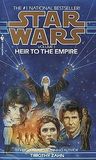
BOOK REVIEW: Heir to the Empire by Timothy Zahn

Heir to the Empire (Star Wars: The Thrawn Trilogy, #1)Heir to the Empire by Timothy Zahn

My rating: 4 of 5 stars

Amazon page

Heir to the Empire is set about five years after the first movie trilogy (by release date, i.e. after Return of the Jedi.) It features many of the principal heroes of the first trilogy including: Luke, Leia, Han Solo, Chewbacca, Lando Calrissian, R2-D2, and C-3PO. Obviously, gone are most of the bad guys from the movies, but in their place has risen Grand Admiral Thrawn—a master strategist who seeks to revive the Empire. Thrawn is portrayed more as a brilliant military man than a dastardly villain. This doesn’t mean he can’t be cold and villainous, but he also brings in a measure of intellect and rationality not seen in the movie universe. While it would appear that Luke is the last of the Jedi Knights, or the first of a new line if one prefers, that turns out to be not entirely true.

I enjoyed this book. I bought it during a Kindle sale on what Amazon considered to be the best Star Wars books. While I’d seen the movies, I hadn’t read any of ancillary works, and so I Googled to find out which of the books on Amazon’s list were considered by fans to be the best. Zahn’s Thrawn trilogy, and particularly this first installment, seemed to be on every fan’s list.

One of the great plot devices used in this book is a creature whose mere presence can nullify the force. This strips Luke’s powers away through a critical piece of the book. Yes, the introduction of this creature is deus ex machina, but it’s deus ex machina that challenges the protagonist–rather than making life easier for him–so it’s alright by me. Because Luke is the last of the known Jedi, he’s essentially a Superman among mere mortals, and so the book might have become tedious if Luke weren’t stripped to his native intellect and courage devoid of superpowers. Instead, he has to escape from the planet on which these creatures reside and help rescue Han and Lando in the process without any supernatural abilities.

As mentioned, this is the first book of a trilogy, and, therefore, it leaves many major issues unresolved. Multi-part series usually have less satisfying endings than a stand-alone book, and I can’t say it’s not true of this work. However, this first book of the Thrawn trilogy does contain a clear climax and a definitive tactical (battle-level) resolution.

The book intersperses chapters from the hero’s point of view (PoV) with those from the Thrawn’s ship. This book begins with a chapter from the enemy’s PoV, and so for Star Wars neophytes—such as myself—one enters into a whole new territory in which it’s not quite certain when or where one is in the Star Wars universe. However, in subsequent chapters Luke, Leia, and Han are introduced and we learn that Han and Leia are married and that Leia is pregnant, and this gives one insight into the timeline of the book. We also learn that while the Empire seems to have been destroyed, the Republic is on weak footing and is having trouble reestablishing itself.

The book introduces us to a couple of new characters that I understand will become established in the expanded Star Wars universe. The most intriguing and important of these is Mara Jade, the right hand woman of the most powerful smuggler in the known universe. We soon learn that Mara despises Luke Skywalker and wants nothing more than to dance on his grave. However, we don’t learn until much later why it is that she hates him, and we learn after a time during which the two are forced together by circumstances. Mara Jade is a force to be reckoned with. While she might not be a match for Luke the Jedi, she is more than a match for Luke stripped of his powers. It seems clear that Zahn is building a relationship between Luke and Mara with their interaction in this book. Luke is oblivious to why Mara dislikes him, or even who she is until he is explicitly told, but events force them to spend time together under trying circumstances.

All in all, I liked this book. I found it readable, and thought that it did a good job of maintaining tension throughout.

View all my reviews

BOOK REVIEW: Gone Girl by Gillian Flynn

Gone GirlGone Girl by Gillian Flynn

My rating: 5 of 5 stars

Amazon page

This book is about the perils of adopting a false face when dating. At first Nick and Amy seem like the perfect couple, but that’s because Amy is donning the guise of “Cool Girl” and Nick is playing the part of the romantic. When the facades crack apart, so does their marriage. Then Amy goes missing under mysterious circumstances.

This isn’t the type of book that would normally call to me, but I read it because I kept seeing references to it and had to see what the hullaballoo was about. I must say, however, the book did not disappoint. I found Gone Girl hard to put down. Flynn does an outstanding job of carefully revealing information—and sometimes planting false flags—so that one is kept thinking throughout the book. To the characters in the book—besides Nick–it increasingly looks like Nick killed his wife, but to the reader it’s more of a roller coaster ride. At first we can’t believe he’s responsible, then we discover he’s not who he appears, then we learn who Amy really is, and so on.

The organization is alternating chapters from the point of view of the two leads, Amy and Nick. This is why we can’t believe Nick is a murderer at first, because we are seeing his point of view, but then we realize that it’s a limited point of view, and Nick isn’t particularly forthcoming about his peccadilloes and vices. In fact, Nick’s penchant for lying is a major factor in his deepening crisis. Nick’s problem is that he can’t stand to not be liked, particularly by women. Amy’s problem stems from having parents who wrote a book series called Amazing Amy that portrays a character that is a thinly veiled version of her—except perfect in every way. This leads to a condition in which Amy needs to appear perfect, even if she realizes that perfection is illusory.

If the reader has a point of dissatisfaction with this book, I believe it will be with the ending. I, myself, have mixed feelings on the subject. On one hand, the ending seems unbelievable and maybe a little flat. On the other hand, it’s an unexpected ending, and I think any ending that wasn’t completely unexpected would come across as a letdown after all the twists, turns, and reveals of the book.

I’d recommend this book for anyone who likes a good story. As I said, it’s highly engaging and readable.

FYI – there is a movie version coming out on October 3, 2014.

Here’s the trailer:

View all my reviews

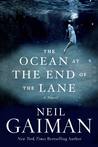
BOOK REVIEW: The Ocean at the End of the Lane by Neil Gaiman

The Ocean at the End of the LaneThe Ocean at the End of the Lane by Neil Gaiman

My rating: 4 of 5 stars

Amazon page

As the title suggests, The Ocean at the End of the Lane takes place in a world in which the supernatural and spectacular lay camouflaged amid the most mundane of settings. The story is about a boy’s interaction with a tri-generational household of women who I’ll—controversially—call “good witches.” The characters explicitly gainsay the title of “witch,” but for lack of any better term with which to describe these ladies other than “a trio of females with supernatural abilities and benevolent purpose,” I’ll call them good witches.

In particular the boy befriends the youngest good witch, a girl who physically appears not much older than he, but whom he comes to realize seems much older. It’s the girl who refers to the pond on her family homestead as the “Ocean.” The girl introduces the unnamed boyish male lead to a supernatural parallel universe, but—in doing so—unwittingly gets the boy tangled up in peril. The boy tracks a portal into his world through which a malevolent creature can slip through. The shape-shifting creature becomes his nanny. However, he is the only one in his family who can recognize the creature’s true nature, and it will do anything to keep the boy from ruining its new gig.

The good witches become the boy’s protectors, and powerful protectors they are. But they aren’t omnipotent, and the forces arrayed against them are formidable as well. Among the morals of the story are that the more powerful enemy of one’s enemy is not only not necessarily one’s friend, but may spell one’s doom. The book also speaks to the rashness of youth running headlong into trouble, and the value of wisdom and experience to find solutions.

This book is short and highly readable. It’s appropriate for young adult readers, but can be enjoyed by adult readers as well. The ending is slightly too deus ex machina for my taste, but overall it’s an intriguing book.

View all my reviews

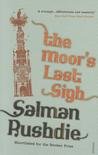
BOOK REVIEW: The Moor’s Last Sigh by Salman Rushdie

The Moor's Last SighThe Moor’s Last Sigh by Salman Rushdie

My rating: 5 of 5 stars

Amazon page

The Moor’s Last Sigh tells the tale of three generations of an Indian family that built its fortune in the spice trade. This isn’t the type of book that would usually float to the top of my stack. I read it because I was traveling to Kochi (Cochin), and it came recommended because much of the first part of the book is set there. (The same recommendation might be received by someone traveling to Mumbai because the latter half of the book is set in that city; granted, there are a lot more stories set in Mumbai [Bombay] than Kochi.) Ultimately, I was pleasantly surprised by this book, despite its soap opera like tone.

The book does read like a soap opera, at least until it gets into the narrating character’s story. There are strong women characters in this male-dominated environment of an Indian family business, though they tend to fall into the categories of “petty bitch” or “prima donna” or both. In the first generation there is a matriarchal character who dominates the family by manipulation and cruelty. In the second generation, the female lead—a strong-spirited, independent artist—falls in love with a Jewish employee of the family. Those familiar with marriage as practiced by the Indian elite will recognize how this inter-sect wedding with an underling might result in no small grief. The resulting marriage produces two female children and a boy. The latter would be nothing but a source of bliss, but for a birth defect that results in a malformed arm. While his mother smothers him with love and attempts to display a progressive spirit that’s beyond biases against such infirmities, under the surface there is the need to come to grips with the fact that handicapped children aren’t supposed to happen in high-caste families. The man with the infirmity is the narrator and overall protagonist of the book. He—as seems inevitable—will eventually fall for a woman of which his mother does not approve.

Beyond the soap opera pettiness, there are genuine intrigues that unfold in the latter half of the book. However, the pettiness of narcissistic people is the root of the protagonist’s ultimate trial.

While Rushdie builds characters in the manner we expect of literary fiction, he doesn’t abandon story. There is a narrative arc that unfolds over the course of the novel. Surprises are revealed and twists unfold.

This is the first Rushdie novel I’ve read. I’ve always intended to read The Satanic Verses to see what all the hullaballoo was about, and the readability of this work makes me even more interested in following through. You know a writer has to be good to inspire a country to take out a hit on him.

I’d recommend this for more than just people visiting Kochi or Mumbai—though it will be particularly interesting for those who are. If you’re interested in the lifestyles of the rich and famous in India more generally, you’ll find this work enlightening. In general, it will appeal to those who like their literary fiction with a bit of a storyline—and if you like the low drama of bitchiness, all the more so.

View all my reviews

BOOK REVIEW: The Beach by Alex Garland

The BeachThe Beach by Alex Garland

My rating: 5 of 5 stars

Amazon page

I imagine the elevator speech for this book being, “Lord of the Flies done Paul Theroux style.” While that may or may not sound appealing, this is one of the most gripping novels I’ve read recently.

The Beach will have its greatest appeal with travelers because understanding the mindset of a traveler versus that of a tourist (vagabonds versus regular folk, if you prefer) is essential to being able to feel the realism in the behavior of the book’s characters. (If you don’t know the difference between a traveler and a tourist, it’s safe to say that you are a regular person who travels as a tourist.) Like Moby Dick, this is a book about all-consuming obsession, but the obsession is in finding and protecting the traveler’s paradise. (Such a paradise is partially defined by a complete lack of tourists.) Unlike Moby Dick, The Beach isn’t rambling, and it maintains tension throughout.

The story beings on Khao San Road in Bangkok, a familiar haunt for backpackers and other low-budget world travelers. The protagonist, Richard, has just gotten in to Bangkok and checks into a hostel. Rooming next to Richard is a Scottish man named “Daffy” who seems to be a complete lunatic and who keeps talking aloud to himself about a “beach.” Owing to the accent, Richard first thinks Daffy is talking about a “bitch,” but soon realizes the man’s obsession is with a patch of sand. Richard has a brief and unusual interaction with Daffy, who throws a lit joint onto Richard’s bed. In the morning, Richard finds a meticulously hand drawn map on his door with “the Beach” prominently labeled. When he goes to see why the crazy stranger left it for him; he knocks on Daffy’s ajar door to find the man has committed suicide.

The beach is on one of the small islands that are kept off-limits as part of the Thai National Parks system. Richard teams up with a French couple who was also staying next to him. While Richard had heard their amorous sounds through the thin walls on the night he met Daffy, he didn’t meet the couple until they were all called in to talk to the police about Daffy’s suicide. For some reason Richard is unwilling to tell the police about the map, but he does tell the Frenchman. The map leads them to the island. It isn’t easy to get to. Once on the island, they discover they must get through a grove of marijuana guarded by heavily armed locals to get to the fabled beach.

It turns out a small community of travelers has already set up on the idyllic beach. As with any group, some people get along well and others rub each other the wrong way. We get the best insight into those individuals who become the friends and enemies of Richard, and many of the others are the novel equivalent of movie extras. At first, all is well on the island. Richard and the French couple have to do work a few hours a day on the fishing detail, but otherwise they are living in their Eden. However, as things begin to go wrong—and they do go frightfully wrong—Richard and others begin to be confronted by the question of what they are willing to do to protect the Beach, and how will their personal moralities be twisted in the process.

Garland uses a couple of interesting techniques in the book. First, Richard is plagued by dreams featuring Daffy, and later–as the burden of secrets to which he is party piles up—he begins to have hallucinations of Daffy during the day. In both cases, it seems that the dreams and hallucinations are an attempt to help him work out the mysteries of the Beach. No one on the island will tell him about Daffy, and he is desperate to know what drove the man mad—or whether he was always like that. There’s one character, Jed, who goes off every day and no one seems to know where he goes or what he does. Eventually, Richard comes to be in on some of these secrets (e.g. becoming Jed’s partner), and the burden of knowledge doesn’t improve his state of mind. In the end, Richard seems to realize that he is the new Daffy, and what drove Daffy into madness will surely do the same for him if he doesn’t get off the island.

Second, Garland uses what—for lack of a better term—might be called foreshadowing. However, it’s not so much a matter of subtle hints as a bold statements such as [paraphrasing], “It’s too bad _________ would die, especially in the way he did.” This should have seemed ham-handed, but there’s always enough mystery about what will come next that the these tips were like lighter fluid to intensify one’s reading so one could find out what would happen next and how.

I whole-heartedly recommend this novel, and think it’s one of the best pieces of travel-oriented writing that I’ve read. It’s a page-turn from beginning to end.

View all my reviews

BOOK REVIEW: Batman: Arkham Asylum by Grant Morrison

Batman: Arkham Asylum - A Serious House on Serious EarthBatman: Arkham Asylum – A Serious House on Serious Earth by Grant Morrison

My rating: 4 of 5 stars

Amazon page

This is the third, and probably last, installment in my “Happy 75th Anniversary, Batman” series of reviews. Batman: Arkham Asylum is an attempt to convey a nightmare on the page, and it succeeds both graphically and narratively. It’s quite different from other Batman comics in style and content. It takes the dark nature of the Dark Knight’s mythology to the extreme.

There are two story-lines woven together in Batman: Arkham Asylum. The main line involves Batman entering an Arkham Asylum being run by the inmates. There he finds himself pitted against his foes: the Joker, Two-Face, Scarecrow, and others. The other is the 19th century tale of Amadeus Arkham’s descent into madness.

As is common in the Batman mythology, psychiatrists are portrayed as walking the razor’s edge between sanity and insanity. For those who don’t read comic books, this is most readily exemplified by the character of Dr. Crane / Scarecrow in the first film of the Nolan trilogy, Batman Begins. I’m not sure whether the point is to create enemies that are so strong they can bend doctors to their will, or if there is a general disdain for psychiatrists—as one might see a dislike of lawyers in other stories.

Among the nightmarish elements of this work is the fact that Batman’s face is never seen clearly. The Dark Knight is always a vaguely and/or surrealistically silhouetted. There’s a mix of sharpness and haziness in the graphics. The Joker gets his own crazy scrawl font. The graphics are as creepy and strange as can be. On my low-end Kindle, the work was in black and white, which worked well. I did look at the sample pages, and the color version uses a lot of sepia and crimson.

Batman: Arkham Asylum asks us to consider whether Bruce Wayne / Batman is sane or just a lunatic with a moral code.

View all my reviews