BOOK REVIEW: Ninja: A History by John Man

Ninja: 1,000 Years of the Shadow WarriorNinja: 1,000 Years of the Shadow Warrior by John Man
My rating: 3 of 5 stars

Amazon page

The author, John Man, isn’t the first historian to fall for the siren call of ninja history only to plummet into a catch-22, but he’s the one I’m reviewing right now. So, while his book isn’t exceptionally bad, it’s tremendously flawed in a manner common across ninja histories. What is said catch-22? On the one hand, ninja excite the imagination and a half-way decent book on them is sure to sell. On the other hand, there’s very little known about the ninja. If the myth of the ninja is an elephant, the ninja as we truly know him is a grasshopper. [So much so that the first Westerner to write such a history, Stephen Turnbull, has now spun 180, proposing that the ninja never existed but were purely a post-Warring States construct.] While it would seem that Turnbull goes too far given the existence of manuals and vague mentions, what we don’t know about are the nitty-gritty details of ninja missions and those are the stories that the reader desires but which time and the ninja’s legendary secrecy have put forever beyond our reach.

What is in the book? If not tales of ninja stealing into castles to abscond with information or to assassinate an enemy General, and the effect of those actions on the outcome of wars? First, there’s a lot of information that is already widely available in other English language books, such as the influence of Sun Tzu’s chapter on espionage on the birth of the ninja (probably spurious given the centuries in between) and description of the seven types of disguises. Second, there’s a lot of general Japanese history that is necessary to some degree as background, but at some point one realizes the author has ventured beyond background into padding. Finally, speaking of padding, about a third of the book by page count (cleverly disguised as only three chapters) occurs long after the end of the ninja. Don’t get me wrong; some of the World War II material is fascinating, but it’s as if one were reading a biography of Blackbeard and—all of a sudden—one finds oneself reading about a Somali hijacking of container ships in 2011. (Even while you are fascinated, you can’t help but feel that you’ve been the victim of bait-and-switch.) In short, the book has a lot of repetition and padding, and not much that’s both new and on topic. (One of the reasons that I didn’t give the book too low a rating is that if it’s the first book you are reading on the subject, it’s readable and interesting.)

There’s one more flaw that comes from the dearth of information. The author cites everyone and anyone who has said something interesting on the subject, but we don’t really know how reputable said sources are. Some may be sterling and others full-of-shit. It’s easy to say something fascinating about the ninja; it’s much more difficult to say something that’s true and fascinating.

So what does the book do right? It’s well written in terms of being readable and offering frequent mind candy. The author does challenge a few statements as he reports them. My last paragraph may have led one to believe that Man just shot-gunned information out there, but he actually takes a suitably skeptical view for addressing such a murky topic. The problem is that we don’t know how serious to take claims he refutes or those he appears to endorse because he’s not an expert in the field. He is an Asianist historian with a list of books that is all over the map. [I did see just one factual error in which he refers to the companion sword of a samurai as a tanto. A tanto is a dagger, the companion to the katana is the wakizashi. But I don’t know how big of a deal to make out of that sin as I can’t say that I noticed any others (not that I necessarily would as I’m no expert either.) On the other hand, a little fact checking…]

If you’ve never read a history of the ninja before, you’ll probably find this one interesting. If you’ve read the other books out there, it’s less clear that you will. However, I did find the discussion of Iga no Ran (the battle of Iga, a campaign meant to crush the ninja of Iga) to be intriguing. At any rate, as long as you realize the last one-third of the book is off-theme and are alright with that, you should find it palatable.

View all my reviews

BOOK REVIEW: The Goldfinch by Donna Tartt

The GoldfinchThe Goldfinch by Donna Tartt
My rating: 5 of 5 stars

Amazon page

Theo Decker is thirteen years old when, during a visit to an art museum, a bomb explodes–killing his mother and defining the course of his life into adulthood. There are the obvious impacts on the life of a child separated from a loving and responsible parent. Furthermore, Decker feels guilty because he and his art-loving mother only stopped in the museum on the way to a meeting with the Principal. Theo’s dad had flown the coup before the book’s start, and is an alcoholic gambler in addition to being a deadbeat dad. The lack of a reliable family member who can (and wants to) take Theo puts tremendous stress on the boy, encouraging him to fall into the same patterns as the father he despises.

Theo spends the remainder of his adolescence in a mix of homes: a caring and wealthy (but in many ways dysfunctional) household where he feels his outsider status, his father’s neglectful Las Vegas home where he makes a solitary friend—Boris–of similar circumstance, and, finally, the home of a wise craftsman to whom Theo is connected only indirectly by the events of that fateful day. No matter whether he is in a good home with a responsible and respectable guardian or in his father’s white trash estate, there’s always a cloud of uncertainty over the boy’s life.

There’s also an unexpected way in which Decker’s life is defined by the bombing. Waking up amid the debris and dust, he tries to help an old man in the last minutes of life, only to witness the man’s death. Shaken, fearful, and unable to find his mother, Theo stumbles his way out through the back of evacuated museum having absconded with a small but famous painting, Carel Fabritius’s “The Goldfinch.” He knows he should return the painting, but the fact that it was one of his mother’s favorites and that he doesn’t want to rock the boat and get sent to an institution leads him to keep it. Furthermore, as much as he loathes the idea of being like his father, he shares his old man’s tendency to get himself into pickles because of a desire to be liked that is so extreme that it keeps him from taking responsibility for his actions and encourages him to self-medicate to deal with the stress of always having dark clouds overhead. The journey of the book, which takes us from the bombing to Decker’s life as a 20-something adult, is all about whether his own innate goodness in combination with the positive role models (living and deceased) around him will allow him to shake off the demons his father never could.

Tartt wrote this book masterfully. The fact that it won the 2014 Pulitzer Prize is more praise than I can heap on it. The book actually opens with an adult Theo Decker in an Amsterdam hotel room, afraid to go outside for reasons the reader isn’t yet let in on. Later we discover that this is chronologically near the story’s resolution, and it serves as a brilliant hook. For the entire book, that hook is set and the question of why resounds in the back of one’s mind.

It’s a rare 800+ page book that doesn’t drag, but this one pulls one through beautifully. This is in large part owing to the character development of all the major characters, and there are quite a few important characters in a book of this scope. While some are cads (e.g. Theo’s dad and his girlfriend “Xandra”) and some are virtuous to a fault (e.g. Hobie, Theo’s guardian from age 15 onward), one sees enough depth to experience the humanity of them all: the good in the bad and the bad in the good. Other than the lead—and possibly inclusive of him—the most fascinating character is his best friend, Boris, who features prominently in Theo’s Las Vegas years as well as during the novel’s climax and resolution.

The other factor that keeps the tension on is the dysfunctionality of many of these characters. There’s always drama to be had. In fact, when things are looking up in the novel is when the reader gets the biggest sense of foreboding, a feeling that the bottom will inevitably fall out. We know the bottom will drop out because Decker has set himself up for it to—and not entirely unwittingly. We just don’t know how until the book’s end.

I’d highly recommend this book for all readers of fiction. Don’t let the large page count and suggestion of stuffiness (art, antiques, and high society New York all featuring prominently in the book) dissuade one. It’s readable and engaging, and it offers the same authenticity then describing Boris and Theo smoking pot and eating sugar on bread for dinner as it does when it’s talking about the sale of a fake 18th century armoire.

View all my reviews

BOOK REVIEW: The Karate Way by Dave Lowry

The Karate Way: Discovering the Spirit of PracticeThe Karate Way: Discovering the Spirit of Practice by Dave Lowry
My rating: 3 of 5 stars

Amazon page

This book collects 29 essays on karate—specifically, traditional Okinawan Karate–into a slim volume. I suspect the essays were initially either magazine columns or possibly blog posts because they all weigh in at a similar length, i.e. six pages. This isn’t to say they weren’t reworked or edited for inclusion into the book, it’s just conspicuous that the chapters to stick to such a tight word count restraint. It’s also evident in the lack of cohesive organizational structure—i.e. the essays don’t build on each other or reference each other, and it doesn’t read like a book that was built from an outline up. This isn’t meant as criticism (that’s coming later.) It’s a perfectly respectable approach to building a book, and the word constraints probably made the book more concise, and the lack of rigid organizational structure likely made it more creative.

Lowry covers a wide range of topics that a student of karate (or one considering becoming one) might find valuable. The questions addressed include: How does one keep motivated? Which is better a teacher who is technically a genius but morally a jackass or one that couldn’t fight his way out of a wet paper sack but is the pinnacle of virtue? Does one need to go to Japan to get high level training? How important is rank and a black belt? Does one need to hit things? What was training like in the old days? Some chapters deal more with technical aspects of common techniques (e.g. side kicks, stance, front thrust kick, etc.), but not in a highly technical or detailed manner (e.g. there are no graphics in the book.) Other essays deal with the philosophy of martial arts (e.g. “victory is in the scabbard”) and/or foreign concepts that may seem strange to a Westerner (“buji kore kaere meiba,” or “it’s a noteworthy horse that can return its rider to safety.”)

I found the book interesting, although it’s not my favorite Dave Lowry book for reasons I’ll get into below. The author does provide interesting insight into the history and development of karate over time. For example, I learned that historically Okinawan karate teachers weren’t so interactive with students as one expects today (this reminded me of what I’ve been told about old school yoga teachers who would quietly watch from a seated position at a distance.) I was also fascinated by the discussion of how “ikken hisatsu” (killing with a single blow) wasn’t a part of Okinawan karate in the early days, though it’s a ubiquitous (if ridiculous) feature of the tactics of many karate styles today. However, one is left feeling—as one sometimes does as a student of Japanese martial arts—a little like one is being told to shut up and accept that it’s just the way it is.

Any book that begins with an apology for sounding pretentious is likely going to be grating in places, and Lowry doesn’t disappoint in that regard. He does display some of the “self-congratulatory smugness” that he claims wasn’t his intent. It’s most notably seen in gratuitous assertions that he puts across as truisms but which seem more controversial. It feels as though he figures that you bought the book because you take him as the expert and will defer to whatever he says. A lot of said assertions involve accepting the traditional way because it’s such a grand avenue to personal growth and development—except that it doesn’t seem like it is. (It seems like a good way to build an army—e.g. blind obedience and faith-based martial arts [by this I mean eschewing competition and randori—free form training / sparring–in favor of form-based practice], but a poor route to personal growth. Note: maybe the preceding sentence is entirely wrong, but you won’t find out why in Lowry’s book because he takes the virtue of the traditional approach as axiomatic.)

Having leveled my criticism, I will say that Lowry is great at explaining himself and making analogies as necessary. He is incredibly knowledgeable. The book is readable and frequently interesting. I’d recommend it for martial artists—whether they practice karate or other styles/systems—but some readers are likely find it more appealing than others. I suspect the more in tune one is with the traditional Okinawan and Japanese approach to martial arts (i.e. in Lowry’s words if you practice “serious karate”) the more satisfying you’ll find this book (you, too, can radiate the glow of self-congratulatory smugness.) If you question the value of the traditional approach and wonder on what basis one should take it as superior, then you’ll probably find the book less satisfying—but still thought-provoking.

View all my reviews

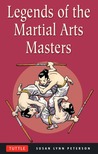
BOOK REVIEW: Legends of the Martial Arts Masters by Susan Lynn Peterson

Legends of the Martial Arts MastersLegends of the Martial Arts Masters by Susan Lynn Peterson
My rating: 4 of 5 stars

Amazon page

This book consists of 21 short stories from the lives of martial arts masters: some modern, some historical, and some anonymous folktales with unknown origins. The majority of the stories are about Japanese or Okinawan martial artists, but Chinese, Thai, American, and Koreans are also represented.

These stories can be roughly grouped by theme (though they aren’t organized in that way in the book and some stories cut across more than one of the themes.) The first theme is peacefulness, non-violence, or minimization of violence. This idea is central to the stories featuring Tsukahara Bokuden and his school of “no sword,” Yasutsune Itosu who invites an attacker for tea, Hisamori Takenouchi who is taught the folly of war by an old man, and Gichin Funokoshi who gives robbers cake.

The second theme is the power of an immovable mindset. This can be seen in the story of the sumo wrestler Onami who had to overcome a stint of choking, the parable of the tea master who is challenged to a duel and is advised by a swordsmanship teacher to take up the sword with the mindset with which he takes up his tea utensils, and the tale of the unbreakable prisoner Gogen Yamaguchi. There are also stories about the ability to win by preventing the opponent from achieving this mindset. This was most famously achieved by Miyamoto Musashi (on several occasions,) but it’s also seen in the story about an archer who is unable to make a shot from a perilous position even though the shot wouldn’t be a hard one for him from stable ground.

The third theme is the importance of the student/teacher relationship and the value of a teacher’s wisdom. This can be seen in the stories about American Karate founder Robert Trias and his experience with the master who wanted to trade him Hsing-I lessons for his own boxing lessons, about Morihei Ueshiba’s demystification of mysteries that perplexed his students, and about Chatan Yara’s reversal of a would-be student’s tactic.

The final story theme deals with the virtue of being diligent in one’s training. These include the amazing feats of the likes of Sokon Matsumura (an Okinawan fighter who fought a bull), Nai Khanom Tom (a Muay Thai legend who defeated twelve of Burma’s best fighters in rapid succession), and Mas Oyama who sentenced himself to training exile for what most would consider a minute infraction. There are other tales in this category such as how Duk Ki Song and other Korean students practiced secretly under a martial arts prohibition or how Yim Wing Chun got out of an arranged marriage to a cad through her diligent training.

This is a short book (about 120 pages) and most stories are only 4 to 6 pages. If you are a long-time practitioner of martial arts, you’ll probably have heard some of these stories, but you’re also likely to come across something new. There are obscure tales intertwined with one so popular it’s been made into multiple movies (e.g. Mu-lan.)

It should be noted that this is more of a collection of morality tales than historical accounts. One shouldn’t take these stories as established history as opposed to mythology or folktales. To her credit, Peterson leaves tales like the parable of the tea master and the tale of the three sons anonymous. Famous martial artists, like Miyamoto Musashi, are often cast into these stories either because people read a fictional account that borrowed from folktales, to lend more power to the story, or because the facts have become muddled in retelling. However, for example, the chapter on the Bodhidharma is most likely wrong. (The consensus view among historians is that Bodhidharma didn’t introduce martial arts to the Shaolin temple as is popularly thought, and that the popular myth is the result of revisionist history.) That doesn’t mean the story doesn’t have virtue—it’s got great hang time for some reason.

I’d recommend this book for martial artists who are interested in the philosophy and ethos of the martial arts. It’s a quick and easy read.

View all my reviews

BOOK REVIEW: When Buddhists Attack by Jeffery K. Mann

When Buddhists Attack: The Curious Relationship Between Zen and the Martial ArtsWhen Buddhists Attack: The Curious Relationship Between Zen and the Martial Arts by Jeffrey K. Mann
My rating: 4 of 5 stars

Amazon page

Mann’s book considers one of Asian history’s intriguing little questions: How is it that one of the most pacifistic of world religions, i.e. Buddhism, came to be integrally connected to some of the world’s most fearsome and devastatingly effective warriors? Specifically, the author looks at the connection of Zen Buddhism to warrior traditions like the samurai of Japan and—to a lesser extent—the Shaolin monks of China. It should be noted that while Zen was one of the most firmly established intersects of Buddhism and martial arts; it’s not the only one. Branches of Vajrayana (esoteric) Buddhism had their own warrior-monk traditions—which he mentions as well as Shugendō’s (combines Buddhist, Shinto, and Taoist elements) warrior connection. The book is heavily weighted toward the Japanese martial arts. This may be in part owing to the author’s particular background, but also because many of the works that establish this firm connection between Zen and martial arts are Japanese (e.g. works by Takuan Sōhō, Yagyū Munenori, and even Miyamoto Musashi.)

It’s worth noting that both Buddhists and modern martial artists have tried to downplay or outright deny the connection between these traditions. However, Mann suggests the connection is undeniable in the face of historical evidence, and that it even has a logic that belies the apparent contradiction. (Note: Presumably many Buddhists deny this connection because they want to distance themselves from the taint of violence, and many modern martial artists deny it so their religious students won’t ditch the art because it isn’t 100% secular [or based entirely in the student’s religious belief structure.])

The book consists of eight chapters as well as front matter and an Epilogue that explores the question of whether the Zen of samurai lore is truly Zen Buddhism. The first couple chapters give the reader an introduction to Buddhism and, specifically Zen. There are then chapters that show the linkage between Zen and the martial arts of East Asia. The book then considers the nature of the advantages offered by Zen to martial artists that made it so appealing to warriors like the samurai. It also considers the interpretation of violence that allows for the dichotomy under discussion, and explores the degree to which the connection between Zen Buddhism and martial arts is relevant in the modern era. The book is a mix of history, religious studies, philosophy, and the art and science of fighting systems. So if one’s interests are eclectic, there’s a lot to take away from this book. If you have narrow interests, you’ll want to make sure they include the aforementioned central question (i.e. Why pacifistic Buddhism has helped produce some of the world’s greatest fighting systems.)

The book is well-researched and documented. There are many interesting and informative stories throughout the book. For example, I’d never read about the 19th century jujutsu murders until this book. This is a fascinating case in which several experienced students of one particular school of jujutsu were found dead with the exact same wound. While the murderer wasn’t captured, investigators quickly discerned his (or her) method. That is, the killer knew the trained responses of this school and made a feint to draw a certain defense and then exploited a vulnerability the response presented. How is this story relevant? It speaks to the perceived advantages of Zen, which emphasizes avoiding habituation and residing in the moment.

I’d recommend this book for martial artists who are interested in the history and cultural context of their arts [and of the martial arts in general.] There’s a class of martial arts student who may want to avoid the book. If you’re a devout adherent of a Western religion who practices a traditional style of East Asian martial art and think that there isn’t an imprint of the local religion on that art, your delusions may be shattered by this book. Buddhists may find the discussion of the less absolutist interpretation of ahimsa (non-violence) to be illuminating (or—for all I know—infuriating.) It’s a short book, coming in at around 200 pages, but is end-noted and referenced in the manner of a scholarly work. It has a glossary and bibliography, but no graphics.

View all my reviews

BOOK REVIEW: A Million Shades of Gray by Cynthia Kadohata

A Million Shades of GrayA Million Shades of Gray by Cynthia Kadohata
My rating: 4 of 5 stars

Amazon page

This young adult (YA) novel is set in the Central Highlands of Vietnam during the last few years of the war. The lead character, Y’tin, is an adolescent whose life ambition is to be an elephant handler, a dream which he’s well on the way to achieving and which he’d be a shoo-in for if he didn’t live in war-torn times. His life is complicated by the fact that his father has worked for the American Special Forces (as a tracker), and the war is turning in the favor of the North.

When US forces withdraw and South Vietnamese forces are overrun, Y’tin escapes into the jungle with a couple of other boys and their elephants. Almost immediately a fault line freezes out Y’tin. The three boys had been close friends in the village, but under the stress of jungle life, the other two resent that Y’tin’s father worked for US Special Forces and that Y’tin, himself, had once gone on mission with the Americans. They believe that this is what has brought the war to their village. On the other hand, they recognize that Y’tin is more gifted in jungle craft than they, especially tracking, because of the education of his father.

Because of these skills, Y’tin is chosen to go back on a mission to reconnoiter their village, and he finds it’s been bombed out and nobody is to be seen. This leaves it unclear how many of the villagers escaped versus being executed by the North Vietnamese forces—but he does know many were killed. [Incidentally, the title comes from Y’tin’s view of the jungle after seeing the remnants of his village—i.e. instead of being a million shades of green, all he can see is gray.]

Besides telling the story of Y’tin’s adventures in surviving the war, the novel pivots on Y’tin’s role as a mahout—and ultimately as a protector of the elephants. Y’tin finds himself in a position in which his dream is no longer tenable, and he must decide whether take a heroic risk to save the elephants or hold on to his dream in the face of unfavorable odds.

The book is only a little over 200 pages arranged into 14 chapters, and—as would be expected of YA fiction—is readable. The book’s strength is in building a lead character who’s interesting by virtue of his mix of worldly naiveté and jungle [local] wisdom and giving him intense challenges and dilemmas. Weakness? The strict chronological progression results in a slow start in which the author spends a chapter establishing that the lead character loves elephants without anything interesting happening. However, if one gives the book til the second chapter, things start happening.

I’d recommend this book for readers of fiction, and particularly those interested in YA fiction and stories of war.

View all my reviews

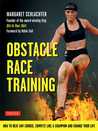
BOOK REVIEW: Obstacle Race Training by Margaret Schlachter

Obstacle Race Training: How to Beat Any Course, Compete Like a Champion and Change Your LifeObstacle Race Training: How to Beat Any Course, Compete Like a Champion and Change Your Life by Margaret Schlachter
My rating: 4 of 5 stars

Amazon page

If you’re a neophyte to the obstacle racing scene, as I am, this is the book for you. That’s not to say that it wouldn’t be useful for someone with some experience, but if you’re a competitive racer looking to shave time off your runs to boost your standings, I suspect you might want more detail on some topics (e.g. details on various approaches for getting over/under/through/around particular obstacles and more explanations of variations on obstacles.) That said, this book hits the Goldilocks zone for someone who has no idea what they are doing, but would like to give some form of obstacle race a try. (i.e. Not so much information as to be overwhelming, but not so little that you’ll be unprepared to have a good run.)

It’s a short book, less than 200 pages, arranged into 18 chapters that are in turn divided into five sections. The first section introduces one to obstacle course racing. While this sport / social event (there are both competitive and non-competitive participants involved in most races and some events are more about comradery than competition) has been growing wildly in popularity in recent years, there will be many readers who are completely unaware of it. However, by the end of these first three chapters you’ll have a thorough sketch of the scene. The rest of the book goes through what one needs to do long before the race (e.g. picking a race, training [general fitness as well as obstacle-specific], and dieting), immediately before the race (e.g. dressing for the race and eating / hydrating for the race), during the race, and after the race (e.g. recovery, choosing a next race, and moving forward with your participation.)

I found this book to be packed with valuable information (e.g. The mantra DON’T WEAR COTTON ON RACE DAY will be forever etched into your brain.) I found Schlachter’s practical, no-nonsense approach to be a breath of fresh air. For example, with respect to diet, her advice is sparse but invaluable. Basically, it boils down to “eat good food in the portions needed for your body.” It may sound like I’m being dismissive, but I’m not. I appreciate her making sense on the subject and not drawing it out with fad baloney diet (figuratively or literally) quackery. (Pet peeve: I really don’t like hearing about people’s ludicrous ideas about how one can eat a pound of bacon a day, but you’ll die if a slice of wheat bread or a wedge of orange goes in your mouth.)

There are several nice features of this guide that I’ll mention specifically. One is that it has a chapter that shares insights from other high performing obstacle course racers. This gives one some useful and varied advice. Second, it actually shows one how to make a couple of obstacles, e.g. walls and spear targets, that are either common or challenging. Finally, it gives one tips for making this an affordable hobby. (If you’re at the stage of reading this book, you’ll probably have to pay the entry fee out of pocket—no sponsors– and have little to no chance of running well enough to earn winnings.)

If you’re considering running an obstacle race, whether a mud run or an obstacle course race, I’d recommend you give this book a read.

View all my reviews

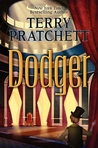
BOOK REVIEW: Dodger by Terry Pratchett

DodgerDodger by Terry Pratchett
My rating: 5 of 5 stars

Amazon page

This book’s protagonist is based loosely on the Artful Dodger character from Charles Dickens’ novel “Oliver Twist.” Pratchett’s Dodger is a brave scamp with a gift for plunging into the middle of precarious situations. One such situation occurs when he rescues a young woman who’s being battered one night on a London side street. The girl, known only as Simplicity, we later find out was attempting to escape an arranged marriage to an awful chap who’s a member of a foreign royal family. Her husband has no intention of letting her go peaceably, and has power, resources, and goons at his disposal. The story is an attempt to resolve this issue in a way that is satisfactory to the girl, for whom Dodger grows fond.

Dodger is a tosher, which is one who scavenges in London’s sewer system in search of wedding rings that were washed down drains or coins that rolled into storm drains. The fact that he’s mostly collecting lost items may make him more palatable / likable than the pick-pocketing Dodger of Dickens’ work. That said, this version of Dodger isn’t above absconding with valuables that seem to be “lying around”–even if they happen to be “lying” on the owner’s desk in the owner’s house. However, it’s clear from the outset that Dodger has a working moral compass. His liberties with earthly possessions don’t interfere with his understanding of what is right and wrong when it comes to treating others as you would like to be treated. This makes for a character who seems more mischievous than felonious.

Like many modern works that are based on Victorian era fiction, this book not only borrows fictitious characters but also individuals from the real world. Pratchett weaves Charles Dickens, Benjamin Disraeli, Henry Mayhew, and Angela Burdett-Coutts into his novel. (If the latter two names don’t ring bells, the former among them was an advocate for the poor and the latter was the wealthiest woman in England at the time, a woman who opened schools for impoverished children.) Except for Dickens [and to some extent Burdett-Coutts], these characters don’t play major roles, but more help to make the reader feel they reside in the world of the novel. [However, the book is dedicated to Mayhew.] There are also other fictional characters, most notably Sweeney Todd—the butcherous barber of penny dreadful fame.

This novel displays generous helpings of Pratchett’s humor and skill in setting the reader into a world that would otherwise feel foreign. One needn’t have read “Oliver Twist” [or any other works] to make sense of the book. It stands alone. [It may be easier if you haven’t read “Oliver Twist,” because you won’t have an ingrown sense of the character.]

I’d highly recommend this book for readers who like light-hearted historical fiction. It’s funny and engaging.

View all my reviews

BOOK REVIEW: Why We Run by Bernd Heinrich

Why We Run: A Natural HistoryWhy We Run: A Natural History by Bernd Heinrich
My rating: 5 of 5 stars

Amazon page

This book is actually several different books woven together. It’s part autobiography of the author’s running life, it’s part a study of comparative biology between various creatures with an endurance bent and humans, it’s part an examination of the evolutionary biology of humanity’s proclivity to run, and it’s part guide to preparing to engage in ultramarathons. Often I pan such books as being unfocused, ill-planned, and—most often—attempts to whip an article’s worth of material into a book length piece. However, Heinrich keeps it interesting enough that I don’t feel it necessary to level these criticisms. Still, my first warning to readers is that one has to read on for quite a while before one gets to the book that one thought one bought—i.e. one that answers the title question of “why WE (i.e. people in general and not the author specifically) run.” In short, you’ll need to have an eclectic set of interests to get through the whole book, but some may find reading only part of it gives them all they wanted from the book.

It should be noted that the book is on its second title. The original title was: “Racing the Antelope: What Animals Can Teach Us about Running and Ourselves.” The author explains in the front matter why the original name was changed (apparently some loud and obnoxious writer had a similarly titled book on a different subject and whined about it.) Changing the title wasn’t required because: a.) titles cannot be copyrighted, and b.) it wasn’t exactly the same title anyway. Still the new, more succinct, title may lead one to expect a succinct book, which this isn’t so much.

Some readers will enjoy Heinrich’s writing style; others will find that it ventures too far into flowery territory on occasion. I did enjoy it. However, I can see how a reader might find some of the descriptive sequences to be excessive–particularly toward the beginning of the book.

While there’s some overlapping and interweaving, one can think of the book in three sections. It’s written in twenty chapters. The first six tell the author’s story of getting into running and his youth. The next eight chapters deal in comparative and evolutionary biology. In general, these chapters look at the biology of other creatures as they pertain to said animals’ ability to engage in running (or activities that are like running in that they involve endurance of muscles and the cardiovascular system.) Also included in this section is the evolutionary biology of humans as it relates to becoming a species of runners. This is the core of the book and was the most interesting section for me. In it, Heinrich considers the endurance activities of insects, birds, antelopes, camels, and frogs. Each of these has a particular relevance. For example, camels are masters of endurance under harsh conditions. Frogs tell the story of the difference between fast and slow twitch musculature (relevant to sprinters versus distance runners.) Antelopes are, of course, the exemplars running in the animal kingdom, but the nature of their running is so different from that of humans (i.e. making quick escapes versus pursuing wounded prey.) The last six chapters can be seen as a guide to preparing for ultramarathon races, but it’s also a continuation of the author’s self-examination of his running life from the time he began ultramarathoning.

I’d recommend this book for readers who are interested in the science of human performance. It’s well written, and the insights it offers into the biology of other animals are fascinating. Whether you read the whole book or just the part that pertains to your interests, you’ll take something away from this book.

View all my reviews

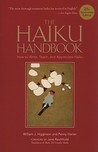
BOOK REVIEW: The Haiku Handbook by William J. Higginson

The Haiku Handbook: How to Write, Teach, and Appreciate HaikuThe Haiku Handbook: How to Write, Teach, and Appreciate Haiku by William J. Higginson
My rating: 5 of 5 stars

Amazon page

Many people think that a haiku is any poem of three lines consisting of 5, 7, and 5 syllables, respectively. Those who’ve gotten beyond a high school literature class introduction to the form may also know that these poems are usually observations of the nature world, and, specifically, the seasons. If the preceding sentences sum up haiku for you, but you’re interested in learning more, Higginson’s book will revolutionize your understanding of the art.

As it happens, the most fundamental notions about what makes up a haiku are actually more contentious than one might believe. Take the 17-syllable format. Japanese syllables are—on average—much shorter than English syllables. (e.g. Consider that “squirreled” is one syllable, whereas a long Japanese syllable would be “shi.”) For this reason, many have argued that to have the same sparse sound quality of Japanese haiku, English language haiku should follow a format that is less than 17 syllables. Also, while many people know that haiku are poems about nature, they might not make the connection to the purely descriptive (non-analytical / non-judgmental) approach or the art form. There’s a definite connection between haiku and the Zen mode of thought. The fact that the poems are sensate descriptions doesn’t mean they shouldn’t evoke emotion; on the contrary, they should be evocative on a primal level.

Be the preceding paragraph as it may, Higginson sketches out the evolution of haiku from the traditional greats (e.g. Bashō, Buson, Issa, and Shiki) to modern haiku poets both from Japan and from the rest of the world. The many examples provided offer the reader insight into how various poets have bent and broken the rules of haiku to achieve their own ends. There are, of course, some who wish to keep the form as true to the tradition as possible. Such individuals would like those who want to get unconventional to avoid using the term haiku (or terms for related traditional forms, e.g. “tanka.”) Others, want the freedom to take the art in new and unconventional directions.

The book consists of 16 chapters divided into four parts. The first part charts the evolution of haiku from the early masters to the modern age. The second part gets into the nitty-gritty of composing haiku, and it’s where one will learn about the various thoughts on the form and content of these poems. (Those wanting to learn the craft of writing haiku are directed specifically to chapters 8 and 9, which address the key elements nicely.) The third part is about teaching haiku, and specifically how to introduce it to children in a way that is much more effective than the usual teaching method (i.e. “Hey, kids, a haiku is a poem with 17 syllables arranged in three lines of 5 – 7 – 5 syllables.”) The fourth and final part puts haiku into a context of lesser known, but related, forms of Japanese poetry such at renga, tanka, and senryu. In other words, it reflects on the forms that predated or sprung from haiku. The book also has front and post matter that readers may find useful, including explanations of Japanese pronunciation (the Japanese poems usually feature the Romanized spelling out of the Japanese words as well as an English translation), a list of season words, a glossary, and bibliographic references.

I’d recommend this book for readers and / or writers of haiku who want to learn more about the craft and its progression as an art form. There’s scarcely a page in the book that doesn’t offer example haiku to help make the author’s points more clearly. One needn’t worry that this will be dull exposition that can only help to kill one’s love of haiku. I found the book to be readable and the examples to be well-chosen.

View all my reviews