BOOK REVIEWS: The Things They Carried by Tim O’Brien

The Things They CarriedThe Things They Carried by Tim O’Brien
My rating: 5 of 5 stars

Amazon page

It’s called a novel, but it reads like a collection of war stories and essays about being an American soldier in the Vietnam War. That’s not a criticism. In fact, it’s part of the brilliance of this book. If it were thoroughly plotted, it might not feel so authentic. As war is disjointed, so is O’Brien’s book. Some of the chapters are tiny and some are lengthy. Some read more like essays than fiction, and others are clearly fictitious.

When I say that “some are clearly fictitious,” there’s always a doubt that it might just be a true story–because war is just that absurd. An example that springs to mind is one of the most engaging pieces in the work. It’s called “Sweetheart of Song Tra Bong,” and it’s about a wholesome, young girlfriend to one of the soldiers who [improbably] comes to live in the camp. The girl acclimates to the war, and soon she is going out on patrol–not with the ordinary infantry soldiers, but during the night with the Green Berets. Perhaps the moral is that some people are made for war, and it’s never who you’d suspect. As I describe it, the premise may sound ridiculous, but the way O’Brien presents it as a story told by a Rat Kiley–a fellow infantryman known to exaggerate—it feels as though there is something true, no matter how fictitious the story might be. Before one reads “Sweetheart of Song Tra Bong” one has been primed by a chapter entitled “How to Tell a True War Story,” which tells one that truth and falsehood aren’t so clear in the bizarre world of war.

There are a couple of chapters outside the period during which O’Brien (the character, who may or may not be the same as the author) is actively in an infantry unit. One early chapter describes his near attempt at draft dodging, and another talks of his time stationed at the rear after being injured. Both of these chapters offer an interesting twist in the scheme of the book overall. We find O’Brien to be a fairly typical infantry soldier, and it seems hard to reconcile this with his floating in a canoe and narrowly deciding not to make a swim for the Canadian shoreline. However, what is odder still is realizing how distraught he is to be pulled out of his unit, particularly when he realizes that he has become an outsider and the [then rookie] medic who botched his treatment is now in the in-group. This is one of the many unusual aspects of combatant psychology that comes into play in the book, along with O’Brien’s description of how devastating it was to kill.

There are 21 chapters to the book. As I said, they run a gamut, but at all times keep one reading. It’s the shortest of the Vietnam novels I’ve read—I think. When I think of works like “Matterhorn” and “The 13th Valley,” there seems to be something hard to convey concisely about the Vietnam War, but O’Brien nails it with his unconventional novel. O’Brien also uses repetition masterfully. This can be seen in the title chapter “The Things They Carried,” which describes the many things carried by an infantry soldier—both the physical items they carried on patrol and the psychological and emotional things they carried after the war. It’s a risky approach that pays off well.

I’d recommend this book for anyone—at least anyone who can stomach war stories.

View all my reviews

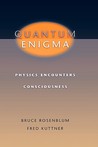
BOOK REVIEW: Quantum Enigma by Rosenblum & Kuttner

Quantum Enigma: Physics Encounters ConsciousnessQuantum Enigma: Physics Encounters Consciousness by Bruce Rosenblum
My rating: 4 of 5 stars

Amazon page

Consciousness remains a great mystery. While it has increasingly begun to look like consciousness is an output part of the brain, intriguing questions remain unanswered, and some of these unknowns are hard to reconcile with a materialist model (materialism says all phenomena are born out of matter.) It isn’t just pseudo-scientists and cranks that have a problem with the materialist approach. Major names in physics have pointed out that everything is not accounted for by a model that imagines consciousness as the computational product of the brain. Rosenblum and Kuttner address one such hiccup, the so-called Quantum Enigma that lends its name to the book. In brief, the quantum enigma reflects the fact that physical reality is created by observation. This may seem hard to believe, because it’s only been observed at the levels of the really small—i.e. primarily the atomic and subatomic, though the authors propose that there is theoretically nothing to limit the phenomenon to that level and experiments are being conducted at molecular level.

Rosenblum and Kuttner remind us that while the quantum world behaves oddly, quantum theory is exceptionally successful in scientific terms. Meaning that it has been validated by every single experimental inquiry, and the knowledge gained from quantum mechanics has made possible many of the advanced technologies that shape our world (laser, transistor, CCD, and MRI.) The oddness of Quantum Mechanics can be seen in several issues. One is the two-slit experiment in which atoms and photons behave like either a particle or a wave. Another is quantum entanglement, in which two atoms that have interacted become “wired” together such that changes in one are instantaneously reflected in the other—even if they have been separated by great distances.

The book is a bit repetitive, but perhaps this is necessary. People seem to have trouble grasping the nuances of the arguments being made, and this can lead to some wrong conclusions. For example, some people have leapt to the conclusion that ESP is supported by quantum entanglement, but the evidence doesn’t support the idea that one’s thoughts can control anything. Observation causes some physical reality to coalesce, but one has no influence over what reality displays itself. (In other words, with observation the wave function collapses and some state of being comes into existence from what was a field of probabilities.) Randomness remains. Physicists tell us that this is the problem with the idea of using quantum entanglement for instantaneous communications across light-years of space. A further example of a nuance that is hard to grasp is the notion that quantum probability doesn’t describe the likelihood an atom is a certain place, but rather it describes the likelihood you’ll find it there (and that that is a distinction with a difference.)

One may be wondering how consciousness is central the issue. If a non-intelligent entity observed, would the wave forms collapse? Consciousness doesn’t necessarily equate to intelligence as we know it. Consciousness can be thought of as merely the ability to observe and recognize significance in what is observed. So a thermostat is a very primitive form of consciousness. However, the authors do outline why a robotic observer wouldn’t end the controversy.

I found “Quantum Enigma” to be readable despite the challenging subject being explained. The authors to a good job of both describing the relevant phenomenon in terms the average person could understand (Ch.2 though which doesn’t reflect reality) before going on to explain the experiments in which the phenomena is actually observed (i.e. Ch. 7.) The authors use simple line drawings as graphics as necessary as well as staged dialogues to help make the concept clear by anticipating objections and dealing with them as they come.

I’d recommend the book for those interested in the unresolved questions of science with respect to Quantum Mechanics. In particular, there is the issue of consciousness—though it might not seem as central to the book’s discussion as the subtitle would lead one to believe. The last few chapters do deal in consciousness, though in a way that creates more questions than they answer. (It often feels like another summation of the strangeness of quantum mechanics, but that may be because the issues regarding consciousness remain so unclear. Furthermore, a lot of background is necessary to make sense of these complicated issues.)

View all my reviews

BOOK REVIEWS: Gut by Giulia Enders

Gut: The Inside Story of Our Body's Most Underrated OrganGut: The Inside Story of Our Body’s Most Underrated Organ by Giulia Enders
My rating: 5 of 5 stars

Amazon page

[I recently posted a review of Mary Roach’s GULP. I mention this because that book is likely to be the primary competitor if you’re looking for a tour of the alimentary canal in book form. While I’d recommend both books and point out that the two have different thrusts, if you’re set on reading just one book on poop and farts this year, the two reviews should help you determine which work is more up your alley.]

In this highly readable and humorous book, medical student Giulia Enders teaches us how to poop, what to do when we can’t, how our bodies extract resources from the stuff we shove in our pie holes, and what the bacteria that outnumber our body’s cells by an order of magnitude do for (and against) us. The book is in part a work of popular science, but it’s also a guidebook to the digestive tract. In other words, Enders not only tells readers about the wondrous job their digestive system does, but she also offers advice as to how to keep it running efficiently.

The book is divided into three parts. The first part lays out what the gut consists of and how it does its job. The second part introduces the reader to the enteric nervous system, which is the part of the nervous system that governs the digestive tract and determines when we vomit, poop, and—to some degree–experience emotional turmoil. The final part addresses the body as an ecosystem. The human body consists of 10 trillion cells and another 100 trillion microbes—cells that could theoretically live independently of your body provided the right conditions.

The strength of this book lies in Enders’s ability to put the complex physiological actions of our body into simple, understandable, and whimsical terms. This may mean anthropomorphizing a colon, but so be it—you’ll still get the drift. A prime example is the “Salmonella in Hats” section that equates antibodies with big floppy sombreros that interfere with the germ’s mobility and virulence. The author’s enthusiasm for this “under-rated” organ is infectious.

The book employs amusing, off-beat line drawings to help convey relevant ideas and to support the stories that the author uses to clarify the complex actions of the gut. The art is well matched to the tone of the text, which makes sense given they were drawn by the author’s sister.

As I mentioned in my GULP review, GUT is a very different book despite all they have in common. Enders spends the bulk of her time in the middle of the alimentary canal, where Roach spends most of her time talking about what happens at the two ends. Enders’s book is about the typical Joe’s digestive system, where Roach specializes in extreme cases and narrow (but fascinating) questions. Enders’s book is more of a tour of the digestive system rather than a series of tales of interesting things that happen in and around it. While Roach’s book deals in bizarre cases, Enders’s book is actually more light-hearted and informal in tone. (Whimsical is a good descriptor for GUT.)

I’d recommend this book for anyone who wants to learn more about how their digestive system works and what they can do to keep it working at its best. It’s funny and packed with fun facts.

View all my reviews

BOOK REVIEW: Gulp by Mary Roach

Gulp: Adventures on the Alimentary CanalGulp: Adventures on the Alimentary Canal by Mary Roach
My rating: 5 of 5 stars

Amazon page


This week I’m [improbably] doing two book reviews about works devoted to the human digestive tract. (Before you conclude that I’ve got a colon fetish, let me explain that I was spurred to this research by life events. I did some advanced yoga cleansing practices and wanted to learn more about the science of what was going on down below.) In addition to this book, Mary Roach’s “GULP,” I’ll be soon posting a review of Giulia Enders’s “GUT.” The two books have more in common than their monosyllabic titles beginning in “gu” and the fact that they each came out within the past couple years. They’re both light-hearted romps down your digestive tract. However, they’re also different in several key ways. GULP is quirkier; GUT is perkier, but more importantly the two books have different thrusts (yes, there’s just that much interesting stuff to learn about digestion (and the lack thereof)—which make the two books complementary. Cutting to the chase, I’d recommend both books, but if you only read one book about your alimentary canal this year, I hope my reviews will help you determine which one is for you.

Explaining how Roach’s book is “quirkier” will tell one a lot about Roach’s book and how it differs from Ender’s work. (And since Ender’s writing style could be described as quirky itself, it’ll help clarify that as well.) By “quirky,” I mean that Roach’s book is built around a set of narrow questions that address topics of a bizarre or strange nature. In GULP one will read about whether your pet really wants “paté in beef gravy” [spoiler: it does not], whether the story of Jonah and the whale is BS, how smugglers use their digestive tracts illicitly, what are the benefits of Fletcherizing (chewing your food more thoroughly—much more thoroughly), whether Thanksgiving dinner can split one’s stomach open (like it feels it does), and what’s the worst case flatulence scenario.

This isn’t to say that one doesn’t learn something about the basic science of digestion as one is reading about extreme cases of tasting skill, stomach fistulas, flatulence, constipation, and overeating. One does, but this book isn’t organized to educate one about the alimentary canal systematically and generally. It’s a work of creative nonfiction designed to make the reader keep saying “huh, I never would have thought” and it does an outstanding job of it. You may not have given much thought to some of these topics, but you’ll be craving answers by the time you get past the chapter heading. There’s a reason that Roach’s works top the charts of pop science books. She finds the interesting questions and the most fascinating examples.

There are 17 chapters in GULP, and while they collectively take one on a tour of the alimentary canal, Roach devotes more space to some parts than others. She spends more time on what goes at the head end (smelling, tasting, chewing, and salivating) than does Enders. Also, please don’t think the book is low brow or that it appeals to the lowest common denominator (8-year-old boys?) when I tell you that there are three chapters on various dimensions of flatulence.

As I said, you may not have thought much about some of these questions, but you’ll learn something nonetheless. A prime example can be seen in the chapter on smuggling via the digestive tract. I’d read stories of cocaine mules dying when a condom burst in their stomach, but I had no idea about the extent to which items and materials are smuggled down there. It’s not just drugs. One guy was explaining how he smuggled knives. Really. Knives. Plural.

There are a few topics that are well covered by both books. Take, for example, constipation. Roach elucidates the topic using the case of Elvis Presley and others who’ve been literally terminally constipated. (Ender’s—on the other hand—considers the everyman’s constipation, though with amusing drawings and commentary.)

I’d recommend this book for readers interested in learning more about how their food makes its way through—particularly if you like learning about the strange cases.

View all my reviews

BOOK REVIEW: Burmese Days by George Orwell

Burmese DaysBurmese Days by George Orwell
My rating: 5 of 5 stars

Amazon page

Orwell’s novel is about the ugly face of empire. It takes place in a Burma that was administered by the British as part of their Indian colony—but it’s in the waning days of the Empire, much to the chagrin of the entitled and chauvinistic European characters of the book. Most of the characters are shockingly racist and life abroad hasn’t broadened their thinking in any discernible way. The notable exception is the lead character, John Flory, whose best friend is Dr. Veraswami (an Indian medical doctor and government official) and who is unique among the British for being able to see the native ways as anything other than primitive and preposterous.

However, the hero is deeply flawed. Flory is a coward, and in the early pages of the novel is unwilling to support the nomination of his good friend Dr. Veraswami for membership to the expat’s club because many of its more vociferous members will be damned before they admit a brown person. Flory is also a bit morally loose for the taste of his early post-Victorian comrades. He has a birthmark that he’s constantly trying to conceal, and whose presence we are led to believe is crucial to his lack of confidence. While the main intrigue is provided by a plot by an unsavory Burmese official named U Po Kyin to undermine Dr. Veraswami and bolster his own stock among the whites, it’s Flory’s story that we are following. The reader hopes that Flory will develop the confidence needed to rise to the occasion—he being the only likable person in the cast (except perhaps Dr. Veraswami, depending upon how put off one is by the Indian doctor’s borderline Uncle Tom-ish obsequiousness.) Flory’s relationship with a young woman plays an important role in his story and sometimes it seems she may spur him to heights while at other times she looks to be his downfall. Flory’s conundrum is that the more virtuously he behaves, the more a target is painted on his back.

While the book is set almost a century ago, I found that it has something to say today. While the times have changed and the Empire is long dead, there are times that the long shadow of this period can still be seen in the current era.

I’d recommend this book for readers of historical fiction and particularly those interested in the past and present of areas under colonial rule. Orwell builds interesting (if often despicable) characters and the book has a well-developed and interesting narrative arc.

View all my reviews

BOOK REVIEW: Emperor of All Maladies by Siddhartha Mukherjee

The Emperor of All Maladies: A Biography of CancerThe Emperor of All Maladies: A Biography of Cancer by Siddhartha Mukherjee
My rating: 5 of 5 stars

Amazon page

Dr. Mukherjee describes his Pulitzer Prize winning book as a biography of cancer. If so, it’s like the biography of a master thief or a gangster. One reads it not because one finds the character in any way endearing, but one can’t help but admire the resourcefulness and indomitable spirit of the culprit. Humanity has been at war with cancer for decades, but it remains alive and well–losing ground in specific domains but gaining overall.

The book covers a period from when our technology was too crude to see at the tiny levels necessary to recognize the commonality between various forms of cancer to the present-day attempts to find treatments that can target cancer cells without attacking good cells—a challenging prospect. The implication of that last sentence is that the cure might be as damning as the disease, and this has often proven to be the case. It’s often a race to see whether the cancer can be killed before the treatment kills the patient. This has been the case with radiation, radical surgeries, and various forms of chemotherapy that are toxic to good cells as well as bad. While the book ends on a hopeful note about more targeted treatment, cancer has not gone gently into that good night.

While the book covers a broad period, the bulk of its pages are devoted to the latter half of the 20th century. That’s when the war on cancer got serious and the science became advanced enough to move beyond crude approaches like radical mastectomies. Our understanding of chemistry, pharmacology, and biology reached a point at which cures were no longer pie-in-the-sky notions. But it wasn’t just the medical science that was more advanced, statistical methodology also reached a point at which it could answer questions that had previously been elusive. Such questions include whether smoking caused cancer—a fact that seems self-evident today, but which wasn’t as straightforward as one might think. There is also the issue of whether various treatments were actually extending the lifespans of those afflicted, which was also not as simple as one might think.

While the above discussion of science and statistics might make this book seem dreadfully boring, this isn’t the case. Mukherjee didn’t get the 2011 Pulitzer Prize for Nonfiction by being dull. The author knows the value of a story, and uses stories successfully throughout the book. There are the stories of individual patient cases, but also the story of the mass movement to raise dollars, awareness, and Congressional support to fight cancer. These true stories sometimes show the roller coaster ride that we associate with fiction—such as the apparent cure of a form of childhood leukemia that seemed promising until the kids once in remission started coming back with symptoms (the leukemia crossed the brain-blood barrier and found fertile ground on the other side of a biological wall that was meant to keep such ne’er-do-wells out.)

As one might expect of a book that covers so much ground, it’s not thin. The book’s 600 pages are arranged in 43 chapters divided into six parts. I’m sure there’s a lot more one could learn about cancer, but Mukherjee covers a lot of ground in an interesting package.

I won’t say I enjoyed the book (it’s unavoidably depressing, if hopeful) but I did find it both interesting and readable. While it might not be the sunniest and most joyous of reads, it’s one that many people should read. I’d recommend it for anyone. I would say “anyone who has been touched by cancer,” but I think that’s the same thing at this point.

View all my reviews

BOOK REVIEW: An Introduction to Zen Training by Omori Sogen

An Introduction to Zen TrainingAn Introduction to Zen Training by Omori Sogen
My rating: 4 of 5 stars

Amazon page

This is a guidebook that explains how to sit for meditation—particularly in the Rinzai style. It describes all the fundamentals one needs to begin Zen sitting including: posture, breathing, where to look, what to do with one’s hands, and even how to get up after a long session. It also provides background information about what to look for in a teacher, what differentiates Rinzai from Soto Zen, and what the objective of practice is (and why it is sought after.) This makes it sound like a dry, technical manual, and to some degree it’s unavoidably so. However, the author does include stories here and there to make the book more engaging and palatable. Overall, though, it’s written as a manual for students.

The book is arranged into 7 chapters, but it’s only the first five of these that are the author’s introduction to Zen meditation. These five chapters are logically arranged to cover the ground from why one should practice to what effects it will have with consideration of the aims, technique, and pitfalls covered in between. The last two chapters are commentaries on (including text from) a couple of the key documents of Zen Buddhism: “A Song of Zen” (Zazen Wazen) and “The Ten Oxherding Pictures.”

There are black and white graphics. First, there are line drawings used to convey information about posture and the physical body in meditation. Second, there are a few photographs of the author, including his dōjō and in the practice of swordsmanship. The author was a skilled swordsman; hence my tagging of this book in “martial arts,” as there may be some interest among martial artists in the author’s take as one who straddled the two worlds of Zen and budō. Finally, there are also copies of the ten ox herding pictures that go with the verse.

I think this book is well-organized and provides a beginner an excellent introduction to the practice of Zen. I didn’t really note any major deficiencies, and will thus recommend it as a good resource for anyone considering taking up a Zen practice or wanting to learn more about doing so. I should point out that the book does also get into the philosophical aspects of Zen, but if one isn’t looking for information about how to practice then there may be books more oriented toward one’s needs. Despite the fact that the book is a translation, it’s clear and readable. As I said, it includes stories—including those about Japanese warriors as well as Zen masters—and that helps to break up the dryness of what is at its core an instructional manual.

View all my reviews

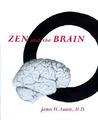
BOOK REVIEW: Zen and the Brain by James H. Austin

Zen and the BrainZen and the Brain by James H. Austin
My rating: 4 of 5 stars

Amazon page

Dr. Austin’s 900-page book looks at what the brain does during (and as a result of) the practice of Zen, and is a great resource for those interested in the science of meditative practices. It’s easy to sum up the strength and weakness of this book. With respect to the book’s greatest strength, it’s that the author—like the book—straddles two widely divergent worlds. He is at once a scientist and a practitioner of Zen. This gives him rare insight into both halves of the equation. This isn’t one of those books written by a spiritual seeker who uses the word “science” and “scientific” very loosely (and in a manner that shows a lack of understanding of the central premise of science.) On the other hand, it’s not one of those books by a scientist who got all of his understanding of meditation from other books.

As for the weakness, it’s that the book was written in the late 1990’s. Ordinarily, I would say that wouldn’t matter much, but concerning our understanding of the brain, it might as well have been the Stone Age—hyperbole duly noted. One doesn’t put together a book of almost 1000 pages overnight, and so much of the references for “Zen and the Brain” are actually from papers from the 1980’s and earlier. The fMRI (functional Magnetic Resonance Imaging) machine didn’t even come out until the early 1990’s, but—of course—it took a while for the studies featuring this powerful technology to reach publication.

The book is arranged into a whopping 158 chapters divided amongst 8 parts. Some of the chapters are pure neuroscience, and there are detailed descriptions of the brain and the functions of its various parts. Other chapters are designed to give one an insight into the practice of Zen and aren’t technical at all. The author has a reasonably engaging writing style when he’s not conveying the minutiae of brain science. He tells stories of his experience as a practitioner of Zen, and passes on the wisdom of past Zen masters.

I have an unconventional recommendation for this book, which I got so much out of. I recommend you first check out the book “Zen-Brain Horizons” put out by the same author and press (MIT Press) in 2014. While I haven’t yet read that book, it seems to hold three advantages. First, it’s only one-third as long and seems to cover similar material. Obviously, it goes into far less detail. (But you may find that a plus.) Second, the 2014 book is reasonably priced. “Zen and the Brain” is one of the most expensive books I’ve bought in recent years. I’m not saying I regret paying as much as I did, because it was a useful book, but cheaper would be better. Finally, the 2014 has the benefit of access to a lot of great research from the past couple decades. If you read the 2014 book and think you need more detail about the brain, then—by all means—get this book.

View all my reviews

BOOK REVIEW: Chemistry: A Very Short Introduction by Peter Atkins

Chemistry: A Very Short IntroductionChemistry: A Very Short Introduction by Peter Atkins
My rating: 4 of 5 stars

Amazon page


Lately, I’ve been reading several of these “A Very Short Introduction” [AVSI] books put out by Oxford University Press. They are a good way to take in the basics of a subject in a concise and layman-friendly manner—either as a refresher or introduction. And they are inexpensive both on Kindle and at my local book seller, Blossom Book House in Bangalore. There are 400 to 500 titles in the series (and growing) and they deal with topics as broad as… well, Chemistry, to as narrow as the Dead Sea Scrolls. They’re available for subjects in the sciences, art, social sciences, the humanities, etc. This book, like most in the series, is about 100 pages long, and includes a glossary and suggestions for further reading.

As is common across the series, the writing is approachable to a non-specialist, but don’t expect Mary Roach style popular science writing. The author doesn’t use interesting stories or colorful language to make his point. The trade-off for getting a concise explanation is that you may find the book dry. I won’t say that these books—and this one in particular—aren’t for pleasure readers, but they’re for readers who take pleasure in learning–as well as those who need to get a grasp on a subject quickly (e.g. your fiance’s mother is a Professor of Microbiology and her father is one of the foremost experts on the Norman Conquest—and you don’t want to seem like an idiot—OUP has you covered.)

As the common subtitle suggests, you will only get the bare essentials. That’s truer for books with a broad scope than those of narrow scope. That is, if you read the AVSI book on “Philosophy” you are going to get less of the full story of the title subject than you will of the one entitled “Heidegger.” Of course, Chemistry is broad.

There are seven chapters in this book. The first offers background information on the history of chemistry, its scope and where it fits with respect to related sciences, and how the subject has come to be organized into sub-disciplines. The second chapter explains the basic concepts of atomic structure and bonding. The third chapter offers the basics of thermodynamics, and the fourth describes the nature of chemical reactions. The fifth chapter describes the methods that are used in the study of chemistry. The last two chapters are a bit different. They tell the reader what chemists have produced (for good and bad) and what directions the discipline is likely to take in the future, respectively.

Many of the AVSI books contain simple, monochromatic graphics, but this particular one includes only a copy of the Periodic Table. There may be points in the book that would benefit from a graphic, but I can’t say that I noticed the absence when I was reading. Let’s face it; on the microscopic level of chemistry takes place, any graphic would likely be a greatly simplified abstraction any way.

I’d recommend this for those seeking a quick guide to the subject of chemistry for those who forgot or never learned the subject.

View all my reviews

BOOK REVIEW: The Elements by Theodore Gray

Elements: A Visual Exploration of Every Known Atom in the UniverseElements: A Visual Exploration of Every Known Atom in the Universe by Theodore Gray
My rating: 4 of 5 stars

Amazon page

What element makes up most of your body by weight? Are diamonds really the hardest known material on Earth? How can you tell a genuine neon light from one that doesn’t contain any actual neon? Are silicon-based life forms really a possibility? How did phosphorous contribute to a human population explosion? How can one tell whether one’s “Titanium” golf club actually contains titanium? What is tin used for–given that it’s not tin cans, tin foil, or tin roofs? Which noble gas has been caught forming compounds with common elements? Why do welders have to get x-rays before an MRI? Why does Ytterby, Sweden have four elements named after it? Why are gorilla lovers boycotting tantalum? Which is better for committing homicide: Thallium or Polonium? [Hint: The answer depends on whether you want to send a message or not—if you know what I mean.] How much natural uranium can a private citizen possess in the US? Which, if any, of the elements named for people are named for the person who discovered them? These are the types of questions you’ll have answered while reading this book.

The most general question the book addresses is probably, how can one collect elements without setting the world on fire? [If that doesn’t make sense, I’d recommend Randall Munroe’s book “What If?” Munroe tells us what would happen if one tried to make a wall out of one square foot containers of each of the elements (in the form of the Periodic Table)? You’ll note that I said “tried to make” and not “made,” and that should tell you something.] Gray is an element collector, and the many photographs for each element show examples of the forms (including manufactured products) in which a given element can be acquired. You’ll also find out where the gaps will remain in your collection of pure elements. [On a related note, you’ll learn which elements are radioactive.] You also may be interested to hear what element sample the FBI confiscated from the author’s collection [hint: it wasn’t Uranium or Plutonium.]

The organization of the book is straight forward. There’s front matter that gives one a rudimentary primer on chemistry and the periodic table in order to refresh the knowledge that has fallen out of your brain since high school or college. But the bulk of the book consists of one short chapter for each element. The chapters each have a cover page containing a photo and some technical information about the element that will only be of interest to the very nerdiest of nerds. Then there’s a page or so of text, which gives some interesting factoids about the element and how it’s used. Finally, there’s a collection of photos of the element and some products that contain it—with one notable exception.

I enjoyed this book. It’s a quick read, but provides a lot of interesting information. And the author’s sense of humor shines here and there.

I read this book on a Kindle Touch. I mention this because true element groupies may find this less than ideal because of the lack of color. However, for me it was fine. Furthermore, the e-book formatting was good. Sometimes books with a lot of graphics don’t work out so well, but in this case it was not a problem.

I’d recommend this book for anyone interested in science, though if you know a lot about chemistry you may find it a bit remedial.

View all my reviews