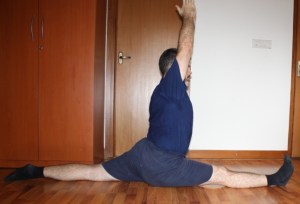
BOOK REVIEW: Faster, Higher, Stronger by Mark McClusky

Faster, Higher, Stronger: How Sports Science Is Creating a New Generation of Superathletes—and What We Can Learn from ThemFaster, Higher, Stronger: How Sports Science Is Creating a New Generation of Superathletes—and What We Can Learn from Them by Mark McClusky

My rating: 4 of 5 stars

Amazon page

McClusky’s book tells us how advances in sports science and technology are producing a new class of elite athlete. More usefully, it discusses which practices of high-level athletes can reasonably be emulated by amateurs. One may think that what’s good for the goose is good for the gander. In this case, not so much. If shaving a hundredth of a second off your time isn’t going to affect your life’s course, there are many activities of elite athletes that simply aren’t worth the cost (in whatever terms.) For example, the loss of friendships due to rampant flatulence resulting from consuming large quantities of baking soda isn’t worth it if you just want a little bit stronger Sunday cycling ride. (Baking soda [sodium bicarbonate] counteracts blood and muscle acidification during exercise and makes it possible to keep moving strongly when fatigued would normally degrade performance. Incidentally, this practice has been shown to be effective only for events that last between one and seven minutes.) On the other hand, some of the lessons of sports science are relatively low-cost and high benefit, and might be just what one is looking for to improve one’s performance. (e.g. Replacing a pre-workout stretching routine with one of rolling out the muscles.)

Faster, Higher, Stronger consists of twelve chapters, each addressing a different aspect of the application of science and technology to sport, including: training methods, genetics, nutrition, recruitment, practice, performance enhancing substances (legal and illegal), elevation training, and the limits of performance.

One question that has always been of great interest is how much of a top athlete comes from his or her genes? In other words, can anyone can do it–given a willingness to work like a maniac of course. As with many other questions about heredity, it was once thought that there would be a precise answer to this question in the wake of the decoding of the human genome. However, the success of the human genome project showed only that the situation was vastly more complex than we’d imagined. It turns out that having certain genes isn’t the end of the story because there are many factors that influence which genes are expressed. Attempts have been made to put numbers to the influence of genetics. For example, one scientist is quoted as claiming that 50% of oxygen processing capability (i.e. VO2 max) is heritable. This translates to the fact that, while the average Joe has a reasonable chance of engaging in athletics at some level, only a 0.1 to 0.3 % can summit the pinnacle of elite level athletics.

In many ways, science has encouraged coaches, trainers, and recruiters to think outside the box—and to look beyond the traditionally engrained approaches. One fascinating story was that of how the British national rowing team held tryouts based only on height, with experience with the sport being not required. They ended up with a champion rower who’d first entered a boat only four years before. This is part of the evidence that controverts the once popular 10,000 hour rule that was popularized by Malcolm Gladwell–though Anders Ericsson is more properly considered the father of the idea. It turns out that 10,000 hours of practice aren’t required for most activities if one goes about it right.

McClusky spends a considerable amount of space on the questions of what athletes should and shouldn’t consume. In emulating elite athletes many amateurs are working at cross purposes. This is readily seen with the issue of sports drinks. If you’re guzzling down a Gatorade or snacking on Cliff Bars after your run, you may only be ensuring that you continue to gain weight despite working out. On the other hand, you may decide that chocolate milk or beet juice are good choices for you.

I’d recommend this book for those interested in the heights of human performance.

View all my reviews

3 Levels of Movement Coach

I.) New teachers and coaches often over-rely on their personal experience. In other words, one may think that the skills that came easily for one will be a piece of cake for one’s students as well. Conversely, such a teacher tends to be more sympathetic and lax when it comes to skills that kicked his or her own ass. This may work for some students, but it’ll be way off the mark for others. There’s a risk of pushing students too hard on skills that may be dangerous for them, and / or not helping them achieve a breakthrough that they are capable of because of one’s own baggage.


II.) The next level of coach recognizes that there are different body types. Such teachers put this knowledge to use in determining what skills present greater or lesser risk for a student given the strength, power, speed, flexibility, etc. associated with such a body. This coach will recommend modifications and capacity building exercises based on the student’s body type.


III.) Then there is the coach or teacher who can see the individual idiosyncrasies of a given student’s body and make recommendations based the unique conditions, strengths, and weaknesses of a particular person.

BOOK REVIEW: Zen Mind, Strong Body by Al Kavadlo

Zen Mind, Strong Body: How To Cultivate Advanced Calisthenic Strength--Using The Power Of Zen Mind, Strong Body: How To Cultivate Advanced Calisthenic Strength–Using The Power Of “Beginner’s Mind” by Al Kavadlo

My rating: 3 of 5 stars

Amazon page

This book discusses issues related to a calisthenics-centric approach to fitness. The first thing that one should be aware of is that the book has no such unifying theme as would be suggested by the title. Really, this is a sort of “best of” collection of Al Kavadlo’s blog posts, but—of course—that makes for a really unsalable title. The title is a take-off on Shunryu Suzuki’s Zen Mind, Beginner’s Mind, which is quoted in the front matter. Don’t expect Zen or the mind to formally enter the picture in a major way. I will say that Kavadlo has a Zen approach in that he emphasizes simplicity and paying attention to what one is doing throughout (so many people try to drown out their workouts with music or entertainment.)

I had mixed feelings about this book. On the pro side, Kavadlo is clearly knowledgeable and has a sound and pragmatic approach to fitness. Not only is he not trying to sell you on supplements and fitness fads, he tries to discourage such profit-driven nonsense. You’ll get some good information and sound advice from reading this book. You’ll find out why Kavadlo eschews dietary supplements, how he prepared for a marathon and a triathlon, what advantages calisthenics hold over other strength building activities, and how to avoid injuries.

So what’s the problem with the book? The first problem is rooted in the fact that I paid full price for the book soon after it came out, and–at said price—it’s overpriced for what it is—a rehash of blog posts. It looks like Amazon has dropped the Kindle price. As I said above, I respect Kavadlo’s approach to fitness, and think that he offers some useful insights, but the question is whether you couldn’t get the same insights for less–I think you can. At half the price I paid for this book, I would have been much happier with it. Alternatively, if they had beefed it up a bit—particularly with useful graphics—I might have found it a good buy at the price I paid. The bottom line is it’s a thin book of blog quality material.

My second problem is that they waste too much space with pictures of Kavadlo standing around shirtless in front of random minor NYC landmarks. I understand that a cut, muscular body is the ultimate resume for a personal trainer. However, I suspect that even the ladies and gay men will at some point say, “Enough with the standing around shirtless photos, Al.” For us heterosexual males, the number of these shots is way over the top.

Now, I’m not saying that the number of photos is excessive. They could have used some of that photo space for instructional photos of how to better do the exercises, or to build up to the more challenging exercises. Kavadlo has an excellent YouTube channel, so I know it would be possible to get more photos of him actually doing exercises. (They do have some pics exercise pics, particularly in the sample workout section at the back.)

The book’s 26 chapters are arranged in four parts that deal with background information, calisthenics, cardiovascular workouts, and diet respectively. There is a section at the back that presents a series of sample workouts divided into beginner, intermediate, and advanced levels.

As for my recommendation, I’d say that if you are interested in fitness and see this book at a price of around $4, buy it. However, if it’s at $10, it’s overpriced for what it is. Of course, your views of a fair price may vary. (I should note that I purchased it in Kindle e-book format.)

View all my reviews

Rewiring the Brain about Pain: All That Isn’t Pleasure Isn’t Pain

IMG_0104

I see people staring at the railing on which they will stretch their hamstrings just like they would look at a side-by-side refrigerator unit that they have to move down a flight of stairs, psyching themselves up for the stretch. Or maybe they are weighing the question of whether they really need to stretch as one might ponder whether it would be better to get an engine overhaul or replace a car altogether. The point is that there seems to be an element of anxiety or dread associated with actions like stretching that aren’t necessarily pleasurable.


I have a theory about why this is the case.

First, people falsely equate discomfort with pain.

Second, the entire point of true pain is to tell one how not to move so as to avoid exacerbating an injury.

Third, this results in a desire to avoid pursuits that cause such physical discomfort.

Fourth, people create a self-fulfilling prophecy in which they tense muscles in the area of the stretch to counteract the aching stretch, but this just increases the discomfort level.


Your body has a clever little device called the myotatic reflex arc (MRA.) That’s when a muscle tenses to avoid injury because the muscle seems to be stretching too fast for comfort. However, that reflex is only relevant to dynamic movement and the fact that it’s a reflex arc means that the signals don’t go through the brain–thus–aren’t consciously controlled. The MRA is different from the tension one holds in a slow and controlled stretch. It’s fun to see people who’ve been encouraged to breath and relax into the stretch realizing that the stretch isn’t as bad as it seems.


Of course, many intense physical activities that cause discomfort may also result in a sufficient endorphin (natural painkillers) inflow and adrenaline / cortisol (stress hormones) outflow to result in net feelings of pleasure. While stretching results in endorphin release, the action of holding the muscle stretched may be too much for our natural painkillers to counteract, particularly when one is breathing easily and thus the body is not under the level of whole-body stress that might encourage the big endorphin dumps desired.


The problem is that one can’t achieve flexibility without pressing against one’s limits any more than one can make strength gains without lifting more or by employing more repetitions. If one just goes to the point at which one is no longer comfortable, you may be able to prevent losing flexibility, but you’re not going to make gains.


Another part of the problem is that people often go into stretching cold, and thus maximize their discomfort. Doing warm-ups and joint articulations before any kind of intense stretching is a good practice. These warm-ups should not test the fullest range of motion, but should move with sufficient quickness to get the muscles and the synovial fluid in the joints warmed up.


The problem with seeing stretching as painful is that it discourages it. Some individuals fail to stretch altogether, and others focus only on the major muscle groups (hamstrings and quads) and miss muscles that adduct, abduct, rotate, and generally stabilize and support the primary agonist or antagonist muscle pairing. The most common injury in the Japanese martial art that I study is a knee injury attributable in part to insufficiently flexible external rotators and abductors and the inability to keep the knee in line with the toes–thus putting too much torque on the joint and too much load on the ligaments.
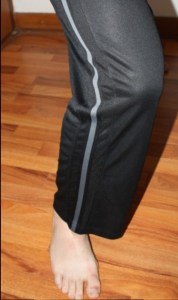
 

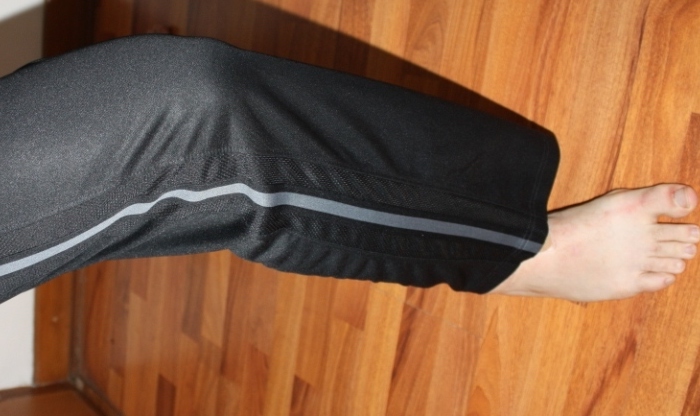
Wrong: knee is not pointing over toes

Wrong: knee is not pointing over toes


Martial artists, in particular, need to avoid equating discomfort with pain. When discomfort becomes pain, pain becomes agony, and agony become intolerable. There are many factors that can determine the outcome of a combative event, including technical proficiency, physical fitness, and the ability to persevere. The last one may mean the ability to take a licking and keep on ticking as the Timex people used to say.


The good news is that it’s possible to rewire one’s brain to avoid equating the discomfort of stretching with pain.

Step 1: Get a yoga face. In the martial arts, we talk about having a warrior face, which is an expression that conveys one’s intensity and seriousness. For yoga and stretching one should ditch the agony face and replace it with a serene face. My personal recommendation is that you aim to emulate the faces on the Bayon at Angkor.
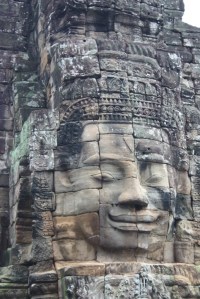
Yoga face as seen on the Bayon at Angkor

Yoga face as seen on the Bayon at Angkor


Step 2: Keep your mind on your breath, and away from the sensation of the stretch. There’s a reason yoga teachers harp on breath, it will help one reduce one’s overall tension.


Step 3: Stop using the word pain (in your own mind or when speaking out loud) to refer to the feeling of a stretched muscle. You may not be able to replace the word “pain” with something as euphemistic as “stretch bliss,” but try to avoid giving it a name with a negative connotation. It’s simply the sensation of a stretched muscle


Step 4: When you find yourself wearing an agony face and squeezing out the protective muscular tension, ease off the stretch until it’s comfortable. Then ease back into the stretch, keeping the surrounding muscles relaxed and the breath even and deep.  You can visualize expelling the tension with one’s exhalation if that helps.


Step 5: When you experience real pain, have no guilt about heeding it and giving that part of the body time to heal. Of course, this requires an ability to differentiate stretch sensation from true pain.


Now I’ll segue into a discussion of actual pain. When I was having a lot of problems with my lower back–eventually diagnosed as arthritis–I had a bizarro interaction with my healthcare provider. When I first went to the doctor, I faced this unsubtle wall of suspicion because back injuries are a common fraud device for persons addicted to painkillers. That’s because there are many forms of back injury that are hard to witness externally. However, when they x-rayed my back they could see clear indication that something was wrong. Then they were surprised when they tried to foist painkillers on me, and I wasn’t interested.


Here is how I look at painkillers. Imagine the “check-engine” light came on in your car, and you took the vehicle to the mechanic. The mechanic has your car for a brief time and comes back to you with a nominal bill. At first you are thrilled, and then you ask the inevitable question, “So what was the problem?” Your mechanic then says, “Oh, I have no idea, I just disconnected the light. That light won’t be giving you any more trouble.” Needless to say, you are decidedly less thrilled. You wanted the underlying problem fixed.


Don’t get me wrong, I’m not saying that there’s no place for pain-killing medication. If one has pain that is so severe that one cannot rest, one’s body won’t be able to heal itself properly.


However, if you pop painkillers to do away with bodily aches, you should reconsider. Those aches are what being alive feels like, and if they come from exercise or labor they should be welcomed and not be framed in a negative light. If they are an indication of a postural misalignment or some sort of systemic problem, you should look into fixing the underlying problem.


[To be fair to my aforementioned doctor, I think people aren’t conditioned to the notion that they are the key participant in their own healthcare and that fixing problems will often require hard work on their part. So a part of the problem in some places–most notably America–is that healthcare isn’t profitable unless they are pushing surgery or expensive medications. However, another part of the problem is that people just want to go to the doctor and have the expert fix them without requiring the personal effort of fixing postural deficiencies or cutting weight. I can understand why doctors are a bit fed up with suggesting people do the work only to get no response. I saw a statistic recently that only 1 in 8 people threatened with a lethal illness would make a behavioral change recommended by a doctor to reduce the threat of the ailment–e.g. stop smoking, stop drinking, cut weight, etc.]


Wat Po v. Chiang Mai Massage: A North / South Divide?

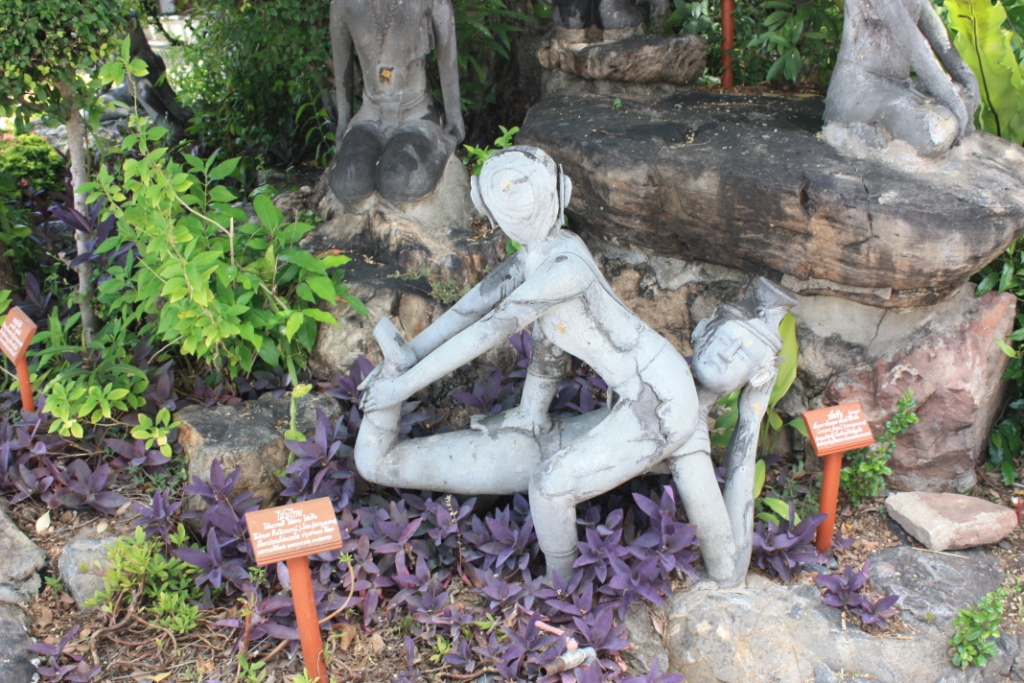
One of the sculptures in the Thai Yoga outcrop at Wat Po.

One of the sculptures in the Thai Yoga outcrop at Wat Po.

In September I attended the General Thai Massage and Foot Massage courses at Wat Po. The teacher from whom I first learned Thai Massage (a.k.a. Thai Yoga Bodywork or Nuad Bo Rarn) was trained in Chiang Mai by various teachers, and the style he teaches reflects that northern heritage. I was curious to see how the style of massage varied in the south from the northern approach that I had already learned. Would I be in uncharted waters? Or would the Wat Po course merely be a refresher of what I had already learned? These questions were on my mind as I began the course.


The answer turned out to be somewhere in between. The Wat Po approach wasn’t radically different from what I had already learned, but neither was it a carbon copy. One could clearly see the common origin of these styles. For yoga practitioners, a reasonable comparison would be to imagine you studied Bihar yoga, and then you sat in on an Ashtanga Vinyasa class. Most of the postures would be similar if not the exact same—e.g. a downward dog is a downward dog. However, the sequence is a little different, you may run into a posture or two that you hadn’t seen before, and there will be many little differences in points of emphasis and so on. The same could be said of two martial arts that have a recent common ancestor art. (However, I think martial arts evolve more rapidly than other systems of movement because there is a life and death urgency to adapt to local conditions, and so martial arts can diverge rapidly.)


I won’t get into every little difference in this post. For one thing, the first course I took was a 60 hour (10 day) course, and the Wat Po course was only half as long (5 day / 30 hours.) Therefore, some of the apparent differences might have more to do with the need to conform to time limitations than true stylistic differences. The Wat Po course was designed to impart a sequence that could be done in an hour-and-a-half bodywork session. The first course I took taught some material that was redundant in the belief that one could tailor one’s sequence to the recipient’s needs and / or the masseuse’s preferences.


As an example, at Wat Po we didn’t learn any massage of the chest or abdomen, but I was shown (in fact, I was recipient of) the Wat Po approach to abdominal massage and it was pretty much the same as I’d learned previously. In my earlier learning, the approach to energy lines was to stretch (longitudinally) the limb, then apply palm pressure, then work the line (typically with the thumbs), and then one would repeat the palm pressure and finish with a repeat of the stretch. At Wat Po, they went straight for the energy line (sen) and followed that with the palm pressure work. I have no way of knowing whether this difference was more due to timing or style.


Before getting into the differences, I will talk a little about similarities. The general approach was the same (e.g. the recipient is fully clothed in a light, comfortable garment(s)) and the massage is ideally given on a thin, dense mattress/pad on the floor–rather than on a table. The general principles of sequencing were the same. Namely, one began at the feet and worked in the direction of the head. Also, when working on a limb, one began at the distal end, worked toward the torso, and then back toward to the starting point. Also, energy line work was done before the stretches.  There were four positions in both styles: supine, side, seated, and prone, and—unlike many other forms of massage—the supine position was at the fore (i.e. neither style emphasized the prone position and back work over the supine in the way other varieties of massage often do.) Both styles of massage (as probably all massage) began with a brief introduction and questioning designed to make sure the individual didn’t have any contraindicated conditions. Both styles of Thai massage began with a moment of prayer or contemplation—this is similar to some styles and different from others and speaks to the traditional nature of Thai massage.


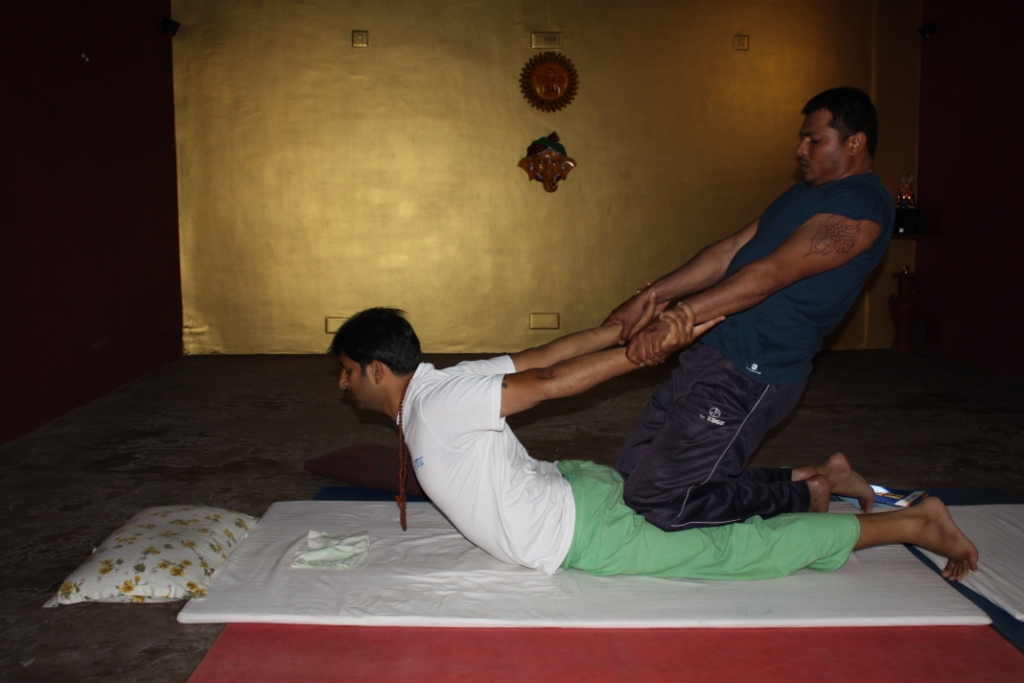
IMG_0031

The side and seated sequences were the most similar between the two styles.  I learned more in these sequences in the longer (Chiang Mai) course, but what was included in the Wat Po course was largely the same. Where the stretches were of the same type, they tended to be virtually identical. By that I mean to say that both styles had stretches that weren’t taught in the other style, but where that was not the case, the stretches were indistinguishable. For example, the pictured variant on sarpasana / bhujangasana [snake / cobra backbends] was done in the same manner in either style. (I learned more stretches in the first—Chiang Mai–course, because it was longer.)  Over all, the energy lines (sen) tended to be identical, but there weren’t always the same number of them, nor were the same ones always emphasized. There were some differences in the feet lines that I’ll get into below.


Now let’s get to the differences. Starting with some small differences, the manner of palm pressure work was different between the two systems. In the Wat Po style, there was always one fixed point that one hand locked in place while the other hand applied palm pressure. I had previously learned to use both hands in a rhythmically alternating series of palm pressure applications.


One little difference that I found interesting involved the technique of closing the little flap over the ears at the end of the face and head massage (both styles close off the ears.) I had been taught to very gently release pressure so as to avoid any kind of popping that might disturb the recipient. However, at Wat Po the instructor taught to vigorously pull the fingers away—resulting in a pop. My guess would be that the idea was to get the recipient’s attention so that one could transition them from the face massage (which notoriously puts people to sleep) to a wakeful state so they could follow instructions for the stretches that followed. (We were taught face massage as part of the seated sequence. Previously, I had learned that this was an option, but that it was easier to do the face massage from supine so you didn’t have to worry about the recipient falling asleep and possibly falling over literally.


A final little difference was how the blood stop was done for the lower extremities. At Wat Po, they did the leg blood stop with both legs straight, whereas I had previously learned this technique with an open groin, i.e. the knee pointed out. (Both ways work about the same, but I think it might be a little less awkward to do it with the groin open as one is not in as close of proximity to the recipient’s privates.) The blood stop for the arm was identical.


The energy lines are one of the most fundamental aspects of Thai massage, and one would expect little variation in them between styles. This proved largely, but not entirely, true. For example, the leg lines were the same (as one might expect because one cannot stray too far from some lines without getting onto bone.) Also the points at the top of the shoulder, around the neck, the base of the skull, and the scapulae were the generally the same–except more or fewer points might be employed from one style to the other.


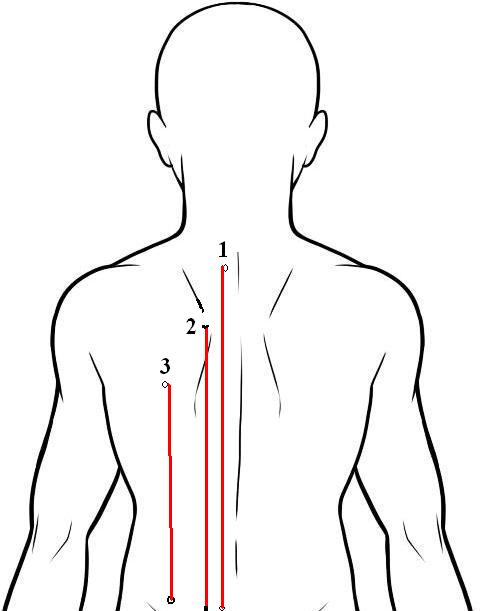
The arm lines were almost the same. The line on the back of the arm was the same, and the line that goes up the middle of the inner arm was the same. However, there was a second inner line that ran in line with the little finger along the lower edge of the arm (presuming the arm is straight out from the shoulder as it is for massaging the inner arm in both styles.) The lines of the back that were used were different. In my (not very accurate) diagram, the lines 1 and 3 were emphasized in the Chiang Mai style, but 1 and 2 were the lines used in the Wat Po system.


Back diagram_CM


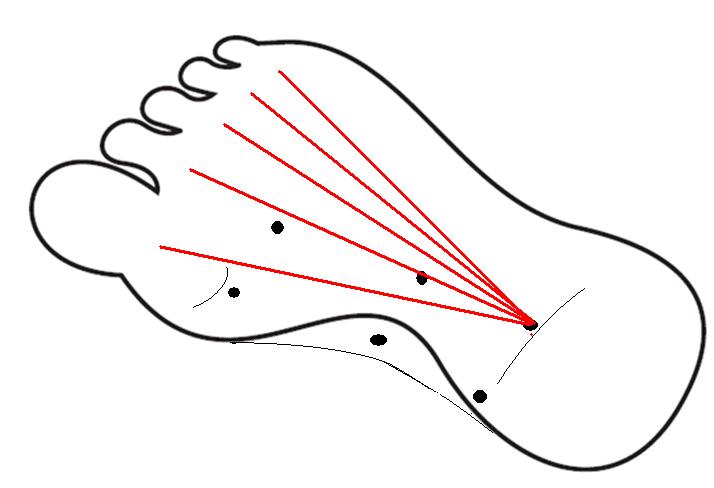
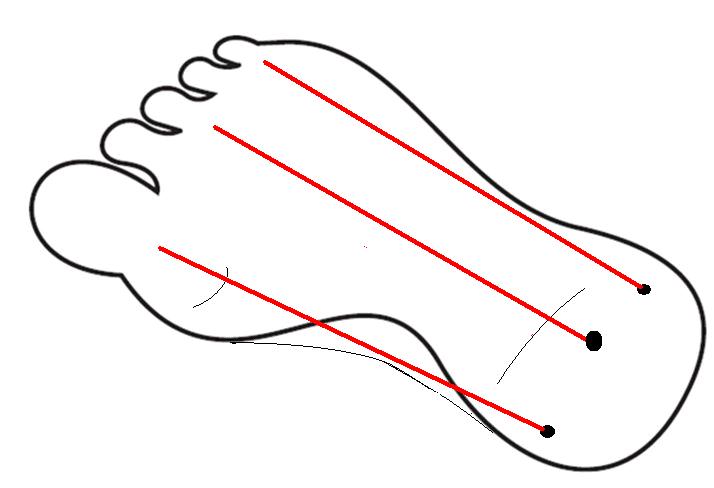
The greatest divergence in lines and points was in the area of the feet. The best example of this can be seen in the lines of the sole. In the Chiang Mai style I’d previously learned there were five lines that radiated from a point where the heel transitioned into the arch about midway across the foot and went toward the base of each toe. The Wat Po style had three lines that were more or less parallel in line with the big toe, middle toe, and the little toe.  See diagrams.


The Chiang Mai 5 lines of the sole.

The Chiang Mai 5 lines of the sole.

The Wat Po 3 lines of the sole.

The Wat Po 3 lines of the sole.


In summary, the difference between these two styles wasn’t that great. In many cases the techniques were exactly the same, in most they were marginally different, and only rarely were they completely different.  I don’t really have a preference between the two styles. I think which would be a better experience comes entirely down to the skill of the masseuse / masseur.

BOOK REVIEW: Warrior Pose by Brad Willis / Bhava Ram

Warrior Pose: How Yoga (Literally) Saved My LifeWarrior Pose: How Yoga (Literally) Saved My Life by Brad Willis

My rating: 5 of 5 stars

Amazon page

It may strike one as hokey that this book has one author, but two names on the byline. But, it’s apropos of an autobiography describing the fundamental transformation of a man.

Part I is the story of Brad Willis, a journalist on the rise. Willis goes from stumbling into a reporter job at one of the smallest markets in the country to being the Asia bureau foreign correspondent for NBC (National Broadcasting Corporation, one of the largest American television networks.) There’s no mention of yoga in this part of the book. It’s the story of a driven journalist covering major world events. Willis made a name for himself reporting from Soviet occupied Afghanistan in the 80’s. He tells harrowing tales of covering the drug war in Latin America, the Desert Storm Gulf War, and human trafficking in Thailand. He was also one of the few American journalists to visit North Korea. There was nowhere he wouldn’t go for the story, and he took serious risks along the way. His highly driven nature is the one point of consistency throughout the book. Willis is not a man to do anything half-assed, be it following a story or pursuing the yogic path.

Then Willis’s world was torn asunder by health problems, and this is the subject of the second part of the autobiography. First, a fall caused a hairline fracture in one his vertebrae that became crippling when Willis refused to take time off from work or to do anything for it. He couldn’t be diverted from his on-the-go foreign correspondent’s pace. Considering the dangerous places Willis traveled, it’s ironic that he initially broke his back on vacation at a Caribbean resort while closing a window during a storm. When the deterioration of his vertebrae made work untenable, he underwent a surgery that failed and left him “permanently disabled.”

Then Willis was diagnosed with a cancer in his throat that spread from his tonsils into lymph nodes. On top of the ailments themselves, Willis’s health rapidly declined because he became dependent on painkillers and other prescribed medications, and—against advisement—he began to drink alcohol in conjunction with these meds. Not only did he become hooked on the medications and alcohol, he became dependent on a back brace, a cane, and a lethargic lifestyle that kept the body from healing itself. Yoga is only briefly mentioned in passing in this part of the autobiography.

The third part is about Willis’s transformation into the yogi Bhava Ram, and his successful battle against cancer. After an intervention that resulted in drug rehab, he was referred to a pain center at Scripps that employed alternative therapies. (As an aside, the book is in part an indictment of a healthcare system in which this Pain Center both helped many people and was completely unsustainable because insurance companies could reject claims on the basis of the treatments being unconventional—but because it was staffed by medical professionals it was too expensive for most people to afford without insurance. Willis points out that there was never a rejection of any claim for any of the expensive medications or surgery that failed to helped him, but the Pain Center that put him on the road to good health went under due to failure to pay.) The Pain Center was the key to his turn around. After progressing with physical therapy, biofeedback, and—most uninsurable of all—Jin Shin Jyutsu, Willis is introduced to Yoga.

The final part charts Willis’s pursuit of yoga both through a series of teachers as well as any books that he can get his hands on. He voraciously reads up on the subject, and begins a sadhana (personal practice) that is marked by all the drive he had earlier given to his journalism career. The practice starts out rough. His muscles have atrophied, his spine curved, and he gained a tremendous amount of weight on a steak, potato, and beer diet mixed with a sedentary lifestyle. However, over the period of a couple of years, well beyond when he had been told he would be dead, he transforms his body and his mind through an intense daily practice and an adjustment of his world view.

I’d recommend this book for anyone. It will definitely be of interest to yoga practitioners—though don’t be surprised that yoga doesn’t come into play until the final quarter of the book. It could also benefit individuals with serious health problems as a way to reconsider how they approach health and treatment. Willis points out that falling into the role of victim was one of the main killers. He inherited a bad situation through an accidental fall and a case of cancer that he believed was attributable to his experience in Iraq (i.e. related to depleted uranium shells.) However, it was only when he stopped gorging on food, alcohol, and self-pity that he made a turnaround.

Even if I wasn’t interested in yoga and alternative approaches to healing, I would’ve found this to be an intensely engaging read. Willis’s journalism career gave him a unique insight into some of the major world events of the 1980s and 90’s. Willis builds lines of tension and sustains them. One wonders what will happen to his marriage to a woman who married one man (a confident and successful foreign correspondent in Hong Kong) and found herself in a marriage with another—first a lethargic addict and then a man who sunk himself hook-line-and-sinker into to the yogic lifestyle. One wonders whether his cancer remission will hold. One wonders whether he can keep clear of the pain meds and stick to the life of a yogi. I haven’t read a book that caught me this much by surprise in some time. I hadn’t heard of this book before I bought it, and didn’t have particularly high expectations (it was on sale on Kindle or I probably never would have picked it up), but I quickly became hooked.

View all my reviews

Paleo-Stressing: Acute v. Chronic Stress

"What happened to the good ole days when I ate you people--not lived in your cages?"

“What happened to the good ole days when I ate you people–not lived in your cages?”

Paleolithic dieting is all the rage these days. I’m no expert on the paleo-diet, but–as I understand it–this refers to the practice of eating the foods consumed by our pre-agrarian ancestors. The idea is that if one consumes the foods that our species is evolutionarily-optimized to eating, one will be healthier.  Whether one believes in the merits of the paleo-diet or not on the whole, it’s hard to argue that one wouldn’t be better off eating less highly-processed and highly-refined foods and more things that look like food at a glance.


Our diet isn’t all that has changed since the days of our pre-agrarian ancestors. Modernity has brought with it an entirely new way of experiencing stress. Eliminating or reducing stress is a common topic of discussion, but not all stress is created equal. There’s a necessary form of stress, a stress that makes one better, stronger, faster, and smarter. We don’t want to willy-nilly eliminate stress; we want to reduce the wrong type of stress.


Our ancestors—like animals–experienced brief periods of intense stress (e.g. saber-tooth tiger attacks), followed by longer periods in which they were free of deadlines, carpools, and after-school activities. Now, no one likes to have a saber-tooth tiger stalking them. It’s unpleasant. Modern humanity has gone to great lengths to eliminate those short bursts of terror, but not without cost. (If you don’t believe me read Robert Sapolsky’s Why Zebras Don’t Get Ulcers.)


Whether or not you believe that eliminating acute instances of terrifying stress is bad for mankind, it’s hard to argue that modernity’s leveling process didn’t eliminate stress, but instead resulted in a chronic stress on a smaller scale. People today have impossibly long daily to-do lists, and they have to accept trade-offs between work, family, and personal development.


It’s true that you don’t get eaten by a giant cat when you drop the ball, but life is so packed diverse events that one may feel like one is dropping some ball constantly. If your boss thinks you’re a model employee, then your kids are probably going to need therapy. If you have a contented home life, your boss may have his or her eyes open for someone who can give the firm consistently 70+ hour work weeks. If you feel you’re doing alright on both the work and family front, your body and / or mind is probably a train wreck.


Chronic [mini] stress may feel better than acute [catastrophic] stress, but it takes its tolls in various ways. First, with our sympathetic nervous system (fight-or-flight reaction) constantly engaged our body’s power to heal itself is reduced. When the parasympathetic nervous system is engaged, the body devotes resources to long-term goals like getting healthier, but in stress mode activities not relevant to immediate survival shut down. This is a great system if you have periodic life and death stress, but is not so good if you’re under constant stress.


Second, chronic stress reduces sleep, and sleep is essential to one’s mental and physical well-being. There are a wide variety of symptoms associated with sleep deprivation such as forgetfulness, decreased concentration, decreased alertness, reduced reasoning ability, diminished problem-solving capacity, and depression—all of which can diminish our physical health through accidents, ailments, suicide attempts, and lack of energy for exercise.


Third, chronic stress can make one fat, with all the health issues that result. Some people use food as a coping mechanism. Other people eat too fast or choose their food poorly because of time constraints or because they are not mindful of eating as their monkey minds churn at a mile a minute. Then there is the more convoluted and complex issue of cortisol–a hormone released under stress that is linked to weight gain in at least some cases. Even if you don’t have a problem on the calorie intake side, the stressed individual may not do so well on the calorie burning side—either because of a lack of time to exercise or a lack of energy.


Modern humans are uniquely suited to chronic stress because we are the only species that achieves the same physiological stress response by remembering and obsessing about a stressful event as experiencing it. Abandoning the modern approach to living isn’t an option most are willing to entertain; but there are ways to combat chronic stress.


Move – Meditate – Mindfully Breath: The bad news is you’ve got to shoehorn these activities into your schedule daily (or at least several times a week.) The good news is that they don’t need to take up a lot of your day. There are a number of systems that address all three components in one handy package such as Qi Gong, Yoga, and some martial arts. I don’t think it matters so much which one chooses as how one goes about one’s practice.


Movement strengthens and strategically stresses the body, but it also increases one’s bodily awareness so that one becomes aware of how stress is manifesting itself in one’s body. Meditation teaches one how to live in the present moment, and it trains one to recognize the seeds of negative thought and emotion earlier so that one can counter-act them. Obviously, breathing is essential to life, but learning to be aware of one’s breathing patterns and to “manually override” the breath patterns associated with harmful emotional states is a beneficial skill.


Massage / Bodywork: Whether self-administered or other-administered (the latter allowing greater distressing–particularly if the masseuse is skilled) massage is an activity, like movement, that can help one become aware of where one is physically holding one’s stress. These physical manifestations of stress can exacerbate the whole experience of stress. One should take time periodically to have bodywork done. A day rarely goes by in which I don’t work on my own neck, shoulders, head, or face, and I occasionally get professional Thai Yoga Bodywork done.


The Places that Scare You: Force yourself to go someplace (not necessarily literally a “place”) that scares you once in a while. This needn’t be skydiving or hand-gliding—but it could be. It may be a martial arts class in which one has to put on the gloves occasionally and go at it. It may be joining Tostmasters and having to give a speech in front of a crowd. It may be traveling to some backwater where you don’t know the language, but you want to learn. This is a very personal issue. (i.e. A Type-A personality he-man may not find that skydiving is outside his comfort zone. If so, sorry, skydiving doesn’t count, he may need to learn ballroom dancing, or something else that truly takes him outside being comfortable.) KEY POINT: The problem with hiding from all stressors is that it doesn’t result in a stress-free life, what happens is that smaller and smaller stressors loom bigger and bigger in one’s mind. Which brings us to…


Perspective:  One must put life’s challenges in perspective. Each person’s problems are important to them, and I don’t want to diminish anyone’s problems, but—come on—you’re not going to be eaten by a freaking saber-tooth tiger.

Yoga for Martial Artists

Long before I ever took a yoga class, I was doing a kind of yoga. It may have even had its roots in India, but it also might have blossomed independently. In the Japanese martial art I study, we called it junan taiso, and many of the poses would be recognizable to a yogi. While it didn’t include the complex and balance-challenging poses seen in yoga, stretches like the butterfly (Poorna Titali Asana), straddle stretch (Upavistha Konasana), and the back stretch (Pashchimottanasana) were virtually identical. As with yoga, the manner of breathing was as important as the nature of the stretch.

Butterfly Stretch (Poorna Titali Asana)

Butterfly Stretch (Poorna Titali Asana)

Back Stretch (Paschimottanasana)

Back Stretch (Paschimottanasana)

Straddle Stretch (Upavisthakonasana)

Straddle Stretch (Upavisthakonasana)

Flexibility is key in the martial arts, and not just the ones with high-flying kicks. Even grapplers and practitioners of the less fancy striking systems gain from increased flexibility, but it isn’t only increases in range of motion that yoga offers.

Let’s consider a modest front kick to a target no higher than the solar plexus. One might be inclined to say, “I don’t need yoga to help with that, I do that kick all the time, and have no problem reaching my target.” Do an experiment. Take a full 30 seconds to do the kick, from the time the foot leaves the floor to the time it extends out, and then hold it for 15 seconds, or so. If you succeeded in this without any problem, you may be good to go.

Front kick, slow-motion style.

Front kick, slow-motion style.

However, there are three problems that might plague one, and yoga is tailor-made to fix two of them. First, you may not have adequate range of motion. You may have thought you did because you can kick at speed and reach the target. But, you say, “Why would I need to kick in slow motion?” You wouldn’t, but this exercise shows you that you are having to use inertia to kick through the resistance of your own muscles. Unless you’re a hardcore bodybuilder that resistance might not seem too daunting, but you are essentially having the brakes applied–albeit softly–to your kick and that’s costing you speed and power.  Yoga can help you develop that range of motion. Consider the pose below, which requires the same type of flexibility.

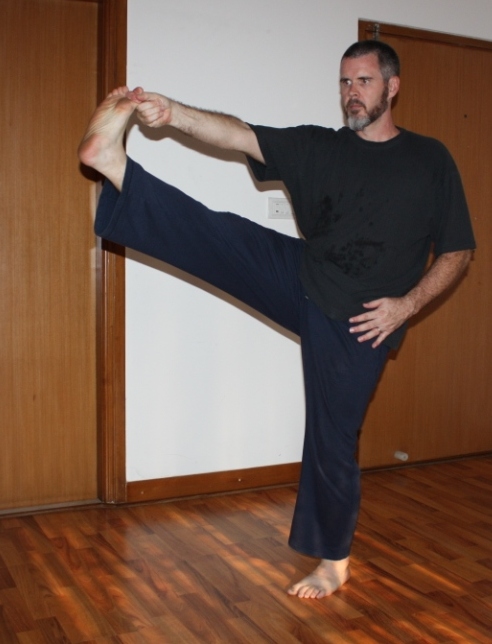
Hand to Big Toe (Utthita Hasta Padangusthasana)

Hand to Big Toe (Utthita Hasta Padangusthasana)

Maybe you can raise your leg, but keeping it cantilevered in place is too much for you. This means you don’t have the strength to support your own leg. Either your leg is  heavy, your strength is lacking, or both. Building this kind of strength isn’t necessarily yoga’s forte. There are styles and approaches that may help you build that strength, but there are other things you can do that may be more efficient for that purpose–not the least of which is doing a whole bunch of kicks one after the other without a break until your leg is burning, and then doing some more.

You may have had the strength and flexibility, but found it hard to stay on balance. The naysayer says, “Yeah, but that imbalance would never be noticeable at speed. That is (as with the lack of flexibility) one can hide weaknesses with speed. While there maybe some truth in this, a lack of balance will cost you in subtle ways, and yoga can help. There are a number of postures that enhance one’s balance, balance on one’s foot, one’s head, or one’s hands (the latter could be useful for the ground grapplers.)

Warrior III (Virabhadrasana III)

Warrior III (Virabhadrasana III)

Headstand (Shirshasana)

Headstand (Shirshasana)

The Crane (Bakasana)

The Crane (Bakasana)

Tree (Vrksasana)

Tree (Vrksasana)

There are a couple of other areas in which yoga can help one’s performance as a martial artist. One is expansion of bodily awareness of issues of alignment and posture. These might not seem so crucial, but if you are in the martial arts for the long-haul, then having the awareness to make small adjustments can be the difference between chronic ailments or a lack thereof. It can be difficult to discover a misalignment in the quasi-combative environment of martial arts training. It’s easier to notice these issues in the slow and controlled practice of yoga.

Postures like Warrior II and the Side Angle Pose and show you where you are holding tension that you might not otherwise be aware of.

Warrior II (Virabhadrasana II)

Warrior II (Virabhadrasana II)

Side Angle Pose (Utthita Parsvakonasana)

Side Angle Pose (Utthita Parsvakonasana)

It must also be remembered that asana (postures) are only a part of yoga. Another aspect that can be extremely helpful for martial arts is pranayama, or the discipline of breathing.  There’s no substitute for cardio, but that doesn’t mean that one can’t benefit greatly from learning more about how to breath, and the science of breath. This is an area in which yoga excels. The great yogis made extensive study of breath and the effects that are achieved by various types of breathing, and these exercises can expand and strengthen the diaphragm and the muscles of the rib-cage. One tends to see the coup de grace strike and think, “There’s your problem.” However, often it’s fatigue that’s the underlying culprit. Better breathing can reduce fatigue.

Of course, meditation is another critical skill for calming the mind and learning to live in the present. Many martial artists already practice some form of meditation, but this is another option.

There is one more benefit and that is building greater confidence in your ability to exercise control over your body. There are many challenging postures in yoga. I don’t advocate all asana that have been taught historically because there can be such a thing as too much flexibility for a martial artist and some poses exercise joints in ways that were not meant to operate. There needs to be a proper balance of strength and flexibility, a proper tension within /between the skeletal and muscular systems. However, there are many poses that just take a bit of time and effort to develop the skill without putting too much wear on the body.

8-Twists Pose (Astavakrasana)

8-Twists Pose (Astavakrasana)

BOOK REVIEW: Higher Judo by Moshe Feldenkrais

Higher Judo: GroundworkHigher Judo: Groundwork by Moshe Feldenkrais

My rating: 4 of 5 stars

Amazon page

If you’re at all familiar with Dr. Moshe Feldenkrais, most likely it’s for the system of bodily awareness and efficient movement that bears his name (i.e. the Feldenkrais Method.) You may be completely unaware that Feldenkrais was a first-rate judōka who trained under judō’s founder Jigoro Kano, and that his experience with judō played a major role in his understanding of the principles of natural and efficient movement. (It should be noted that Feldenkrais was neither a medical doctor nor a doctor in a medical / biological field, but was a physicist by training.)

Higher Judō was originally published in 1952, and was out of print for many years until a new addition was brought out in 2010 (with three new forwards and some additional back matter.) It’s not hard to imagine why the book made a comeback after such a hiatus–and 26 years after the death of Dr. Feldenkrais. The book explains the ground fighting techniques of judō, which are the basis of Brazilian Jujutsu (BJJ), and BJJ is a dominant form of ground and submission work within Mixed Martial Arts (MMA.) Given the immense popularity of MMA, and the desire of fighters to hone their technique to the utmost, it’s a good time to bring this half-century old book back to the fore.

The book consists of twelve chapters. The first half of these chapters deals with preliminaries such as principles of movement, philosophy, and basic movement exercises. The second half gets into the tactics of ground work. The arrangement for the latter chapters is largely by position of the competitors relative to each other (e.g. the mount, 12 o’clock, side control, in the guard, etc.)

The first half has few graphics, but the last half is packed with line drawings that are based on photographs (ostensibly it was cheaper or easier to reproduced the line drawings back in the day.) The line drawings offer sufficient detail so that one can see what is being done (to the degree one would be able to see it in a photo or even in person—i.e. some of the techniques are subtle and the written description becomes essential.)

The book is a good overview of the basics of ground work with a few unusual and rare techniques thrown in. Feldenkrais points out that some techniques are more important than others, and that one should drill a few of the most critical ones rather than focusing a lot of time on the more eccentric techniques. As I’ve written many times before, I don’t believe that one can learn a martial art from a book. However, if you’ve been taught these types of techniques, you’re sure to find this book an interesting reference with some ideas for approaching ground work training.

Some of the characteristics of the book could be taken as positive or negative, and I’ll leave it to the reader to decide. First, Feldenkrais avoids using names for techniques. He uses neither the common Japanese names for the techniques (e.g. there’s no reference to juji gatame, tomoe nage, or hadaka jime) nor the common English names. He goes by figure number attached to the aforementioned line drawings. Second, he has thoroughly cross-referenced the book such that you might be on the page containing figures 228 and 229, and he’ll make reference to figure 52. So the book involves a lot of turning back (I wrote in the page numbers where off-page figures were referenced so I wouldn’t have to find what page the figure was on each time.) Third, Feldenkrais is a scholar by training and is not averse getting a bit wordy and verging on abstruse. Of course, the flip-side of this is that he provides a great deal of precision in his language. That being said, I found this book readable and much less ponderous than one of his Feldenkrais Method books that I read.

I’d recommend this book for anyone interesting in gaining a better understanding of ground fighting. In the early sections of the book he provides excellent food for thought about the judō approach to movement, and in the latter half he catalogs the basics in a thorough and logical fashion.

View all my reviews

Chi: The Power of What Isn’t

Every morning I start my day with chi kung (a.k.a. qi gong), and many days I do tai chi (tai qi.) For those who are unfamiliar, chi is usually defined as “life force” or “life energy.” However, defining chi is neither simple nor will one find a consensus agreement. Some say chi is  “breath,” at which point its existence becomes a much less controversial, but also less explicative, concept. Others would say that chi is much more broadly dispersed than the “living” so “life force” is an understated definition.

Chi Kung are exercises combining breathing, movement, meditation, visualization, and self-massage that are used to keep one healthy. Because yoga also contains these components (e.g. breathing, movement, and meditation; though with very different specifics) some have even been known to call chi kung “Taoist yoga.” The idea behind these exercises is that chi is lost through living (some activities more than others), and can become blocked in the channels through which it is believed to move. Various exercises are used to replenish and ensure healthy circulation of the chi. Tai chi is a series of martial arts forms that are also considered to have the effect of replenishing and / or enhancing chi.

Two questions may leap to mind, especially among those who know me as a skeptic. First, do you believe in chi–despite the lack of evidence that it exists? (When I mention this lack of evidence, I am obviously not defining chi as breath or bodily fluids, in which case the most rabid skeptic would have to acknowledge its existence. However, then an entirely different set of questions is raised about the vast and complicated nature of chi kung exercises needed to circulate oxygen, which travels through blood vessels and not through channels or meridians. In other words, there’s no reason not to abandon a lot of the Traditional Chinese Medicine (TCM) / Taoist conceptions of health if one considers a narrow definition of chi.) Second, if you don’t have any reason to believe that chi is a real thing, why bother with the exercises?

First, no, I don’t believe in chi as a substance or physical entity in the way that your average Taoist priest does. I don’t mock or ridicule those who do, and I acknowledge it could always turn out that they were right and I was wrong and that my current state of ignorance combined with an incorrect deference to Occam’s Razor led me astray.

However, I have a pretty high standard for believing a person, place, or thing exists. I need to be able to observe it.  If I can’t perceive it directly, but there is some indirect sign it exists, then that indirect sign needs to be the simplest possible explanation I can imagine given my current state of knowledge. (Yes, I realize that Occam’s Razor isn’t a law, it can always be that an unlikely explanation is the correct explanation. I also know the raft of indirect signs of chi, and, yes, I’m saying I can imagine simpler explanations than an energy source that is immeasurable but powerful enough have bodily effects.) While I don’t believe in chi (or meridians, or the yet undiscovered organ called the “triple heater”) as physical things, I do believe in conceptual chi which is an object of visualization.

Moving on to the second question, I practice these exercises because they make me healthier.

This, of course, raises another question, “How can these exercises be effective if chi is not real?”

Now I have to go Socratic on my hypothetical questioner. The Socratic dialogue goes like this:

S: Have you ever been to a scary movie?

A: Of course, I have. What kind of a troll has never seen a scary movie?

S: I’m Socrates. I’ll ask the damned questions around here, thank you very kindly.

So while you were watching said movies, did you ever get startled? That is, did your pulse ever pound a bit harder; did you ever take a gasping breath; did your hands ever grip the armrest with white knuckles; or did you ever get butterflies in your stomach?

A: Of course, that’s part of the horror movie watching experience.

S: So, then, you were under the impression that the events you were watching were actually happening, and that the killer might come out into the theater after you at any moment?

A: No, of course not. Don’t be absurd!

S: And yet this thing that was not real–that was just symbolic or conceptual–had actual physiological effects?

[At this point Socrates breaks into his superiority dance.]

I think visualizing chi flow has positive benefits both mentally and physically. The mental benefits may be clear. The physical benefits result from putting oneself in the moment and conducting activities (deep breathing and movement) that help one de-stress. This process of de-stressing helps one to be healthier. Does it matter that one does the exercises as they have been handed down from ancient China? Probably not, but I believe that trial and error (even without complete information about anatomy and physiology) yield some impressive results. Of course, there are many other systems (e.g. yoga) that can work equal wonders using an approach that is quite different in its detail. (I also don’t believe in Chakras, but can imagine great benefits from behaving as if they exist.)

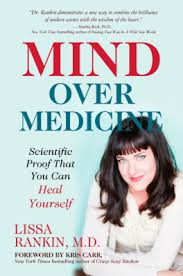
MindOverMedicineI just started reading a book by a medical doctor named Lissa Rankin. Rankin’s book, entitled Mind Over Medicine, presents evidence from a large body of scientific literature suggesting the mind often plays a major role in wellness by way of mechanisms that aren’t yet fully understood, but which defy the traditional view of Western medicine.

Rankin was intrigued by the vast number of anecdotal cases of what doctors call “spontaneous remissions.” Spontaneous remissions are when a patient becomes healthy in a way that defies explanation (i.e. they had no treatment, they had insufficient treatment, and they had an illness for with the body’s immune system is normally believed incapable of doing the job on its own.) She wasn’t satisfied with these one-off stories involving placebos, fake surgeries, busted radiology equipment, faith healing, etc, but rather wanted to see what the scientific literature contained by way of scientific double-blind studies on the subject.

She found there was evidence to support mind over matter when it came to illness, and that there was a fledgling explanatory literature. She also learned that while there was a large database of spontaneous remissions, there had not yet been an attempt to determine whether there were common characteristics of those who showed the “placebo effect” (getting well while being in the placebo group of a double-blind study) or other spontaneous remissions.

My point is that there is good reason for skeptics to consider that there may be a lot more to health and well-being than our current paradigm suggests.