
bowl in the right
 calabash in the left:
  drunkard empties
 & then fills his cup --
 amid missing time.

bowl in the right
calabash in the left:
drunkard empties
& then fills his cup --
amid missing time.
In the Flow.

What force dances one
   into this lovely state?

Light & ecstatic,
 Blissful but calm.

Each breath a drug
   that sends delicate
   shimmers rippling
   through the universe.

What force, indeed?

Drunk, me and my boat float freely downriver.
 Unfortunately, I can't stay amid the flowers.
 Hazy waters sprawl; sun, countless mountains high.
 Red blossoms shower downward.
 I don't know how I got here.
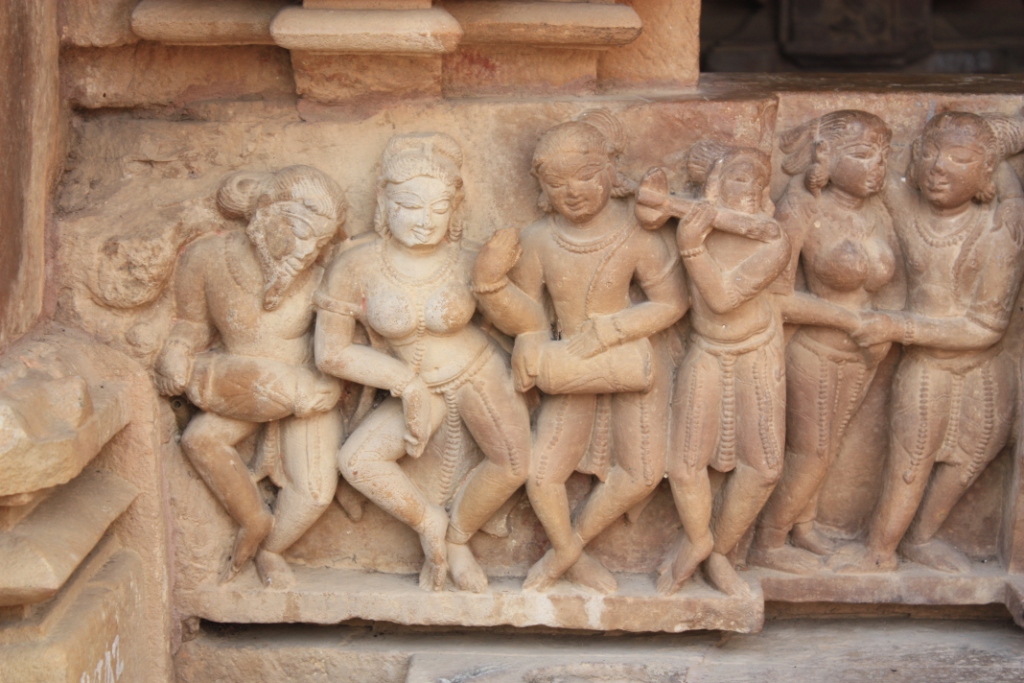
Not by hearing or listening,
     but by feeling the rhythm,
     body / mind resonating to it,
     being effortlessly attuned to it:

That is how the music transports one --
            how it changes one's mind.

deep in the cave,
there’s a hole that knows no light;
everything
and nothing can reside
within that black hole
 This is the belated final posted of my 2019 project on altered states of consciousness. I was traveling during the latter half of December and, hence, my tardiness.
During 2019, each month I gave special attention to studying some state of consciousness that exists outside of the normal waking state. (Of course, the folly of believing that there is one “normal waking state of consciousness” is one of the major lessons learned from this exercise.) My investigations included: meditation, hypnosis, lucid dreaming, sensory deprivation, psilocybin consumption, and various others — a number of which were variations on inducing a Flow state.
In December, because I was traveling so much I was reading even more than usual, and it occurred to me that there is a kind of reading in which the mind behaves differently from the norm. I’m not talking about all reading, but — specifically — when one gets lost in story. There’s run-of-the-mill reading, and then there’s the reading in which a hundred pages seem to fly by in minutes, but you realize you’ve lost a lot more time than that. This topic might seem like a dull ending to this project. Being absorbed in story might not appear as enthralling or “sexy” as mushroom tripping or floating in sensory deprivation tank, but the experience can be just as profound.
As I was looking into this, I discovered that there is a term that addresses what I’m talking about, “narrative transportation.” Narrative transportation relates to absorption, which I learned is a factor in hypnosis. That is, how easily does one become completely mentally occupied with an object of contemplation such that one loses awareness of the passage of time and external stimuli. In this type of reading, one is mentally reconstructing the world and events of a story, and that process is demanding of one’s attention. Furthermore, there is an intense emotional experience that one is feeling simultaneous to this mental construction. This doesn’t leave much room for the mind to wander — if the story is intriguing enough to hold one’s attention.
As a reader, one facilitates narrative transportation largely by picking stories that are appealing to one, and by finding extended time periods to read without distraction. However, what’s really interesting is how a writer can facilitate this state through his or her style and method. The most commonly discussed aspects of this facilitation are: the story arc (i.e. arranging events to create and maintain excitement) and building lovable or loathsome characters (either way, just as long as they aren’t tedious or boring.)
But there is another aspect that I think of as readability. How easy does the storyteller make it for the reader to create their own mental story-world? In large part, this has to do with the art of finding the Goldilocks Zone of description. If one describes too little one creates “floating head syndrome” in which the reader (if they continue reading at all) may imagine floating heads conversing in a blank white room. On the other hand, if one spends twelve pages describing the drapes or the weather, one is unlikely to keep readers engaged. Coincidentally, one of the books that I read in December that was educational (though not transportational) was Milan Kundera’s “The Art of the Novel.” In it, Kundera bemoans the tendency to over-describe characters such that one interferes in the reader’s imaginings. He points out that readers learn almost nothing about the physical description and background of some of the most important characters in literature.
And so concludes my year of altered states as I look forward to new adventures in 2020.
 Some people swear by the mind-altering properties [and other benefits] of chanting mantras. I’ve been reading a review copy of Kulreet Chaudhary’s “Sound Medicine,” a book whose play-on-words title says it all. It’s about the way sound is either shown or speculated to have health effects. (Full-disclosure: Some of the speculation gets a bit out there.) Chaudhary is both a medical doctor and an Ayurvedic practitioner, and has an outlook akin to that of Deepak Chopra.
Chanting has never been my thing. I’ve learned about it and done some in yoga training, but I can’t say it ever resonated [no pun intended] with me. However, in the spirit of investigation, this month I did a few one hour and half-hour sessions of chanting. I kept it very basic, chanting AUM as I was taught with equal parts of A – U – and – M.
While I can’t say that I’m sold that chanting is the ultimate practice that achieves outcomes unachievable through other means, I will say that after these sessions I do feel a sense of calm and clarity. I can certainly see why mantra chanting has appeal for so many people, even though I also believe that, sadly, it’s sometimes oversold as something supernatural and the discussions about it are needlessly complicated.
 The Science of Meditation: How to Change Your Brain, Mind and Body by Daniel Goleman
My rating: 5 of 5 stars
This book has been sold under the title listed above as well as the less prosaic title, “Altered Traits.” The switch may represent a lack of confidence that the coined term “altered traits” would catch on, and / or a desire to market the book as broadly as possible.
“Altered Traits” is a play on the more well-known term “altered states [of consciousness.]” The idea being that meditation (as well as many other activities from consuming psychoactive drugs to having a shamanistic drum rave) create a change from the ordinary waking state of consciousness, but what the authors wanted to focus more upon is the long-term and sustained changes that result from extended meditation practice. (Hence, coining the term “altered traits.”) These sustained changes are a prevalent theme through out the book. This makes sense as one of the co-authors, Richard Davidson, is well-known for investigating the brains and brain activity of monks and yogis with extremely advanced practices (tens of thousands of hours in meditation.) Still, the prosaic title, “The Science of Meditation,” may make more than marketing sense because the book does discuss the scientific research on meditation pretty broadly.
Both Goleman and Davidson are long time meditators as well as being subject matter experts in psychology and brain science. This is a major strength of the book. Some scientists are dismissive of practices that have origins in spiritual practices and have blindsides or are prone to oversimplifications because of that bias. On the other hand, that bias isn’t helped by the fact that meditation experts often oversell meditation as a practice that will do everything from spontaneously cure your cancer to allow you to levitate six feet in the air. The authors of this book aren’t afraid to call out such spurious claims, but aren’t dismissive of practices of religious or spiritual origin. The authors also spend a fair amount of time criticizing past scientific investigations of meditation (including their own) on the basis of naivete about the nature of the practices. A major problem has always been an “apples and oranges” grouping together of practices that are different in potentially important ways. There have also been all the problems that plague other disciplines as well (small sample size, poor methodology, etc.) These discussions won’t mean much to most readers, but are helpful to those who want a better idea which studies are gold standard and which are weak. That said, the book doesn’t get bogged down in technical issues.
The book opens by laying out some of the important differences between various meditation practices and trying to educate readers who may either not know much about meditation or may know it only from the perspective of a single discipline. Goleman and Davidson suggest one way of thinking about different kinds of meditation is in terms of “the deep and the wide.” The former being sectarian practitioners who practice specific ritualized practices in an intense way. The latter being more secular practitioners whose practices may borrow from different domains. They present a more extensive classification scheme than this simple bifurcation, making it more of a continuum. Later in the book, they consider ways in which practices might be categorized (e.g. Attentional, Constructive, and Deconstructive) but it’s emphasized that there isn’t currently an agreed upon schema.
Throughout the book, one gets stories of the authors experience in investigating this subject. This included trying to get monks to allow themselves to be studied, even with a letter from the Dalai Lama. It also covers the challenge of trying to build interest in the subject in an academic setting that once thought of meditation as little more than voodoo.
The middle portion of the book has a number of chapters that address particular types of practices and the specific effects they have (and haven’t) been found to have. These include developing a more compassionate outlook and behavior (ch. 6), improved attention (ch. 7), negation of pain and physical ailments (ch. 8 & 9), and meditation / mindfulness as part of a psychotherapeutic approach. The authors repeatedly point out that these practices were never intended for the purpose of treating ailments (mental or physical,) though they do seem to show benefits in a number of domains outside of what the spiritual seekers who brought them to prominence intended of them.
The chapters toward the book’s end focus heavily on investigations into advanced meditators, and the altered traits and brain changes seen in them.
There are few graphics in the book, but it’s annotated and has an “additional resources” section in the back.
I’d highly recommend this book. The authors’ mixed background gives them a good vantage point to provide an overview of the subject, and also allows them to tap into stories of their experiences which make the book more interesting than it otherwise would be.
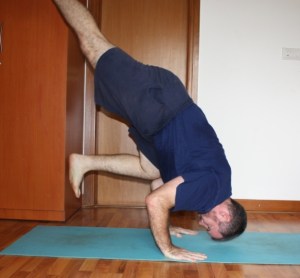 This is month ten in my year of studying altered states of consciousness, and this post will be on movement and the mind.
There are many downsides to being introverted, but one upside (at least in being a kinesthetic-oriented introvert) is that I can get out of my head and in touch with my body quickly and efficiently when I’m in motion. It can be a blissful state when the inner yakking pipes down and my awareness becomes attuned to sensation.
I would differentiate three types of movement that have very different effects on my state of consciousness. First, there are highly repetitive acts of movement such as running. Now, I do run because it’s great exercise, but it doesn’t tend to put me in the state of mind I’m talking about. Your results may vary. I know many people find “runner’s highs” or achieve a quieting of the mind when running. For me, running tends to produce a daydream-centric state of mind. I sometimes counter this by focusing my awareness on my breath, stride, or sensations, but — left to its own inertia — my mind goes into daydream mode.
Second, there are fixed sequence series of movements — preferably with a flow. The best example that I can think of — and which I currently practice — is taiji. I’ve been practicing Yang Style Taiji for a few years now, and find it’s conducive to this state of mind. However, the point that differentiates this type of movement from the next is that it takes some time to get to that point. One has to ingrain the sequence of movements into one’s body, then coordinate the breath, and then correct minute mistakes in the movement. It’s worth it, but it’s not an instant ride to altered consciousness. While you’re getting the fundamental movements down, the conscious mind is necessarily quite active and it’s hard to tune into the movement and the sensations.
Third, this is what I would call free movement. Some people think of it as a kind of dance, but not one with a fixed choreography, which would fit more in the second category. Free movement is just letting your body move (usually to music) with awareness to the body, but without conscious direction. While the feel created is much like that of the second type of movement, mentally it bears more resemblance to free writing, which I discussed last month. That is, one is trying not to direct the body consciously, but rather let the movement come about (perhaps mediated by the music.) Rather than trying to consciously direct the movement, the conscious mind is used to direct and maintain awareness of sensations. Sometimes, I keep my awareness on the soles of my feet, feeling how various movements — subtly or unsubtly — change the distribution of weight on the feet.
In doing this, I find that sensitivity to sensations — external and internal — dials up. While I’m focusing on internal sensation. I often notice tactile sensations that would usually not register. There’s also a more visceral experience of the effect of music, which is another subject in its own right. The blissful effect of music seems to be amplified by the body in motion.
In thinking about the difference between the second and third types of movement experience, I was reminded of the argument that a ritual is an essential element of plumbing the depths of the mind. As the argument goes, there’s something about inggraining a sequence of actions into one’s muscle memory and continually performing them that tunes one into something vaster than the self.
I’m still planning to do two more posts in this series, although I’m bouncing around alternative subjects for November and December, those joining this experience in progress and curious about previous posts can find them:
January – Psilocybin Mushroom
February – Sensory Deprivation / Float Tank
March – 30 Days of Meditation
April – Hypnosis
May – EGG Feedback
June – Breathwork
July – Lucid Dreaming
August – Sleep Deprivation
September – Free-writing / Poetry


 Tiger Riding for Beginners