
Taken in September of 2017 in Ahmedabad





Taken in Ahmedabad in October of 2017
… Does it “pedaling-around-a-dozen-gas-canisters”-suck?
 The Harvard Psychedelic Club: How Timothy Leary, Ram Dass, Huston Smith, and Andrew Weil Killed the Fifties and Ushered in a New Age for America by Don Lattin
My rating: 4 of 5 stars
The title and subtitle say it all when it comes to Lattin’s controversial thesis that four individuals who were at (or — in Smith’s case — “near / working with”) Harvard University single-handedly (octa-handedly?) gave birth to the sixties’ counterculture through their research and advocacy of hallucinogenic substances (first psilocybin and later LSD.) Before I obtained a copy, I was perusing the reviews, and one overarching criticism stuck out amid a sea of generally complimentary comments. Having now read the book, I’d have to agree with both that criticism and much of the praise.
The criticism is that Lattin arbitrarily lumps four individuals together and emphasizes their connection to the prestigious Harvard University in order to support a [sub-titular] claim whose reach exceeds its grasp. Now, some critics may be defending their alma mater. No matter one’s perspective, Harvard gets a black eye from the story of Timothy Leary and Richard Alpert (a.k.a. Ram Dass.) For some people, that black eye results from the fact that the pair of psychologists were able to carry out such wild and woolly experimentation in the first place. For others, it results from the fact that the university ultimately fired the two and ended research into the benefits and hazards of hallucinogenic substances [and how to tap the former without succumbing to the latter] — a line of research just starting to show results. (To be fair, the CIA’s shenanigans with hallucinogen experimentation [i.e. MK ULTRA] likely did more to kill this line of research than did the firing of Leary and Alpert.)
As one can see, tying the stories of Leary and Alpert together is reasonable. They were faculty members who worked together, were ultimately fired together, and for a while after said firing they continued to work together to advance their agenda outside the constraining halls of academia. Smith and Weil have roles in this story, but presenting them as though they were working shoulder-to-shoulder to advance psychedelic substance use is a bit of a stretch. While Weil’s work eventually suggested that marijuana wasn’t particularly harmful and could be beneficial, as his story intersects with the Leary / Alpert story his role was adversarial. As an undergraduate and writer for the school newspaper, Weil was the one who broke the story that Leary and Alpert were giving at least some undergraduates hallucinogenic substances (a big no-no as per their agreement with Harvard.)
Huston Smith’s story is yet more tenuously connected. While he was on faculty at MIT, he worked with Leary and Alpert on a study with divinity students to determine how psychedelically-induced mystical experiences compared to ones that weren’t influenced by mind-altering substances. While Leary followed his own advice to “drop out,” becoming a counterculture / hippie bad boy, and Alpert went on to pursue the mystical life of a spiritual seeker under the alter-ego of Ram Dass, Smith had a long career as a mainstream academic – retiring as Professor Emeritus from Syracuse University. Weil had some karma pains early in his career, being marginalized by his colleagues for his work with controlled substances as Leary and Alpert once had been, but ultimately he became a health food / holistic medicine celebrity and co-director of the Center for Integrative Medicine at the University of Arizona.
While I agree that Lattin overstates his case on the book’s cover, once one delves into its pages, I think he does some intriguing and honest reporting of the stories of these four men. It’s certainly a story with a lot of tension. There’s the strained relationship that ultimately develops between the polar-opposite partners of Leary and Alpert. The two psychologists’ differences were complements in some ways, but the partnership was ultimately doomed. Of course, both of the above men had a problem with Weil, and the latter’s attempts to reconcile with them is integral to the post-Sixties part of the book. As suggested above, Smith’s is a side story that exists outside this drama, and only really has the one point of intersection.
This book kept me reading. Timothy Leary and Ram Dass were only vague pop-culture references to me, and I knew nothing of Weil or Smith before reading, but the overarching story (as well as the individual ones) is a fascinating one. While these four men may not have birthed the Sixties into being, they did have interesting stories while living through an interesting time. I’d recommend this book if you want to learn about the early civilian (i.e. transparent) research into hallucinogens (note: there is only a small reference to the parallel, secretive, government-sponsored work on LSD, and this isn’t the book to learn about that subject.) It’s also a good book to get a view of how the sixties unfolded, and the states of mind that led to it. As I said, these four men weren’t particularly integral to the Sixties being what it was. Aldous Huxley’s essays were out there; the Vietnam War, political mistrust, and other ingredients of the counter-cultural tide were all present. But, while the Sixties might have transpired without a glitch if none of these men had ever been born, they did have front row seats to what was going on, and one sees in their actions (drug use, spirituality, radicalism, etc.) the era in miniature.
 The Finger by William S Burroughs
My rating: 4 of 5 stars
This is book #25 in Penguin’s “Modern” series. These short books (less than 100 pages) feature short works (poems, short stories, essays, speeches, and even a novella or two) from 20th century luminaries. In this case, the book consists of six short stories by the Beat Generation writer William S. Burroughs, who’s most famous for his novel “Naked Lunch” and for his affinity for heroin. I mention the latter not to besmirch Burroughs’ character, but because drug use (and the vices that sometimes travel hand-in-hand) is a fixture in Burroughs’ writing, and this collection is no exception.
Many, if not all, of these stories are in the same fictional universe, as suggested by repeated characters and locations — most notably the junky William Lee of “Naked Lunch” fame. [These stories were previously published in a collection entitled, “Interzone,” and the titular piece had an even earlier first publication in the book, “Early Routines.”] However, the stories are all stand-alone pieces and a couple of them show no evidence of being related. The one’s that do share common features don’t tell an overarching tale.
The six stories are:
1.) “The Finger”: An addict, Lee, cuts off his own finger (just the top joint) and is surprised by the reaction it incurs.
2.) “Driving Lesson”: An individual with no experience driving is asked to take the wheel, and given some bad advice to boot.
3.) “The Junky’s Christmas”: The spirit of Christmas overcomes an addict’s yearnings.
4.) “Lee and the Boys”: Lee and his various [non-sexual] interactions with young male prostitutes.
5.) “In the Café Central”: This isn’t so much a story as sketches of the various meetups simultaneously transpiring at a café. There is a table with: a.) a guide and a tourist, b.) a German expat and the annoying gossip who he uniquely tolerates, c.) a beautiful woman with bad teeth who is a wee bit sensitive about them.
6.) “Dream of the Penal Colony”: This hazy, little story is part a dream of being in a penal colony and part slurry of reality and the hallucinations of drug-addled drifter.
I enjoyed this little collection and would recommend it for someone who wants to sample Burroughs before diving into one of his novels. While the first story may have gotten the title role by virtue of its bizarre subject matter, I’d argue that “The Junky’s Christmas” is narratively the strongest. It’s not too hard to follow these pieces despite the fact that the stories virtually all feature unreliable narration by virtue of being told through the eyes of someone in the grips of substance abuse. Burroughs presents that mix of reality and drug-distorted world-view vividly and intelligibly. That said, if you’re expecting the world through sober eyes, you’re in the wrong place.
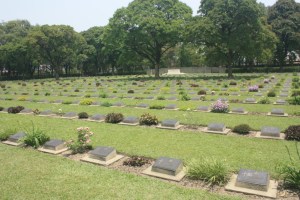
5.) In Flanders Fields by John McCrae
excerpt [2nd stanza]:
We are the dead; short days ago
We lived, felt dawn, saw sunset glow,
Loved and were loved, and now we lie
In Flanders fields.
4.) Do Not Go Gentle Into That Good Night by Dylan Thomas
excerpt [1st stanza]:
Do not go gentle into that good night,
Old age should burn and rave at close of day;
Rage, rage against the dying of the light.
3.) Because I could not stop for Death (479) by Emily Dickinson
excerpt [1st stanza]:
Because I could not stop for Death –
He kindly stopped for me –
The Carriage held but just Ourselves –
And Immortality.
2.) To the Virgins, to Make Much of Time by Robert Herrick
excerpt [2nd stanza]:
The glorious lamp of heaven, the sun,
The higher he’s a getting,
The sooner will his race be run,
The nearer he’s to setting.
1.) Do Not Stand At My Grave and Weep by Mary Elizabeth Frye [authorship disputed]
excerpt [opening lines]:
Do not stand at my grave and weep.
I am not there. I do not sleep.
I am a thousand winds that blow.
I am the diamond glints on snow…
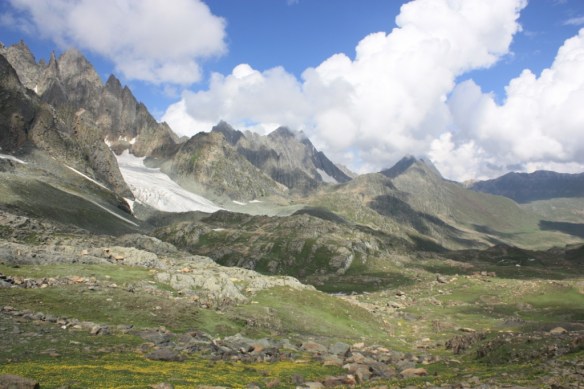
Taken in Kashmir in August of 2016 on the Great Lakes Trek between Naranag and Sonamarg

one never, ever, crests a rise
without killing off a pack of lies
the ugly lie: it’s all descent
belied by cold, granite torment
the pretty lie: continued gloom
skewered by rhododendrons in full bloom

Taken in June of 2015 on the Shimla – Kalka Toy Train

station editorial comments

passing engine

open air

postal elephant

a curious passenger

reminded me of the aqueducts
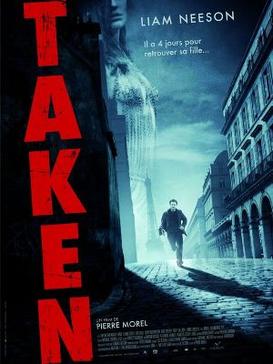 He fancied himself a Bryan Mills
as played by Liam Neeson in “Taken”
…
only the Bizarro World version.
For he had no particular set of skills
[least-wise not as applicable to his situation]
&
instead of having had a child taken
he’d had one foisted upon him.
While this didn’t fill his every waking moment with violence
in a fight to recover the child
it did fill them all with chaos and occasional contusions
in the struggle to flee the bedlam.
And so, in that sense, they were practically twins.

Taken in Hanoi in December of 2015


