Unknown's avatar

About B Gourley

Bernie Gourley is a writer living in Bangalore, India. His poetry collection, Poems of the Introverted Yogi is now available on Amazon. He teaches yoga, with a specialization in pranayama, and holds a RYT500 certification. For most of his adult life, he practiced martial arts, including: Kobudo, Muay Thai, Kalaripayattu, and Taiji. He is a world traveler, having visited more than 40 countries around the globe.

To What Degree Can Yoga Be Whatever One Needs It to Be?

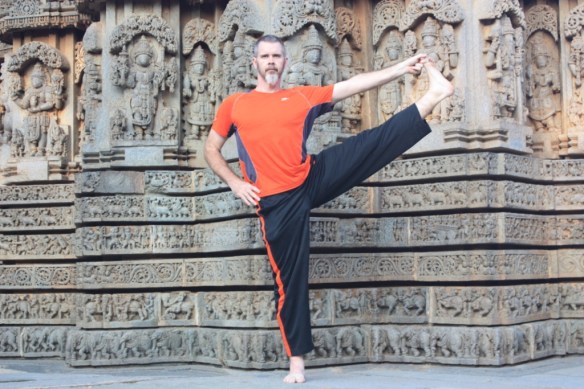
Chennakesava Temple, Somanathapura


To what degree can yoga practice be whatever one needs it to be?


If one is expecting the definitive answer to this question, one won’t find it here. While I’ll share my views, I’d love to get some comments, because shared wisdom may help myself and others to hone in on a more coherent answer.


There is a continuum of views on this question.  On one hand, there are people who have very rigid notions of what a yoga practice can (or should) consist of. “Everyday, one should do precisely x repetitions of Surya Namaskara (Sun Salutations), y repetitions of nadi shodhana (alternate nostril breathing), z repetitions …, and every full moon one should do…, and every six months one should do… shatkarma, etc.” In some circles, this rigidity may extend to what deity one worships, the nature of one’s personal philosophy, what one should eat, how one should dress, and how vigorous one’s practice should or shouldn’t be.


Near the rigid end of the spectrum are those who rail against drawing secular and / or culturally-neutral elements from yoga, and / or engaging in a revision of yogic culture. [Cultural revision, in this case, referring to a shift from the traditional culture which is Indo-centric to a more Westernized approach (e.g. this may be seen in different modes of teaching and / or in interaction between students and teachers.) I’m afraid this may remain unclear to anyone who hasn’t spent time in both: a. a traditional yoga ashram / shala; and b. a Western-style yoga studio. To those who have, it’s likely apparent that these two places each have a culture that may share elements (especially superficial one’s like symbology, etc.), but which aren’t identical.] The recent controversy generated by a paper by a Michigan State University professor, Shreena Gandhi, who suggested that Americans practicing yoga were engaging in a kind of white supremacy is a case in point.


I find myself rejecting the aforementioned extreme for a number of reasons. First, if yoga practice should be one thing, how come there are so many different “one things” that it should be? If one set was objectively superior, one would expect it to come to dominate, but we don’t see that. Secondly, it fails to acknowledge the wide variety of varied needs. There can even be logical inconsistencies embedded in these rigidities. For example, if one says that a practitioner should do 15 rounds of Surya Namaskara per day, and, also, that they shouldn’t increase the rapidity of breathing by much, then one is limiting the base of students. Some students simply can’t do 15 rounds in a session, while for others it’s an inadequate warm-up because it doesn’t tax their system in the slightest. Thirdly, while I’m not a Sanskrit scholar, from what I’ve been taught, the early writings don’t suggest the kind of doctrinaire approaches to yoga one sees today. One can see in Patanjali’s Yoga Sutras a sparse and vague set of dictums that aren’t consistent with the idea that one needs to accept and embrace any and all of the trappings that have come along in the past few thousand years.


Now it might seem that I’m at the footloose and fancy free end of the spectrum. But  I’m afraid that I cringe too hard every time I see a story about “ice cream yoga.” (Or fill in the quote marks with whatever the mashup-du-jour consisting of an activity that some individual finds nifty, and, therefore, assumes will pair excellently with yoga.) At the far end of the spectrum are people who think one can engage in any activity (or set of activities) and label it yoga, and it is yoga. I don’t think I can quite get on that bandwagon either. While I don’t offer my support to the people who have very fixed and limited views of what yoga is, I can empathize with them at times. These include: 1. the person who has the Om symbol emblazoned over 80% of their wardrobe [or — more astoundingly — has it tattooed on his body] but who thinks it translates to “namaste,” “yoga,” or to any other mistranslation. 2. the practitioner who believes the ultimate question of the universe is which print of Lululemon captures her spirit animal, or, 3. the individual who thinks the sports bra and yoga pants she wears for practice seems like reasonable attire in which to visit a Hindu (or virtually  any other) temple.
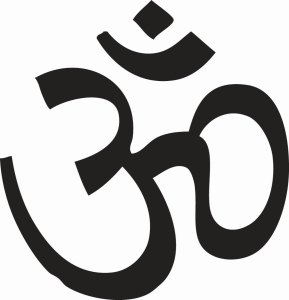
“Om,” not “namaste” etc,


This leaves me somewhere in the middle on the issue. The single question I would ask to determine whether something is a yoga practice or not, is:

Is one working towards quelling the turbulence in one’s mind by dispassionately observing one’s body, breath, and / or mind?


This probably seems like an insane criteria because if one is doing the Gerbil Yoga version of setu bandasana (back bridge while devoting one’s attention to petting a rodent) then one isn’t actually doing yoga. However, if one is sitting at a bus stop watching the air go in and out of one’s nose and adjusting the pace of said flow, then one is doing yoga. Crazy, right? A back bridge is much more yoga-esque than sitting at a bus stop apparently doing nothing. Don’t even get me started on how one could be in a yoga studio doing a perfectly traditional yogasana like ardha chandrasana while your mind is in an internal monologue — i.e.  rant — about how miserable one is in the and how one can’t wait to hit the bar after class, and you’re not really doing yoga. On the other hand, one could be being screamed at by one’s boss in the office while watching the emotional turmoil bubble up, and one would be doing yoga. Crazy as it may sound, it’s the best I’ve been able to figure.


Let me know where you fall on the question.

DAILY PHOTO: Dashashwamedh Ghat from the Ganga

Taken in October of 2015 in Varanasi (Benares)


POEM: Orange Hour

A golden streak of light,

glowing off the Ganga

like the opening scene

of a fury-destined manga.


The silent, gliding boats

give way to bells and horns

as sadhus leave the ghats

with the fading of the morn.


Gone the floating lamps and flowers,

so ends that magic orange hour.

DAILY PHOTO: Two Sculptures, Sir JJ School of Art

Taken in June of 2018 in Mumbai


DAILY PHOTO: Elephanta Macaques

Hanging out on a bobbing branch


Perplexed on a fence-post


Ear investigation


Flea check; Taken June 30, 2018 on Elephanta Island

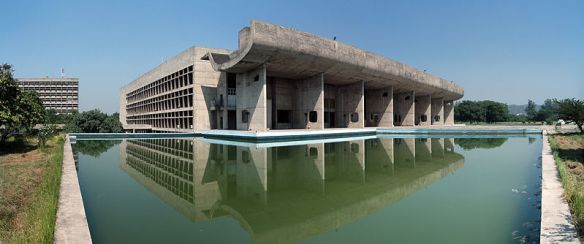
POEM: Le Corbusier’s Chandigarh

Assembly Building, Chandigarh; Source: Duncid (via Wikipedia)


The best “futuristic” can aspire to is to become retro-chic —
like the ship sets from the 60’s Star Trek.

Yet, we can’t help but try to capture tomorrow, today —
only to create today’s vision of tomorrow’s dystopia.

If Asimov wrote about a man who finished his work at a typewriter
only to catch a trans-galactic shuttle —
what hope could Le Corbusier have of finding the future?

Le Corbusier’s Chandigarh features elegant, broad boulevards —
running straight, intersected only by other broad boulevards.

Perhaps, the future has arrived:
Where else in urban India can one drive a mile
without rounding a corner to stop for livestock, playing children, or a parked truck.
One can cross Chandigarh in twelve minutes flat.
Crossing Bengaluru requires four hours,
non-inclusive of stops for gas and a hardy biryani.

But that massive tic-tac-toe grid is built
of neighborhoods constrained inside block walls.
As one speeds through town, with nary a car in sight, one wonders
where is the life?
is this still India?
have I slipped through a trans-galactic teleportation portal?

Perhaps, the future has arrived:
Where else in urban India can one see:
battleship gray unadorned by marigolds or ochre
and wonder where the windows of the future went
and whether people of the future
ever idly peer off out toward the horizon?

POEM: Fallen Fence

rotten post, baked dry
strands of barbed wire
in stiff helices
part submerged in sand
part twisting over it
like a sandworm of Dune

if it’s true that,
“good fences make good neighbors”
then
this fence makes for crotchety neighbors
who’ve given up on life

DAILY PHOTO: Haji Ali Dargah, Mumbai

Taken on July 1, 2018 in Mumbai


DAILY PHOTO: Elephanta

Trimurti, a 3-headed Shiva; considered the masterpiece of the Elephanta Caves — at least since the titular elephant sculpture was moved to a Mumbai museum


Cave entrance


Taken on June 31, 2018 on Elephanta Island

5 Things to Which My Introverted Self Has Been Oblivious

5.) In the absence of information, people write their own stories, and everyone gives himself the leading role in his own story.

Therefore, sitting in the corner, minding one’s own business, deep in introspection, may balloon into: “He’s giving me the silent treatment. I bet he hates me and wishes I would die.”


4.) Quietness may be interpreted as arrogance.

I was told this by a teacher in Middle School, but — at that stage in my life — that seemed an impossibility. In those days, I was self-conscious about being introverted — and I was shy, to boot. (That’s not redundant. If you think it is, I’d recommend Susan Cain’s Quiet)  Because I felt that I so blatantly lacked confidence, it seemed hard to imagine that someone would misinterpret my quietness as being over-confident and / or narcissistic. How could it not be obvious that I lacked the confidence to be arrogant, but people see a lot less than one (or they) might think they do.


3.) Miss eye contact, miss a lot.

It’s not just that one misses non-verbal communication, it’s that it might be assumed that you caught a signal when you didn’t.


2.) When you are in deep introspection, you may have total inattentional blindness, but others may not recognize that. 

You may be familiar with inattentional blindness from the gorilla – basketball pass video. It’s the fact that we can’t mentally multitask, no matter how much we might think we can. If our attention is given over to one task we may miss even the blatantly obvious. Most people don’t think this is the case, and it doesn’t feel that way. That’s because we are usually quite good as bouncing our attention between different events and stimuli. (Though never without a degradation of performance.) However, if you’re entranced in introspection, you may look like you’re giving the evil eye to the angry hoodlum at the bar, or that you’re seeing the projectile flying at your face, but maybe not.


1.) If one doesn’t outwardly express emotions, some people may not realize that you have them. 

It seems self-evident that everybody experiences fear, anger, or sadness on occasion. Some more frequently. Some less. Some wear emotions on their sleeves, some hold their cards close to the chest, and every point in between. Part of the problem is that our intuitive understanding of what it looks like to be without emotion is flawed. As is discussed in Antonio Damasio’s book Decartes’ Error, a true lack of emotion (as seen in those with damage to parts of the brain involved in emoting) may look like the inability to make a decision (i.e. paralysis by analysis,) rather than our traditional notion of Star Trek’s Spock — a perfectly rational decision maker who can’t be insulted and doesn’t get sarcasm.