Taken in October of 2019 in Tamil Nadu.



A girl pressed her palms against her eye sockets.
Was she trying to keep her eyeballs from popping out?
Or was she trying to make sure something didn’t get into her eye?
If it was the latter, I don’t think it was matter she sought to keep out–
not grit, acid, iron filings, or any of the other nasties that get in an eye.
No. She was making a light-tight seal.
So, she was really trying to keep something out of her brain.
Light is just light.
It takes a brain to dance photons into a horror story.


Taken on November 2, 2019 at Antharagange Hill, near Kolar
Every scream is special.
There’s no such thing as
-a mundane scream
-a work-a-day scream
-a milquetoast scream.
Some things are like that.
Other things must prove themselves special
at every turn,
and against all odds.
Let me try to sell you on the exceptionality of two particular slices of toast.
Even if they are golden-brown perfection,
Even if they are crisp, but not desiccated,
Even if they are still warm enough to melt butter.
It is still just toast.
And, I wonder how much of mastering life comes down to the ability to
find a scream ordinary
&
taste olympian toast.
 The Science of Meditation: How to Change Your Brain, Mind and Body by Daniel Goleman
My rating: 5 of 5 stars
This book has been sold under the title listed above as well as the less prosaic title, “Altered Traits.” The switch may represent a lack of confidence that the coined term “altered traits” would catch on, and / or a desire to market the book as broadly as possible.
“Altered Traits” is a play on the more well-known term “altered states [of consciousness.]” The idea being that meditation (as well as many other activities from consuming psychoactive drugs to having a shamanistic drum rave) create a change from the ordinary waking state of consciousness, but what the authors wanted to focus more upon is the long-term and sustained changes that result from extended meditation practice. (Hence, coining the term “altered traits.”) These sustained changes are a prevalent theme through out the book. This makes sense as one of the co-authors, Richard Davidson, is well-known for investigating the brains and brain activity of monks and yogis with extremely advanced practices (tens of thousands of hours in meditation.) Still, the prosaic title, “The Science of Meditation,” may make more than marketing sense because the book does discuss the scientific research on meditation pretty broadly.
Both Goleman and Davidson are long time meditators as well as being subject matter experts in psychology and brain science. This is a major strength of the book. Some scientists are dismissive of practices that have origins in spiritual practices and have blindsides or are prone to oversimplifications because of that bias. On the other hand, that bias isn’t helped by the fact that meditation experts often oversell meditation as a practice that will do everything from spontaneously cure your cancer to allow you to levitate six feet in the air. The authors of this book aren’t afraid to call out such spurious claims, but aren’t dismissive of practices of religious or spiritual origin. The authors also spend a fair amount of time criticizing past scientific investigations of meditation (including their own) on the basis of naivete about the nature of the practices. A major problem has always been an “apples and oranges” grouping together of practices that are different in potentially important ways. There have also been all the problems that plague other disciplines as well (small sample size, poor methodology, etc.) These discussions won’t mean much to most readers, but are helpful to those who want a better idea which studies are gold standard and which are weak. That said, the book doesn’t get bogged down in technical issues.
The book opens by laying out some of the important differences between various meditation practices and trying to educate readers who may either not know much about meditation or may know it only from the perspective of a single discipline. Goleman and Davidson suggest one way of thinking about different kinds of meditation is in terms of “the deep and the wide.” The former being sectarian practitioners who practice specific ritualized practices in an intense way. The latter being more secular practitioners whose practices may borrow from different domains. They present a more extensive classification scheme than this simple bifurcation, making it more of a continuum. Later in the book, they consider ways in which practices might be categorized (e.g. Attentional, Constructive, and Deconstructive) but it’s emphasized that there isn’t currently an agreed upon schema.
Throughout the book, one gets stories of the authors experience in investigating this subject. This included trying to get monks to allow themselves to be studied, even with a letter from the Dalai Lama. It also covers the challenge of trying to build interest in the subject in an academic setting that once thought of meditation as little more than voodoo.
The middle portion of the book has a number of chapters that address particular types of practices and the specific effects they have (and haven’t) been found to have. These include developing a more compassionate outlook and behavior (ch. 6), improved attention (ch. 7), negation of pain and physical ailments (ch. 8 & 9), and meditation / mindfulness as part of a psychotherapeutic approach. The authors repeatedly point out that these practices were never intended for the purpose of treating ailments (mental or physical,) though they do seem to show benefits in a number of domains outside of what the spiritual seekers who brought them to prominence intended of them.
The chapters toward the book’s end focus heavily on investigations into advanced meditators, and the altered traits and brain changes seen in them.
There are few graphics in the book, but it’s annotated and has an “additional resources” section in the back.
I’d highly recommend this book. The authors’ mixed background gives them a good vantage point to provide an overview of the subject, and also allows them to tap into stories of their experiences which make the book more interesting than it otherwise would be.
 Twelfth Night by William Shakespeare
My rating: 5 of 5 stars
The story of “Twelfth Night” (a.k.a. “What You Will”) revolves around several men in the city of Illyria vying for the hand of Olivia, a woman both lovely and wealthy. The problem is Olivia is in the dumps, having lost both her father and her brother (which explains how she ends up head of such prestigious household, given the times.) The only thing that brings her out of her sullen state is her affection for a new arrival to the city named Cesario. The problem is that Cesario is not interested because he is secretly a she – the cross-dressing Viola. This tale might have been counted among the tragedies were it not for the fact that Viola’s brother Sebastian shows up on the scene. Since Sebastion is the spitting image of the cross-dressed Viola (i.e. Cesario) and bears other common traits of sibling experience, Olivia transfers her affections without even realizing it. [Viola and Sebastian had both been laboring under the impression that the other is dead.]
In “Twelfth Night” one sees the plot device of mistaken identity from “Comedy of Errors” replayed in a way that is a bit less believable, though in a sense riper with comedic potential. I say this because while it might be possible to imagine two siblings being confused even (if they are of different gender), when the confusion begins (upon Sebastian’s arrival) we find that he is anything but the boyish character we expected given Cesario, granted the difference between the clever but wimpy Viola and the brave and cocksure Sebastion makes for levity. Notably when Sebastian lays out Sir Andrew Aguecheek with the utmost ease. Granted Aguecheek is a Don Qixote-esque character, though perhaps with incompetence owing more to alcoholism than an addled mind (though his mind may be addled as well as pickled.) Of course, there is the love-triangle plot device common in Shakespearean comedies, though “triangle” seems an inadequate geometry.
I’m a bit fonder of “Comedy of Errors” than “Twelfth Night.” I think more is done with the identity confusion in that one, as well as it having some great lines (many delivered by the Dromios.) That said, “Twelfth Night” has its funny moments, particularly involving the two plotting drunks, Sir Toby Belch (kinsman to Olivia) and Sir Andrew Aguecheek (the aforementioned Quixote-esque knight.)
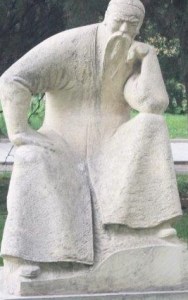 Like it or not, life makes philosophers of us all. You may hate philosophy, but you can’t escape it. You can — as many people do — outsource how you answer these questions, but that still requires a decision.
5.) How do I know a thing is true? Sometimes the answer is self-evident, but, more often then people acknowledge, it’s not. This is exacerbated by the confusion of subjective truth (a personal “truth”) with objective truth (the universally true.)
Some people relinquish decision to an authority — be it a teacher, a scripture, or the scientific consensus. Some people only believe what said person’s personal experience tells them.
There is a related question of how tightly should one hold onto whatever beliefs one acts as if are true. The scientific approach suggests one should be ready to abandon something one believes is true in light of new information (assuming the new information is sound and can be validated.) Religions tend to prefer that the truths that have been handed down should be grasped firmly no matter what one sees, hears, or learns. One’s philosophical stance may take either approach, or one in between.
4.) [Who] am I? As the brackets suggest, this is actually two questions. The full question, “Who am I?” presumes that there is a self (an I.) Some philosophies, e.g. Buddhism, reject this presumption, hence the more fundamental question of “Is there an I?”
3.) What constitutes a virtuous or moral life? Of course, some philosophies would reject the ingrained presumption that one should care, but that’s a fringe position. Maybe the more general question of “What constitutes a good life?” is a better one.
2.) What does it mean for something to be real? Some will say, “Come on. I know what’s real. I don’t need to philosophize about that?” Really? Because the best minds in the world are constantly debating this and have reached no consensus on the subject. It’s certainly possible to get through life behaving as though reality is “x,” whether or not “x” turns out to be true. But that’s very different from knowing what is true.
1.) Is there free will, and — if so — in what sense? It feels like we have complete free will, but there are a couple of grounds on which this has been questioned. For the religious, reconciling an omnipotent god and free will takes some mental gymnastics. (If one can act completely freely, how can a god also?)
But more recently, free will has been challenged by science as well. Benjamin Libet’s work showed that “decisions” take place before people become conscious of them, and — therefore — aren’t decisions in the sense we usually understand that word (i.e. the product of conscious deliberation.) Of course, while some have argued that the repeated validation of Libet’s work shows free will is purely an illusion, there remain many who argue there are still possible ways in which some form of free will exists. (Including, apparently, Libet who believed we at least have “free won’t” even if we don’t have free will — i.e. we can consciously veto deterministic “decisions.”)
Best of luck picking — or building — your own life philosophy.