
Taken in Singapore in October of 2016.


Taken in Singapore in October of 2016.
 I
her form,
perched at the water’s edge,
took the shape of a treble clef
and all the notes that followed,
my heart did sing
II
there’s a gravity that grows
between two orbiting souls,
waiting to be nudged into unity
III
not all silenced voices produce loneliness
one voice, silenced, opens infinite connections

See what I did there?

Taken on July 3, 2020 at Chennagiri Hills
 King Lear by William Shakespeare
My rating: 5 of 5 stars
This is the tale of virtuous children, wronged, who nevertheless do the right thing when the time for filial piety is at hand. This play combines two such tales.
The main story involves King Lear pitting his three daughters against each other in a competition to see which daughter will describe her love for him in the most glowing and grandiose terms. When his eldest two daughters (Goneril and Regan) engage in fawning and over-the-top bootlicking while his youngest daughter (Cordelia) will only say that she loves him like a daughter should love her father, Lear becomes enraged with his youngest. While he’d intended a roughly even three-way split of dowry awards between his daughters, he changes his mind and divides Cordelia’s share between the other two. Even when Kent, a nobleman and the King’s right-hand man, begs the King to reconsider (because Kent can see that the older daughters are all talk and no love,) Lear banishes Kent. Not surprisingly, when Lear is later in need, the two toady daughters are less than helpful – turning him out into a wild storm, in fact. A French prince agrees to marry Cordelia even without the dowry because he, like Kent, can see that she is the cream of the crop as far as Lear’s daughters are concerned. As Queen, Cordelia is later in a position to come to help her father in his hour of need. Kent, like Cordelia, maintains loyalty even after being spurned by the King. Kent takes a disguise to continue his service to the King.
The subplot involves another loyal nobleman, Gloucester, who has two sons – a legitimate one named Edgar and a bastard named Edmund. Edmund, like Iago in “Othello,” cleverly goes about poisoning the relationship between Gloucester and Edgar, resulting in Edgar fleeing and adopting the disguise of a peasant. After Edmund’s ambitious plotting becomes known to Gloucester, the nobleman (now blinded for being loyal to Lear in opposition to Goneril and Regan) meets Edgar on his way to Dover. Because of Edgar’s adoption of a crude and common manner of speech and the fact that Gloucester is blind, the father doesn’t recognize his son. A disguised Edgar agrees to lead Gloucester to the chalky cliffs of Dover where the father can suicide plummet to his death. Edgar, however, doesn’t lead him to his death, and along the way learns that Gloucester is remorseful and wishes good things for Edgar.
This is a cautionary tale about our inability to recognize virtue and vice, and the tendency to read the signs wrong. About valuing pretty words over devoted action. Both Lear and Gloucester wrong a soft-talking child while failing to recognize that ambition, not love, motivates the cheap words of each man’s other child(ren.) Definitely, a must-read.
 The Neil Gaiman Library Volume 2 by Neil Gaiman
My rating: 5 of 5 stars
Out: November 24, 2020
This is a graphic novelization of several pieces of Neil Gaiman’s short fiction. The component works are all speculative fiction (i.e. taking place where the fantastical is possible,) and – more specifically – most would be classed urban fantasy — though there is a touch of horror.
The book contains four parts, and could be thought of as four stories. However, the first chapter, “Likely Stories,” is actually a collection of tales connected by being told in the same private after-hours club. So, the connective tissue is bar patrons trying to one-up each other with more intriguing stories. The pieces included are: “Feeders and Eaters” (the entry most likely to be classified as horror,) “Looking for a Girl,” and “Closing Time.”
The second story is “Troll Bridge,” and it shows a man’s repeated encounters with a troll who exists in the pedestrian tunnel under an abandoned rail line. These meetings begin when the protagonist is a young boy and continue until he’s middle-aged.
The penultimate story is entitled “Harlequin Valentine,” and it’s about an amorous Harlequin who develops an infatuation with a young woman and begins to stalk her. When he gives her his heart, it doesn’t go as expected.
The final story is “The Facts in the Case of the Disappearance of Miss Finch.” When a writer is roped into a double date in which his date is a dowdy and humorless scholar, the night that had been a train of misery ends in a mind-blowing (if disconcerting) fashion.
This was an excellent read. While it’s a second volume, because it’s short fiction, the book is completely self-contained. One doesn’t need to read the first volume beforehand to follow these tales. Each of the stories is satisfying in itself. I’d read at least one of these stories previously (possibly more) but it didn’t feel redundant because the conversion of the textual stories to graphic ones gives each an entirely different feel. The art is clear and the various styles match the tone of the respective stories nicely. If you like Neil Gaiman’s work, you should definitely check this one out. [And if you’re unfamiliar with Gaiman, I’d recommend you get familiar.]

Taken in the summer of 2011 in the Őrség [Hungary.]

I’ll not weep in, this, the Devil’s hour.
I might not laugh, but I won’t be dour.
The blur of winged fury sweeps above.
Each thinks of his first and last love,
wondering which of these memories
his dying mind will last see.
Whichever it is, I’ll not be dour,
though this be the devil’s hour.
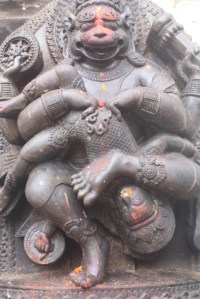 The Truthlands are chartless and vast.
I crave understanding.
I’ve tripped through time on jagged lines
in search of mind-expanding.
I’m like a dog in hot pursuit,
both seeking to sink teeth,
and terrified that I’ll be tossed
and die ground underneath.
I’m chasing down a map to Truth,
but it’s the search I seek.
I’m not discouraged that my chance
is little more than bleak.
[In truth, I’m proud to have had such
a winning losing streak.]
 when time died
we were frozen
— blocks of inaction
no one would ever know
no light traveled to eyes
no vibrating air entered ears
no bioelectricity zipped down neurons
no cells broke down and died
no memories were formed
no tick-tock of clocks
no clip-clop of hooves
nothing moved or witnessed
everything did nothing
&
never was everywhere
the day time died


