Unknown's avatar

About B Gourley

Bernie Gourley is a writer living in Bangalore, India. His poetry collection, Poems of the Introverted Yogi is now available on Amazon. He teaches yoga, with a specialization in pranayama, and holds a RYT500 certification. For most of his adult life, he practiced martial arts, including: Kobudo, Muay Thai, Kalaripayattu, and Taiji. He is a world traveler, having visited more than 40 countries around the globe.

BOOK REVIEW: Bones of the Master by George Crane

Bones of the Master: A Journey to Secret MongoliaBones of the Master: A Journey to Secret Mongolia by George Crane

My rating: 4 of 5 stars

I’m a sucker for a tale of the sage next door. In an unwise world, it’s nice to believe that the wise exist, and that they walk among us. That they are not relegated to secluded retreats, but live in suburban subdivisions. In Bones of the Master a quirky Asian man drops in on his neighbor. The neighbor turns out to be the author of this book, poet George Crane. The visitor is Tsung Tsai, a Cha’an monk who trekked from Inner Mongolia to Hong Kong in 1959 in order to ensure the teachings of his monastery would survive.

The two men strike up a friendship, collaborating on poetry translation and eventually making a journey together back to Tsung Tsai’s home. The first part of the book tells of their meeting and describes Tsung Tsai’s 1959 journey to freedom. The second part deals with the two men’s mid-1990’s return trip. The monk’s ambitious plan is to find the bones of his master, cremate them, and relocate them in accord with the dictates of his religious tradition. He also wants to rebuild the temple that was razed by the Red Guard during the cultural revolution. As this is nonfiction, it’s not all happy endings. Not everything works out as they’d like it to. A brief third part tells of their return to the states with an interesting stopover in Hong Kong.

Much of the appeal of the book stems from how the monk’s worldview rubs off on the author. The monk assumes matter-of-factly that they will be able to sell the book for a sufficient advance to pay for the trip and a monument to his teacher. As one can imagine– particularly anyone who knows a bit about publishing– Crane is suitably skeptical, but ultimately buys into the plan. The monk often tells Crane that he worries too much. However, most of us would worry about these daunting challenges. For example, how to get a one ton statue from New York to Inner Mongolia, or–more importantly–whether the aged and ailing monk will be able to complete the trip alive.

There are tidbits of insight as well as poetry scattered throughout the book.

View all my reviews

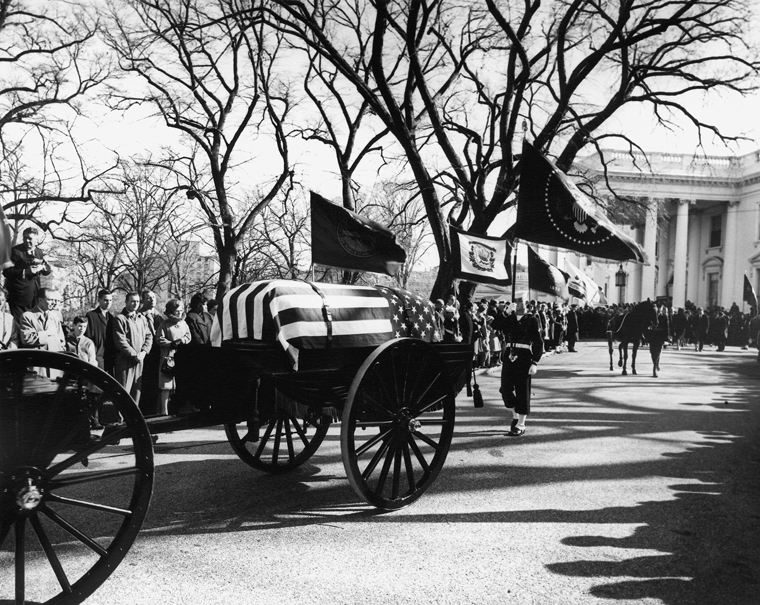
Our Most Beloved and Most Deadest of Presidents

Source: Kennedy Library

Source: Kennedy Library

Presidents live the ultimate catch-22, the only way to reliably boost their approval ratings is to shuffle off this mortal coil (i.e.become worm food.)  The more decomposed a president, the more fond our remembrances of him. The worst thing that anyone ever says about a long dead president is nothing at all. When was the last time you heard a scathing character impeachment of Millard Fillmore? (I do realize that a person with the supreme narcissism needed to be president may find silence more insufferable than being called the son of a syphilitic donkey whore.)

(Quick, without looking, name a president from the 19th century other than Jefferson or Lincoln [or Fillmore]?) FYI- there were 23 or 24 of them. If you drank your entire cup of coffee before you could come up with one of the other twenty names, congratulations you are a typical American– or an exceptional non-American.

I first noticed this phenomena when watching the Reagan funeral. Everyone from all walks of life had great things to say about our 40th president on that day. However, while I was still a minor at the time, I distinctly remember half of the country loathing the man spectacularly and engaging in ad hominem attacks against him at any opportunity. Well there was one period during which no one was saying horrible things about Reagan’s character and that was  during the brief period after the assassination attempt when his opponents thought he might die — at which point they went into dead presidents mode. Had Reagan passed away at the hands of John Hinckley, he would’ve achieved a level of freedom from being crapped upon usually reserved for a our first few (long decomposed) presidents.

Still, Reagan has achieved the broadly beloved status of being the Democrat’s “In-your-face President” just like Kennedy serves in that role for Republicans. An “In-your-face President” is one that political parties use to attempt to show that their current opposition is on the lunatic fringe by indicating that that iconic leader supported something vaguely, roughly approximal in a similar sort of way to what they are trying to do in the present day. These statements being followed by a silent, but understood, “IN YO’ FACE.”

I’m sure that when Carter dies, equally lovely things will be said about him — though never has a bigger train wreck of state been seen then the term of James Earl Carter. To be fair, some of the wheels that rolled off the RV-of-state were not his fault, but we  give all the credit and all the blame to the president. Why do you think Clinton is always grinning like he just had sex? No, it’s not because he just had sex– though he did (the speaking circuit is like fishing with dynamite), it’s because he reigned over the big bubbly part of the bubble. When we were rich because we thought we had a lot of valuable stuff, before anyone bothered to look inside and see what we had was rotten at the core.

Admittedly, Nixon’s demise did challenge everybody’s ability to grin and say nice things.  Comments were made such as, “That Checkers was a good boy, such a good boy, yes he WAS… YES he WAS. Oh yeah, and how about that China thing, that was a real work of diplomacy.”  (Checkers was one of Nixon’s dogs, made famous by a Vice Presidential speech of the same name.) The word “China” was used at Nixon’s funeral more than it was used at the Chinese Conference on China in Beijing, China. Of course, there wasn’t much nice to say about Nixon. Democrats can’t even take advantage of the fact that the Environmental Protection Agency (EPA) was a Nixon Administration initiative. Nixon can’t be an “In-your-face President.” It’s too much like slapping your opponent with a bloated dead fish; you may hit them, but you’re going to get the stink on you never-the-less.

BOOK REVIEW: Into the Wild by Jon Krakauer

Into the WildInto the Wild by Jon Krakauer

My rating: 5 of 5 stars

Nature is a harsh teacher. That was the last lesson Chris McCandless ever learned. A recent college graduate, McCandless struck out for the Alaskan wilderness with minimal resources, his body was found by a party of moose-hunters several months after he’d begun his Alaskan adventure.

Into the Wild gives us a well-researched explanation for how McCandless died, but it also tells us a great deal about how he lived– and that story is fascinating in its own right. Many thought McCandless must have been crazy, but refusing to acquiesce to the work-a-day world is often incorrectly diagnosed as insanity.

McCandless had an obsessive desire to find out whether he could make it on his own, not just separate from his parent’s wealth but from all the trappings of modern society. McCandless’s most iconic indicator of insanity-by-way-of-thwarting-convention was when he gave away the entirety of his $25,000 savings account and burnt all the money in his wallet. He wanted to know whether he could survive if he was returned to the state of nature from whence mankind came. Sadly, the answer was no.

It would be easy to dismiss McCandless as a dumb kid who got in over his head. Though he certainly was that. On his deathbed, in a bus carcass in the remote Alaskan wilderness, McCandless likely had a revelation that most teenagers pass into adulthood without ever realizing, that he was mortal.

However, McCandless was more than a kid with an underdeveloped sense of his own mortality. He was a kid with the courage to confront a question that most of us just let nag in the back of our minds. That question being,do we have what it takes to live not as a cog in a machine but as a human in the natural world.

I know many are intrigued by this question in part because there are entire TV channels that are practically devoted to survival shows. Yet most people don’t take it beyond sitting on a couch contemplating whether they could survive. Will thinking man (Homo sapiens) be replaced by doing man (Homo effectus)?

View all my reviews

There was a movie based on this book. I didn’t see it, but here is its trailer.

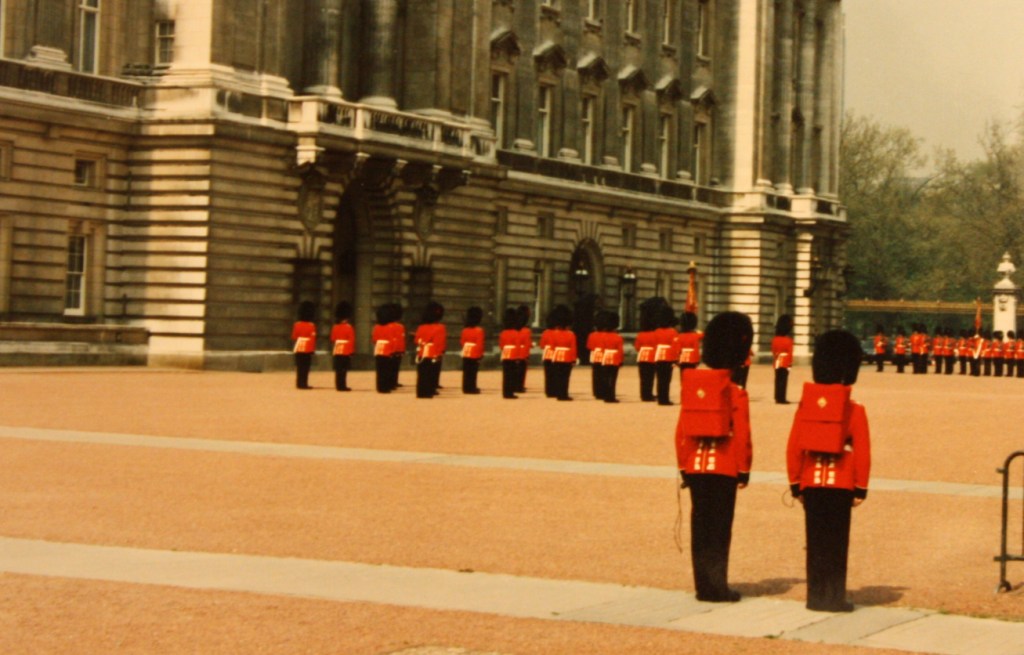
DAILY PHOTO: Buckingham Palace in London, England

Palace Guard

Palace Guard

I took this in 1989 or thereabouts. I think I just stumbled upon the changing of the guard (thankfully this has nothing to do with diapers) ceremony that day. How about those snazzy backpacks?

BOOK REVIEW: Eclipse of the Crescent Moon by Géza Gárdonyi

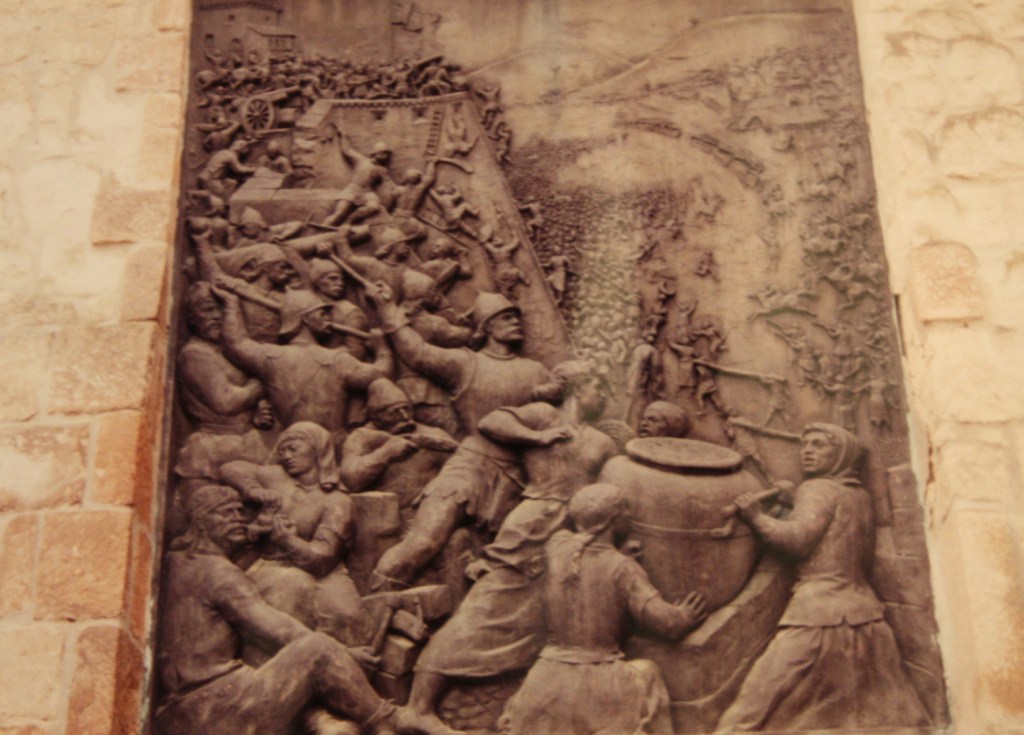
Bas relief of Siege of Eger

Bas relief of Siege of Eger

Eclipse Of The Crescent MoonEclipse Of The Crescent Moon by Géza Gárdonyi

My rating: 4 of 5 stars

This book is the English translation of a volume originally written in Hungarian and titled Egri Csillagok, i.e. “Stars of Eger.”

Historical fiction works best when the event it’s built around requires no fictitious embellishment to fascinate the reader. Eclipse of the Crescent Moon takes place during the 1552 siege of Eger. During this siege, 2,000 Hungarians held off at least 40,000 Turkish invaders for over one month. (In the book the Turks have a two order of magnitude advantage.) The Turks retreated despite having had superior armaments as well as a massive numeric advantage. It’s the perfect underdog story.

Reading a purely historic account would be interesting enough, but Géza Gárdonyi creates value-added by imbuing his characters with depth, particularly his lead Gergely Bornemissza. There wasn’t much known about Bornemissza. He was a minor character in history compared to Eger’s commander, István Dobó. However, his expertise in explosives did play a role in this Hungarian success story.

The book begins when Bornemissza is a young boy. He and a girl named Éva are captured by a Turk. The couple escapes and manages to free others. They later elope to avert Éva’s arranged marriage. They have a child who is later captured by the same Turk who had captured them.

A major subplot is a trip made to Istanbul in the heart of enemy territory to attempt to aid in the escape of Bornemissza’s  adoptive father.

The book is well translated and an engaging read.

View all my reviews

DAILY PHOTO: Akihabara in Tokyo, Japan

Tokyo's Electronics District

Tokyo’s Electronics District

Akihabara is where one goes to find the latest in high-tech gadgets. I was there in 2008, about exactly 48 hours before the multiple-fatality stabbing spree that darkened the doorstep of this lively consumer district.

If you’re wondering about the girls in the French maid costumes, they weren’t kinky prostitutes. They were giving out free tissue packets with advertising  on them. Why wear such costumes? I have no idea– except that I imagine they sell a lot of what they’re selling to sarariman.

BOOK REVIEW: The Journeys of Socrates by Dan Millman

The Journeys of SocratesThe Journeys of Socrates by Dan Millman

My rating: 4 of 5 stars

The Journeys of Socrates shines the spotlight on Dan Millman’s mysterious teacher from The Way of the Peaceful Warrior. We discover that Socrates was born Sergei in Russia to a Cossack father and a Jewish mother.

His youth is scarred by tragedy. His mother died in labor with him and his father died of alcohol poisoning while Sergei was away at military school. His only remaining relative that we know of, his grandfather, dies. He flees military school to avoid having to harass Jews as a soldier, and in the process he has to battle his arch-rival. He marries into a family, but that brings its own tragedy. His family by marriage are Jews living under false identities at a time when it is very dangerous to be a Russian Jew.

It is after this tragedy that Socrates’ search for warrior skills and revenge drive the narrative. In injecting so much tragedy into his life, Millman makes the main character’s transformation all the more impressive. At every turn, Socrates is faced with events that should fill him with bitterness and hatred, but he must keep going and learn to control his emotions to become the warrior that he wants to be.

He proceeds to train under a warrior trained in the way of Japanese swordsmanship, a man named Razin. Razin only reluctantly accepts him as a student. He then lives at a hermitage, learning to reign in his mind and to respond freely and appropriately to attacks. His teacher at the hermitage, Father Serafim, teaches him to fight, while encouraging him to give up his vendetta. Finally, he travels abroad to train with a convened collection of sages from various traditions (Taoism, Buddhism, Judaism, Christianity,etc.)

Socrates narrative arc is well developed. He is pitted against a powerful enemy named Zakolyev, aka Gregor Stakkos, a military school rival who became an antisemitic Cossack gang leader. Socrates is reluctantly drawn into a final decisive battle with this nemesis, but there is a twist at the end to further complicate that event.

I’ll admit I’ve had mixed feelings about Millman’s work. I was a big fan of the original books Way of the Peaceful Warrior and to a lesser extent Sacred Journey of the Peaceful Warrior. Those books provided great insight into mind-body development in a readable narrative form. However, I later picked up one of his subsequent books and found it to be some sort of numerology/astrology drivel. That was disconcerting not only because it offended my sensibilities as a Cartesian skeptic, but even more so because it seemed to fly in the face of the Peaceful Warrior message– which was one of self-empowerment, not passive acceptance of some randomly bestowed fate.

So I picked The Journeys of Socrates reluctantly. However, I found this book to be the most readable of all. It is written like a novel or the memoir of someone who led the rare novel-shaped life.

View all my reviews

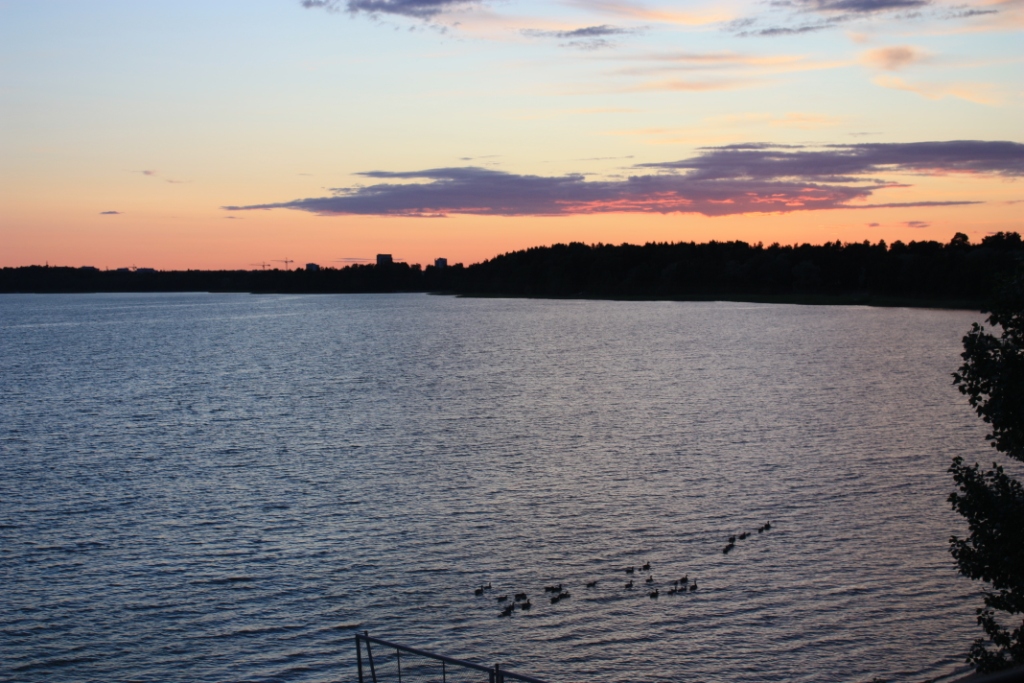
DAILY PHOTO: Gulf of Finland Inlet

Taken from the Hilton Helsinki Kalastajatorppa

Taken from the Hilton Helsinki Kalastajatorppa

In 2011, we made a mid-summer trip to Helsinki. We stayed at the Hilton Helsinki Kalastajatorppa. It’s located northwest of Helsinki proper up the inlet to the city’s west side (not far from Seurasaari Island.)

This photo was taken at probably 1:30am. Vampires beware: I don’t think it ever got fully dark. There was always light on the horizon. Those little black specks on the water are birds whose circadian rhythms were as confused as was mine.

BTW, that hotel has an awesome breakfast buffet that’s included in the room price.  It’ s a little out-of-the-way though.

TODAY’S RANT: Viral Video Advertising

I recently saw this posted on Facebook. I, being a doofus, believed I had stumbled upon the black box recording that would show archaeologists the moment it all went sour for the human race– the dawn of the rise of the apes. As soon as our self-aware brethren learn to take our technology and use it against us, we are surely doomed. Being damned dirty, the apes will own humans. [Participle dangle intended.]

Of course, I felt compelled to do a Snopes check because– believe it or not– sometimes people put things on the internet which are fake. I know, I know, hard to believe.

It turns out the video is a piece of viral advertising for the next Planet of the Apes movie. “Lesser” primate use of technology is still about right here:

Viral advertising is the latest craze. One leaks intriguing footage onto YouTube and doesn’t label it or say what it is.  Then you hope a bunch of schmucks fall for it, and they will– because that’s the defining characteristic of we schmucks. It’s tautological.  This kind of video will stick in one’s mind and get more media attention than would a regular trailer.

The problem is that movie-makers have the ability to make really convincing fakes. (That’s what they do.) My well-read reader will certainly have heard of the Orson Welles War of the Worlds incident. People who didn’t hear the beginning of the broadcast, which was formatted like a news bulletin, freaked out about the alien invasion. Some people jumped out windows (why, I have no idea. I don’t think they thought the value of that through.) Some people fled to Canada (assuming, of course, that the aliens wouldn’t be interested in that icy wasteland.)

My problem with all this isn’t that people are duped; it’s the “boy who cried wolf” effect. One day when we’re under attack by aliens, apes, or artificial intelligence, people are going to be like, “Dude, that’s a really convincing looking ray-gun… NOT!”

BOOK REVIEW: Cat’s Cradle by Kurt Vonnegut

Cat's CradleCat’s Cradle by Kurt Vonnegut

My rating: 5 of 5 stars

Cat’s Cradle is Vonnegut at his most brilliant and witty.

The book follows a writer, John/Jonah, as he does research for a book on the Hiroshima A-bomb. To learn about the (fictitious) inventor of the bomb, the deceased Felix Hoenikker, he interviews  Hoenikker’s children and former supervisor. In the process he becomes entangled in global catastrophe in a way he couldn’t have imagined.

As it turns out, Hoenikker had invented another weapon of mass destruction, one that would make the H-bomb look like a firecracker. However, ice-9, as the weapon was designated, wasn’t intended as a weapon at all. Ice-9 turns all water into ice at temperatures below 114 degrees Fahrenheit. The idea was to make marshes crossable by Marine Corps units. It’s the failure to anticipate the ramifications of using such a chemical, i.e. the hydrologic cycle, that’s the central premise of this book.

A lot of the book deals with a fictitious religion called Bokononism. Bokononism is the cynical faith of the Island of San Lorenzo, and it perfectly reflects Vonnegut’s mildly misanthropic attitudes. The first sentence of the Book of Bokonon says it all, “All of the true things I am about to tell you are shameless lies.”

At the beginning of Cat’s Cradle we find out that John is a Bokononist, but that he’d grown up a Christian. Bokononism is prohibited on the island by the dictator, Papa Manzano. The reader comes to discover that not only is the prohibition a fraud designed to give the religion more sex appeal, but also that Manzano is a practitioner himself. This is just one of the quirky oddities that defines life on San Lorenzo.

It’s when John and all the Hoenikker children are assembled in San Lorenzo that the action really unfolds. Manzano is dying and turns the presidency over to Franklin Hoenikker (the non-midget son of the father of the bomb); Manzano later commits suicide in the oddest imaginable way. Franklin convinces John to take the presidency, but it becomes moot as the book approaches climax.

I’ll leave you with my favorite piece of Bokononist wisdom, “Peculiar travel suggestions are dancing lessons from God.” By the way, you should go to San Felix island off the coast of Chile. [Picked via a spinning globe.]

View all my reviews