
Taken May 18, 2014 in Bangalore


Taken May 18, 2014 in Bangalore
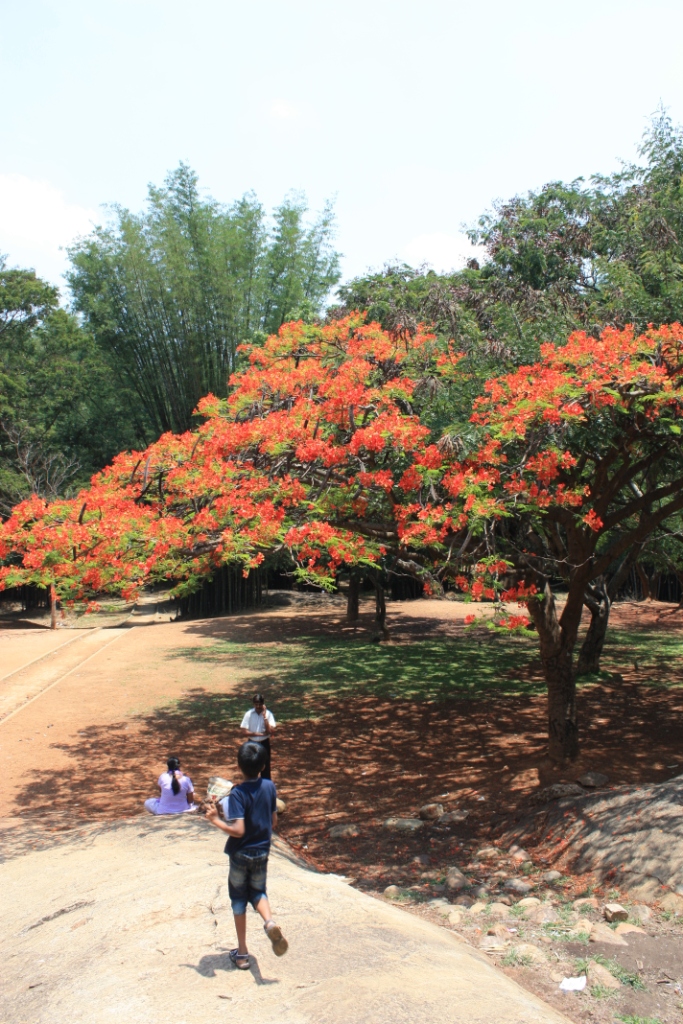
Taken on May 18, 2014 in Cubbon Park, Bangalore.

Taken May 17, 2014 in Bangalore.
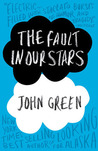 The Fault in Our Stars by John Green
My rating: 5 of 5 stars
The title of this novel about the doomed love affair of two cancer-riddled teens says a great deal, and—while lifted from Shakespeare–it’s well-chosen. The lead character is a sixteen-year-old girl named Hazel who has lungs that, as she puts it, “suck at being lungs.” She meets a boy, Augustus, at support group who is in remission, but who had a leg amputated in the process of achieving his momentary cancer-free status. Hazel takes an immediate liking to the handsome and charismatic Augustus (i.e. “Gus”), but remains standoffish because she is–to use her own words–“a grenade.” Meaning that she is going to die young, leaving her loved ones devastated. She has enough guilt about the fact that she will do this to her parents, but is unwilling to subject Gus to the same fate. Augustus, however, is an ardent and skillful wooer and eventually wears Hazel down with his winning ways and selfless acts.
This isn’t a typical read for me by a long shot. It’s written in the language of YA fiction, and it’s brutally depressing in places. Neither of the aforementioned characteristics usually draw me in. However, despite its sad subject matter, the book has a sense of humor that is essential to keep the story from crushing one’s will to continue reading. Of course, the fact that all the major young characters are dying is a cloud ever-present throughout the book. I will say it’s the most viscerally emotional novel I’ve read in some time. The only books this depressing that I’ve read recently were nonfiction works on Pol Pot era Cambodia and the Holocaust.
The strength of the book is its characters. They may be atypically intelligent, clever, and well-spoken teens, but they are intriguing, likable, and well-developed characters. Besides Hazel and Gus, there is a secondary character named Isaac who has a form of cancer that isn’t highly lethal but which does claim his eyes. Hazel and Gus are in one way polar opposites. Gus, the former star athlete, is ever concerned about his legacy, but the less ambitious Hazel believes that everyone fades into oblivion rapidly. These divergent perspectives of similarly doomed youths give one insight into the varied approaches to experiencing one’s mortality.
Another intriguing character is Peter Van Houten, a one-time American writer living in Amsterdam and the heir to a fortune off which he lives as a professional drunk. Van Houten wrote a single book about a person who dies young, which turns out to be based on his own child and is Hazel’s favorite book. Gus reads the book to please Hazel, but becomes genuinely intrigued with its ambiguous ending. Van Houten is an unpleasant character, but his book is a focal point of the storyline. The couple takes a trip to Amsterdam to try to get answers about the novel’s abrupt ending, and this experience proves to be the pivotal point in their relationship. Van Houten–jackass as he may be–does end up passing on some useful wisdom to Hazel and Gus.
I rate this book highly for being readable, captivating, and gripping. I would recommend it for those who don’t usually read YA, though the language and focus is decidedly geared toward a YA audience.
It should be noted that the film adaptation will come out this summer. For some reason they filmed it in Pittsburgh instead of the story’s real setting—and my one-time home—Indianapolis, Indiana. I’ll try not to hold this against it, too much.
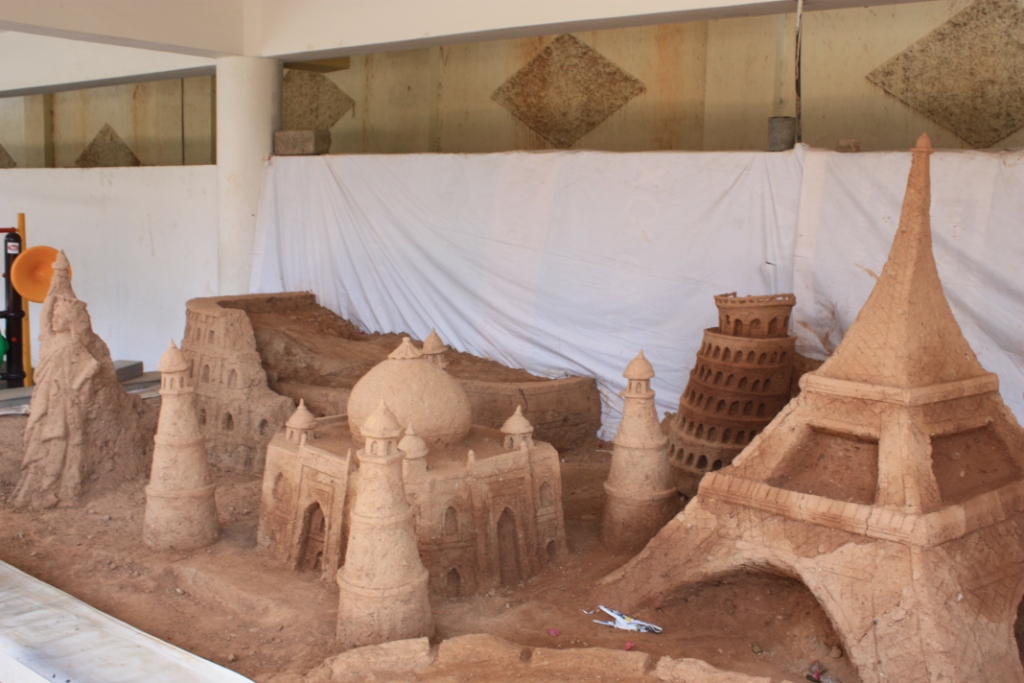
Taken May 18, 2014 at the MG Road Metro Art Station.
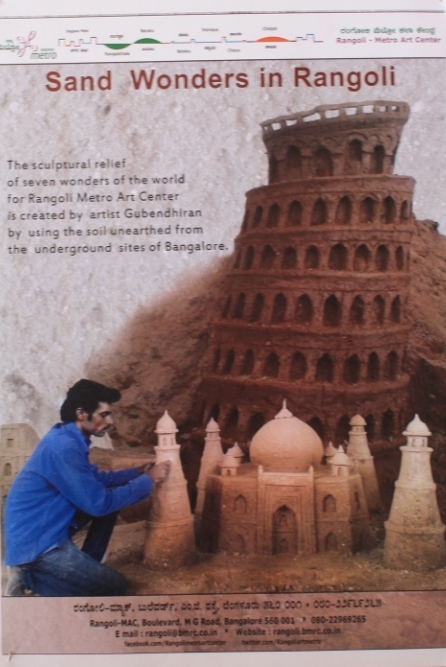
Taken May 18, 2014
I’ve been a delinquent poster as of late. However, I took some photos over the past few days so that I can at least resume my Daily Photo posts. Look for some Book Reviews in the near future and after a week or two I should be up to writing some posts about my adventures in the study of Yoga, Thai Yoga Bodywork (and Tok Sen), and Kalaripayattu.
This was taken at the art station that runs along MG Road between MG Road Station and St. Mark’s Road. This area displays a mix of permanent and temporary exhibits. This exhibit, made out of sand, obviously fits in the latter category. It consisted of seven prominent man-made creations. (While the display poster referred do the seven wonders, some of the depictions were part of the traditional seven wonders–e.g. the Great Wall, Taj Mahal, and the Roman Colosseum, and others were not–e.g. the Eiffel Tower and Statue of Liberty.)
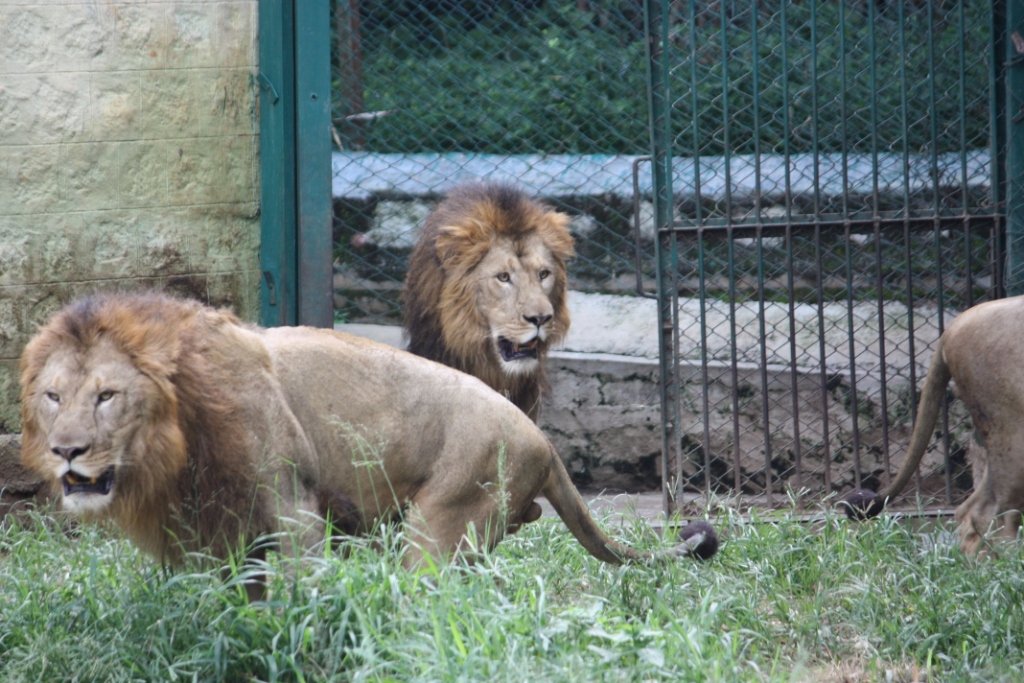
Taken in October of 2013 at Bannerghatta Zoo

Taken in October of 2012 in Bangkok Thailand.
This was taken at the Red Cross Snake Farm in downtown Bangkok.
 The Tao of Bruce Lee: A Martial Arts Memoir by Davis Miller
My rating: 3 of 5 stars
While one expects this to be a biography of Bruce Lee, the first half of it is much more an autobiography of the author that is loosely themed around Bruce Lee’s influence on his life. It’s an unusual book in this regard. However, while my description may induce visions of a dismal read by a self-absorbed author, it’s really not so bad. The latter half of the book is much more tightly focused on the events of Bruce Lee’s life—or, more dramatically, his death.
To be fair, there’s not much material for a Bruce Lee biography. Few lights have shone so bright that, while brief, they provided decades of afterglow. Bruce Lee was just in the news last week as he was made a character in a new MMA video game—over 40 years after his death. (It might seem odd for Bruce Lee to be featured in an MMA game, but while movie Bruce Lee showed us high-flying, high-kicking kung fu, Bruce Lee the founder of Jeet Kune Do emphasized the ability to fight at all ranges, against opponents of any style, and in a pragmatic fashion.) But Bruce Lee the movie star delivered only four completed movies as an adult (though he had a childhood acting career unrelated to Kung fu.) Martial Artist Bruce had only one real fight that anyone knows about and even it remains a subject of great controversy to this day. There are competing claims about who came out on top, to what degree, and how. According to the book, there’s not even much of a sparring record of which to speak.
With the proceeding information in mind, it might not be such a surprise that the author took the tack he did and still produced only the slim volume that he did. Miller’s description of his own life pulls no punches and he spares himself none of the embarrassment incumbent in being a young man seeking to emulate the squealing man with the fists of fury. He doesn’t come across as the narcissist that one might expect from a person who devotes at half of a biography of a global superstar to his own obscure juvenile years. In fact, his profile is of a scrawny kid who got his fair share of wedgies and other bully-induced torments. The autobiographical parts are more homage than self-aggrandizement.
Just as Miller is honest about his own lost pubescence as a scrawny kid, he will win enemies with his frankness about Bruce Lee and those in the gravitational pull of the kung fu superstar. Those who deify Lee will no doubt be displeased to read intimations that he died not on a walk with his wife and from a rare adverse side-effect of a prescription—but non-illicit–drug, and instead died on the bed of a lover from a hash or pot overdose.
Furthermore, Miller tells of how Bruce Lee told his students to stop teaching Jeet Kune Do, because Lee was worried about where it was going. Miller goes on to report about how Bruce Lee’s martial art went awry according to many. Then there is the suggestion that Lee had little first-hand fighting (or sparring) experience on which to build such a combative art in the first place.
However, the overall portrait of Lee is of an exceptional human being, and one who had such a wide range of influence, from fitness to philosophy. While the Bruce Lee physique is now much sought after and regularly seen among movie stars, all the leading men of Lee’s era were doughy by comparison. (One may look no further than his Way of the Dragon nemesis, Chuck Norris.) Lee wasn’t just a movie star and martial artist; he was also a philosopher and thinker. While it’s true that he didn’t produce much in the way of novel ideas, by Hollywood standards he was a regular Algonquin Roundtable member. Lee oozed charisma so powerfully that after all these decades he’s almost as likely to be seen on a T-shirt as Che Guevara—don’t ask me why the Latin American Guerrilla fighter is so popular in silk screen, but that’s beside the point.
To sum it up, this isn’t a book about Bruce Lee, it’s about how his life and death shaped so many other lives—starting with Miller’s. While I didn’t count pages, there seems to be about as much space devoted to the events surrounding Lee’s death as the events of his life. Of course, there’s a bit of sensationalism, but inquiring minds want to know. People are intrigued about how a man who looked to all appearances to be one of the healthiest men on the planet could have died so young. (It’s an interesting irony that Bruce Lee’s almost complete lack of body fat—estimated at under 1%–could well have exacerbated his oversensitivity to whatever substance killed him.)
I’d recommend this book for anyone curious about the life and death of Bruce Lee.
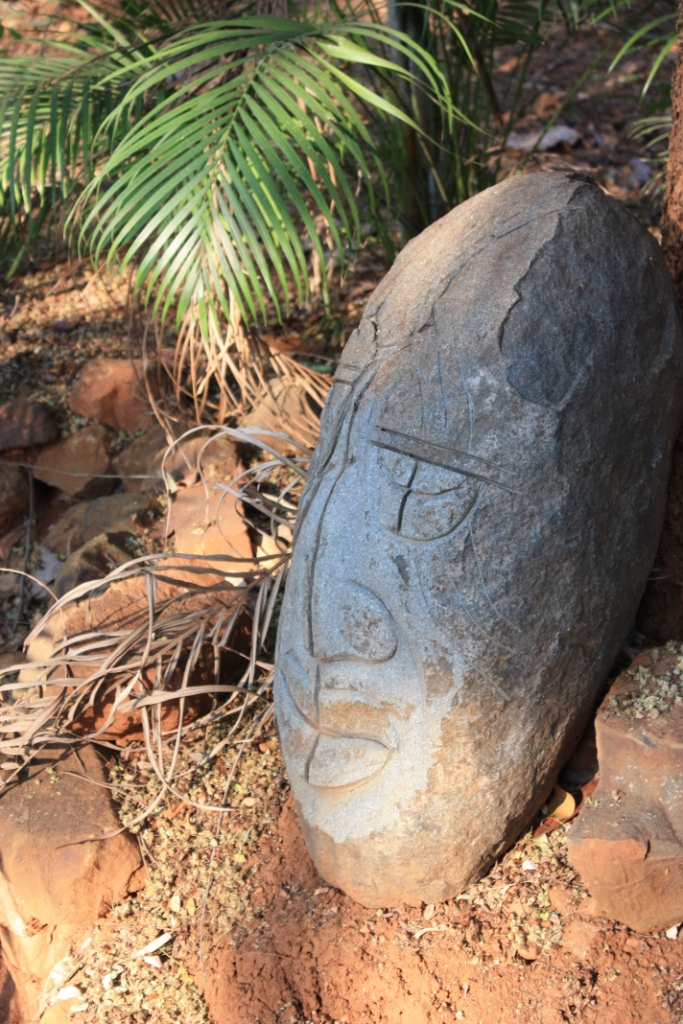
Taken May 3, 2014 at Fireflies Ashram in Dinnepalya.
My apologies for being delinquent in posting this past week. I had the first set of tests for my yoga teacher training certification course yesterday, a Toksen workshop out-of-town last weekend, and–on top of all of life’s little happenings–my internet access by computer was only sporadically operational. [And I find posting from a phone to be painfully tedious.]
However, I’ve finished a few books for review, and have lots of thoughts to share about yoga teacher training, Toksen (a Thai massage method using a wooden mallet and chisel), and Kalaripayattu (an Indian martial art for which I’ve been taking lessons.) I’ll try to get busy on writing up some posts after I get some rest.
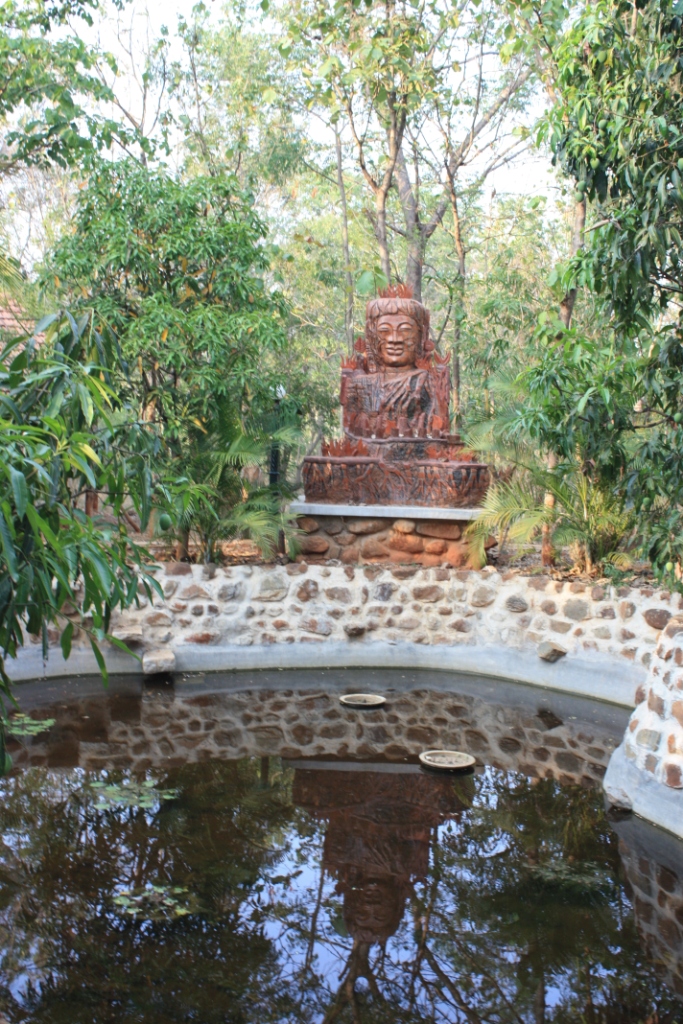
Taken May 3, 2014 at Fireflies Ashram in Dinneplaya, India.
I spent the weekend at an Ashram south of Bangalore learning Toksen, which is a bodywork method indigenous to Chiang Mai, Thailand.


