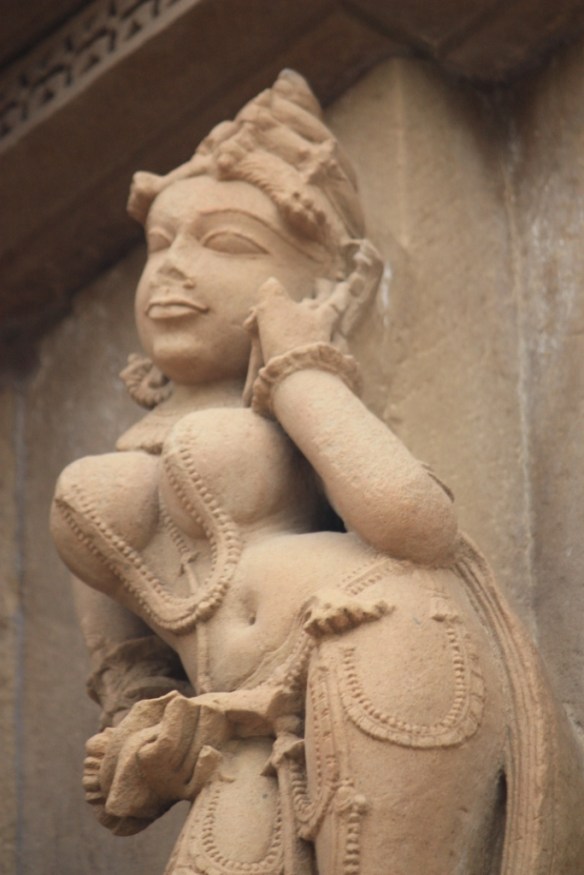
Taken on March 2, 2016 near Varkala


I’m breaking a lifelong maxim (i.e. “Live life with no egrets.”) to bring you this post.
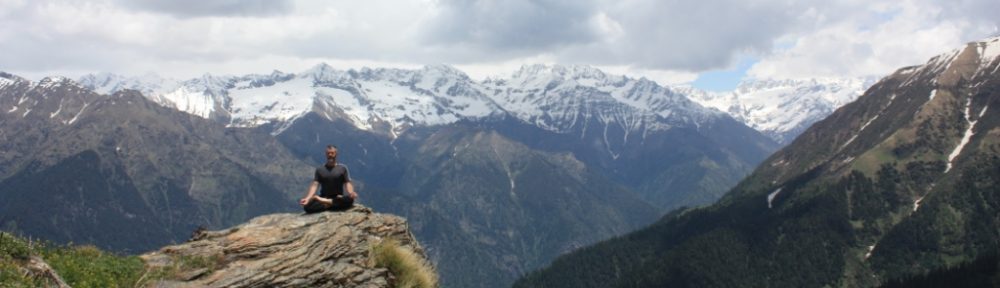

Taken on March 2, 2016 near Varkala
I’m breaking a lifelong maxim (i.e. “Live life with no egrets.”) to bring you this post.

Taken in November of 2015 in Pushkar

Taken in November of 2015 in Jodhpur


Below is the hotel shrine and above is the sitting area also pictured.

 Burmese Days by George Orwell
My rating: 5 of 5 stars
Orwell’s novel is about the ugly face of empire. It takes place in a Burma that was administered by the British as part of their Indian colony—but it’s in the waning days of the Empire, much to the chagrin of the entitled and chauvinistic European characters of the book. Most of the characters are shockingly racist and life abroad hasn’t broadened their thinking in any discernible way. The notable exception is the lead character, John Flory, whose best friend is Dr. Veraswami (an Indian medical doctor and government official) and who is unique among the British for being able to see the native ways as anything other than primitive and preposterous.
However, the hero is deeply flawed. Flory is a coward, and in the early pages of the novel is unwilling to support the nomination of his good friend Dr. Veraswami for membership to the expat’s club because many of its more vociferous members will be damned before they admit a brown person. Flory is also a bit morally loose for the taste of his early post-Victorian comrades. He has a birthmark that he’s constantly trying to conceal, and whose presence we are led to believe is crucial to his lack of confidence. While the main intrigue is provided by a plot by an unsavory Burmese official named U Po Kyin to undermine Dr. Veraswami and bolster his own stock among the whites, it’s Flory’s story that we are following. The reader hopes that Flory will develop the confidence needed to rise to the occasion—he being the only likable person in the cast (except perhaps Dr. Veraswami, depending upon how put off one is by the Indian doctor’s borderline Uncle Tom-ish obsequiousness.) Flory’s relationship with a young woman plays an important role in his story and sometimes it seems she may spur him to heights while at other times she looks to be his downfall. Flory’s conundrum is that the more virtuously he behaves, the more a target is painted on his back.
While the book is set almost a century ago, I found that it has something to say today. While the times have changed and the Empire is long dead, there are times that the long shadow of this period can still be seen in the current era.
I’d recommend this book for readers of historical fiction and particularly those interested in the past and present of areas under colonial rule. Orwell builds interesting (if often despicable) characters and the book has a well-developed and interesting narrative arc.
 The Emperor of All Maladies: A Biography of Cancer by Siddhartha Mukherjee
My rating: 5 of 5 stars
Dr. Mukherjee describes his Pulitzer Prize winning book as a biography of cancer. If so, it’s like the biography of a master thief or a gangster. One reads it not because one finds the character in any way endearing, but one can’t help but admire the resourcefulness and indomitable spirit of the culprit. Humanity has been at war with cancer for decades, but it remains alive and well–losing ground in specific domains but gaining overall.
The book covers a period from when our technology was too crude to see at the tiny levels necessary to recognize the commonality between various forms of cancer to the present-day attempts to find treatments that can target cancer cells without attacking good cells—a challenging prospect. The implication of that last sentence is that the cure might be as damning as the disease, and this has often proven to be the case. It’s often a race to see whether the cancer can be killed before the treatment kills the patient. This has been the case with radiation, radical surgeries, and various forms of chemotherapy that are toxic to good cells as well as bad. While the book ends on a hopeful note about more targeted treatment, cancer has not gone gently into that good night.
While the book covers a broad period, the bulk of its pages are devoted to the latter half of the 20th century. That’s when the war on cancer got serious and the science became advanced enough to move beyond crude approaches like radical mastectomies. Our understanding of chemistry, pharmacology, and biology reached a point at which cures were no longer pie-in-the-sky notions. But it wasn’t just the medical science that was more advanced, statistical methodology also reached a point at which it could answer questions that had previously been elusive. Such questions include whether smoking caused cancer—a fact that seems self-evident today, but which wasn’t as straightforward as one might think. There is also the issue of whether various treatments were actually extending the lifespans of those afflicted, which was also not as simple as one might think.
While the above discussion of science and statistics might make this book seem dreadfully boring, this isn’t the case. Mukherjee didn’t get the 2011 Pulitzer Prize for Nonfiction by being dull. The author knows the value of a story, and uses stories successfully throughout the book. There are the stories of individual patient cases, but also the story of the mass movement to raise dollars, awareness, and Congressional support to fight cancer. These true stories sometimes show the roller coaster ride that we associate with fiction—such as the apparent cure of a form of childhood leukemia that seemed promising until the kids once in remission started coming back with symptoms (the leukemia crossed the brain-blood barrier and found fertile ground on the other side of a biological wall that was meant to keep such ne’er-do-wells out.)
As one might expect of a book that covers so much ground, it’s not thin. The book’s 600 pages are arranged in 43 chapters divided into six parts. I’m sure there’s a lot more one could learn about cancer, but Mukherjee covers a lot of ground in an interesting package.
I won’t say I enjoyed the book (it’s unavoidably depressing, if hopeful) but I did find it both interesting and readable. While it might not be the sunniest and most joyous of reads, it’s one that many people should read. I’d recommend it for anyone. I would say “anyone who has been touched by cancer,” but I think that’s the same thing at this point.

Taken in July of 2011 in the Peruvian Andes

Taken at Hampi in November of 2013

Taken in July of 2015 in McLeod Ganj