
Taken in December of 2016 in Budapest



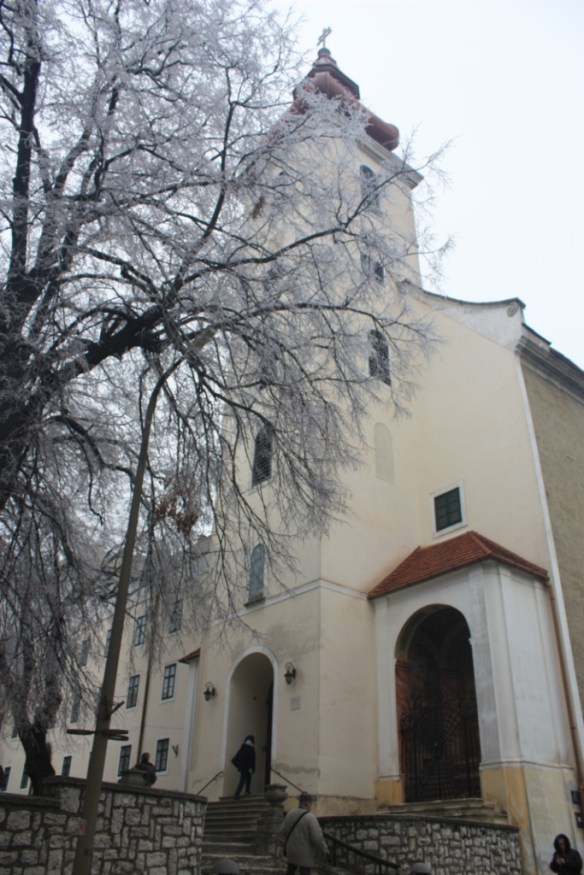
Sarlós Boldogasszony Ferences Kegytemplom; Taken on December 20, 2016 in Sümeg, Hungary
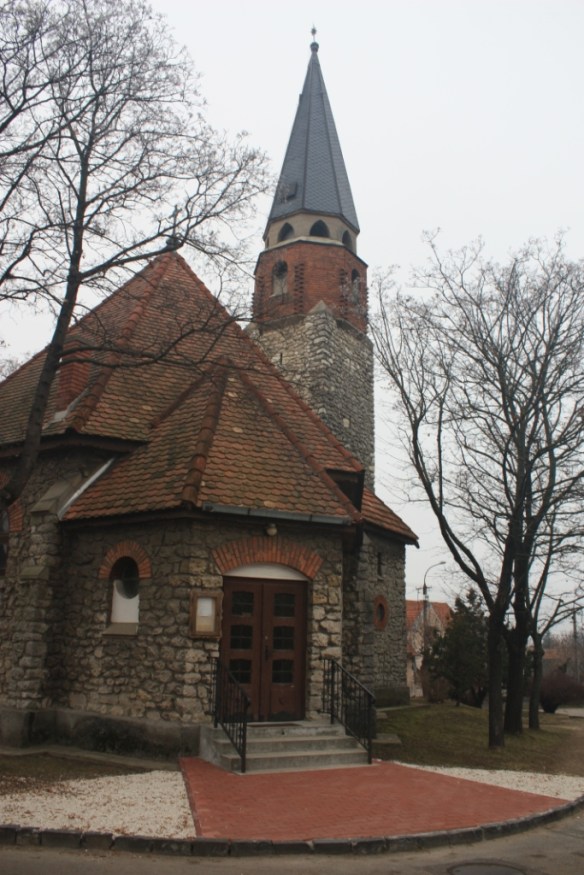
Református és Evangélikus Közös Templom in Sümeg
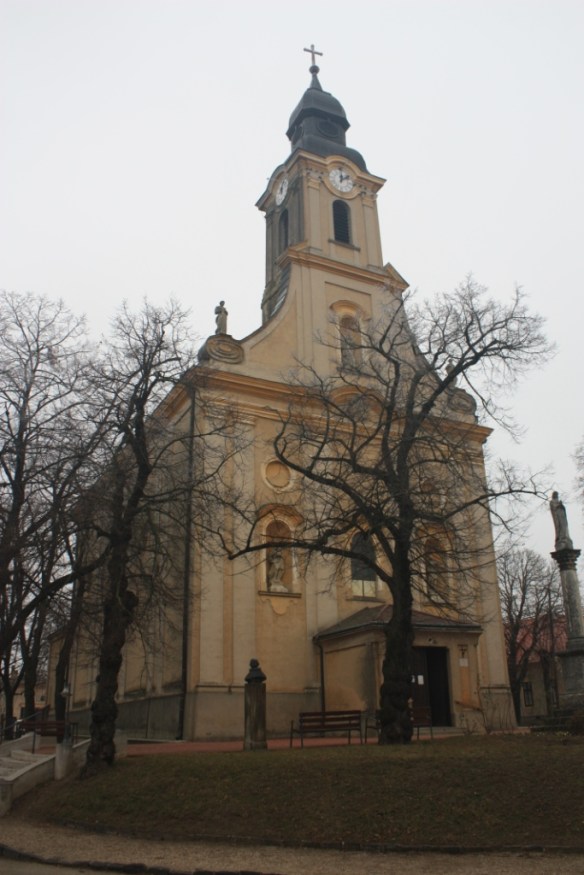
Urunk Mennybemenetele Plébániatemplom

Taken on December 16, 2016 in New Delhi

Taken on December 30, 2016 in Vienna (Wien)

I don’t know what this is supposed to mean, but it seems a bit harsh

Austrian mural with an Indian flavor
 The Dharma Bums by Jack Kerouac
My rating: 5 of 5 stars
What one needs to know to get a feel for this book is neither a summation of events nor the description of some crisis that sets up those events; instead, one simply needs to know who dharma bums were. This may or may not be self-evident, despite the fact that it’s essentially what the two words crammed together suggests. Dharma Bums were members of the Beat Generation (i.e. Beatniks, the 1950’s predecessor counter-culture to the hippies) who followed (or were enamored by) Buddhism, and who eschewed a materialistic lifestyle—which is to say they worked only when they needed to in order to put bread on the table or when they found it [autotelicly] satisfying to do so.
The book is literary fiction and places more emphasis on character than plot, and–furthermore—the events of the book read as though loosely autobiographical. Therefore, the happenings of the book are as scattershot as real lives tend to be.
The book begins with Ray Smith (the fictional counterpart to the real Kerouac) hopping a freight car in the manner of Jack London’s “The Road” (not to be confused with Cormac McCarthy’s “The Road,” nor Kerouac’s own “On the Road”)
The book then spends time with a series of characters who map to real life members of the Beat Generation. The most important of these individuals (besides Smith / Kerouac) as far as the book is concerned is Japhy Ryder who represents the Zen poet Gary Snyder. Ryder is a mentor to Ray Smith. First, Ryder’s knowledge and practice of Buddhism is much more advanced than Smith’s—though they occasionally disagree because Ryder is a Zen Buddhist and Smith has an affinity for a more mainstream sect, Smith learns much about Buddhism and Eastern philosophy from Ryder. Second, Ryder is a mentor in sharing various life lessons with Smith, including introducing him to mountaineering. A short expedition up a mountain is among the most memorable parts of the book.
I’ll mention one other of the characters, Alvah Goldbook, who stands for Allen Ginsberg. Ginsberg may be the most famous of these individuals (other than Kerouac, himself) today, owing largely to his poem “Howl.” Ginsberg is more agnostic where Buddhism is concerned. He enjoys ideas from it but doesn’t jump in feet-first in the manner of Smith—let alone Ryder. There are a number of well-known beatniks who feature more or less prominently (e.g. Neal Cassady and Philip Whalen.)
The book’s end features Smith working alone as a fire lookout on another mountain—Kerouac readers later learned that this was the aptly named Desolation Peak. Japhy’s hand can be seen in this as well, as he recommended the job to Smith.
This is a book for the thinking-person. There is really only one dramatic event that stands out in my mind as the source of tension one normally seeks in a novel. The joy of the book comes from joining the characters in bouts of philosophizing, in the creative use of language, and in reflecting upon an approach to life that exists outside the conventional.
I’d recommend this book. Personally, I enjoyed it more, and found it more thought-provoking, than “On the Road,” which I suspect is the work for which Kerouac is more known and which is also a good read.
 Alice’s Adventures in Wonderland & Through the Looking-Glass by Lewis Carroll
My rating: 5 of 5 stars
These are two separate children’s books, but the edition I read is one of several in which they are bundled together. Besides the fact that each is only a little over 100 pages, they are conveniently bundled because they share the same lead character, Alice, and take place in similar (arguably the same) alternate realities: Wonderland and the Looking-Glass World. These are worlds in which strange events are common place and there’s little compulsion to behave logically– worlds in which imagination rules and reality only provides a subconscious shaping of events.
In the former book, Alice enters the alternate world by tumbling down the rabbit hole and in the later she does so by stepping through a mirror (i.e. a looking-glass.) Each of these books follows Alice from her entry into the alternate reality, through a series of adventures, and then back to the real world.
Not much of a review is necessary because even though—given you are reading a review—you probably haven’t read the books yet, you will be familiar with many of the characters and references from widespread appearance in pop culture. I already mentioned the tumble down the rabbit hole, as does Morpheus (Laurence Fishburne) in “The Matrix.” That movie also references chasing the white rabbit, as does a famous song by Grace Slick. You’ve also probably seen or heard references to the grin of the Cheshire Cat and the frenetic behavior of the Mad Hatter. “Through the Looking-Glass” features several well-known characters from English nursery rhymes (e.g. Tweedledee & Tweedledum as well as Humpty Dumpty.)
It’s also not so important to get into plot because the stories are purposefully chaotic and exist in a world of loose logic. The strings of causality are not so strong, but it’s on purpose. It’s supposed to be a strange and surreal world, and it achieves great success in this regard. Events don’t have to make sense; they just have to be imaginable. This doesn’t mean that there is no flow or transitions between the adventures in these books. There is. It’s more easily recognized in “Through the Looking-Glass” in which a game of chess provides an underlying structure for the unfolding of events.
I’d recommend everybody read these books. While I referred to them as “children’s books,” I also agree with Neil Gaiman’s point that that is a nonsense term. So one shouldn’t think one missed the boat and there is no going back.

Taken on December 22, 2016 in Budapest

by night

Chamber of Deputies (I think)

Main staircase
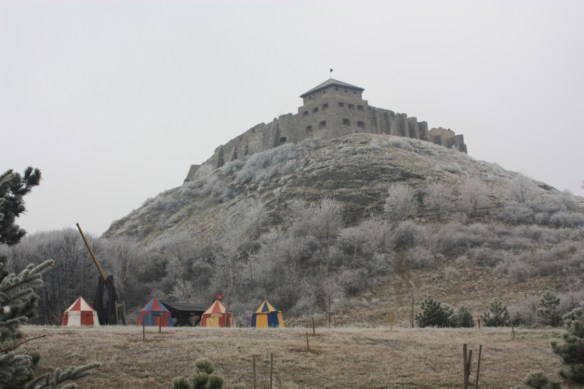
The Castle; Taken on December 20, 2016 at Sümeg
Sümeg is a castle town north of Lake Balaton in Hungary. It was built in the late 13th century by King Bela IV. It was gifted to the Catholic church by King Stephen V. It’s been nicely remodeled, and is now the site of renaissance faire style events. Here are some pics from within:
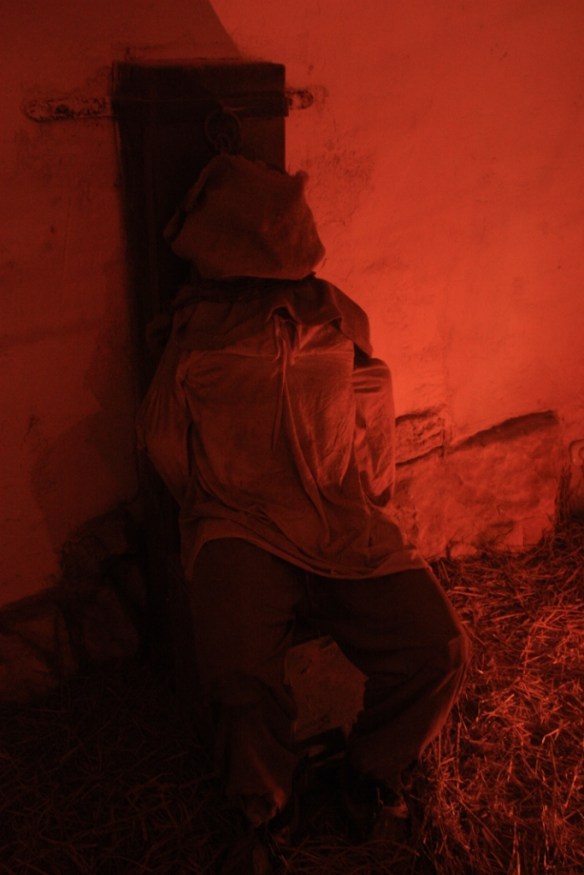
In the dungeon (i.e. the várbörtön)
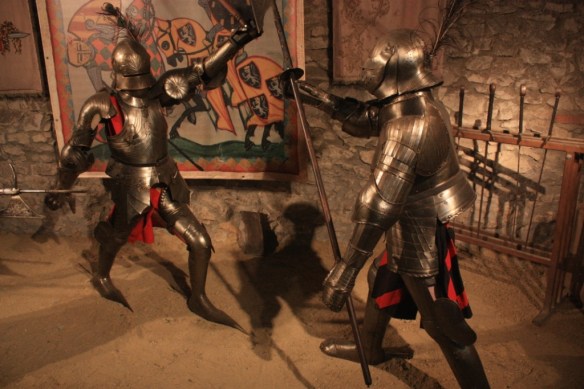
Medieval warfare, check out those pointy boots
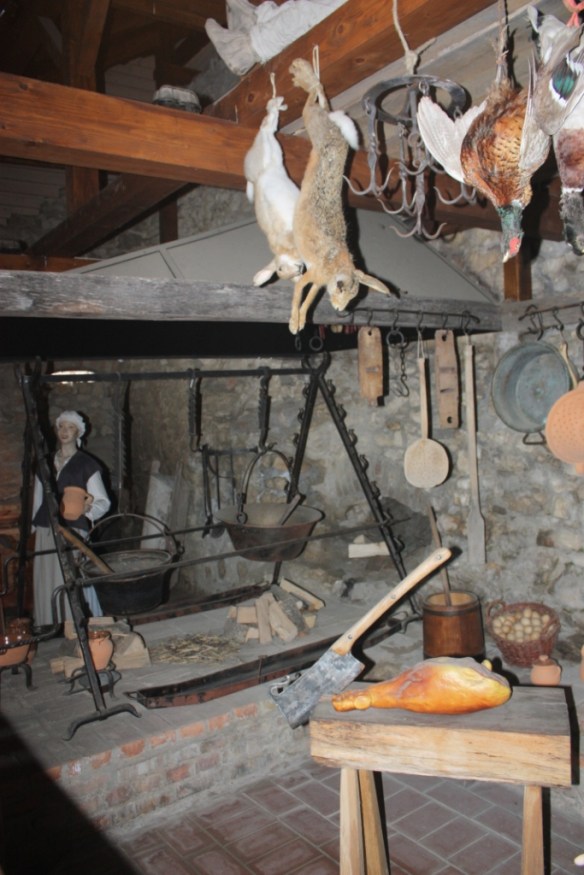
The kitchen
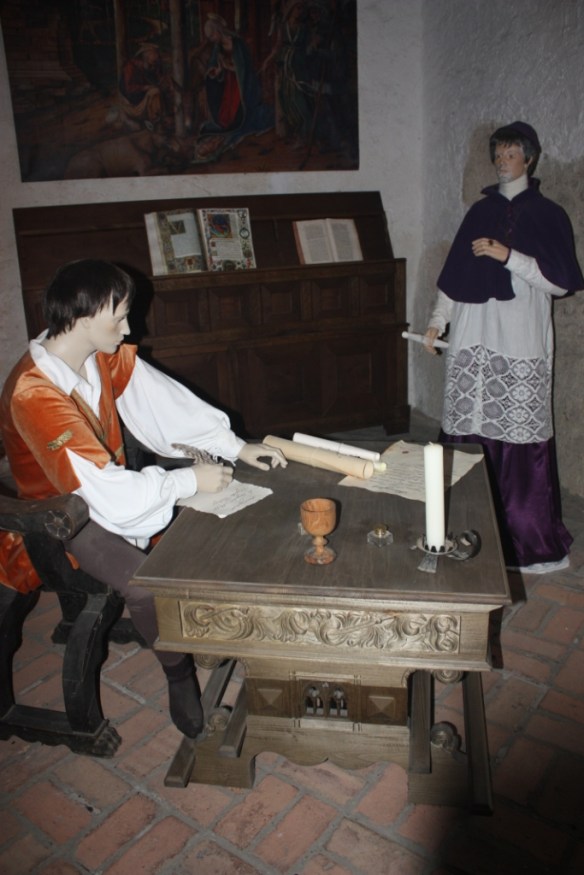
The Bishop’s Quarters
 Askew: A Short Biography of Bangalore by T. J. S. George
My rating: 4 of 5 stars
Bangalore (properly, now Bengaluru) has been my home for the past 3+ years, and I can tell you that it’s a strange and unique city. It has a population of about 10 million, but the surprising part is not the population but rather that half of those millions came over 10 to 12 years. On one hand, this makes Bangalore a chaotic place. I live in the area near the centers of both the Karnataka and the city government, but it can’t be called a city center in the sense that most cities have a central business district. I suspect that residents of Indiranagar, Kormangala, Jayanagar, and many other neighborhoods feel they have as much claim to call themselves the city center as does my neighborhood.
On the other hand, the reason that there has been such an influx is because this is India’s Silicon Valley and that means that Bangalore is (or at least seems) more affluent, well-educated, and cosmopolitan than much of India. I’ve often termed it “India Light” in that all the problems that one associates with India (soul-crushing poverty, rampant disease, etc.) are of a lesser scale in Bangalore. People often ask me whether I get sick a lot living in India, and I can honestly say that Bangalore has never given me a case of intestinal distress more substantial than I got from any given trip to Taco Bell in America, and I’ve delighted in the street food of VVpuram on several occasions. [Whereas a two-day trip to New Delhi nearly killed me.] And, of course, Bangalorean weather is perfect year-round (if you’re saying, “No, it’s not!” that means you’re a Bangalorean who has never spent an extended time period anywhere else in the world–excepting maybe San Diego or parts of the Mediterranean.)
That explanation of my Bangalorean credentials aside, even living in the city for several years, one can feel like a stranger to it. An ex-pat’s insight is much more in-depth than a tourist’s, but remains much less than a local’s. That’s one of the reasons I found this book intriguing. There are a number of books on Bangalore that present sunny travelogues of the city, but not so many that investigate the grittier underside of life. If anything, George inflates the ugly side of the city. He devotes a lot of space to topics like racial violence and gangsters. It’s nothing personal. His theory, suggested by the Introduction, is that any city that grows too big has the wheels roll off in one way or the other—though he also suggests other cities have proven better at fixing the problems of [over-]growth. Still, the author occasionally he comes across as curmudgeonly, with a “back in my day everything was sunshine and roses” kind of attitude.
As the subtitle suggests, this is a short book—less than 100 pages divided among five chapters. The organization of the chapters is not chronological but thematic. The first chapter explores Bangalore from the perspective of the influx of newcomers and the pull and push factors that bring them. This includes both the educated middle-class who’ve come to advance professional careers as well as the less fortunate immigrants who’ve sometimes found themselves victimized as outsiders. (You may wonder how I—as a foreigner—could remain unaware of the extent of racial and xenophobic violence in this city. To understand this one has to understand the long-shadow of biases rooted in colonialism and caste hierarchy. You may get a clue by looking into the reaction to Nina Davuluri winning the Miss America title in 2013. While most Indians, I suspect, were proud of her by way of connection to ethnic heritage [she’s American by birth—much to the confusion of the American nimrods commenting on her victory], it spawned a whole debate about whether she could have one Miss India if she were an Indian citizen given her darkish skin tone. Of course, those Indian dimwits don’t even hold a candle to the American dimwits who ranted against her victory.)
Chapter 2 investigates the role of defective governance in Bangalore’s plight. In many ways this is the heart of the argument that Bangalore is uniquely dysfunctional. Corruption in the presence of huge wealth has created ideal conditions for myopic and self-serving activities that often bite the citizenry square in the backside.
Chapter 3 focuses largely on the culinary history of the city, which means a lot of discussion of MTR, CTR, Koshy’s, and some of the longstanding hotel [restaurants] as well as the individuals behind these institutions.
Chapter 4 contrasts the life of two of the privileged heirs of Bangalore. The two men in question are Siddhartha Mallya and Rohan Murty. The former is of the family of the United Brewing and the later of Infosys. Mallya is the presented as the outsider who could never make roots in Bangalore or the family business and Murty is the insider whose roots are grown into Bangalore and who managed to make a place for himself despite a pact by the Infosys founders that they wouldn’t become a nepotistic venture.
The last chapter is about the intellectual and artistic dimensions of Bangalore, including discussion of bookstores and theaters of note.
As I mentioned, this book doesn’t give one a complete picture of Bangalore. Pardon for appropriating the title to my own purposes, but if this is one’s only introduction to Bangalore than one’s view will be askew. However, when read in conjunction with other sources of information, “Askew” can offer balance as well as nuanced insight into specific issues that might not be covered elsewhere (e.g. food and bookstores.)
There is a conservative-old-man-of-India viewpoint that skews the book’s discussion that will make it seem quite right to that same demographic but off-kilter to others. One example of this is that there seems to be a suggestion that alcohol is a major source of Bangalore’s problem. However, one sees all manner of vice in cities that are both better governed and less dysfunctional as cities—e.g. Amsterdam and Bangkok. For that matter, alcohol is a more prominent fixture in pretty much every European city than it is in Bangalore. So I had trouble buying that viewpoint, which also seems to inform the vilification of the Mallya family (as opposed to the much vaunted Murty family.) Another example is that while an entire chapter is devoted to comparing those two sons, the daughters barely merit a line or two.
All and all, I’d recommend the book as a balance point to other sources of information.
 A Burglar’s Guide to the City by Geoff Manaugh
My rating: 5 of 5 stars
This is a book about how people exploit the architecture and infrastructure of cities to abscond with other people’s property. Manaugh shows us both how the masterminds of burglary think outside the box “Ocean’s Eleven” style, as well as how the dim dull-wits and junkies botch burglaries in hilarious ways. In the process, the author also shines a light on the ways in which the law enforcement community has had to update its technological and tactical capabilities to counter these threats.
The book contains seven chapters. The first chapter lays the groundwork, particularly through discussion of the aforementioned extremes. On one hand, there is George Leonidas Leslie, an architect turned bank robber who would build accurate mockups in order to accurately rehearse robberies, and–on the other hand–there is the guy who used a ghillie suit disguise in a rock and mineral museum (which, not unsurprisingly, featured barren rock displays [down-playing vegetation] such that the guy stuck out like a guy in a ghillie suit in a rock display.)
Chapter 2 details what Manaugh learned about burglary and the fight against it through his interviews with law enforcement, and—in particular—the Los Angeles Police Department (LAPD) helicopter unit.
The next chapter focuses on how different types of buildings are violated by burglars, and apartment burglaries are prominent in the discussion. This isn’t just about how they breach the building, but how they discover when no one will be home.
Chapter 4 is entitled “tools of the trade” and it reflects upon the skill-set that Hollywood suggests is associated with burglars—i.e. lock-picking and safe-cracking–but which constitute a less common set of tactics than one might think. Burglars usually favor the messier / quicker approach of busting walls and locks.
Chapter 5 deals with a number of issues under the rubric of “inside jobs” but one of the most intriguing is its discussion of those who don’t break in at all, but rather who hide inside the target building awaiting closing time.
The penultimate chapter is about that ever-present concern of burglars, the getaway. And sometimes the secret is what Black Widow says in “Captain America: Civil War”: “The first rule of being on the run is walk, don’t run.” The final chapter is a wrap-up, including a conclusion to the George Leonidas Leslie story that was brought up in the first chapter.
There are notes and citations at the end of the book. There are no graphics. I think this book could have benefited from graphics. However, the author displayed such skill with language and story-telling that I didn’t seem to notice (or care) at the time of reading. I suspect Manaugh didn’t want to present too much detail for fear of being seen as an actual manual for crime, which this clearly is not.
I found this book fascinating, and think you would enjoy it if you have any interests in cities, security, civil engineering, architecture, or just have a healthy curiosity about how buildings and cities work.


