Unknown's avatar

About B Gourley

Bernie Gourley is a writer living in Bangalore, India. His poetry collection, Poems of the Introverted Yogi is now available on Amazon. He teaches yoga, with a specialization in pranayama, and holds a RYT500 certification. For most of his adult life, he practiced martial arts, including: Kobudo, Muay Thai, Kalaripayattu, and Taiji. He is a world traveler, having visited more than 40 countries around the globe.

BOOK REVIEW: Stealing Fire by Steven Kotler and Jamie Wheal

Stealing Fire: How Silicon Valley, the Navy SEALs, and Maverick Scientists Are Revolutionizing the Way We Live and WorkStealing Fire: How Silicon Valley, the Navy SEALs, and Maverick Scientists Are Revolutionizing the Way We Live and Work by Steven Kotler
My rating: 5 of 5 stars

Amazon page


“Altered states of consciousness” conjures visions of rogue scientists hitting hallucinogens and then sealing themselves up in sensory deprivation tanks until they either have a breakthrough or a breakdown. This book may touch on such activities, but it’s about something else. It’s about the states of consciousness in which the part of the mind that is critical, overly cautious, and always creating worst case scenarios fades into the background, allowing one to be more effective, happier, and to drop one’s neurotic tendencies. Kotler and Wheal refer to this as ecstasis, borrowing from the Greek word meaning “to get outside oneself.” They differentiate it from the Flow of Mihaly Csikszentmihalyi with which it clearly has overlap. (One of the authors, Kotler, wrote a great book on the exploitation of Flow by extreme athletes entitled “The Rise of Superman.”) [I’d love to see a Venn diagram of how they see these states overlapping, but—alas—one isn’t provided, though there is some discussion of it.]


The book is organized into three parts. The first part consists of three chapters and it both explores what ecstasis is and why it’s so hard to find. The story of how the Navy SEALs designs training to build group Flow states on command is illuminating as is the second chapter’s discussion of how Jason Silva found ecstasis through freewheeling philosophizing. The third of the chapters describes three prominent barriers to achieving these states of mind. These barriers are among the reasons for the rarity of these altered states even though they’re available to everyone.


The heart of the book is the second part which describes four avenues by which people pursue these altered states of consciousness: psychology, neurobiology, pharmacology, and technology. The chapter on psychology uses a dialogue series between Oprah and Eckhart Tolle as a stepping off point, probably more because of what it tells us about the scale of yearning for ways to get outside of one’s head than because of the dialogues’ value in facilitating that condition. Positive psychology as recipient of a mantle once held by religion and spiritualism is an important theme in this chapter.


The neurobiology chapter isn’t just about the biology of the brain and nervous system; it’s about the integration of brain and body. In it, we learn about how expressions, postures, and gestures can influence our state of mind.


Many apparently believe that the story of pharmacology is a much bigger part of this book than it actually is, but it’s a part that’s hard to ignore. As one who seeks non-pharmacological approaches to Flow (I’m more about yoga, meditation, and movement) I still found this chapter fascinating, and perhaps most so in its discussion of other species’ pursuit of chemically induced highs [particularly that of dolphins.]


The technology discussed covers a range of approaches from biofeedback devices designed to help one navigate one’s way into the zone, to gear to help one engage in trigger activities at lower risk. For example, the mix of defiance of gravity and high-speed gliding experienced wing-suiting seems to be a potent trigger for ecstasis. It also seems to kill anyone who keeps doing it long enough. So the question is whether one can create the sensation and still achieve the trigger without inevitably experiencing an untimely demise.


The grimness of that last paragraph is an apropos lead-in to discussion of the book’s final part, which considers how one can organize one’s pursuit of ecstasis without running into the many pitfalls that coexist with it—from becoming a pleasure junky to dropping out of life to killing oneself. The first of three chapters in the final part discusses the Burning Man festival phenomena in great detail as well as other avenues by which people find themselves drawn into the pursuit of altered consciousness. The next chapter describes how both government and commercial firms have sought to exploit the bliss of these altered states. The last chapter is about how to merge daily life and pursuit of ecstasis in a balanced way so one avoids becoming a pleasure junky who runs his life aground on rocky shoals in pursuit of the next ecstasis fix.


The book is endnoted, and has some nice ancillary features—a number of which are available online with the link being given at the back of the book. An appendix that I found interesting was one entitled “Notes on Inside Baseball.” This section discussed a number of controversies that were outside the scope of the book, but which readers might wish to research in greater detail.


I found this book to be highly engaging. The authors use the narrative approach throughout to keep it interesting, while at the same time conveying complex ideas in an approachable fashion. They scour many disparate realms in search of this altered consciousness, and so there’s never a dull moment.


I’d recommend this book for anyone interested in learning more about how to shut down that perpetually critical and gloomy part of the brain so that one can achieve one’s optimal potential.

View all my reviews

DAILY PHOTO: Temple Carved From a Mountain, Ellora

Taken in November of 2014 at Ellora

Taken in November of 2014 at Ellora

DAILY PHOTO: Rangsit Fight Night Takedowns

Taken on February 19, 2017 at Rangsit Boxing Stadium

Taken on February 19, 2017 at Rangsit Boxing Stadium


img_6515

img_6458

img_6344

img_6338

img_6560

5 Untruths Worth Pretending Are True

pretend_play_preschool


William James famously suggested that the path between emotion and expression wasn’t a one-way street. In other words, it’s not just that having an emotion causes us to express it through facial expressions and body language, but also that by assuming a given expressions we create the corresponding emotional state. James might have gone a little far in proposing the emotion can’t exist devoid of its expression, but he came by the belief that you could get to emotion through expression honestly enough.


I read about how James, suffering a bad cases of the blues, asked himself what would happen if he behaved as though he was in a happier state of mind. He decided to carry out this experiment, and he soon found himself in a much better mental state. This got me thinking about what else one might pretend that would yield positive results.


It should be noted, that there’s been a lot of research on this topic, and it’s been dubbed the “as if principle,” though colloquially people talk about it as “faking it till you make it.” Some of you may be familiar with this idea from the study showing that adopting a Wonder Woman stance made subjects feel more confident. If not, Amy Cuddy’s TED Talk can be viewed here.


So, here are five ideas–true or not–that are worth believing:


[Note: You’ve got to pretend as if you were a five-year old. Don’t bring those pathetic and puny adult imaginations.]


5.) I’m happy:  Starting with the self-ruse most widely known and which James brought to our attention. You may have heard the following advice: if you’re ever feeling down, stand up and pump your fists in the air at an upward angle such that one’s body forms a “Y” (or an “X if you want to keep your feet wide.) This is a hardwired victory behavior written into our evolutionary coding, and it’s hard to be depressed while doing it.


4. Oneness / Unity:  Try pretending that you’re connected to everything in the universe. The experience isn’t uncommon with mystics and meditators, as well as those in the Flow. This is an attempt to work it around from the other direction.

Now, some mystic-scientist out there is going to say that this isn’t an untruth because there’s evidence that we are connected to everything, citing quantum entanglement and such like. Maybe so, but as there’s no reason to believe we have a sensitivity to happenings at that quantum state, the pretending is still necessary. (i.e. Even if such entanglement exists, we can no more sense it than we could recognize if a force of 1-trillionth of a gram touched our skin.) Evolution doesn’t grant us capabilities beyond what are needed to survive to procreate, and so I’m doubtful that we have some untapped power to sense quantum entanglement lurking within us.) The oneness we feel has to do with the part of the brain that tracks the “I v.) not-I” divide fading out of operation–rather than an awareness of some web of subatomic entanglement.

This self-subterfuge is a way to simultaneously put one’s worries in perspective while not becoming demoralized about being an insignificant speck in a vast universe. One is an infinitesimal speck in an infinite universe, but one is tied into the universe such that one is simultaneously an infinite universe.


3.) Chi / Prana: I don’t think there’s any reason to believe that the immaterial energies of Eastern traditions (Taoism and Yoga, respectively) exist. However, I wouldn’t argue that there’s no benefit from imagining them to exist.  There seems to be little doubt that visualizing the flow of these energies can have benefits–regardless of whether they’re the traditionally advertised benefits or not. Even if you don’t succeed in pulling energy into one’s body directly, sans the middlemen of food and oxygen (so one can live off the dew on a single ginko leaf–ala “Kung Fu Panda”), visualization is good for the brain and the invigorated feeling one creates in pretending chi exists can’t hurt.


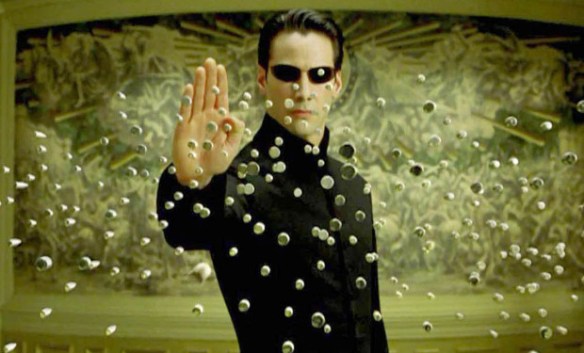
matrix

2.) “There is no spoon:”  This, of course, comes from the movie “The Matrix” in which a young sage / savant attempts to teach the protagonist, Neo, how he can bend a spoon with his mind. The upshot is that one doesn’t try to bend the spoon, one realizes that the spoon is a figment of the imagination.

The idea that we are part of a simulation may turn out to be less far-fetched than it seems. I cite, for example, the TED Talk by physics Nobel Laureate George Smoot.

At any rate, the virtue of the thought exercise of pretending this is true is two-fold. First, one can ask whether one would lead the same life and give events the same weight if one was to discover that one was living out a simulation designed to advance the understanding of some entity (e.g. an alien race, a colossal supercomputer, etc.) Second–and more importantly–one may become more attuned to the fact that one’s own mental / emotional world is full of dream-like simulations. One’s brain is designed to anticipate worst-case scenarios, and it’s exceedingly good at fabricating scenarios that taint our perception of the world with anticipated negative possibilities–most of which will never come to fruition. There are many variants, attributed to various speakers, of the following Mark Twain quote:

“I’ve had a lot of worries in my life, most of which never happened.”


1.) There is no I:  A core tenet of Buddhism is that there is no self. Depending what a self has to be to exist as an independent entity, science may yet converge on a similar conclusion. The self seems, at best, to be an emergent property. In the Anil Ananthaswamy book I recently reviewed, it’s compared to a center of gravity. There’s no molecule that can be called the center of gravity, it’s a property that moves around as the body does. It’s definable, but not in terms of a specific location or physical existence.

Pretending there is no self may help put many worries into perspective. Like #4, it may also help one feel more connected to a larger world. But most importantly, it may help one to turn off those parts of one’s mind that are prone to self-loathing, self-denigration, or just self-consciousness.


Happy pretending.

nightsky

POEM: Great Characters in Literary History I

Call me Ishmael.

And if you write me

send it by fish mail,

addressed: high seas.

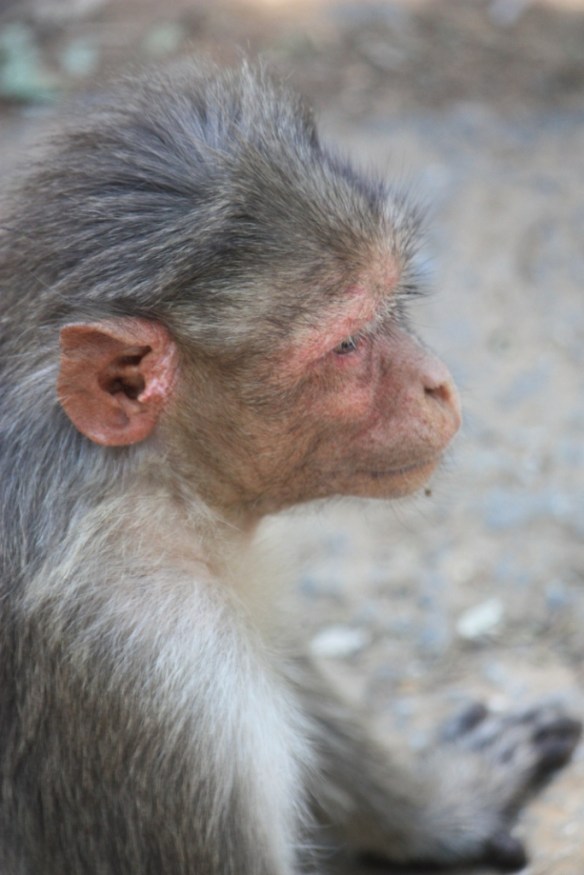
DAILY PHOTO: Old Macaque in Profile

Taken in March of 2014 in Nandi Hills

Taken in March of 2014 in Nandi Hills

DAILY PHOTO: The “Up Yours” Baby Statue, Vienna

Taken in December of 2016 in Vienna

Taken in December of 2016 in Vienna

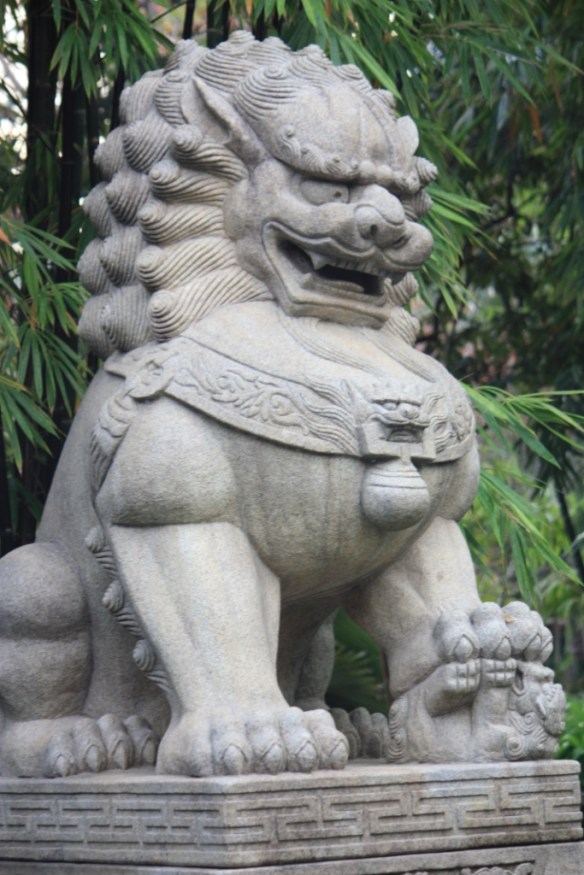
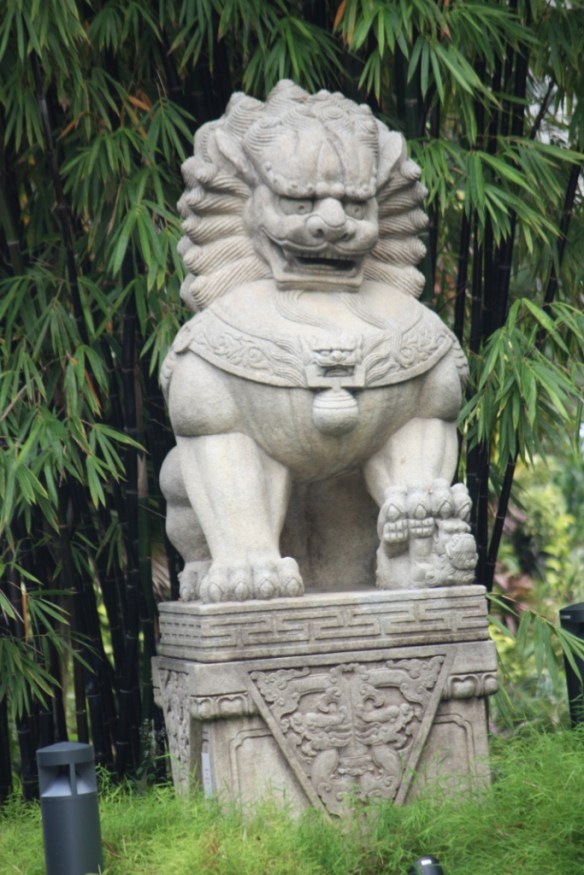
DAILY PHOTO: Guardian Lion, Singapore

Taken in Singapore in November of 2016

Taken in Singapore in November of 2016


img_4581

DAILY PHOTO: Ghat of Pushkar Lake

Taken in Pushkar in November of 2015.

Taken in Pushkar in November of 2015.

DAILY PHOTO: Muay Thai!

Taken in September of 2015 at the Rangsit International Boxing Stadium

Taken in September of 2015 at the Rangsit International Boxing Stadium


img_1630


Heading back to Thailand for muaythai training. I’m planning on keeping the blog going at some level this time. Hopefully, the metaphoric grass won’t grow up and the tires go flat while I’m away.