BOOK REVIEW: The Convent School by Rosa Coote

The Convent School: Early Experiences of a Young FlagellantThe Convent School: Early Experiences of a Young Flagellant by Rosa Coote
My rating: 4 of 5 stars

Amazon.in page


This novella is a work of Victorian erotica. Given the Victorian era’s legendary hyper-moralism and widespread desire to downplay of sexuality, one might be forgiven for thinking of the term “Victorian erotica” in the same vein as “Medieval Electronics.” However, the psychology of interest revolves around the question of whether repression produces obsession, resulting in sex becoming more entangled with guilt and punishment than it is with love and romance. The Convent School tells the sexually-charged story of a girl / young woman / woman who receives a lot of spankings before, during, and after her time at the titular convent school — in the latter case, as an unfaithful married woman.

That brings us to mention the first of two [overlapping] groups of readers who are unlikely to find any appeal in this book, and who would be advised to steer clear of it. First of all, anyone with delicate sensibilities regarding sexual activities will likely find this work over the line. If you are expecting something like Bram Stoker’s Dracula that is sensual but in only a vaguely sexual sort of way, you’ll be in for a rude shock. This story is presented with a pornographic level of graphic detail. It holds nothing back and leaves little to the imagination. I should point out that the story gets more graphic as it progresses. So, for example, before the girl is sent to convent school, the main sexual activity goes on behind closed doors between the girl’s matron-like tutor and the girl’s father (or so the reader is led to believe,) with the girl’s solitary self-exploration forming the most graphic portion. However, by the time she is a married woman being punished for the transgression of infidelity the story reaches a brutal level of graphic detail.

The second group are those who are piously religious. In written tradition that predates the Victorian era, and which includes works like Boccaccio’s The Decameron and any work by the Marquis de Sade, the clergy are presented as libidinous and hypocritical. [At least, that’s how the clergy who feature in the story are portrayed. While it could be argued that they are exceptions to the rule, it might also be claimed that these authors are saying something about how the inability to engage in romantic sexuality will – rather than resulting in the desired asexuality – result in a perverse weaponization of sexual activity.]

As for who would read this book, beyond the obvious — those for whom sado-masochism and bondage / domination has great interest or appeal, the readership is a niche group with interests in history and / or psychology as it [they] overlap[s] literature. It’s fair to say that this is a work that might have been totally forgotten had it not been for the fact that Alan Moore revived the pseudonym and fictitious biography of the author of The Convent School for use in his graphic novel The League of Extraordinary Gentlemen (a work that imagines a collection of Victorian era fictional characters (Allan Quatermain, Mina [Harker] Murray, Dr. Jekyll, and Captain Nemo) brought together as a team of heroes. Having said that it might have been completely forgotten from the annals of erotic literature, it is available on Project Gutenberg.

Normally, here I’d give a recommendation or anti-recommendation, but this whole review serves that function, so consider yourself forewarned / informed.

View all my reviews

DAILY PHOTO: Vajdahunyad Castle in Summer

Taken in the summer of 2011 in Budapest.

BOOK REVIEW: One Hundred Years of Solitude by Gabriel García Márquez

One Hundred Years of SolitudeOne Hundred Years of Solitude by Gabriel García Márquez
My rating: 5 of 5 stars

Amazon.in page


This novel follows the founding family of the fictional city of Macondo (i.e. the Buendía family) from the municipality’s quiet establishment through war and colonial conflict to what comes beyond life at the bleeding edge of a banana republic. Macondo begins its existence as a utopia built amid a swamp. At first – it’s a village that knows no death. Over time, Macondo changes greatly as members of the Buendía family become entwined with broader events and as neocolonial activity comes to Macondo in the form of a large US fruit company that establishes a plantation using Macondo’s labor force. [If the title leads you to expect a great deal of solitude, you may be disappointed. The book begins in medias res with Col. Aureliano Buendía standing before a firing squad, and seldom is there a dull moment, thereafter. Even when the book isn’t in the midst of civil war or disputes between the fruit company and the workers, there are all kinds of strange happenings and fascinating psychology to consider. For example, retired Col. Aureliano Buendía spends his days making and then melting down little gold fish. The futility of this action should make it uninteresting, but the question of why he does it keeps one intrigued. If he sold the fish and made new one’s it would become just another boring job.]

This book is known as one of those must-read masterpieces that don’t make it easy for the reader. That’s not to say it’s dull or written in a difficult style, which could be said to be the case for other books that fall into said category. The readability issues of One Hundred Years of Solitude can largely be grouped under the intertwined categories of “time” and “characters.” (A third could be said to be the magical realist genre which places strange supernatural occurrences within an otherwise realistic setting and chain of events – events not unlike those that took place in real world Latin America. The genre doesn’t present a huge challenge, but it does insist on a more careful reading than would a book that is either pure realism or pure fantasy.)

Because — as the title suggests — there’s a century covered, there are a lot of characters in this book. If having a lot of characters didn’t make it hard enough to follow, names are repeated from generation to generation. This isn’t the result of author laziness. One of the book’s main themes is how – no matter how the world changes – people get caught up in cycles of repeated mistakes and patterns of behavior. Repeating names establishes descendants as at once individuals and archetypes. Another challenge regarding time is that it’s not strictly chronological, but rather jumps around. At a broad level, there is a chronological flow reflecting Macondo’s life-cycle, but within this flow the story jumps around in time a lot. As with the name repetition, this too is likely done on purpose – in this case, in order to convey thoughts on time and memory. Memory is a fascinating issue as the reader sees the events that happen ultimately become mythologized, people no longer believe they happened as described but are rather tall-tales.

One of the most engaging supernatural elements of the book revolves around writings of a traveling gypsy that are written out in Sanskrit and which sit around through the decades gathering dust. These writings aren’t meant to be translated until after one hundred years, and when one of the Aurelianos gets around to translating them, he discovers that they are prophesies that have told the whole story of Macondo, including what is to come, but by the time it is translated the future is already upon them.

I found this book to be a pleasure. It’s not easy reading. One has to read with a level of conscientiousness that can be a labor to maintain. However, it’s worth it in the sense that it offers more food-for-thought than the average novel. There is a line of wisdom conveyed by this novel that has led to it being considered one of the most important novels in the history of literature. I’d highly recommend it for readers of literary fiction.

View all my reviews

POEM: Worlds, Real & Imagined

Sitting in a café, watching snowfall collect,
on the lamp-lit portion of a quiet side street.


Mind struggling to create a fresh world of one’s own,
but unable to find one more swollen with life,
feeling, and profound truth than the one right outside.

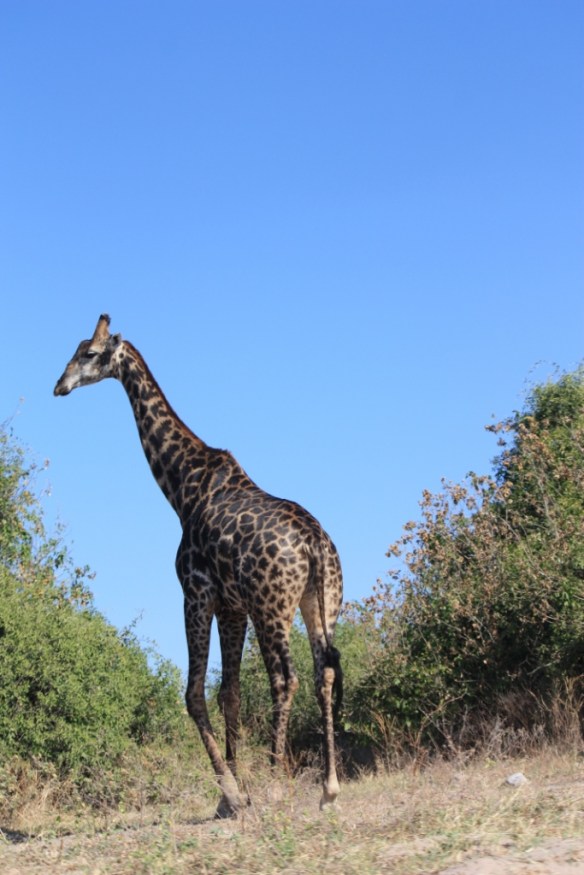
DAILY PHOTO: Walking Mammals, Botswana

Taken at Chobe National Park in May of 2017.

Rainy Dusk Haiku

streetlamp in rain
each droplet catches light,
the drips glow


monsoon rain-song
isn’t loud, but is deafening —
ear-hushed / mind din


cyclone residue
crawls inland, shedding the sea
hauled to sky

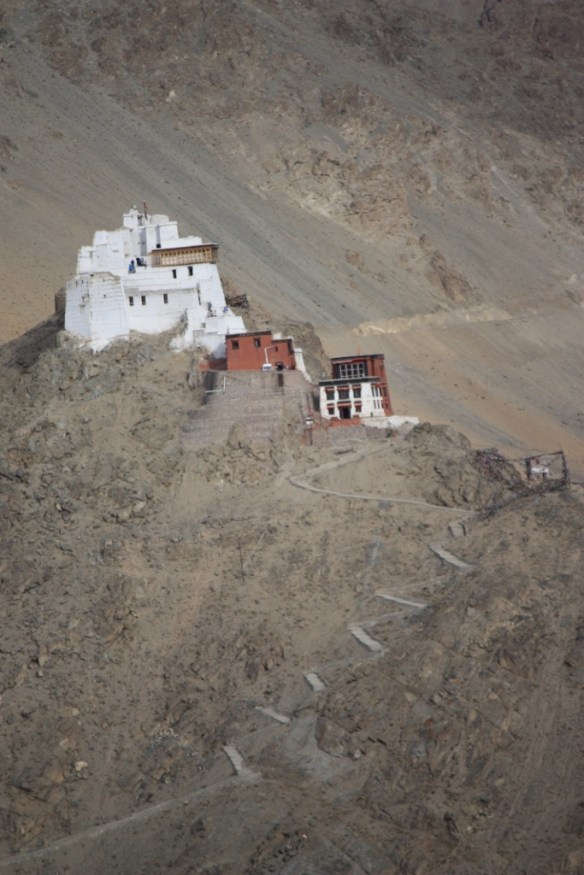
DAILY PHOTO: Castle at Tsemo from Shanthi Stupa

Taken in Leh, from the Shanthi Stupa, in August of 2016

POEM: Freak Street


In the dim lanes of the circus city,
set wide of the world you’ve come to know,
some part of a person vanishes —
stripped away in silence and without warning —
and whether that’s good or foul
depends on what rabbit-hole you drift into,
how deep you sink,
what hooks you back into the world you recognize,

&
whether that world recognizes you, back.

POEM: A Dead Winter Stillness

a faintly unnerving stillness burdens the forest

-not a beast scurrying or digging

-no birdcalls of alarm or affection

frost glitters on the rooted earth when the sun cracks through the clouds

but then falls invisible,

leaving that black soil unadorned

what do the hidden creatures smell?

what do the birds that pass silently over this forest know?

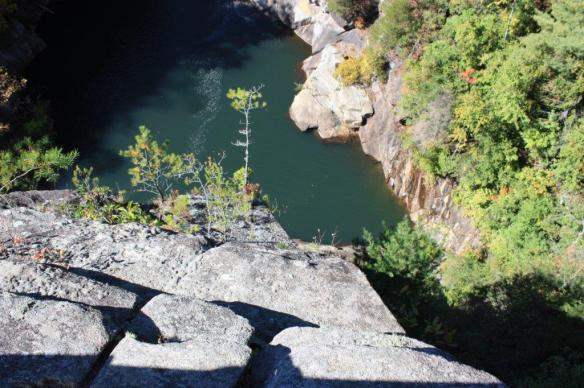
DAILY PHOTO: A Gorge, Looking Down v. Looking Across

Taken near Tallulah Falls in the autumn of 2011.