“Parting” [送别] by Wang Wei [王维] [w/ Audio]

I dismount to share some booze, 
And ask the wayfarer where he goes.
Begrudgingly, and with discontent,
He says, "I'll rest up near South Mount."
He asks me to just leave him be.
White clouds cross vast skies - endlessly.

This is poem 13 in the 300 Tang Poems [唐诗三百首.] The original poem in Simplified Chinese is:

下马饮君酒, 问君何所之?
君言不得意, 归卧南山陲。
但去莫复问,白云无尽时。

“Weichuan Farmers” [渭川田家] by Wang Wei [王维] [w/ Audio]

Low, warm light lands on the village.
Cattle and sheep trapsing farmward.
Farmer mulls a missing shepherd,
Leaning on his staff, still on guard.
Pheasants cluck, wheat heads are heavy,
Silkworms dormant, mulberry leaves few.
Farmers stand, hoes on their shoulders,
Telling old tales, as if they were new.
How I envy the idle time --
To chat about mankind's decline.

This is poem #16 of the 300 Tang Poems [唐诗三百首.] The original poem in Simplified Chinese is:

斜光照墟落, 穷巷牛羊归。 
野老念牧童, 倚杖候荆扉。
雉雊麦苗秀, 蚕眠桑叶稀。
田夫荷锄立, 相见语依依。
即此羡闲逸, 怅然吟式微。

Mount Zhongnan [终南山] by Wang Wei [王维] [w/ Audio]

Taiyi stretches toward heaven;
Linked mountains reach into the sea.
Looking back, white clouds coalesce;
In the mist, the mist can't be seen.
A ridge is a boundary of worlds:
Cloudy or clear; with - or sans - tree.
In need of lodging for the night,
I ask the woodsman cross river from me.

This is poem #118 of the 300 Tang Poems [唐诗三百首.] The original in Simplified Chinese is:

太乙近天都, 连山接海隅。
白云回望合, 青霭入看无。
分野中峰变, 阴晴众壑殊。
欲投人处宿, 隔水问樵夫。

“Wang Chuan Village After Rain” [积雨辋川庄作] by Wang Wei [王维]

Smoke slowly rises from sodden woods;
Millet 's steamed to feed the fieldhands;
Egrets fly over foggy paddies;
Hidden birds sing from lush tree stand.
Mountain hikers study hibiscus,
Under dewy pines chew sunflower seeds,
Give mat space to any old traveler.
Gull and I: wary of each other's deeds.

Original Poem in Simplified Chinese:

积雨空林烟火迟, 蒸藜炊黍饷东菑。
漠漠水田飞白鹭, 阴阴夏木啭黄鹂。
山中习静观朝槿, 松下清斋折露葵。
野老与人争席罢, 海鸥何事更相疑?

“Bamboo Grove Cabin” [竹里馆] by Wang Wei [王维] [w/ Audio]

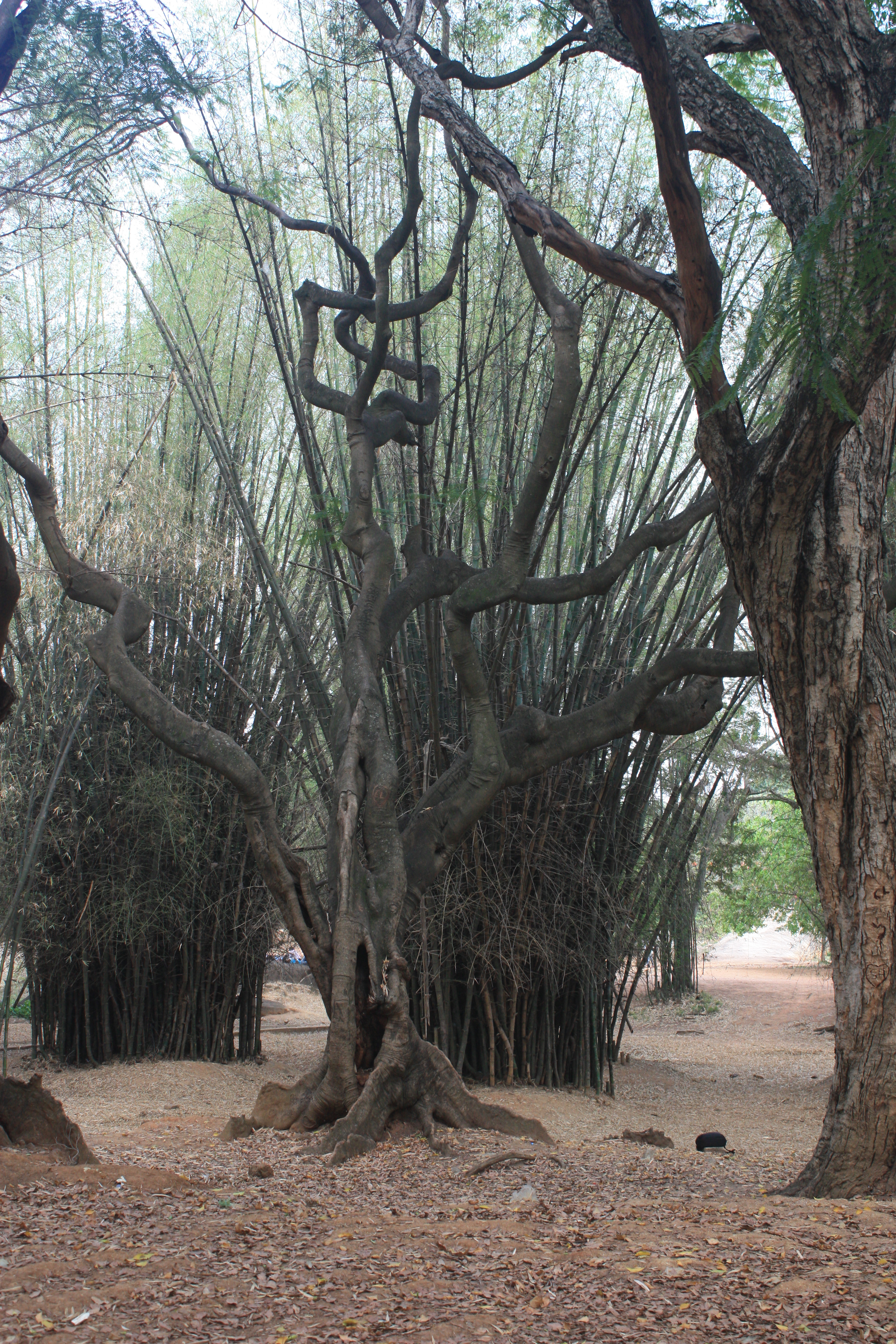
Sitting alone -- secluded bamboo grove:
I whistle or pluck my zither;
People don't know my deep forest;
Moon and I shine on each other.

Original in Simplified Chinese:

独坐幽篁里
弹琴复长啸
深林人不知
明月来相照

“The Blue-Green Stream” by Wang Wei (Lowell version) [w/ Audio]

Every time I have started for the Yellow Flower River,
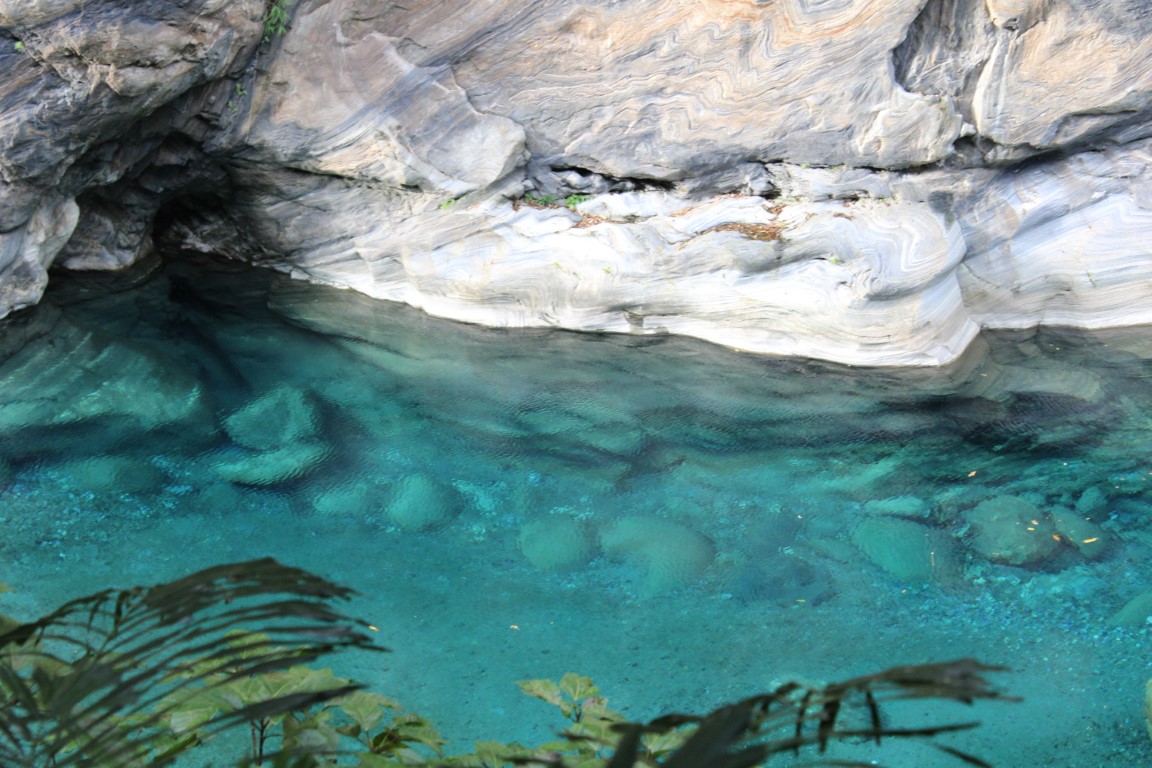
I have gone down the Blue-Green Stream,
Following the hills, making ten thousand turnings.
We go along rapidly, but advance scarcely one hundred li.
We are in the midst of a noise of water,
Of the confused and mingled sounds of water broken by stones,
And in the deep darkness of pine-trees.
Rocked, rocked,
Moving on and on,
We float past water-chestnuts
Into a still clearness reflecting reeds and rushes.
My heart is clean and white as silk;
it has already achieved Peace;
It is smooth as the placid river.
I long to stay here, curled up on the rocks,
Dropping my fish-line forever.

NOTE: This version was translated by Florence Ayscough and adapted by Amy Lowell in the book: Fir-Flower Tablets (1921) New York: Houghton Mifflin, p. 123

“Jade Gate Pass” by Wang Wei [w/ Audio]

Dawn rain has washed the city of its dust;
The refreshed hotel willows tremble in a gust.
My friendly advice, you dry up another glass,
You have no acquaintance beyond The Jade Gate Pass.

The Painting by Wang Wei [w/ Audio]

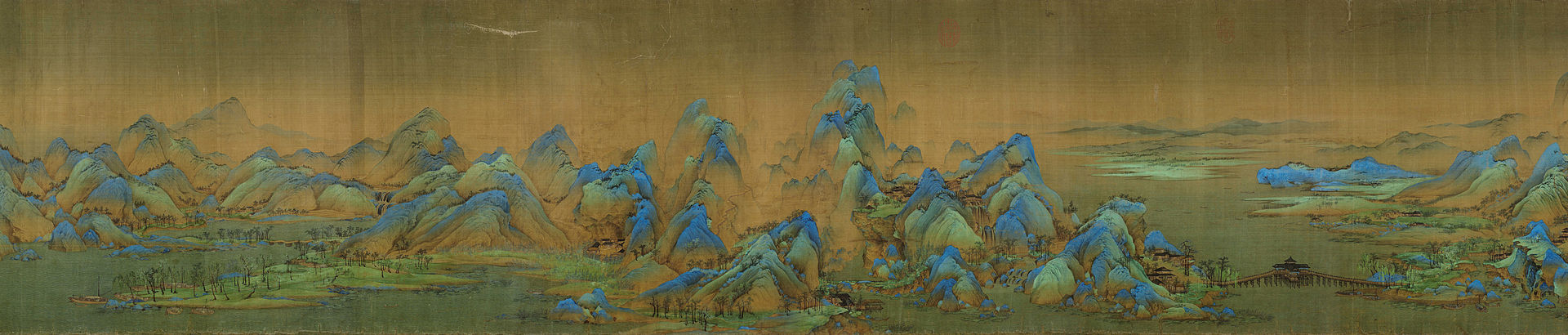
Afar, colorful mountains.
 Near, silent waters.
 Spring 's gone but flowers remain.
 People come but birds aren't startled.
Original:

遠看山有色
近聽水無聲
春去花還在
人來鳥不驚

BOOK REVIEW: Poetry and Prose of the Tang and Song [Trans. by Yang Xianyi & Gladys Yang]

Poetry and prose of the Tang and SongPoetry and prose of the Tang and Song by Yang Xianyi
My rating: 5 of 5 stars

Amazon.in Page

This collection includes works from eighteen prominent poets and writers from the Tang (618-907 AD) and Song (960 – 1279 AD) Dynasties of China. Among the most famous of the included authors are: Wang Wei, Li Bai, Du Fu, Bai Juyi, Wang Yucheng, and Su Shi. The included works (mostly poems but including some brief prose writings) explore subjects such as nature, social justice, patriotism, travel, and drinking. If some of those topics surprise you, you’re not alone. I may be letting my biases show, but I was surprised by how much social outrage and humor was contained in these works from the China of 750 to 1,400 years ago. That said, most of the works do present the kind of sparse imagist depictions of natural scenes one would likely expect from Chines poets in days of yore. (Think haiku, but longer — though no less devoid of analysis or judgement.)

As someone who isn’t an expert on Chinese literature or even a speaker of any of the Chinese languages, I can’t comment intelligently on how precise the translations are. However, the English language versions contained in this volume are evocative, clever, and, occasionally, funny.

To give one an idea of the kind of humor, I’ll offer this quote from a poem by Xin Qiji:

Last night by the pine I staggered tipsily
And asked the pine, “How drunk am I?”
When I imagined the pine sidling over to support me,
I pushed it off saying, “Away!”


I enjoyed this collection, and would highly recommend it.


View all my reviews

BOOK REVIEW: Three Tang Dynasty Poets by Wang Wei, Li Po, and Tu Fu

Three Tang Dynasty PoetsThree Tang Dynasty Poets by Wang Wei
My rating: 5 of 5 stars

Amazon page


This book is in a series put out by Penguin Books entitled “Little Black Classics.” As the series name implies, these are booklets featuring classic works (or fragments, thereof.) This book features a combined 33 poems by three Chinese poets who lived in the eight century.

In the 14 poems by Wang Wei (a.k.a. Wang Youcheng) we see his famed mastery of landscape and nature poems, and we feel the effect of his Cha’an (Zen) Buddhist mindset.

Among the ten poems by Li Po (a.k.a. Li Bai) we are introduced from the beginning to the poet’s legendary proclivity for drink. While it’s not all carousing, human characters do play a more central role in Li Po’s work.
There are nine poems by Tu Fu (or, Du Fu), which share Li Po’s inclination to feature humanity at the heart of each poem, if in a more straight-laced way.

I enjoyed the poems in both their imagery and sound quality. I can’t really speak to how skilled the translation was, i.e. how much better or worse they could have been. The translators were G.W. Robinson and Arthur Cooper, who I know nothing of, but who apparently both translated a considerable amount of classic Chinese literature.

The poems are almost all short form works, so – with one exception – the poems are included in their entirety (i.e. not excerpted.)

The booklet has an appendix that features a two-page prose story entitled “The Story of the Peach Blossom Spring” by Tao Yuanming. The reason for including the story is that it’s the inspiration for the Wang Wei poem that opens the volume.

I enjoyed reading this little booklet of poetry. The translations are easy to follow, and the imagery is appealing. The Zen / Taoist feel that is widespread in these works is pleasant.

View all my reviews