“Drinking Alone in the Rainy Season” by Tao Yuanming [陶渊明] (a.k.a. Táo Qián, or 陶潜]

Whatever lives must meet its end --
That is the way it has always been.

If Taoist immortals were once alive,
Where are they today?

The old man who gave me wine
Claimed it was the wine of the immortals.

One small cup and a thousand worries vanish;
Two, and you'll even forget about heaven.

But is heaven really so far away?
It is best to trust in the Tao.

A crane in the clouds has magic wings
To cross the earth in a moment.

It's been forty years of struggle
Since I first became reclusive.

Now that my body is nearly dead,
My heart is pure. What more is there to say?

NOTE: This is the translation of Sam Hamill found in The Poetry of Zen (2004); Shambhala Publications: Boston, MA, p.24.

“Weichuan Farmers” [渭川田家] by Wang Wei [王维] [w/ Audio]

Low, warm light lands on the village.
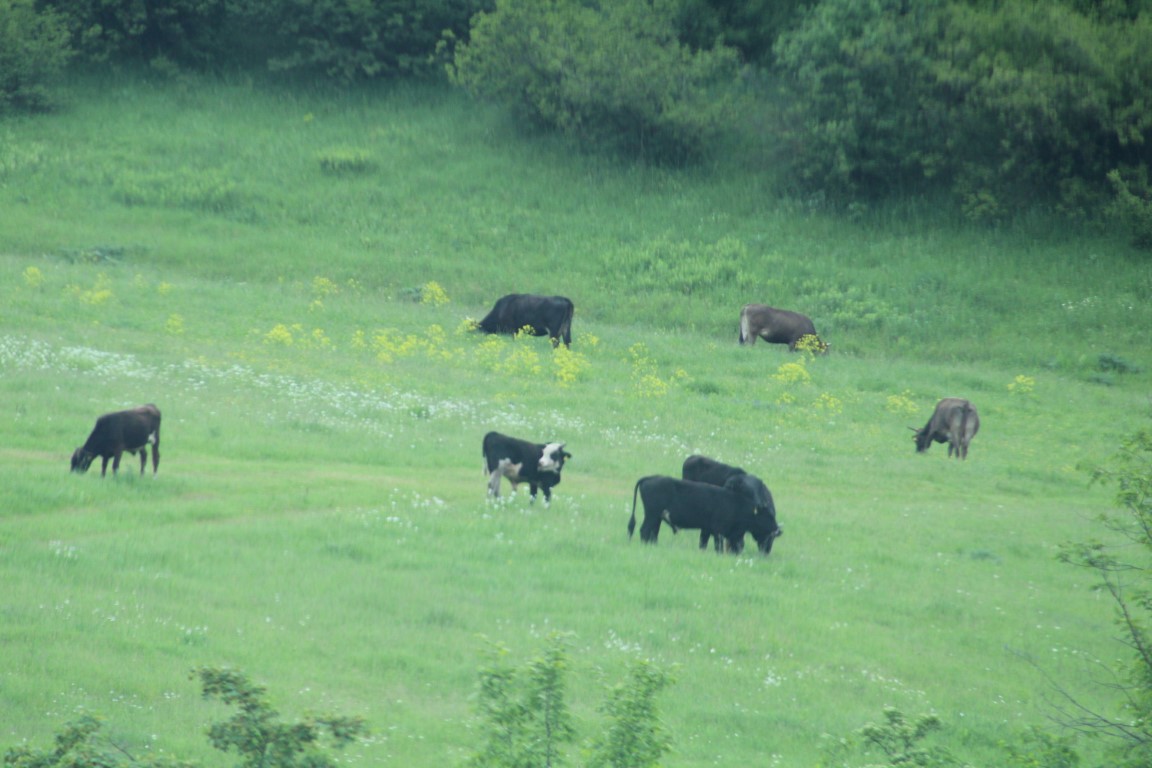
Cattle and sheep trapsing farmward.
Farmer mulls a missing shepherd,
Leaning on his staff, still on guard.
Pheasants cluck, wheat heads are heavy,
Silkworms dormant, mulberry leaves few.
Farmers stand, hoes on their shoulders,
Telling old tales, as if they were new.
How I envy the idle time --
To chat about mankind's decline.

This is poem #16 of the 300 Tang Poems [唐诗三百首.] The original poem in Simplified Chinese is:

斜光照墟落, 穷巷牛羊归。 
野老念牧童, 倚杖候荆扉。
雉雊麦苗秀, 蚕眠桑叶稀。
田夫荷锄立, 相见语依依。
即此羡闲逸, 怅然吟式微。

“Autumn Moon” [秋月] by Cheng Hao [程颢] [w/ Audio]

A clear stream passes by the
mountain clad in green;
The clear sky and clear water
melt in autumn hue.
Far far away from the tumultuous
world unclean,
Long long will white clouds and
red leaves be friend to you.

Note: This is the joint translation of Xu Yuanchong and Xu Ming found in the edition of Golden Treasury of Quatrains and Octaves on which they collaborated (i.e. China Publishing Group: Beijing (2008) p. 64.)

“In Search of the Taoist, Chang” [寻南溪常道士] by Liu Changqing 刘长卿

I walk the narrow path,
Clogs divoting the moss.
White clouds over the shore;
Gate obscured by Spring grass.
Post-rain, I see the pines,
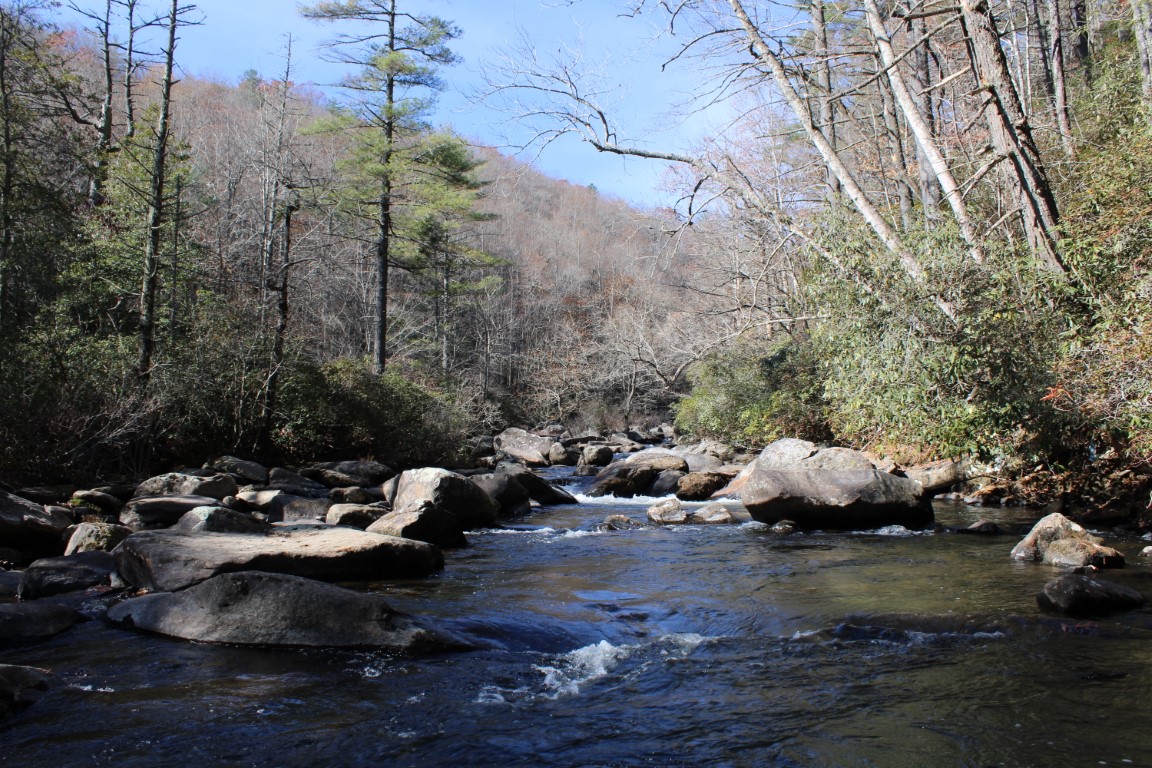
Follow stream to its source.
Flower-mind, then Zen Mind --
Arrived! Words have no force.

This is poem #136 of the 300 Tang Poems [唐诗三百首.] The original in Simplified Chinese goes:

一路经行处, 莓苔见屐痕。
白云依静渚, 春草闭闲门。
过雨看松色, 随山到水源。
溪花与禅意, 相对亦忘言。

“Little Echoed Hills” [小重山] by Yue Fei [岳飞] [w/ Audio]

Last night chirps resounded in the cold,
Through witching hour no sleep occurred.
I rose and slowly walked, alone.
Moonlight window glow, but no one stirred.

I've grayed in service and search of fame.
On hills, back home, the pines have grown old.
That's the story I'd let my lute tell,
If a string weren't broken &
there was someone to be told.

“Impromptu Lines Written on a Spring Day” [春日偶成] by Cheng Hao [程颢]

Towards noon fleecy clouds waft in the gentle breeze;
I cross the stream amid flowers and willow trees.
What do the worldlings know about my hearty pleasure?
They'd only take me for a truant fond of leisure.

Note: This is the joint translation of Xu Yuanchong and Xu Ming found in the edition of Golden Treasury of Quatrains and Octaves on which they collaborated (i.e. China Publishing Group: Beijing (2008.))

“The Taoist Temple Revisited” [再游玄都观] by Liu Yuxi [刘禹锡]

In half of the wide courtyard only mosses grow;
Peach blossoms all fallen, only rape flowers blow.
Where is the Taoist planting peach trees in this place?
Only I come again after my new disgrace.

Note: This is the joint translation of Xu Yuanchong and Xu Ming found in the edition of <em>Golden Treasury of Quatrains and Octaves</em> on which they collaborated (i.e. China Publishing Group: Beijing (2008.))

The “new disgrace” referenced was Liu Yuxi’s second exile.

Mount Zhongnan [终南山] by Wang Wei [王维] [w/ Audio]

Taiyi stretches toward heaven;
Linked mountains reach into the sea.
Looking back, white clouds coalesce;
In the mist, the mist can't be seen.
A ridge is a boundary of worlds:
Cloudy or clear; with - or sans - tree.
In need of lodging for the night,
I ask the woodsman cross river from me.

This is poem #118 of the 300 Tang Poems [唐诗三百首.] The original in Simplified Chinese is:

太乙近天都, 连山接海隅。
白云回望合, 青霭入看无。
分野中峰变, 阴晴众壑殊。
欲投人处宿, 隔水问樵夫。

Lament 4 [感遇四] by Zhang Jiuling [张九龄] [w/ Audio]

South of Yangtze, stands of red tangerine
Can endure winter while remaining green.
Is it that the weather there is so warm?
No. Their nature 's to bear a winter storm.
What might well serve the joyful traveler
Will be loathsome peril to passengers.
Fate factors in chance and situation --
Not playing around in cyclic rotation.
You may cultivate crops however you please,
But should heed shade thrown by mountains & trees.

This is the fourth poem in 300 Tang Poems [唐诗三百首] and the final poem of a quartet that opens that collection. The original in Simplified Chinese is:

江南有丹橘, 经冬犹绿林;
岂伊地气暖? 自有岁寒心。
可以荐嘉客, 奈何阻重深!
运命惟所遇, 循环不可寻。
徒言树桃李, 此木岂无阴?

Wen Fu 9 [文赋九] “The Whip” by Lu Ji [陆机] [w/ Audio]

Language can be complex, reason may sprawl,
And words don't always seem to point the way.
Extremes aren't always clear and distinct.
Overhauls are not always an upgrade.
The gist may dwell in a key phrase or two --
Those words the whip that make it race or stay.
Though multitudinous words are in place
They must do more than roar, hiss, or bray.
Overuse of the whip exhausts the horse --
Keep the impulse to whip too much at bay.

The original lines in Simplified Chinese are:

或文繁理富,    而意不指适。
极无两致, 尽不可益。
立片言而居要,乃一篇之警策。
虽众辞之有条,必待兹而效绩。
亮功多而累寡,故取足而不易。