Nuns fret not at their convent's narrow room;
  And hermits are contented with their cells;
  And students with their pensive citadels;
  Maids at the wheel, the weaver at his loom,
 Sit blithe and happy; bees that soar for bloom,
  High as the highest Peak of Furness-fells,
  Will murmur by the hour in foxglove bells:
  In truth the prison, into which we doom
 Ourselves, no prison is: and hence for me,
  In sundry moods, 'twas pastime to be bound
  Within the Sonnet's scanty plot of ground;
  Pleased if some Souls (for such there needs must be)
 Who have felt the weight of too much liberty,
  Should find brief solace there, as I have found.
Four Seasons fill the measure of the year;
   There are four seasons in the mind of man:
 He has his lusty Spring, when fancy clear
   Takes in all beauty with an easy span:
 He has his Summer, when luxuriously
   Spring's honied cud of youthful thought
     he loves
 To ruminate, and by such dreaming high
   Is nearest unto heaven: quiet coves
 His soul has in its Autumn, when his wings
   He furleth close; contented so to look
 On mists in idleness -- to let fair things
   Pass by unheeded as a threshold brook.
 He has his Winter too of pale misfeature,
 Or else he would forego his mortal nature.
As a fond mother, when the day is o'er,
  Leads by the hand her little child to bed,
  Half willing, half reluctant to be led,
  And leave his broken playthings on the floor,
 Still gazing at them through the open door,
  Nor wholly reassured and comforted
  By promises of others in their stead,
  Which, though more splendid, may not
     please him more;
 So Nature deals with us, and takes away
  Our playthings one by one, and by the hand
  Leads us to rest so gently, that we go
  Scarce knowing if we wish to go or stay,
 Being too full of sleep to understand
 How far the unknown transcends the
     what we know.
That time of year thou mayest in me behold
  When yellow leaves, or none, or few, do hang
  Upon those boughs which shake against the cold,
  Bare ruined choirs, where late the sweet birds sang.
 In me though seest the twilight of such day
  As after sunset fadeth in the west,
  Which by and by black night doth take away,
  Death's second self, that seals up all in rest.
 In me thou seest the glowing of such fire
  That on the ashes of his youth doth lie,
  As the death-bed whereon it must expire,
  Consumed with that which it was nourished by.
     This thou perceiv'st, which makes thy love more strong,
     To love that well, which thou must leave ere long.
Still will I harvest beauty where it grows:
  In coloured fungus and the spotted fog
  Surprised on foods forgotten; in ditch and bog
  Filmed brilliant with irregular rainbows
 Of rust and oil, where half a city throws
  Its empty tins; and in some spongy log
  Whence headlong leaps the oozy emerald frog...
  And a black pupil in the green scum shows.
 Her the inhabiter of divers places
  Surmising at all doors, I push them all.
  Oh, you that fearful of a creaking hinge
  Turn back forevermore with craven faces,
 I tell you Beauty bears an ultra fringe
  Unguessed of you upon her gossamer shawl!
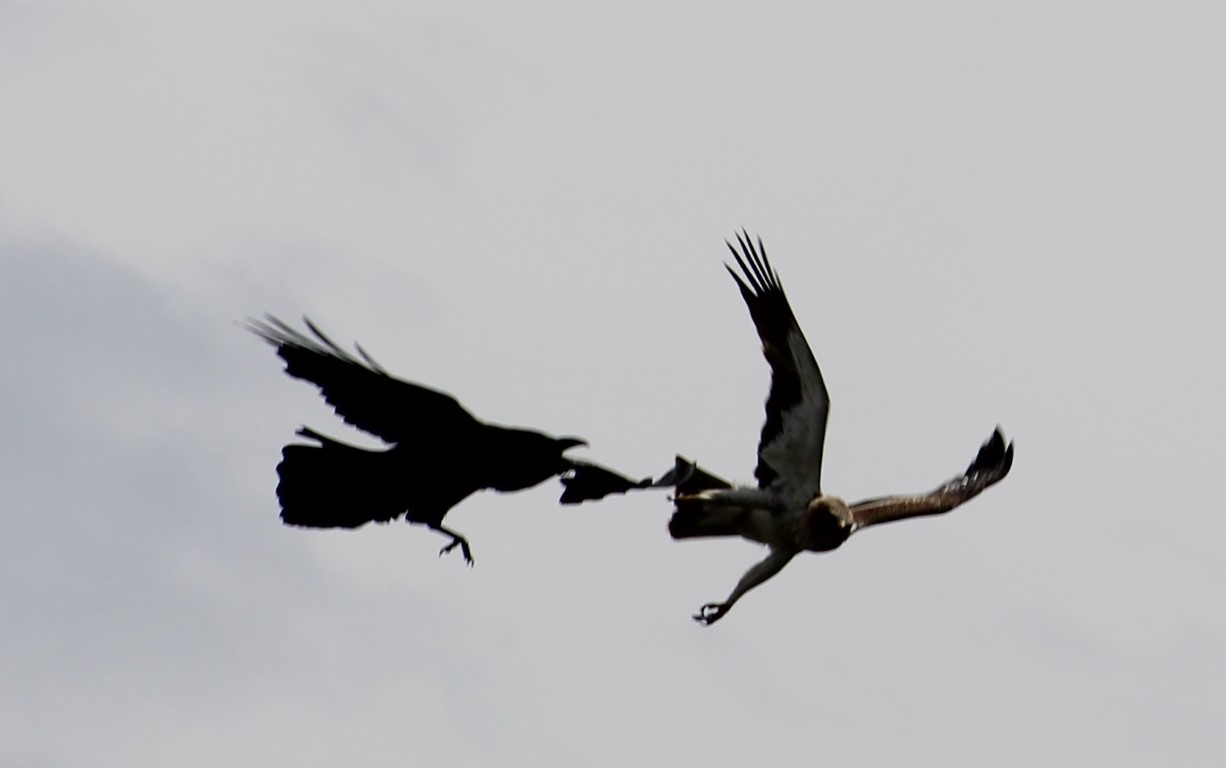
Their shadow dims the sunshine of our day,
 As they go lumbering across the sky,
 Squawking in joy of feeling safe on high,
 Beating their heavy wings of owlish gray.
  They scare the singing birds of earth away
  As, greed-impelled, they circle threateningly,
  Watching the toilers with malignant eye,
  From their exclusive haven -- birds of prey.
 They swoop down for the spoil in certain might,
 And fasten in our bleeding flesh their claws.
  They beat us to surrender weak with fright,
  And tugging and tearing without let or pause,
  They flap their hideous wings in grim delight,
  And stuff our gory hearts into their maws.
If thou must love me, let it be for nought
  Except for love's sake only. Do not say,
  "I love her for her smile -- her look -- her way
  Of speaking gently, -- for a trick of thought
  That falls in well with mine, and certes brought
  A sense of pleasant ease on such a day" --
 For these things in themselves, Beloved, may
  Be changed, or change for thee -- and love, so wrought,
  May be unwrought so. Neither love me for
  Thine own dear pity's wiping my cheeks dry:
  A creature might forget to weep, who bore
  Thy comfort long, and lose thy love thereby!
 But love me for love's sake, that evermore
 Thou mayst love on, through love's eternity.
Scorn not the Sonnet; Critic, you have frowned,
  Mindless of its just honours; with this key
  Shakespeare unlocked his heart; the melody
  Of this small lute gave ease to Petrarch's wound;
 A thousand times this pipe did Tasso sound;
  With it Camöens soothed an exile's grief;
  The Sonnet glittered a gay myrtle leaf
  Amid the cypress with which Dante crowned
 His visionary brow: a glow-worm lamp,
  It cheered mild Spenser, called from Faery-land
  To struggle through dark ways, and, when a damp
  Fell round the path of Milton, in his hand
 The thing became a trumpet; whence he blew
 Soul-animating strains -- alas, too few!
Mine eye hath play'd the painter and hath stell'd
  Thy beauty's form in table of my heart;
  My body is the frame wherein 'tis held,
  And perspective it is best the painter's art.
 For through the painter must you see his skill
  To find where your true image pictur'd lies,
  Which in my bosom's shop is hanging still,
  That hath his windows glazed with thine eyes.
 Now see what good turns eyes for eyes have done:
  Mine eyes have drawn thy shape, and thine for me
  Are windows to my breast, wherethrough the sun
  Delights to peep, to gaze therein on thee.
    Yet eyes this cunning want to grace their art;
    They draw but what they see, know not the heart.












 Tiger Riding for Beginners