What’s your favorite word?
“Sword” is “words” with a simple swap where the word leapfrogs its ass, and yet they are unrhymable with each other. That’s a word with some sort of voodoo magic.

What’s your favorite word?
“Sword” is “words” with a simple swap where the word leapfrogs its ass, and yet they are unrhymable with each other. That’s a word with some sort of voodoo magic.
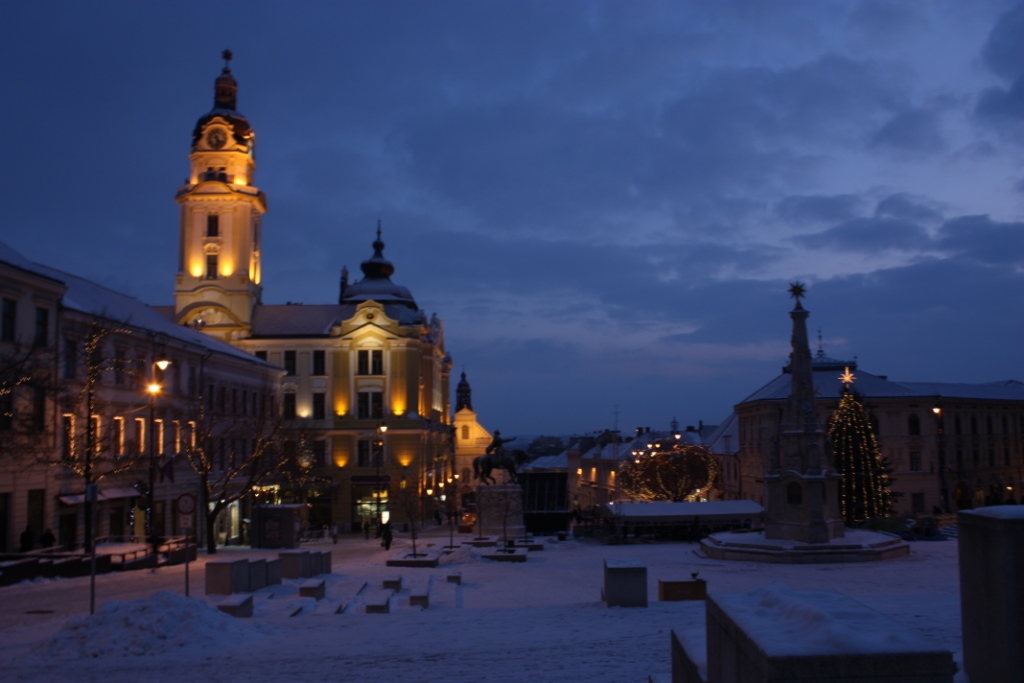
From our low seat beside the fire
 Where we have dozed and dreamed and watched the glow
 Or raked the ashes, stopping so
 We scarcely saw the sun or rain
 Above, or looked much higher
 Than this same quiet red or burned-out fire.
To-night we heard a call,
 A rattle on the window-pane,
 A voice on the sharp air,
 And felt a breath stirring our hair,
 A flame within us: Something swift and tall
 Swept in and out and that was all.
Was it a bright or dark angel? Who can know?
It left no mark upon the snow,
 But suddenly it snapped the chain
 Unbarred, flung wide the door
 Which will not shut again;
 And so we cannot sit here anymore.
We must arise and go:
 The world is cold without
 And dark and hedged about
 With mystery and enmity and doubt,
 But we must go
 Though yet we do not know
 Who called, or what marks we shall leave upon the snow.
 The Sounds of Poetry: A Brief Guide by Robert Pinsky
My rating: 4 of 5 stars
As the title suggests, this is a book about sound as a component of poetry. Besides the characteristics of noises made in reading poetry, the book details the various characteristics that shape the overall sound of a poem–such as the duration of a syllable and whether it’s stressed or unstressed. Having said that, a major theme of Pinsky’s work is that one shouldn’t be absolutist or rigid about these characteristics (e.g. stress versus unstressed) and should instead look at the relative traits (i.e. more or less stressed.) By adopting a more flexible view of the concepts like accent (stress), rhyme, similarity of sound, one opens up limitless options for poetry.
The book consists of five chapters. The front matter includes an introduction and a brief commentary on theory. The latter points out that there are no hard rules, but by paying attention to these concepts one can produce richer and more interesting sounding poems. Pinsky reviews the most common poetic terms (e.g. iamb, trochee, spondee, etc.) but also looks at how these are varied for effect in a way that is enjoyable to all but prosody hardliners.
The chapters are: 1.) Accent and duration; 2.) Syntax and line; 3.) Technical terms and vocal realities; 4.) Like and unlike sounds; 5) Blank verse and Free verse. (fyi: Blank verse is unrhymed verse that has a regular meter (most commonly iambic pentameter. Free verse is unrhymed verse with irregular meter.)
There are relatively few poems used as examples in this book. Some readers may find this a bit tedious and would prefer being exposed to more (and more varied) examples. However, other readers will enjoy drilling down into a few poems along several dimensions. That’s a matter of personal preference, but the reader should be aware of it.
The book is less than 150 pages even with the back matter, which includes recommended readings and glossary of names and terms. It’s a quick read.
I enjoyed this book. It’s not too technical, and can be followed by a reader whether they’ve had an extensive education into poetry or not. It’s not doctrinaire about prosody, which appeals to my personal preferences. It provoked some intriguing insights, such as the flexible approach to accent as well as poetry as an art that uses the body of reader as its medium—their respiratory systems, vocal chords, and related musculature how these sounds are produced.
I’d recommend the book for poets and readers of poetry who are serious about the endeavor.
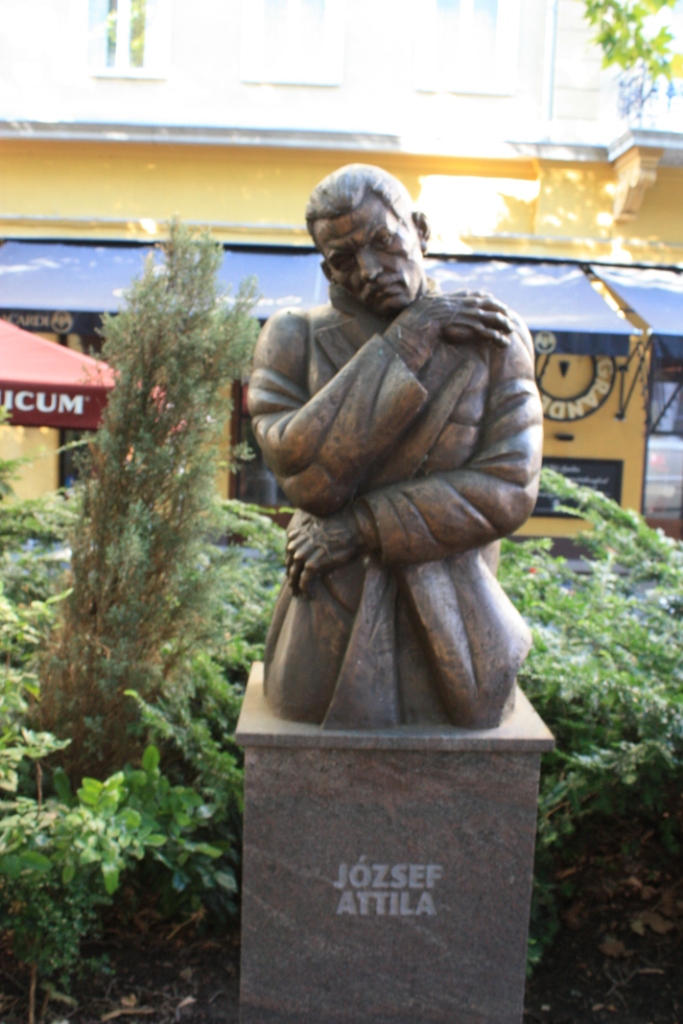
A fine Hungarian poet who Wrote with and without rhyme
it’s my cross, my curse
this rhyme in my verse
rhymers aren’t taken seriously
and are berated furiously
“Oh, your poem is so cutsie,
like little baby bootsies.”
call it banal or call it niche
but “cutsie?”, please!, step off bitch
just because my verse ain’t free
don’t act like I’m a perp to slavery
I spare my words the sting of the rod
they’ve never tasted a cattle prod
I’ve never waterboarded my “ands” or “buts”
or kicked a pronoun square in the nuts
I don’t whip my adjectives to get ’em in line
I stand waiting patiently holding a sign
Why steer my words like some stern brigadier?
because it scratches an itch somewhere in my ear
I know my rhymes sometimes lack cachet
because they’re little too Ogden Nash-ay
but from the hilltops I sing
like that guy Rodney King
hear the words of my song
“Can’t the poets all just get along!”


 Tiger Riding for Beginners