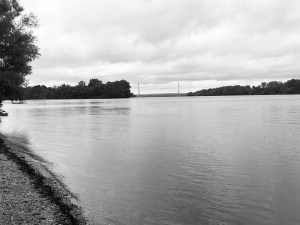
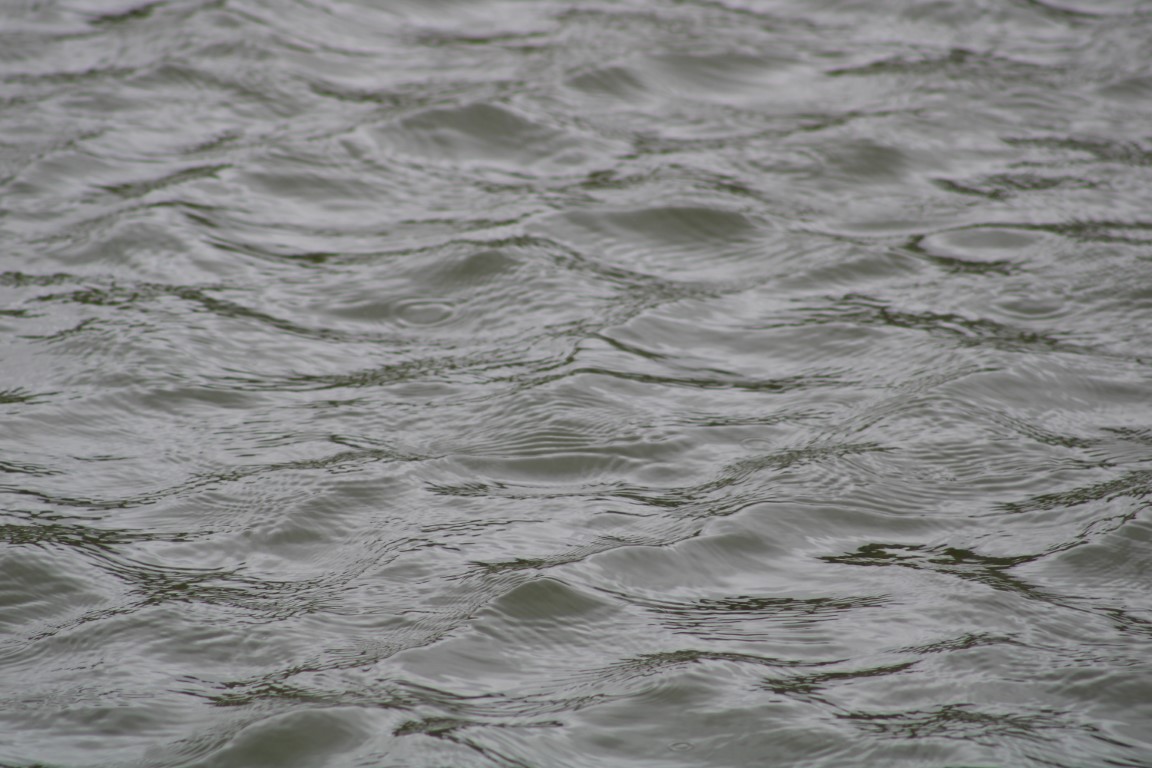
first droplets
 of a Spring shower ripple
  on the river.

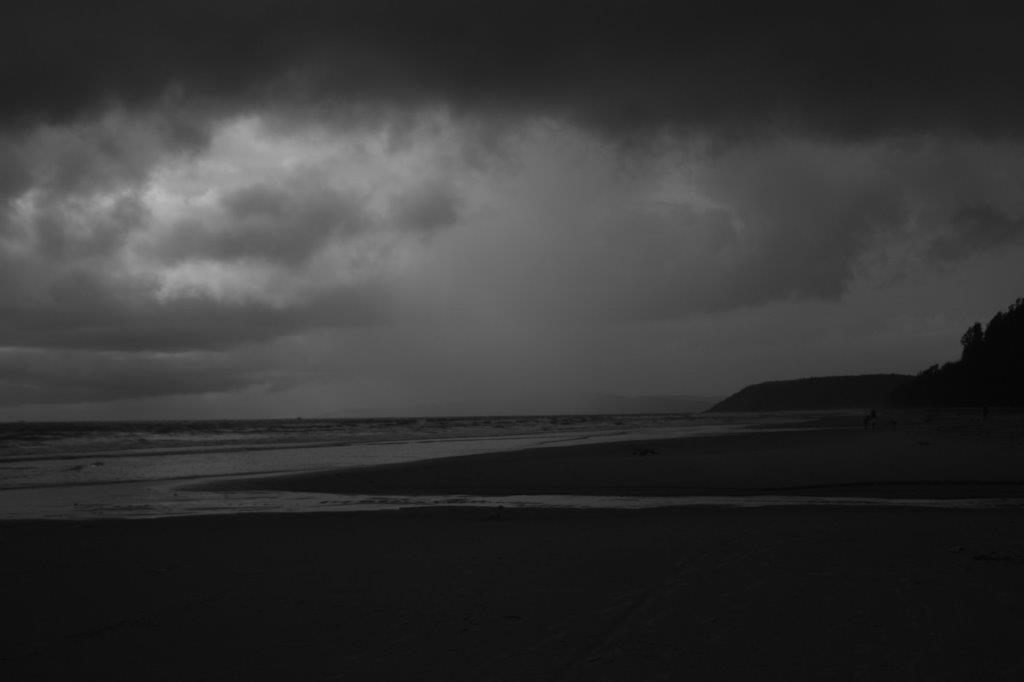
Trees are wagging,
   Whipping, and waving
 That were still but
   A moment ago.
 Dark clouds snuck in
   With pattering rain,
 But, oh, how those
    Foul winds do blow!

rain strike seen
 in ripples on the pond
  before felt on skin.
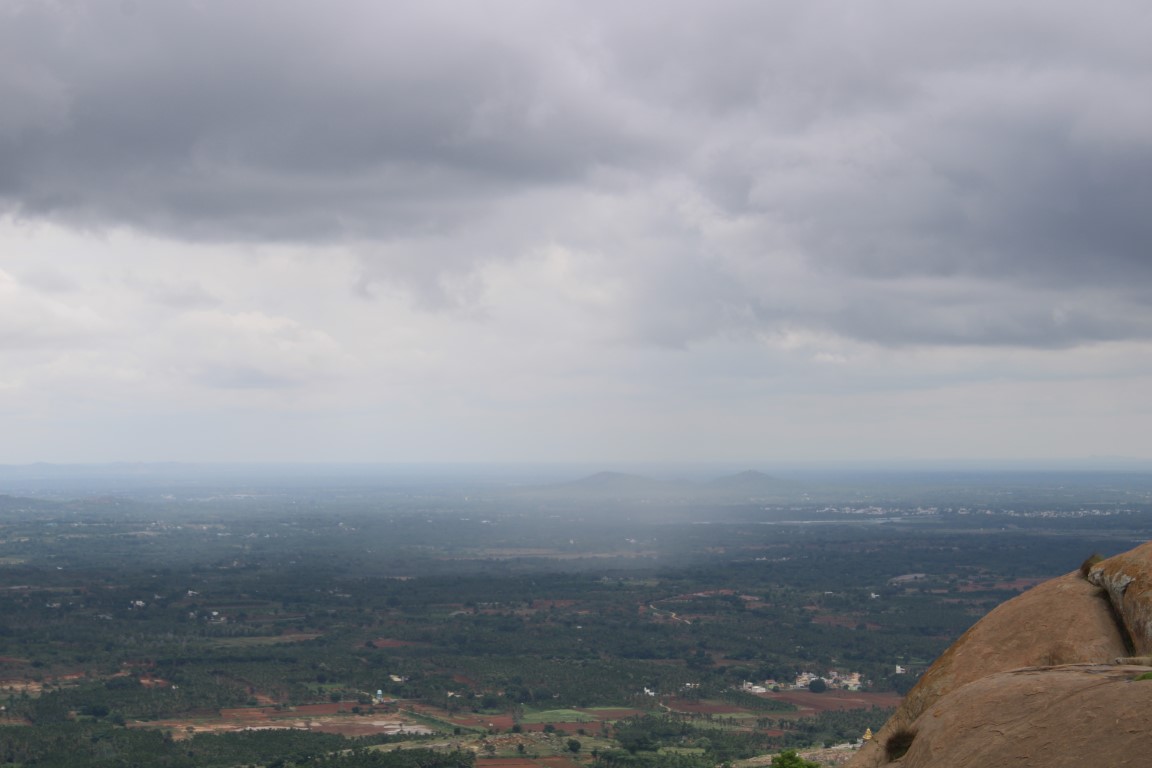
from the hilltop,
 Spring downpour creeps nearer;
  me, sans raingear.
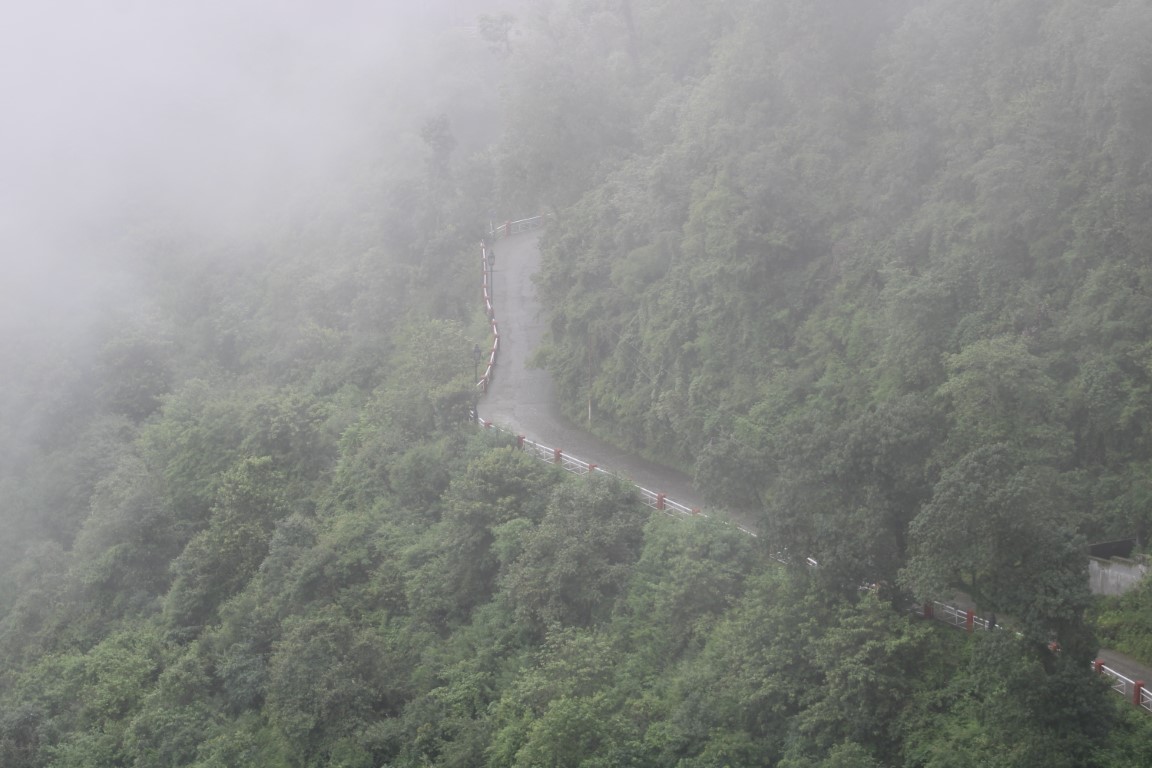
Smoke slowly rises from sodden woods;
   Millet 's steamed to feed the fieldhands;
   Egrets fly over foggy paddies;
   Hidden birds sing from lush tree stand.
Mountain hikers study hibiscus,
   Under dewy pines chew sunflower seeds,
   Give mat space to any old traveler.
 Gull and I: wary of each other's deeds.
Original Poem in Simplified Chinese:
积雨空林烟火迟, 蒸藜炊黍饷东菑。
漠漠水田飞白鹭, 阴阴夏木啭黄鹂。
山中习静观朝槿, 松下清斋折露葵。
野老与人争席罢, 海鸥何事更相疑?
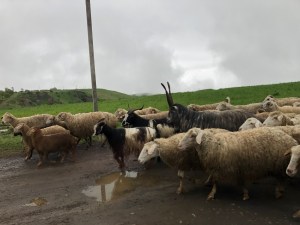
horde of livestock
 sprawls puddle-strewn lane
  between downpours.
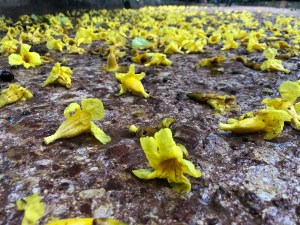
rain-laden blossom
 falls… lands with a sound,
  in the mud.







 Tiger Riding for Beginners