Those who cross boundaries. William Blake with painting and poetry. Yue Fei with martial and poetic arts. Rabindranath Tagore with music and poetry. Da Vinci with painting and sculpture. Weird Al with accordion music and comedy.
Tag Archives: Rabindranath Tagore
“Crossing 16” by Rabindranath Tagore [w/ Audio]
You came to my door in the dawn and sang;
it angered me to be awakened from sleep,
and you went away unheeded.
You came in the noon and asked for water;
it vexed me in my work,
and you were sent away with reproaches.
You came in the evening with your flaming torches.
You seemed to me like a terror and I shut my door.
Now in the midnight I sit alone in my lampless room
and call you back whom I turned away in insult.
“Gitanjali 7” by Rabindranath Tagore [w/ Audio]
My song has put off her adornments.
She has no pride of dress and decoration.
Ornaments would mar our union;
they would come between thee and me;
their jingling would drown thy whispers.
My poet's vanity dies in shame before thy sight.
O master poet, I have sat down at thy feet.
Only let me make my life simple and straight,
like a flute of reed for thee to fill with music.
NOTE: This poem is sometimes titled, “My song has put off her adornments,” or – simply – Song VII.
BOOKS: “One Hundred Poems of Kabir (1915)” Translated by Rabindranath Tagore
One Hundred Poems of Kabir by KabirMy rating: 4 of 5 stars
Amazon.in Page
Kabir was a fifteenth century Indian poet and mystic. This collection was translated by the Bengali Indian Nobel Laureate Rabindranath Tagore, and Tagore’s stylistic imprint is felt in these poems. The poems are overwhelmingly of a mystic / spiritual nature. Kabir was non-sectarian but extremely oriented towards mystic belief. He references the Koran and Vedas alike, but is more likely to communicate in secular, if mystical, terms.
How much the godly emphasis works for the reader will vary greatly. For me it was a bit excessive, often reading more like prayers than poems, but your results may vary.
The only thing I found actually disturbing was the repeated romanticization of sati, a practice in use during Kabir’s lifetime in which widows would be burned alive on their husband’s funeral pyre. Kabir repeatedly writes of sati as if it was always a completely voluntary act of raw passion and connection and was never motivated by being old and destitute (not to mention being societally pressured or, even, physically forced into it.)
The poems are well composed and engaging, and if you can get past the periodic sati propaganda, it’s a pleasant, almost euphoric, read.
View all my reviews
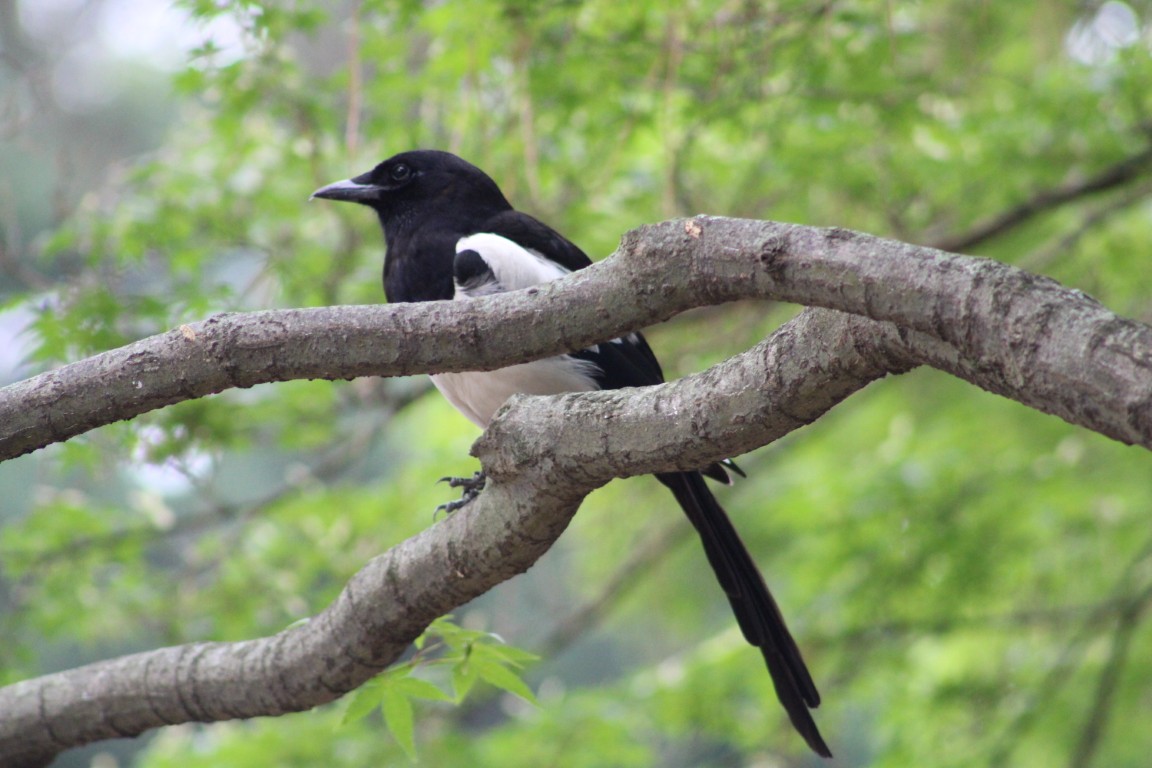
“There Is a Bird in the Tree” by Kabir [w/ Audio]

On this tree is a bird:
It dances in the joy of life.
No one knows where it is:
And who knows what the burden
Of its music may be?
Where the branches throw a deep shade,
There does it have its nest:
And it comes in the evening
And flies away in the morning,
And says not a word
Of that which it means.
None tell me of this bird
That sings within me.
It is neither coloured nor colourless:
It has neither form nor outline:
It sits in the shadow of love.
It dwells within the Unattainable,
The Infinite, and the Eternal;
And no one marks
When it comes and goes.
Kabir says, “O brother Sadhu!
Deep is the mystery.
Let wise men seek to know
where rests that bird.”
NOTE: This is the translation by Rabindranath Tagore from the 1915 text, One Hundred Poems of Kabir. This is poem #30 (XXX) of that volume.
“Gitanjali 35” by Rabindranath Tagore [w/ Audio]
Where the mind is without fear and the head is held high;
Where knowledge is free;
Where the world has not been broken up into fragments by narrow domestic walls;
Where words come out from the depth of truth;
Where tireless striving stretches its arms towards perfection;
Where the clear stream of reason has not lost its way into the dreary desert sand of dead habit;
Where the mind is led forward by thee into ever-widening thought and action
Into that heave of freedom, my Father, let my country awake.
NOTE: This poem is often entitled “Let My Country Awake,” particularly when it is anthologized independently of the larger Gitanjali poem.
“The Gardener – 85” by Rabindranath Tagore [w/ Audio]
Who are you, reader, reading my poems my poems an hundred years hence?
I cannot send you one single flower from this wealth of the spring,
one single streak of gold from yonder clouds.
Open your doors and look abroad.
From your blossoming garden gather fragrant memories
of the vanished flowers of an hundred years before.
In the joy of your heart may you feel the living joy that sang one spring morning,
sending its glad voice across an hundred years.
PLAYTHINGS by Rabindranath Tagore [w/ Audio]
CHILD, how happy you are sitting in the dust, playing with a broken twig all the morning. I smile at your play with that little bit of a broken twig. I am busy with my accounts, adding up figures by the hour. Perhaps you glance at me and think, "What a stupid game to spoil your morning with!" Child, I have forgotten the art of being absorbed in sticks and mud-pies. I seek out costly playthings, and gather lumps of gold and silver. With whatever you find you create your glad games, I spend both my time and my strength over things I never can obtain. In my frail canoe I struggle to cross the sea of desire, and forget that I too am playing a game.
BOOKS: The Crescent Moon by Rabindranath Tagore
The Crescent Moon : Poems and Stories [Paperback] [Jan 01, 2017] Rabindranath Tagore by Rabindranath TagoreMy rating: 5 of 5 stars
Available free at Project Gutenberg
Amazon.in Page
This is a collection of forty poems that are all connected by the theme of childhood. Many are in the voice of a child, but others are in a parent’s voice as he contemplates the nature of youth and how life has changed — or simply as he looks upon a sleeping infant. Some are brief stories or vignettes and others are scenes or philosophical reflections. Among the more well-known inclusions are: “Playthings,” “Paper Boats,” “The Gift,” and “My Song.”
This is Tagore at his most playful, but it retains his usual clever musing.
View all my reviews
Five Wise Lines from Fireflies by Rabindranath Tagore
In the drowsy dark caves of the mind / dreams build their nest with fragments / dropped from day’s caravan.
From the solemn gloom of the temple / children run out to sit in the dust, / God watches them play / and forgets the priest.
The wind tries to take the flame by storm / only to blow it out.
The same sun is newly born in new lands / in a ring of endless dawns.
When death comes and whispers to me, / “Thy days are ended.” / let me say to him, “I have lived in love / and not in mere time.” / He will ask, “Will thy songs remain?” / I shall say, “I know not, but this I know / that often when I sang I found my eternity.
Fireflies by Rabindranath Tagore is in the public domain and can be read at sites such as:
Fireflies is available at PoetryVerse