BOOK REVIEW: How to Read a Poem by Edward Hirsch

How to Read a Poem: And Fall in Love with Poetry (Harvest Book)How to Read a Poem: And Fall in Love with Poetry by Edward Hirsch
My rating: 5 of 5 stars

Amazon page


If one were to judge solely by the mundane title, one might expect this to be a different book—i.e. more along the lines of “Poetry for Dummies.” That’s not what Hirsch is offering with his book. There’s plenty of opportunity to learn to differentiate pentameter from tetrameter or a lyric from an epic poem, but the book isn’t arranged according to such fundamentals. It might even take one a few pages (or chapters) to realize there is an organizing structure. But you’ll get there because of the author’s contagious passion for poetry and his presentation, and an analysis, of many beautiful poems by masters such as Keats, Yeats, Whitman, Dickinson, Frost, Neruda, and many others–more ancient or modern and equally or less well-known. In the end, you’ll think of poetry in a new light.

The book is arranged into 12 chapters, each of which looks at poetry from a different dimension. Chapter 1 considers the poem in two ways. First, it emphasizes the importance of the reader, i.e. the poem is presented as an interaction rather than an act of transmission. Second, the author considers how various poets have defined poetry, and what we can learn from said definitions—besides that poetry is defiant in the face of definition. (Like a wet bar of soap, the tighter one tries to grasp it, the less one succeeds.) Chapter 2 continues to investigate the nature of a poem using the framework of the word’s etymology, coming from the ancient Greek word meaning “to make”–thus the chapter title: “A Made Thing.”

Chapter three delves into the making of connections (or lack thereof) as a theme in poetry. As with most of the book’s chapters, it’s built around a small number of poems that elucidate the author’s point. In this case, poems by Keats, James Wright, and Baudelaire are used to describe cases in which a human connection is sought, in which it momentarily exists, and in which it is shunned. As is true of other chapters, this doesn’t mean that these three poems are all that are mentioned. It’s just that they are given in-depth analysis, while other poems and fragments are referenced to help illustrate points.

Chapter four is entitled “Three Initiations” and it introduces three types of poetry through quintessential examples. The three types of poems are: 1.) poetry of trance; 2.) poetry of praise; and 3.) poetry of grief. The latter two may be more easily grasped than the first, which are poems that convey an altered state of consciousness.

Chapter five examines the subject of authenticity and vividness in poetry and how poets convey such genuineness—even by way of surrealism. The classic example is Shakespeare’s sonnets that mock Petrarchan sonnets in suggesting a less hyperbolic form of love letter (i.e. Sonnet 130, “My mistress’ eyes are nothing like the sun”)

Chapter six is entitled, “5 Acts,” and, as such, it covers five different subjects through the motif of a play. This first act is about opening poems or introductory soliloquy. The second act is about drama and its role in verse, and is heavily influence by a quote from Robert Frost (i.e. “Everything written is as good as it is dramatic.”) Act three is about what might be called “character” in the scheme of a play, but is really about the personhood of a poem. Act four delves into the topic of dialogue as a poetic tool. The last act is about concluding poems / death poems—as exemplified by Bashō’s deathbed poem and the postcard poems written by Miklós Radnóti on a Holocaust death march.

Chapter seven considers desolation as a theme in poetry. The next chapter places poetry in the context of history, using Polish poetry of war and Holocaust to convey the emotion and numbness of tragic events. Chapter nine proposes a nexus between art and justice, and looks at how this is displayed through jeremiads and political poems. The two core examples of this chapter are a work song by Sterling Brown and an ode by Pablo Neruda.

Along with chapter four’s “poetry of trance,” I found chapter ten’s discussion of poems that transport the reader to a moment of epiphany–or ecstatic / transcendental experience–to be particularly fascinating. There are a couple modern pieces that Hirsch presents herein, but some work by Dickinson introduces the topic and truly shows how it’s done. Chapter eleven presents the soul as a poetic theme. The poem gives substance to that which is inherently insubstantial, but which is somehow essential and beyond refute. Walt Whitman’s references to the soul offer particularly vivid insight on this question.

The last chapter is a brief echo of the first, reiterating the role of the reader and the need for poetic definitions for poetry because any definition that tries to capture the medium in precise prose loses it as it’s reinvented countless times over. If one prefers a simple and direct definition of poetry—e.g. writing that displays meter and rhyme–this is may not be your go-to book. (You might prefer a book such as Fry’s “The Ode Less Traveled” that is more dogmatic about prosody as the sine qua non of poetry.)

As for ancillary material, there is a huge glossary. It’s huge not by virtue of containing a vast number of words, but rather because it goes into considerable detail on most of the entries. There is also an extensive and thoroughly organized “recommended reading” section. The book also offers discussion questions for those who want to review or used the book for a book club or whatnot. There’s not much by way of graphics, except for one or two displays of visually oriented forms of poetry, but there’s no need of more than that.

I found this book to be insightful and I welcomed the unique way in which the author divvied up and evaluated the topic of poetry. If you enjoy poetry, or if you write it, there is much to be garnered from reading this book.

View all my reviews

5 Ways in Which Poets Are Mistaken for the Insane

“He’s right behind me, isn’t he?”


5.) Sound Seeking:
If anything  looks more insane than walking down the street talking to oneself out loud, it’s talking to oneself out loud in rhyme and alliteration in a disjoint fashion while counting off beats on one’s fingers.


4.) Emotion Evocation: If your writing comes across as a cry for help, you may be a deeply troubled individual. Or you may be a poet trying to induce a reader to feel.


3.) Clarity & Codes: Because there may be no literal meaning to your verse, the reader may suspect that you’re writing in code to your imaginary pink bunny rabbit. Faced with the humbling possibility that he or she may “just not get it,” most people prefer the alternative explanation that you’re a rambling lunatic.


2.) Playing the Odds: Let’s be honest, there have been a lot of poets who slipped into the abyss. Poe, Pushkin, Plath, Pound, and several poets whose last names didn’t begin with the letter “P,” were all afflicted by mental illness.


1.) Violent Reactions to being Interrupted:  A poem under development is a house of cards that needs only the subtlest gust of wind to be obliterated. Poems in the works are gauzy and fragile. So, as one is trying to wedge words together into a solid construct, one is occasionally interrupted. When this happens, one may instinctively pimp slap the interrupting individual like a Zen master trying to make the point that there is no point.

POEM: Time

  • Slow Time


A sweep second-hand betrays your modernity
A glint unrecognizable throughout eternity
Not all slow time dances out the same
Gooey time stretches to a break in the rain
Tom-toms string out in slow motion
Lost before the vastness of an ocean


  • Go Time


The massacred were buried shallow
Their murderers never saw the gallows
Legends said that ghosts rose up
Dead partaking of a proffered cup
To magically roll back the killing time
But clocks refuse to yield for crime


  • No Time


Running dumbly down the street
She bows to touch the guru’s feet
But the world is in chaos down
On the burned out side of town
Cashing checks for weekly wages
Stuck in time across the ages

POEM: Mind Gravity: or, The Heft of Mental Putrefaction

depression-in-bed

Gravity pulls her head down into the pillow.

Like tar through a garden hose, thoughts flow.

Thoughts weighty, not freed of mass and matter.

As stuck in time and lost to reason as the Hatter.

Thoughts arise because they’re lighter than air.

Hers fell sodden, a lead balloon in the state fair.

The infection arose from a single putrid notion.

One drop floating free to fester across an ocean.

That she wasn’t enough. Enough for whom? Enough for what?

Unanswerable questions that congealed into a sluggish pus.

They say truth has weight, but truth lifts one to fly free.

What pulled her head to pillow was the mass of negativity.

As her thoughts hardened into a slag, devoid of truth or reason.

She summoned the strength for a search in her final season.

She scoured the four corners of the Earth for a fabled cure.

But it lie in a place close at hand, but vastly more obscure.

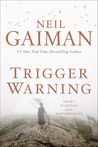
BOOK REVIEW: Trigger Warning by Neil Gaiman

Trigger Warning: Short Fictions and DisturbancesTrigger Warning: Short Fictions and Disturbances by Neil Gaiman
My rating: 5 of 5 stars

Amazon page


“Trigger Warning” is a collection of 24 pieces of short fiction and poetry written by Neil Gaiman. If you know what a trigger warning is (I had to look it up) you may be thinking this collection is darker, edgier, and/or more risque than it really is. (For those who don’t want to look it up, a “trigger warning” is a blurb that intimates that a work has words or images that may induce a traumatic reaction.) However, these stories are Gaiman to the core, which means they are humorous, clever, and often quirky; but they are unlikely to throw one into catatonia or an apoplectic fit. The pieces include Sherlock Holmes and Doctor Who stories, spin-offs from Sleeping Beauty and American Gods, as well as a few homages to other authors, including Ray Bradbury, Gene Wolfe, and William Blake.


Without further ado, I’ll give a rundown of the included works:


1.) “Making a Chair”: This is a poem about writer’s block.

2.) “A Lunar Labyrinth”: An homage to Gene Wolfe’s work, “Solar Labyrinth.” This short story is about a maze that was destroyed, and that wasn’t to be walked on full moon nights.

3.) “The Thing About Cassandra”: This is among my favorite stories in the collection. What happens when your friends and family start bumping into the girl who you made up as a girlfriend back in school?

4.) “Down to a Sunless Sea”: This was written for a water-themed event. It’s about a person riding in a lifeboat down the Thames toward the sea.

5.) “The Truth is a Cave in the Black Mountains”: This one was inspired by an island off Scotland called Skye, but the story is fantasy with magic elements. A man strikes out in search of revenge and closing, regarding a daughter who he thought had run away. This is one of the most engaging pieces in the collection.

6.) “My Last Landlady”: This is a story, conveyed in poetic form, about a mean landlady.

7.) “Adventure Story”: In the Introduction, Gaiman calls this a companion piece to his novella “The Ocean at the End of the Lane.” However, I didn’t make that connection, (and I’ve read that story.) At any rate, it’s a great story about an intriguing artifact left behind by a [deceased] father whose stories were always painfully dull. It’s told by a mother to a son who is incredulous that his, seemingly milquetoast, father lived through such a fascinating event.

8.) “Orange”: Like several of the pieces in this book, this one is unconventional / experimental. However, it’s creative, and it works. It consists of answers to a questionnaire, from which the reader pieces together the story. One doesn’t have the questions, but most of them are fairly clear from the context of the answer.

9.) “Calendar of Tales”: This is what it sounds like, 12 stories each matched to a month. It’s another of the unconventional and unusual pieces. Each story was spun from a tweet response to a question about a given month of the year.

10.) “The Case of Death and Honey”: Few characters in the public domain have spurred as many offshoot stories as Sherlock Holmes, and this is Gaiman’s entry in the pool. Holmes’s interest in bee-keeping is central to the story.

11.) “The Man Who Forgot Ray Bradbury”: An homage to Bradbury. If one forgets a person, did they ever exist?

12.) “Jerusalem”: This work was influenced both by a poem by William Blake and a trip the author took to said city. The story is about a couple of tourists and the unique mental illness associated with this locale.

13.) “Click-Clack the Rattlebag”: A scary bedtime story told by a child about a different kind of monster.

14.) “An Invocation of Incuriosity”: A story about one of the strange and colorful people one might meet at a flea market.

15.) “’And Weep, Like Alexander’”: A lighthearted story about an “un-inventor,” one who keeps you from having flying cars and all the other promised technology from sci-fi.

16.) “Nothing O’Clock”: This is a “Doctor Who” story. It’s not necessary to be familiar with the series (necessary backstory is provided), but it could make it more appealing—i.e. the inside joke effect.

17.) “Diamonds and Pearls: A Fairy Tale”: This is from “Who Killed Amanda Palmer?” Palmer is a cabaret-punk singer/songwriter and Gaiman’s wife, and the aforementioned booklet consists of a series of photos of Palmer looking deceased with brief stories to go along. This is one of the stories that could stand alone. It’s a fairy tale of the adults-only variety.

18.) “The Return of the Thin White Duke”: Another fairy tale, this one about a Duke that strikes out on a quest for adventure in order to rescue a Queen who doesn’t need rescuing.

19.) “Feminine Endings”: A story about a human statue—by that I mean one of those people who deck themselves out and stand on a box in the town square in touristy places in many parts of the world.

20.) “Observing the Formalities”: A poem about one who doesn’t get invited.

21.) “The Sleeper and the Spindle”: A take on the story of “Sleeping Beauty,” but from a different point of view.

22.) “Witch Work”: This is another poem. I believe it’s the only one that’s not free verse. It’s about the life of a witch.

23.) “In Relig Odhrain”: This is a true story about a saint, written in free verse.

24.) “Black Dog”: This is a spin-off from the novel “American Gods” and it features that book’s protagonist, Shadow. You don’t need to have read that book, but you might have a greater affinity for the story if you have. It should also be noted that this is the one piece that is original to this collection, and it’s one of the most substantial pieces in the collection. i.e. it gives fans a reason to pick up the book even if they’ve read a lot of it from the original source.


I enjoyed this book. Gaiman is a masterful story-teller. Whether it’s one of conventional pieces based in established worlds (e.g. “Doctor Who” or that of Sherlock Holmes) or one of the off-the-wall, experimental pieces, these stories and poems are a pleasure to read.

View all my reviews

The Moors of Your Mind: A Halloween Poem

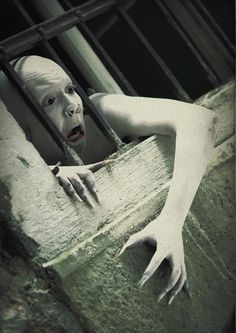
Butoh artist, source unattributable

Butoh artist, source unattributable

in the moors of your mind
where lurk the moles of souls unkind
spying out your darkest dreams
amid the hum of silent screams

awakened hip deep in the mud
as chest-high waters rise in flood
you struggle but it pulls you down
in a boat, up drifts a blood-soaked clown

his hand grips a shiny new bone-saw
his other hand, a twin-hooked claw
your only hope; that you’re still dreaming
but wouldn’t you waken from your own screaming?

POEM: To BE… Or Not

Copy of IMG_1580“What do you want to BE when you grow up?”

They ask you when you’re just a little pup.

So, what part of what I must BE,

is different from the me you see?

Dad thought, “the part that they’ll pay you for.”

Like an allowance for finishing a chore?

“Yes, young man, but you can safely assume, 

no one else will pay you to clean your room.”


Kids don’t think of being gainfully employed.


Which seems to make grownups quite annoyed.

At five, I wanted to be a cowboy.

“Son, there’s no jobs in that line of employ.”

That’s OK, then I’ll be an Indian.

“You’d have to be born that way, my friend.”

I wasn’t born a doctor, but you said that’s OK.

“That’s not the same, son, what can I say?”

I know what then, Dad, I’ll be the Batman!

“Come on, son, that’s not a feasible plan.”

You’re thinking Superman, Batman has no powers.

“Bruce Wayne by day, Batman at night, where’s the sleeping hours.”

You have a point there, you’ve got me stumped.

Thinking myself prematurely defunct.

POEMS: Dreary Day Haiku

IMG_2123Clouds chugged landward
Smothering a festive town
In a dense, gray cloak


Dreary days have come
Reminding me of Britain,
the long nightless nights


Drizzle piddles down
Dimpling the sidewalk sheen
With random ripples


BOOK REVIEW: Leaves of Grass by Walt Whitman

Leaves of GrassLeaves of Grass by Walt Whitman

My rating: 5 of 5 stars

Amazon page

There are a number of editions of this collection of poems, as Whitman apparently continued to revise it right up until his death. The 1855 edition is popular but there is a “Deathbed Edition” which–as the name implies–is the closest thing to a final draft that exists.

Back in the day (the late 19th century), this was considered racy and controversial stuff, and the collection got Whitman fired from is civil service job as well as a great many vitriol-filled reviews. Like the works of Emerson and Thoreau, with whom Whitman shared some beliefs, it was also controversial in that the poem put man at the fore and religion was shunted out of the picture. (Trust in yourself and don’t blindly follow anyone was still a heretical notion among many at the time.) This isn’t to say that Whitman eliminated spirituality from his work (any more than Emerson did), references to the soul are commonplace—but it’s a mystic spirituality. There were features outside the “prurient” and religious that angered many, such as Whitman’s shining of light on the barbaric institution of slavery. However, today Leaves of Grass is considered one of America’s greatest and most beloved works of poetry, and for good reason. It beautifully reflects an America that was changing, an America subject to a new era of ideas both from science and from distant lands.

It should be noted that this is a life’s work. If you are expecting a typically thin poetry collection, you will be in for a surprise. Leaves of Grass is of a page count normally reserved for histories and epic novels. The collection consists of 35 “Books” that are quasi-themed sub-collections of poems. Individual poems vary greatly with some being only a few lines and some running for pages. Most of the poems are free verse, though there are sections that display a meter (specifically iambic pentameter.) Free verse is poetry without meter or rhyme. If you didn’t know there was such poetry, you may want to work through your Doctor Seuss before you crack open a tome like this one.

There are a few themes that are repeatedly revisited. One idea that made the collection so controversial is that it exalted in the human form and the physicality of humanity. In recent years, a lot of discussion of this work revolves around whether Whitman was or wasn’t homosexual or bisexual. Not that it matters, but the fact is there is a dearth of information about what form of sexuality Whitman practiced—if any, but one can imagine why people wondered. Whitman writes descriptively about both the male and female forms, and was not shy about verse that suggested lying with this gender in one poem and the other in the next. The poem “I Sing the Body Electric” is probably the most famous example of Whitman’s discussion of the body.

However, perhaps the most striking theme is a celebration of America, both in its natural state and as it was shaped by the people who settled there. In multiple poems one sees long strings of description and exposition about the various states of the United States. Whitman paints pictures of the nation as a collage showing the variations among its constituent parts. To a lesser extent, he does the same for the world (e.g. see Book VI.)

I enjoyed this collection, although I will admit I read it a bit here and a bit there over a long time period. I, therefore, probably missed some of the depth of meaning coming from how the poems were arranged. Maybe someday I’ll have time to go back and read it once more. However, the beauty of this collection is that it’s so many different things. It meanders like a river, and peers overland with an eagle-eyed view. It offers scenes that are like a hard-boiled work of film noir and ones that are like Ansel Adams pictures. It’s not anti-god, but rather about the god within, or the god within the blade of grass. Leaves of Grass offers brilliant turns of phrase, bold descriptions, and always interspersed with the author’s personal philosophy.

View all my reviews

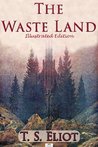
THE CLASSICS: The Waste Land by T.S. Eliot

The Waste Land (Illustrated Edition)The Waste Land by T.S. Eliot

My rating: 5 of 5 stars

Amazon page

It’s for good reason that this is considered one of the greatest poems of the 20th century. Eliot’s vivid verse paints a bleak landscape in language of beauty not seen in the poem’s imagery. It will come as no surprise that this work was penned during a dark time in the poet’s life, but it wasn’t just Eliot’s personal dark hour; for many, the wounds of World War I hadn’t yet scarred over.

This poem is divided into five sections, each with an artful title. The five sections of The Waste Land are: “The Burial of the Dead”, “A Game of Chess”, “The Fire Sermon”, “Death by Water”, and “What the Thunder Said.” Some consider The Waste Land to be a collection of five poems, but there is both language and theme that connects the various parts. For example, the following verse is contained in both the first and third chapter:

Unreal City,
Under the brown fog…

The poem contains many complex references to Arthurian legends and to a broad swath of literary canon. You can learn about that from individuals more erudite than I. I will suggest a simpler theme, and that is death—not just death, but death as an eraser of legacies and influence. Eliot refers to bone almost as much as he does death, and by the time one’s body is reduced to bones one’s influence on the land of the living is minimal—even for giants among men. When he’s not speaking of bones, he’s speaking of death of masses, also a form of anonymous death.

I will pick a few lines from each of the five sections to illustrate my point.


From “The Burial of the Dead”:
Unreal City,
Under the brown fog of a winter dawn
A crowd flowed over the London Bridge, so many,
I had not thought death had undone so many


From “A Game of Chess”:
I think we are in rat’s alley
Where the dead men lost their bones


From “The Fire Sermon”:
White bodies naked on the low damp ground
And bones cast in a little low dry garret
Rattled by the rat’s foot only, year to year.


From “Death by Water”:
A current under sea
Picked his bones in whispers


From “What the Thunder Said”:
After the agony in stony places
The shouting and the crying
Prison and palace and reverberation
Of thunder of spring over distant mountains
He who was living is long dead
We who were living are now dying
With little patience


I’m not saying that Eliot’s views on death and dying are great from a philosophical or psychological perspective—on the contrary, but as a work of poetry these words should be read by all.


Neither the version linked to in GoodReads nor on Amazon is the version I read. As far as I could tell by way of a hasty search, the Kindle edition I read no longer exists.

View all my reviews