DAILY PHOTO: Climbing Lizard

Taken November 2, 2013 at Hampi.

Taken November 2, 2013 at Hampi.

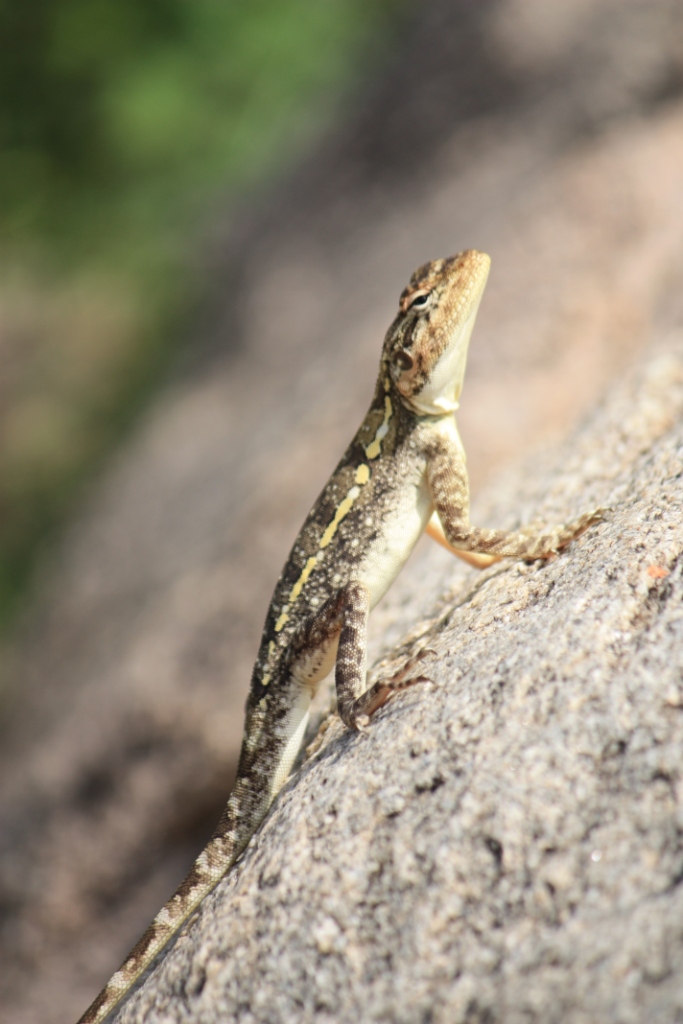
These little lizards were one of the most common animal lifeforms at Hampi.  They blend into the rock quite well despite the broken white or yellow line of dots on their backs, which itself blends into the splotched pattern of the creature.

I believe they are called Psammaphilus Dorsalis, Peninsular Rock Agamas, or South Indian Rock Agamas. [However, I know nothing about lizards and am open to correction by a herpetologist.]

DAILY PHOTO: Precarious Rock

Taken November 3, 2012

Taken November 3, 2012

Part of what makes Hampi so surreal is all of the precariously balanced boulders. This shot is oriented straight up and down, i.e. the camera is not tilted, and so one wonder’s “How is that rock not falling?”

DAILY PHOTO: Stone Chariot

Taken November 2, 2013 at Hampi

Taken November 2, 2013 at Hampi

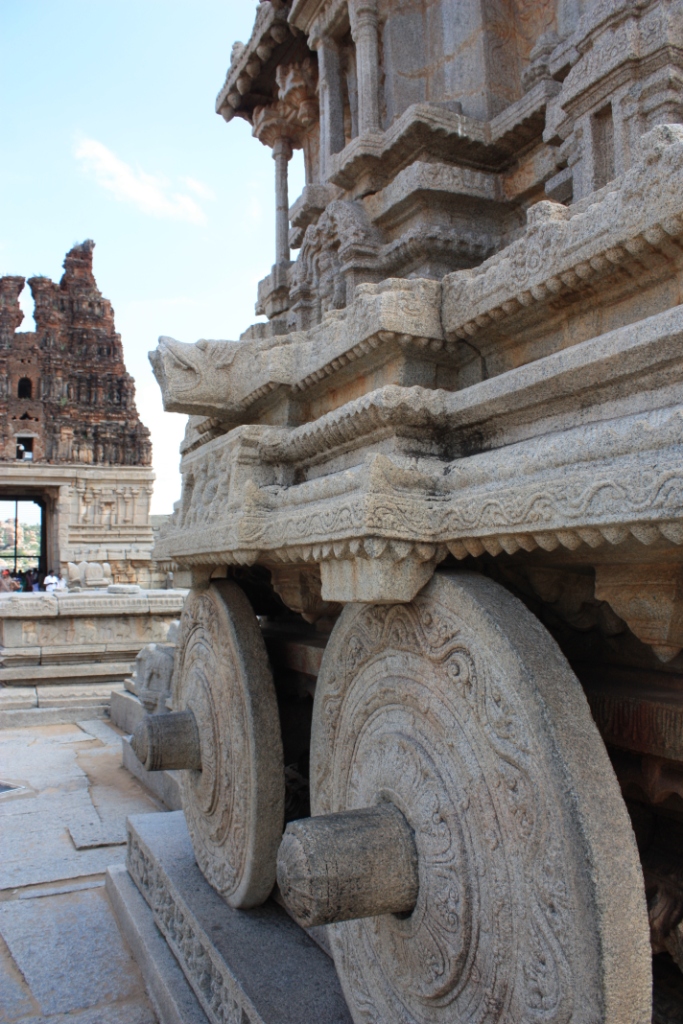
This stone chariot is one of the most iconic scenes of Hampi. The wheels on the chariot were once capable of moving, but no more. It remains an amazing sculpture. It’s in the Vittala temple complex, and is one of the first things that draws the eye when one enters through the gate that one can see in the background.

DAILY PHOTO: Towering 4-Handed Guardian

Taken November 2, 2013 at Hampi

Taken November 2, 2013 at Hampi.

These guardians of the inner sanctum can be seen here and there throughout Hampi.

I assume they were meant to be guardians and not just four-handed mutant freaks doing yoga stretches to loosen up their leg abductor muscles.

DAILY PHOTO: Yellow Blossoms

Taken November 2, 2013 at Hampi.

Taken November 2, 2013 at Hampi.

The Hampi area is painted from a different palette than most of Karnataka. Instead of uniform green, the brownish-red of the boulders dominates, and, while green lines the spaces between the rock, the vivid yellow of these flowers decorate the base of many hills.  Of course, there remain islands of green, in the form of corn fields, banana plantations, and palm groves.

DAILY PHOTO: 1008 Linga on the Tungabhadra Bank

Taken November 1, 2013 near the Tungabhadra river at Hampi.

Taken November 1, 2013 near the Tungabhadra river at Hampi.

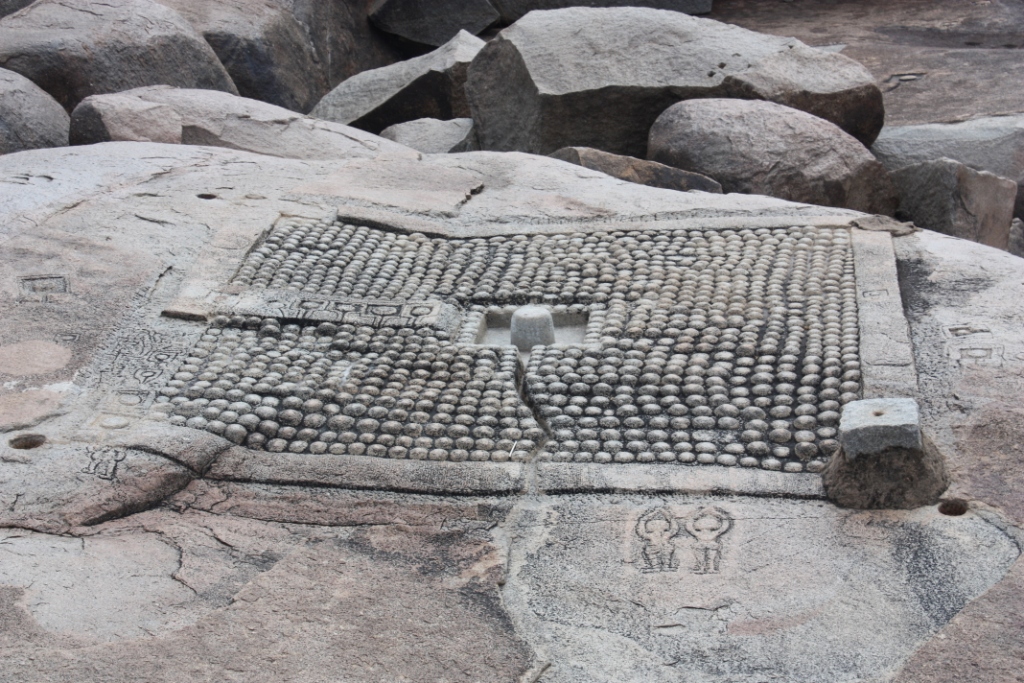
I read the Wikipedia article on Shiva linga, which said that it was a grave error to think of a lingam as a phallus. However, the article went on to say that the union of the lingam and the yoni represents the inseparability of male and female and the act of creation. Therefore, I’m sticking with the neophyte view that this symbolically represents the male organ of amour.  [Note: the terms linga and yoni are used in the Kama Sutra to describe the male and female organs, respectively. The terms may have been euphemisms that distorted the true initial meaning, or this might be taken as evidence of the correctness of the neophyte view. I’m not qualified to comment.]

Shiva is one of the top-tier aspects of God in Hinduism. He’s one aspect of the Hindu trilogy. Brahma is the creator. Vishnu is the operator. And, Shiva is the destroyer. This may seem a little ominous, but it’s obvious that something must be destroyed to make way for new things to come into existence. In a more modern interpretation, matter cannot be created or destroyed but can only change forms. These two ideas may seem very different, but when one considers that there is a finite amount of matter, if you want to make something new, then something else has to give up its matter to build it.

So while Shiva’s hallmark quote is, “I am become death, destroyer of worlds,” [reiterated by Robert Oppenheimer in referring to his role in the Manhattan Project] he’s really not so bad a deity.

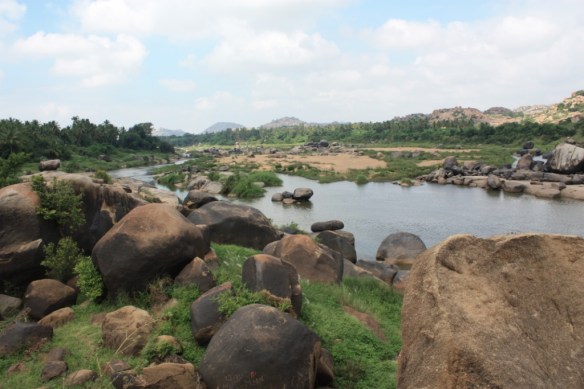
DAILY PHOTO: Hampi Boulders

Taken on November 1, 2013 on the Tungabhadra  River

Taken on November 1, 2013 on the Tungabhadra River.

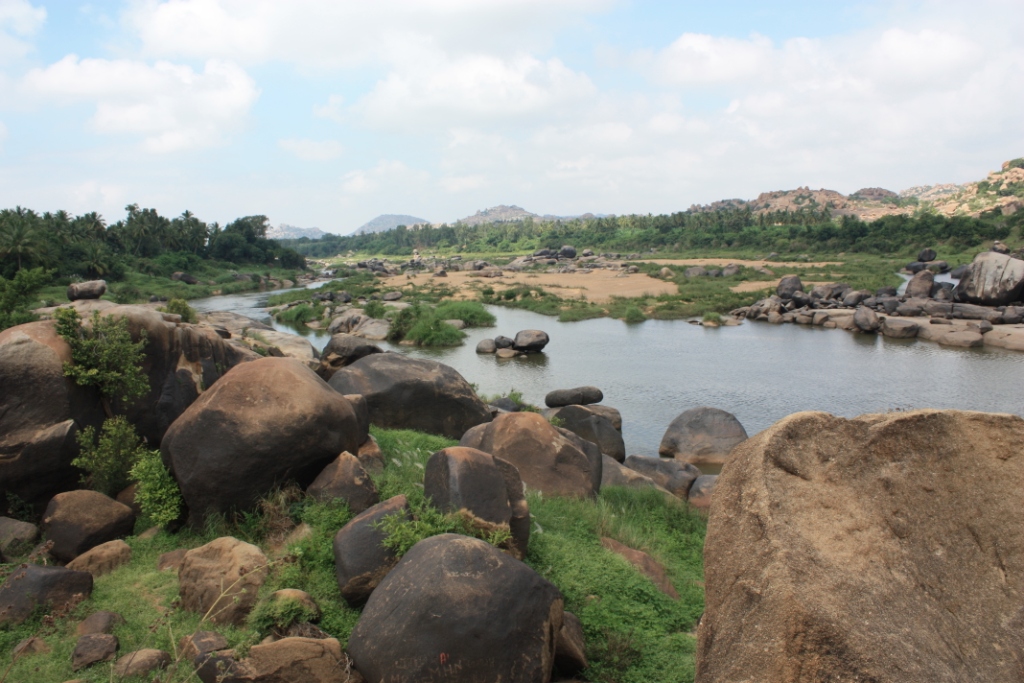
I just got back from a trip to Hampi, India. My wife and I agreed that it’s the most spectacular Indian historic site we’ve seen to date. The reason why it edges out the–awe-inspiring–Taj Mahal for us is that even if man had never touched this land it would be a spectacle to behold due to the unique geological processes that have taken place there. (The Taj Mahal is impressive, but once you leave its gates, the glory shrivels. In Hampi, leave the ruins and the awe has just begun.)

The rocks in that region are some of the planet’s oldest, and while much of the softer rock has been entirely washed away, the harder marble remains, but has been eroded over time. It creates an otherworldly appearance that is suitable for the set of a sci-fi film. Some formations seem to defy gravity, with boulders stacked on boulders in impossible ways.

I highly recommend a trip to Hampi. It’s about 7 hours by car from Bangalore (if your driver knows where he’s going–ours was a bit longer.)

A couple of points to keep in mind.

-There’s no alcohol allowed in Hampi village.

-There’s little non-vegetarian food in Hampi (Even if you’re vegetarian, you may be a little underwhelmed. It’s bland by Indian standards, and almost every guesthouse / restaurant tries to sell every ethnic food imaginable resulting in a “jack-of-all-trades-master-of-none” warmed-over mediocrity. The one exception that we found was the Mango Tree restaurant, which is generally packed. Eat at off hours if you can.)

-If you stay across the river, the ferry only runs until 6pm. We stayed in one of the many basic guesthouses in Hampi proper. Staying in a nicer hotel incurs a trade-off that one will have to travel quite a while to get to the site. (As my wife said, “30 kilometers is too far in India.”) If you miss the ferry, the trip by car is a long way around.


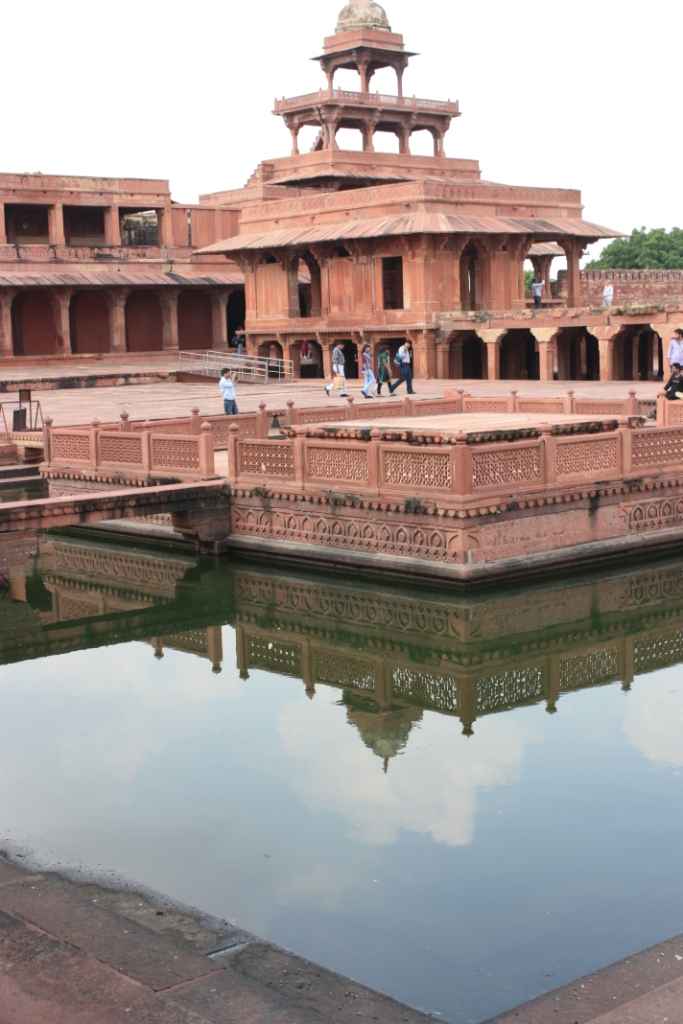
DAILY PHOTO: Fatehpur Sikri

Taken October 13, 2013

Taken October 13, 2013

Fatehpur Sikri is a historic site not far from Agra (home of the Taj Mahal.) It’s almost entirely red sandstone, and is impressive site and well-maintained– including ornate carvings inside many of the structures.

This will be my last post for a few days as I will be traveling to Hampi, another set of famous Indian ruins of once great states.  I’ll be back after Diwali with photos and experience from that visit.


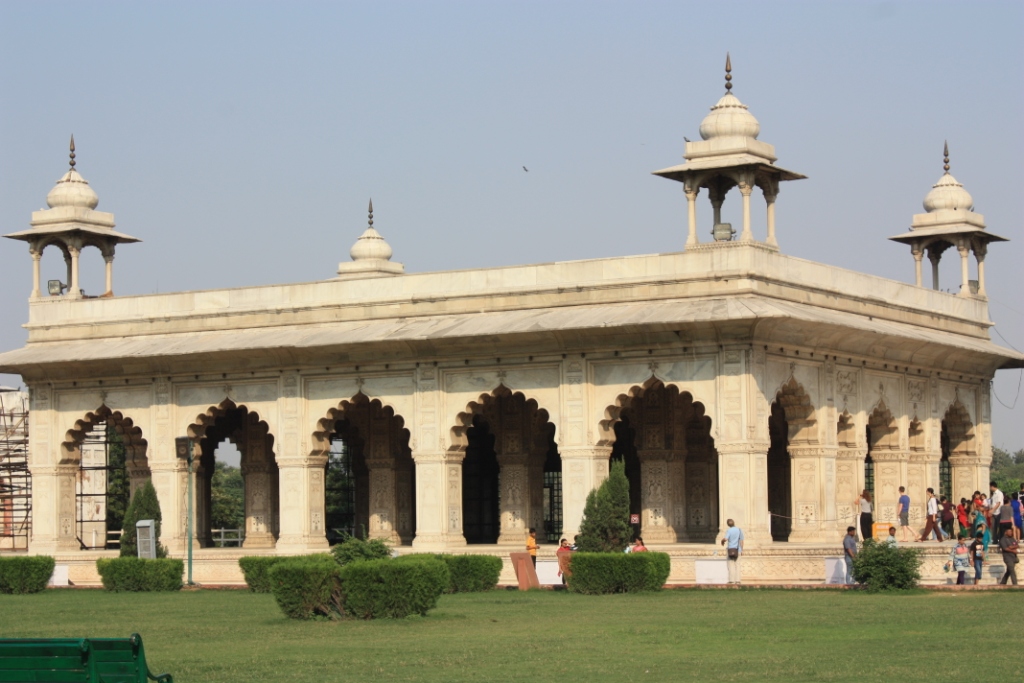
DAILY PHOTO: Red Fort

Taken on October 16, 2013

Taken on October 16, 2013

This white marble palace constructed in the Indo-Islamic style is one of the more impressive structures in Old Delhi’s Red Fort.

The Red Fort should be visited before visiting Agra Fort, because it should be seen but it’s not as impressive as its Agra kin. I did it the other way around, and the Red Fort was a disappointment by comparison. The grounds aren’t kept up, most of the semi-precious gemstone inlays are missing from the ornately carved marble, and the fort houses an architectural hodgepodge. That being said, the red sandstone walls are imposing and magnificent and the few historic structures are quite impressive–if not as much so as in Agra.

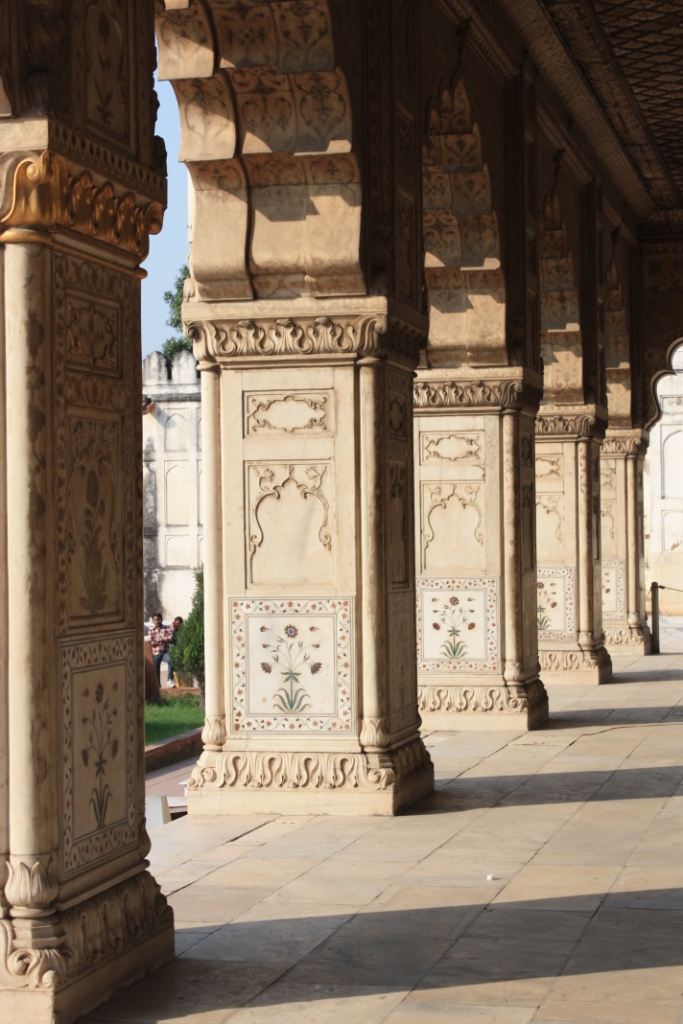
Close up of the same structure.

Close up of the same structure.

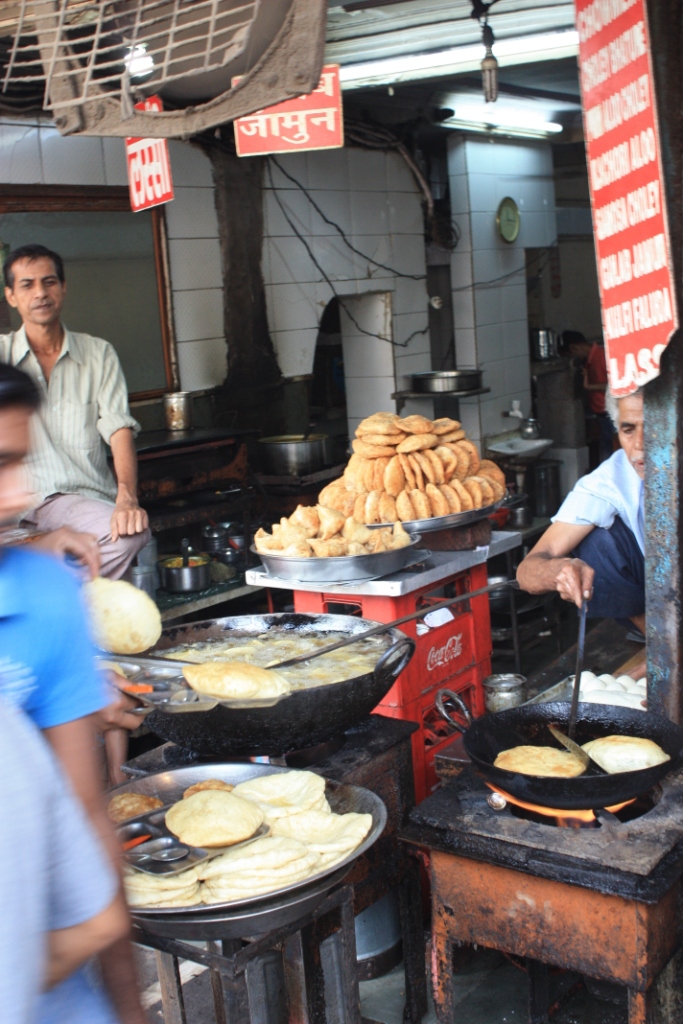
DAILY PHOTO: Chandni Chowk Street Food

Taken October 15, 2013 in Old Delhi.

Taken October 15, 2013 in Old Delhi.

Ummm! Fried breads.

Chandni Chowk is a major bazaar street that runs west from the Red Fort in Old Delhi. It’s a solid traffic jam from about 8:30am to 10:30pm. Bicycle rickshaws, auto-rickshaws, oxcarts, and automobiles can all be seen inching down the boulevard.

One can get cloth, sweets, suits, or glasses on the cheap.

7:00am gives one an entirely different perspective. There are people bathing in the streets from communal spigots. There are long lines of individuals, mostly men waiting to see the street doctor, who–right on the sidewalk–is bandaging up a badly swollen foot. There are worshipers entering the Sikh temple.  There is little traffic, but pallets of materials piled in the street outside some businesses.