Full Disclosure: I’m not much of a movie-goer, and have seen a mere 16 of the titles on Chopra’s list—if memory serves, but it often doesn’t. My point being that I may not be the best judge of what films should be included in such a list.
Be that as it may, I liked this book and its list. First, I found it to be a richly diverse set of films. Given that Chopra works for Indian media, one might expect that the book would be completely dominated by Indian films (fyi–I don’t know much, but I have learned not to lump all of Indian cinema under the term “Bollywood.”) Alternatively, one might expect the list to be ruled by Hollywood because the US has been the 800-pound gorilla of moviemaking since the early days of the industry. It’s true that the US and India are well represented on the list (the US with 34 movies and India with 26,) but Hong Kong, Italy, Japan, France, Mexico, and others are suitably represented (not to mention films produced by / in multiple countries.) (Nigerians and other Africans from countries with filmmaking industries may not agree because Africa isn’t represented, but the fact that the most recent film is 2007 makes me assume the book may not be up to the latest breakthroughs. [My edition is listed as 2013, but I think that’s just the e-publishing date. I’d guess the book came out around the time of the last film on the list, but could be wrong.])
Another aspect of the book’s diversity is the age range; the films are from 1922 to 2007. They don’t seem to be heavily weighted toward the modern day—as is a common defect of such lists. Yet another dimension is diversity of the class and genre of film. By that I mean that the list includes unambiguous classics of cinema like “Citizen Kane,” but it also includes what might be considered less cerebral movies such as “Enter the Dragon” and “Kungfu Hustle.” It also includes comedies and sci-fi movies, which are often under-appreciated by critics. Still, Chopra doesn’t resort to using to box office earnings as a criterion either. Many huge money makers aren’t on the list (e.g. “Titanic.”)
The entries for each film are just a couple of pages, but, in addition to a summary, they include the awards won by the film and a piece of intriguing trivia for each entry. There are some graphics in the form of movie posters and set photos. There isn’t a photo for every entry, but they aren’t that important and, in the case of my little Kindle, the pictures couldn’t be seen well anyway.
I’d recommend this book for anyone who wants a tight list of films to be seen that prominently features international cinema.
Ip Man 3: The third installment chronicling (movie-style) the life of the legendary Wing Chun master Ip Man. It came out in Hong Kong in December 2015, but wasn’t released in the US, Canada, and elsewhere until January.
Synopsis: When a band of brutal gangsters led by a crooked property developer make a play to take over the city, Master Ip is forced to take a stand.
Kung Fu Panda 3: US release was January 29.
Synopsis: Continuing his “legendary adventures of awesomeness”, Po must face two hugely epic, but different threats: one supernatural and the other a little closer to his home.
The Monkey King 2: Released in early February.
Synopsis: Tells part of the story of the classic Chinese novel Journey to the West.
Crouching Tiger, Hidden Dragon: Sword of Destiny: The Netflix released sequel to one of the most successful Kung Fu movies of all time. Released on February 26th.
Synopsis: A story of lost love, young love, a legendary sword and one last opportunity at redemption.
COMING:
The Bodyguard: This Sammo Hung film is set to release in early April in China as well as select other Asian countries. No worldwide release set.
Synopsis: A retired bodyguard suffering from early dementia finds a new friend in a young girl.
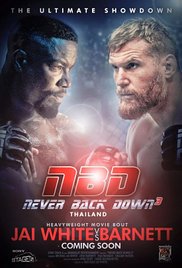
Never Back Down 3: To be released in the US on April 5th.
Synopsis: Picking up after the events of Never Back Down 2, former MMA champion Case Walker is on the comeback trail.
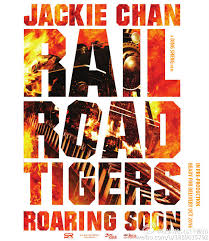
Railroad Tigers: Release date is October 3rd in China but unset for the rest of the world.
Synopsis: A railroad worker in China in 1941 leads a team of freedom fighters against the Japanese in order to get food for the poor.
Feng Shen Bang: Set for release in October, but no trailer or poster yet. Only a synopsis.
Synopsis: Based on the 16th-century Chinese novel Feng Shen Yan Yi (The Investiture of the Gods), the story tells of how King Zhou of Shang becomes a tyrant due to the wiles of Daji, a vixen spirit who is disguised as one of his concubines.
UNKNOWN:
Birth of the Dragon: There’s no release date, trailer, or poster–so I wouldn’t get too excited about this synopsis.
Synopsis: A young and up-and-coming martial artist, Bruce Lee, challenges legendary kung fu master Wong Jack Man to a no-holds-barred fight.
Boyka: Undisputed [IV]: There’s no set release, but there’s a trailer and apparently this is the fourth installment, so I give it better odds than “Birth of the Dragon.”
Synopsis: In the fourth installment of the fighting franchise, Boyka is shooting for the big leagues when an accidental death in the ring makes him question everything he stands for.
The Deadly Reclaim: Trailer finished, but no firm release date.
Synopsis: Set in 1914 following the collapse of the Qing Dynasty, the film tells the story of a group of villagers standing up to a cruel young warlord.
Kickboxer: Vengence: There’s a teaser and a synopsis, but no full trailer or release date.
Synopsis: A kick boxer is out to avenge his brother.
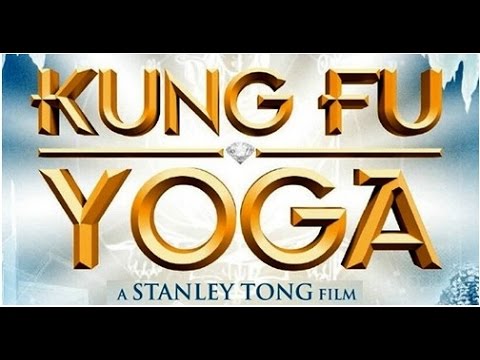
Kung Fu Yoga: No trailer or release date yet for this Hong Kong / Bollywood love child.
Synopsis: Chinese archaeology professor Jack (Jackie Chan) teams up with beautiful Indian professor Ashmita and assistant Kyra to locate lost Magadha treasure.
Skiptrace: This Jackie Chan + Johnnie Knoxville MA comedy has been delayed.
Synopsis: A detective from Hong Kong teams up with an American gambler to battle against a notorious Chinese criminal.
As promised, I’m updating this post at mid-year because in January there’s a lot of uncertainty about what movies will actually come out and when. If you’re comparing notes, my original 2015 Martial Arts Movies post was here.
Wild Card (January 30 in US): This may be a cheat given what I said above. However, it’s a Jason Statham film, and like the “Transporter” films it probably doesn’t amount too much without the ass-kickery. Let’s face it, you’re not going to see Jason Statham for his extensive acting range.
Dragon Blade (February 19 in China, March for India, September for US): Featuring Jackie Chan, John Cusack, and Adrien Brody. This is a period piece, and–as you can tell from the casting–is big budget as martial arts flicks go.
Wolf Warrior (April 2) [China]: This looks like more of a shoot-em-up action film than a martial arts film, but some have listed it as a martial arts film and the close quarters action is definitely reminiscent of a martial arts film.
Skin Trade (April 23, direct to DVD): This film stars Tony Jaa and Dolph Lundgren as the good guys and Ron Perlman as the villain. As the title suggests, it’s set around a theme of human trafficking.
Kung Fu Killer (April 24 in theaters, July 21 on DVD): A Donnie Yen action flick in which Yen is in prison.
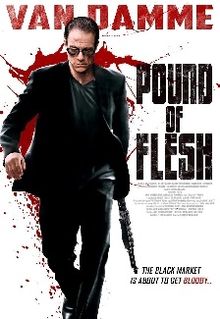
Pound of Flesh: (May 15 limited theater, June 23 to DVD, etc.): Jean-Claude Van Damme. The blurb says: “A man’s heroic attempt to help a woman in distress ends up with him waking up the next day without a kidney and plotting his revenge.”
Redeemer (June 12 in theaters, August 31 to DVD): A hit-man goes good. This is a 2014 movie that’s receiving an expanded international release.
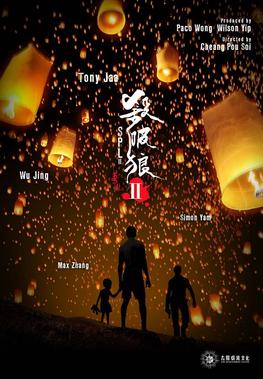
SPL (Sha Po Lang) II / A Time for Consequences / SPL2: Rise of Wong Po (June 18): This Hong Kong film will feature Thai superstar Tony Jaa. (Like Donnie Yen, this guy is in everything. I don’t know whether they’re cloning these guys or what. Maybe they just don’t need to sleep, eat, or poop like the rest of us.)
The Monk Comes Down the Mountain (July 3): This movie is based on a popular Chinese novel entitled Dao Shi Xia Shan (A Monk Comes Down the Mountain) and is a comedic kung fu flick.
Underdog Kids (July 7, straight to DVD / online): Looks like The Karate Kid but with a lower budget but more [karate] kids. Here is the trailer:
The Boy and the Beast (July 11) [Japan]: This is an animated film, but martial arts is a prominent and necessary feature of the movie. (I believe I included one of the Kung fu Panda movies in one of my past posts, so I think this is fair game.)
Brothers (July 31) [India, in Hindi]: An Indian remake of the American film Warriors. In the American movie, two estranged brothers must fight each other in an MMA bout. (Hence the name of the Indian version, Brothers.)
The Martial Arts Kid (August 21): As the unimaginative title (a generic knock-off of the alliterative “Karate Kid”?) suggests, this is a low budget work, and the acting–if the trailer is any indication–is atrocious. It features competition martial artists-turned actors Don Wilson and Cynthia Rothrock.
Crouching Tiger, Hidden Dragon: The Green Legend (August 28): Interestingly, this sequel to an immensely popular film will be released on Netflix and IMAX simultaneously. If this were some risky, low-budget film, going straight to Netflix wouldn’t be at all surprising, but this is the sequel to the highest grossing foreign language film in America.
The Transporter: Refueled (September 4): Another “Transporter” film, but Ed Skrein plays the role of Frank Martin in this one. As with “Wild Card” it may be a cheat to include it as a martial arts film, but car chases and shoot-outs don’t get these movies all the way to watchability.
Skiptrace (December 24): This is a martial arts comedy featuring Jackie Chan and Johnny Knoxville as buddies on the lam.
Movies with unspecified release dates:
The Bodyguard (undesignated release) [China]: Featuring and directed by Sammo Hung. The lack of trailer makes me not optimistic for a 2015 release, but who knows…
The Chemist: A grain of salt on the 2015 release. This is an “assasin-who-can’t-bear-to-kill-his-victim-and-ends-up-protecting-her-instead” film. It’s been in post-production for a while.
Iceman 2 (in post-production): This Donnie Yen sequel doesn’t have a set release date and I expect a 2016 release, but it’s still listed as a winter 2015 film. It’s a Kung fu Encino Man. I haven’t seen any publicity, but the plot blurb is: The imperial guard and his three traitorous childhood friends ordered to hunt him down get accidentally buried and kept frozen in time. 400 years later pass and they are defrosted continuing the battle they left behind
Close Range (in post-production): A guy is looking for a girl. It looks like a low budget Taken, but the fight scenes may be better.
Unlikely 2015 Releases:
White Tiger: Another film with Don “the Dragon” Wilson and Cynthia Rothrock.
A Man Will Rise: A Tony Jaa and Dolf Lundgren film with a “delayed” release status.
Black Salt: (in post-production): The blurb is: With time winding down towards world-ending devastation, the fate of mankind rests in the hands of Interpol agent Samuel Tharpe.
[I normally put a link here to the books I review, but wouldn’t want anyone to accidentally buy this one by mistake.]
This review is the same rant I put in my weekly reading review today. If you saw it there, don’t bother reading onward.
This book was a stinker, and I can’t recommend it for anyone–though its saving grace is that it’s slim and thus only wastes a tiny bit of one’s time. What the author apparently did was to watch a Star Wars movie marathon and pull every Yoda line out and collect them together. This is a sad effort in two ways. First, while Yoda isn’t a lead in the movies (and, therefore, has a limited number of lines), there’s a vast canon of Star Wars books, and it doesn’t look like the author trolled any of them for quotes. Second, some of the lines are neither witty nor wise. Occasionally, Yoda has a line equivalent to, “take a left at the second light,” and the author includes such banal quotes. Furthermore, some of the quotes appear a second time in either reduced or extended form. Beyond all these complaints, the author doesn’t even take the time to put together meaningful front matter to tell the reader something interesting that they don’t already know, and thus doesn’t establish his worth in producing such a book. (Also, he doesn’t seem to know accepted protocol for writing quotes inside quotes–i.e. use of single quotes. Which I guess means he probably didn’t just cut and paste all the quotes because then they would have been grammatically correct.) He also could have at least provided told us which movie each quote was from. It’s a lazy effort. It succeeds spectacularly in being lazy. If you’ve seen the movies (or have basic cable so that you can readily do so by way of one of the frequent Star Wars marathons) you’ll gain nothing from this book.
For those unfamiliar with this series or the movie featuring Sean Connery, this graphic novel assembles a team of heroes from 19th century science fiction and adventure novels. Specifically, the team includes: Mina Harker (of Bram Stroker’s Dracula), Allan Quatermain (of H. Rider Haggard’s King Solomon’s Mine series), Captain Nemo (of 20,000 Leagues Under the Sea and other Jules Verne novels), Dr. Jekyll/Mr. Hyde (of the Robert Louis Stevenson novel featuring their names), and Hawley Griffin (of the H.G. Wells novel, The Invisible Man.) The team’s principle nemesis is Professor James Moriarty of Arthur Conan Doyle’s Sherlock Holmes series.
Interestingly, this book follows the same general plot progression as the movie, but is much different in tone, settings, and character details. The plot progression of which I refer is that the team is assembled (with no small amount of mutual animosity) and they bond into a team as they face a grandiose threat of steampunk industrialization run amok. That plot progression aside, you’ll find an entirely different story otherwise. First, those who favor gender equality will appreciated that Mina Harker is in a leadership role in this volume, the role played by Quatermain in the movie. (That being said, this isn’t a group of individuals who take readily to being led.) Second, those who like darker, grittier tales will find this book more appealing than the movies. Allan Quatermain is found by Harker wasted in an opium den. Griffin is captured after having moved into a girl’s school to use his invisibility to lecherous advantage and the head mistress of said school is decidedly dominatrix like. I generally liked the grittier tone better, though it was hard to reconcile Griffin’s abhorrent behavior with heroism—anti-heroes are a challenge, particularly one who can disappear at will. Third, the team in the book is smaller and more manageable, with the movie having taken on two more characters (Dorian Gray and Tom Sawyer.) Finally, the book doesn’t get around so much. The movie features at least four major settings—not counting the high seas, but the book takes place mostly in Victorian London.
You don’t have to have read all the classic works from which the characters derive to get the story, but it does make it a little more fun. (Yes, I realize that I’m using “classic” for books–some of which–were considered the pulp fiction of their day. However, if your book is still in print after 100 years, I’d say you deserve the status and respect.) Those who’ve read the books will get some subtleties that aren’t critical to the story but are kind of nifty. That being said, don’t expect the characters to match their originals perfectly. The novels covered are wide-ranging, some rely on supernatural elements and others are more realistic, some are futuristic while others reflect the times more accurately. One can’t bring all these individuals into one world and have them be exactly as they were in their original domains.
There are some extra features at the end including a short story featuring a time traveling Allan Quatermain and some art from the series.
I’d recommend this book for those who read comics and graphic novels—especially if they’ve read the stories of at least a few of the 19th century characters. (If you haven’t read any of the novels, you should probably go back and hit some classics before you read anything else. Just my opinion.) It’s an intriguing concept, and it’s done well.
This is one of those books that’s designed to make tedious material palatable. Rowlands achieves this by conveying the concepts of erudite philosophers such as Plato, Nietzsche, Sartre, Laplace, Kant, Heraclitus, Wittgenstein, Hume, and Heidegger through the lens of popular speculative fiction movies (almost all Sci-fi.)
The book uses thirteen films as case studies to consider ten critical philosophical concepts (over ten chapters.) Virtually all sci-fi fans are likely to have seen most—if not all—of these films. They include: Frankenstein, The Matrix, the first two Terminator films, Total Recall (1990), The Sixth Day, Minority Report, Hollow Man, Independence Day, Aliens, Star Wars, Blade Runner, and The Lord of the Rings. I am not a film fanatic (though I do like Sci-fi) and I’d seen all but two of these movies (i.e. Hollow Man and The Lord of the Rings.) I can say that the book is understandable without having seen the movies, but it’s much more enjoyable when you have seen them. Although, as far as the two movies that I’d missed went, Hollow Man was easy because it’s a relatively straight-forward invisible man story, and—therefore—the link to that chapter’s question “Why Be Moral?” was simple. However, for The Lord of The Rings book I had to rely more on the synopsis the author provides to follow the chain of thought.
The philosophical issues that are addressed include: the meaning of life, what can we really know (if anything), what am I (or you or any other individual), what makes me (you, etc.) different from everyone else, is there free will, why behave morally, how broadly does morality apply (in other words, is it applicable outside humanity), do good and evil exist and (if so) what differentiates them, what does it mean to be mortal, and what’s wrong with moral relativism. If you’ve seen the movies, and give it some thought, you can probably match the movies to the questions easily.
I enjoyed this book. First of all, I will admit that it’s easier to follow the concepts and for them to stick with one when one puts them in terms of movies one has seen (in some cases, several times.) Second, the author has a good sense of humor. While Rowlands is a Professor of Philosophy, this book doesn’t read in the humorless and dry tone of academic writing. On the contrary, it’s meant for a popular audience and it reads for a popular audience. It should be noted that the humor and the exclusive focus on movies (versus literature or films) set this book aside from a number of others that are superficially quite the same. I have another book in storage back home called Science Fiction and Philosophy that is by an academic publisher, maintains the scholarly tone, goes into a bit more depth, but covers many of the same ideas (e.g. Brain-in-a-vat, etc.) using similar examples. I didn’t finish the more scholarly book, but if you’re looking for great depth but not reading ease you might pick it up for comparison.
Rowlands does overplay the “these-movies-are-so-bad-they’re-good” card, and when he does he sounds a tad professorial / pretentious. However, the book often reads like it was written by a colorful football coach rather than a Philosophy Professor. And, to be fair, in some cases it’s true that the films are delightfully bad. However, these are not B-movies like Attack of the Killer Tomatoes as one might think from the commentary.
If you’re interested in philosophy, but can’t get through two pages of Kant without falling asleep, I’d recommend this book.
NOTE: I’ve revised this post with up-to-date information. Please see that post here.
My third annual preview of martial arts movies will be presented in two installments. Many of the movies in the latter half of the year do not yet have release dates or trailers by January. Ergo, I’m posting the first part now, and will do a revision in mid-summer.
“Martial arts movie” is a bit ambiguous. Almost every action movie features martial arts. The leaked teaser for Ant-Man was pretty much a sequence of Scott Lang (Ant-Man) fighting his way through a corridor to access an elevator. So, does such a movie get included? I’ve opted against putting every action film with a kick in it into this post. Yet, I don’t want to stick to films that feature martial arts cliches (e.g. they killed my master, an evil billionaire is hosting a death match tournament, they killed me and left me for dead, etc.) I, therefore, use the admittedly subjective litmus test of whether there would be a movie if one took away the martial arts and replaced it with brawling–not just whether it would be a less slick movie with a diminished “woo” factor.
I’ve tried to go as international as possible this year, including Bollywood (using the term colloquially if not precisely) and SE Asian releases in addition to the usual Hong Kong & Hollywood fare.
Underdog Kids (January 16): Described on IMDb as: “Inner city kids from a poor neighborhood go up against the undefeated Beverly Hills Junior National Karate Team.” I’ve seen no trailer for this, just a poster:
Wild Card (January 30): This may be a cheat given what I said above. However, it’s a Jason Statham film, and like the “Transporter” films it probably doesn’t amount to much without the ass-kickery. Let’s face it, you’re not going to see Jason Statham for his extensive acting range.
Dragon Blade (February 19): Featuring Jackie Chan, John Cusack, and Adrien Brody. This is a period piece, and–as you can tell from the casting–is big budget as martial arts flicks go.
Wolf Warrior (March 1) [China]: This looks like more of a shoot-em-up action film than a martial arts film, but some have listed it as a martial arts film and the close quarters action is definitely reminiscent of a martial arts film.
Skin Trade (April): This film stars Tony Jaa and Dolph Lundgren as the good guys and Ron Perlman as the villain. As the title suggests, it’s set around a theme of human trafficking.
Bollywood Dragon (May 15) [India]: The blurb for this one is: “An English martial arts instructor travels to Mumbai to identify her twin sister’s body, discovering she lived a mysterious life among the criminal underworld and decides to investigate by being her.”
There is no trailer up for this movie as of yet.
The Kickboxer: City of Blood: (May 15): This is a different project than the Bautista / Van Damme / Carano film that was originally titled “Kickboxer” and is now going by “Kickboxer: Vengence,” but there’s no graphic publicity out on it yet. It may not come out as scheduled.
The Transporter Legacy (June 19): Another “Transporter” film, but Ed Skrein plays the role of Frank Martin in this one. As with “Wild Card” it may be a cheat to include it as a martial arts film, but car chases don’t get these movies all the way to watchability.
I haven’t seen a trailer, but there are still photos.
The Boy and the Beast (July 11) [Japan]: This also may be a cheat because it’s an animated film, but martial arts does seem to be a prominent feature of the work. (I believe I included one of the Kung fu Panda movies in one of my past posts, so I think this is fair game.)
Brothers (July 31) [India, in Hindi]: An Indian remake of the American film Warriors. In the American movie, two estranged brothers must fight each other in an MMA bout. (Hence the name of the Indian version, Brothers.) There’s not a proper trailer out, but there is this:
Crouching Tiger, Hidden Dragon: The Green Legend (August 28): Interestingly, this sequel to an immensely popular film will be released on Netflix and IMAX simultaneously. If this were some risky, low-budget film, going straight to Netflix wouldn’t be at all surprising, but this is the sequel to a movie that was (maybe still is) the highest grossing foreign language film playing in America. If this bold move pays off, it could be the beginning of a new paradigm of movie releases. [Also with The Interview going with an unconventional release owing to North Korean threats and intervention, there maybe a great deal learned about alternatives to a traditional film release.]
The Bodyguard (undesignated Summer release) [China]: Featuring and directed by Sammo Hung.
Movies with unspecified release dates:
SPL (Sha Po Lang) II / A Time for Consequences / SPL2: Rise of Wong Po [China]: This Hong Kong film will feature Thai superstar Tony Jaa. (Is he in everything? Have they cloned him, or does he not need to sleep, eat, and poop like the rest of us.)
The Chemist: A grain of salt on the 2015 release, please. This is an “assasin-who-can’t-bear-to-kill-his-victim-and-ends-up-protecting-her-instead” film.
Pound of Flesh: Jean-Claude Van Damme. The blurb says: “A man’s heroic attempt to help a woman in distress ends up with him waking up the next day without a kidney and plotting his revenge.”
Kickboxer: Vengence: Featuring Dave Bautista, Jean-Claude Van Damme, and Gina Carano.
The Martial Arts Kid: As the unimaginative title (generic knock-off of the alliterative “Karate Kid”?) suggests, this is low budget. It features past martial arts competitors like Don Wilson and Cynthia Rothrock.
Ultimate Justice [Germany]: The blurb on IMDb reads: “A team of former elite soldiers are drawn back into action when the family of one of their own is attacked.”
I haven’t seen any publicity for this movie yet.
The Monk (Summer) [China]:This movie is based on a popular Chinese novel entitled Dao Shi Xia Shan (A Monk Comes Down the Mountain.)
I’ve seen no graphic publicity on this one, and the novel has apparently not been translated to English, so I don’t have much to tell you.
Unlikely 2015 Releases:
Stan Lee’s Annihilator: IMDb has it listed for an unspecified 2015 release. If so, those involved are better at keeping secrets than anyone else in Hollywood.
Showdown in Manila: Featuring Mark Dacascos. It’s supposed to begin filming early in February, so a release this year is unlikely. It’s said to be like “The Expendables.” I assume that means that it’s a big cast of past super-stars, but it might just mean that it sucks badly.
This book is about the perils of adopting a false face when dating. At first Nick and Amy seem like the perfect couple, but that’s because Amy is donning the guise of “Cool Girl” and Nick is playing the part of the romantic. When the facades crack apart, so does their marriage. Then Amy goes missing under mysterious circumstances.
This isn’t the type of book that would normally call to me, but I read it because I kept seeing references to it and had to see what the hullaballoo was about. I must say, however, the book did not disappoint. I found Gone Girl hard to put down. Flynn does an outstanding job of carefully revealing information—and sometimes planting false flags—so that one is kept thinking throughout the book. To the characters in the book—besides Nick–it increasingly looks like Nick killed his wife, but to the reader it’s more of a roller coaster ride. At first we can’t believe he’s responsible, then we discover he’s not who he appears, then we learn who Amy really is, and so on.
The organization is alternating chapters from the point of view of the two leads, Amy and Nick. This is why we can’t believe Nick is a murderer at first, because we are seeing his point of view, but then we realize that it’s a limited point of view, and Nick isn’t particularly forthcoming about his peccadilloes and vices. In fact, Nick’s penchant for lying is a major factor in his deepening crisis. Nick’s problem is that he can’t stand to not be liked, particularly by women. Amy’s problem stems from having parents who wrote a book series called Amazing Amy that portrays a character that is a thinly veiled version of her—except perfect in every way. This leads to a condition in which Amy needs to appear perfect, even if she realizes that perfection is illusory.
If the reader has a point of dissatisfaction with this book, I believe it will be with the ending. I, myself, have mixed feelings on the subject. On one hand, the ending seems unbelievable and maybe a little flat. On the other hand, it’s an unexpected ending, and I think any ending that wasn’t completely unexpected would come across as a letdown after all the twists, turns, and reveals of the book.
I’d recommend this book for anyone who likes a good story. As I said, it’s highly engaging and readable.
FYI – there is a movie version coming out on October 3, 2014.
I learned the terms “hot media” and “cool media” during my weekend reading. These terms were coined by Marshall McLuhan, and don’t seem to have caught on outside of academia.
Hot media are information sources that are packed with data (often simultaneously transmitted to multiple sensory organs at once), and that require little or no interpretation or analysis on the part of the recipient. Television and movies are prime examples.
Cool media are those information sources that offer relatively little data, but which require the receiver to interpret, interpolate, analyse, and draw conclusions about the information they receive. Books are the prime example of cool media.
There are people who proudly say, “I don’t have the time to read, but I only watch the Discovery Channel and Public Broadcasting.” If you think you’re getting smarter just like readers, you’re not. You’re still mainlining information, and the parts of your brain that have to exercise when you read (or otherwise take in information in an abstract form) are shut down.
I’m not suggesting one shouldn’t watch television, or that you can’t learn something from it. I’m just saying that if you don’t read, but try to educate yourself via TV, you are the intellectual version of this guy…
“What’s the ‘Rabbit’s Foot?'” “I don’t know, but I’m going to shoot her in the head if you don’t give it to me.” Source: Paramount
Critics often bemoan the effectiveness of MacGuffins. A “MacGuffin” is an object so intrinsically valuable that people are willing to kill for it, die for it, or chase each other across the universe for it… and this is the important bit…without knowing precisely why said object is so valuable. In other words, it’s a plot device designed to propel plots forward that would have no reason to advance otherwise. Its exact characteristics are unimportant, and sometimes even its general characteristics remain unrevealed.
Prime examples from the cinema include “the case” from Pulp Fiction, the “Maltese Falcon” from the same-named movie, the “one ring” from Lord of the Rings, the sword “Destiny” from Crouching Tiger, Hidden Dragon, the “Rabbit’s Foot” from Mission Impossible III, the “Tesseract” from The Avengers, or “Genesis” from Star Trek II: The Wrath of Khan.
So, why would people kill, die, or chase after something that they didn’t understand? That’s what the aforementioned critics say, but I have my own theory as to why MacGuffins work well and frequently. MacGuffins work because people are used to spending their lives chasing something that they don’t precisely understand. Call it bliss or legacy or a missing part of oneself. If one spends one’s life chasing after a key that may or may not achieve one’s desired goal, it would be hypocritical to not have sympathy for characters who do the same.

 100 Films to See before You Die by Anupama Chopra