2014 Martial Arts Movies

[My 2015 Martial Arts Movies post can be visited here.]

Here are some of the known or suspected martial arts movies for the new year.


RAZE; January 10, 2014

A film to appeal to guys who make the RAARRW noise when they see two girls get in a fight, but to the extreme.

I, FRANKENSTEIN; January 24, 2014

OK, this is better labeled sci-fi as it’s based on the premise that Shelley’s monster lived into the future. However, I heard that Aaron Eckhart spent six months learning Kali for the film, so I’ll throw it in the pot. (Also, all martial arts films are cross-genre anyway.)

ENEMIES CLOSER; January 24, 2014 (US release)

A Jean-Claude Van Damme film in which two enemies must come together to avoid being killed by a common enemy.

SPECIAL ID; The Chinese release was in 2013, but there may be a US release in March 2014

This is a 2013 Donnie Yen action film that was not released in the US, but may be soon.

JOURNEY TO THE WEST; March 7, 2014

For those who liked Kungfu Hustle (and who didn’t) this one should appeal. It’s a period piece, but with the same kind of humor and visual affects as Kungfu Hustle.

THE RAID 2; March 28, 2014

This is a sequel to the 2011 Indonesian film produced by Gareth Evans.

ICEMAN; April 3, 2014

The latest Donnie Yen film. It’s about an ancient Chinese warrior who is unfrozen and kicks ass in the modern age.

TEENAGE MUTANT NINJA TURTLES; August 8, 2014

Another attempt to capitalize on the inexplicable popularity of this cartoon. But I’ll give it a chance.

THE MONKEY KING; September 14, 2014

A new play on the popular Chinese folk tale.

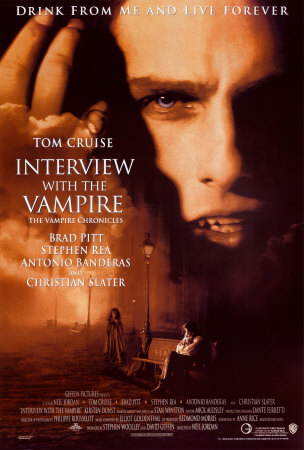
Interview with the Vampire: The Real Deal

InterviewwithaVampireMoviePosteI saw a review of Anne Rice’s book recently, and it got me thinking about how an actual interview with a vampire would go.

Interviewer (I): So, about this whole turning into a bat thing. It seems to me that a man is much bigger than a bat. Therefore, my first question is do you conserve mass? In other words, do you get really dense as a bat, and, if so, how do you even get off the ground? If not, you must shed mass, but then how do you get it back?

Vampire (V): I am the prince of darkness. I rule the night. I take whatever form suits my needs.

I: Well, that’s not really a proper answer, now is it? That’s sort of a politician on the Sunday morning talk shows answer.

V: [Bares fangs and growls]

I: Well then, moving on. Are you at all concerned about the many blood-borne illness out there: HIV, Hepatitis, Ebola, Rift Valley Fever, etc.?

V: I’m immortal. I can’t be killed by your puny germs.

I: So, that’s a… no?

V: Hrrumph!

I: Moving on. Have you ever had anyone put Vaseline on their neck or something else really gross–you know to prank you?

V: You suck!

I: One could say the same of you, my friend. Ha!… You know… because you suck on people’s necks… Well, then, moving on. Which would you rather have: a wooden stake to the heart or a silver bullet in the chest?

V: Silver bullets are for werewolves, you imbecile.

I: Yeah, but it’s still got to be quite unpleasant, wouldn’t you say?

V: [Sighs loudly] OK, I’d have to take the silver bullet, but the longer this interview goes on, the more fond I grow of the stake.

I: I love steak, too, but that’s besides the point. Any way, who would you rather have as an enemy: Bram Stoker’s  Van Helsing, who’s very smart but has no kung fu; or the  Hugh Jackman Van Helsing who’s all buff and studly but not the sharpest tool in the shed?

V: It matters not. They are both humans and, as such, no match for me.

I: Really, because in both the book and the movie…

V: [hisses like a rabid cat,  fangs out] Human propaganda. Are we done yet?

I: Not quite. What’s the hurry? Got a hot rendezvous with a Victorian wench on the docket?… Anywho. What would you say are the pros and cons of working the night-shift? I’d think it would be rather easy to get a parking space, but, then again, you don’t really need one if you turn into a bat. But, then again, all that flapping must get tiring…

V: I’m out of here!


The Most Intense Blockbuster You’ll Never See

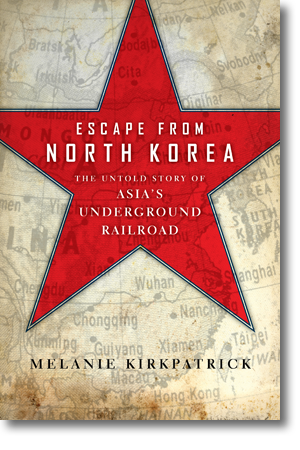
REV_Kirkpatrick-designAmong the Kindle Daily Deals yesterday was a book entitled Escape from North Korea: The Untold Story of Asia’s Underground Railroad by Melanie Kirkpatrick. It was well-timed to a news story about a Korean War Veteran, Merrill Newman, whose video statement as a prisoner of the DPRK was released the same day. Anyway, I bought the book and I’m hooked. The stories it contains are a mix of chilling and thrilling.

As I began reading, I wondered why no one had made a major Hollywood blockbuster based on an escape from North Korea. It’s a journey fraught with peril. There’s so much to go wrong from being shot in the back crossing the Tumen River to being repatriated to being double-crossed by smugglers to falling into the hands of traffickers or other predators. Adding to the challenge is the fact that most North Koreans are severely undernourished, and each is on his or her own for the first part of the trip–getting across the border. Furthermore, it’s not uncommon for North Koreans to stick out physically because they’re unusually small and, as pointed out by one of Kirkpatrick’s sources, prone to bad hair and split ends.

I know these are words that writers despise but the screenplay practically writes itself.

Then I remembered, oh yeah, this will never be a movie because China’s government would be one of the villains, and Hollywood isn’t in the business of making films that PO the Chinese any more. Why is China the villain? Well, it’s not the main villain. That distinction, of course, goes to the Kim dynasty, presently personified by Kim Jong Un–who has been the biggest bastard yet when it comes to escapees. China’s policy is one of repatriation. It would be kinder for China to just execute the North Koreans themselves. One of the stories early in the book is about an entire family that was to be sent back who–having eaten their first decent meal in a long time–decided to die full and committed suicide while in Chinese custody. Lest one think that this is a Communist thing, Kirkpatrick points to Vietnam as one of the countries that quietly helps North Korean escapees get to safety. Like the democracies that do so, Vietnam keeps this on the down-low to avoid cheesing off the Chinese, but at least they do it.

Why would such a movie be good? Because everybody needs to know what’s going on, and movies are the surest injection point into the public consciousness. There have been books and documentaries about this for years, but I don’t think most people realize how bad it is.

I should point out that there have been films on the subject. The Crossing, made in South Korea, is probably the most well-known feature film on the subject. It’s about a father who crosses the border to get medication for a wife, but ends up stuck on the other side of the border during which time his wife dies and his boy becomes–for all intents and purposes–an orphan. This film is apparently based on a true story.

And there have been a number of documentaries on the subject. The Defector: Escape from North Korea is one of the best.

This is the book trailer for the Kirkpatrick book.

Shame List: 10 Iconic Movies That I’ve Never Seen

Last week I made a confession about 25 books that I haven’t read that everyone else seems to have. This week, I thought I do the same for movies. These all feature prominently in pop culture, and one can’t go through life without hearing references to them.


1.) Apocalypse Now: I caught a part of the 2001 Redux, but I’ve never seen the original 1979 movie. I know the general plot, but otherwise all I know is that Lt.Col. Kilgore says, “I love the smell of napalm in the morning. Smells like… victory.”


2.) Citizen Kane: This is at the top of many a list for the best movie ever.


3.) The Crying Game: I, like everyone not living under a rock, know its surprising twist ending.


4.) Gone with the Wind:: As someone who has lived much of his adult life in Atlanta, this is a particular disgrace.


5.) The Killing Fields: I’ve been to Cambodia. I’ve read about the Khmer Rouge, but…


6.) Poltergeist: “They’re here.” That’s all I know.


7.) Psycho: Norman Bates and his mother, hwew, right?


8.) Raging Bull: The name Jake LaMotta rings a bell.


9.) Scarface: “Say hello to my little friend. [delivered in thick, Cuban accent]” Yeah, I know that part.


10.) Taxi Driver: “You talkin’ to me?” That’s all I know.

Are Action Movies Dazzling Us Stupid?

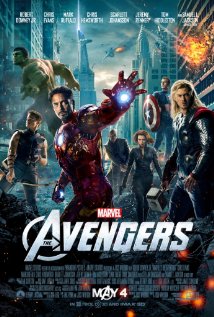
AvengersJust like everyone else, when I first watched The Avengers, I was awed. As I digested the experience, however, I realized how appallingly flawed the story was. Can a film that is visually impressive enough dance over the hard parts of story?

Alright, it’s not just being visually impressive. If it were, then the Transformers movies (I’m thinking particularly of the second one) wouldn’t be so sucktacular. No. Filmmakers also need clever quips. This feeds an inexplicable urge of young people to repeat the witty remarks of movie characters ad infinitum. (Confession: I’ve always longed for an excuse to say, “I’m your Huckleberry,” as per Doc Holliday’s words to Johnny Ringo in Tombstone.) It’s not just that the Hulk bashes a marble floor to dust using Loki’s lanky frame, but that he delivers that witty, two-word rejoinder. Together the CGI and the quip seal the scene in one’s mind.

[Spoilers ahead] If one looks up deus ex machina in the dictionary, one learns that it means: “someone or something that solves a situation that seemed impossible to solve in a sudden and unlikely way, especially in a book, play, movie, etc.” If one’s dictionary is online, one would then probably be treated to a video clip of the scene in which Professor Selvig is knocked on the head, becomes unenslaved, and consciously realizes that his subconscious built a backdoor that will allow him to shut down the portal that were previously told can’t be shut. The clip could then continue through the end of the movie (minus the post-credit shawarma scene.)  The following are key incidents of deus ex machina in this film:

-a bump on the noggin releases one from the mind-control of a god (A “puny god,” indeed.)
-a conscious mind (in a waking and non-meditative state) knows in great detail what happened in the subconscious
-an attack on the mothership disables all troops on the ground, Independence Day style (worst command and control ever.)

One may be thinking that I’m just one of those douches who picks nits, but I’m really not. These flaws are fundamental to how the story is resolved. They are cheats that make everything that happened leading up to the climax irrelevant. Think about it; if the Professor had gotten knocked on the head 20 minutes earlier, the massive Avengers battle through Manhattan would never have been necessary. They could have called the movie “Professor Selvig’s Magical Mind” and left the Avengers out of it all together.

I’m willing to sustain disbelief about the small things. There are plenty of critics who get into the minutiae of continuity gaffes and the like. A couple of my favorites are below.

Lest one think that I’m picking on The Avengers, that’s only because it’s the third highest grossing film ever and first in the superhero genre. If you’re spending hundreds of millions on a film, you’d think you could throw some chump change into good story-building.  I realize that filmmakers have a jaded audience to contend with, and that they have to ramp up the peril to impossible heights to impress. Maybe they are forced to then throw away the resolution of story. Those who read my recent review of The Wolverine, will know that my criticism isn’t restricted to The Avengers.

Well, I’ve got nits to pick.

BOOK REVIEW: World War Z by Max Brooks

World War Z: An Oral History of the Zombie WarWorld War Z: An Oral History of the Zombie War by Max Brooks

My rating: 4 of 5 stars

Amazon page

World War Z, as the subtitle suggests, is written as a series of interviews of key (or in some cases typical) people involved in the Zombie War. The viewpoints addressed include various political leaders, military service members of various branches and nations, strategic planners, doctors, and even civilians caught up in the diaspora that resulted from the plague.

The approach of the novel is unusual. To the degree there is a lead character, it’s the UN employee who conducts all the interviews. However, we don’t experience the interviewer’s story arc and are left with very little insight into this individual. Rather, the story is a global arc of mankind’s experience of zombies from “patient zero” through the clean up in the years following the war. And, it is a global tale. The stories of these individuals take one to places like Chongquing, Meteora, the Amazon, Barbados, Johannesburg, the Alang ship breaking yard (an excellent choice for a post-apocalyptic setting, I must say), Denver, and even onto a ballistic-missile-toting submarine sitting on the ocean floor.

Where Brooks’s book excels is in making one think, and in that regard it does an excellent job. This isn’t about edge-of-the-seat adrenaline injections to which most Zombie book authors aspire. I don’t deny that there are emotional parts to the book, but the tension is reduced by virtue of being a collection of survivors’ tales. That is, we know the story-tellers survived more-or-less intact. Also, because of the intrusions of the interviewer and the authenticity of responses (some are more skilled and open story tellers than others), we never lose sight of the fact that this is a couple of people talking war stories.

That being said, we take a cook’s tour of gut-wrenching food for thought over the course of the novel. Consider a government that abandons its citizenry, and even uses some as bait to help save others. Brooks tugs at the readers’ heartstrings through an interview with a K-9 soldier who describes the role of man’s best friend. Brooks portrays the best and worst that mankind has to offer–as one would surely expect to experience them in such a world gone wrong.

I must admit, some of the topics may be more interesting to me as a social scientist than they will be to others. One interviewee discusses the mismatch between job skills needed and job skills available in a rapidly evolving post-apocalyptic landscape. This speaks to present-day society as much as it does to a dystopian future. The author devotes an interview to questioning the man responsible for reestablishing trust in the dollar in an economy that has by necessity reverted to barter. There is also discussion of revolutions in governance that find their catalyst in the Zombie War. There are intriguing turns of events such as the makeshift flotillas of U.S. citizens converging on Cuba because Fidel’s authoritarian regime was uniquely prepared to close itself off during the earliest days of the outbreak.

With the movie coming out this Friday (June 21), I will say that I can’t see much in common between the book and the trailers for the movie that I’ve seen to date. However, I can imagine the movie being an extension or outgrowth of one of the many vignettes expressed in the book. This is not to say that the movie will be bad (or that it won’t be), but if one sees the movie one will still be left with impetus to read the book.

I enjoyed World War Z because it makes one think–a feat that isn’t the strong suit of Zombie literature.

View all my reviews

Your Post-Apocalyptic Guidance Counselor Is In

I’ve been reading World War Z because I had heard it’s an interesting book and because it went on sale–presumably in anticipation of the movie that comes out next week that shares a name (but probably little else besides Zombies) with the novel. I don’t usually read zombie or vampire literature because there’s so much of it and rarely does it offer anything new or intriguing. (Once one’s read Bramstoker and Matheson, what more is there to be said on the undead.) Brooks’ book is an exception. Told as a series of oral histories collected by a UN employee who serves as a quasi-protagonist–but not necessarily a central character–of the book, World War Z  chronicles the human dimension of the Zombie War.

The book tells a series of personal vignettes from the earliest sign of the pandemic through the cleanup afterward. One of the issues that is discussed is the mismatch between the skill sets the survivors had and the skill sets that were needed to survive in a post-apocalyptic world. In one of the interviews, a bureaucrat discusses the need for job retraining because they had all these information age analysts, managers, coordinators, etc. but few people who knew how to make new things, grow food, or repair damaged infrastructure. They had all these mid-level white-collar people and they needed blue collars.

This got me thinking. To be honest, I haven’t had a job that would be useful in a post-apocalyptic wasteland since I was a 22-year-old infantry-trained law enforcement officer. Everything since then has involved life in a cubicle or small office uncovering, creating, evaluating, analyzing, describing, modifying, and disseminating information. Then there has been writing, which I love, but which isn’t exactly going to pull humanity back from extinction. (Let’s not kid ourselves that “reading is fundamental” when society has to be rebuilt from the ground up–fed, clothed, etc.)

This isn’t to say that I would be altogether useless in a post-Zombie Apocalypse world. I lived years 0 through 18 on a working farm. That was a long time ago, but I’m sure I could remember something about how to engage in activities that are actually directly related to keeping people alive (as opposed to keeping them informed.)

So will you be useful post zombie apocalypse? What would you be interested in doing if your current Dilbert-esque work life became irrelevant?

I Always See the Wrong Movies: or, Post-Oscars Watcher’s Remorse

The one Oscar-Winner I saw

The one Oscar winner I saw

I only watched part of the Oscars last night. At some point I realized it wasn’t worth continuing. I see about three movies in the theater per year, and rarely are any of them Oscar material. At 10:00 pm all I had to show for watching was the chorus of the ditty “We Saw Your Boobs” echoing through my brain.  (Damn you, Seth MacFarlane, for that catchy, clever, melodic jingle that still runs like a gerbil in the rodent-wheel of my mind.)

The three movies I saw in the theaters last year were: The Avengers, Dark Knight Rises, and This is 40. The first two will no doubt convince you that I am a 12-year-old boy trapped in a middle-aged man’s body, and the last will convince you that I have poor judgement. (This is 40 had its humorous moments, but there was far too much screaming for my taste, although we did see Leslie Mann’s boobs– damn you, again, Seth MacFarlane.) I saw another half-dozen 2012 films on long Korean Air flights, but these were equally lowbrow titles (Men in Black 3, Prometheus, and Brave– the latter at least won an Oscar during the hour and a half I was watching, I think it was for Best Animated Makeup Artistry.)

I’m not altogether lowbrow. I will see most of the big winners eventually, when they finally make it to basic cable. For example, I watched The Hurt Locker on Saturday, just one day before the Oscars. So I am only three or four  or five years out of synch.  The Hurt Locker is a particularly fine example of going the other way because I understand its distinction is being the lowest grossing Best Picture winner ever.

This year’s Best Picture Argo is definitely a film that I will see in the next five years–barring Zombies, the apocalypse, or a Zombie Pandemic Apocalypse. So there’s a 60% chance that I’ll see it. The Iranian hostage crisis is one of the first historical events that I remember seeing on the news first-hand. Had I been in the country when Argo came out–I might have seen it in the theaters, but probably not.

Part of me thinks that I should grow up and start watching the “right” movies.  However, part of me says, “wait, there’s this one day a year when everybody is talking about these movies, and the other 364 days  they are talking about Dark Knight Rises and The Avengers  So in some sense, I already am watching the “right” movies.

TODAY’S RANT: Continuity Gaffes

For those unfamiliar, a continuity gaffe is a mistake in a movie in which something that shouldn’t change from one instant to the next does. They result from movies being shot over many days in an order unrelated to how the film unfurls before the viewer. Take an example, say a brawler is wearing a green shirt, they cut away to the other fighter, but when they flash back he’s an orangutan in a bikini. If it’s still not clear what I’m talking about, the YouTube clip below shows a horde of gaffes from the first Star Wars trilogy.

Now, from the title of this post, you probably think that I’m some sort of obsessive-compulsive nerd who catches every little niggling mistake in a movie. To this I say, I wish! I’m a not-the-least-bit-compulsive nerd. I don’t catch any movie continuity gaffes– not a single one. Sure, I can see them when they’re circled and the film is run in slow motion, but otherwise I’m clueless. This has made me wonder if there isn’t something defective with my brain. When they are pointed out they seem pretty glaring.

What really bothers me is not that I never catch a continuity gaffe in a movie, but rather that I catch them in my real life all the time. I’ll distinctly remember setting my keys down on the valet, but after a thorough search I’ll find them in the freezer. I’ll remember having written a paragraph, but when I come back to my laptop I find nothing but the cryptic message, “xzsawrwddd&&ppPPP.” I’ll put down Shakespeare’s Sonnets and when I pick the book back up, it’s a James Patterson novel.

I’ve developed two competing hypotheses to explain these gaffes. First, I’m in the Matrix, and Mr. Smith is corrupting the code. Second, my secretly super-intelligent cat is fucking with me.

TODAY’S RANT: Toy Movies

Uggh!

Uggh!

I’m troubled by the devolution of movie source material. As soon as there were movies, there was a desire to convert books into films. This worked great. While it wasn’t always easy to convey the depth of a 600 page novel in a 100 page screenplay, this gave even the least of us the ability to raise ourselves up to the status of pretentious douche-bag with the mantra –say it with me: “The book is always better than the movie.”

Running low on literary fodder, movie-makers decided to shift to making movies from comic books. This worked even better. You could convey the complexity of a comic in a movie, and you had an existing visual media for continuity. The major challenge was finding actresses with huge boobs who could deliver a spinning back-kick (enter Scarlet Johansson), and figuring out what to do about the crotch bulges (or lack thereof) of male superheroes in Spandex.

Pushing the limits, directors turned to video-games. This gave us such hits as Lara Croft: Tomb Raider and Doom.  Okay, a video game may give us a nice action-packed romp of mayhem and carnage– albeit with dialogue like, “Suck on this!” (accompanying a grenade toss.) One can watch such a movie on basic cable on a Sunday afternoon while eating an entire pizza and still leave all of one’s mental faculties for contemplating such deep questions as whether this is the low point of one’s existence.

Movies based on toys and board games are the low point of Hollywood’s existence. I thought they had learned their lesson from the movie version of Clue in the 80’s, but apparently not. 

To show that I am nothing if not flexible, I will say that I’m willing to change my view if any of the studios are willing to develop  my ideas such as:

Lincoln Logs: Zombie Slayer: A rogue ex-cop, Lincoln Logs, takes a break from drinking himself to death after his family is Zombified to lure zombies into poorly constructed cabins, toppling the cabins, he crushes the Zombies to undeath. Tagline: “Eat Log, Bitches.”

Chutes and Ladders: Into Darkness: Two naughty children find out what happens when one chutes right off the board — an express ride to hell, that’s what. In order to get out they have to learn to count to 100, but the devil is teaching them to count: 1, 7, brick, egg, 14, 6, toad, biscuit… They must warm Satan’s heart, and then develop the upper-body strength to climb a ladder out of hell.  Tagline: “Numbers are Hard, Hell is Hotter.”

Lego Box: The Musical: A plucky red-headed stepchild is devastated when his siblings get all the Lego bricks, but he only gets the plastic tub they came in. However, through hard work and dedication, he becomes the lead percussionist for the Boston Philharmonic Orchestra, leaving his horrid family behind. Working Tagline: “Eat Box, Bitches.”