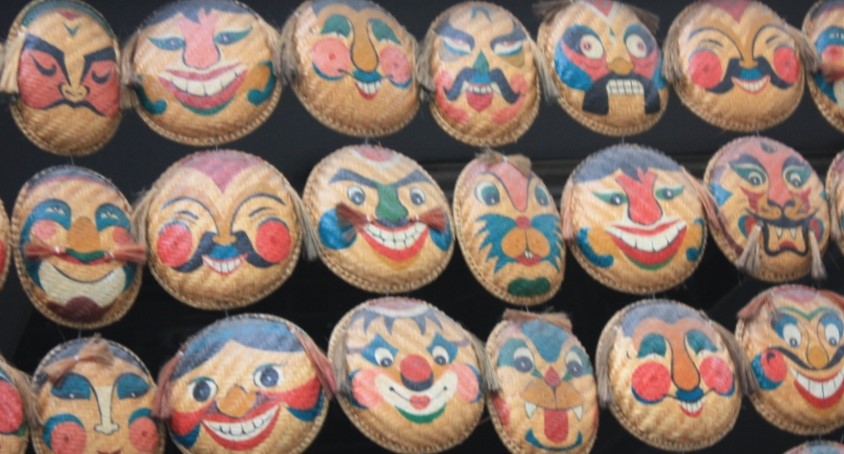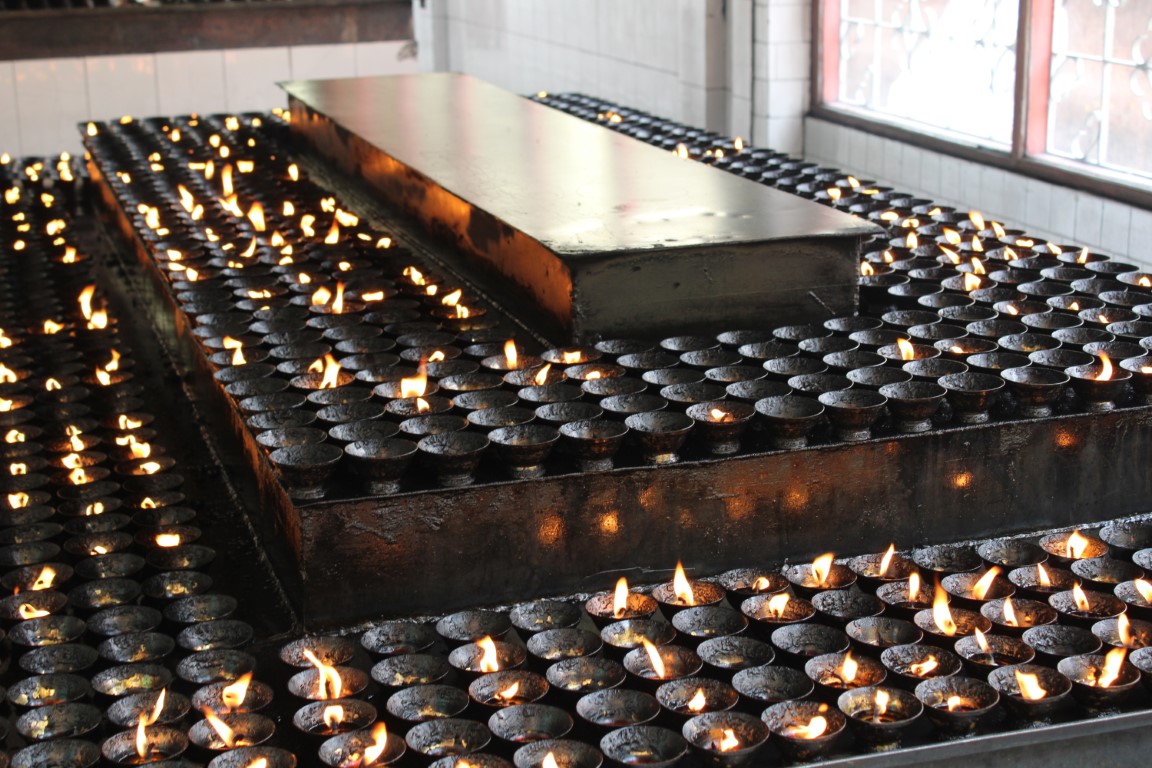
in the temple, chaotic swirls of smoke echo my mind
Tag Archives: mind
Self Speculation [Free Verse]
What's a Self? ...a soul? ...a set of neuronal activity? ...an illusion? ...a ghost in a machine? ...the body, the brain, & the whole enchilada? Memories can be false, and some always are. Thoughts can be illusory, and some always are. Feelings can be flighty & fickle, and some always are. If one loses a little toe, is one a diminished self, or still whole? What about if one loses a pinky toe-sized mass of brain? So many possibilities: ...death, ...changed personality, ...emotionlessness, ...speech pathologies, ...blindness, ...memory loss, ...coma, ...no discernable change, and so on. What's a Self? ...a dog? ...an embryo? ...an AI? ...an extraterrestrial? What is a self? Am I a self?
The Crossing [Free Verse]
A ship crosses the ocean, in the darkness: darkness, black & endless no moon, no stars, just clouds -- thick & low clouds that can't be seen The ship has lights, but those lights know an event horizon Lights sometime glint against the waves, those roiling & undulating waves, and the lights bounce off the ship's hull But no one can see them, because if anyone could see them, the seers would be seen-- unless theirs is a ghost ship, piloted by literal ghosts, or some other agent of observation Maybe there is fog -- not enveloping the ship, (such mist would be felt on the skin of those on deck) but, rather, a fog between where the ship is, and where is should be For it is surely off course, listlessly drifting, all hope arrayed against edges: edges of ice & edges of the world Not that the world is flat, but, perhaps, it's not fully sculpted: maybe nothing lies outside the range of the seen: outside the bounds of experience It sounds crazy, but all kinds of crazy form in a mind submerged in darkness
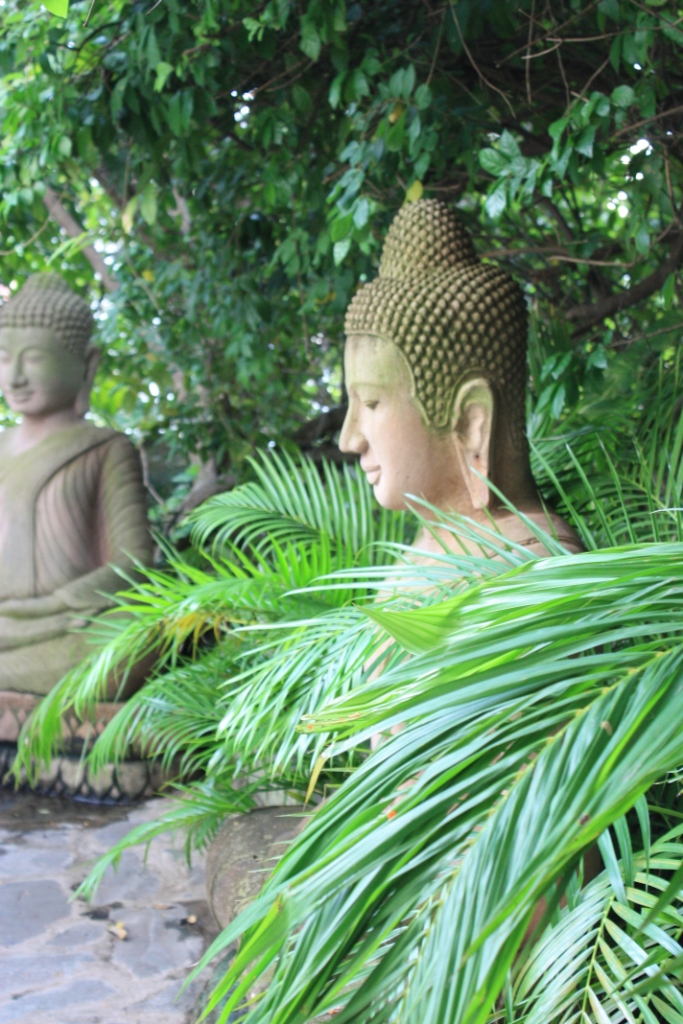
Bamboo & the Buddha [Haiku]
Bardo Mind [Free Verse]
Field of Flames [Haiku]
Driftwood Deception [Tanka]
Enlightenment in Four Bits of Shakespearean Wisdom
If you’re looking to attain Enlightenment, you may have turned to someone like the Buddha or Epictetus for inspiration. But I’m here to tell you, if you can put these four pieces of Shakespearean wisdom into practice, you’ll have all you need to uplift your mind.
There is nothing either good or bad, but thinking makes it so.
william Shakespeare, Hamlet
Through Yoga, practitioners learn to cultivate their inner “dispassionate witness.” In our daily lives, we’re constantly attaching value judgements and labels to everything with which we come into contact (not to mention the things that we merely imagine.) As a result, we tend to see the world not as it is, but in an illusory form.
The fault, dear Brutus, is not in our stars, but in ourselves.
William shakespeare, julius caesar
In Psychology class, you may remember learning about the self-serving bias, a warped way of seeing the world in which one attributes difficulties and failures to external factors, while attributing successes and other positive outcomes to one’s own winning characteristics. Like Brutus, we need to learn to stop thinking of our experience of life as the sum of external events foisted upon us, and to realize that our experience is rooted in our minds and how we perceive and react to events.
The fool doth think he is wise, but the wise man knows himself to be a fool.
william shakespeare, as you like it
A quote from Hamlet also conveys the idea, “There are more things in heaven and earth, Horatio, than are dreamt of in your philosophy.” If you grasp this idea, you may become both humbler and more readily capable of discarding bad ideas in favor of good. It’s common to want to think of yourself as a master, but this leads only to arrogance and to being overly attached to ineffective ideas. Be like Socrates.
Cowards die many times before their deaths; The valiant never taste of death but once.
william shakespeare, julius caesar
Fears and anxieties lead people into lopsided calculations in which a risky decision is rated all downside. Those who see the world this way may end up living a milquetoast existence that’s loaded with regrets. No one is saying one should ignore all risks and always throw caution to the wind, but our emotions make better servants than masters. One needs to realize that giving into one’s anxieties has a cost, and that that cost should be weighed against what one will get out of an experience.
There it is: Enlightenment in four bits of Shakespearean wisdom.
Midnight Circus [Free Verse]
The Midnight Circus was not as it seemed. It was bright colors: motion-blurred. It was the tinny monotony of music box-style tinkling tunes & organ tones. One could even make out the scent of fried foods and cotton candy, among the many other [uncircus-like] odors. But there was also the story a mind wrote to dance sensory facts into sensory fictions; that was where the falsity lie. If one opened one's eyes, letting them focus: there'd be sparking wires, & flames licking ever closer. The shrill organ tones would become screams. The summer night's humid heat would become third degree burns. The circus smells would become dust and death and acrid burnt combustibles. So, he didn't open his eyes to war or his impending demise, but let his mind march into that big musty, canvas tent, surrendering to its irreality.
Slant [Free Verse]
They told it slant, but not all the truth, and it rolled into the ears of the willing and into the minds of the faithful. And in those minds it was built into a swift machine, one of great power -- if little reality. But deaths never required reality of motive, only reality of matter. So, the wild stories became wild ideas that were the bane of us all.