“Circular Portrait” by Ikkyū [w/ Audio]

The monk’s entire body is present
in this great circle.
Xutang’s true face and eye
emerge from it.
The blind singer’s love song delights
flowers for ten thousand springs.

Translation by Kazuaki Tanahashi and David Schneider in Essential Zen (1994) HarperSanFrancisco.

“The great road has no gate” by Tiāntóng Rújìng [w/ Audio]

The great road has no gate.
It leaps out from the heads of all of you.
The sky has no road.
It enters into my nostrils.
In this way we meet as Gautama's bandits,
or Linji's troublemakers. Ha!
Great houses tumble down and spring wind swirls.
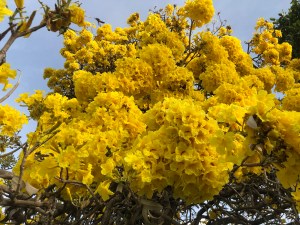
Astonished, apricot blossoms fly and scatter -- red.

Translated by Mel Weitsman and Kazuaki Tanahashi; printed in: Essential Zen. 1994. HarperSanFrancisco, p. 136.

Note: While Rujing was Chinese he was teacher to the prominent Japanese Zen Teacher, Dōgen Zenji, the latter published this and other poems, hence the dual categorization of it as Chinese and Japanese Literature.

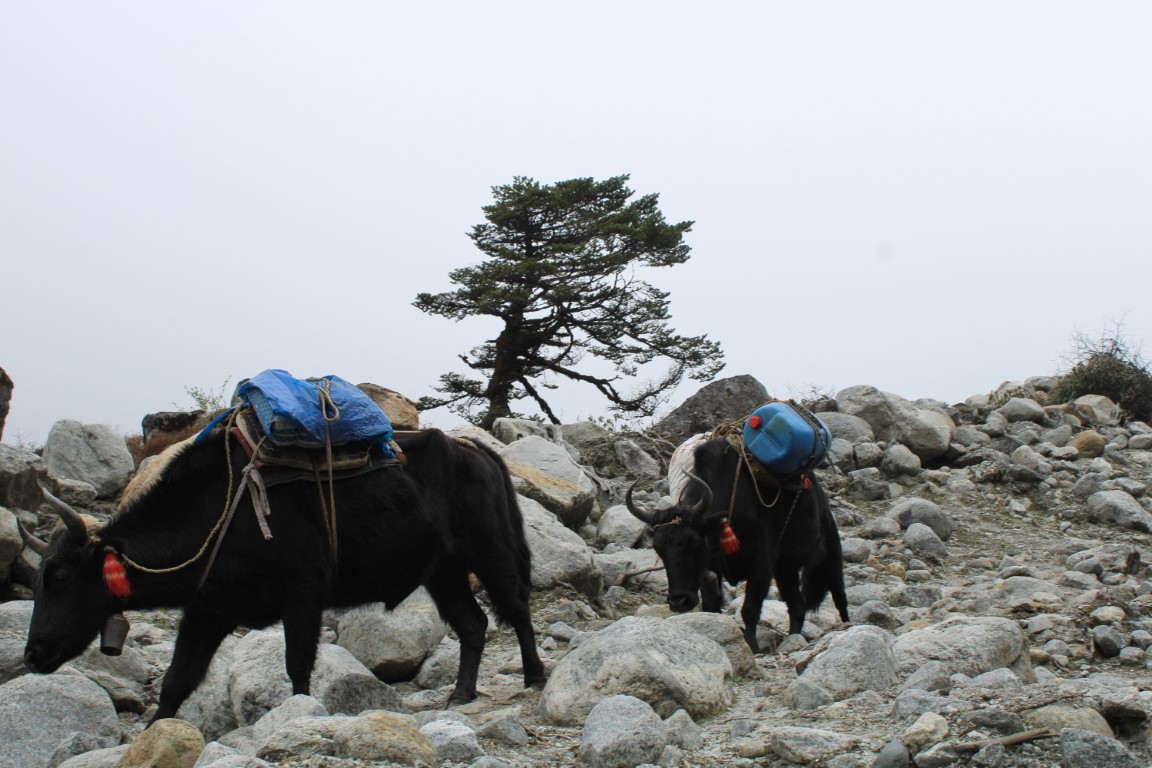
“Ox” by Ikkyū [w/ Audio]

Among other creatures this is what I was.
Abilities depend on the realm;
realm also depends on abilities.
At birth I forgot completely by which path
I came.
I don't know, these years, which school
of monk I am.

Translation by Kazuaki Tanahashi and David Schneider in Essential Zen. 1994. HarperSanFrancisco.

“Without desire everything is sufficient” by Ryōkan Taigu

Without desire everything is sufficient.
With seeking myriad things are impoverished.
Plain vegetables can soothe hunger.
A patched robe is enough to cover this bent old body.
Alone I hike with a deer.
Cheerfully I sing with village children.
The stream under the cliff cleanses my ears.
The pine on the mountain top fits my heart.

Translation by Kazuaki Tanahashi and Daniel Leighton in Essential Zen (1994) HarperSanFrancisco.

“Under the Trees…” by Ikkyū [w/ Audio]

Under the trees, among the rocks, a thatched hut:
verses and sacred commentaries live there together.
I'll burn the books I carry in my bag,
but how can I forget the verses written in my gut?

Translation by Kazuaki Tanahashi and David Schneider in Essential Zen (1994) HarperSanFrancisco.

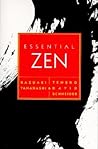
BOOKS: “Essential Zen” ed. by Kazuaki Tanahashi & David Schneider

Essential ZenEssential Zen by Kazuaki Tanahashi
My rating: 5 of 5 stars

Google Books Page

This is a collection of short writings (poems, koans, and prose excerpts) on Zen Buddhism arranged into loosely themed sections. The writings tend toward the artistic, creative, and metaphorical, with relatively few straightforward descriptions of technique or philosophy. The writings range from those of Chinese and Japanese monks who lived hundreds of years ago to present-day poets and Zen practitioners. Among the more frequently drawn from sources are: Hanshan, Ikkyu, Dogen, Ryokan, Hakuin, Gary Snyder, Robert Aitken, Seung Sahn, John Daido Loori, Thich Nhat Hanh, and Peter Levitt. But there are many others, including some who have only a single piece included.

There’s a substantial “Notes” section that gives source, translation, and — in some cases — background information. Most of the translations (both Japanese and Chinese) are by the editors, Kazuaki Tanahashi and David Schneider. There are illustrations, but they are all ensō (circular brush paintings) and related forms.

This is a highly readable and insightful collection of short writings, and I’d highly recommend it for individuals interested in Zen or Eastern Philosophy more generally.

View all my reviews