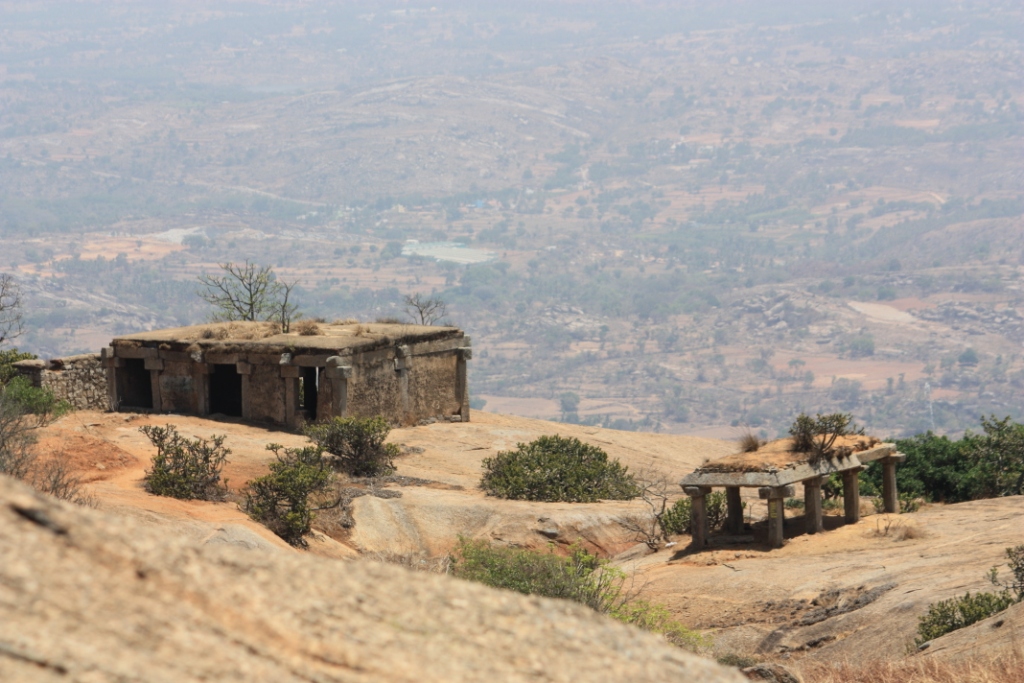
Taken on March 28, 2015 at Savanadurga
Looks fake, but it’s not.

Taken on March 28, 2015 at Savanadurga
Looks fake, but it’s not.
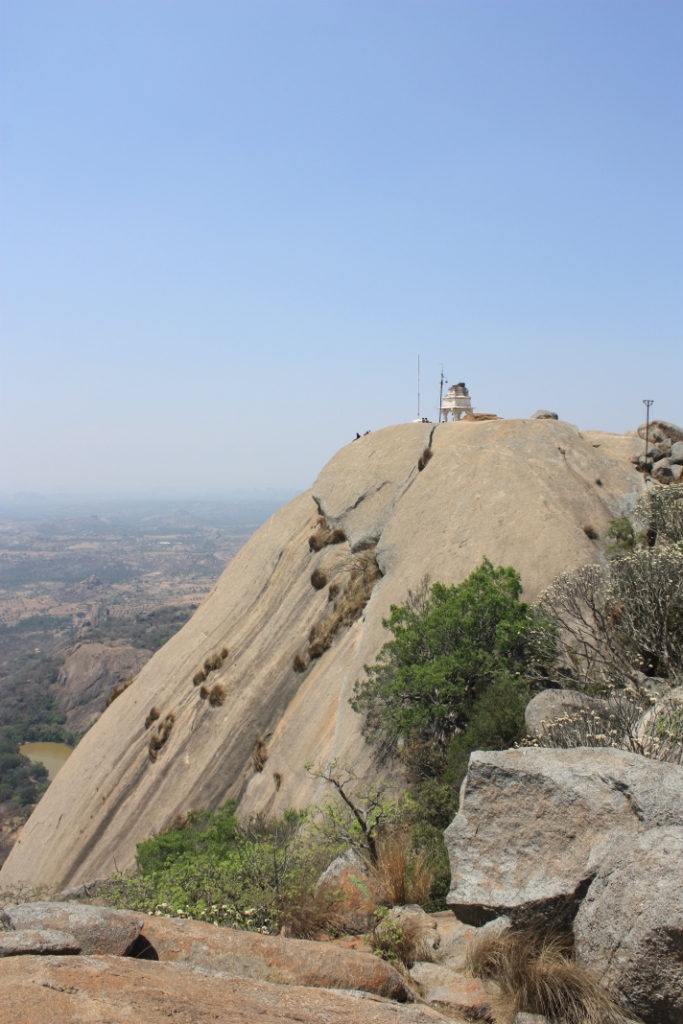
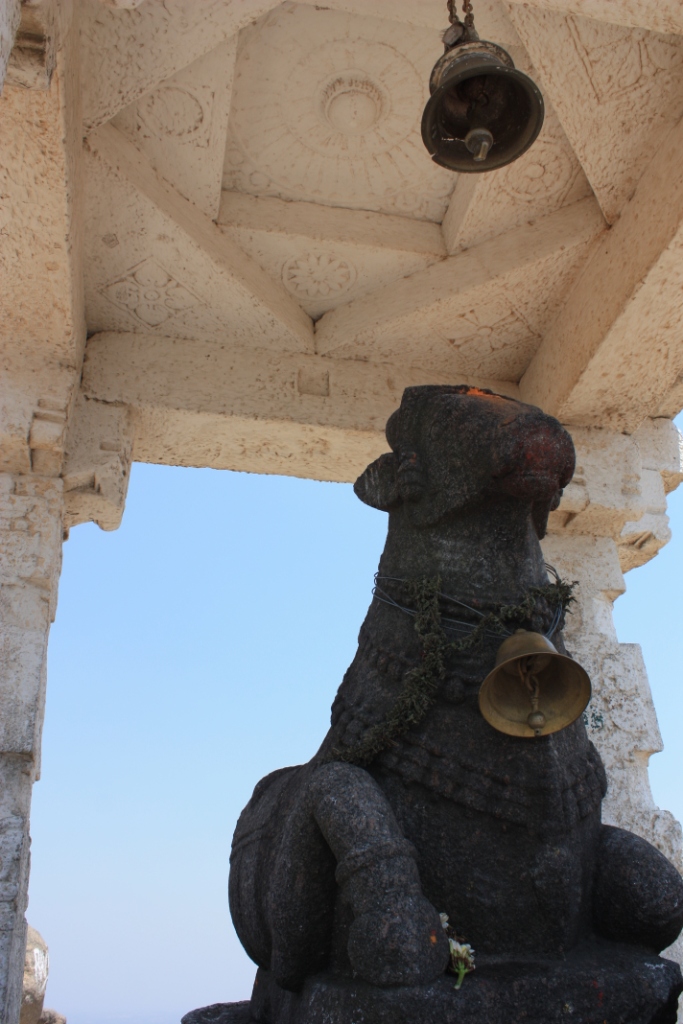
Taken on March 28, 2015 atop Savanadurga Hill
Savanadurga is one of the largest monoliths in Asia. It’s located about 60km (40-ish miles) west of Bangalore. The top picture shows the hilltop from the trail, and the lower one is a close up of the Nandi shrine at said top. Savanadurga’s hightest point is at a little over 1226 meters (4000-ish feet.)
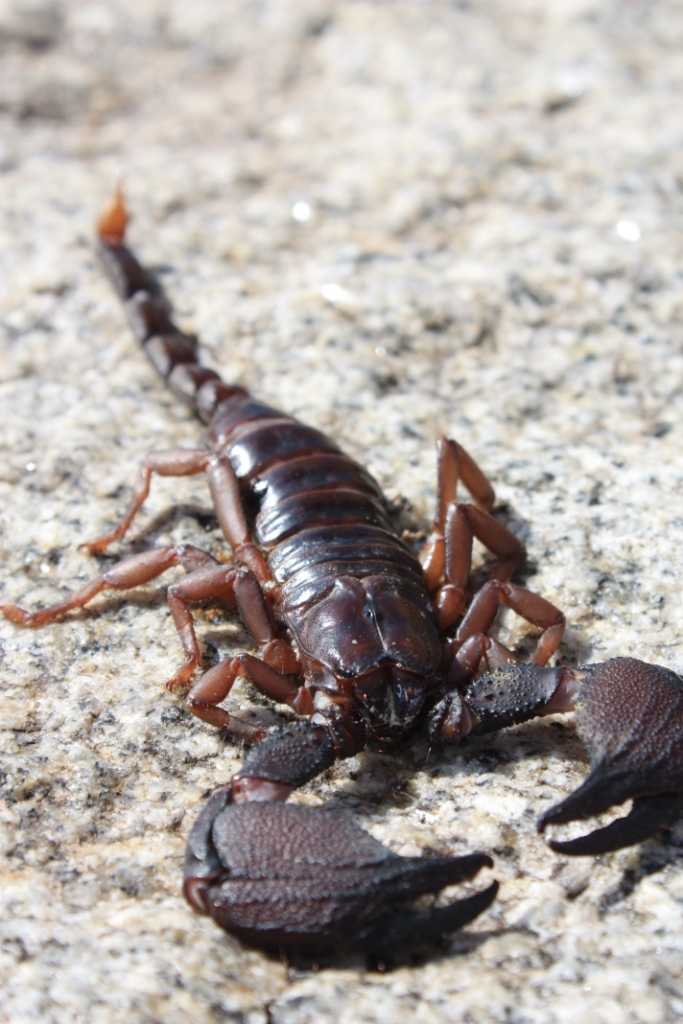
Taken in November of 2013 at Hampi
This dead scorpion was sitting on some stonework at the Achyutaraya Temple.
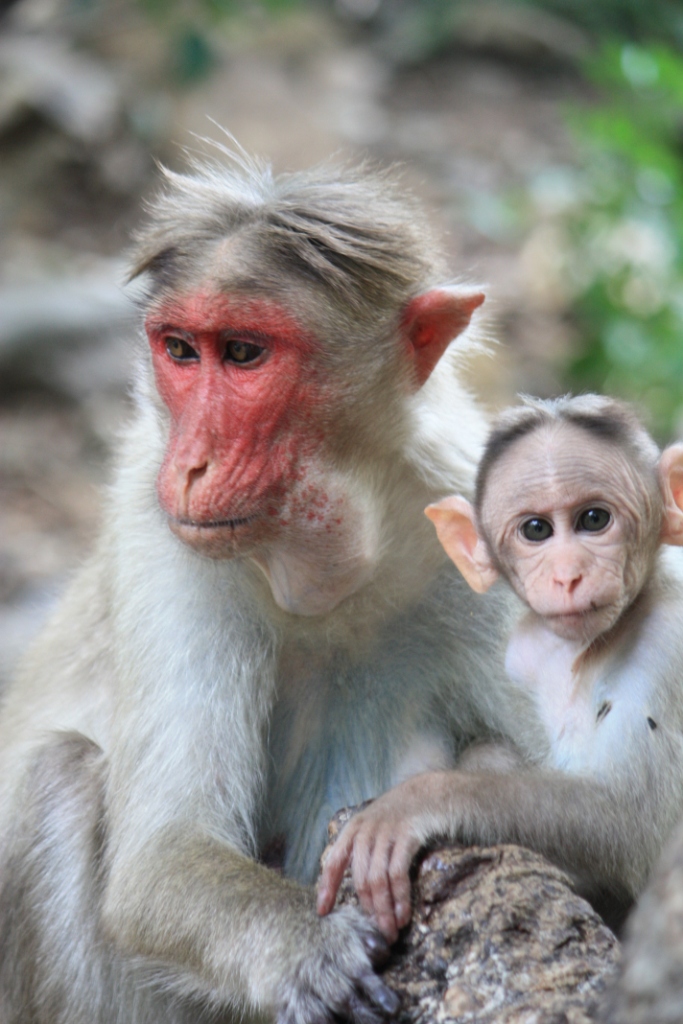
Taken in the July of 2014 near Chamarajanagar.
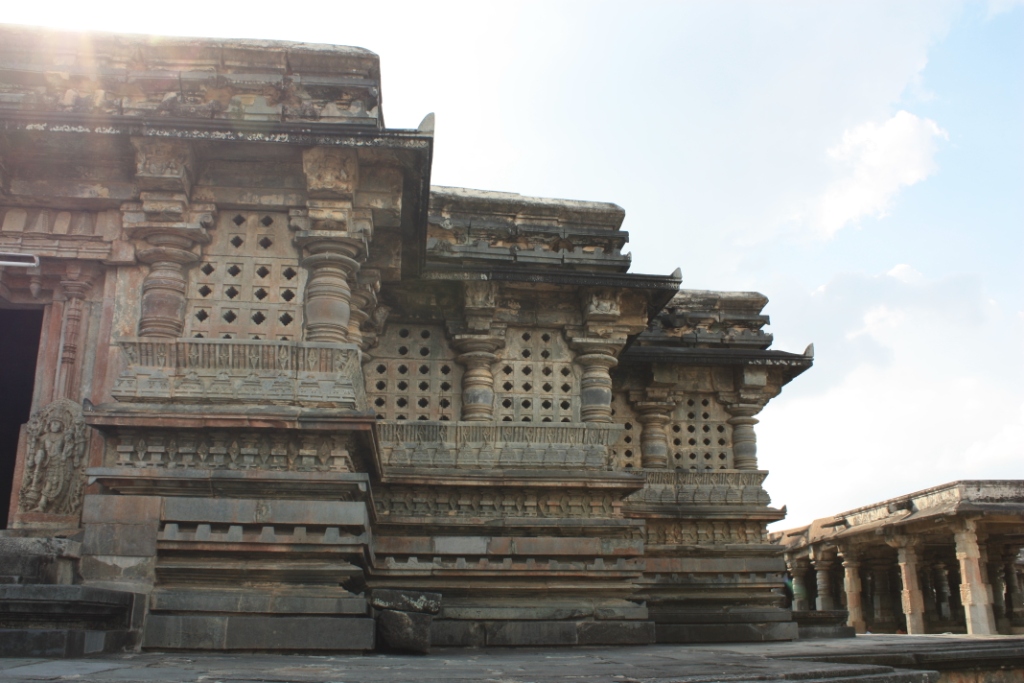
Taken in November of 2013 in Belur
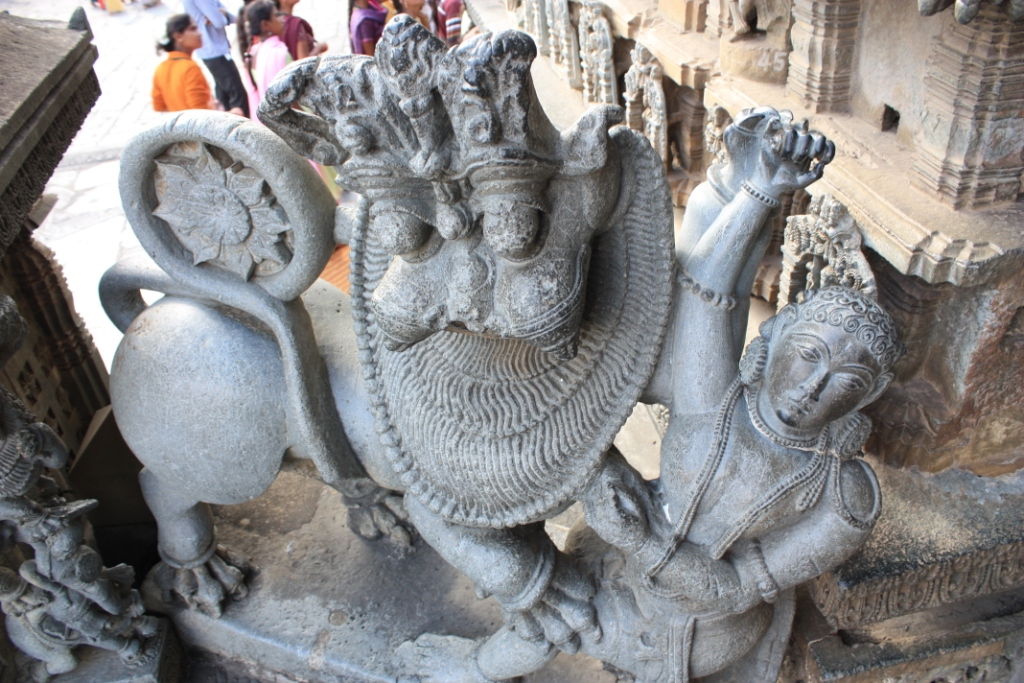
The temples at Belur and Halebidu are among India’s most impressive–but least known–historical sites. Both cities were a capitals during the days of the Hoysala Empire, but are well off the major tourist path. If you’re spending some time in South India, these temples should be on your itinerary.
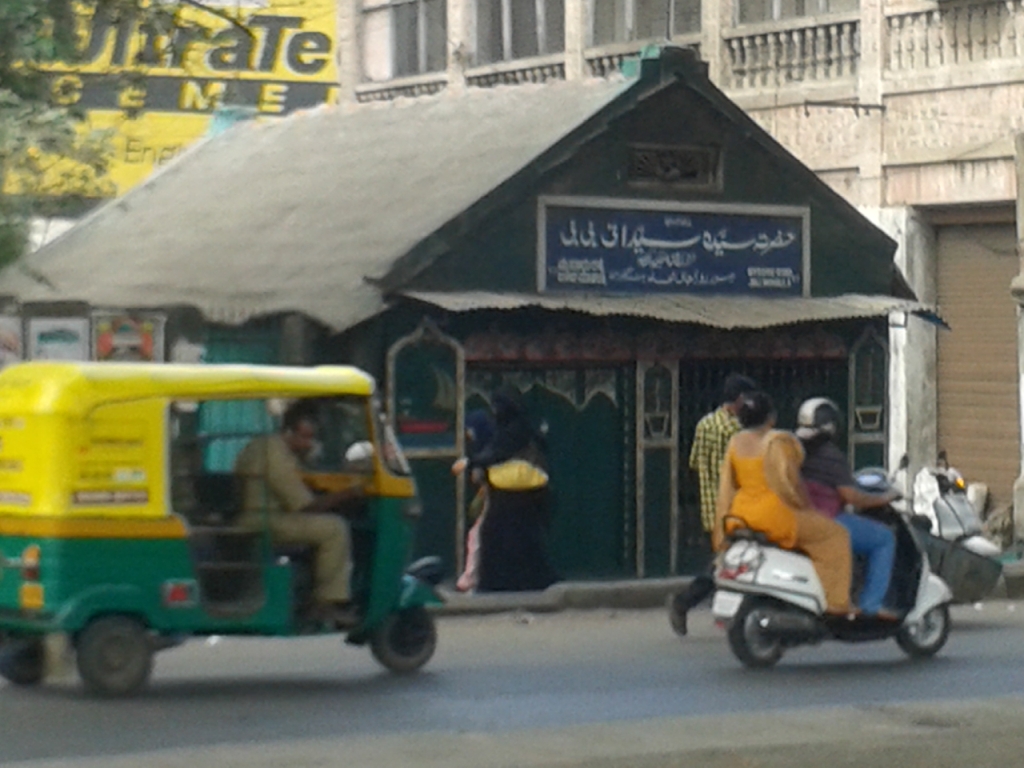 Where is Uncle’s shop? It’s where you are going if you got into an auto-rickshaw with a driver who has volunteered to drive you around for less than the metered rate. It may not be where you want to go, where you think you’re going, or where you’d like to go. But in the driver’s eyes, by taking him up on a reduced fare, you’ve entered into an implicit contract to be taken to a random store and nagged into buying something expensive enough that the shop can happily recoup the driver’s finders fee.
FYI- Bangalore auto-rickshaw fare is currently 25 rupee (Rs) for the first 1.9km, and 13Rs for every kilometer thereafter. If the driver offers to take you around for 10 or 20Rs, you know they have plans. (Although there is a small chance that they are counting on you to be ignorant of the fact that the place they are offering to take you is 50 feet away.) Usually, a driver will offer to take you to a place for 4 to 8 times the metered rate (sometimes more if he has no idea where said place is–a not uncommon condition in Bangalore.) In other words, the driver will normally try to rip you off in the old-fashioned way (which eats at your pocket-book, but not at your time.)
If you find the new-fangled rip-off scheme to be a deplorable con, just remember to save some of your wrath for FaceBook, Google, and the other websites you commonly use. They almost all work on the same model. You get charged little or nothing to use said sites in exchange for agreeing to be shamelessly pitched stuff you don’t want or need.
What does Uncle’s shop sell? I hope you like a good mystery, because there’s no telling whether Uncle’s shop sells anything in which you have the slightest interest. If you are a single male, Uncle’s shop probably sells saris and pashminas. If you have a tiny apartment, Uncle’s shop probably specializes in 14 foot tall bronze statues of Ganesha. It could sell woven goods, knick-knacks, bric-a-brac, widgets, tsotchkes, or relics of a religion you know nothing about so you can engage in some low-grade impiety. (FYI- You may not realize this but for the devoted, it can be a bit offensive for a bunch of non-believers to be wearing “OM” symbols or having Buddha statues who aren’t Hindu/Yogic or Buddhist, respectively. Sort of the way many hardcore Christians feel about how Christmas was shanghai’d by a jolly old elf or Easter was overtaken by a giant bunny.) In some cases, Uncle’s shop will sell all of the aforementioned items and more.
Surely I will get an outstanding deal at Uncle’s shop, right? I mean, Uncle is not going to rip off his nephew’s customer, right? Wrong. First of all, there is an infinitesimally small chance that the driver is biologically related to the store owner in any way, shape, or form. It’s probably more likely that they’ve never formally met.
Second, let’s do some Uncle’s shop mathematics. We will call the wholesale cost of the product “C” and the bloated profit that the store owner would like “W” (for “wishful thinking profit”) and the lowest profit “Uncle” is willing to accept “R” (for “reservation price profit.”) If you just walked into the shop off the street and bought said item you’d pay some amount ≤(C+W) and ≥(C+R).
However, now the driver expects a reward. [Granted, it may be nominal in the scheme of things.] We’ll call the fixed-rate payment to the driver “S” (for “sucker wrangling charge.”) [You may wonder why I’m assuming this is a fixed-rate payment. Fair enough, if the driver is savvy, it will be percentage. However, my finding has been that between 60% and 80% of autorickshaw drivers in Bangalore don’t understand the concept of a map. I’m not saying they don’t know how to use a map. I’m saying that they don’t get that it’s a representation of the streets surrounding them. My point being, auto-rickshaw drivers are–as a group–not savvy. Granted, certain among them are really savvy. However, my point holds as long as we can except that S>0, for all S–whether fixed or a percentage.)
Long story short, now you will pay between (C+W+S) and (C+R+S), where S>0. Long story shorter, going to Uncle’s shop with an auto driver will not save you money (unless you’re looking for something specific, and it will save you the value of time to have a guide to show you where to get what you’re after. Good luck with said guide being an auto driver, the driver doesn’t care what you want, he wants you to buy whatever Uncle’s shop is selling. You can buy what you want on your own time.) It’s true that you may find it worth it to pay the nominal extra amount for many reasons, i.e. convenience, a likable driver, etc. Just be informed.
How come it’s called Uncle’s shop, when nobody involved is the Uncle of anybody else involved? Indians use “auntie” and “uncle” as honorifics for older individuals who are in positions / stature commanding respect–it needn’t be a relative by blood. For auto drivers, this includes random shop owners who’ll pay them 50 rupee for dragging hapless tourists into the store.

Taken in January of 2014 at the Republic Day Flower Show at LalBagh Gardens
I probably won’t make it to this year’s Republic Day Flower Show at LalBagh Botanical Gardens, but I’ll post a couple of pics from last year’s show.

Bonus rose

Taken in Cubbon Park on December 13, 2014
The other day I posted a winter photo from Budapest to psyche myself up to experience winter for the first time in a while. Now I’m going the other route. As I pack to travel to a place with winter, I’m posting some of the flowers currently blooming in Cubbon Park.



Taken in Cubbon Park on December 13, 2014.

Taken in Hampi in November of 2013.

This fake rat is kind of big, but if you asked me how it differed from real Indian rats, I’d have to say the bling. Real Bengaluru rats aren’t ostentatious, and rarely wear jewelry.
Occasionally, I will see a rat–usually the carcass thereof–that makes me exclaim… Duh-uh-AAAaaammmmm! They often look like beavers, sans the distinctive paddle-tail, but with a whip-like, hairless rat tail in its place.
These sightings have raised some intriguing questions:
The first question is for any biologists or geneticists who–quite improbably–might read this post. Is it possible for the offspring of an English Bulldog and a Norwegian Rat to survive? If so, I’m pretty sure that I’ve seen one. If I find out where it lives, will they name it after me? Can I pay them not to?
The second question is for statisticians–particularly bio-statisticians. Let’s say that 95 percent of rats successfully live their lives underground, in walls, and out of sight. Let’s further say that I’ve seen a rat that was 1.5 feet long and 0.75 feet wide. Is it possible to calculate how large the biggest statistically likely rat would be. I’m thinking, lurking somewhere in the sewers, there is a three-foot long and foot-and-a-half wide ratzilla–probably chomping on a cigar and belching occasionally.
The third question is for an ecologist. I know that cats and other predators will attack–often successfully–prey that are larger than they are. However, given the freakish disparity in sizes that we are seeing, will the existing ecological order be overturned, and to what effect? Bangalorean cats are about the same size as American cats, but Bangalorean rats are about the size of American pigs–not the cute little pot-bellied variety but rather the kind that take a blue ribbon at a 4H County Fair. I know humans were once primarily prey, and only quite recently became dominant predators. This worries me because I know that humanity’s prey-like predilection to be scared of everything, combined with its unprecedented predatory weapon set, has fucked up the world but good. I can only image what a rat would do with a hydrogen bomb.
The fourth question for a rat neurologist. Are rats really that much smarter than turtles? I know the Teenage Mutant Ninja Turtles follow their Rat Sensei unquestioningly. I googled it. Rats live about 1 year and turtles can live to be about 40. So Splinter must have learned much faster in addition to being much smarter.
OK, the last one was not a serious question (but it’s a serious plot-hole for TMNT), but I do have one last question for the general public.
Which do you find more disturbing: a.) when you see a single mammoth rat? or b.) when you see an elaborate Vietcong-style series of tunnel openings and you know there is a billion rat army wriggling all over each other just centimeters below your feet?
Please don’t think I’m anti-rat. I know that, while we fear the plague-infested rats, it was really the fleas that gave us the Black Plague. I also know there are places like Karni Mata Temple in Rajasthan where rats are treated deferentially. There are an estimate 20,000 rats living on the temple grounds.

Source: Wikipedia entry on Karni Mata Temple in Rajasthan.
I guess this raises one more question for a rat nutritionist. How come these rats, which are fed and cared for, don’t get huge like the one’s lurking in the back alleys of Bengaluru.


