BOOK REVIEW: Night Mary by Rick Remender

Night MaryNight Mary by Rick Remender
My rating: 4 of 5 stars

Amazon.in Page

In this graphic novel, the protagonist is a young woman, Mary, who is a talented lucid dreamer – i.e. being conscious in one’s dreams. While lucid dreaming is a real thing, the sci-fi “magic” of the story world is that, using an experimental medication in conjunction with skilled dreamers allows the lucid dreamer to observe and take part in the dreams of another person. Said experimental medication was developed by Mary’s father, who’s a bit of a shady “evil scientist” type, and he employs Mary as his lucid dreamer (even though she is still a high school student.)

The story is intense and provocative. Character development is good and we learn that Mary is dealing with her own mental health issues, presumably PTSD-like traumatization related to an automobile accident she was in with her mother, but she may have already been anxiety prone. Mary’s father is a complex character throughout. He’s cold and distant as a father and obsessive as a scientist, but not altogether dastardly. I enjoyed falling into the story and found it to be narratively taut. That said, it wasn’t with out some problems of pacing and villain monologuing around the climax.

The artwork by Kieron Dwyer succeeded in creating a visceral horror / surreal feel. Also, the use of different color palettes for the real world versus various dream worlds helps to clarify where one is, which is useful in a story that shifts between the real (waking) world and dream scenes.

If you enjoy stories set in dreams and the sci-fi of the unconscious mind, you may want to look into this one.

View all my reviews

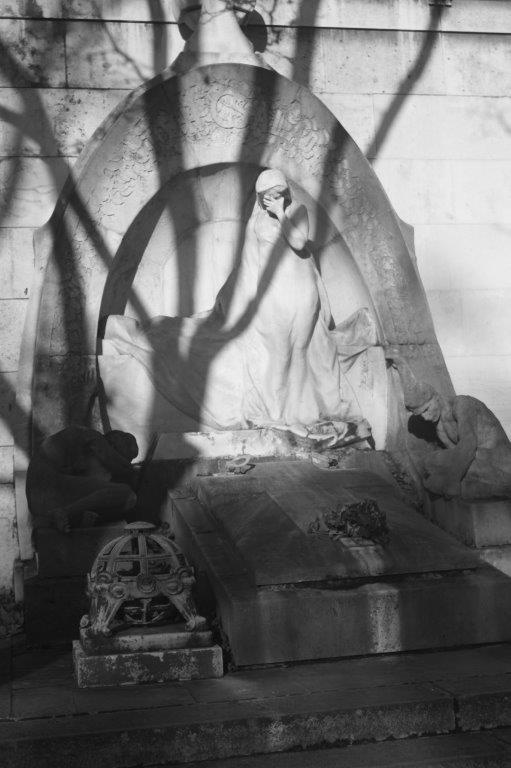
Necropolis [Free Verse]

a city of the dead
tunneled under the living,

awaiting the flip,
a shift in who's who

-the living & the dead,
-the dead & the living
-the alive and the existent
-the living dead &
those dying alive

all jumbled together
in a sea of inhumanity,
tumbling past each other,

scrambling for humanity -
for the breath of life,
for life in a breath

the musty scent of decay
in the living city
was the first sign...

those in the necropolis 
smelled flowery scents --
clean and bright --
and found those fragrant
perfumes
as revolting as the
living found the rot stench

in the brief time it took
to become acclimated to the stink,
all found themselves in the churn,
struggling for more
of something they
didn't understand

BOOK REVIEW: The Gold Persimmon by Lindsay Merbaum

The Gold PersimmonThe Gold Persimmon by Lindsay Merbaum
My rating: 4 of 5 stars

Amazon.in Page

Out: October 5, 2021

This book consists of two stories with the common connection of being set in strange hotels. The first story is split between parts one and three (of three.) This allows part one to tell a story that feels like straightforward realism (while part three is where the story gets a bit trippy and where – in that trippiness – the reader may see connections between the two stories that may or may not be intended.) It’s the story of Cly, an employee of a fancy hotel [The Gold Persimmon] that specializes in serving a grieving clientele, and her love affair with a regular guest, Edith, who is a physician. The strangest thing in this story is that Cly is probably the most attached to her job of any low-level hotel employee in the history of low-level hotel employees.

The second story’s protagonist, Jaime, is an aspiring writer of nonbinary gender identification who is about to take a job in another hotel, a Japanese-style love hotel. [For the unfamiliar, that means a place with themed rooms where people come for short-term stays to get their freak on – think: dungeon, subway train interior, etc.] This story gets weird almost immediately as a fog descends over the city leaving only a few employees and customers trapped together inside the hotel. This is a much more engaging story than the other. The few people in the hotel inexplicably go all “Lord of the Flies,” and the reader can’t be sure whether it’s descent into madness from whatever fog has enveloped the hotel, or whether they are mostly unstable from the start.

It’s extremely difficult to write surreal- / madness-based stories that aren’t distractingly unclear about what – if anything – is real. I felt this story suffered from two difficulties. First, Jaime’s internal monologue sways radically from what seems like extreme paranoia to very reasonable states, but we don’t know the character enough to have a baseline. Second, many of analogies used in describing events read a bit clunky, causing one to need to re-read to try to make sense of whether what is said is what is actually being seen or whether it’s just a confusing metaphor.

That said, I was engaged throughout the story, and found it compelling enough to need to keep reading. I’d say if you don’t mind some ambiguity and experimentation in writing, you’ll enjoy this book. If not, not.

View all my reviews

BOOK REVIEW: When a Robot Decides to Die and Other Stories by Francisco García González

When a Robot Decides to Die and Other StoriesWhen a Robot Decides to Die and Other Stories by Francisco García González
My rating: 4 of 5 stars

Amazon.in Page

Out: November 15, 2021

This book isn’t for everyone. There are two factors I believe a reader needs to be aware of going forward. First, shocking and taboo plot devices are used throughout; so, one needs to be mentally ready for bestiality, necrophilia, cannibalism, and enslavement. Second, while this is nominally science fiction, it’s not nerd’s sci-fi, but rather English Lit / Humanities major sci-fi. Which is to say, scientifically- / technologically-minded people are likely be occasionally distracted by thoughts like: “that’s not how that would work,” or “why did he use that word? It doesn’t make sense in that context. Is it just because it sounded vaguely techy?”

For those who are still reading, the stories are more than just shock for shock’s sake. They are thought-provoking, and the taboo topics both engage readers on a visceral level, but also engage readers on an intellectual level as symbolism. While it’s far from great sci-fi, it’s fine psych-fi (a subgenre that – like sci-fi – deals in speculative futures, but which focuses more on changes in human modes of interaction and ways of behaving – rather than on the effects of technological advances.) “The Year of the Pig” was probably my personal favorite. That story explores family dynamics, cultural proclivities, and personal psychology in a smart way.

If the opening paragraph didn’t scare you away, you’ll probably find some compelling stories in this collection.

View all my reviews

BOOK REVIEW: I Breathed a Body by Zac Thompson

I Breathed a BodyI Breathed a Body by Zac Thompson
My rating: 4 of 5 stars

Amazon.in page

Out: October 5, 2021

This is one creepy commentary on technology run amok, and the alienation, desensitization, and disconnection that can result. [Or, at least that’s how I interpret it.] The protagonist is a driven social media executive who finds herself in territory that even she believes is over the line, despite her near psychopathic emotional disconnection. Another way to interpret the story is that the fungi that has taken parasitic control over humanity is making people see the world more as they would – i.e. with less cringing about death, decomposition, and deformation. [I happen to think that the fungi infection is a clever plot device to get across ideas about technology and modernity, but I could be wrong.]

Either way, I do think this is a clever story. There’s a species of Cordyceps fungi that takes control of the brain of an ant, steers it to the top of the nearest tree, and bursts out of the ant’s head to spread its spores from its new, elevated vantage point. This book reminded me of the Cordyceps fungi, and I wouldn’t be surprised if it inspired the story — with the requisite growth in sophistication to account for taking over a much more complex brain. This is a compelling and thought-provoking story, but it’s also gruesome and at times chaotic. If you can take horror, you’ll probably find it worth reading.

View all my reviews

BOOK REVIEW: Crueler than Dead, Vol. 1 by Tsukasa Saimura

Crueler than dead, vol.1 (Crueler than dead, #1)Crueler than dead, vol.1 by Tsukasa Saimura
My rating: 4 of 5 stars

Amazon.in Page

Out: October 12, 2021

A teenage girl regains consciousness in a bland institutional setting to discover that she has been part of medical experimentation. Her mission, should she choose to accept it, is to get a vile of vaccine tested on her and the young boy who will be her traveling companion (as well as, on a bunch of people who didn’t survive) to a stadium in the heart of a Tokyo, a city overrun by Zombies. This is a manga-style graphic novel (i.e. black-and-white panels read right to left.)

I found the work to be in the meaty middle among the vast Zombie subgenre – neither among the best nor the worst. What I think the book did well was set up stakes for intense action. They have to journey to the center of the world’s most populous city to the only un-Zombified people known to remain living. So, the stakes are the continued existence of our species. What the book doesn’t do so well is maintain pace and a clear narrative thread. Textless panels are used to make transitional jumps and it’s not clear to me that most readers will follow the flow smoothly.

If you enjoy Zombie stories and manga comics, you may want to look into this one. It has a video game like aesthetic and feel which may (or may not) appeal to gamers more than the average reader. If you find Zombies overplayed and are looking for only the best of the best in Zombie stories, you’re unlikely to find that here.

View all my reviews

BOOK REVIEW: The Neil Gaiman Library, Vol. 3 by Neil Gaiman

The Neil Gaiman Library Volume 3The Neil Gaiman Library Volume 3 by Neil Gaiman
My rating: 5 of 5 stars

Amazon.in page

Out: June 1, 2021


This series collects short fiction of Neil Gaiman and presents it via the medium of the graphic novel. While there are four works listed, because two of these works contain multiple stories, there are actually eight stories contained in this volume. The selection is diverse both in terms of genre and artistic style. With respect to genre, the stories cut across fairy tale, fantasy, horror, supernatural, and tales of the weird. The artistic styles range from art nouveau to comic strip style. While this is the third volume, the included stories all stand on their own, and so there is no necessity to have read previous volumes. Because Gaiman draws heavily on fairy tale source material, parents might assume these are kid-friendly stories, but you should check them out first yourself as “Snow, Glass, Apples” and “The Daughter of Owls” both present somewhat sexually explicit content (the former both graphically and with respect to story events and the latter only with respect to story,) and while the horror stories are pretty calm as horror stories go, they are still works of horror.

“Snow, Glass, Apples” is a dark take on the princess-centric fairy tale. It imagines a vampiric young nymph who appears as challenger to the Queen. This is probably the most visually impressive work, being illustrated in a style that mixes art nouveau with Harry Clark’s stain glass artworks. It is definitely not the run-of-the mill graphic novel, graphically speaking. The art is exceptionally detailed and stunning.

“The Problem with Susan and Other Stories”: As the title suggests, this is one of the two multi-story entries in the collection. The titular main story features a retired Professor who is plagued by Narnia-like dreams, and who receives a visit from a reporter for a college paper. The art for this one is much more reminiscent of the typical graphic novel of today. There are three other stories included. “Locks,” the comic strip-esque illustrated story, is a take on “Goldilocks and the Three Bears” as it’s being told to – and imagined by – a little girl. “October in the Chair” imagines a kind of story competition taking place around a campfire by anthropomorphized “months.” It’s a bit more artistically rendered than the other stories in this [sub-] collection (although that may have to do with the dark tone that is used to reinforce that the stories are being told in the middle of the night in the middle of a woods.) The final story is a brief, but artistically dense, story that imagines a day in which everything goes wrong at once.

The sixth story, “Only the End of the World Again,” revolves around a man / werewolf who wakes up to find that he has clearly turned in the preceding night. The tale is set in a small and remote village, where everyone seems to know everything about everyone, and it doesn’t shock the man when select people let slip that they know his secret. As the story unfolds, it’s clear that the man / werewolf is caught up in something bigger than his own tragedy.

The last entry is a two-parter. The first is one of my favorite Neil Gaiman short stories; entitled, “The Price,” it offers an answer to the question of why some indoor / outdoor cats constantly come home battered and bleeding. The second story, “The Daughter of Owls,” revolves around “the baby left on the church steps” plot mechanism. Because the girl is enveloped in owl accoutrements, she is shunned by the village and forced into exile at a dilapidated former abbey. Both of these stories have a more brush-painted style that the usual graphic novel.

I enjoyed this collection immensely. While not all of the stories were new to me, the way they were illustrated shone a new light on the familiar tales. All of the stories are masterfully crafted and illustrated. While Gaiman draws heavily on well-known fairy tales, there is nothing banal about these stories. I’d highly recommend this book, even if you’ve read some of the stories already.

View all my reviews

BOOK REVIEW: Disaster Inc. #1 by Joe Harris

Disaster Inc. #1Disaster Inc. #1 by Joe Harris
My rating: 4 of 5 stars

Amazon.in page

Out: February 24, 2021


This story revolves around the practice of dark tourism, visiting edgy sights – disaster zones, crime-ridden areas, war zones, etc. In this story, “Disaster Inc.” is taking half a dozen tourists into the radioactive hot zone of the Fukushima Daiichi nuclear meltdown. The owner / entrepreneur of Disaster Inc. is Paolo, a shady character who is always working side hustles of questionable legality. Paolo’s assistant, Abby, is arguably the protagonist of the story, and is depicted as more sensible but also as someone whose financial difficulties have gotten her roped into Paolo’s nefarious and shoddy enterprise. On the ground in Japan, Paolo has hired a yakuza, Toshiro, as a driver / translator / facilitator, and heavy. These three are to lead the tourists, who consist of a pair of eco-warriors and a psychedelic-loving Scandinavian playboy and his fem-entourage.

From an opening scene, we know that something is not right in the exclusion zone, and when Paolo leads the group off course it becomes apparent that he has an ulterior motive. [It’s kind of a bizarre idea to use an illegal activity as a cover for another illegal activity, but the dark tourism angle does make for a provocative set up.] In real life, an excessive dose of nuclear radiation causes: nausea, weakness, low blood count, and hair loss, but – of course – in comic books the effects of radiation are completely different and hard to anticipate. In this case, the radiation animates the immortal souls of a samurai army, giving them the capacity to do battle in the world once more, which they take to doing in a manner more ninja-like than samurai-esque, but that keeps up the eeriness.

This book has an intriguing premise. Samurai raised to resume defense of lands that have been ecologically defiled. The art is vibrant, clear, and can be creepy where it needs to be. I felt that character development was the book’s biggest weakness. I think we were supposed to find Abby to be a sympathetic character for which we could root. While we get some of her backstory and scenes of her nagging others to be safe and responsible, I didn’t really feel any connection. I did find Paolo to be suitably unappealing to root for him to be chopped up or to fall in a vat of nuclear waste. The other characters generally felt like good enough fodder, which I suppose is great for a horror story – not knowing who’ll get it and who might scrape through.

This was an interesting concept. If you’re interested in fiction built around dark tourism, it’s worth giving it a look.

View all my reviews

BOOK REVIEW: What the Hell Did I Just Read by David Wong

What the Hell Did I Just Read (John Dies at the End, #3)What the Hell Did I Just Read by David Wong
My rating: 4 of 5 stars

Amazon.in page


This is the third installment in a trilogy that began with “John Dies at the End.” The series takes place in an undisclosed and rundown Midwestern town that is prone to various catastrophic supernatural shenanigans. It’s a humor-horror cross-genre work that is heavier on the former than the latter by virtue of the fact that the tone is consistently lightened by the duo of doofuses’ jokes and unreliable narration – often in the face of apparently calamitous events.

In the first book, the narrator, David, and the titular character, John, consume a drug (street-named “Soy Sauce”) that gives them the ability to see supernatural phenomena to which the general citizenry are blind. This book continues with that idea, but — given their experience with supernatural happenings, limited as it may be – they’ve become paranormal investigators of sorts (usually unpaid and sometimes without anyone asking for their services.) Also, Amy becomes not only a more firmly established love interest to David, but also a full-fledged member of the team – albeit the one that plays straight-[wo]man to the buffoonery of the other two.

The central event in this story is a child abduction that turns into a chain of abductions, but soon it becomes in doubt whether the children ever existed in the first place – or whether they are mass delusions implanted by a monstrous source. The book unfolds as the story of the trio trying to find the “children,” to find out what their true nature is, and then to figure out what to do about them. The villain’s henchman is capable of shape-shifting and takes several forms throughout the book – including that of David, thus casting suspicion upon him.

The author takes an interesting approach to perspective. The perspective shifts between David, John, and Amy, but only the David parts are written in first person (John and Amy are allotted sections from their perspective, but they are written in third-person limited perspective.) There are section headings to clarify whose perspective is being used and so it’s not hard to follow (even context would provide a great clue.) The shifting perspectives serves three purposes. First, one can see points in time during which David is not present, allowing the team to divide and conquer and for humorous confusion to be exploited. Second, it allows one to see the difference between the various accounts of the same event, which is helpful in building confidence about what actually happened — given the unreliable narration. Third, it allows for unreliable narration to be used for comedic effect. John, in particular, is famous for being especially unreliable among the unreliable narrators, though most of his embellishment is along sexual lines. [Amy is the most reliable in that she isn’t prone to flights of fancy. However, she has no ability to see through the shapeshifters and implanted hallucinations, and so she might – in fact — be the least reliable.]

There is not a strong and satisfying conclusion to the story. In part, this is because it’s not entirely clear what really transpired. We know at the end that there is another version of events out there, an account written by a scholar of the paranormal who is a secondary character in the latter half of the book. However, it also seems that the author tries to end one the lesson that sometimes the best thing to do is to wait and see, and not create problems by one’s need to be active. That is a fine lesson, but it doesn’t make for a satisfying conclusion to the story. There is also a muddled motivation of the “missing children.” I don’t think this lack of a definitive ending is about setting up a fourth entry in the series because the author states only vague intentions to (possibly) continue the series at some undefined point in the future. I also don’t think it’s a matter of having painted himself into a corner, but it maybe that he’s trying to say something about what really happened that I didn’t actually get. That’s a risk with so much going on in a multi-perspective, unreliably-narrated book.

There is a humorous attempt to engage with the challenge of mental illness, with John and Amy encouraging David to get help toward the end of the book. [This is also addressed in the epilogue.]

This is certainly a fun read. It’s humorous throughout. The story isn’t the strongest (or perhaps isn’t the clearest.) If you’ve read the other books, or at least the first one, and enjoyed it, I’d recommend you give this one a look.

View all my reviews

BOOK REVIEW: iZOMBIE, VOL. 1: DEAD TO THE WORLD by Chris Roberson

iZombie, Vol. 1: Dead to the WorldiZombie, Vol. 1: Dead to the World by Chris Roberson
My rating: 4 of 5 stars

Amazon.in page


“iZombie” is the story of Gwen, a zombie who works as a grave-digger to allow her access to ethically-sourced brains (at least compared to the alternative.) Gwen lives in the cemetery, has a colorful cast of friends and confreres, including: a ghost, a were-dog, and the odd human being. The niche idea that separates this from the vast zombie lore is that Gwen takes on memories and personality traits of the ex-owner of the most recent brain she consumes. She then uses this knowledge to do a favor for the deceased, be it solving their murder, or otherwise. In this volume, following visions of the deceased family man leads Gwen back to a spooky house that she and her ghost-girl pal had trick-or-treated at on Halloween.

I read this because I was intrigued after seeing the CW television series which is based upon this comic book. For those who’ve seen the show and are wondering, the book and show have very little in common beyond the premise of a female zombie who takes on memories and personality traits of the former owner of the brain she consumes. In the tv series, the main character is Liv Moore, a doctor in the medical examiner’s office, and the series is much more of a police procedural set in a city experiencing a covert pandemic of Zombification. Both the comic and the tv series are light-hearted takes on zombie tropes, but the tv series reminds me more of “Psych” than it does, say, “The Walking Dead.” [An individual who people believe is a psychic, but who solves crimes in another way altogether – i.e. “Psych” with Zombies.] Comparing the comic book is more difficult, but I would say it has a definite “Scooby-Doo” vibe, except the monsters (e.g. vampires) are real and not the scary ploy of a crotchety old man (and there’s a nefarious guild of monster hunters in the mix.)

I enjoyed reading this volume. It wasn’t as satisfying as it could be because it seemed like it was more about setting up a larger story than it was about telling a story within the volume itself. That is, I was left in a somewhat unsatisfied state of having more questions outstanding than I felt were answered. To be fair, there is a story – i.e. an answer as to why Gwen’s “brain of the month” died, but we don’t really know whether that answer can be trusted because we know the responsible party has some (presently ill-defined) ulterior motive. Perhaps, it is just that, as readers, we enter the protagonist’s world “in medias res” and then are given a huge helping to chew on that will not be paid off until later. The combination of these two factors causes the volume’s story arc to get lost.

I enjoyed this comic book, overall. I will make the unpopular and anti-urbane comment that the tv series seemed a bit cleverer and more intriguing to me. That said, it’s an interesting concept and a nice light-hearted read.

View all my reviews