Tradition v. Modernity in Fitness and Movement Arts


TheScienceofYoga_BroadOne of my favorite professors (and I had a lot of them) was in the Religious Studies department of Indiana University in Indianapolis (IUPUI.) Among the lessons he taught us were the various forms of fallacious reasoning applicable to the discipline. He did so in a way that was both erudite and folksy, often in a humorous way.


While I don’t remember the formal names he gave these concepts or their technical definitions, I do remember the more colorful variations. One was the “firstist-is-bestist” fallacy in which it’s assumed that the old ways are inherently superior because bad ideas die out, and young ideas are at least as likely to be crap as not. This is sometimes called “appeal to tradition.” Over a sufficiently long time horizon this assumption may prove true (i.e. the time horizon beyond which Keynes warned we’d all be dead), but we know that wrong ideas can live on for centuries.


Another was the “outhouse” fallacy, which says that because pre-modern man didn’t have indoor plumbing they must have been complete idiots, and we should assume newer is better. This is sometimes called the “appeal to modernity.”  While there is some advantage to having access to the compiled knowledge of history, this doesn’t keep people from coming up with idiotic ideas regularly.


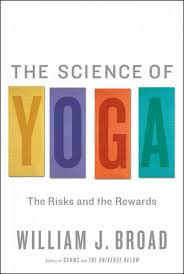
What made me think about these conflicting fallacies is that I’ve been reading a lot about the science of yoga–and other systems of movement–lately. Specifically, I was reading The Science of Yoga by William Broad. During the 20th century, yoga went from not giving a whit about science to trying to show that it wasn’t at all at odds with science–if not that it was grounded in science. (Note: this statement could be applied to many of the old ways—e.g. religions—which sought to prove themselves consistent with scientific evidence out of fear that–in the age of rationality–to be inconsistent with scientific observation would be death to old beliefs.) While the hucksters and con men seeking to bilk people out of money through shows of yoga “magic” have lost power (though some still exist and prey on the gullible regularly), this isn’t to say that science has yet won the day entirely.


Chapter two of Broad’s book discusses the findings of the scientific community on whether yoga has any merit as aerobic exercise. (The consensus is that it doesn’t.) Now, one would think that the whole yoga community would be pleased that academia has for the most part shown that yoga has a range of positive benefits that make it a worthwhile endeavor when practiced safely and conscientiously, but some have been unwilling to accept that yoga isn’t excellent cardio on top of all its unambiguous benefits. The established consensus is being ignored and a single seriously flawed study (small sample size, no control group, and—while peer-reviewed—the author was the journal editor) is cited, that one—of course—suggests that yoga meets all one’s cardio needs.


It’s easy to follow the incentives. For example, if one runs a yoga studio one would like to be able to say that yoga is a panacea for all of a person’s health needs. People are busy and lazy, and if someone else can sell them a silver bullet then they’ll lose business.  If one gives the matter thought, it becomes hard to imagine an exercise panacea. Consider a list of health goals that includes reduced stress, improved balance, greater flexibility, more strength, and enhanced cardiovascular capacity. One should see that some of these goals are at odds with each other. The first three goals—at which yoga excels–require holding a static position for a time while engaging in deep and controlled breathing. The fourth goal, strength enhancement, (which yoga achieves only in a limited way) requires repeated alternation of stressing and relaxing a muscle. And cardio, the fifth goal,–for which yoga is less than helpful–requires rapid and sustained motion so as to cause the heart to be stressed.


Of course, individuals have tried to rectify yoga’s cardio deficit by creating yoga styles that add speed and repetition. If one does five sun salutations per minute for 45 minutes, then—congratulations–you are now getting cardio and strength building. Unfortunately, you are now losing out on the first three goals of stress reduction, balance enhancement, and flexibility improvement. Those three things requiring holding poses while engaging in relaxed and controlled breathing. So the question is whether one is happy having sacrificed the benefits yoga does better than everything else in a desire to have yoga gain benefits that other exercise systems probably still do better.


The old systems of movement and exercise, be it yoga or chi kung, have shown themselves to have merit. However, the mechanisms by which that merit is achieved (or the nature of the merit) are often not what the system’s mythology suggests. There’s no need to fear science, but one should be ready to embrace what is shown true and set aside what is shown to be false.


On the other hand, this modern idea that we can have our cake and eat it too by throwing together disparate systems, which often have conflicting goals and modes of operation, needs to be reevaluated. All of these fads have been created where someone crams together tai chi and yoga or yoga and jazz dance or Zen meditation and parkour and they think they have the ultimate system based on a more complete picture of modernity, and what they’ve got is a muddle.


What we need is the tested merit of tradition without its voodoo, and the compiled knowledge of modernity without its hubris.


How to Choose a Muay Thai Gym in Thailand

Tiger MT Beginner's Area. (The mats are up for cleaning to prevent Staph outbreaks.)

Tiger MT Beginner’s Area. (The mats are up for cleaning to prevent Staph outbreaks.)

So you’re going to Thailand and you want to learn a bit of Thai Boxing. Where do you go to train? This is the question under consideration in this post.

I just got back from two weeks of training at Tiger Muay Thai & Mixed Martial Arts on Phuket. This was my second experience training Muay Thai (MT) in Thailand. In October of 2012, I spent 6 days at the Muay Thai Institute (MTI) in Rangsit (a suburb of Bangkok.) The training at both places was awesome, but quite different. This got me thinking about what type of student would find each of these two places ideal. Both of these schools has a niche of students who would find it better suits their needs than the other.

First let me point out a factor that one might think is crucial that really isn’t so much, and that’s price. While I’ve only attended the two schools, I did quite a bit of web research and found that prices don’t range that widely. Particularly in Phuket, where there is a saturation of the market, everybody seems to charge around 3,000 Baht ($91USD) per week—give or take 500Baht. While 2,500 to 3,500 Baht ($76 to $106 USD) might seem like a big gap, there could be very reasonable explanations for why a gym is at the high or low end. Low cost gyms may be more remote, and thus have fewer customers. One should take into account that if one has to rent a scooter or take taxis or pay exorbitant rates for food, one might not be so happy with tuition savings. A gym at the high-end might offer more training opportunities beyond MT, may have more facilities, or may have more prestigious trainers (or just more trainers–period.) [Note: For what you pay you can probably get 24 to 28 hours of classes in per week.]

Now I suspect there are some who will say, “Hey, stop relying on the internet. Find out where locals train. There are gyms that produce winning fighters, but that just aren’t as fancy/web-savvy but are much cheaper.” This may be true, and– if one speaks Thai–that may be the way to go. However, the places that have glitzy English-language websites, usually also have trainers and staff that speak English and that can be a big advantage if one doesn’t know more than Su-was-dee-krap and Kob-Kun-krap.

Note: What I’m saying about price doesn’t necessarily apply to lodging and food. Some gyms offer accommodations and meal plans that may not be competitive with what one can do at local guesthouses and restaurants. Web research should tell you whether you are getting a decent deal staying at the gym. If you don’t mind Spartan accommodations (and I don’t) the baseline gym rooms often offer great savings. I stayed at the gym at both MTI and Tiger, and found it was a good deal (but, again, I don’t need TV, AC, or other luxuries–a bed, a fan, and my Kindle pretty much have me covered.)

Tiger had a meal plan, but I didn’t use it. However, I can’t say that I even looked at its price. I like to try as many different places as I can, and I ate at most of the restaurants and cafes on that strip. I will say there are a lot of cheap, tasty, and nutritious places to eat within walking distance of Tiger. My experiences with the restaurants on the strip were overwhelmingly positive.

So this brings us to what does matter. Some questions you should ask are:
-What is the typical student/trainer ratio?
-What styles are taught at the gym? (i.e. Only Muay Thai or other disciplines as well?)
-Are classes mixed abilities or are there skill level divisions?
-What does the typical class consist of for the level at which you will be training?
-What are the trainers like and how does that jibe with what you need?
-Where is the gym located, and how close is it to the services you’ll need?

Of course, the central question that undergirds five out of six of the questions above is, “What do you want to get out of the training?”

The MTI Gym from my room.

The MTI Gym from my room.

Student/Trainer ratio: How important this is varies radically depending upon what one wants from training. If one is going to class primarily for fitness, having a low student/trainer ratio may not be important. However, if you are looking to improve your technique, it matters greatly because you need attention to the minutest details.

I attended Tiger in peak season and MTI just before peak travel season. That said, I think I can safely say MTI probably always offers lower student/ trainer ratio. (I don’t think MTI’s student attendance is as tourism-cyclic as it has more Thai and expat students and relatively few foreign visitors at a given time. Tiger MT is probably very tourism-centric at the beginner level.) In Rangsit, there was often one trainer to every one or two students. The beginner’s class at Tiger had many students per trainer. However, Tiger offers four separate classes of Muay Thai (Beginner, Intermediate, Advanced, and Fighter), and as one moves up there are fewer students per trainer. So if you “test out” of the beginner’s class your ratio gets better.

One should note that at the extremes one may find a low student/trainer to be more a curse than a blessing. First, one will not have many different people to train with, and diversity of training partners is important to growth. Second, having eyes on you every second may become overbearing, particular if the trainer is fixing every tiny error. In such situations, one may never get into the grove.

What do they teach? The two schools I’ve attended were at opposite ends of the spectrum on this issue. MTI taught Muay Thai–that’s it and that’s all. If you just want to improve your Muay Thai, MTI is a great place for it. There’s not the distraction of tons of people coming through doing other things.

Tiger MT, on the other hand, taught about everything there is to teach. If you want to get into Mixed Martial Arts (MMA), they’ve got you covered with classes on MMA tactics, Brazilian Jujutsu (BJJ), and Boxing in addition to Muay Thai. On the other hand, if you’re a martial arts wonk, who likes to get into the evolution of the arts or understand the combat aspects, they also teach Muay Boran and Krabi Krabong. Muay Boran is the unarmed ancestor to Muay Thai, and Krabi Krabong is a weapons system.

Mixed abilities v. Tiered classes: If you are a rank amateur, an advanced practitioner, or a competitive fighter, you may be pleased with multiple tiers of classes. A beginner may be intimidated or uncomfortable training with advanced students. Advanced student may have a lackluster training experience when working with a lot of people who are well below their skill level. On the other hand, if one has a bit of confidence and fitness, one may find a mixed abilities class enjoyable because one gets an opportunity to pit oneself against more skilled or experienced training partners.

In reality there was not much difference between Tiger and MTI here, though it might look like there was. As mentioned, Tiger MT had four different classes for MT and these were held in distinct areas, but all the other courses (e.g. MMA and BJJ) were mixed abilities. At MTI, everybody was taught in one big gym. However, because there was a low student/trainer ratio, there were usually at least three or four distinct groups (sometimes groups of one or two) training concurrently and the gym was big enough for these small groups to not be in each other’s way.

Class schedule: There’s a widespread standard approach to Muay Thai teaching that goes: running laps, other warm-up exercises, drills / shadowboxing, rounds of bag work, rounds of focus mitt drills, rounds of sparring, and cool down exercises. However, the emphasis can vary tremendously from one gym to another. In particular, some schools will make great efforts to drill the basics before putting a student into sparring or teaching more complex tactics. Other schools have their beginners hit the ground running to a greater degree. Each of these approaches will appeal to a certain type of student. Some want to get into the meat of training by sparring as soon as possible even if their fundamentals are a bit shaky. Others are concerned about having solid foundations before building upward.

Of course, this is all a matter of degree. At every gym, beginning students are going to spend more time drilling than sparring—and that’s as it should be. One needs to learn the techniques well before one can have any hope of applying them in a quasi-competitive / competitive environment effectively. Usually the emphasis for beginners will be on getting the basic mechanics down, and intermediate students will spend more time pumping up the power and working on application.

Of the two places I trained, MTI took a like more time and attention with the nitty-gritty details of form and technique, and Tiger gave one a pretty broad experience from the get go, i.e. they got student into light free sparring right away.

What are the trainers like? I’m not just talking about their fight records or whether they were champions or not. Both of the places I trained at had trainers with very impressive fight careers. Also important is the trainer’s disposition. If you’re just trying to get fit and learn a move or two, an intense, scar-faced task-master who works you till you puke and kicks you till you collapse may not be for you. On the other hand, if you’re preparing for a fight or are just deadly serious about your training, the smiling old softy may leave you disheartened. Some students may want someone who is a stickler for detail, and others may want someone who will focus on getting them in better shape. Unfortunately, while you can probably get information about a trainer’s fight history online, you may only be able to get information about their disposition by visiting, trying the place out, or by talking to people who’ve trained there.

It should be noted that a common complaint about many MT gyms is that the trainers don’t seem to care. Students need to understand that they may have to be a little proactive to get the best relationship out of their trainer. Keep in mind that trainers are overwhelmingly extremely driven individuals. Often a trainer has had 200+ fights in their Thai-boxing career, and they still do their own training every single day even if they’re 40 or 50 years old. Plus, they have their own young fighters to train for competition. They will often have a very low interest in–or tolerance for–tourists who just want to half-ass the training as an alternative to jazzercise class. If you want to get their respect and prove worthy of their attention, you’ll need to gut it out day-after-day.

To put this more clearly, don’t whine about the trainer not giving a damn if any of the following apply to you.
-You join laps 20 minutes into class to avoid all the running.
-You leave early so you don’t have to do all those dreadful push-ups at the end of class.
-You take a water break right in the middle of a round of bag work.

Your trainer is someone who has probably:
a. trained until he puked
b. exercised until his muscles literally gave out
c. used the ropes to climb to his feet
If that was you, would you have a lot of enthusiasm for the half-assers?

Keep in mind, the most gregarious trainer may not be the one who’ll give you the best training experience. The guy who doesn’t say a word and seems mean as hell may take the greatest efforts to develop your skills. At MTI there was a trainer who smacked my arm every single time my guard was not perfect.

Location: I’m not just talking about whether it’s beach-adjacent or not. (Some may find nearby beaches or nightlife too tempting or distracting, while others may be into that.) There are a range of services you’ll want ready access to such as laundry, ATM, food of variety, taxi services / scooter rental, the occasional Thai Massage, and massive amounts of bottled water.

MTI was located in a Bangkok suburb. If you don’t mind a good walk, pretty much everything one might need or want was within walking distance via shopping malls, 7-Elevens, and even hardware stores. Tiger was in a less developed area, but it was on a stretch of road that was littered with MT gyms and fitness centers, and so all the essential businesses a foreign student would need were plentiful on that strip of road, and it was a short ride to Phuket Town for those things that long-term visitors might unexpectedly find that they needed.

If you are interested in martial arts, I’d highly recommend putting in some time at a MT gym while you’re visiting Thailand. It’s exhausting, but worth it. I hope this post will give you some food for thought about what to consider in picking a gym.

Chi: The Power of What Isn’t

Every morning I start my day with chi kung (a.k.a. qi gong), and many days I do tai chi (tai qi.) For those who are unfamiliar, chi is usually defined as “life force” or “life energy.” However, defining chi is neither simple nor will one find a consensus agreement. Some say chi is  “breath,” at which point its existence becomes a much less controversial, but also less explicative, concept. Others would say that chi is much more broadly dispersed than the “living” so “life force” is an understated definition.

Chi Kung are exercises combining breathing, movement, meditation, visualization, and self-massage that are used to keep one healthy. Because yoga also contains these components (e.g. breathing, movement, and meditation; though with very different specifics) some have even been known to call chi kung “Taoist yoga.” The idea behind these exercises is that chi is lost through living (some activities more than others), and can become blocked in the channels through which it is believed to move. Various exercises are used to replenish and ensure healthy circulation of the chi. Tai chi is a series of martial arts forms that are also considered to have the effect of replenishing and / or enhancing chi.

Two questions may leap to mind, especially among those who know me as a skeptic. First, do you believe in chi–despite the lack of evidence that it exists? (When I mention this lack of evidence, I am obviously not defining chi as breath or bodily fluids, in which case the most rabid skeptic would have to acknowledge its existence. However, then an entirely different set of questions is raised about the vast and complicated nature of chi kung exercises needed to circulate oxygen, which travels through blood vessels and not through channels or meridians. In other words, there’s no reason not to abandon a lot of the Traditional Chinese Medicine (TCM) / Taoist conceptions of health if one considers a narrow definition of chi.) Second, if you don’t have any reason to believe that chi is a real thing, why bother with the exercises?

First, no, I don’t believe in chi as a substance or physical entity in the way that your average Taoist priest does. I don’t mock or ridicule those who do, and I acknowledge it could always turn out that they were right and I was wrong and that my current state of ignorance combined with an incorrect deference to Occam’s Razor led me astray.

However, I have a pretty high standard for believing a person, place, or thing exists. I need to be able to observe it.  If I can’t perceive it directly, but there is some indirect sign it exists, then that indirect sign needs to be the simplest possible explanation I can imagine given my current state of knowledge. (Yes, I realize that Occam’s Razor isn’t a law, it can always be that an unlikely explanation is the correct explanation. I also know the raft of indirect signs of chi, and, yes, I’m saying I can imagine simpler explanations than an energy source that is immeasurable but powerful enough have bodily effects.) While I don’t believe in chi (or meridians, or the yet undiscovered organ called the “triple heater”) as physical things, I do believe in conceptual chi which is an object of visualization.

Moving on to the second question, I practice these exercises because they make me healthier.

This, of course, raises another question, “How can these exercises be effective if chi is not real?”

Now I have to go Socratic on my hypothetical questioner. The Socratic dialogue goes like this:

S: Have you ever been to a scary movie?

A: Of course, I have. What kind of a troll has never seen a scary movie?

S: I’m Socrates. I’ll ask the damned questions around here, thank you very kindly.

So while you were watching said movies, did you ever get startled? That is, did your pulse ever pound a bit harder; did you ever take a gasping breath; did your hands ever grip the armrest with white knuckles; or did you ever get butterflies in your stomach?

A: Of course, that’s part of the horror movie watching experience.

S: So, then, you were under the impression that the events you were watching were actually happening, and that the killer might come out into the theater after you at any moment?

A: No, of course not. Don’t be absurd!

S: And yet this thing that was not real–that was just symbolic or conceptual–had actual physiological effects?

[At this point Socrates breaks into his superiority dance.]

I think visualizing chi flow has positive benefits both mentally and physically. The mental benefits may be clear. The physical benefits result from putting oneself in the moment and conducting activities (deep breathing and movement) that help one de-stress. This process of de-stressing helps one to be healthier. Does it matter that one does the exercises as they have been handed down from ancient China? Probably not, but I believe that trial and error (even without complete information about anatomy and physiology) yield some impressive results. Of course, there are many other systems (e.g. yoga) that can work equal wonders using an approach that is quite different in its detail. (I also don’t believe in Chakras, but can imagine great benefits from behaving as if they exist.)

MindOverMedicineI just started reading a book by a medical doctor named Lissa Rankin. Rankin’s book, entitled Mind Over Medicine, presents evidence from a large body of scientific literature suggesting the mind often plays a major role in wellness by way of mechanisms that aren’t yet fully understood, but which defy the traditional view of Western medicine.

Rankin was intrigued by the vast number of anecdotal cases of what doctors call “spontaneous remissions.” Spontaneous remissions are when a patient becomes healthy in a way that defies explanation (i.e. they had no treatment, they had insufficient treatment, and they had an illness for with the body’s immune system is normally believed incapable of doing the job on its own.) She wasn’t satisfied with these one-off stories involving placebos, fake surgeries, busted radiology equipment, faith healing, etc, but rather wanted to see what the scientific literature contained by way of scientific double-blind studies on the subject.

She found there was evidence to support mind over matter when it came to illness, and that there was a fledgling explanatory literature. She also learned that while there was a large database of spontaneous remissions, there had not yet been an attempt to determine whether there were common characteristics of those who showed the “placebo effect” (getting well while being in the placebo group of a double-blind study) or other spontaneous remissions.

My point is that there is good reason for skeptics to consider that there may be a lot more to health and well-being than our current paradigm suggests.

BOOK REVIEW: Living Your Yoga by Judith Hanson Lasater

Living Your Yoga: Finding the Spiritual in Everyday LifeLiving Your Yoga: Finding the Spiritual in Everyday Life by Judith Hanson Lasater

My rating: 4 of 5 stars

Amazon page

If you’re the average joe, you probably think of yoga as a series of stretchy postures–many or most of which seem physically impossible for a run-of-the-mill human. If you’re a little more sophisticated on the subject–perhaps you’ve even done a few yoga classes–you realize that breathing exercises (pranayama) and meditation (dhyana) are also an essential part of the practice. However, if you’re hardcore, you realize that there is an entire moral, ethical, spiritual, and philosophical approach to life embodied in yoga.

Lasater’s book is aimed at the latter group or people who plan to one day be in that group. You will not find out how to do a single posture (asana), and you won’t learn how to do breathing exercises or meditation. So, the book might sound like one of those navel-gazing, pie-in-the-sky, philosophical tomes. But it’s not. On the contrary, the chapters are short and readable, and each one ends with exercises to put that chapter’s lesson into practice. Now, it probably sounds more like a how-to workbook. It is, but the exercises can only be carried out in everyday life.

Admittedly, I don’t know that much about yoga, but I suspect such a book is much-needed. I do know that in the martial arts there is also a rich and well-defined moral, philosophical, and–for lack of a better term–spiritual component, and that it gets lost much of the time by a large percentage of students as soon as they step out the door of the dōjō. I suspect this is true of yoga practitioners as well. I imagine that as yoga has spread globally many of the less visible and tangible aspects of the system get left behind. I know this happens in the realm of martial arts–sometimes these elements even get lost in the homeland. It’s a natural side-effect of busy lives; people take on what they can grasp and don’t go looking for the rest.

Living Your Yoga is divided into three parts of seven chapters each (21 chapters in total.) The social circle widens as one goes through the parts. Part I deals with the yoga practitioner as an individual. Part II considers the practitioner’s relationships with others in their immediate domain–family, friends, co-workers, etc. The final part looks at the practitioner in the global context.

Each chapter focuses on a particular virtue or vice and how to cultivate it or mitigate against it, respectively. All of the chapters begin with a quote, most from the Yoga Sutras of Patanjali or the Bhagavad Gita, then there is the body of the chapter, followed by a practice on that particular theme, supplementary practices, and a few mantras.

The chapters in the first part are: spiritual seeking, discipline, letting go, self-judgment, faith, perspective, and courage. The second part deals with compassion, control, fear, patience, attachment / aversion, suffering, and impermanence. And the final part considers greed, service, connection, truth, success, nonviolence, and love.

While I suggested this book is for the hardcore yogi/yogini, it has value for a more general readership than that. It’s really for anybody interested in working on self-improvement on a daily basis, as opposed to those who restrict their development pursuits to inside the yoga studio (or dōjō or ashram.) The advice is sound, regardless of whether one ever practices an asana or not.

View all my reviews

DAILY PHOTO: A Walk in the Park

Taken in the summer of 2008 in a small park in Beijing's Central Business District

Taken in the summer of 2008 in a small park in Beijing’s Central Business District

Beijing has workout equipment all over the place–mostly in parks, but sometimes just by the side of the road. One sees the same sorts of things in Bangkok, and even Phnom Penh has exercise equipment on the river front strip of park.