BOOK REVIEW: Ender’s Game by Orson Scott Card

Ender's Game (Ender's Saga, #1)Ender’s Game by Orson Scott Card

My rating: 4 of 5 stars

Amazon page

Ender’s Game is the story of a boy, Ender Wiggin, whose intelligence and capacity for ruthlessness lead the military establishment to believe that he’s the last hope for mankind. The book is set in a future after the Earth has been invaded twice by an alien species called the buggers, and now the Earth is planning its own “preemptive” invasion to end the bugger threat once and for all.

The novel follows Ender’s life from his short home life as a “third”—a rare third child for which special permission must be granted—through his post-war life. (This entire timeline transpires before adulthood.) The bulk of the novel takes place in Battle School, where Ender receives his training in military tactics and strategy and spends much of his time in zero gravity war games. He rises up through the ranks quickly, as expected, but not without stirring some animus in the process. He learns strategy both through war games and through the mind-field of real world animosity by others who are jealous or feel insulted by his brilliance.

As Commander material, Ender is considered to be in the Goldilocks zone. His older brother, Peter, is too cruel; his sister, Valentine, is just too kind. (All three Wiggin children are geniuses.) Ender has the right mix to fight the buggers. His problem is that the world forces him to be ruthless and his compassionate side makes it hard to cope.
While Ender leaves home young and early in the novel, there is a subplot involving the older Wiggin children that is revealed over the course of the book—showing the reader more of the tormenting brother and the loving sister who shaped his worldview. Ender does interact with Valentine in person on a couple of occasions, but his only interaction with Peter is a brief mention of correspondence at the end of the book.

Ender is an intriguing character. He is always the outsider, by birth as a third and then through isolation in Battle School that is facilitated by the conflicted head of the Battle School, Col. Graff.

I won’t get into the ending except to say that there is a twist at the novel’s climax. I will say that the reveal of this twist felt a little anti-climactic to me. However, as the real story isn’t about fighting the buggers, but Ender’s internal struggle, this isn’t as dismaying as it might otherwise be.

One can tell that this is a series book because it climaxes and resolves relatively early, leaving a fair amount of space to set up the next book. This actually helps the twist offer some surprise because the reader sees that there are so many pages left for the novel to resolve itself.

Card does an interesting thing in making the central character stronger than everyone around him–at least until he’s introduced to his new guru, Mazer Rackham–the Commander who won the key battle of the second bugger invasion and who is alive by virtue of a relativistic trip. Ender’s superiority seems like a recipe for boredom, but it works because what we don’t know is whether Ender is stronger than everyone else pitted against him combined, and, moreover, we don’t know whether he is strong enough inside to withstand all the horridness to which he is subjected. A lot of the tension of the novel is really internal to Ender. Unlike Peter, who would revel in ruthlessness, Ender is tormented by all of the violence he must perpetrate.

I’d recommend this novel. It has its flaws, but it is quite readable and Ender’s character is intriguing from start to finish.

The movie version is coming out tomorrow. I haven’t seen it, but here is the trailer.

View all my reviews

BOOK REVIEW: American Gods by Neil Gaiman

American Gods (American Gods, #1)American Gods by Neil Gaiman

My rating: 5 of 5 stars

Amazon page

American Gods is the story of a hapless and gentle brute who goes by the nickname “Shadow.” We meet Shadow as he is being released from prison a few days early because the wife that he loved dearly has passed away. While the description of Shadow’s imposing size and criminal activity might lead us to believe he’s an unsavory character, we find him sympathetic from the outset–though we don’t learn that it was virtue more than vice that landed him in prison until late in the book.

Given that the name of the book is American Gods others who’ve read it may wonder why I say it’s about Shadow instead of being about a war between America’s old gods and its new ones (e.g. technology and mass media.)The latter statement is more likely what one will read on the dust jacket. However, for me it was the character of Shadow that kept me reading. As with any great novel’s main character, Shadow is put in predicament after predicament, and one must see how he’ll handle them. Eventually, we suspect that enough will be enough and he will have to choose to act in his own best interest rather than in the moral manner.

The importance of character in this novel doesn’t mean that it’s lacking a plot. Early on we are given a great hook when Shadow is introduced to the character of “Wednesday.” The hook is that Wednesday seems to know things about Shadow that no one could, and he makes a proposal to Shadow. The reader is thus drawn in and wants to know how Wednesday knows the impossible and whether Shadow will agree to the vague offer. While we don’t know what agreeing will mean for Shadow, we suspect that it’s tailor-made to land him back in hot water.

While Shadow seems to be always ending up with the short end of the stick, what makes things interesting is that he’s not dumb. He doesn’t stumble into these traps unwittingly. Rather, Shadow defies convention and, by some measures, is really quite a sharp man. Often, he sees the folly of his decisions but is compelled by virtue to act in ways that put him at risk.

Shadow is on a journey of self-discovery throughout the book, and what he ultimately discovers about himself is spectacular.

In a way American Gods is Neil Gaiman’s commentary on America, and Shadow represents America at its most virtuous. We see plenty of America’s faults and failings in the process, its vainglory and hunger for power. But in Shadow we see a character who is honor bound to do what he thinks is the right thing–even when it comes at great personal cost and even when he knows he is being manipulated.

I found this novel to be highly readable and would recommend it. It has Gaiman’s characteristic humor, darkness, and dark humor.

View all my reviews

BOOK REVIEW: Wise Blood by Flannery O’Connor

Wise BloodWise Blood by Flannery O’Connor

My rating: 5 of 5 stars

Amazon page

Wise Blood is a character-driven novel about a young veteran, Hazel Motes, who becomes a devout atheist. If that sounds like an oxymoron, let me explain. After becoming enamored with a preacher (and having the blood of a preacher man in his veins), Motes begins to preach the tenets of his newly formed Church Without Christ. In essence, Motes believes in religion without believing in God (the opposite condition of that which some of us find ourselves.)

This was Flannery O’Connor’s first novel, and it’s the first of her novels that I’ve read. I have, however, read some of her stories, and Wise Blood displays a dark humor similar to that found in O’Connor’s best know story “A Good Man is Hard to Find.”

Throughout the book, Motes struggles to convey the depths of his disbelief. He attacks false prophets. He follows through on an act of self-mutilation that he had earlier discovered the preacher, Asa Hawks, could not. Thus proving his lack of faith to be stronger than the preacher’s faith. Motes is wooed by both by the nymphomanical daughter of Hawks, Sabbath Lily, and later by his landlady, Ms. Flood. While Motes doesn’t necessarily remain chaste, he does maintain a kind of priestly detachment from the pleasures of the flesh.

An interesting part of the story details Motes’s interaction with a con-man named Hoover Shoats who co-opts Motes’ preaching sessions and starts his own Holy Church of Christ Without Christ–which passers-by find to be a source of amusement–as a bastardization of Motes’ message. Motes rejects Hoover, but sees his mission being usurped anyway. Motes shows deadly seriousness in his desire to be taken seriously in the word that he preaches.

This novel was apparently built from a series of stories, and a little bit of discontinuity can be sensed early on. However, that’s just part of the charm of a book that is sometimes thought-provoking, sometimes humorous, and sometimes both.

I would recommend book for anybody, excepting those hard-core pious who grow red-faced with rage in the face of atheism or other beliefs.

View all my reviews

BOOK REVIEW: Mostly Harmless by Douglas Adams

Mostly Harmless (Hitchhiker's Guide, #5)Mostly Harmless by Douglas Adams

My rating: 3 of 5 stars

Amazon page

[NOTE: If you would like to read my reviews of the first four books, you can do so by following the hyperlinked title: 1.) The Hitchhiker’s Guide to the Galaxy 2.) The Restaurant at the End of the Universe  3.) Life, the Universe, and Everything 4.) So Long, and Thanks for All the Fish]

This is the fifth and final installment in The Hitchhiker’s Guide to the Galaxy series (not including Eoin Colfer’s And Another Thing, which I don’t.) Fans of the series will recognize “Mostly Harmless” as the sum total of the Earth’s entry in The Hitchhiker’s Guide to the Galaxy.

The story focuses on a trio of characters from the original book’s cast: Arthur Dent (of course), Tricia McMillan (a.k.a. Trillian), and Ford Prefect–with the Random addition a new fourth feature character. As the series had already begun trending, this story is more human-centric than the earliest installments. The central story could be divorced from the sci-fi genre with relatively minor modifications. However, as Restaurant at the End of the Universe uses time travel as a sci-fi plot device, this book uses the concept of a parallel universe.

The story begins with our main characters separated from one another. Arthur Dent is making sandwiches of Perfectly Normal Beast (an Orwellian turn-of-phrase as one might expect) on the planet where he crash landed. Trillian, or one of them, is reduced to doing an interview with an astrologer. Ford Prefect is breaking into his place of employment to avoid the accountants in his usual manner of hijinks.

Adams throws each of these characters a monkey wrench. Dent finds out he has a daughter, Random Dent, and that her mother–Trillian–is dropping her on his doorstep. Ford discovers that the Guide is under new and nefarious management, and that they have created an edition with dire ramifications. Trillian, or one of them, gets her big break being picked up by a Grebulon ship only to discover they want her to advise them on astrology.

The notion that no one escapes the feeling of being without a home is a central theme in the book.

This isn’t Adams’ best work. The story has grown stale. It lacks the creative brilliance derived from plot devices like the Infinite Improbability Drive, and–while there may be something to be said for a story with more humanity– it leaves one missing idiosyncratic characters like Zaphod and Marvin. That being said, even at his worst Adams is amusing and thought-provoking. If you enjoyed his earlier books, you could certainly do worse than to finish the series. In the unlikely event that Adams isn’t your cup of tea, this final installment probably won’t revise your assessment.

View all my reviews

Shame List: 25 books I should have read by now

To force myself to get cracking on more of the best books, I’m baring my shame. Below is a list of some of the books that it’s downright appalling I’ve failed to read as of yet. This is by no means a complete list. In fact, the initial list I compiled was about three times as long. (And it still wasn’t all-inclusive.)

I had to apply a few selection criteria to get to a reasonably-sized list. Some of these criteria are unique to a particular book, and will be noted under the book’s listing. However, there are also general criteria. If a book is commonly referred to in pop culture and I haven’t read it, that’s a cause for concern. In other words, if I’m not getting the literary references on The Simpsons, I’m a little embarrassed.  (Or pop science references made on Big Bang Theory.)

Also, I believe that one should read broadly and outside one’s comfort box. This means that one should read the counter arguments to what one believes, so as to not be happy stewing in one’s ignorance. This is part of becoming wiser and trading one’s narrow view of the world for one which is broader.

Some of these choices are idiosyncratic to myself– as opposed to being classics or masterpieces. For example, I was trained as a Social Scientist, so books on that subject might not make most people’s “essential reads” list. Also, I’m a martial artist, so my bonus picks are tied to that interest.

So, in alphabetical order, without further ado:


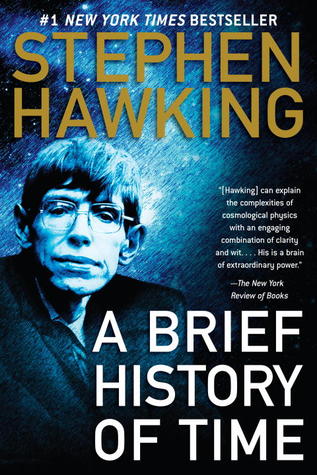
Brief history of time

1.) A Brief History of Time by Stephen Hawking

This may be an odd choice as I’m fairly certain I wouldn’t understand anything Hawking says beyond the Acknowledgements page. I once read that this book had the distinction of being “the most unread book on everybody’s bookshelf.” (I don’t know whether that’s urban legend or established fact– but I can believe it.) An Engineering PhD student from a very prestigious technical university once admitted to me that he couldn’t make heads nor tails of it. I did read The Universe in a Nutshell, which has a lot of pictures and, thus, is more my speed; it was kind of “A Brief History of Time … for Dummies.”


Confederacy of Dunces

2.) A Confederacy of Dunces by James Kennedy Toole

The backstory behind this book is fascinating and has an important moral. Toole killed himself, presumably because he couldn’t get it published. Then, posthumously, it became a critically-acclaimed hit after his mother took it around and forced literary types to read it. NEVER GIVE UP!

Farewell to Arms

3.) A Farewell to Arms by Ernest Hemingway

I’m a big Hemingway fan. I’ve read a few of his novels, many of his short stories, and even some of his non-fiction. This is my elusive great white Hemingwhale.

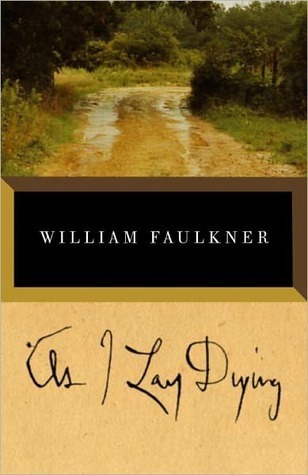
As I lay dying

4.) As I Lay Dying by William Faulkner

I was a late comer to Faulkner. I’d always heard that his writing was wordy and that it straggled. As those are bad habits of my own, I figured I should feed myself more Hemingway-esque writing. However, after reading several of Faulkner’s stories and his novel Sanctuary, I developed a man-crush on his use of language.

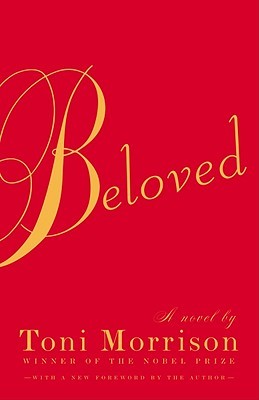
Beloved

5.) Beloved by Toni Morrison

Like many books on my list, I’ve got a copy of this on my bookshelf, and I even started it once. I’m not sure what distracted me. I picked it up originally to see how Morrison wrote accented dialogue. This is part of my advice to self to read outside my own history and experience.
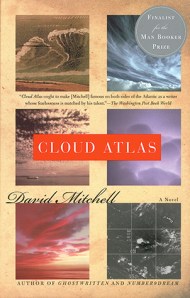

cloud atlas

6.) Cloud Atlas by David Mitchell

I like cross-genre books. Furthermore, I’ve heard good things about the organization of this as a series of incomplete stories that are tied together in the final part.


crime and punishment

7.) Crime and Punishment by Fyodor Dostoevsky

This is another one that is on my bookshelf and that I started. It’s not that I didn’t like the opening (though like most all literature of its era is not exactly punchy.) Rather, it’s that I tend to end up with too many books up in the air at once. Therefore, if one takes over, the others get dropped.

I hope I don’t have a subconscious aversion to Russian literature, but–I must admit–I’ve read far too little Tolstoy, Dostoevsky, Pushkin, Turgenev, and (to a lesser extent) Chekhov. (I’ve read quite a few Chekhov short stories.)


Don quixote

8.) Don Quixote by Miguel de Cervantes

Again, I own this one. I don’t believe that I ever started it. However, anything with a sense of humor is a winner in my book.

GunsGermsSteel

9.) Guns, Germs, and Steel by Jared Diamond

While doing my Masters in International Affairs, I almost took a course  that used this as a textbook, but I had a conflict with a required course. The question of how some civilizations progress (when others don’t) is fascinating to me–as is the subject of Diamond’s more recent book Collapse, which looks at why certain civilizations unravel.


Heart of Darkness

10.) Heart of Darkness by Joseph Conrad

This one is particularly sad because: a.) I own it. b.) I’ve started it on more than one occasion. c.) It really does seem like a fascinating story, and d.) [the kicker] It’s extremely short. It’s not even properly called a novel, but more a novella or–maybe even–a long short story.


Les Miserables

11.) Les Misérables by Victor Hugo

I hate to admit that I might have some subtle anti-French bias because I’ve never read any Hugo or Camus.


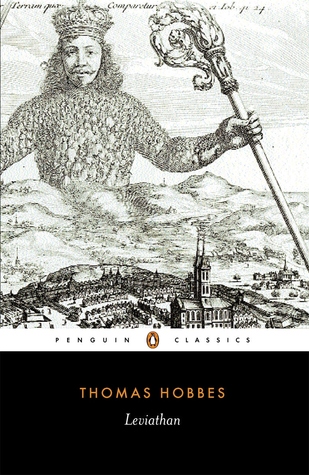
Leviathan

12.) Leviathan by Thomas Hobbes

This is another one that is about balanced reading. I’ve always tended toward a libertarian view of governance. So I’ve read John Locke and many other arguments for why government should stay small and limited. Leviathan is the granddaddy of counter claims. It’s about why the government must be involved in everything. I’ve read a lot of commentary on the Hobbes-Locke divide, but not this book. While I may not agree with Hobbes, that’s exactly why I should have read him. I have read Marx and others who’ve made more modern arguments for the primacy of governing over the governed.


Life of Pi

13.) Life of Pi by Yan Martel

I read the cover blurb of this when it came out and thought it would be interesting. When the movie was coming out, I thought about it again, but I just haven’t gotten around to it.
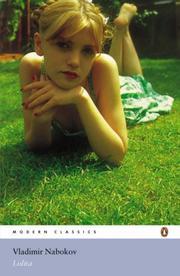

Lolita

14.) Lolita by Vladimir Nabakov

I saw the 1962 movie, but have never read this book. This is one that is often cited in pop culture. I know the general premise, but it would be good to read it.
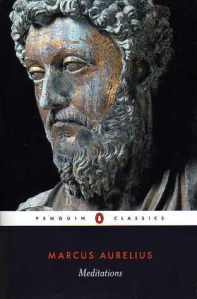

Meditations

15.) Meditations by Marcus Aurelius

I’ve read quotes from this book, and I once started it from the beginning. I agree with the life philosophy espoused in it, so I should have finished it by now. I particularly like the quote, “It is not death that a man should fear, but he should fear never beginning to live.”


lives of a cell

16.) The Lives of a Cell by Lewis Thomas

I began it once, and it’s tiny. So double shame on me for not finishing this one yet.


Origin of species

17.) The Origin of Species by Charles Darwin

I’ve read a lot of commentary on Darwin’s ideas, but not this book– at least not in full. I include it because it’s one of the seminal works on the biological world as we know it. It contains many ideas that should be considered when reflecting on the nature of man and animal alike.
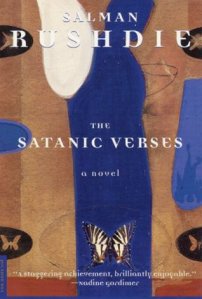

Satanic Verses

18.) The Satanic Verses by Salman Rushdie

Any writing that makes someone take a hit out on the author must be powerful stuff. Enough said.
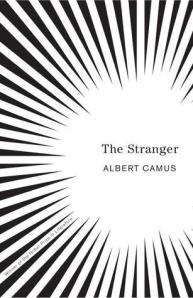

The Stranger

19.) The Stranger by Albert Camus

This is one whose pop culture references, I suspect, elude me.


things they carried

20.) The Things They Carried  by Tim O’Brien

I’ve just heard that his is an outstanding and very readable book. It’s supposedly a great example of a sparse but evocative style. I’m interested in the literature of war, so it’s right up my alley.
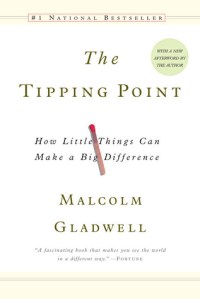

Tipping point

21.) The Tipping Point by Malcolm Gladwell

This is really a stand-in for a number of pop social science titles by Gladwell that examine the behavior and decision making of individuals and groups. Blink might have been a choice as well, but I’m a little more interested in the tipping point phenomena.  I’ve read vast troves on behavioral economics and related fields, but Gladwell is such a household name that I should probably be more familiar with his work.



The Trial

22.) The Trial by Franz Kafka

Another one that I own, I’ve started, which has many pop culture references, but which I’ve never gotten through.
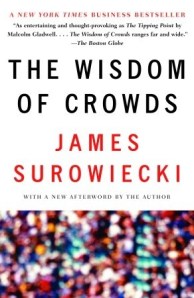


wisdom of crowds

23.) The Wisdom of Crowds by James Surowiecki

This is sort of a counter claim social science book. I once read an old book entitled Extraordinary Popular Delusions and the Madness of Crowds by Charles MacKay. MacKay suggests (as Tommy Lee Jones did in Men in Black) that in groups otherwise intelligent people are stupid and panicky.


to kill a mockingbird

24.) To Kill a Mockingbird by Harper Lee

Again, there are tons of pop culture references out there on this one. I’ve heard it’s a well-crafted book, but–for whatever reason– I’ve never read it.


Ulysses

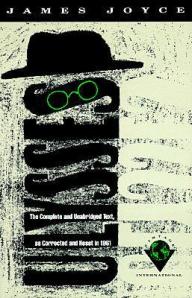
25.) Ulysses by James Joyce

I have no illusions that this would be fun reading, but some consider it the best English language novel of all time. Also, I have read some of James Joyce’s shorter stuff, and I dig his use of language. My fear is that it will be like “the greatest American novel,” Moby Dick, which I did read and would rate far lower.


Bonus Shame Picks

I just realized that my list was appallingly Western-centric, and so I’ve added a couple bonus picks  to rectify this because I’m too lazy to go back and cut a couple of the others.

Tale of genji

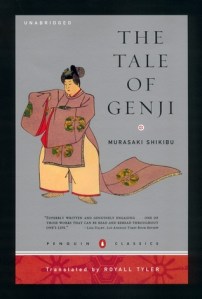
26.) The Tale of Genji by Murasaki Shikibu

Written in the 11th century, this Japanese work is considered by many to be the world’s first novel–or at least the first modern novel.


Water Margin

27.) The Water Margin by Shi Nai’an

This 14th century Chinese novel is one of the four classics of ancient Chinese literature. It also supposedly contains a lot of kung fu flick elements.


Your turn. Come on,  confession is good for the soul. What books are you ashamed that you haven’t gotten around to reading yet?

BOOK REVIEW: World War Z by Max Brooks

World War Z: An Oral History of the Zombie WarWorld War Z: An Oral History of the Zombie War by Max Brooks

My rating: 4 of 5 stars

Amazon page

World War Z, as the subtitle suggests, is written as a series of interviews of key (or in some cases typical) people involved in the Zombie War. The viewpoints addressed include various political leaders, military service members of various branches and nations, strategic planners, doctors, and even civilians caught up in the diaspora that resulted from the plague.

The approach of the novel is unusual. To the degree there is a lead character, it’s the UN employee who conducts all the interviews. However, we don’t experience the interviewer’s story arc and are left with very little insight into this individual. Rather, the story is a global arc of mankind’s experience of zombies from “patient zero” through the clean up in the years following the war. And, it is a global tale. The stories of these individuals take one to places like Chongquing, Meteora, the Amazon, Barbados, Johannesburg, the Alang ship breaking yard (an excellent choice for a post-apocalyptic setting, I must say), Denver, and even onto a ballistic-missile-toting submarine sitting on the ocean floor.

Where Brooks’s book excels is in making one think, and in that regard it does an excellent job. This isn’t about edge-of-the-seat adrenaline injections to which most Zombie book authors aspire. I don’t deny that there are emotional parts to the book, but the tension is reduced by virtue of being a collection of survivors’ tales. That is, we know the story-tellers survived more-or-less intact. Also, because of the intrusions of the interviewer and the authenticity of responses (some are more skilled and open story tellers than others), we never lose sight of the fact that this is a couple of people talking war stories.

That being said, we take a cook’s tour of gut-wrenching food for thought over the course of the novel. Consider a government that abandons its citizenry, and even uses some as bait to help save others. Brooks tugs at the readers’ heartstrings through an interview with a K-9 soldier who describes the role of man’s best friend. Brooks portrays the best and worst that mankind has to offer–as one would surely expect to experience them in such a world gone wrong.

I must admit, some of the topics may be more interesting to me as a social scientist than they will be to others. One interviewee discusses the mismatch between job skills needed and job skills available in a rapidly evolving post-apocalyptic landscape. This speaks to present-day society as much as it does to a dystopian future. The author devotes an interview to questioning the man responsible for reestablishing trust in the dollar in an economy that has by necessity reverted to barter. There is also discussion of revolutions in governance that find their catalyst in the Zombie War. There are intriguing turns of events such as the makeshift flotillas of U.S. citizens converging on Cuba because Fidel’s authoritarian regime was uniquely prepared to close itself off during the earliest days of the outbreak.

With the movie coming out this Friday (June 21), I will say that I can’t see much in common between the book and the trailers for the movie that I’ve seen to date. However, I can imagine the movie being an extension or outgrowth of one of the many vignettes expressed in the book. This is not to say that the movie will be bad (or that it won’t be), but if one sees the movie one will still be left with impetus to read the book.

I enjoyed World War Z because it makes one think–a feat that isn’t the strong suit of Zombie literature.

View all my reviews

Your Post-Apocalyptic Guidance Counselor Is In

I’ve been reading World War Z because I had heard it’s an interesting book and because it went on sale–presumably in anticipation of the movie that comes out next week that shares a name (but probably little else besides Zombies) with the novel. I don’t usually read zombie or vampire literature because there’s so much of it and rarely does it offer anything new or intriguing. (Once one’s read Bramstoker and Matheson, what more is there to be said on the undead.) Brooks’ book is an exception. Told as a series of oral histories collected by a UN employee who serves as a quasi-protagonist–but not necessarily a central character–of the book, World War Z  chronicles the human dimension of the Zombie War.

The book tells a series of personal vignettes from the earliest sign of the pandemic through the cleanup afterward. One of the issues that is discussed is the mismatch between the skill sets the survivors had and the skill sets that were needed to survive in a post-apocalyptic world. In one of the interviews, a bureaucrat discusses the need for job retraining because they had all these information age analysts, managers, coordinators, etc. but few people who knew how to make new things, grow food, or repair damaged infrastructure. They had all these mid-level white-collar people and they needed blue collars.

This got me thinking. To be honest, I haven’t had a job that would be useful in a post-apocalyptic wasteland since I was a 22-year-old infantry-trained law enforcement officer. Everything since then has involved life in a cubicle or small office uncovering, creating, evaluating, analyzing, describing, modifying, and disseminating information. Then there has been writing, which I love, but which isn’t exactly going to pull humanity back from extinction. (Let’s not kid ourselves that “reading is fundamental” when society has to be rebuilt from the ground up–fed, clothed, etc.)

This isn’t to say that I would be altogether useless in a post-Zombie Apocalypse world. I lived years 0 through 18 on a working farm. That was a long time ago, but I’m sure I could remember something about how to engage in activities that are actually directly related to keeping people alive (as opposed to keeping them informed.)

So will you be useful post zombie apocalypse? What would you be interested in doing if your current Dilbert-esque work life became irrelevant?

BOOK REVIEW: Rules for Virgins by Amy Tan

Rules for VirginsRules for Virgins by Amy Tan

My rating: 3 of 5 stars

Amazon page

This Kindle Single is written in the form of advice by a Madam to the newest member of her brothel. It’s historical fiction, and is set ambiguously in the past. It is presumably set in China, but I don’t recall that that is ever explicitly determined.

The Madam shows a mix of maternal protectiveness for the girl and straightforward, harsh candor. She tells the young girl how to game the men, and how to get the most out of them. She instructs the girl in how to defend her virginity until such time as it is sold to someone who can afford to richly compensate them for it.

There is nothing in the way of a plot in the book. It does read just like rambling advice, so there is also not a lot by way of setting. We do get character development of the Madam, but not so much of the title character.

It’s well-written and seems to be well-researched as well. While I don’t know a great deal about the subject, it rings authentic. Despite the subject, the book isn’t gratuitous in its talk of sex. However, don’t be surprised that the entire work revolves “around” the intertwined subjects of sex and money.

View all my reviews

BOOK REVIEW: Ubik by Philip K. Dick

UbikUbik by Philip K. Dick

My rating: 4 of 5 stars

Amazon page

Philip K. Dick was one of the most imaginative writers and skilled storytellers of the 20th century. There’s a reason that so many of his stories and novels have been made into movies (e.g. Minority Report, Total Recall, Scanner Darkly, and–most famously–Do Androids Dream of Electric Sheep? [which was adapted into a less quirky and darker film called Blade Runner.])Dick’s works lend themselves to the screen because they lay out novel plots in engaging stories.

Ubik isn’t among the Dick works that have been made into movies, but it’s not for lack of trying. Dick wrote his own screenplay for a film adaptation of the novel, but the project fell through. Over the years, a few directors have talked of Ubik: the Movie, so don’t be surprised if you see it someday.

Ubik deals with the afterlife. It’s set in 1992 (Dick’s future–our past.) (You can’t blame a man who lived from 1928 to 1982 for over anticipating the futuristicness of the 90’s. In the year of his birth Amelia Earhart was making the first solo transatlantic flight by a woman–only a year after Lindbergh became the first ever to do it. The year Ubik was published (1969) the Concorde was making its first supersonic transatlantic flight.)

In the world of Ubik, the moon is being developed for human use, and there are many people with psychic abilities. The protagonist, Glen Runciter, runs a business offering services blocking psychic activity to prevent industrial espionage. He is working for a company that’s building a moon base.

Runciter’s wife is deceased; however, he often consults with her as the dividing line between life and death isn’t so clear in Runciter’s world as our own. There exists a state of “half-life” between life and being fully dead.

The inciting incident is a nefarious explosion on the moon base of which Runciter and his team are victims. At first it appears that Runciter is dead and that his team is alive and trying to rush him back to Earth to get him into a state of half-life (just like his wife.)However, as the novel goes on it becomes less clear who is alive and who is dead. All that is clear is that Runciter exists in a different world from his team members. As the story proceeds there are clues–most notably coins with faces on them that aren’t dead Presidents. Joe Chip (a team member) sees coins with Runciter’s face on them, and later Runciter sees coins with Chip’s face on them.

Ubik is a product that Chip and the others begin to see advertised in their world–which they have come to believe is the afterlife. (Some versions of the book have a spray can on the cover that represents this mysterious product that comes in many forms.) They begin to believe that Ubik is their only hope. There has been a great deal of discussion about the symbolism of Ubik. Its name comes from the word for “everywhere”– as in “ubiquitous”– but what (or who)it’s supposed to be is never clearly revealed. Some have said that Ubik is meant to be God. If so, Dick made an interesting statement because the product is always marketed like some cheesy consumer good.

One test for whether you’ll like this book is whether you enjoy ambiguity in endings. Some readers really enjoy the thought-provocation of an ambiguous ending and the process of thinking out their own conclusions. (I am among this type of reader.) However, there are other readers who feel ripped off if the writer doesn’t tie all the answers up with a neat little ribbon at the end of the book. If you are this type of reader, you will likely hate this book. In other words, if you felt good leaving the theater when you saw Inception you’ll like this book, but if you left shaking your head and saying, “WTF, Chris Nolan?” then don’t bother.

View all my reviews

BOOK REVIEW: So Long, and Thanks for All the Fish by Douglas Adams

So Long, and Thanks for All the Fish (Hitchhiker's Guide, #4)So Long, and Thanks for All the Fish by Douglas Adams

My rating: 4 of 5 stars

Amazon page

My reviews of the previous books in the series are linked below:

Hitchhiker’s Guide to the Galaxy

Restaurant at the End of the Universe

Life, the Universe, and Everything

This, the fourth book in the H2G2 trilogy, feels different from the others. First, it’s not so much about the ensemble cast featured in the other books. This is a book about Arthur, plain and simple. Arthur is reunited with Ford Prefect only in chapter 36 of 40, though there are Ford chapters interspersed preceding that reunion. Marvin the depressive robot makes it into the final chapter, but his appearance seems random and purposeless (except that it interjects a Marvin’s typical humor to nice effect.) Zaphod and Trillian are only mentioned in passing.

Second, romance plays a significant part in the story line, answering the previously perennial question, “Will Arthur ever get laid?”

It will be no surprise to readers of the earlier books that the title, So Long, and Thanks for All the Fish, was the final message of the dolphins before they jetted from the Earth–they being the only ones on the planet who knew the Vogons were about to destroy Earth to make way for a hyperspace bypass.

The story begins with Arthur being dropped on a planet that looks suspiciously like the Earth that he knows was destroyed. He hitches a ride with a young man and his delirious sister, Fenchurch. He develops an inexplicable connection with Fenchurch, and their burgeoning romance makes up a considerable part of the story. Fenchurch had had an epiphany right before what she can’t help feeling was the destruction of the world, and she is traumatized by her inability to remember.

The only difference between this planet and the one Arthur knows is that–he later finds out–this one is entirely devoid of dolphins. His house is even where he left it with a couple of months of dust and dirt accumulated. The only thing out-of-place is a new fishbowl engraved with “So long, and thanks for all the fish.”

The couple, once united, go to meet an eccentric scientist who claims to know what happened to the dolphins. The eccentric, who goes by the name Wonko the Sane, has a house built inside-out to symbolize that he is outside the asylum–the asylum being the rest of the world. Wonko shows the couple his engraved fishbowl, and they then realize that all three of them (including Fenchurch) received such bowls. Wonko tells them that they should have put their ear to the bowl’s mouth. They do so, and hear a message from the “Save the Humans” organization, which is a dolphin charity group whose name says it all.

Fenchurch wants to see the universe, and so when Ford lands back on Earth–having come to investigate why the Hitchhiker’s Guide entry for Earth has been expanded from “mostly harmless”–they go off together. Their first stop is to read God’s final message to His created. I’ll not tell you the message. So ends the book–well there’s a little epilogue which is nearly meaningless in isolation.

While it’s off-kilter from the other books, this one shares Adams’ usual absurdist humor. However, in keeping with the different feel, one of the best laughs I had in this book was not absurdist humor at all. That laugh resulted from a story told by Arthur to Fenchurch as an icebreaker. He had once bought a packet of crisps and a beverage and sat down at a table to work the crossword at a train station. The station cafe was crowded and so a stranger ended up sitting across the table from him. The man opened the package of crisps and ate one. Taken aback, Arthur didn’t know what to do. Being non-confrontational in a reserved British fashion, all he could manage to do was to ignore the man’s encroachment and take his own crisp to eat. The man, not to be out done, took another. They proceeded like this until the entire pack had been consumed. To Arthur’s mortification, when he got up to go to his train, he found that his packet of crisps was under his newspaper, untouched. Something about that struck me as hilarious.

View all my reviews

Here is the song from the movie of the same name.