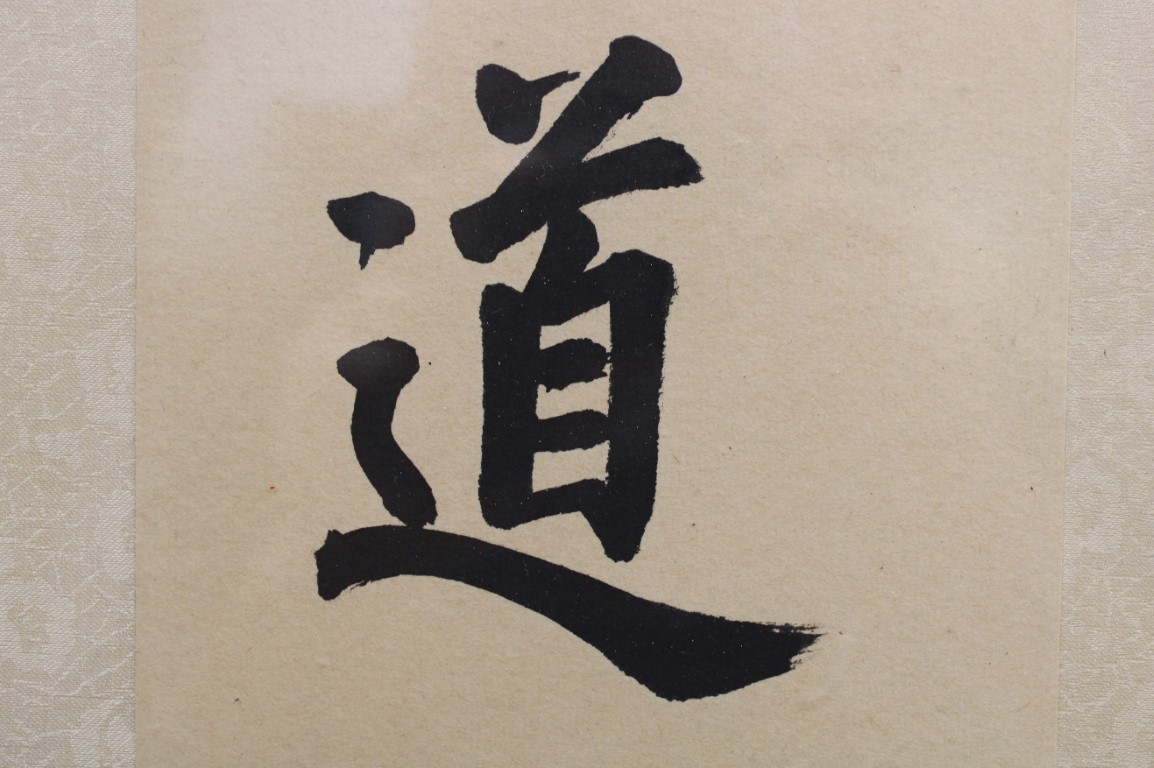
BOOKS: 道德经 by 老子 [a.k.a. Daodejing by Laozi]

老子道德经校释(简体中文版): 中华传世珍藏古典文库 (Chinese Edition)老子道德经校释(简体中文版): 中华传世珍藏古典文库 by 王弼
My rating: 5 of 5 stars

Available in Traditional & Simplified Chinese [w/ multiple translations] at YellowBridge

Packed into the 81 brief chapters of this book is the core Taoist philosophy on life, human relationships, governance, and war. Most often, it offers a wisdom that turns conventional wisdom on its head, advocating for inaction over action, less over more, simplicity over complication, and for recognizing the usefulness of what isn’t.

Some of the book’s central ideas are captured in these quotes:

上善若水。水善利万物而不争. “The greatest good is like water. It benefits all without fighting.” [Ch. 8]
金玉满堂,莫之能守 “A house full of jade and gold cannot be guarded.” [Ch. 9]
知人者智,自知者明。胜人者有力,自胜者强。“He who knows others is smart; he who knows himself is enlightened. He who conquers others has power; he who conquers himself is mighty.” [Ch. 33]
柔胜刚,弱胜强。“Softness overcomes hardness; weakness overcomes strength.” [Ch. 36]
道常无为而无不为。“The Dao is constant inaction, yet nothing is left undone.” [Ch. 37]
善者,吾善之;不善者,吾亦善之;德善。“The good, I treat well; the bad, I also treat well. Yeah Virtue!” [Ch. 49]
知者不言,言者不知。“He who knows does not speak; he who speaks does not know.” [Ch. 56]
千里之行,始于足下。“The journey of a thousand li (“miles”) begins with a single step.” [Ch. 64]
天之道,不争而善胜 “The way of heaven is to win without fighting.” [Ch. 73]
信言不美,美言不信。“True words aren’t pleasing; pleasing words aren’t true.” [Ch. 81]

I think this is one of those works that should be read and reread. It may help rewire your brain in useful ways.

View all my reviews

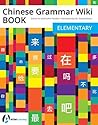
BOOKS: “Chinese Grammar Wiki BOOK: Elementary” ed. by John Pasden

Chinese Grammar Wiki BOOK: ElementaryChinese Grammar Wiki BOOK: Elementary by John Pasden
My rating: 5 of 5 stars

Publisher Site

Confronted with a vast sea of Chinese grammar texts, this is the series I chose, and I’ve been happy with my decision. This, the beginner level grammar guide, is reasonably priced, logically organized, easy to use, and has all one needs without time-wasting excesses.

The core of the book consists of 135 grammar points (40 “A1” level and 95 “A2” level.) For each point there is a clear but simple explanation of the rule, a formulaic statement of said rule [an easy to find timesaver when reviewing,] a number of examples (with Chinese characters, pinyin, and an English translation) and any cautions to consider (i.e. common mistakes, ways Chinese grammar differs from English, and common exceptions to the rule.) The examples used simple and common words and phrases to drill basic and useful vocabulary.

This book is organized to put bite-sized chunks of learning at hand so that one can do more or less, depending upon one’s schedule.

I’d recommend this book for anyone looking for a basic Chinese Grammar text.

View all my reviews

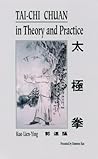
BOOKS: “Tai-Chi Chuan in Theory and Practice” by Kuo Lien-Ying [ed. Simmone Kuo]

Tai-Chi Chuan in Theory and PracticeTai-Chi Chuan in Theory and Practice by Kuo Lien-Ying
My rating: 4 of 5 stars

Publisher Site

This brief book discusses Taijiquan primarily from a philosophical perspective. Though a significant amount of the book’s page-count consists of full-page pictures of various taijiquan movements, it isn’t so much a how-to book. Readers who enjoy an eclectic book that’s short and sweet but also kind of all over the place have a good chance of liking this book and gaining from its varied tidbits of wisdom. Readers who favor books with a clear organization and internal logic will probably find this to be an odd stew of short writings (essays, guides, poems, scriptural excerpts, etc.) It should be noted that not all of the writings are from Kuo Lien-Ying, himself. It includes a translation of a manual by Wang Tsung-Yue (13th Century) as well as an appendix consisting of writings from the Daodejing, Tang Dynasty poetry, and quotes from Mencius and Confucius. It also features a chapter on the I-Ching and Taiji philosophy by Kuo’s wife, Simmone Kuo. Besides the Wang manual, which is right up the alley of Kuo’s writings, it’s not clear why the other pieces were selected (not that they aren’t beneficial, but that they seem random.)

One thing I really liked about this book is that a lot of it is presented in bilingual format. For someone learning Chinese, this is quite beneficial. (Especially, given that it consists of short pieces that can be more easily consumed by a new reader.) That said, those who don’t read Chinese may see the translations as further indication of padding a pamphlet up to book scale. The monochrome photos are well-done and could definitely be of use to someone who practices taijiquan (though would not be of much use to someone new to it.)

This book is an insightful mess, make of that what you will.

View all my reviews

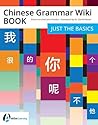
BOOKS: “Chinese Grammar Wiki BOOK: Just the Basics” ed. by John Pasden

Chinese Grammar Wiki BOOK: Just the BasicsChinese Grammar Wiki BOOK: Just the Basics by John Pasden
My rating: 5 of 5 stars

Publisher Website

This is the first in a series of books that present the rules and structure of grammar for Mandarin Chinese along with examples. As the subtitle suggests, it covers only the rudiments of sentence structure as well as the most elementary ways of expressing existence, possession, location, number, and a few other basic grammatic functions, as well as teaching the reader how to count and express time and date.

The examples are all presented in characters, pinyin [w/ tone markers,] and the English translation. The explanations are straightforward, and the examples offer basic and useful sentences and phrases.

I found this book to be beneficial, and have obtained the next volume, which expands upon the basics. The book presents a simple and painless approach to Chinese grammar. I’d recommend this book for any fellow neophytes just learning Chinese.

View all my reviews