BOOK REVIEW: When Buddhists Attack by Jeffery K. Mann

When Buddhists Attack: The Curious Relationship Between Zen and the Martial ArtsWhen Buddhists Attack: The Curious Relationship Between Zen and the Martial Arts by Jeffrey K. Mann
My rating: 4 of 5 stars

Amazon page

Mann’s book considers one of Asian history’s intriguing little questions: How is it that one of the most pacifistic of world religions, i.e. Buddhism, came to be integrally connected to some of the world’s most fearsome and devastatingly effective warriors? Specifically, the author looks at the connection of Zen Buddhism to warrior traditions like the samurai of Japan and—to a lesser extent—the Shaolin monks of China. It should be noted that while Zen was one of the most firmly established intersects of Buddhism and martial arts; it’s not the only one. Branches of Vajrayana (esoteric) Buddhism had their own warrior-monk traditions—which he mentions as well as Shugendō’s (combines Buddhist, Shinto, and Taoist elements) warrior connection. The book is heavily weighted toward the Japanese martial arts. This may be in part owing to the author’s particular background, but also because many of the works that establish this firm connection between Zen and martial arts are Japanese (e.g. works by Takuan Sōhō, Yagyū Munenori, and even Miyamoto Musashi.)

It’s worth noting that both Buddhists and modern martial artists have tried to downplay or outright deny the connection between these traditions. However, Mann suggests the connection is undeniable in the face of historical evidence, and that it even has a logic that belies the apparent contradiction. (Note: Presumably many Buddhists deny this connection because they want to distance themselves from the taint of violence, and many modern martial artists deny it so their religious students won’t ditch the art because it isn’t 100% secular [or based entirely in the student’s religious belief structure.])

The book consists of eight chapters as well as front matter and an Epilogue that explores the question of whether the Zen of samurai lore is truly Zen Buddhism. The first couple chapters give the reader an introduction to Buddhism and, specifically Zen. There are then chapters that show the linkage between Zen and the martial arts of East Asia. The book then considers the nature of the advantages offered by Zen to martial artists that made it so appealing to warriors like the samurai. It also considers the interpretation of violence that allows for the dichotomy under discussion, and explores the degree to which the connection between Zen Buddhism and martial arts is relevant in the modern era. The book is a mix of history, religious studies, philosophy, and the art and science of fighting systems. So if one’s interests are eclectic, there’s a lot to take away from this book. If you have narrow interests, you’ll want to make sure they include the aforementioned central question (i.e. Why pacifistic Buddhism has helped produce some of the world’s greatest fighting systems.)

The book is well-researched and documented. There are many interesting and informative stories throughout the book. For example, I’d never read about the 19th century jujutsu murders until this book. This is a fascinating case in which several experienced students of one particular school of jujutsu were found dead with the exact same wound. While the murderer wasn’t captured, investigators quickly discerned his (or her) method. That is, the killer knew the trained responses of this school and made a feint to draw a certain defense and then exploited a vulnerability the response presented. How is this story relevant? It speaks to the perceived advantages of Zen, which emphasizes avoiding habituation and residing in the moment.

I’d recommend this book for martial artists who are interested in the history and cultural context of their arts [and of the martial arts in general.] There’s a class of martial arts student who may want to avoid the book. If you’re a devout adherent of a Western religion who practices a traditional style of East Asian martial art and think that there isn’t an imprint of the local religion on that art, your delusions may be shattered by this book. Buddhists may find the discussion of the less absolutist interpretation of ahimsa (non-violence) to be illuminating (or—for all I know—infuriating.) It’s a short book, coming in at around 200 pages, but is end-noted and referenced in the manner of a scholarly work. It has a glossary and bibliography, but no graphics.

View all my reviews

BOOK REVIEW: A Million Shades of Gray by Cynthia Kadohata

A Million Shades of GrayA Million Shades of Gray by Cynthia Kadohata
My rating: 4 of 5 stars

Amazon page

This young adult (YA) novel is set in the Central Highlands of Vietnam during the last few years of the war. The lead character, Y’tin, is an adolescent whose life ambition is to be an elephant handler, a dream which he’s well on the way to achieving and which he’d be a shoo-in for if he didn’t live in war-torn times. His life is complicated by the fact that his father has worked for the American Special Forces (as a tracker), and the war is turning in the favor of the North.

When US forces withdraw and South Vietnamese forces are overrun, Y’tin escapes into the jungle with a couple of other boys and their elephants. Almost immediately a fault line freezes out Y’tin. The three boys had been close friends in the village, but under the stress of jungle life, the other two resent that Y’tin’s father worked for US Special Forces and that Y’tin, himself, had once gone on mission with the Americans. They believe that this is what has brought the war to their village. On the other hand, they recognize that Y’tin is more gifted in jungle craft than they, especially tracking, because of the education of his father.

Because of these skills, Y’tin is chosen to go back on a mission to reconnoiter their village, and he finds it’s been bombed out and nobody is to be seen. This leaves it unclear how many of the villagers escaped versus being executed by the North Vietnamese forces—but he does know many were killed. [Incidentally, the title comes from Y’tin’s view of the jungle after seeing the remnants of his village—i.e. instead of being a million shades of green, all he can see is gray.]

Besides telling the story of Y’tin’s adventures in surviving the war, the novel pivots on Y’tin’s role as a mahout—and ultimately as a protector of the elephants. Y’tin finds himself in a position in which his dream is no longer tenable, and he must decide whether take a heroic risk to save the elephants or hold on to his dream in the face of unfavorable odds.

The book is only a little over 200 pages arranged into 14 chapters, and—as would be expected of YA fiction—is readable. The book’s strength is in building a lead character who’s interesting by virtue of his mix of worldly naiveté and jungle [local] wisdom and giving him intense challenges and dilemmas. Weakness? The strict chronological progression results in a slow start in which the author spends a chapter establishing that the lead character loves elephants without anything interesting happening. However, if one gives the book til the second chapter, things start happening.

I’d recommend this book for readers of fiction, and particularly those interested in YA fiction and stories of war.

View all my reviews

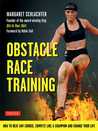
BOOK REVIEW: Obstacle Race Training by Margaret Schlachter

Obstacle Race Training: How to Beat Any Course, Compete Like a Champion and Change Your LifeObstacle Race Training: How to Beat Any Course, Compete Like a Champion and Change Your Life by Margaret Schlachter
My rating: 4 of 5 stars

Amazon page

If you’re a neophyte to the obstacle racing scene, as I am, this is the book for you. That’s not to say that it wouldn’t be useful for someone with some experience, but if you’re a competitive racer looking to shave time off your runs to boost your standings, I suspect you might want more detail on some topics (e.g. details on various approaches for getting over/under/through/around particular obstacles and more explanations of variations on obstacles.) That said, this book hits the Goldilocks zone for someone who has no idea what they are doing, but would like to give some form of obstacle race a try. (i.e. Not so much information as to be overwhelming, but not so little that you’ll be unprepared to have a good run.)

It’s a short book, less than 200 pages, arranged into 18 chapters that are in turn divided into five sections. The first section introduces one to obstacle course racing. While this sport / social event (there are both competitive and non-competitive participants involved in most races and some events are more about comradery than competition) has been growing wildly in popularity in recent years, there will be many readers who are completely unaware of it. However, by the end of these first three chapters you’ll have a thorough sketch of the scene. The rest of the book goes through what one needs to do long before the race (e.g. picking a race, training [general fitness as well as obstacle-specific], and dieting), immediately before the race (e.g. dressing for the race and eating / hydrating for the race), during the race, and after the race (e.g. recovery, choosing a next race, and moving forward with your participation.)

I found this book to be packed with valuable information (e.g. The mantra DON’T WEAR COTTON ON RACE DAY will be forever etched into your brain.) I found Schlachter’s practical, no-nonsense approach to be a breath of fresh air. For example, with respect to diet, her advice is sparse but invaluable. Basically, it boils down to “eat good food in the portions needed for your body.” It may sound like I’m being dismissive, but I’m not. I appreciate her making sense on the subject and not drawing it out with fad baloney diet (figuratively or literally) quackery. (Pet peeve: I really don’t like hearing about people’s ludicrous ideas about how one can eat a pound of bacon a day, but you’ll die if a slice of wheat bread or a wedge of orange goes in your mouth.)

There are several nice features of this guide that I’ll mention specifically. One is that it has a chapter that shares insights from other high performing obstacle course racers. This gives one some useful and varied advice. Second, it actually shows one how to make a couple of obstacles, e.g. walls and spear targets, that are either common or challenging. Finally, it gives one tips for making this an affordable hobby. (If you’re at the stage of reading this book, you’ll probably have to pay the entry fee out of pocket—no sponsors– and have little to no chance of running well enough to earn winnings.)

If you’re considering running an obstacle race, whether a mud run or an obstacle course race, I’d recommend you give this book a read.

View all my reviews

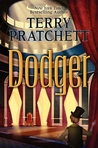
BOOK REVIEW: Dodger by Terry Pratchett

DodgerDodger by Terry Pratchett
My rating: 5 of 5 stars

Amazon page

This book’s protagonist is based loosely on the Artful Dodger character from Charles Dickens’ novel “Oliver Twist.” Pratchett’s Dodger is a brave scamp with a gift for plunging into the middle of precarious situations. One such situation occurs when he rescues a young woman who’s being battered one night on a London side street. The girl, known only as Simplicity, we later find out was attempting to escape an arranged marriage to an awful chap who’s a member of a foreign royal family. Her husband has no intention of letting her go peaceably, and has power, resources, and goons at his disposal. The story is an attempt to resolve this issue in a way that is satisfactory to the girl, for whom Dodger grows fond.

Dodger is a tosher, which is one who scavenges in London’s sewer system in search of wedding rings that were washed down drains or coins that rolled into storm drains. The fact that he’s mostly collecting lost items may make him more palatable / likable than the pick-pocketing Dodger of Dickens’ work. That said, this version of Dodger isn’t above absconding with valuables that seem to be “lying around”–even if they happen to be “lying” on the owner’s desk in the owner’s house. However, it’s clear from the outset that Dodger has a working moral compass. His liberties with earthly possessions don’t interfere with his understanding of what is right and wrong when it comes to treating others as you would like to be treated. This makes for a character who seems more mischievous than felonious.

Like many modern works that are based on Victorian era fiction, this book not only borrows fictitious characters but also individuals from the real world. Pratchett weaves Charles Dickens, Benjamin Disraeli, Henry Mayhew, and Angela Burdett-Coutts into his novel. (If the latter two names don’t ring bells, the former among them was an advocate for the poor and the latter was the wealthiest woman in England at the time, a woman who opened schools for impoverished children.) Except for Dickens [and to some extent Burdett-Coutts], these characters don’t play major roles, but more help to make the reader feel they reside in the world of the novel. [However, the book is dedicated to Mayhew.] There are also other fictional characters, most notably Sweeney Todd—the butcherous barber of penny dreadful fame.

This novel displays generous helpings of Pratchett’s humor and skill in setting the reader into a world that would otherwise feel foreign. One needn’t have read “Oliver Twist” [or any other works] to make sense of the book. It stands alone. [It may be easier if you haven’t read “Oliver Twist,” because you won’t have an ingrown sense of the character.]

I’d highly recommend this book for readers who like light-hearted historical fiction. It’s funny and engaging.

View all my reviews

BOOK REVIEW: Why We Run by Bernd Heinrich

Why We Run: A Natural HistoryWhy We Run: A Natural History by Bernd Heinrich
My rating: 5 of 5 stars

Amazon page

This book is actually several different books woven together. It’s part autobiography of the author’s running life, it’s part a study of comparative biology between various creatures with an endurance bent and humans, it’s part an examination of the evolutionary biology of humanity’s proclivity to run, and it’s part guide to preparing to engage in ultramarathons. Often I pan such books as being unfocused, ill-planned, and—most often—attempts to whip an article’s worth of material into a book length piece. However, Heinrich keeps it interesting enough that I don’t feel it necessary to level these criticisms. Still, my first warning to readers is that one has to read on for quite a while before one gets to the book that one thought one bought—i.e. one that answers the title question of “why WE (i.e. people in general and not the author specifically) run.” In short, you’ll need to have an eclectic set of interests to get through the whole book, but some may find reading only part of it gives them all they wanted from the book.

It should be noted that the book is on its second title. The original title was: “Racing the Antelope: What Animals Can Teach Us about Running and Ourselves.” The author explains in the front matter why the original name was changed (apparently some loud and obnoxious writer had a similarly titled book on a different subject and whined about it.) Changing the title wasn’t required because: a.) titles cannot be copyrighted, and b.) it wasn’t exactly the same title anyway. Still the new, more succinct, title may lead one to expect a succinct book, which this isn’t so much.

Some readers will enjoy Heinrich’s writing style; others will find that it ventures too far into flowery territory on occasion. I did enjoy it. However, I can see how a reader might find some of the descriptive sequences to be excessive–particularly toward the beginning of the book.

While there’s some overlapping and interweaving, one can think of the book in three sections. It’s written in twenty chapters. The first six tell the author’s story of getting into running and his youth. The next eight chapters deal in comparative and evolutionary biology. In general, these chapters look at the biology of other creatures as they pertain to said animals’ ability to engage in running (or activities that are like running in that they involve endurance of muscles and the cardiovascular system.) Also included in this section is the evolutionary biology of humans as it relates to becoming a species of runners. This is the core of the book and was the most interesting section for me. In it, Heinrich considers the endurance activities of insects, birds, antelopes, camels, and frogs. Each of these has a particular relevance. For example, camels are masters of endurance under harsh conditions. Frogs tell the story of the difference between fast and slow twitch musculature (relevant to sprinters versus distance runners.) Antelopes are, of course, the exemplars running in the animal kingdom, but the nature of their running is so different from that of humans (i.e. making quick escapes versus pursuing wounded prey.) The last six chapters can be seen as a guide to preparing for ultramarathon races, but it’s also a continuation of the author’s self-examination of his running life from the time he began ultramarathoning.

I’d recommend this book for readers who are interested in the science of human performance. It’s well written, and the insights it offers into the biology of other animals are fascinating. Whether you read the whole book or just the part that pertains to your interests, you’ll take something away from this book.

View all my reviews

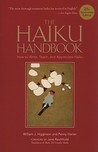
BOOK REVIEW: The Haiku Handbook by William J. Higginson

The Haiku Handbook: How to Write, Teach, and Appreciate HaikuThe Haiku Handbook: How to Write, Teach, and Appreciate Haiku by William J. Higginson
My rating: 5 of 5 stars

Amazon page

Many people think that a haiku is any poem of three lines consisting of 5, 7, and 5 syllables, respectively. Those who’ve gotten beyond a high school literature class introduction to the form may also know that these poems are usually observations of the nature world, and, specifically, the seasons. If the preceding sentences sum up haiku for you, but you’re interested in learning more, Higginson’s book will revolutionize your understanding of the art.

As it happens, the most fundamental notions about what makes up a haiku are actually more contentious than one might believe. Take the 17-syllable format. Japanese syllables are—on average—much shorter than English syllables. (e.g. Consider that “squirreled” is one syllable, whereas a long Japanese syllable would be “shi.”) For this reason, many have argued that to have the same sparse sound quality of Japanese haiku, English language haiku should follow a format that is less than 17 syllables. Also, while many people know that haiku are poems about nature, they might not make the connection to the purely descriptive (non-analytical / non-judgmental) approach or the art form. There’s a definite connection between haiku and the Zen mode of thought. The fact that the poems are sensate descriptions doesn’t mean they shouldn’t evoke emotion; on the contrary, they should be evocative on a primal level.

Be the preceding paragraph as it may, Higginson sketches out the evolution of haiku from the traditional greats (e.g. Bashō, Buson, Issa, and Shiki) to modern haiku poets both from Japan and from the rest of the world. The many examples provided offer the reader insight into how various poets have bent and broken the rules of haiku to achieve their own ends. There are, of course, some who wish to keep the form as true to the tradition as possible. Such individuals would like those who want to get unconventional to avoid using the term haiku (or terms for related traditional forms, e.g. “tanka.”) Others, want the freedom to take the art in new and unconventional directions.

The book consists of 16 chapters divided into four parts. The first part charts the evolution of haiku from the early masters to the modern age. The second part gets into the nitty-gritty of composing haiku, and it’s where one will learn about the various thoughts on the form and content of these poems. (Those wanting to learn the craft of writing haiku are directed specifically to chapters 8 and 9, which address the key elements nicely.) The third part is about teaching haiku, and specifically how to introduce it to children in a way that is much more effective than the usual teaching method (i.e. “Hey, kids, a haiku is a poem with 17 syllables arranged in three lines of 5 – 7 – 5 syllables.”) The fourth and final part puts haiku into a context of lesser known, but related, forms of Japanese poetry such at renga, tanka, and senryu. In other words, it reflects on the forms that predated or sprung from haiku. The book also has front and post matter that readers may find useful, including explanations of Japanese pronunciation (the Japanese poems usually feature the Romanized spelling out of the Japanese words as well as an English translation), a list of season words, a glossary, and bibliographic references.

I’d recommend this book for readers and / or writers of haiku who want to learn more about the craft and its progression as an art form. There’s scarcely a page in the book that doesn’t offer example haiku to help make the author’s points more clearly. One needn’t worry that this will be dull exposition that can only help to kill one’s love of haiku. I found the book to be readable and the examples to be well-chosen.

View all my reviews

BOOK REVIEW: Surviving the Extremes by Kenneth Kamler

Surviving the Extremes: What Happens to the Body and Mind at the Limits of Human EnduranceSurviving the Extremes: What Happens to the Body and Mind at the Limits of Human Endurance by Kenneth Kamler
My rating: 5 of 5 stars

Amazon page

The title says it all. This is a book about all that can go wrong with the human body when it’s exposed to the most extreme conditions possible—including places where no human can survive without the benefit of modern technology. The medical science provides plenty of tidbits of fascinating food for thought, but it’s the stories of survival (or, sometimes, the lack thereof)—many of which the author, Kenneth Kamler, M.D., was present for—that make this a gripping non-fiction read.

There are only six chapters, addressing survival in the jungle, on the high seas, in the desert, underwater (diving), high in the mountains, and in space. There’s also a prologue that sets up the book with examples from Dr. Kamler’s experiences at high elevation (specifically Mount Everest.) Each chapter is full of illuminating stories about the threats to human life that exist in all of the aforementioned environments. The author is a hand surgeon who made a secondary specialization through expeditions to extreme environments to deal with the maladies that are largely unknown to the average person’s day-to-day existence—from pulmonary edema to exotic Amazonian parasites. A few of the chapters feature mostly stories of Kamler’s own experiences. These include the chapters on the jungle, deep-sea diving, and high altitude climbing. For other chapters Dr. Kamler draws together fascinating cases of survival and perishment in extreme environments such as living in a life raft on the high seas.

Besides considering what might kill you in extreme places, this book also reflects upon a couple of other interesting tangential questions. First, what adaptations (cultural or physical/genetic) do the locals have who live at or near these extremes that allow them to live? A fascinating example of this seen in the explanation of how Sherpas of the Himalayas differ from the Andean Indians who live at high elevations in terms of their biological adaptations to elevation. These two peoples living under similar conditions share some common adaptations, but other adaptations are quite different. On a related subject, Kamler also looks at what adaptations other species have developed to allow them to be so much more successful in some extreme environments (e.g. seals in water.)

Second, the role that x-factors like belief and will to survive play are never shunted aside as irrelevant anomalies by the author. Kamler devotes an epilogue to the subject of will to survive. Dr. Kamler was at one of the camps above base camp on the day of the 1996 Everest tragedy in which 12 perished. Kamler saw and advised on the treatments of Beck Wethers and other severely frostbitten climbers. Wethers’s story is particularly fascinating as he lay freezing in the snow overnight in a blizzard, apparently snow blind—though it later turned out to be an altitude related problem with an eye surgery (radial keratotomy)—before climbing to his feet and shambling into the wind (his only guide to where the camp might be.) Kamler considers the science of how Wethers neurons might have fired to get him to his feet against what seems like impossible odds, but concedes there’s much we don’t understand about what separates survivors from those who succumb.

I found this book to be fascinating and would recommend it to anyone interested questions of what a human is ultimately capable of. If you’re interested in medicine, biology, or survival, you’ll likely find this book engaging.

View all my reviews

BOOK REVIEW: The Secrets of Judo by Jiichi Watanabe and Lindy Avakian

The Secrets of Judo: A Text for Instructors and StudentsThe Secrets of Judo: A Text for Instructors and Students by Jiichi Watanabe
My rating: 5 of 5 stars

Amazon page

Every once in a while, one stumbles onto a book that one feels desperately needed writing but which one thought didn’t yet exist. In the case of The Secrets of Judo, the book has been around for almost 60 years. First off, a more telling title for this book would be “The Science of Judo” or “The Physics of Judo.” It’s not a book that deals in arcane knowledge, as its title might suggest, but rather applies science to the skills of throwing, pinning, and submitting seen in judo.

While there’s a brief discussion of the nervous system as it pertains to reaction times, the bulk of the book is classic mechanics applied to judo techniques. The first six chapters (which constitute a little over half the book) provide a background of the relevant principles of both physics (e.g. force, momentum, and center of gravity) and judo (e.g. kuzushi [unbalancing], seiryoken zenyo [maximum efficiency], and ukemi [breakfalls].) The last two chapters provide explanations of how forces are applied to achieve successful throws (ch. 7) and grappling techniques—i.e. pins, chokes, and locks (ch. 8.)

I found this book to be invaluable and would recommend it for anyone who’s interested in grappling arts generally (whether judo or not) or even the science of human movement. The writing is clear. There are some mathematical equations, but just the algebraic formulas seen in basic physics. The graphics (mostly line drawings with a few photos) are useful, especially the drawings of the sequences of techniques which have letter labeled arrows to clarify the lines of force.

I should note that I read the original (1960) edition. Tuttle put out a 2011 edition that is probably what you will get–unless you stumble onto a copy in the used bookstore as I did. From a quick glance at the table of contents of the new edition, it doesn’t look like a major change and I suspect the new edition is at least as good.

View all my reviews

BOOK REVIEW: Things Fall Apart by Chinua Achebe

Things Fall Apart (The African Trilogy, #1)Things Fall Apart by Chinua Achebe
My rating: 4 of 5 stars

Amazon page

Things Fall Apart is about a man who conducts his life ever trying to distance himself from his father. In the process, he sows the seeds of his own destruction. Residing in the small (fictional) Nigerian village of Umuofia in the late 19th century, Okonkwo strives to be hyper-masculine in everything he does. As a young man he becomes a village wrestling champion and, when it comes time to start farming, he’s driven to be the best farmer possible in order to pay off his debts and to be as wealthy as possible. He feels that his father, who was constantly in debt and negligent in his familial duties, was weak and effeminate. On the one hand, Okonkwo’s drive is respect worthy, but, on the other, his need to appear strong in the extreme comes off as a bit pitiful.

There are a couple of crucial events in Okonkwo’s life in which his need to appear manly results in great inner distress. The first occurs when it’s determined that a young man who’s been staying with Okonkwo’s family must be killed. (The young man was sent to Umuofia as a settlement for a wrong between the young man’s father and an Umuofia resident.) Okonkwo has been a father to the young man. Even when a village elder tells Okonkwo to have no part in the killing owing to being like a father to the boy, Okonkwo feels he must participate lest he be seen as effeminate. Of course, Okonkwo is wracked with guilt because he murdered a boy who’d been like a son to him. Later, an accidental discharge of Okonkwo’s firearm kills an innocent young man. The worst part of this for Okonkwo is that an accidental killing is seen as a “woman’s offense.” As punishment, Okonkwo and his family are sent in exile on another village for seven years. Okonkwo isn’t so much torn up by killing another innocent as by the fact that the way it happened makes him look girly in the eyes of others—or so he believes.

Besides the character portrait of Okonkwo, the book is also a commentary on the nature of colonialism and proselytizing missionaries. The first part of the book is set in a pre-colonial state, but in the latter half the rapidly developing tensions between the missionaries and the local villagers is featured. When Okonkwo and his family return to Umuofia after seven years, he finds that white men have built a church and are actively seeking to turn the villagers away from the indigenous beliefs. Of course, for Okonkwo this is just too much, and he can’t believe others are putting up with this. (Adding to his torment is the fact that his son is one of the converts—possibly because that son himself wants to distance himself from the father who murdered his best friend [the boy from the other village.]) Okonkwo is ultimately unable to tolerate that the world has become something so different from what he believes is right, and to continue living means to steer away from the path that he has locked his life into.

This short and thought-provoking book is a great window into pre-colonial Africa and the clash of worldviews that colonization brought. It’s also a cautionary tale about not having sympathy for the failings of one’s father—not to mention the weakness inherent in our own humanity.

View all my reviews

BOOK REVIEW: Anno Dracula by Kim Newman

Anno DraculaAnno Dracula by Kim Newman
My rating: 5 of 5 stars

Amazon page

Anno Dracula is set in a world subsequent to the events of Bram Stoker’s Dracula. In the world of Anno Dracula, Dracula kills Van Helsing (not the other way round) and becomes more powerful than ever. In fact, the Count has married himself into line to become king. Vampires flourish in the open and their numbers are swelling. But a few of them are being gruesomely murdered. In Newman’s work, the vicious Whitechapel murders attributed to Jack the Ripper target young, “turned” working women of Whitechapel. The killings attract attention and become politically charged. The book’s plot revolves around the investigation by an unlikely duo, Charles Beauregard (human) and Geneviève Dieudonné (Vampire elder), into the murders.

Newman creates a fascinating world that blends not only his own characters (e.g. Beauregard and Dieudonné), but also characters from other popular works set in the 19th century as well as from our own history. Some of these borrowed characters are important to the story, others are mere cameos, and still others are references to the departed or imprisoned. Among the book’s fictional pantheon are those from works by Robert Louis Stevenson, Oscar Wilde, H.G. Wells, Sir Arthur Conan Doyle, and—of course—Bram Stoker. Bram Stoker lends the critical character of Dr. John Seward to the book, although there are references to most of that book’s major characters. (You’ll miss some connections if you haven’t read Dracula, but you’ll still be able to follow the story.) The next biggest contributor of characters is Sir Arthur Conan Doyle. Mycroft Holmes, Inspector Lestrade, and Professor Moriarty are all present in the flesh, though the latter plays a small role, and others—including the great detective, himself—are referenced throughout.

Many of the real world characters are literary greats (poets, playwrights, and novelists) including George Bernard Shaw, Lewis Carroll, Alfred Tennyson, and Oscar Wilde. However, also included are political figures, royalty, and—of course—the victims of Jack the Ripper. This mixing of the literary and historical worlds lures book-lovers further down the rabbit hole.

If this book seems like a murder mystery, it’s not. One of the interesting elements of Newman’s approach is that he reveals the killer from the outset. While we know who the killer is from the book’s opening, we don’t know whether or how he will be brought to justice—or what precisely justice means in this case. The book is more about the web of intrigue that surrounds the murders than it is about the murders. Ultimately, the book takes in a much bigger picture than a few murders in the seedy side of London.

Anno Dracula is intriguing and readable. If one has read Dracula, the various Sherlock Holmes stories, The Strange Case of Dr. Jekyll and Mr. Hyde, The Island of Dr. Moreau, and other contemporary literature, it’s all the more enjoyable for the way it artfully places these all in the same universe. I’d highly recommend this book for readers of the classic popular fiction.

View all my reviews