I turned to speak to God
 About the world’s despair;
 But to make bad matters worse
 I found God wasn’t there.

God turned to speak to me
 (Don’t anybody laugh)
 God found I wasn’t there—
 At least not over half.
I turned to speak to God
About the world’s despair;
But to make bad matters worse
I found God wasn’t there.
God turned to speak to me
(Don’t anybody laugh)
God found I wasn’t there—
At least not over half.
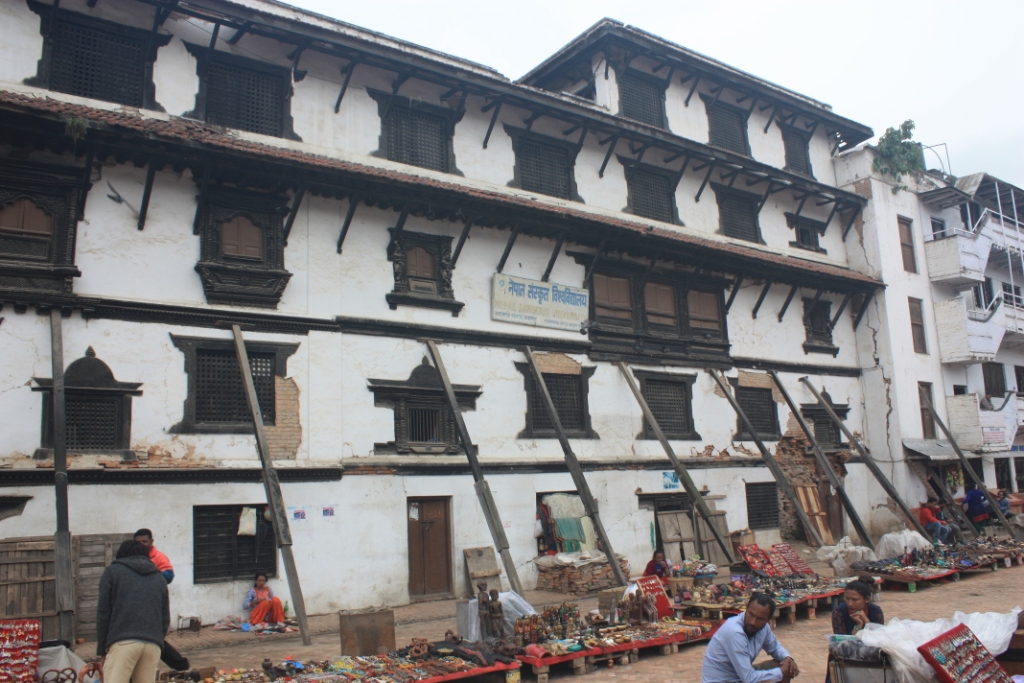
The Props assist the House
   Until the House is built
 And then the Props withdraw
  And adequate, erect,
 The House support itself
  And cease to recollect
 The Augur and the Carpenter –
  Just such a retrospect
 Hath the perfected Life –
  A Past of Plank and Nail
 And slowness – then the scaffolds drop
  Affirming it a Soul –
Romance, who loves to nod and sing,
 With drowsy head and folded wing,
 Among the green leaves as they shake
 Far down within some shadowy lake,
 To me a painted paroquet
 Hath been—a most familiar bird—
 Taught me my alphabet to say—
 To lisp my very earliest word
 While in the wild wood I did lie,
 A child—with a most knowing eye.
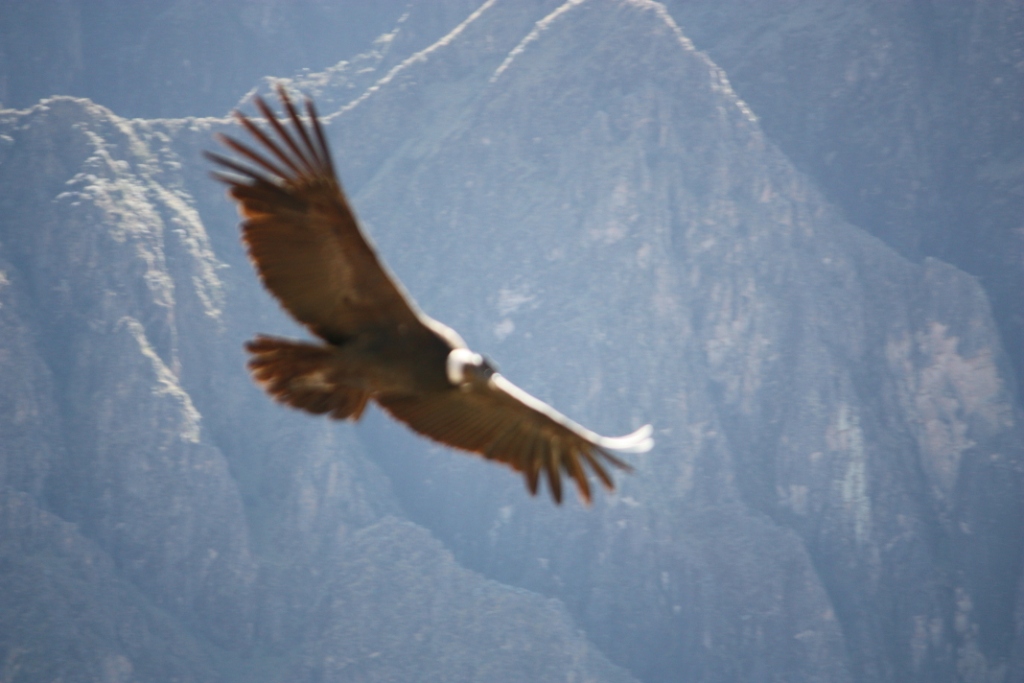
 Of late, eternal Condor years
 So shake the very Heaven on high
 With tumult as they thunder by,
 I have no time for idle cares
 Through gazing on the unquiet sky.
 And when an hour with calmer wings
 Its down upon my spirit flings—
 That little time with lyre and rhyme
 To while away—forbidden things!
 My heart would feel to be a crime
 Unless it trembled with the strings.

Life contracts and death is expected,
As in a season of autumn.
The soldier falls.

He does not become a three-days personage,
Imposing his separation,
Calling for pomp.

Death is absolute and without memorial,
As in a season of autumn,
When the wind stops,

When the wind stops and, over the heavens,
The clouds go, nevertheless,
In their direction.
The Soul has Bandaged moments -
   When too appalled to stir -
 She feels some ghastly Fright come up
   And stop to look at her -

Salute her, with long fingers -
   Caress her freezing hair -
 Sip, Goblin, from the very lips
   The Lover - hovered - o'er -
 Unworthy, that a thought so mean
   Accost a Theme - so - fair -

The soul has moments of escape -
   When bursting all the doors -
 She dances like a Bomb, abroad,
   And swings opon the Hours,

As do the Bee - delirious borne -
   Long Dungeoned from his Rose -
 Touch Liberty - then know no more -
   But Noon, and Paradise

The Soul's retaken moments -
   When, Felon led along,
 With shackles on the plumed feet,
   And staples, in the song,

The Horror welcomes her, again,
 These, are not brayed of Tongue -
Do not weep, maiden, for war is kind.
 Because your lover threw wild hands toward the sky
 And the affrighted steed ran on alone,
 Do not weep.
 War is kind.

      Hoarse, booming drums of the regiment,
      Little souls who thirst for fight,
      These men were born to drill and die.
      The unexplained glory flies above them,
      Great is the battle-god, great, and his kingdom—
      A field where a thousand corpses lie.

Do not weep, babe, for war is kind.
 Because your father tumbled in the yellow trenches,
 Raged at his breast, gulped and died,
 Do not weep.
 War is kind.

      Swift, blazing flag of the regiment,
      Eagle with crest of red and gold,
      These men were born to drill and die.
      Point for them the virtue of slaughter,
      Make plain to them the excellence of killing
      And a field where a thousand corpses lie.

Mother whose heart hung humble as a button
 On the bright splendid shroud of your son,
 Do not weep.
 War is kind.
This poem opens War Is Kind and Other Lines (1899.)
Light-winged Smoke, Icarian bird,
 Melting thy pinions in thy upward flight,
 Lark without song, and messenger of dawn,
 Circling above the hamlets as thy nest;
 Or else, departing dream, and shadowy form
 Of midnight vision, gathering up thy skirts;
 By night star-veiling, and by day
 Darkening the light and blotting out the sun;
 Go thou my incense upward from this hearth,
 And ask the gods to pardon this clear flame.
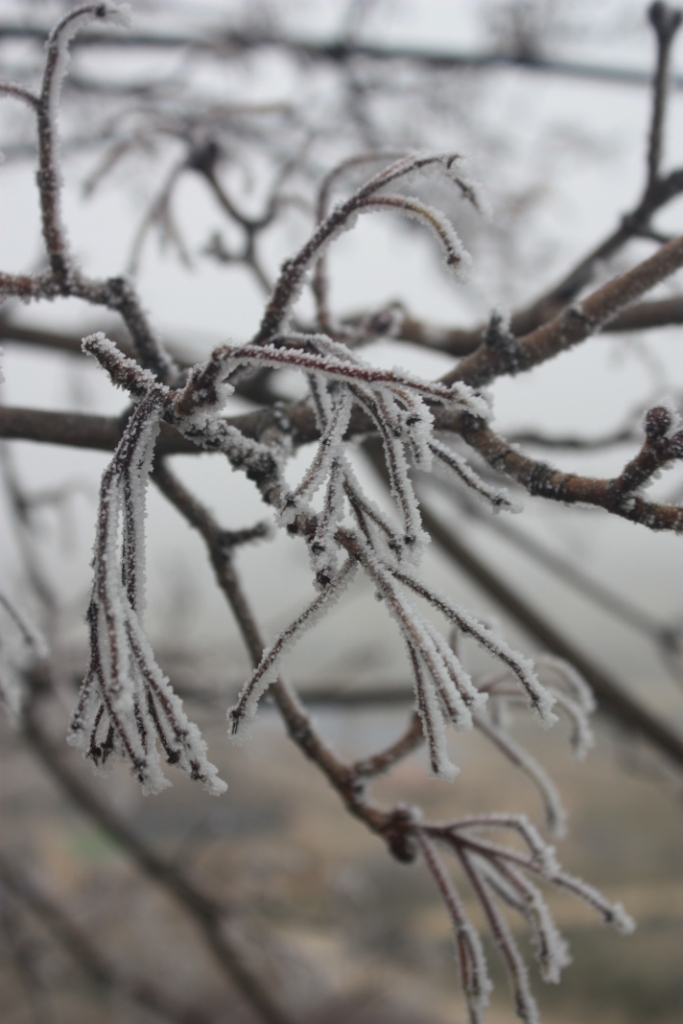
One must have a mind of winter
 To regard the frost and the boughs
 Of the pine-trees crusted with snow;

And have been cold a long time
 To behold the junipers shagged with ice,
 The spruces rough in the distant glitter

Of the January sun; and not to think
 Of any misery in the sound of the wind,
 In the sound of a few leaves,

Which is the sound of the land
 Full of the same wind
 That is blowing in the same bare place

For the listener, who listens in the snow,
 And, nothing himself, beholds
 Nothing that is not there and the nothing that is.
I cut myself upon the thought of you
 And yet I come back to it again and again,
 A kind of fury makes me want to draw you out
 From the dimness of the present
 And set you sharply above me in a wheel of roses.
 Then, going obviously to inhale their fragrance,
 I touch the blade of you and cling upon it,
 And only when the blood runs out across my fingers
 Am I at all satisfied.

Before man came to blow it right
     The wind once blew itself untaught,
And did its loudest day and night
     In any rough place where it caught.

Man came to tell it what was wrong:
     It hadn’t found the place to blow;
It blew too hard—the aim was song.
     And listen—how it ought to go!

He took a little in his mouth,
     And held it long enough for north
To be converted into south,
     And then by measure blew it forth.

By measure. It was word and note,
     The wind the wind had meant to be—
A little through the lips and throat.
     The aim was song—the wind could see.


 Tiger Riding for Beginners