POEM: Madmen on the March

by Gustave Dore (via Wikipedia)


Madmen on the march
Clones de la Mancha
Pouring through the arch
Lacking lingua franca


Seeking common thrills
An army of sham knights
Tilting at windmills
With more pride than fight


It’s not a sickness of the brain
that scripts this lunatic life.
It’s chasing the sanction of “sane”
that breeds this stream of strife.


[Note: A poem on the hilarity of defining sanity as the recognition of reality. As if any of us knows what’s real in a meaningful sense. Sanity is being able to pretend you know what’s real with sufficient confidence to avoid grinding against society’s sensitive spots.]

DAILY PHOTO: Amer Fort & Sky

Taken in November of 2015 in Jaipur

Mountain Haiku

pounding drums
echo down the valley
birds calm


deep breath
fog dissipates
common peril


fog follows
will it catch us
before the pass


cow grazes
on the high trail
dispiriting


glaciers glow
in sunrise orange
forge iron, not


on the ridge
falls can be lethal
worth it


DAILY PHOTO: Mughli Bibi’s Tomb


Taken in September of 2017 in Ahmedabad

POEM: Intergalactic Smelly Kid; or, Fermi Paradox, Solved It!

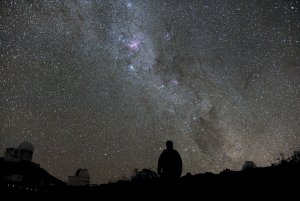
Source: European Southern Observatory (via Wikipedia)


Let me step up on my soapbox,
tell you about a paradox.
Said a scientist named Fermi,
“Why’ve no aliens made the journey
to bring us a nice fruit basket
or just tell us how fantastic
it is having us in the neighborhood.”


Scientists have racked their brains
considering competing claims:
“Life is hard and smarts is harder.”
“They can’t stock a trans-galactic larder.”
“They’ve come here, but are to small to hear.”
“They are shy, out of wisdom or of fear.”
Or, simply, “They all blow’d themselves to hell.”


I, too, have had reason to ponder
why aliens stifled the urge to wander
into our little neck of the wood,
and I fear we don’t come off so good.
What if, I ask you, heaven forbid
they think of us as the smelly kid?
Are we the seatmate who won’t shut up
about his robotic barbershop startup?
Do humans come across as the kind
to ask a stranger if they wouldn’t mind,
helping us move and antique armoire
or lending us their new flying car?


So when considering whether we’re alone of device or luck,
consider the competing hypothesis that we really suck.

DAILY PHOTO: Tree & Granite Building

Taken on February 27, 2018 in Bangalore.

DAILY PHOTO: Basket and Grain Drying in a “Town Square”

Taken in May of 2017 in Khonoma Village


Wealthy villagers in Nagaland earn merit by constructing circular stages like this one on which festival activities can be conducted. (Or, during non-festival times, grain can be put out to dry as per this photo.)  I put “Town Square” in quotes because they are neither square in shape nor are they solitary centrally-located public spaces. Rather there can be several of them– as there are in Khonoma, a village near Kohima — at various locations in and around the village. The little cubic pillars are seats, some of which may be assigned to prominent individuals and others are open seating.

The basket put upside-down on the pillar is typical of the region, and is worn with the band across one’s forehead.

The building in the back is also a public building constructed by a prominent villager.

DAILY PHOTO: Oasis Edge, Ladakh

Taken in August of 2016 in Ladakh

DAILY PHOTO: Sunflower & Prayer Flags

Taken in August of 2016 near Thikse Monastery in Ladakh

BOOK REVIEW: Treasury of Greek Mythology by Donna Jo Napoli

Treasury of Greek Mythology: Classic Stories of Gods, Goddesses, Heroes & MonstersTreasury of Greek Mythology: Classic Stories of Gods, Goddesses, Heroes & Monsters by Donna Jo Napoli
My rating: 4 of 5 stars

Amazon page


This book consists of 25 biographical sketches of figures from Greek Mythology. It’s one of those books that grew on me, and the reason it grew on me was a few of the chapters toward the end were engaging, such as those about Heracles, Jason, and Helen. This also means that the number of stars I gave it is fairly meaningless. It was in no danger of getting 5 stars nor 1, but could’ve been anywhere in between at various points in my reading.

The problem with the book is that the unit of interest isn’t the myth, i.e. not the story, but rather the mythical figure, the various gods and heroes of ancient Greece. Because of this organization, some of the chapters have a tight and memorable story, such as that of Heracles and his 12 labors, while others are just piles of genealogical facts mixed with odd mythical happenings (e.g. who burst from whose forehead) and tossed with that mythical figure’s bit parts in larger myths. The book is a good, solid reference book for schoolkids doing research on Greek Mythology, but much of it’s not very engaging to read.

The graphics are beautiful and colorful, if a bit artsy (not always instantaneously clear in subject.) There are maps, a timeline describing happenings of ancient Greece — real and mythical, a bibliography, and a quick guide to the characters that would make more sense if the book wasn’t a collection of relatively brief biographical sketches to begin with (but repetition has its merits, particularly for children.)

If you’re looking for a collection of biographies of mythical Greeks (i.e. a reference for children,) then this is a good book for you. If you’re looking to get your kids intrigued by the Greek myths, then you might want to shop around. Put another way, if you’re looking for a version of what Neil Gaiman did with this “Norse Mythology,” only for the Greeks, this isn’t it.

View all my reviews