O Captain! my Captain! our fearful trip is done,
 The ship has weather'd every rack, the prize we sought is won,
 The port is near, the bells I hear, the people all exulting,
 While follow eyes the steady keel, the vessel grim and daring;
       But O heart! heart! heart!
          O the bleeding drops of red!
             Where on the deck my Captain lies,
                Fallen cold and dead.

O Captain! my Captain! rise up and hear the bells;
 Rise up -- for you the flag is flung -- for you the bugle trills,
 For you bouquets and ribbon'd wreaths -- for you the shores a-crowding,
 For you they call, the swaying mass, their eager faces turning;
       Here, Captain! dear father!
          This arm beneath your head!
              It is some dream that one the deck
                 You've fallen cold and dead.

My Captain does not answer, his lips are pale and still,
 My father does not feel my arm, he has no pulse nor will;
 The ship is anchor'd safe and sound, its voyage closed and done,
 From fearful trip the victor ship comes in with object won;
       Exult, O shores! and sing, O bells!
          But I, with mournful tread,
             Walk the deck my Captain lies,
                 Fallen cold and dead.
There was an Anger Management counselor
 who, truth be told, was kind of an amateur.
   His schedule planner
   didn't know the name "Banner."
 So, for his new place, he hired a nerd.
Diogenes [of Sinope] and – also – Drukpa Kunley. Each of them spoke his mind, lived by his own rules, never wore a mask, and could not be controlled. They were truly free.
In Flanders fields the poppies blow
 Between the crosses, row on row,
      That mark our place; and in the sky
      The larks, still bravely singing, fly
  Scarce heard amid the guns below.

We are the Dead. Short days ago
  We lived, felt dawn, saw sunset glow,
       Loved and were loved, and now we lie,
          In Flanders fields.

Take up our quarrel with the foe:
   To you from failing hands we throw
       The torch; be yours to hold it high.
       If ye break faith with us who die
    We shall not sleep, though poppies grow
         In Flanders fields.
Amazon.in Page
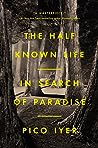
The subtitle to this collection of travel essays might suggest Iyer intends to write about the most idyllic places on Earth. In a way, he does, but he’s also revealing the conundrum of “paradise” by showing the reader places that have been called “paradises,” but which are also some of the furthest places from serenity imaginable. I wouldn’t say that the author is revealing the concept of paradise to be an illusion, but rather that he’s showing that there is an inextricable tangle of dark and light in any earthly paradise. I think the idea is best expressed in a quote from the book, “A true paradise has meaning only after one has outgrown all notions of perfection and taken the measure of the fallen world.” [FYI: the main title is from a quote from Moby Dick.]
From my experience with some of the places that Iyer covers (e.g. Kashmir, Sri Lanka, Varanasi, etc.) I can glimpse the substance that started him digging. It isn’t just that these places are superficially paradisaical (though Kashmir and parts of Sri Lanka are definitely scenically idyllic,) but there is some other (deeper) quality by which these places feel fantastical. Of course, the examples that I mentioned (as well as others: e.g. Jerusalem) are simultaneously examples of the antithesis of paradise. These are troubled places with histories of violence and dysfunction. I even learned that Bali (which doesn’t have its own chapter but is discussed) has barbarity in its own history, and it seems as likely a candidate for true paradise as any.
I enjoyed reading this book. I must admit that part of my fascination with it derived from the fact that I’d tread much of the same ground that Iyer covers. I’d highly recommend the book for readers of travel writing. View all my reviews
Once upon a time, there was a wise, old Taoist priest
 who got the least from the most & the most from the least.
    If he offered a snack,
    you'd be bursting your slacks,
 but expect empty plates when he'd call for a feast.
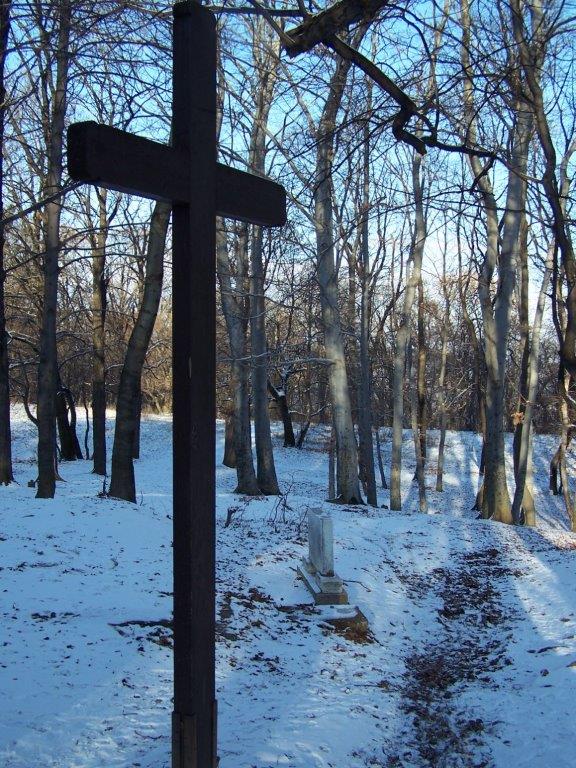
Whose woods these are I think I know.
 His house is in the village though;
  He will not see me stopping here
 To watch his woods fill up with snow.

My little horse must think it queer
 To stop without a farmhouse near
   Between the woods and frozen lake
 The darkest evening of the year.

He gives his harness bells a shake
 To ask if there is some mistake.
  The only other sound's the sweep
 Of easy wind and downy flake.

The woods are lovely, dark and deep.
 But I have promises to keep,
  And miles to go before I sleep,
 And miles to go before I sleep.